A final trip using the half-price First Class Inter-Rail ticket bought in last year’s 50th anniversary sale is also my longest, and takes me from home to Milan, then south through Italy to Bari, before sailing across the Adriatic to Patras and on by bus and train to Athens. From there it is north on the fateful route to Thessaloniki, before finishing in Bulgaria with a visit to the spa town of Velingrad.
Setting off in glorious spring weather on Tuesday, 23 May 2023, I am hoping for some sunny sightseeing along with all the rail journeys, having arranged to spend two days in Bari, Athens and Thessaloniki and then finish up with three days at the apartment I stayed at in Velingrad during a visit in March 2022.
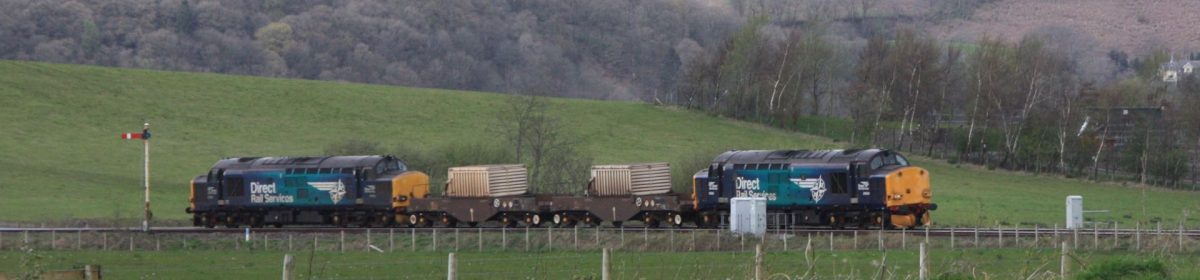
Along the way my aim is to indulge a passion for narrow gauge railways, by travelling on three separate systems – the 950mm gauge Ferrovie Appulo Lucane from Bari, a short section of surviving metre-gauge service in Patras on the once-enormous Peloponnese network, then finally another trip on Bulgaria’s only little railway, the 125km (78 mile) 760mm gauge route from Septemvri to Bansko and Dobrinishte.
Day one begins with a trip to Waterloo on the rammed and newly re-timed 06.58 from Haslemere then another Standard Premier trip on Eurostar 9014 to Paris at 09.31 from St. Pancras. After queuing to buy a ticket for several minutes it is then a two-stop trip on RER Line D to the magnificent Gare de Lyon.
Here there is plenty of time to buy food and drink in the streets nearby (not in the over-priced station shops) before taking TGV 9249 to Milan at 14.45. This runs fast and non-stop for the first three of the seven hour journey before halting at Chambery, where the pace slows significantly.
After another stop at the border station of Modane we pass into Italy through the 8½ mile (13.7km) Frejus tunnel beneath Mont Cenis, before emerging into some wonderful Alpine scenery on the route to Turin and Milan. Arriving slightly late into Porta Garibaldi station at 22.00 I take a two-stop ride (€2.20) on metro line 2 to Milano Central and the welcome comfort of Hotel Flora, just yards for one of the Metro station exits.
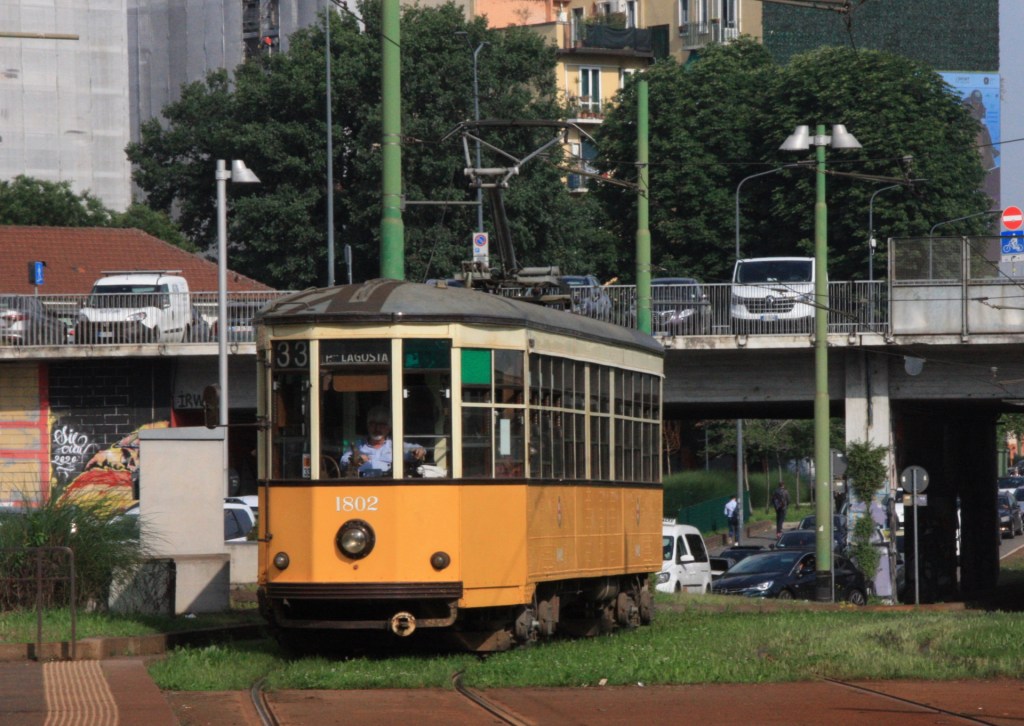
My schedule does not give me time to appreciate much of Milan, but returning to Porta Garibaldi station the following morning (24 May 2023) I do have time to photograph a couple of the oldest tramcars in regular service anywhere in the world – what are known as ATM Class 1500 cars that are almost a century old, and date from 1927-30.
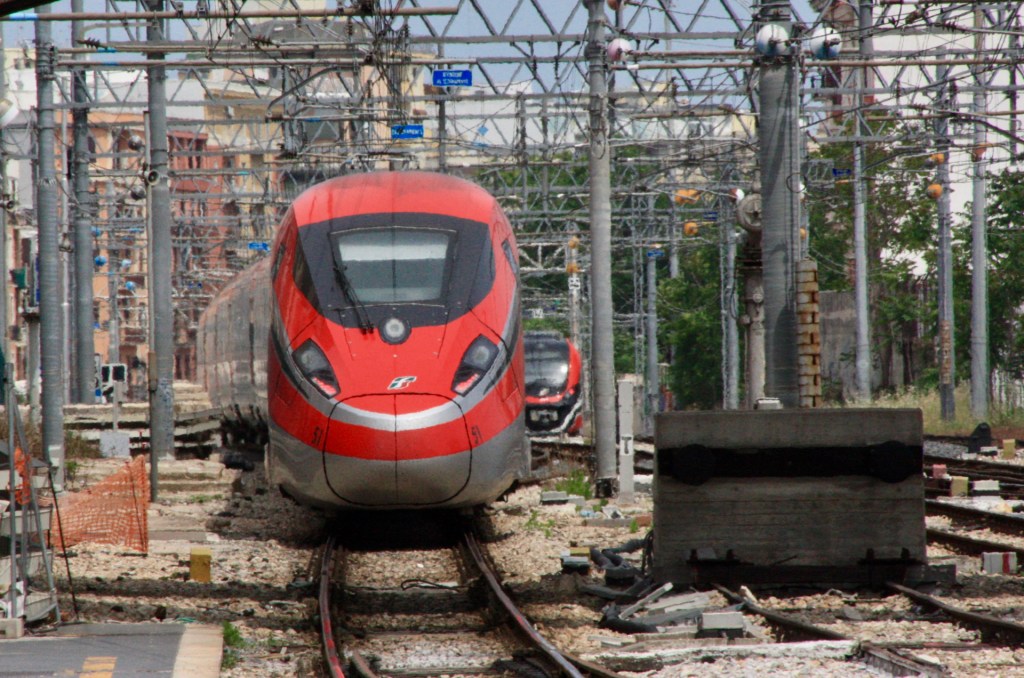
The aftermath of devastating floods in Northern Italy is disruption to rail services, including my Frecciarossa high speed service FR9805, which only runs as far as a place called Faenza, to the south of Bologna. But business class on Italian high speed is a step up from French TGVs, with more comfortable seats and a welcome free snack box and coffee.
After some impressive 300km/hr (187 mph) running on the high speed line, and well organised replacement coaches at Faenza, things go badly wrong when we reach a place called Cesena after a 45 minute run down the E55 motorway. Despite a Frecciarossa train being in the platform, the resumed FR9805 does not depart for over an hour, making the train one hour 35 minutes late on departure.
The journey south is a very pleasant one in FS business class, with plentiful supplies or complimentary snacks and soft drinks and some great views of the Adriatic Coast as we pass through well-known resort towns including Rimini and Ancona, with an eventual arrival into Bari two and a half hours late at 20.00.
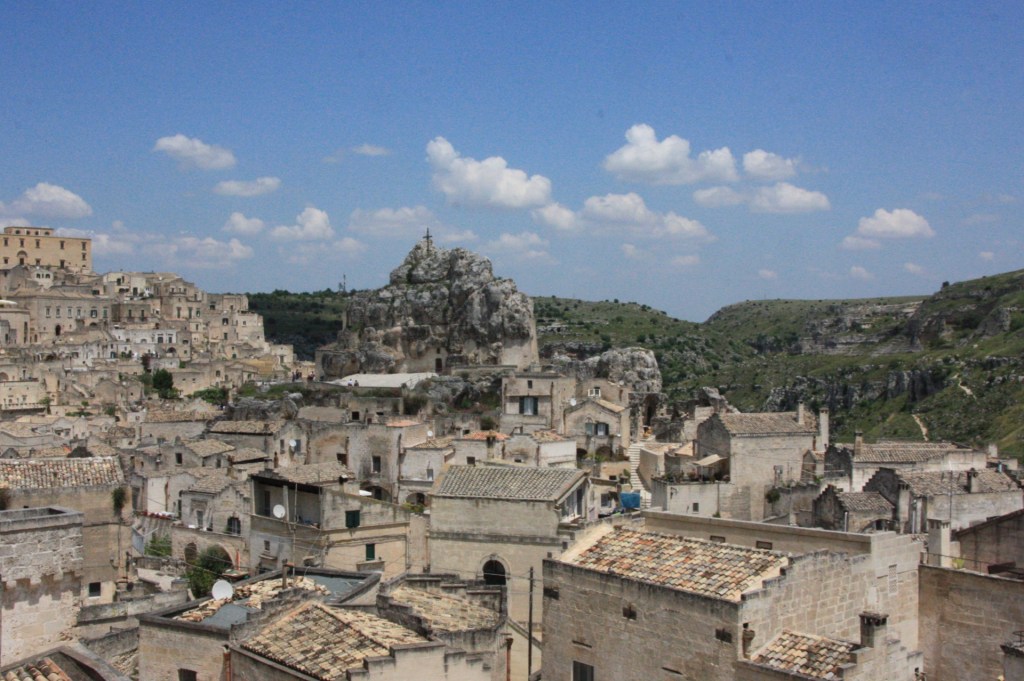
One of the joys of Inter-Rail for me has been to accidentally discover new things or places. So after seeing the world’s oldest trams in Milan it was a remarkable bonus when I did some homework on the southern Italian city of Matera before travelling there (25 May 2023) on the narrow gauge FAL train from Bari.
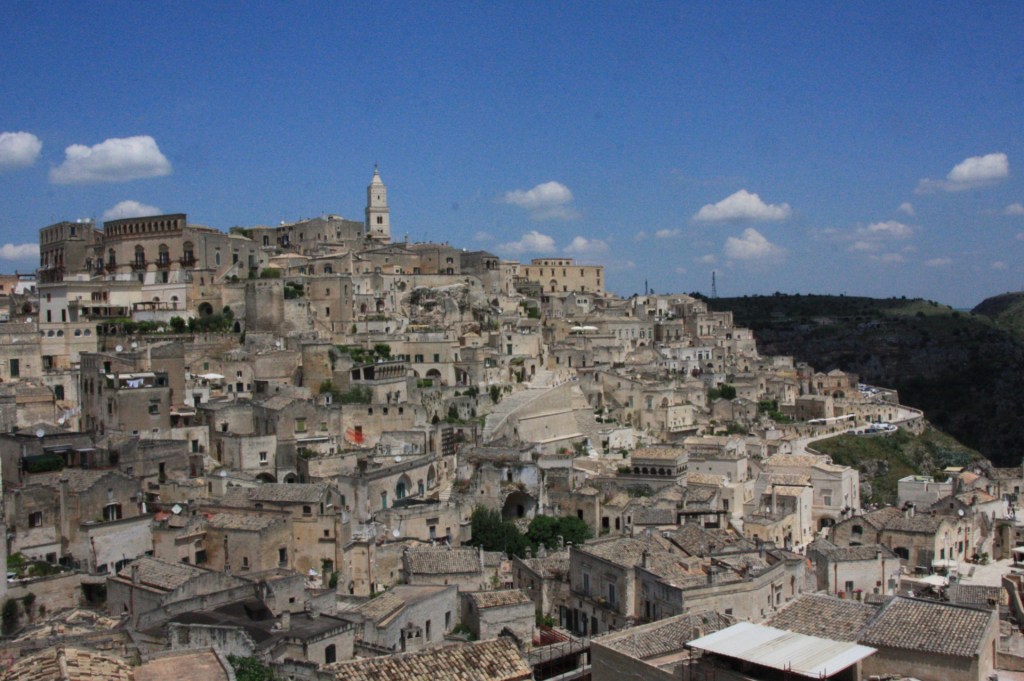
What I had planned as a day riding the little trains was transformed when I read that Matera was a UNESCO World Heritage Site, a joint European City of Culture in 2019 and the setting for the latest James Bond film No time to die. On a gloriously sunny day it became a must visit place for me.
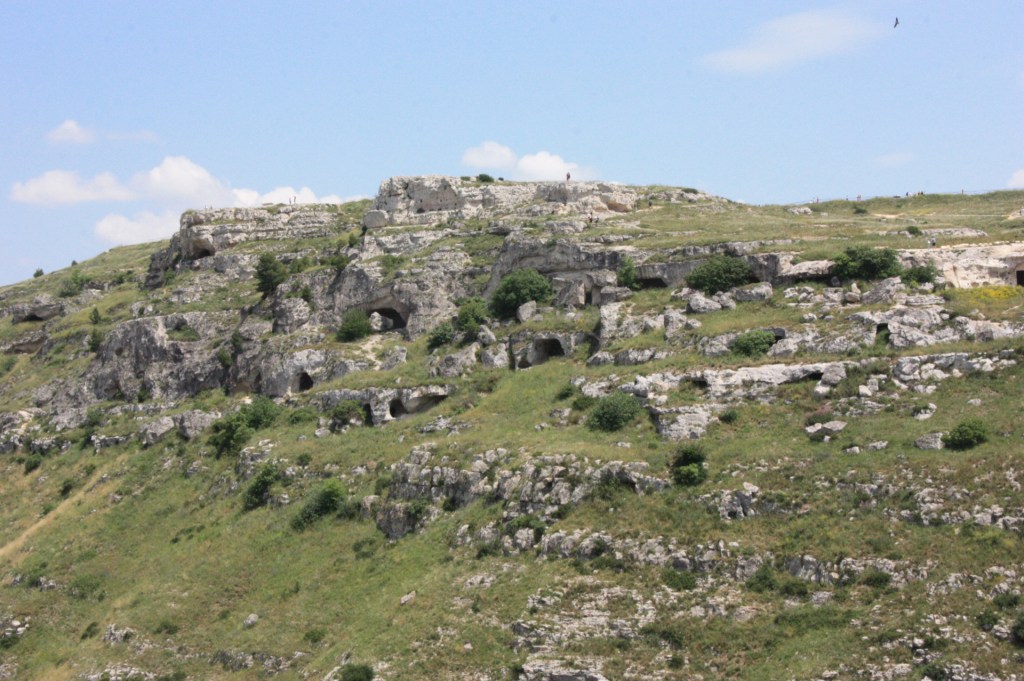
After buying a €1.50 map from a kiosk near Matera Centrale station and being pointed in the direction of the historic centre I had a fascinating walk, along with several thousand tourists, around the historic city, with views across the river gorge of caves that were inhabited until well into the twentieth century. It is a place not to be missed by anyone spending time in southern Italy.
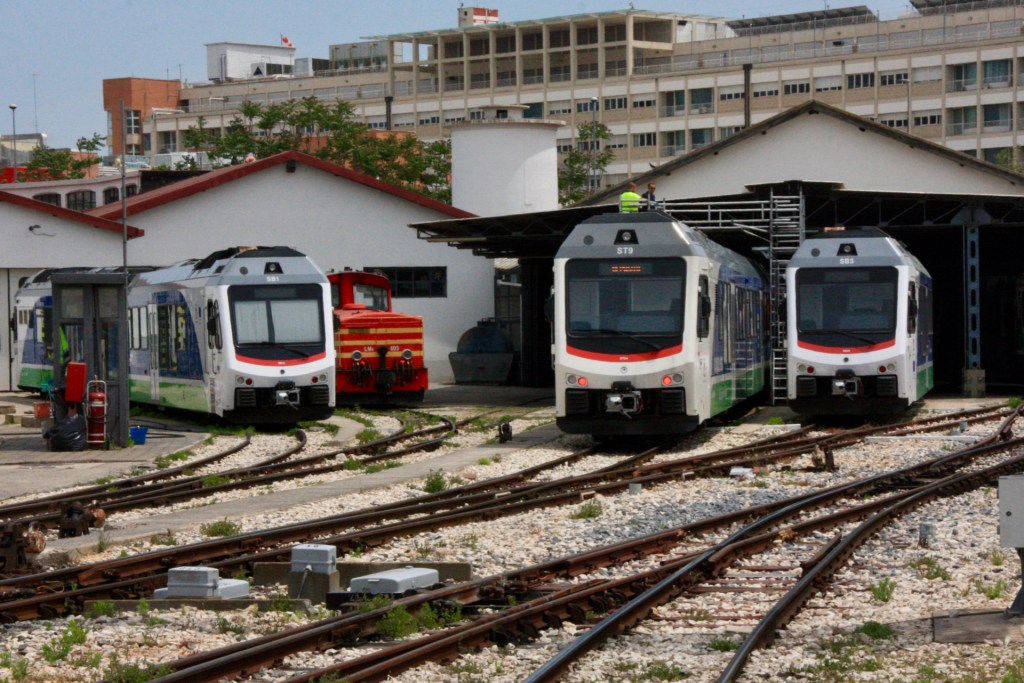
Matera is the main destination for what is left of the FAL network, with services departing roughly hourly from the high level two-platform station close to the main FS Bari Centrale. It is not covered by Inter-Rail, but a single for the 76km (47 mile) trip costs just €5.70, with the journey aboard one of the comfortable Stadler DMUs taking around 80 minutes.
FAL services from Bari run in a south-westerly direction to the large town of Altamura, where trains divide, with one portion going to Matera and the other continuing for one stop to a station called Gravina, from where the route onwards to Potenza is served four times a day by replacement buses, although it is not clear if this is a permanent arrangement.
Services on Puglia’s only narrow gauge system seem well- patronised, but timekeeping is pretty poor, with lengthy speed checks meaning that every service seems to run late. Apart from loss of the Potenza services there seems to have been quite a bit of rationalisation, with long stretches of rusty rails alongside the single running line and only two of the four platforms at Bari Scalo, alongside the FAL depot, remaining is use.
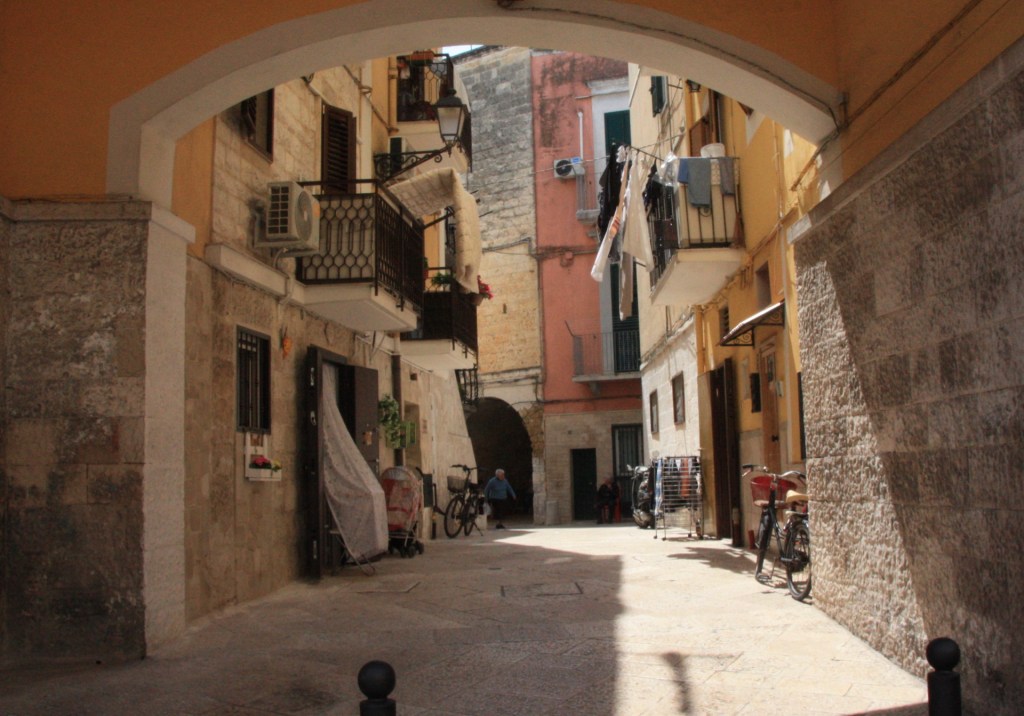
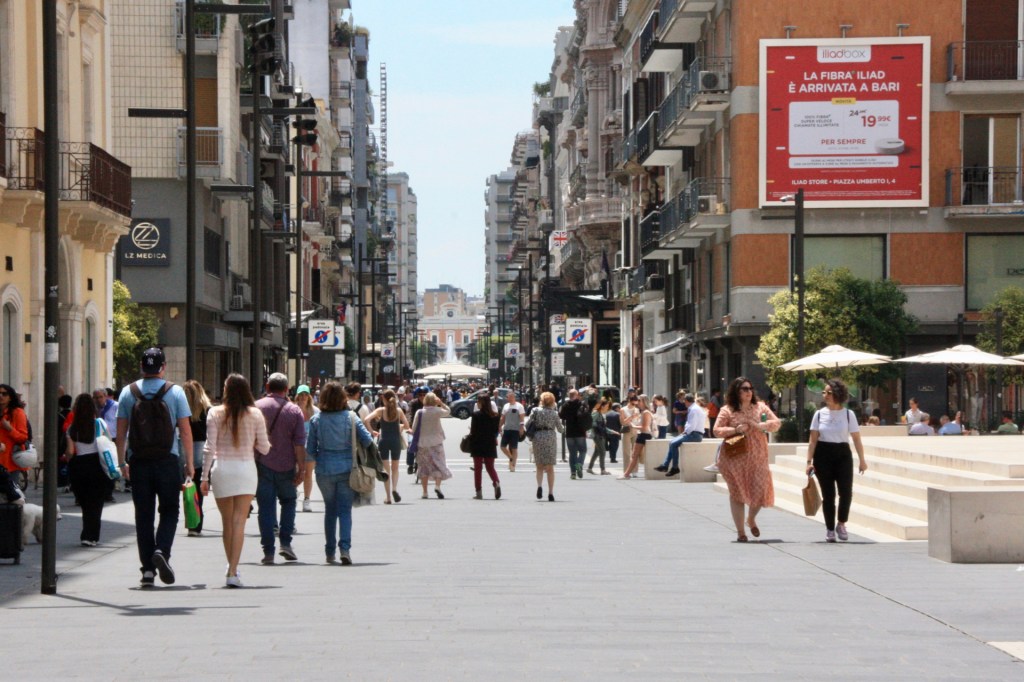
Faced with a day of planned strike action on Italian railways (26 May 2023) I decided to forego a planned trip to Brindisi and Taranto in favour of a day walking around the fascinating city of Bari, which has a wonderfully well preserved old town close to the port and an elegant 19th century town to the south that is laid out on a grid pattern, so easy to navigate once you have your bearings.
Getting from Bari Centrale to the old town involves walk straight ahead (north) along the pedestrianised Via Sparano then across a major road called Corso Vittorio Emanuele and into the maze of narrow streets and alleys that make up the old town and are a Mecca for tourists.
Highlights for me of a morning spent touring the old town were the Norman castle and its displays of ancient archaeological finds from this fascinating region, along with the Basilica di San Nicola, a world-famous sanctuary founded in 1087 with a remarkable carved and gilt 17th century ceiling covering the entire nave and transepts.
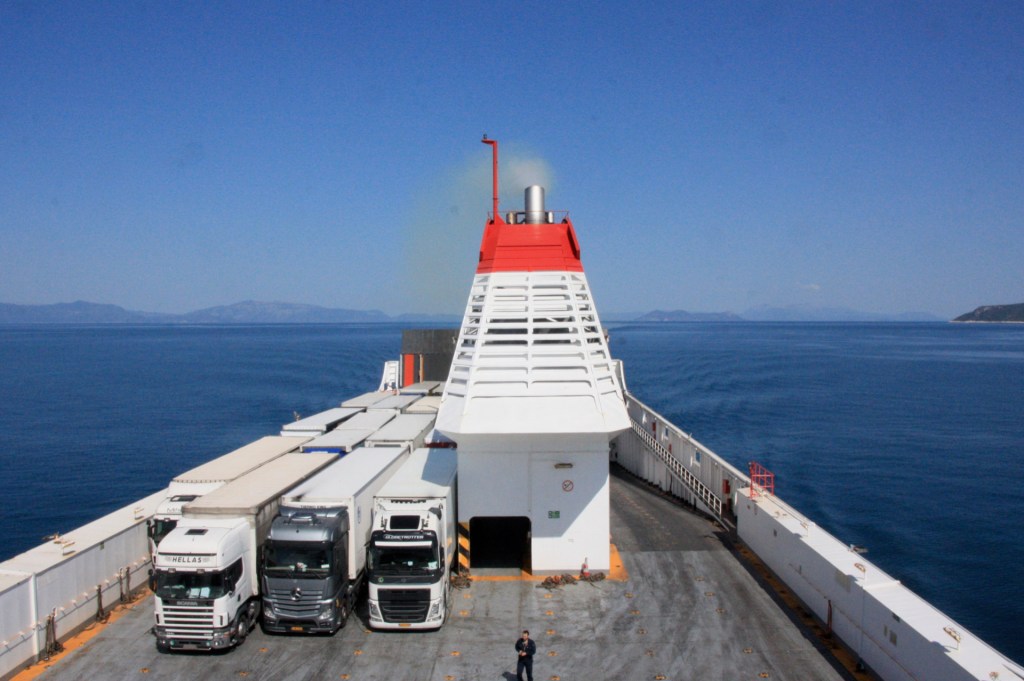
After an enjoyable day in Bari it is time for a new mode of transport and an overnight journey to Patras aboard the Superfast 1, which Inter-Railers can travel on for a modest €23.00 one way, comprising no actual fare, but a €16 fuel surcharge and €7 port tax.
First class pass holders qualify for a free airline type seat – cabins are expensive and had all sold out for my crossing on 26 May. The lights go out in the lounge fairly early, but what I had not bargained for was the lights being turned on again at 05.00 prior to a call at 05.30 in the port of Igoumenitsa, where the majority of passengers disembarked.
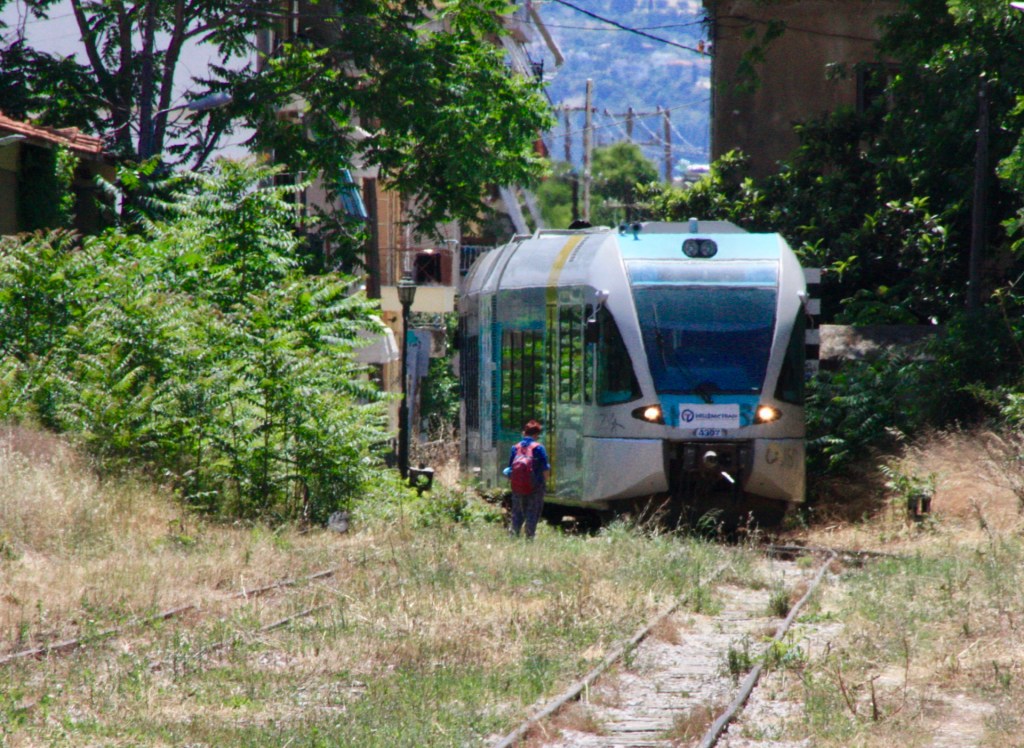
Our arrival in Patras was half an hour ahead of schedule at 12.30, from where I had planned to walk a short distance to a station called Antheias on a newly-re-opened southern section of metre-gauge suburban railway.
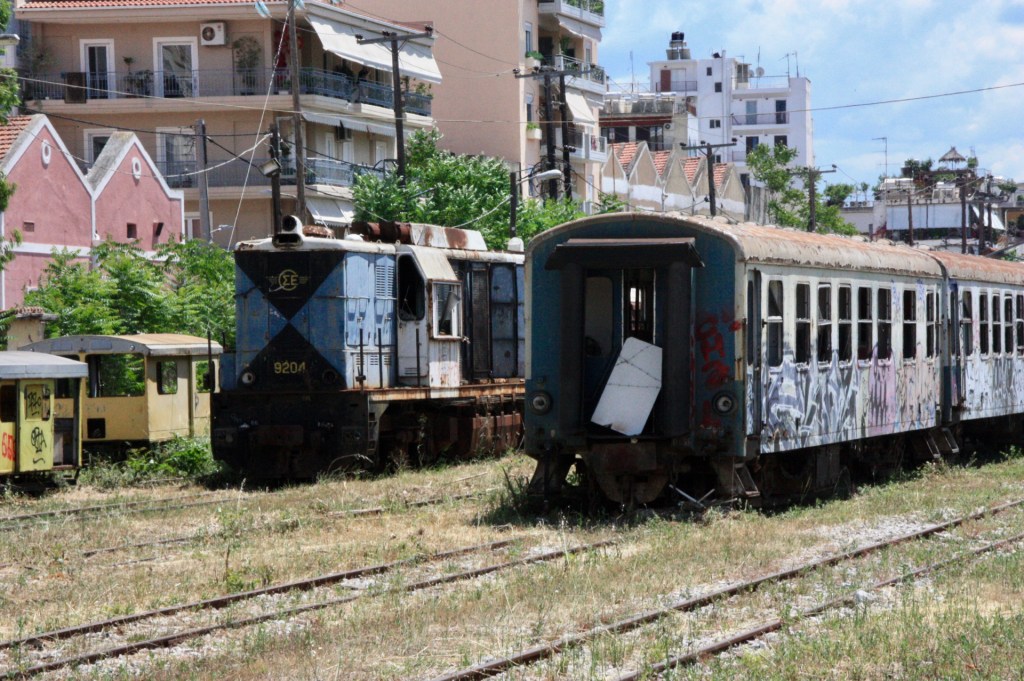
But a high clear plastic fence between the port and a main road made exiting in the direction of the new station totally impossible, so I was faced instead with a sweaty 25 minute walk to a station further north called Agios Andreas, where hourly trains on the new southern route connect with those going to the main station and northwards to a suburb called Rio.
Having taken the chance to sample most of the re-opened line I got a free reservation on the next rail replacement bus to Kiato, just west of Corinth, from where fast electric suburban trains whisk you to Athens in 80 minutes.
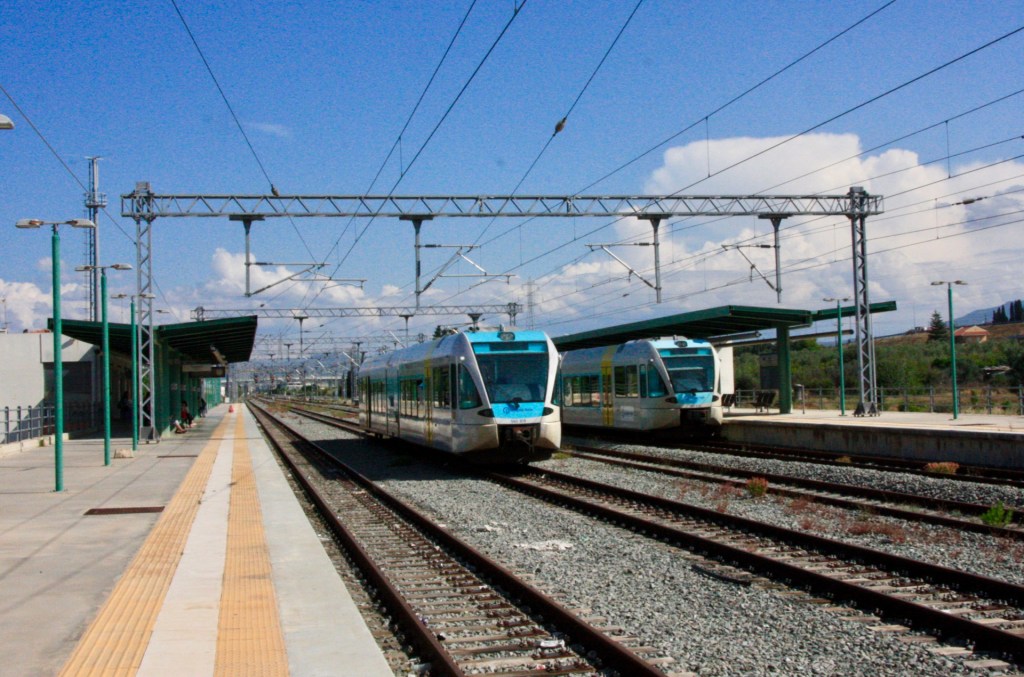
Patras is Greece’s third biggest city but has been without a direct rail link to the capital since the famous narrow gauge system closed during a financial crisis in 2011. The standard gauge line to Kiato has already been extended westwards to a place called Aigio – though not yet electrified – and most of the route to Patras now seems to have been built.
It is 44 years since my first visit to Athens, when as a student I spent a few nights at a then famous hostel called Hotel California in the Plaka area of the city. There has been a vast amount of change since then, but there is still much of that older Athens remaining, particularly in unfashionable areas such as the streets around my apartment, very close to the main Larisa railway station.
Having just one full day in the city I began by buying a 24 hour travel pass (€4.10) then took a line two metro from Larissa to Syntagma Square, where an information office gave me what I had been fruitlessly seeking elsewhere, a detailed city map which also showed metro, rail and tram routes.
When I first came to Athens in 1979 getting around was a real challenge, but the 2004 Olympic Games spurred on a huge amount of spending on transport infrastructure, including three metro lines, upgraded rail links, along with a new airport and a tram route from Syntagma Square to Piraeus and destinations on the coast.
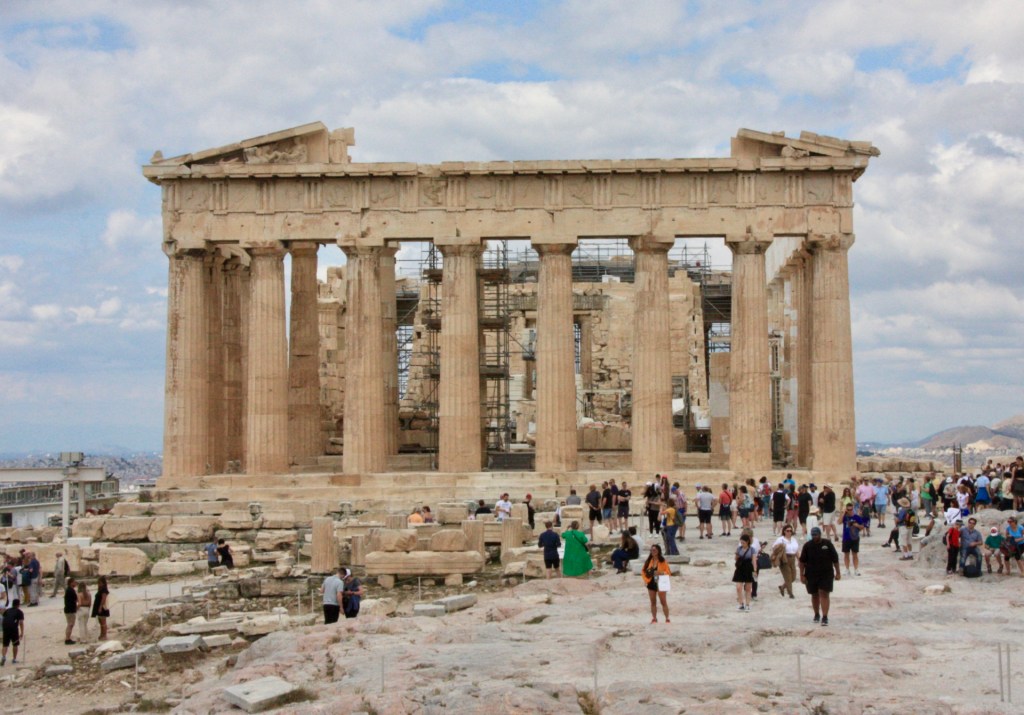
Being fascinated by all types of public transport I was keen to take a ride on the trams, but first it was the obligatory bit of culture and a visit to the Acropolis, that powerful symbol of the city that reminds you that the Greeks were a civilised race at the time it was built around 500 BC even if they have had problems with their plumbing in the centuries since then.
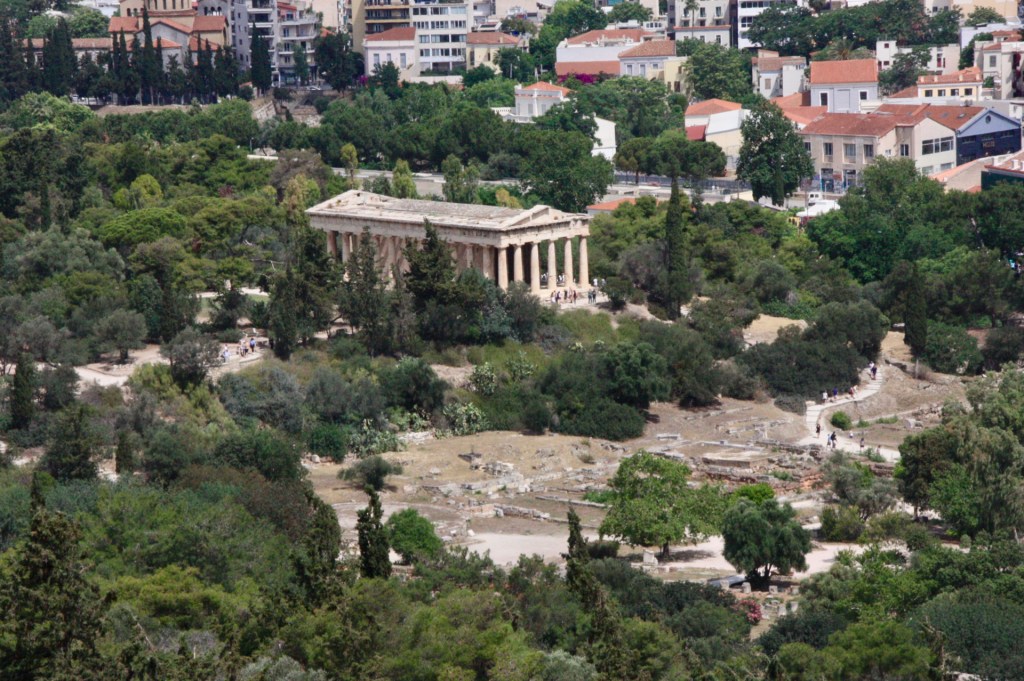
Despite the hordes of tourists flocking there on a fine Sunday morning (28 May) it is a sight not to be missed, and after the climb up to it you are rewarded with fine views in all directions of the city below, nearby mountains, the coast at Piraeus and other historic sights, notably the Temple of Hephaesus north-west of the Acropolis.
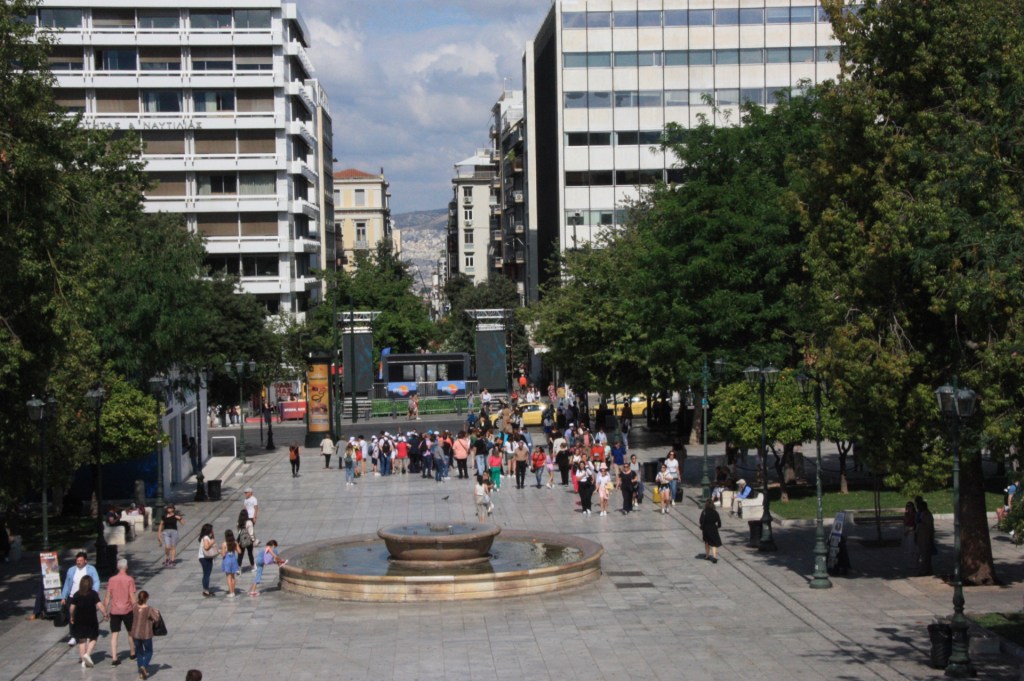
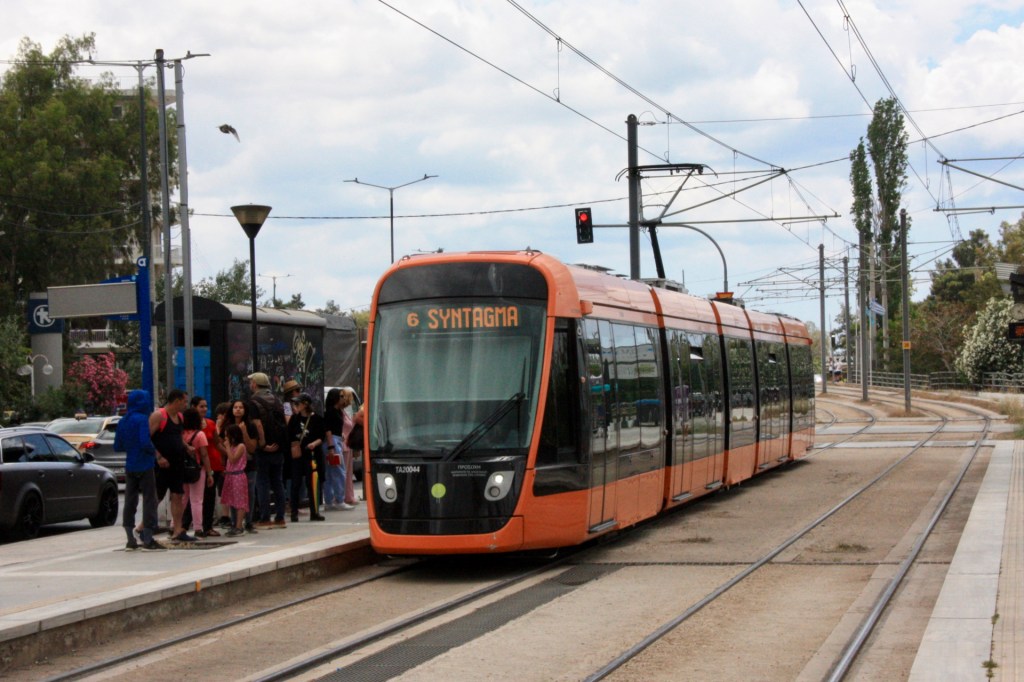
Returning to Syntagma Square I was keen to sample the tram system, so took a T6 tram from a corner of the Square to the coast at a place called Edem. Here I changed onto a T7 service that took me to a stop called Dimarcheio, a square in Piraeus, from where a one stop ride on the newly extended M3 metro line brings you to the railway terminus I remember from four decades ago.
Travelling the expensively upgraded 500km (312 mile) route from Athens to Greece’s second city, Thessaloniki, in just four hours and 40 minutes it is fascinating to see many remnants of the old single track route, including many viaducts and mile after mile of intact track and signalling to the east of the new electrified double track route.
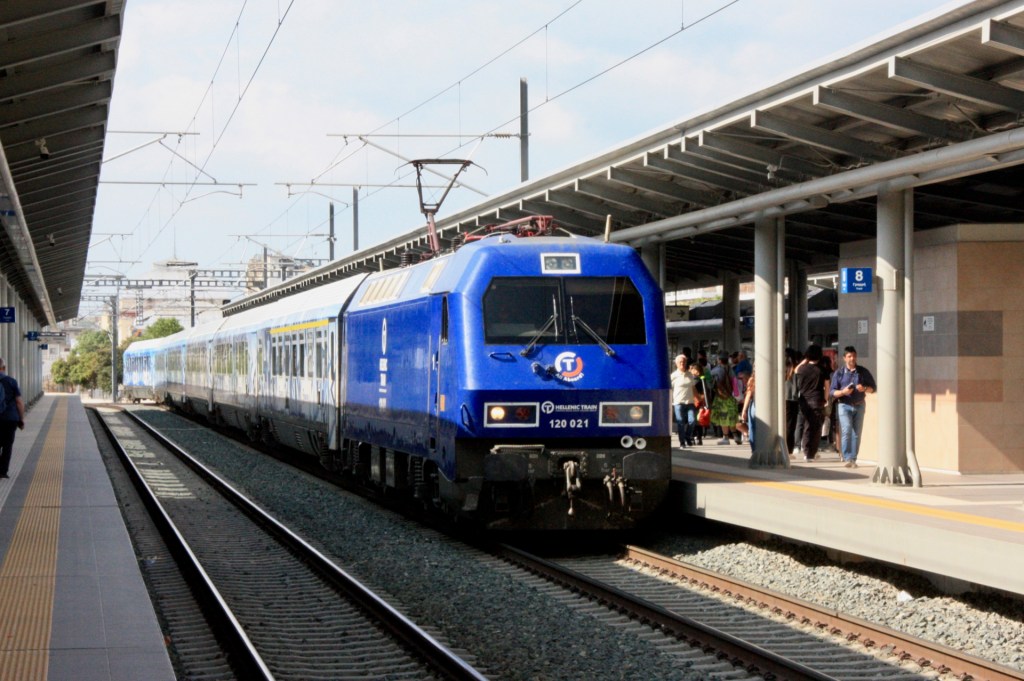
Despite the impressive punctuality – after an investment of €1.8 billion in the line – it is sobering to remember that my 29 May 2023 journey is almost exactly three months since 57 passengers perished while making this same journey on 28 February 2023, when human error led to the worst disaster in Greek rail history and a head on collision between a Thessaloniki-bound passenger train and a southbound freight train.
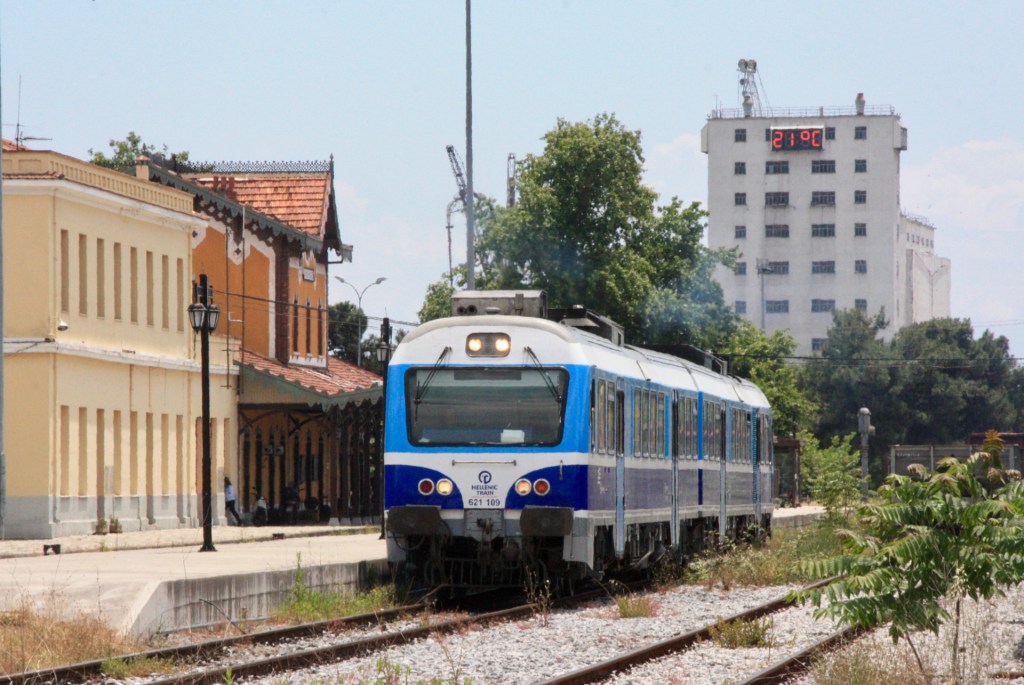
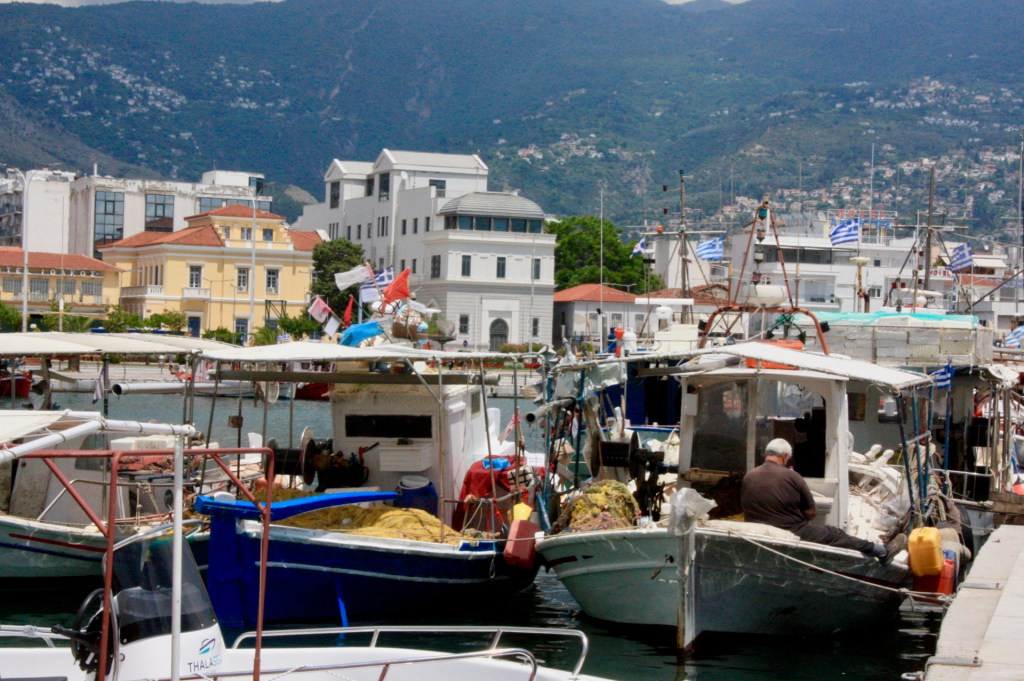
Partially retracing my steps on one final day of riding Hellenic Trains (30 May 2023) I was keen to sample the 61km (38 mile) branch line from Larisa to the bustling port city of Volos, which is operated by a noisy two-car diesel unit that takes 50 minutes to reach its destination, shuttles back and forth every couple of hours, and connects fairly well with Thessaloniki-Athens expresses.
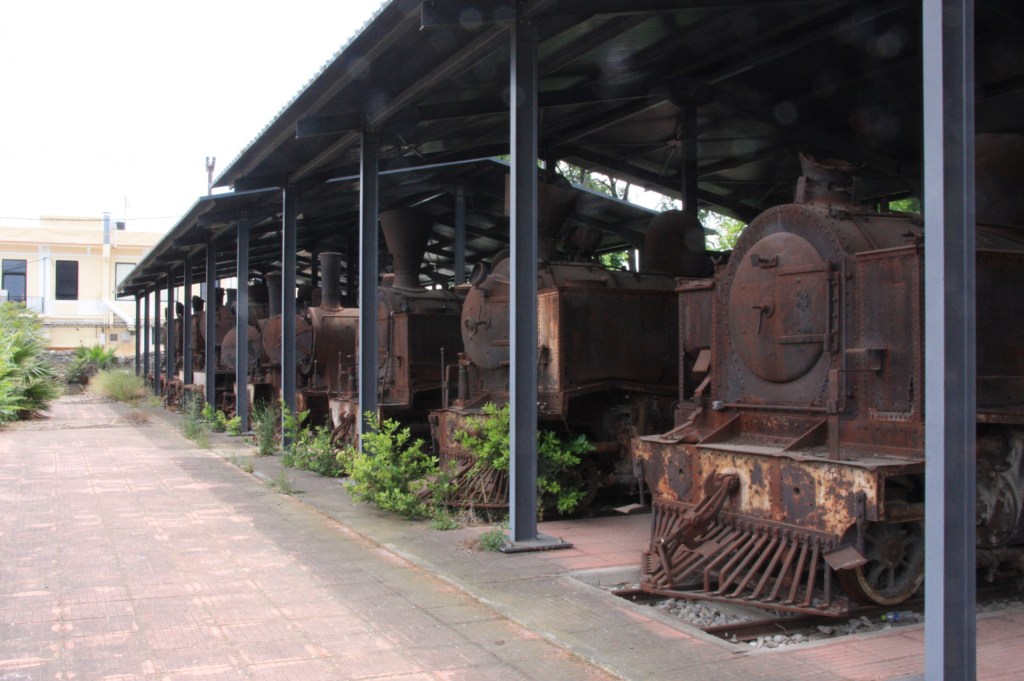
I had read that there was a collection of steam locomotives at Volos and, sure enough, in an abandoned corner of the extensive station yard stood no less that ten tank engines, all under cover, but seemingly preserved though gently rusting away. For the record I noted 2-6-2s OSE 30/34/40/41/42 four 2-6-0s (OSE 20/21/27/203) and 0-6-0 (OSE 1058).
Having seen literally billions of Euros poured into its railway to create a high speed link between the first and second cities, as well as the endless saga of rebuilding the railway to Patras, it seems ludicrous that Greece – like Serbia – remains a country that is isolated from the rest of Europe’s railway network.
Links from Thessaloniki to Belgrade via Skopje and to Sofia remain closed for no reason I could ascertain, so while the European overnight network continues to expand and long distance daytime services cross many national boundaries there is no way of getting in or out of Greece overland, except by bus, as I was forced to do on the final leg of my Inter-Rail adventure.
So after an early morning journey on a 31 bus from the city centre to the large and rather out-of-town Makedonia bus station it was the 08.15 Arda Tur bus that took me to Sofia in a little under five hours, reaching the Bulgarian capital at 13.00 after a 30 minute passport and comfort stop at Greek/Bulgarian border.
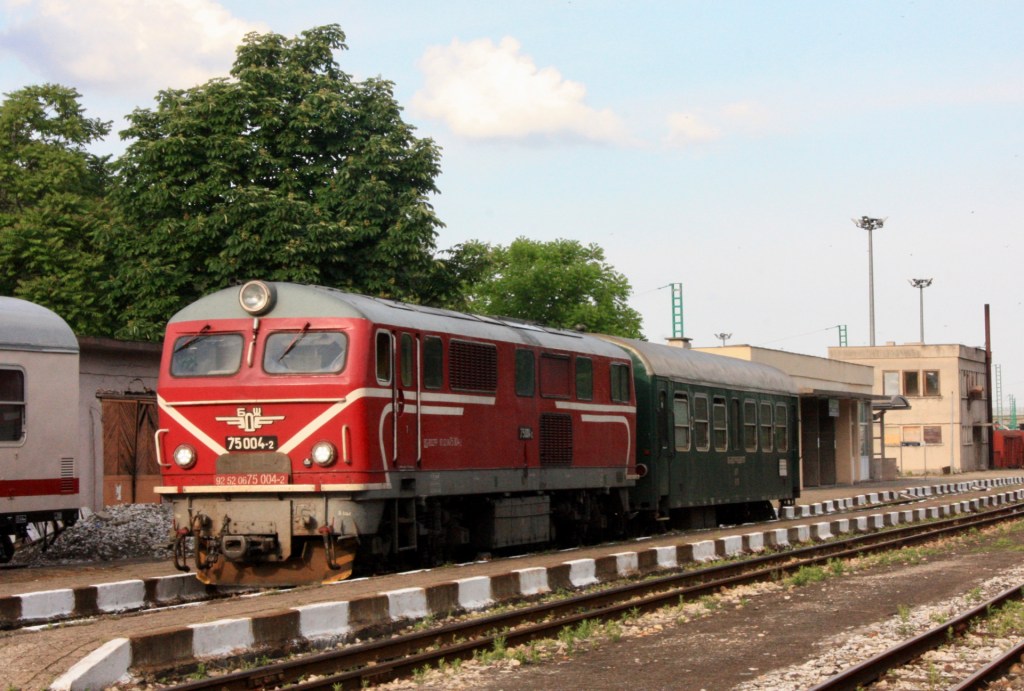
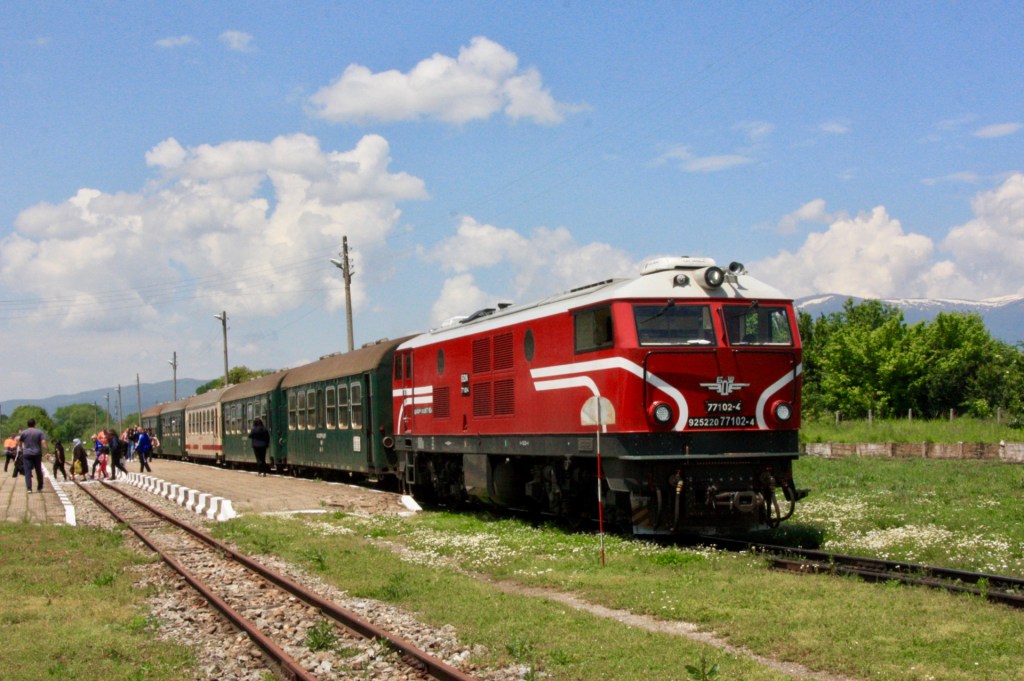
From here I am making one last detour and a return visit to a charming town called Velingrad (“Spa Capital of the Balkans”) that is about one third of the way along Bulgaria’s famous and only narrow gauge railway. This is the 125km (78 mile) 760mm-gauge line which runs from a junction called Septemvri on the main line from Sofia to Plovdiv up to the famous ski resort of Bansko then terminating a few miles further on.
The journey south-east from the Bulgarian capital to Septemvri remains painfully slow, due to a temporary singling of the line while a protracted upgrade takes place, but from there to Velingrad is 90 minutes of pure delight, with the 19.05 Kleptuza service formed of just a 1966-vintage locomotive and a single coach, with me, the guard and four other passengers aboard.
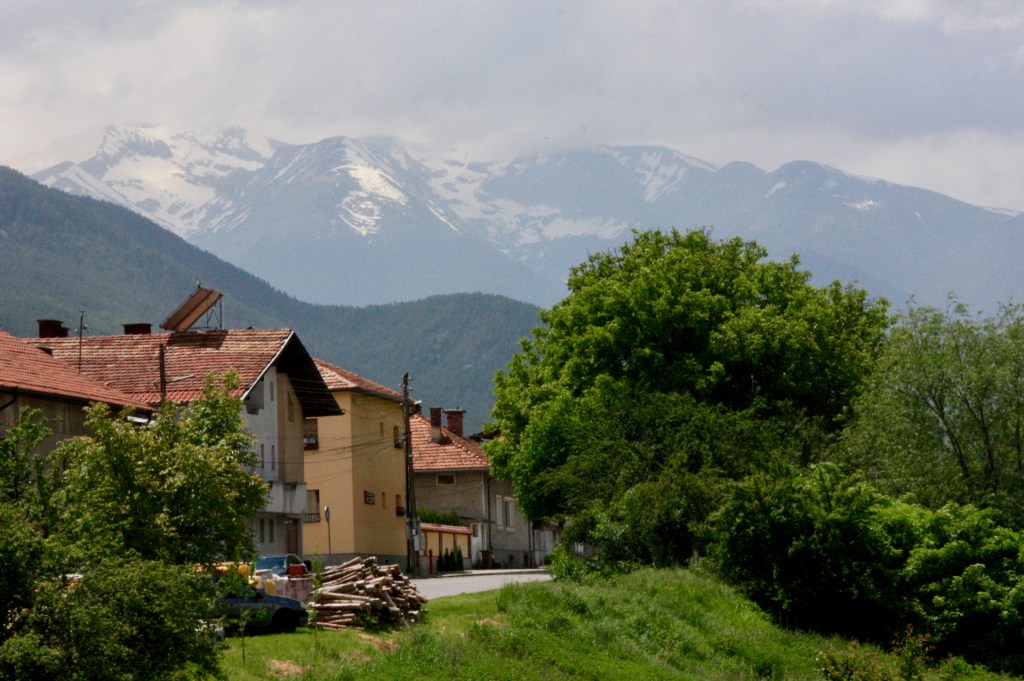
From Velingrad to the end of the line at Dobrinishte is a delightful was to spend three hours on a fine spring morning (1 June 2023). I had only once before travelled the short distance beyond Bansko, but Dobrinishte is a pleasant sleepy town overlooked by the snow-topped Rhodope Mountains, with a pleasant bar opposite the Town Hall in which to pass the time before my return to Velingrad.
My Inter-Rail adventure finally comes to an end at a station called Iskarsko Shose in the southern suburbs of Sofia, from where it is a simple two stop journey on Metro line M4 to the airport and a flight to Palma for a few days with family and friends, but no trains!
It has been a remarkable couple of months, with this being my fourth separate trip using a two-month first class pass, the three out-and-fly-home journeys that I have chronicled on railwayworld.net broken up by a two-week three capitals tour with my wife Clare to Berlin, Prague and Vienna.
Since early May 2023 I have travelled through ten countries, visited three capitals I had never been to before – Zagreb, Belgrade and Podgorica – had some memorable train journeys and visited a number of remarkable places, notably Split, Bari and Matera.
But I am reminded that there is still a huge amount more to see across the Inter-Rail network on my journey to Sofia, when train 8640 draws in to Septemvri station right on time at 08.43 with the Turkish sleeping cars of the overnight Istanbul – Sofia service attached at the rear. One for next year, I hope!
For a longer feature on the Bulgarian narrow gauge railway please return to www.railwayworld.net on or after 13 June 2023 and look out for “Spring-time in the Rhodope Mountains”
 RailwayWorld.net
You must be logged in to post a comment.