Bulgaria’s only narrow gauge railway has long been a favourite of mine to travel and photograph, so when my fourth and final Inter-Rail trip took me to Sofia it seemed like the ideal finale to spend a few days in Velingrad and renew my acquaintance with the wonderfully scenic Septemvri-Dobrinishte line.
For those unfamiliar with it, this is a 125km (78 mile) long route which leaves from a junction on the main line from Sofia to Plovdiv and heads up into the Rhodope Mountains, passing Velingrad and the ski resort of Bansko before terminating a few miles further on.
Services on the 760mm-gauge line comprise four full-length trips, mostly taking around five hours, and a number of shorter journeys, including the final evening working from Septemvri to Velingrad at 19.05 and an early morning return from “The Spa Capital of the Balkans” at 06.40.
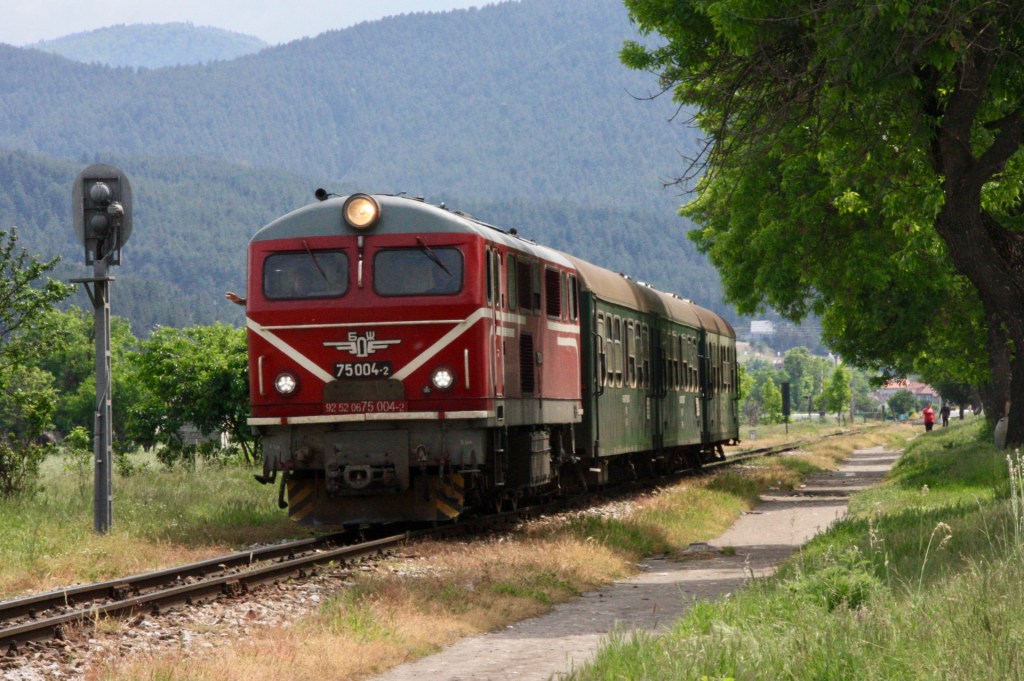
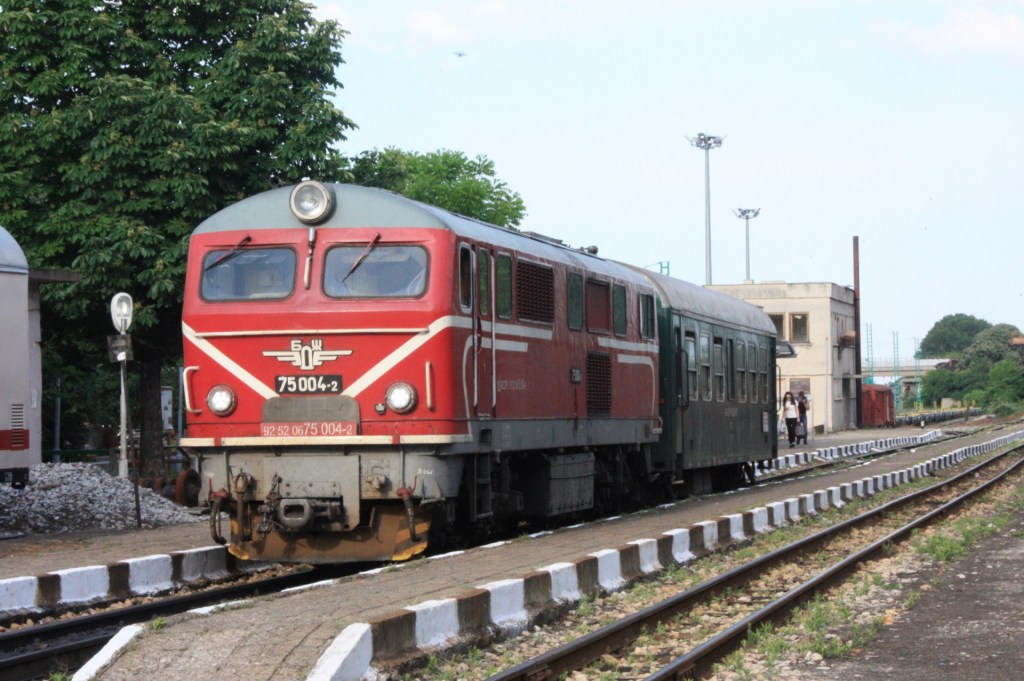
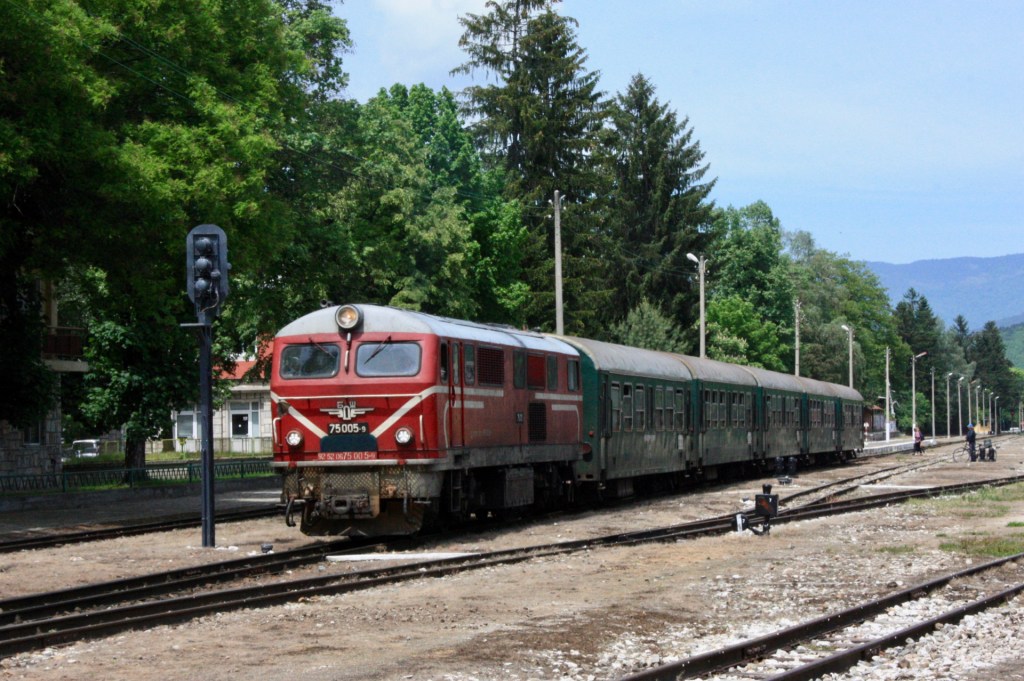
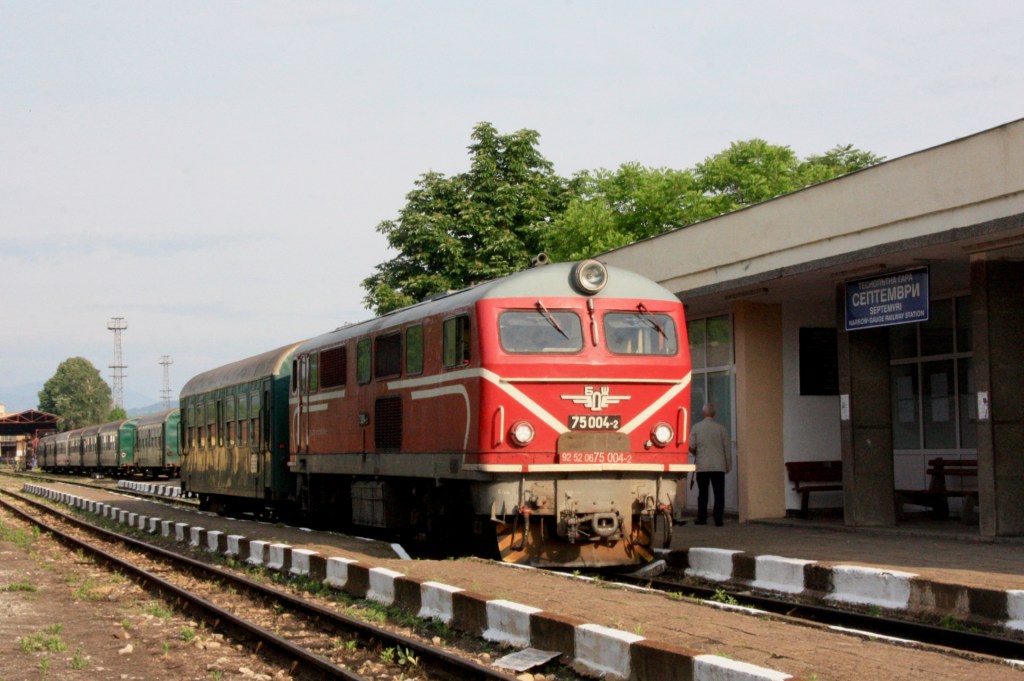
Most Trains on the route are powered by a fleet of five 1966-vintage Henschel Class 75 diesels (75-004/5/6/8/9) but there are a couple of later Romanian diesels dating from 1988 that have been extensively modernised since my last visit in March 2022, although I only saw 77-102 (formerly 77-002).
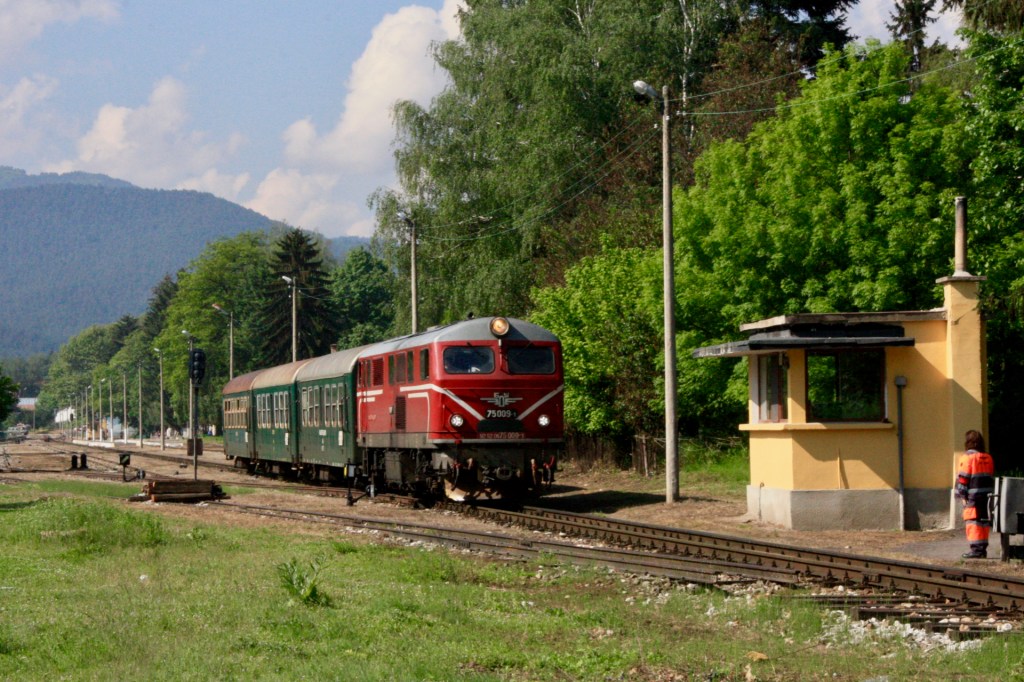
This latter unit was in use on the four days of my visit (31 May 2023-3 June 2023) hauling the line’s crack express, the Rodopi, which travels from end to end of the line in four hours 25 minutes, an average speed of around 18 mph!
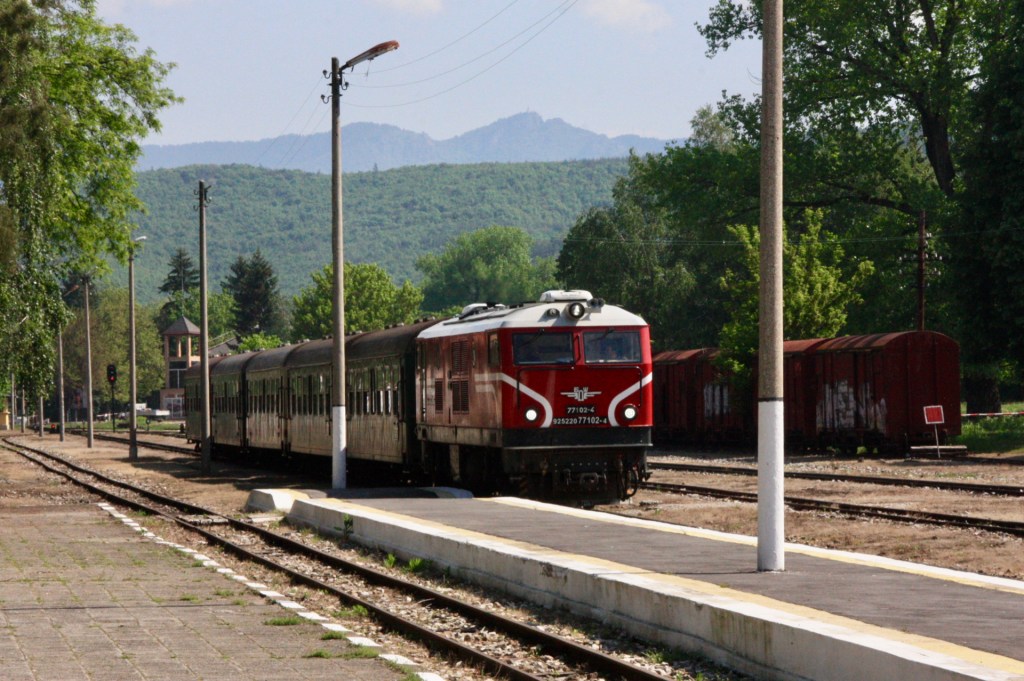
The Rodopi departs Septemvri at 08.50 and Velingrad at 10.15 then reaches Bansko at 12.50 and Dobrinishte at 13.15. It returns at 14.40, arriving in Bansko at 14.51, Velingrad at 17.35 and Septemvri at 19.08, so is the only service that gives the intrepid traveller a chance to travel out and back from Sofia to Dobrinishte in a day.
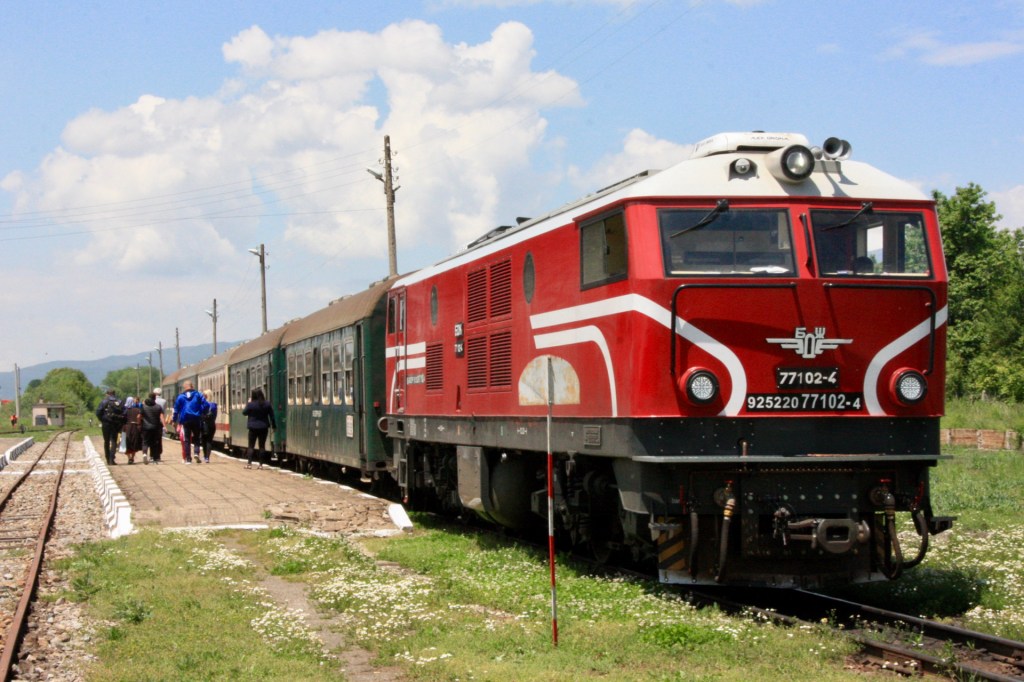
Apart from its speed and use of the modernised Class 77 loco, what makes the Rodopi special is that its five or six coach formation includes a buffet car, painted white in contrast to the green passenger coaches. It serves cold cans of beer at BGN 2.40 (about £1.10) and is a rather civilised way to enjoy the line.
Velingrad makes an ideal base from which to spend a few days travelling the line, being 90 minutes from the main line junction, and gives the added flexibility of the evening Kleptuza service and the early morning departure, both of which I used in getting to and from the spa town.
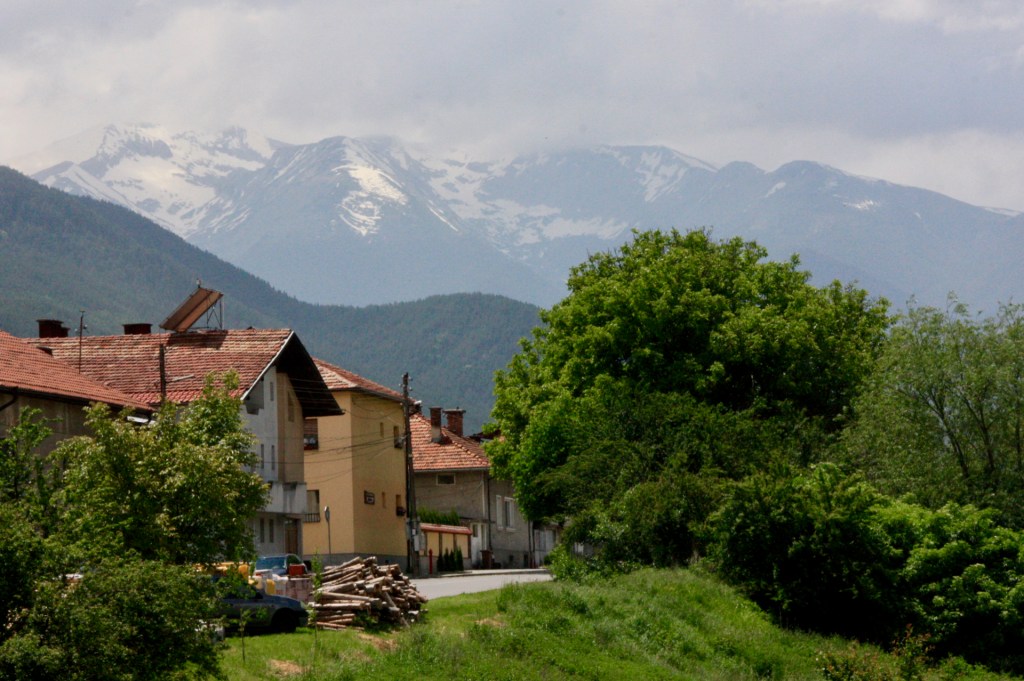
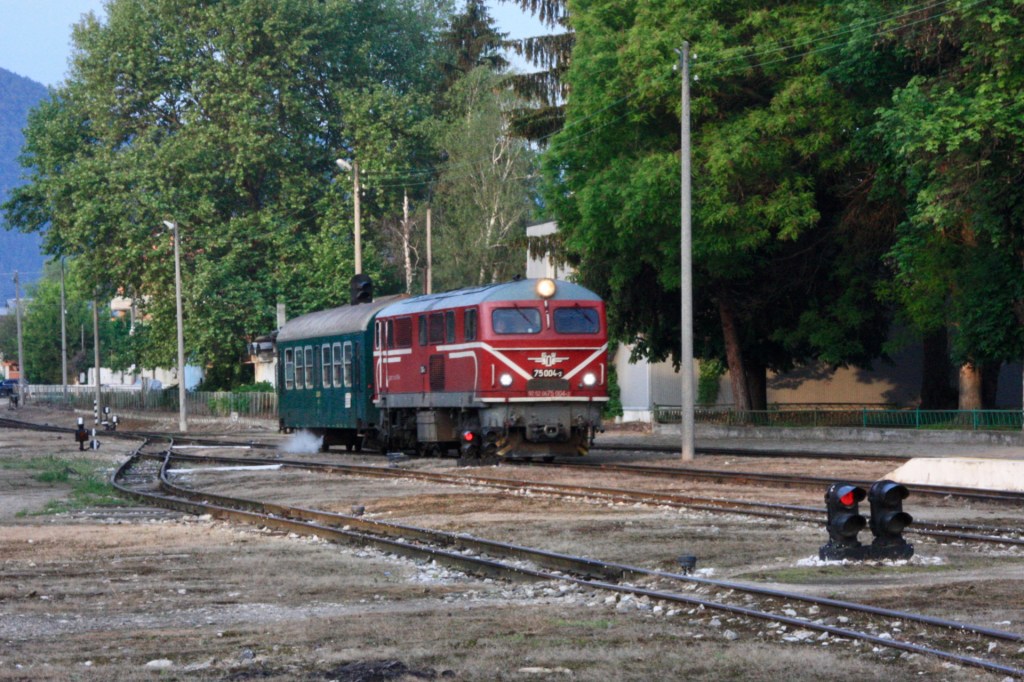
What makes the Kleptuza unique among the line’s services is that it is formed of a loco and just a single passenger coach. Travelling on the 19.05 from Septemvri on 31 May 2023 my haulage was the line’s oldest working loco 75-004 (loco 75-002 is stored in the depot) with a guard, me and four other passengers aboard.
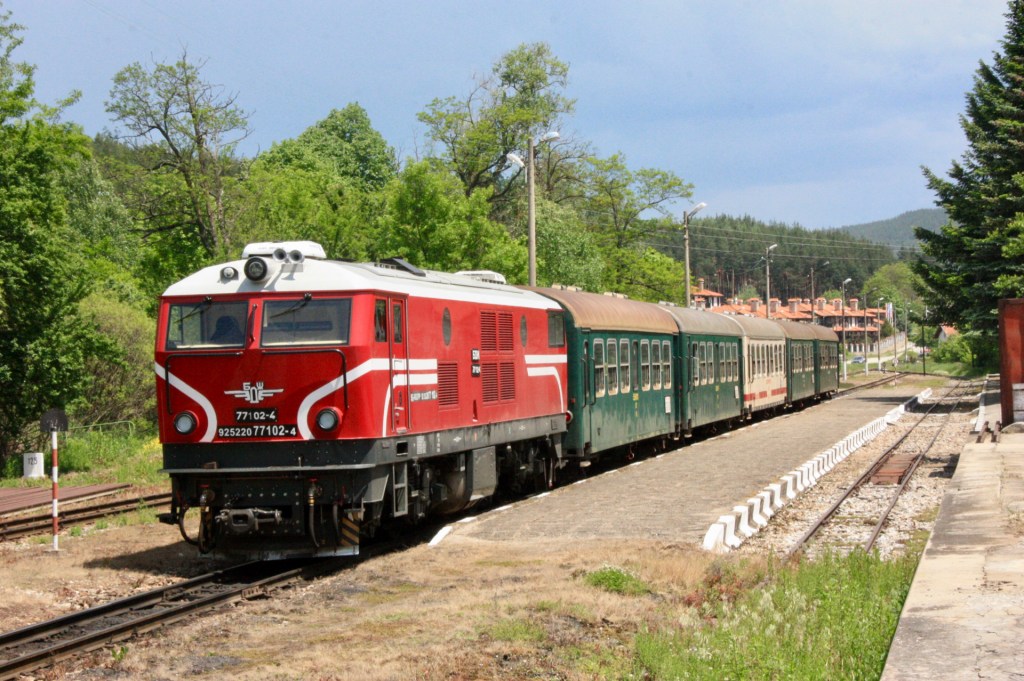
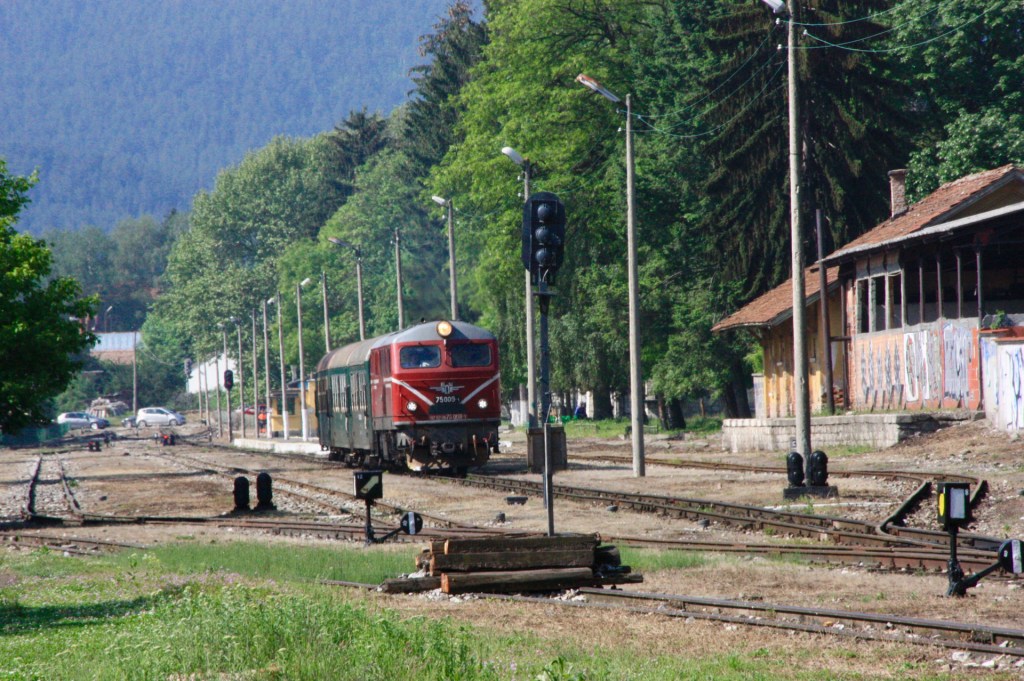
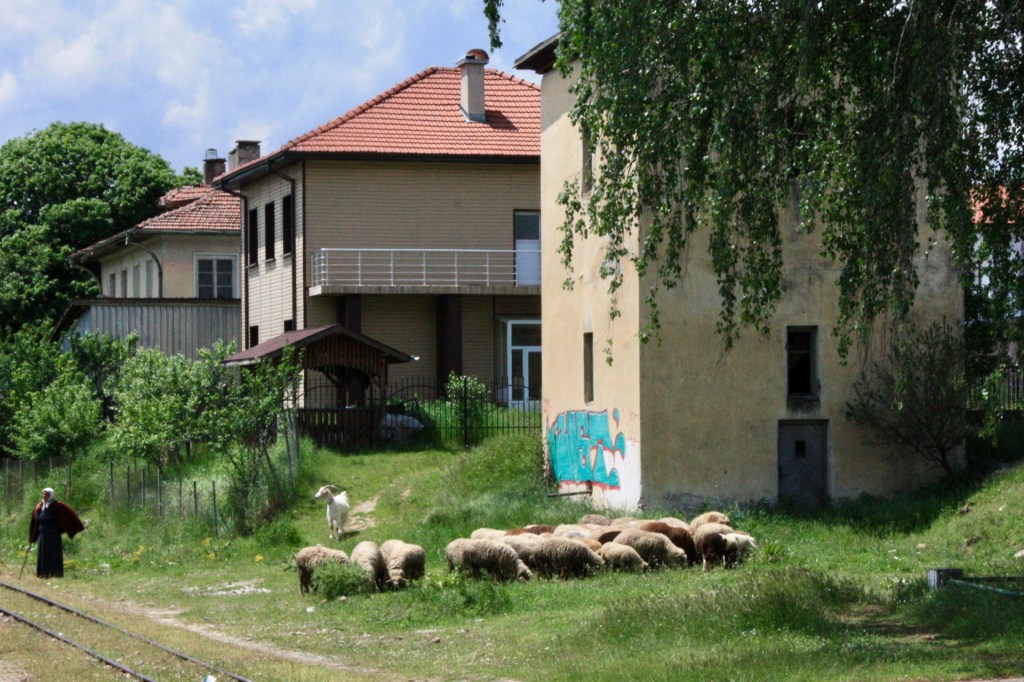
The station at Velingrad is a grand affair to the east of the town centre with an array of loops and sidings, on which still sit lines of freight wagons that have been dumped there, and at a number of other places along the line, since freight traffic ceased in 2002.
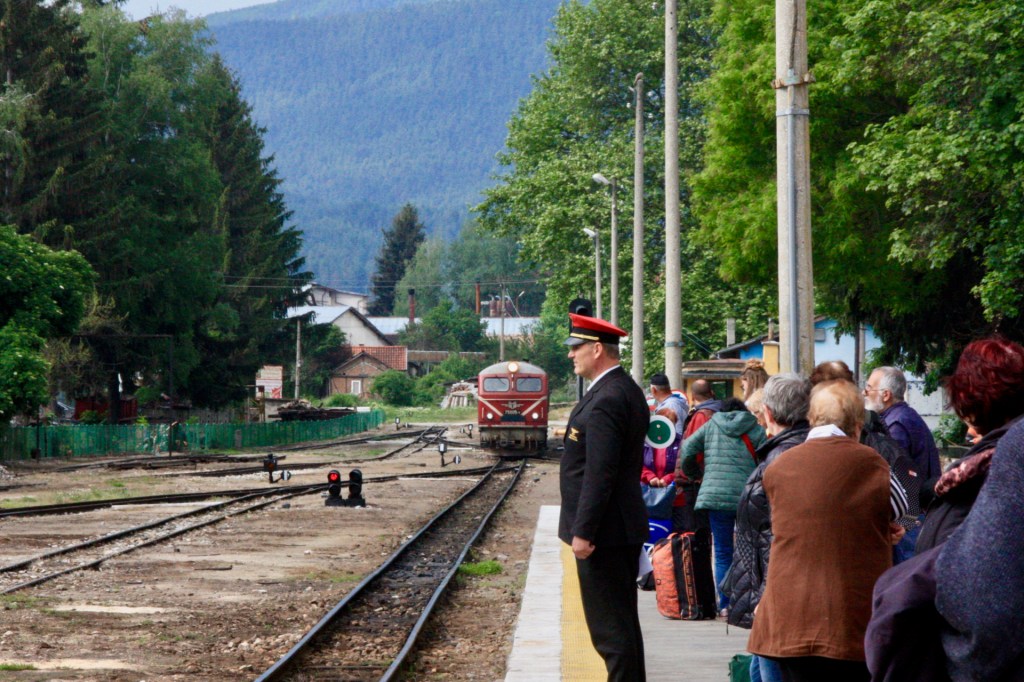
On my first full day in Velingrad (1 June 2023) I took the three-hour ride on the Rodopi to the end of the line at Dobrinishte, a place I had only travelled to once before, having normally alighted at, or stayed in, Bansko.
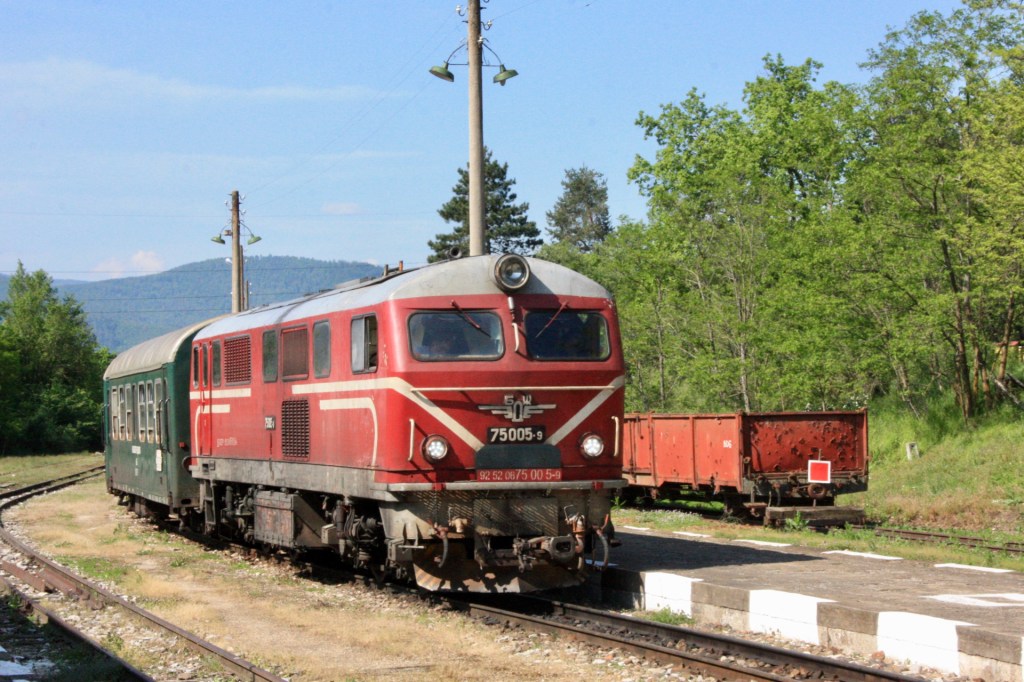
Dobrinishte was a pleasant surprise, with the turn-round time of the train allowing you to take a leisurely five minute stroll to the town centre, which stands below still snow-topped mountains, and plenty of time to have a beer on the terrace of a pleasant bar opposite the town hall.
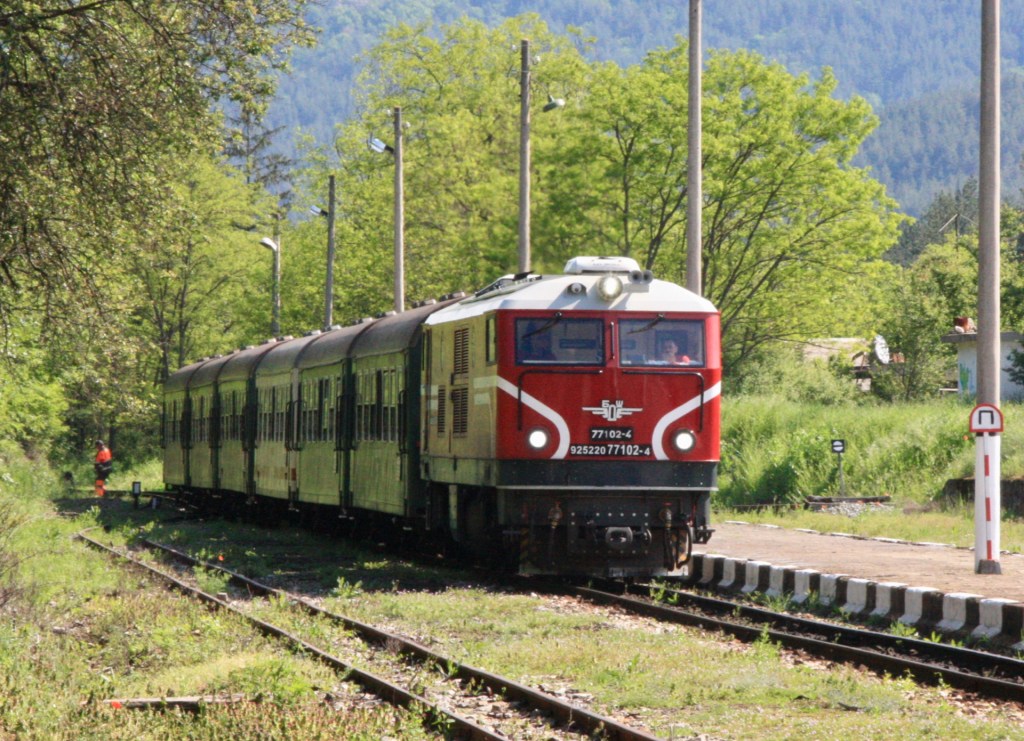
For my second day on the narrow gauge (Friday, 2 June 2023) I decided to retrace my steps and take a look at the depot in Septemvri, getting a chance on the way to photograph the down Rodopi as we waited at Kostandovo for it to pass non-stop through the station.
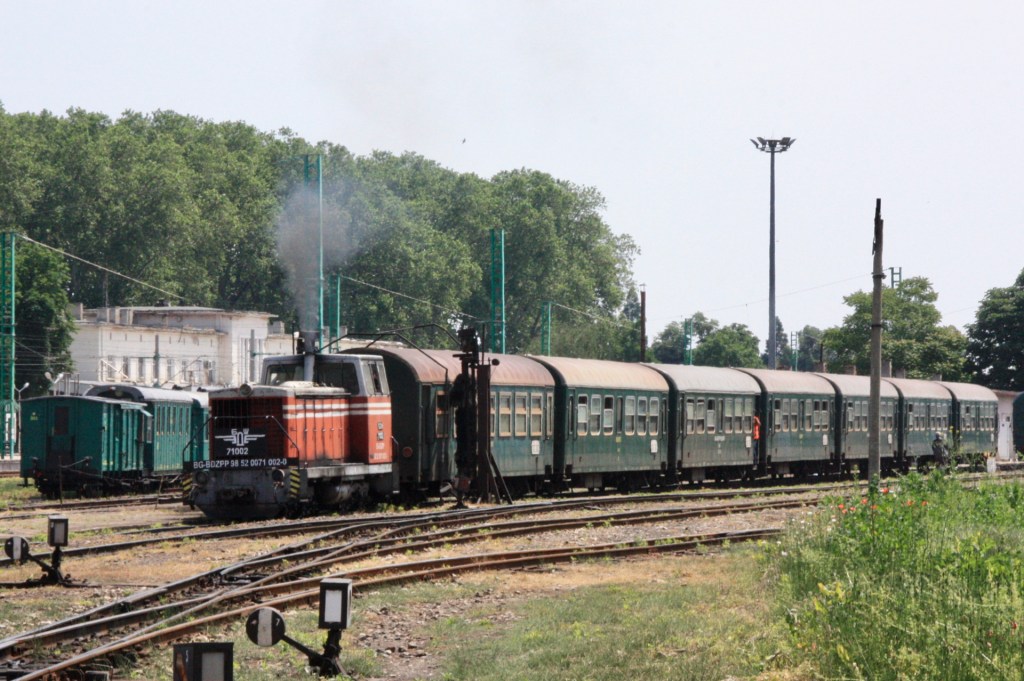
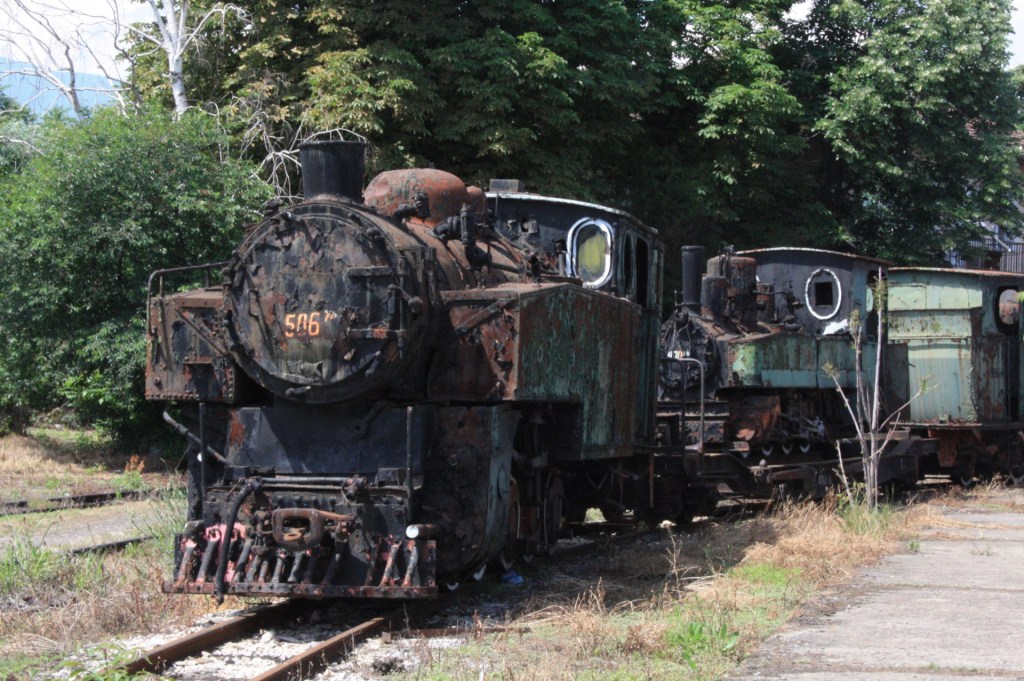
There seems no problem visiting the depot at Septemvri – I simply kept my camera visible at all times and gave a friendly wave to any railway worker who looked in my direction! The trio of rusting steam locos remains outside the depot (506-76, 470-60 on a wagon and 1-76) along with derelict railcar 82-01.
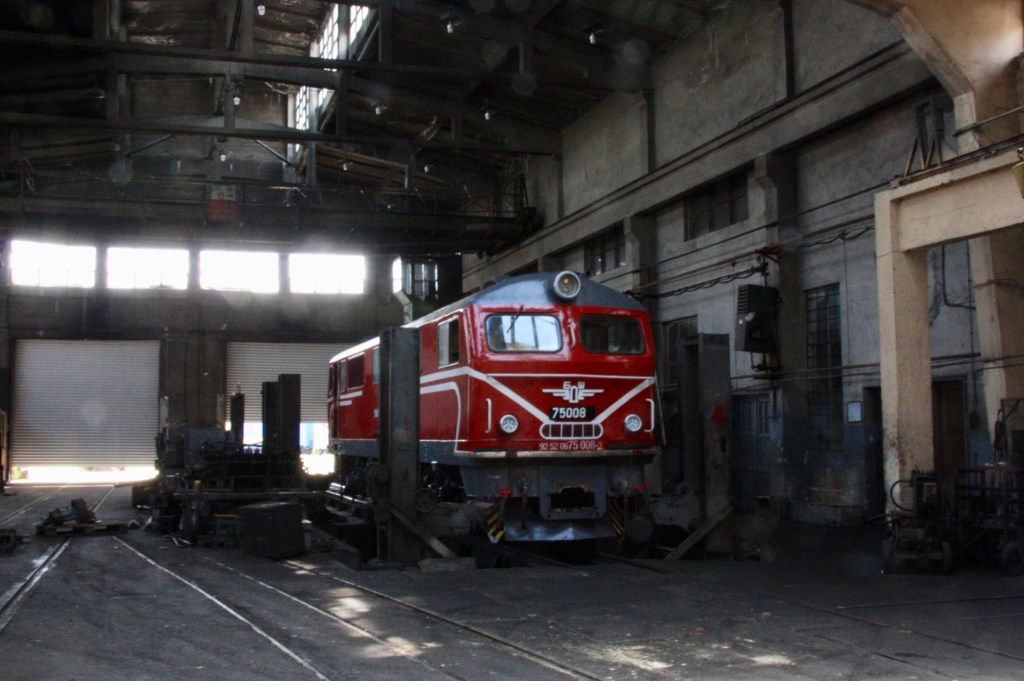
Inside the depot 75-002 is stored out of use, while classmate 75-008 was receiving an overhaul in the works. Also present in the sheds were a shunter bearing the number 80-001 and a large yellow-painted diesel behind it bearing the number 402.
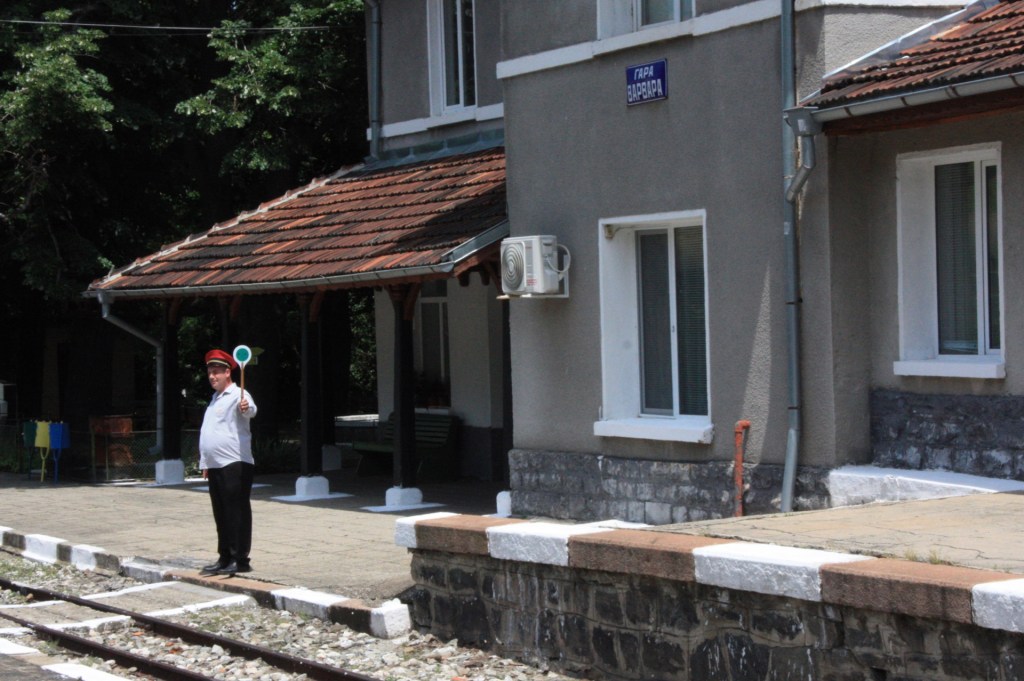
Returning to Velingrad aboard the 12.45 Mesta service, one amusing sight was at the first major intermediate station, Varvara, where a signaller is present at the north end of a passing loop level then, as the train waits for a couple of minutes in the station he frantically cycles past and on to close the barriers of a level crossing to the south of the station!
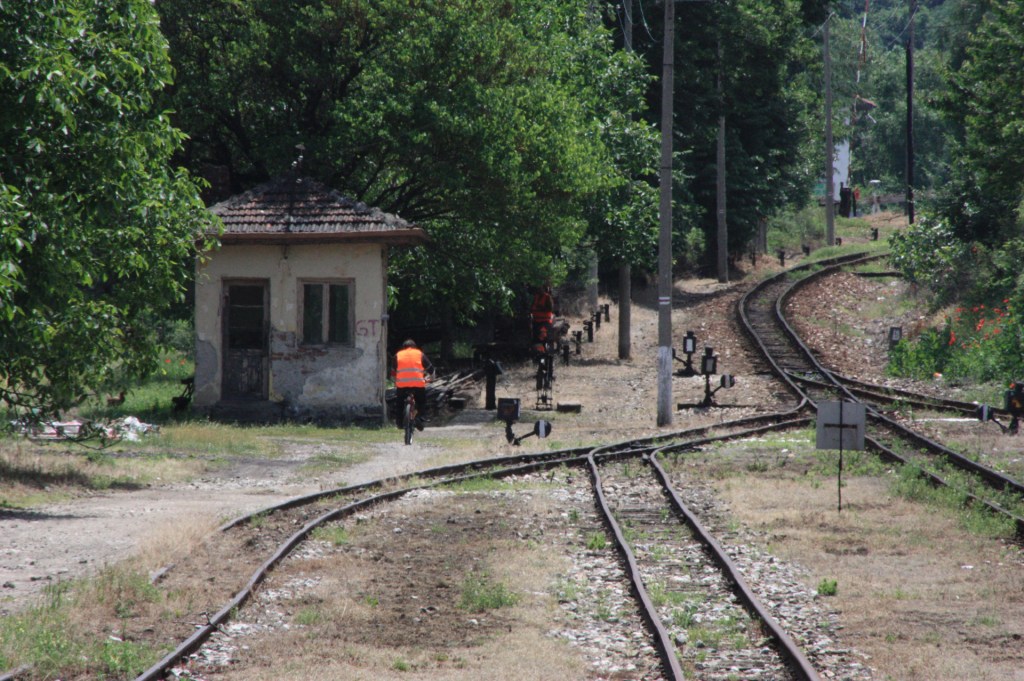
approaches the level crossing on 2 June 2023
Departing from Velingrad on the up Kleptuza service on Saturday, 3 June (06.40), I was amazed when 75-004 arrived with the steam heating working in the single coach it was hauling, which I once again shared with the guard and four other passengers.
I had assumed that the Kleptuza stabled overnight in the station at Velingrad, so when it was not there on my arrival at 06.15, I then assumed it came empty from Septemvri. I was not expecting it to come from the south and would be fascinated to know where it is actually parked overnight.
As I noted last year, the rail journey from Sofia to Septemvri is painfully slow, with trains timetabled to take around two hours 15 minutes for the 82.6km (51.6 mile) journey, due to a very protracted upgrading that has temporarily reduced the whole of this section of track to single line working.
One handy way of shortening the travel time to and from Septemvri for those arriving or departing Sofia Airport is to change from train to Metro line M4 at a suburban station called Iskarsko Shose that is only two stops from the Airport and avoids the need to go to the main station in Sofia.
 RailwayWorld.net
You must be logged in to post a comment.