When it comes to appreciating what remains of mechanical signalling on our national railway network there is no finer survival than the 94½ miles of route around the Cumbrian Coast that extends all the way from Arnside, between Carnforth and Grange-over-Sands, to Wigton, south-west of Carlisle
As I wrote in my book “Britain’s last mechanical signalling” this fascinating and scenic route boasts no less than 17 signal boxes and two gate boxes controlling semaphore signals, most of which are at, or close to, stations and so accessible to the rail-borne traveller.
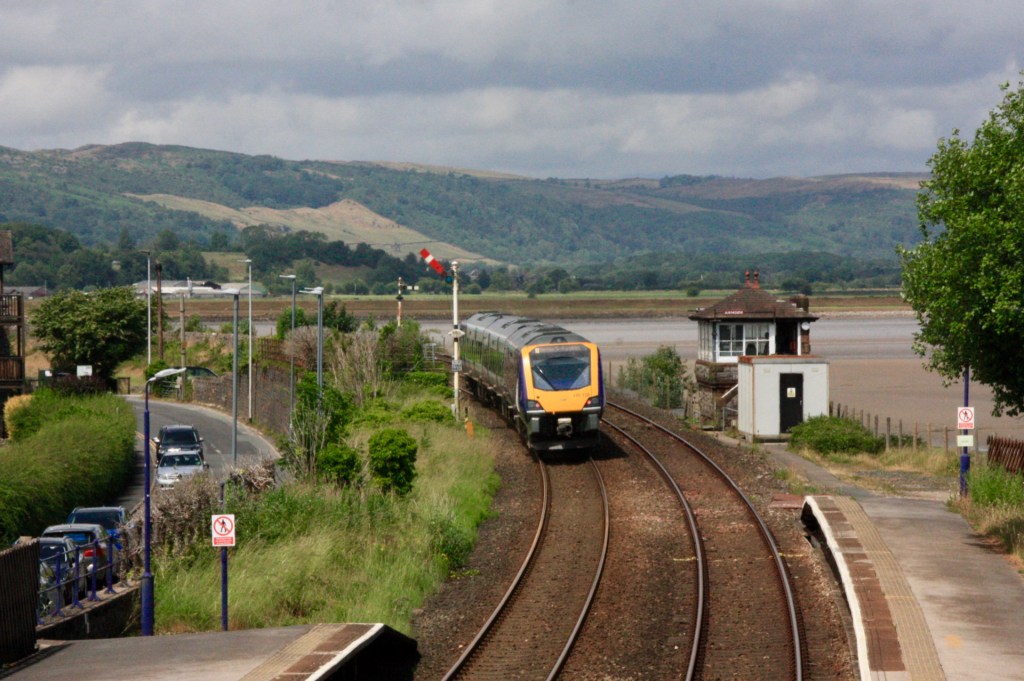
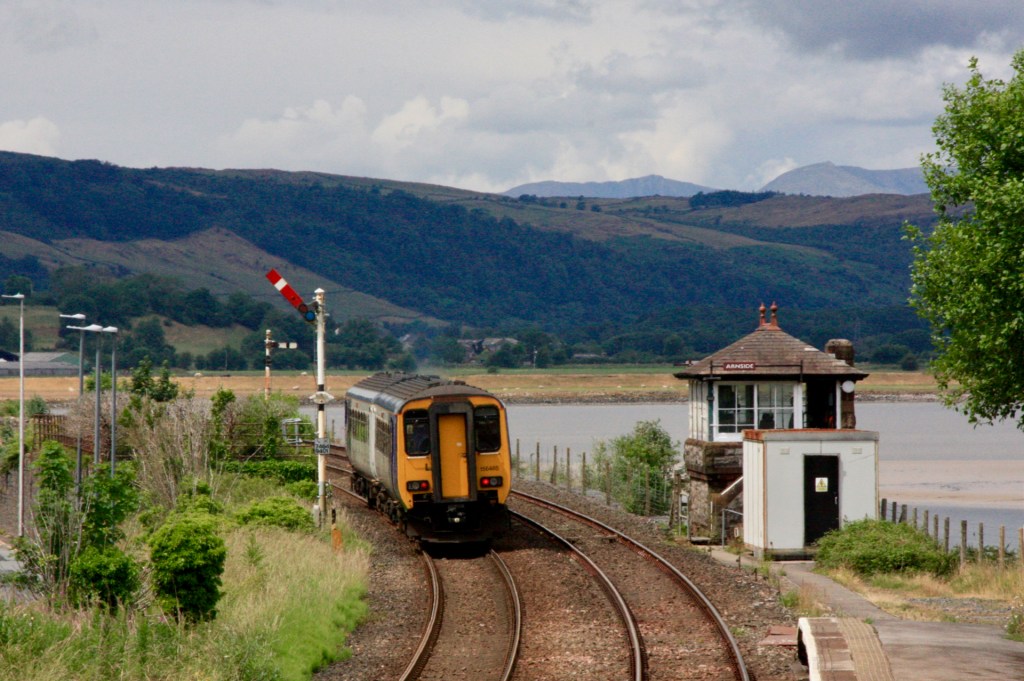
Paying an overdue return to the route, my focus on a three-day visit (19-21 June 2023) was the most southerly of these many fine locations and delightful Arnside, where a Grade II Listed signal box stands close to the 50-arch Kent Viaduct and from its 35-lever frame controls a handful of semaphores, including an up distant signal.
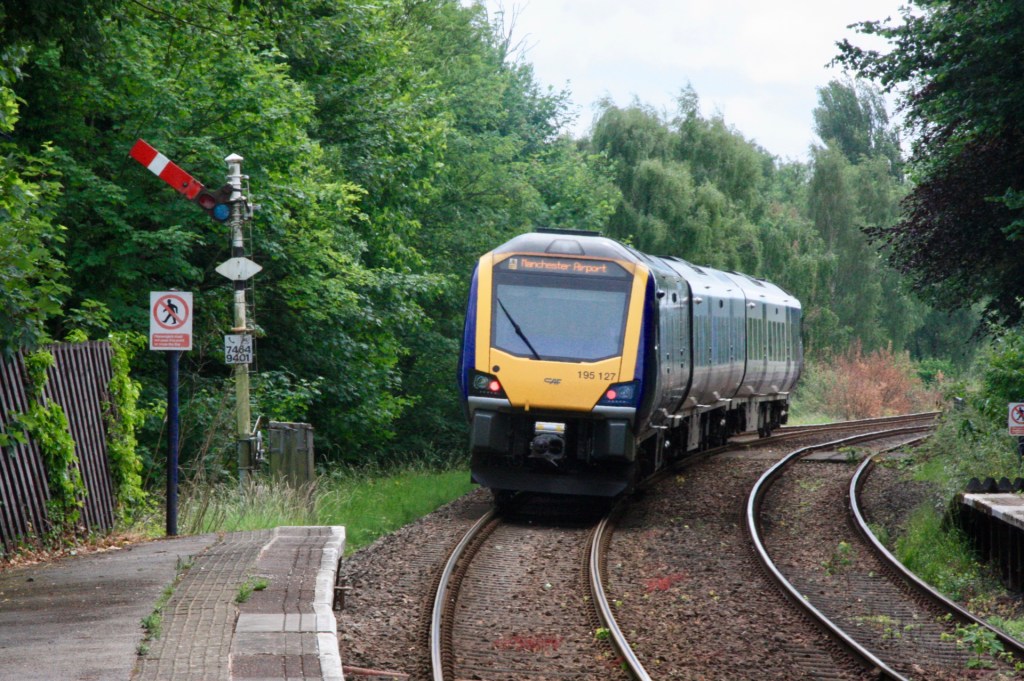
Three of this semaphore quintet can be seen from the station platforms and footbridge, and comprise up starter AE25 at the eastern end of the station, a down home (AE17) opposite the signal box and an up home (AE26) at the end of the viaduct. Out of sight beyond, are down section signal AE18 and motor-worked up distant AE28 at the far end of the viaduct.
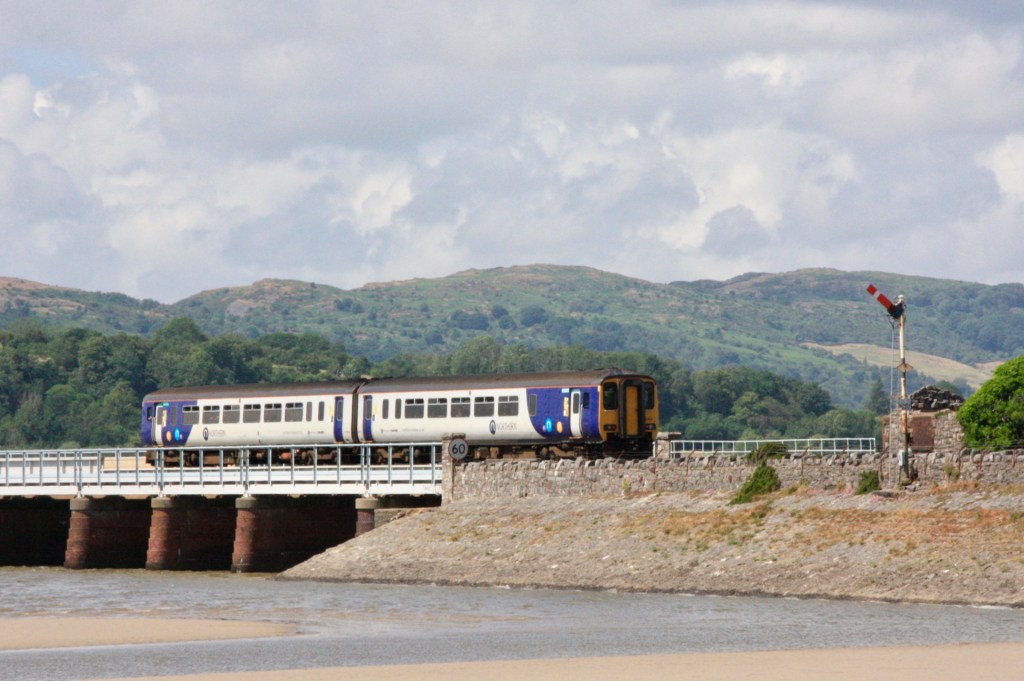
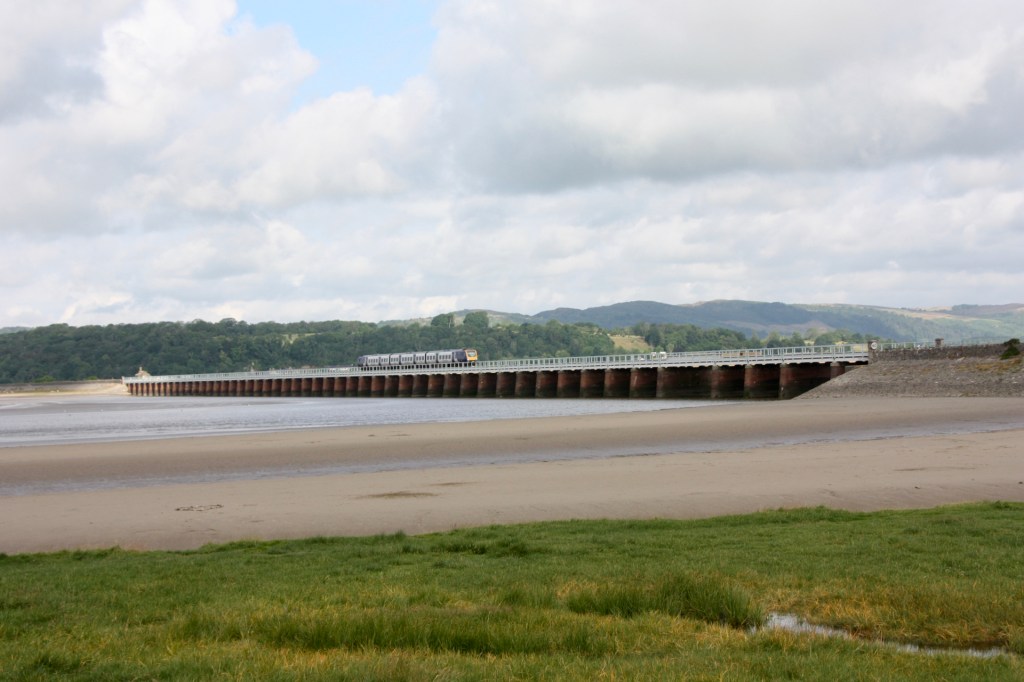
This latter pair can be seen by taking a short walk from the station to the waterfront, where there are great view of the viaduct, with AE18 on the approach to it and distant signal AE28 just visible at the far end of the viaduct. In
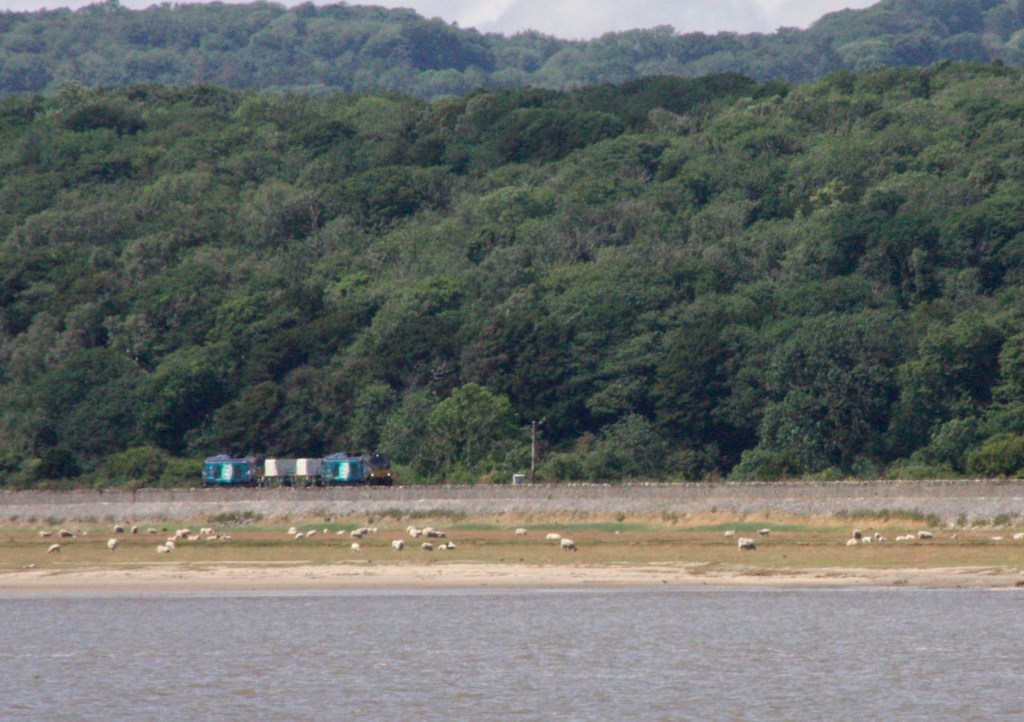
To fully appreciate the scene I can recommend Ye Olde Fighting Cocks pub, with its fine views of the viaduct and estuary. Spending a couple of nights at the Thwaites Brewery-owned pub (B&B a reasonable £59 a night) gives you a chance to savour views of the estuary, looking across to Grange-over-Sands to the west and the rolling hills of the Lake District to the north and east.
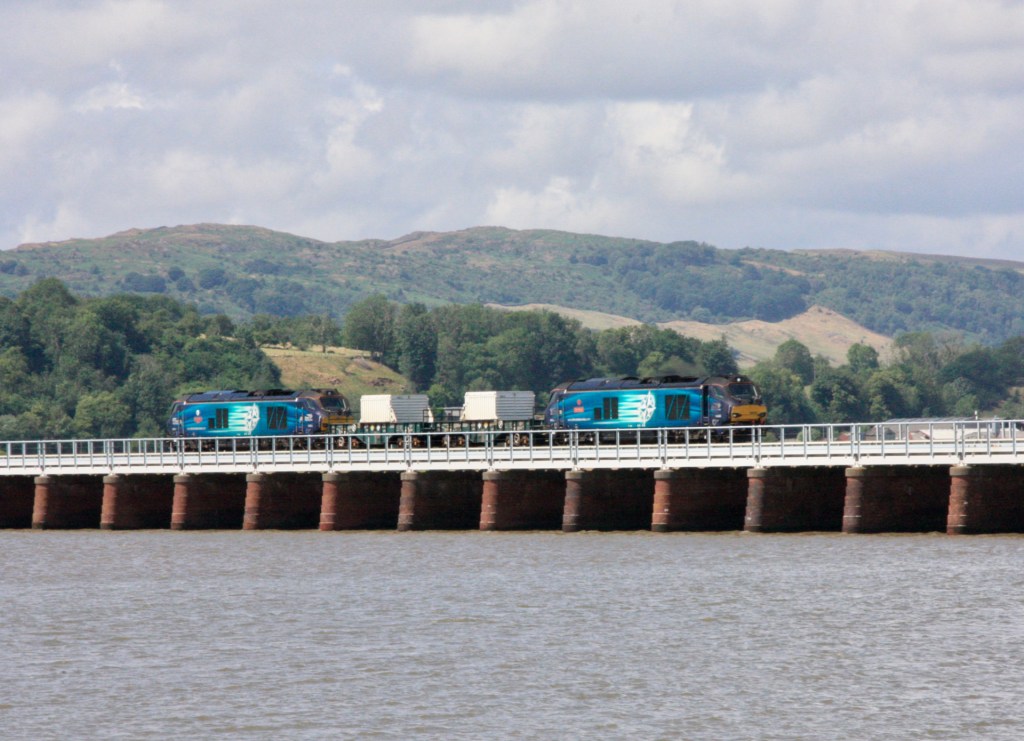
Kent Viaduct is also known as the Arnside Viaduct and was built in 1857. It takes the railway over the River Kent estuary and is once of two similar structures along the route of the Furness Line to Barrow, the other being the Leven Viaduct to the east of Ulverston, which takes the railway over Cartmel Sands and is marginally shorter than the Kent Viaduct.
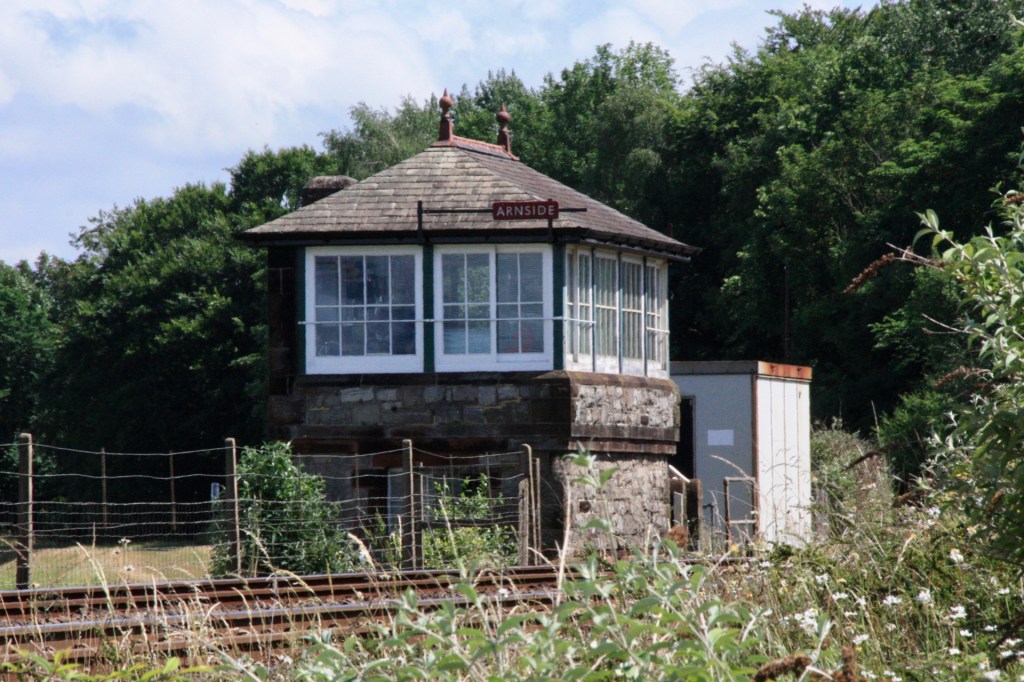
Arnside’s Furness Railway signal box dates from 1897 and is a Type 4 design built in stone. Besides being a little-altered example of a Furness Railway Type 4 box, the listing citation singles out its architecture: “possibly designed, or at least influenced by, the architectural practice of Paley and Austin, the contrasting use of limestone with red sandstone dressings is particularly effective. This is further enhanced by high quality detailing such as the mitred hips to the roof.”
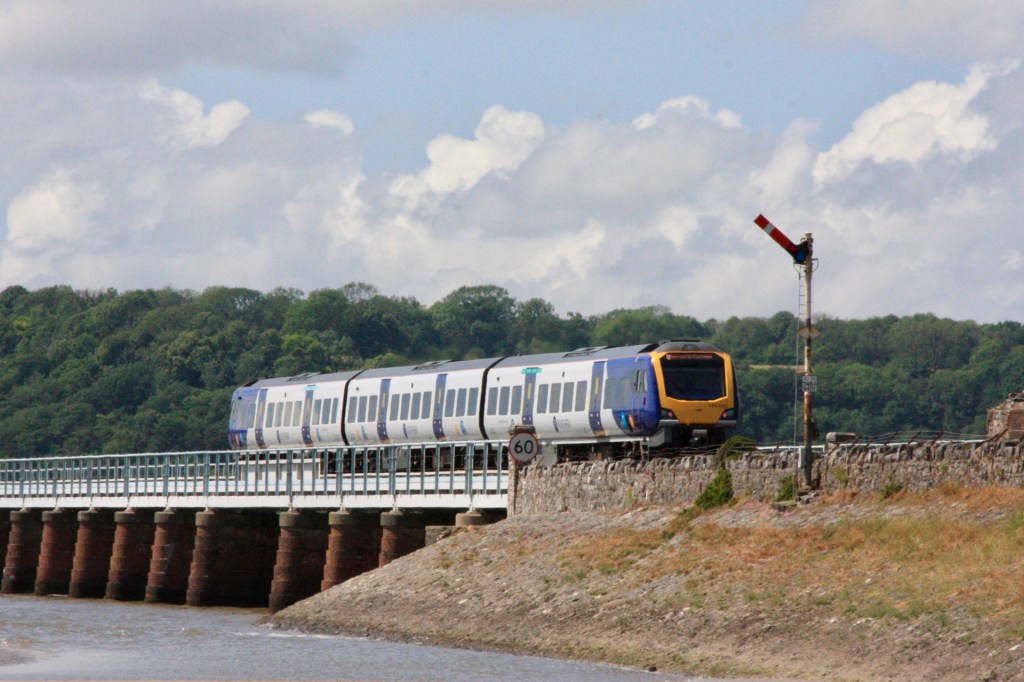
Passenger services stopping at Arnside comprise hourly workings between Barrow-in-Furness or Carlisle and Lancaster or Manchester Airport formed by a mixture of Class 156 (Carlisle-Lancaster) and Class 195 units (Barrow-Manchester Airport).
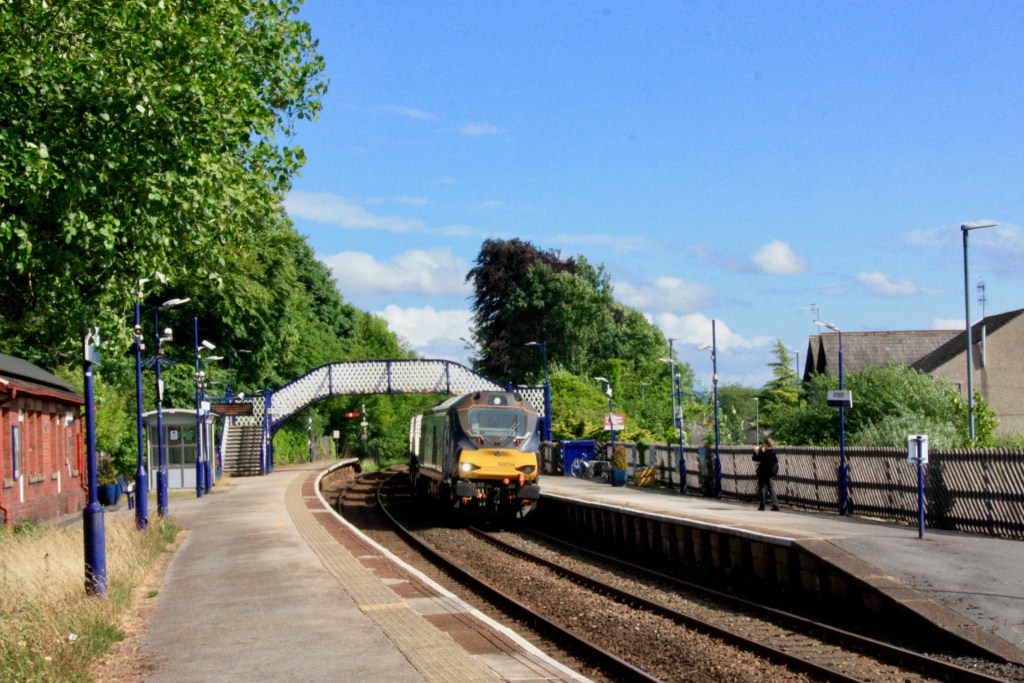
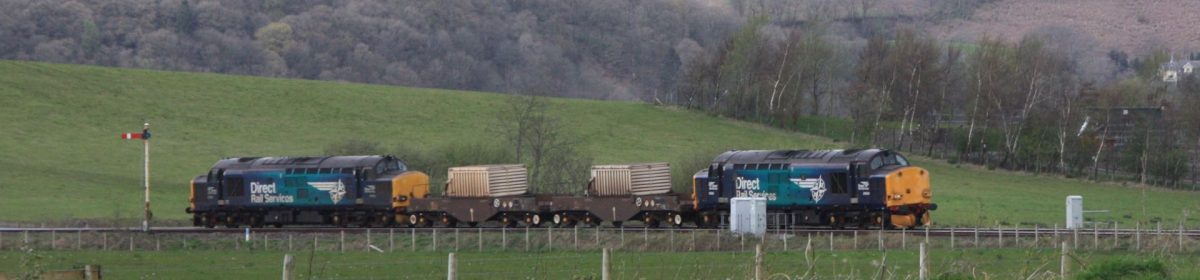
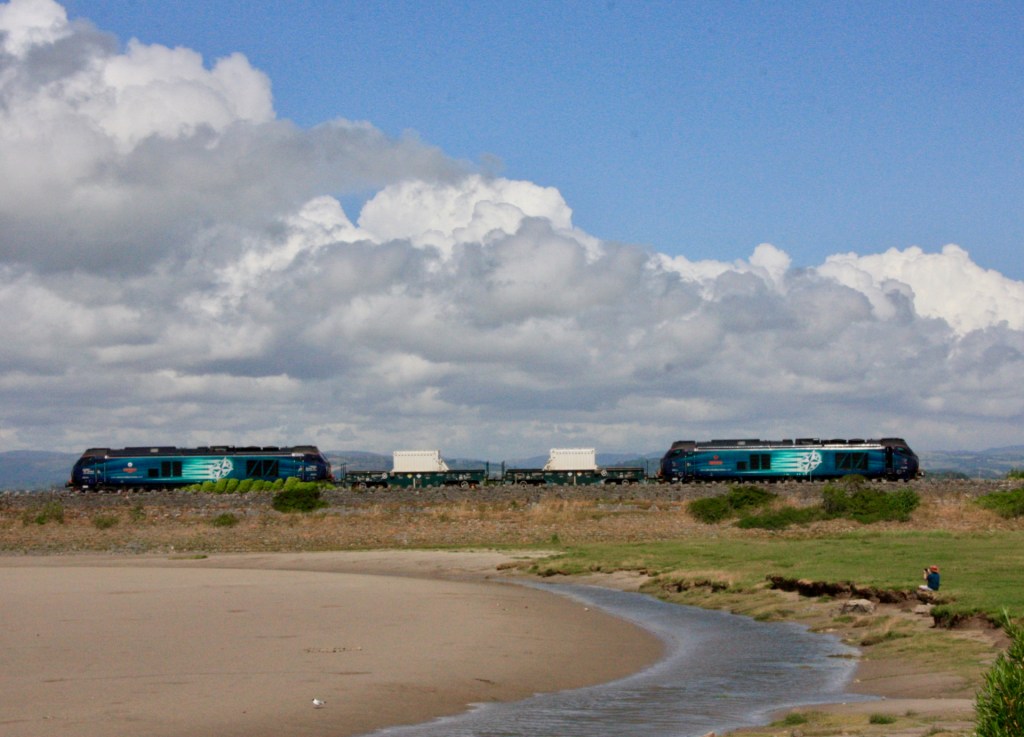
The only regular freight working to pass is a service from the Sellafield nuclear plant to and from Heysham Harbour Power Station. This is powered by a pair of Class 68 locos, operating top-and-tail to avoid the need for run round at Morecambe and at the power station itself. It appears to run two or three times a week, passing Arnside around 14.00 on its outward run and returning around three hours later.
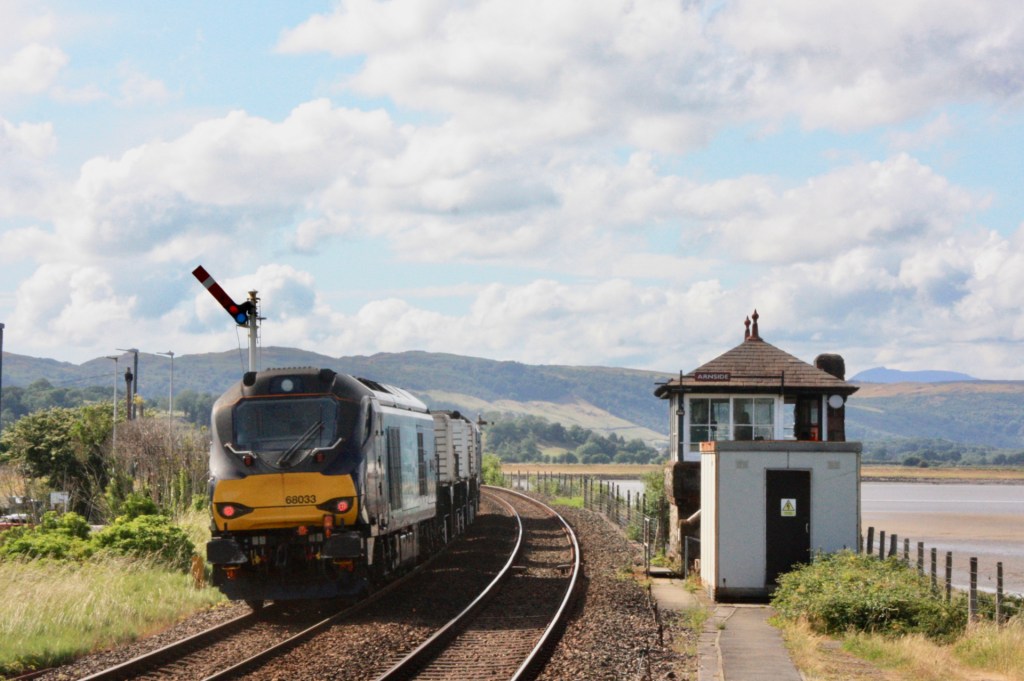
Like the down distant at Millom, Arnside’s signal AE28 remains at caution when stopping trains are passing and is only pulled off for the nuclear flask train to Heysham and for other workings like empty stock that are not scheduled to stop at Arnside.
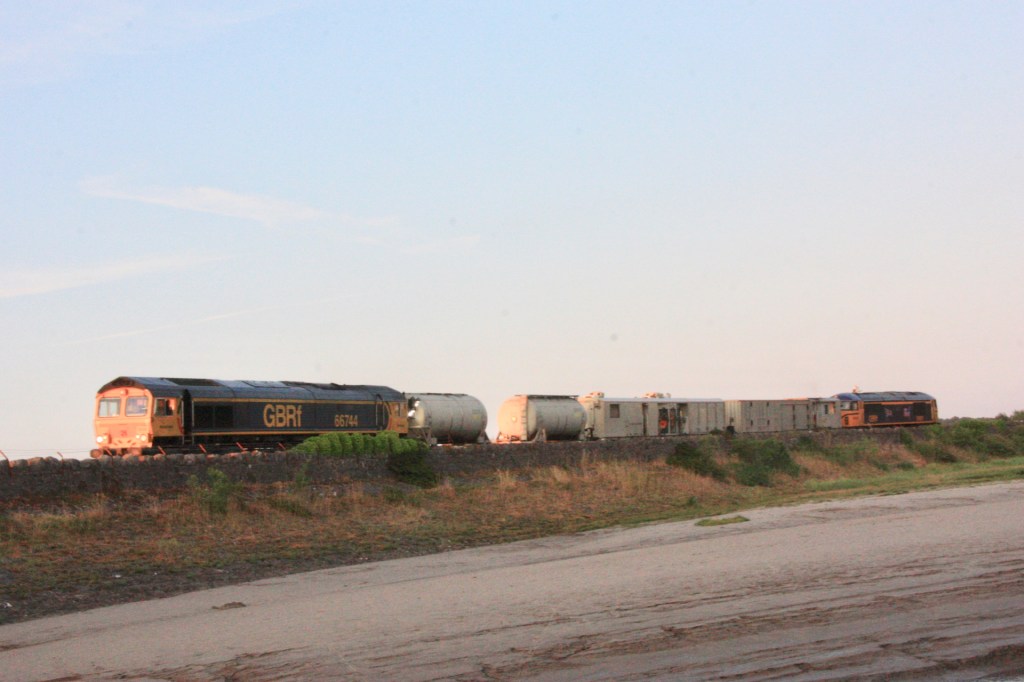
My reward for staying at the pub came shortly before sunset (21.25) on 19 June 2023, when there was some bonus loco haulage in the form of DRS 66744/69001 top-and-tailing a short civil engineering train (3Q99) from Carlisle Upperby CE to Barrow via Carnforth, which was held at signal AE18 for several minutes.
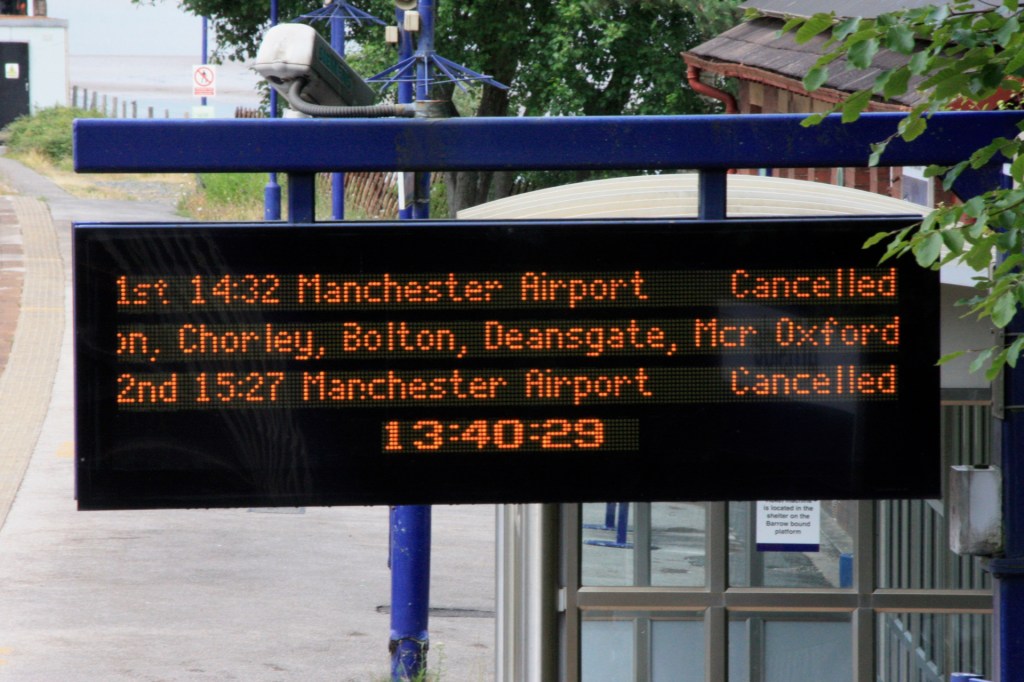
Seeing two loco-hauled workings at Arnside was a stroke of luck. The following day (20 June) saw nothing but Class 156/195 units and some outrageous gaps in the timetable, due to continuing industrial action, including a three-hour gap in up service during the afternoon, when two consecutive Manchester Airport services were cancelled.
Anyone who fancies a rail trip to Arnside or any of the other fine locations along the Furness Line and is faced with a lengthy connection time at Lancaster could do worse than visit the wonderful Tite & Locke bar on platform 3. This is run by Lancaster Brewery and has no less than six of its fine beers on hand pumps, including two I sampled – “Lancaster Amber (3.8% / £4.30) and Lancaster IPA (4.0% / £4.40)
 RailwayWorld.net
You must be logged in to post a comment.