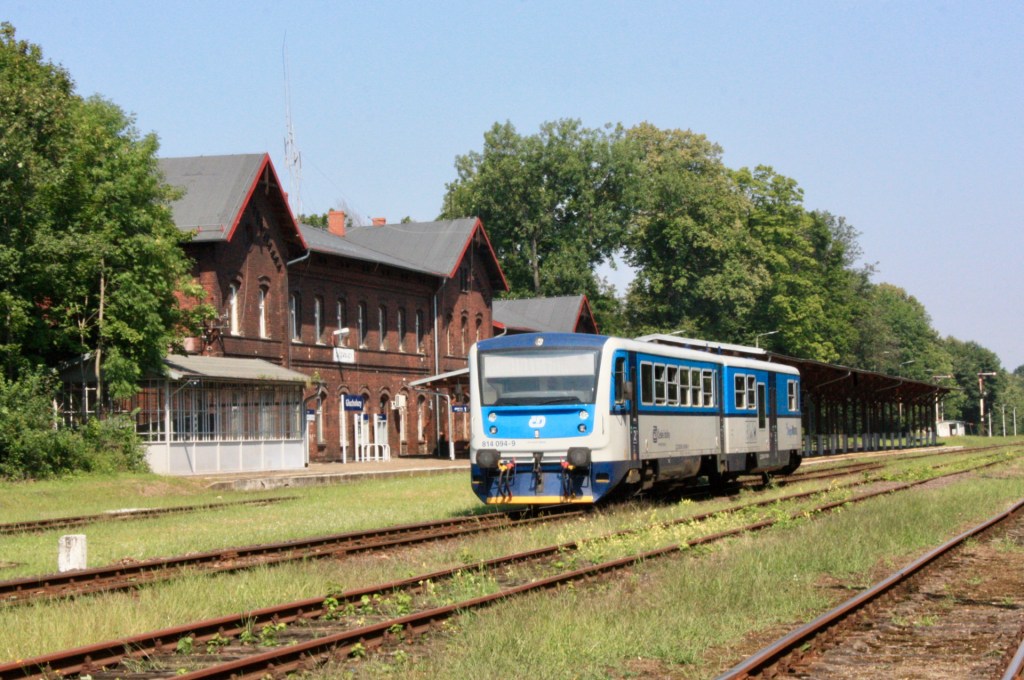
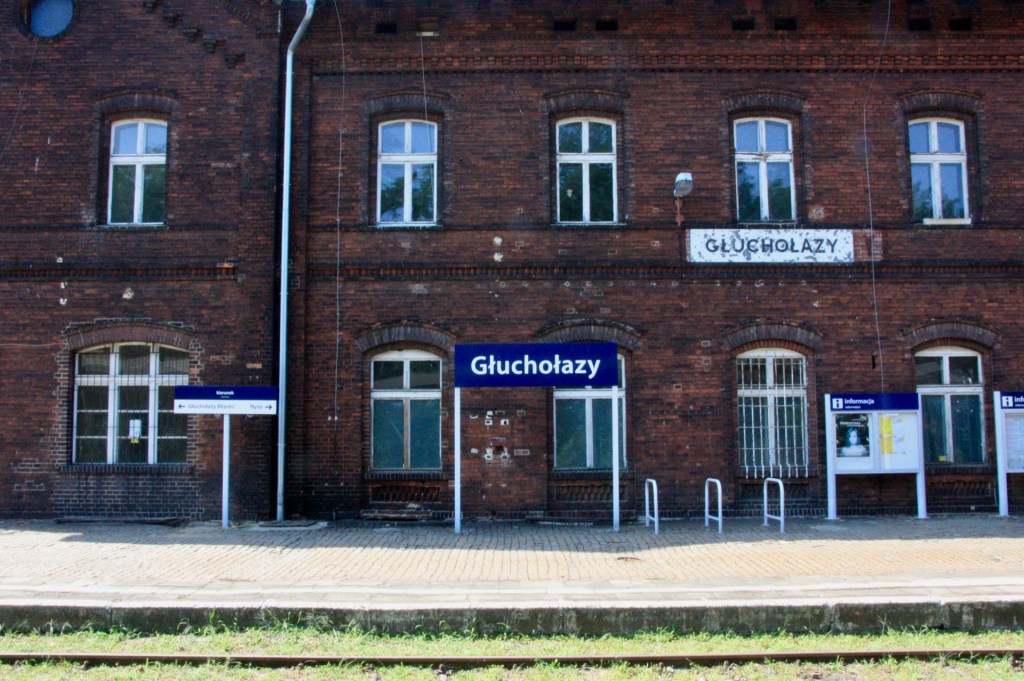
Four times each day a Czech Railways (CD) regional train makes a 60km (37½-mile), 90-minute, trip from the town of Krnov to Jesenik in Eastern Czechia, heading briefly across the Polish border midway through its journey to stop and reverse in a deserted Polish station called Głuchołazy.
Głuchołazy is a small and historic town in South-West Poland that merits a place in railway folklore as being a station in one country that for five days out of seven is only served by the trains of its neighbour, Czechia (Czech Republic).
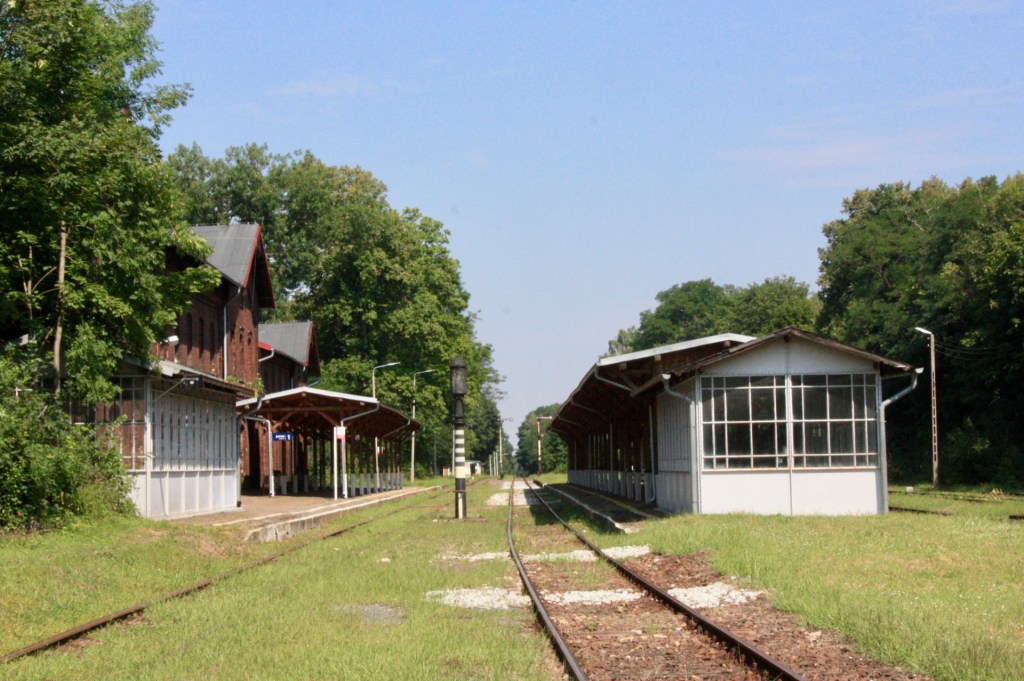
The remote and desolate junction stands a mere 6kms (3¾-miles) from the nearest PKP station at Nowy Świętów, with the branch from there to Głuchołazy having closed to regular passenger services in December 2010.
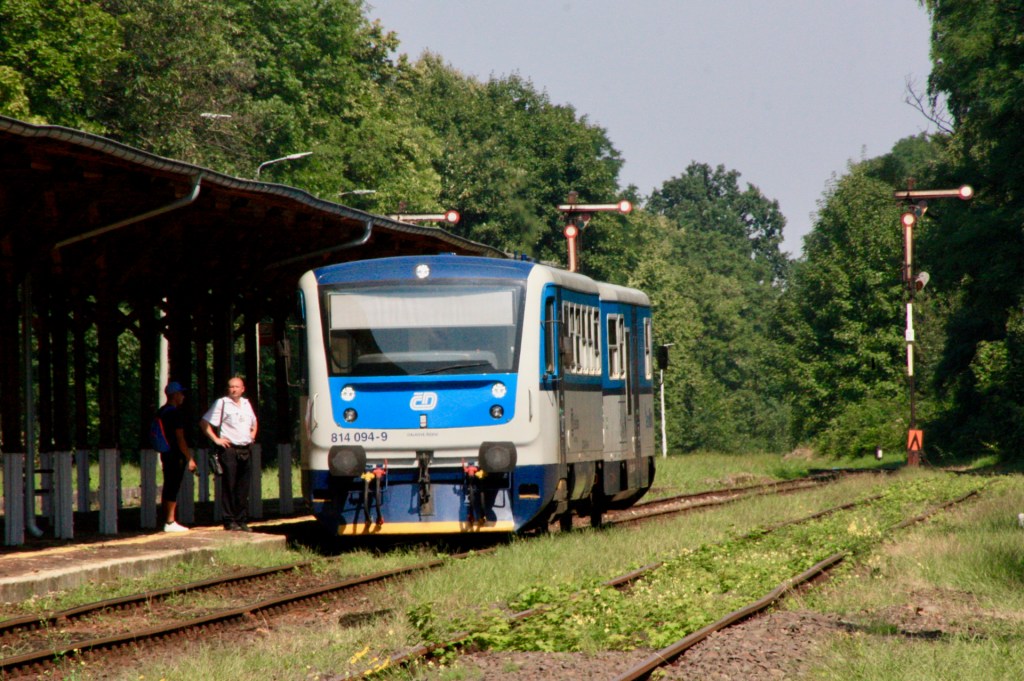
At closure there were two round trips a day between the Polish town of Nysa, 18kms (11¼-miles) to the north, and a Czech border station called Mikulovice on the section of line heading south-west from Głuchołazy to Jesenik.
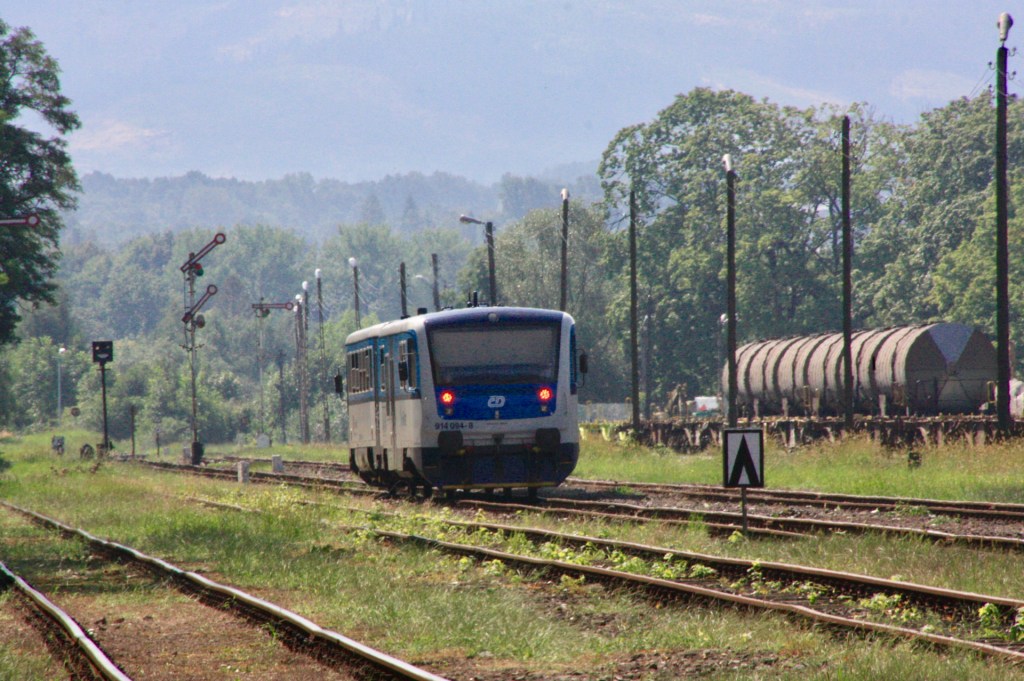
But a limited passenger service was restored exactly four years later, in December 2014, when a pair of trains was reintroduced on Saturdays, Sundays and Public Holidays only, providing a link between the Polish towns of Opole, and Nysa through Głuchołazy to a re-opened town centre station called Głuchołazy Miasto [Town].
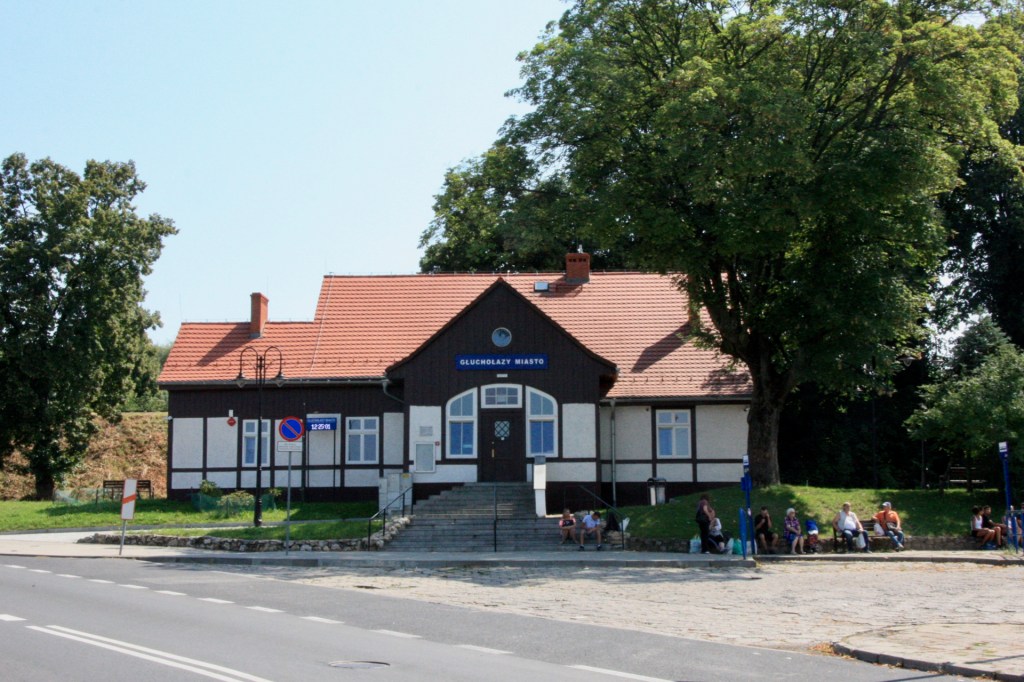
This station (pictured above) stands alongside the town’s bus station and is on a spur off the route from Głuchołazy to Jesenik that originally continued to a terminus station 1km further south called Głuchołazy Zdroj.
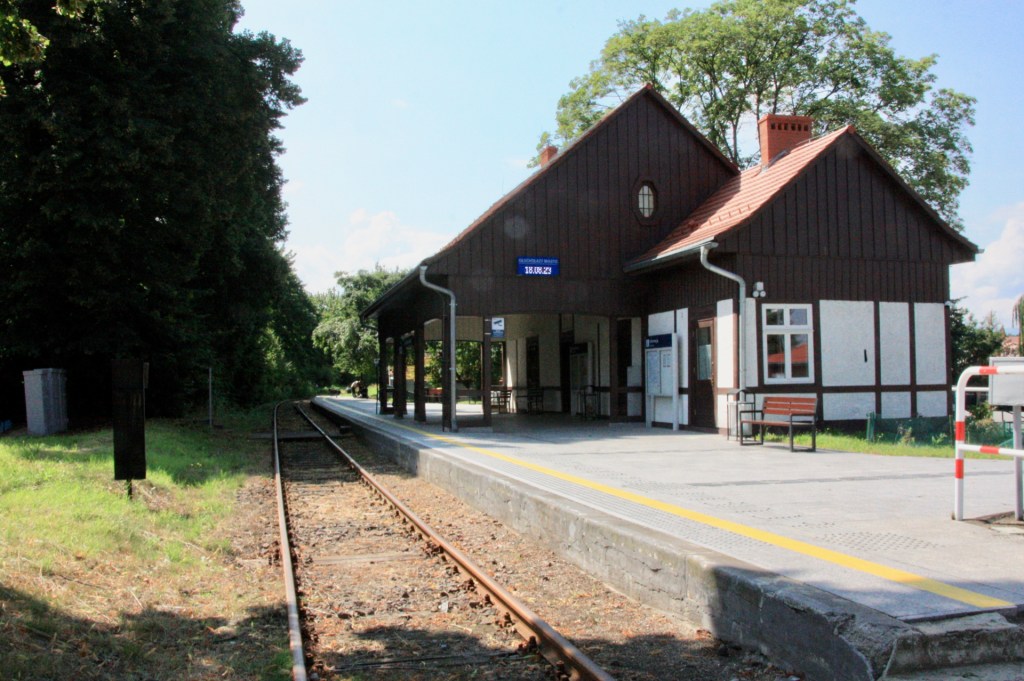
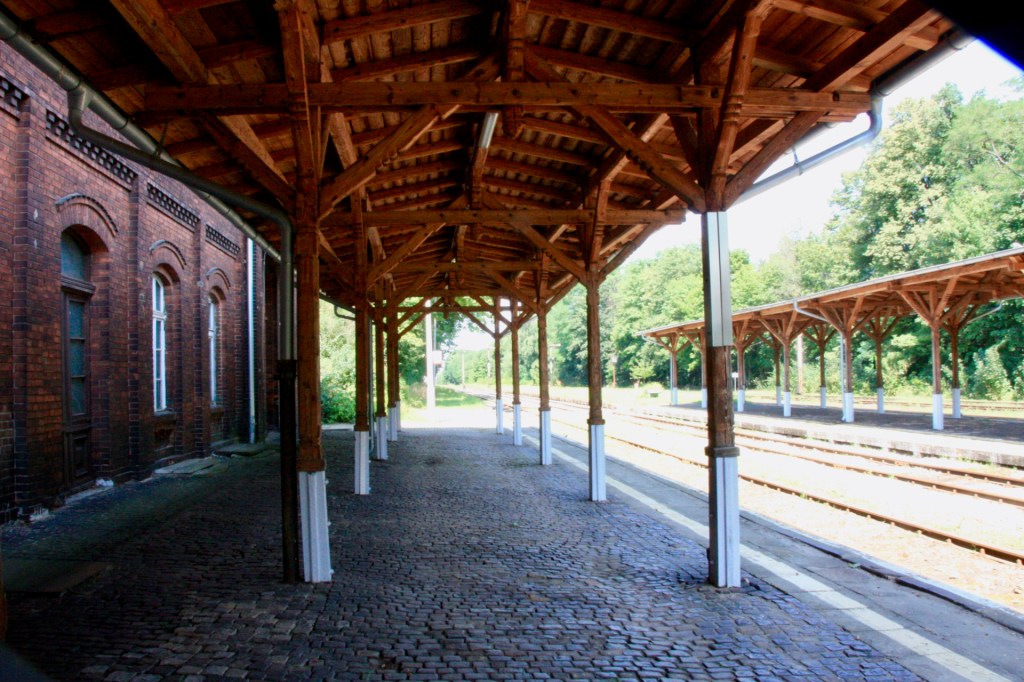
Arriving at the town’s main station on a weekday, it seems that almost no-one travels by rail to or from Głuchołazy, and the spacious junction has an air of abandonment about it, with an enormous, typically Polish, station building and remarkably well-preserved wooden shelters along its two platforms.
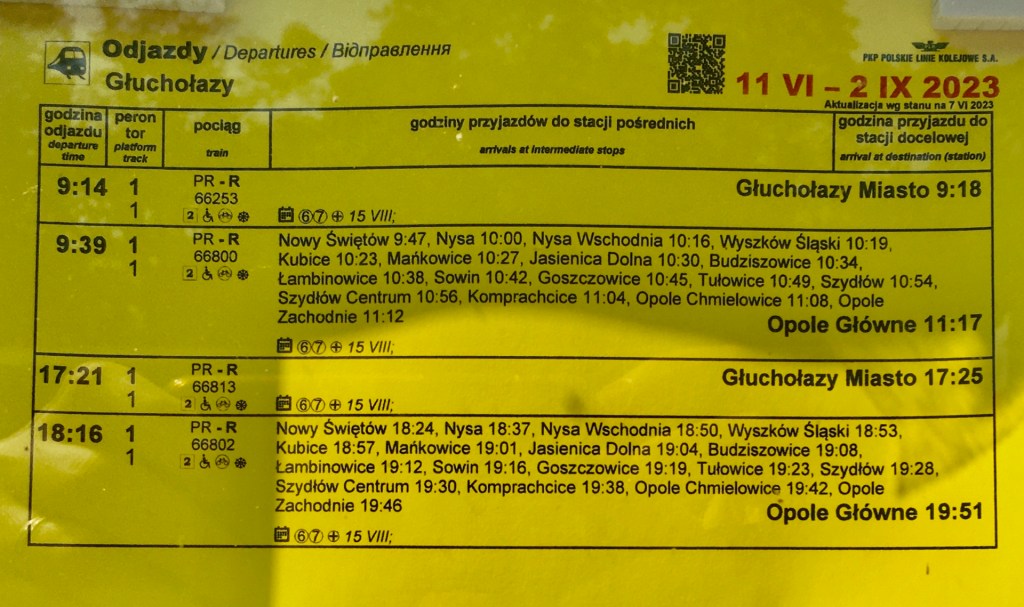
There is a member of PKP staff on duty at Głuchołazy to despatch the regular CD trains, but what seems very odd is that there are timetable posters showing times for the two weekend services between Opole and Głuchołazy Miasto, but no mention at all of the daily CD services between Jesenik and Krnov.
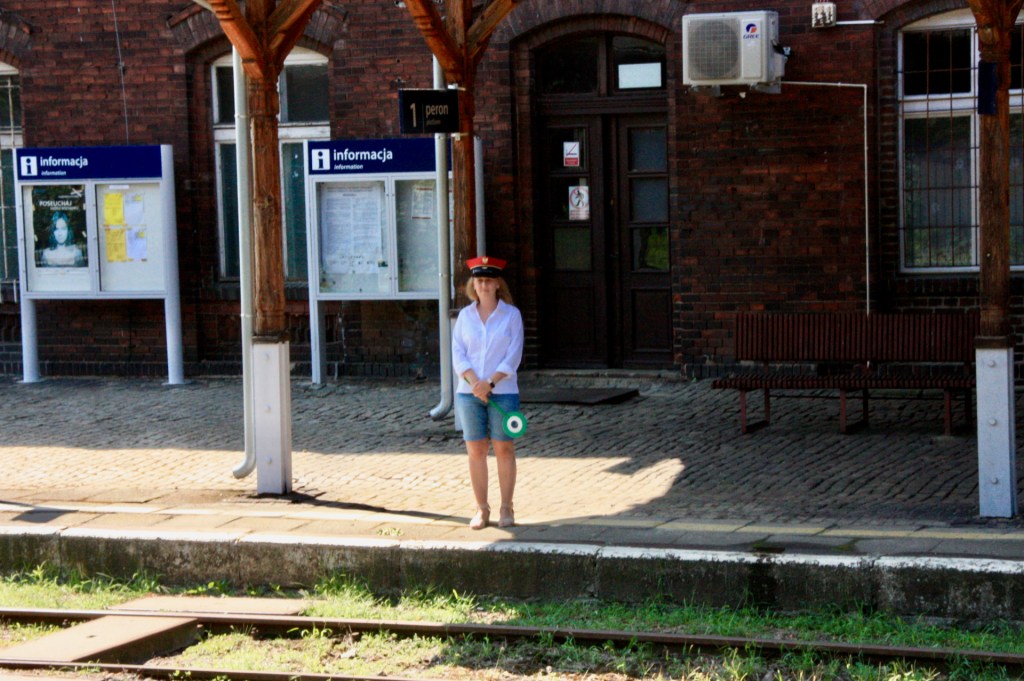
The junction station is rather inconvenient for the centre of this small town (population around 13,500), and anyone wanting to get to the station from the town centre will needs help from a map – it is a good 20 minute walk northwards, with no signage whatsoever to suggest where there is a right turn for the station off the main road.
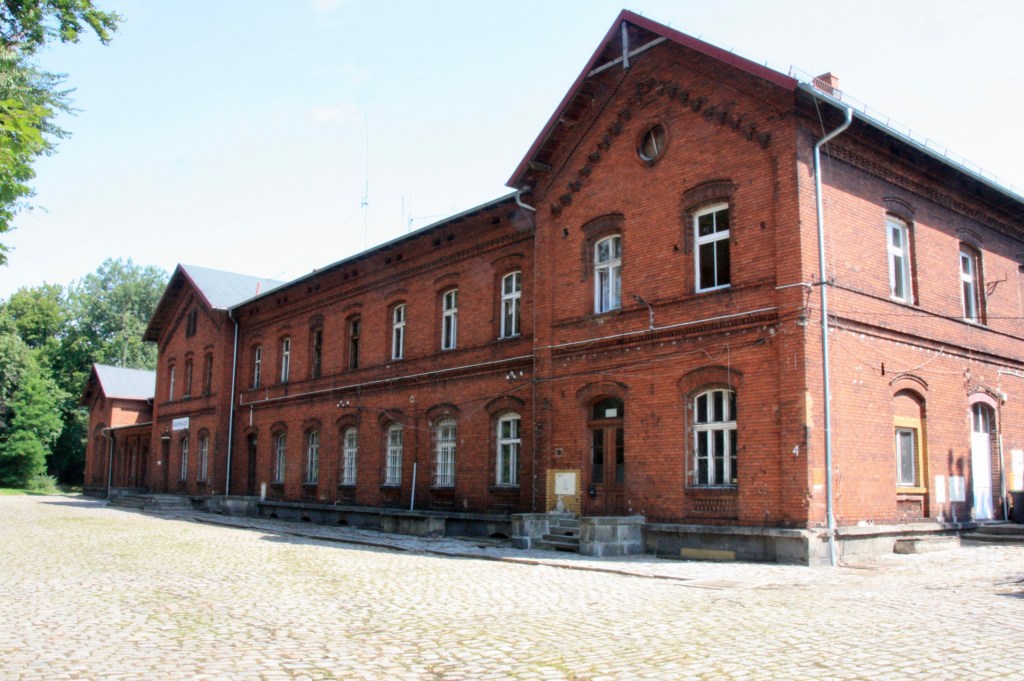
There were a line of tank wagons and some other modern container carrying wagons in a freight yard south of the station, suggesting that there is some weekday PKP rail action here, with semaphore signalling at both ends of the station and a friendly crossing keeper manning the small signal box at the south end of the station complex, where the three lines divide.
One of the great advantages of buying CD tickets online is that there is no penalty if you change your plans, or buy a ticket for the wrong date, as I did for my journey back from the Polish town to Krnov, where I was staying.
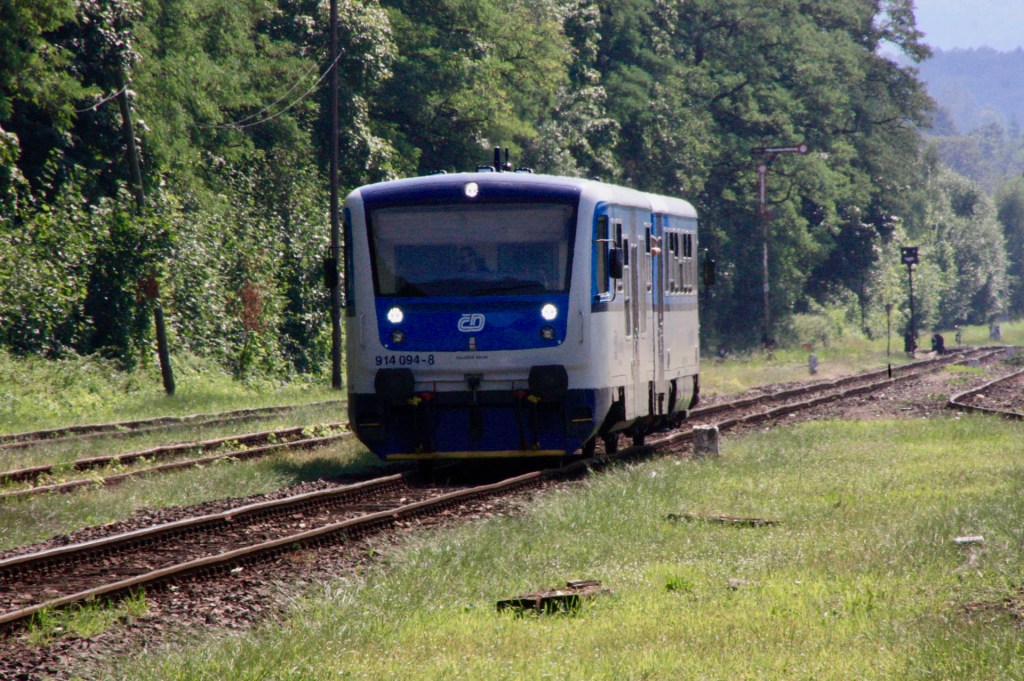
After buying a new CZK80 (£2.85) ticket for the 38Km (24-mile) trip from the guard I simply cancelled the one I had bought (for the following day) on the app and immediately got confirmation of a full refund. For older travellers, another thing worth noting is the CD offers half-price travel to anyone over 65, with no requirement for any sort of railcard.
 RailwayWorld.net
One thought on “A ghostly Polish station that is forever part of Czech Railways”
Comments are closed.