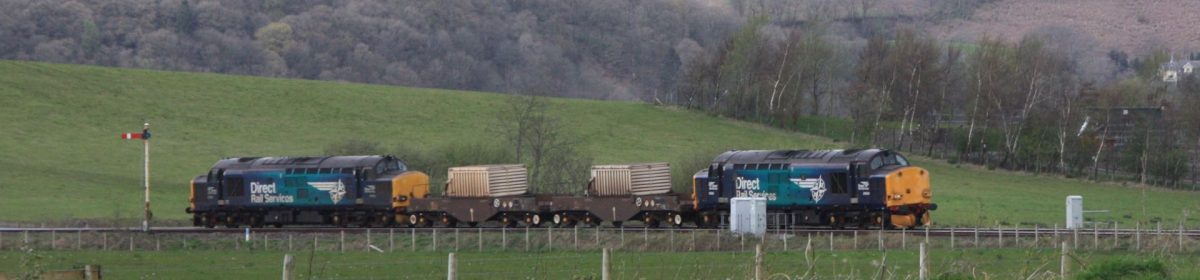
SHREWSBURY remains a must visit location for anyone interested in our signalling heritage, so returning to Shropshire’s county town for the first time in over a year, my challenge this time was to attempt to photograph both semaphores and a variety of loco-hauled workings that were scheduled to pass on 31 August 2023.
Selecting locations on either side of the town, my hope was to be able to photograph Class 66-working of the regular Dee Marsh-Margam freight, Class 67-worked TfW services between Cardiff and Manchester, a Class 37-powered scrap move of ex-Merseyrail units to Sims at Newport, and a steam-hauled special from Woking.

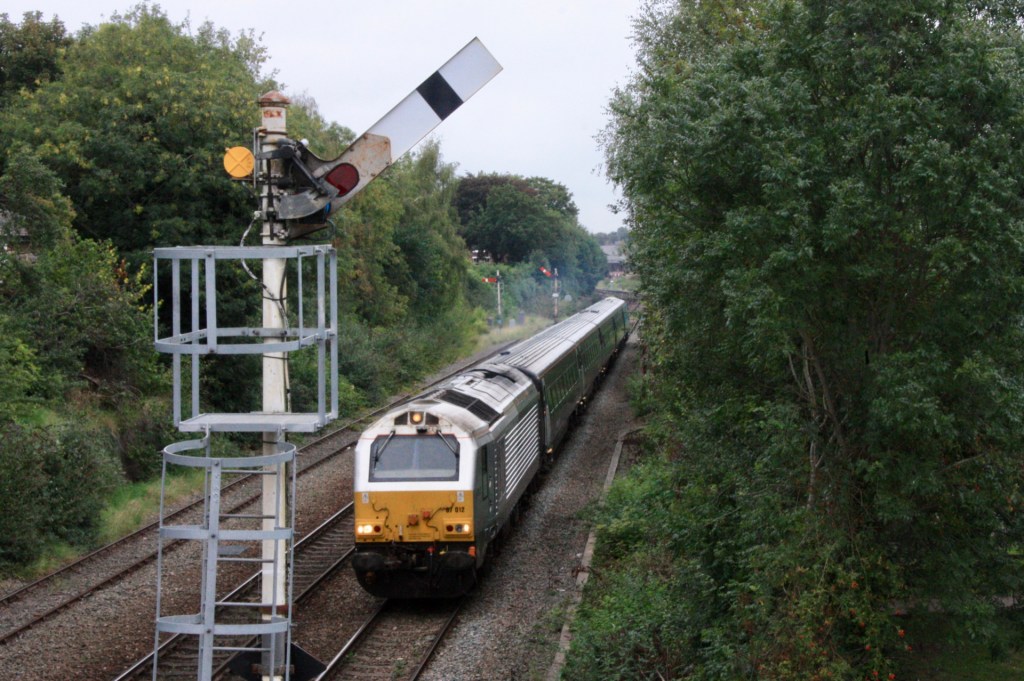
On a day when the weather did not look too promising, my first port of call was the Ellesmere Road (A528) over-bridge, north of the station, from where there is a good view looking south of northbound trains departing the station beneath the Castle, while looking north you will see trains passing Crewe Junction up outer home signal CJ1, as seen below.

While there was nothing interesting heading out of the station while I was there, I was able to photograph both a Class 158-worked Holyhead-Birmingham International service and the regular Dee Marsh-Margam freight train passing CJ1, before taking a 20-minute walk through the town, over English Bridge and on to Sutton Bridge Junction.

Sutton Bridge Junction Signal Box controls the junction of the Cambrian lines to Aberystwyth and Pwllheli with the Marches Line to Hereford and Newport, as well an up goods loop, access to Coleham Yard on the west side of the line, and was once junction for the Severn Valley Line to Bridgnorth and Hartlebury.
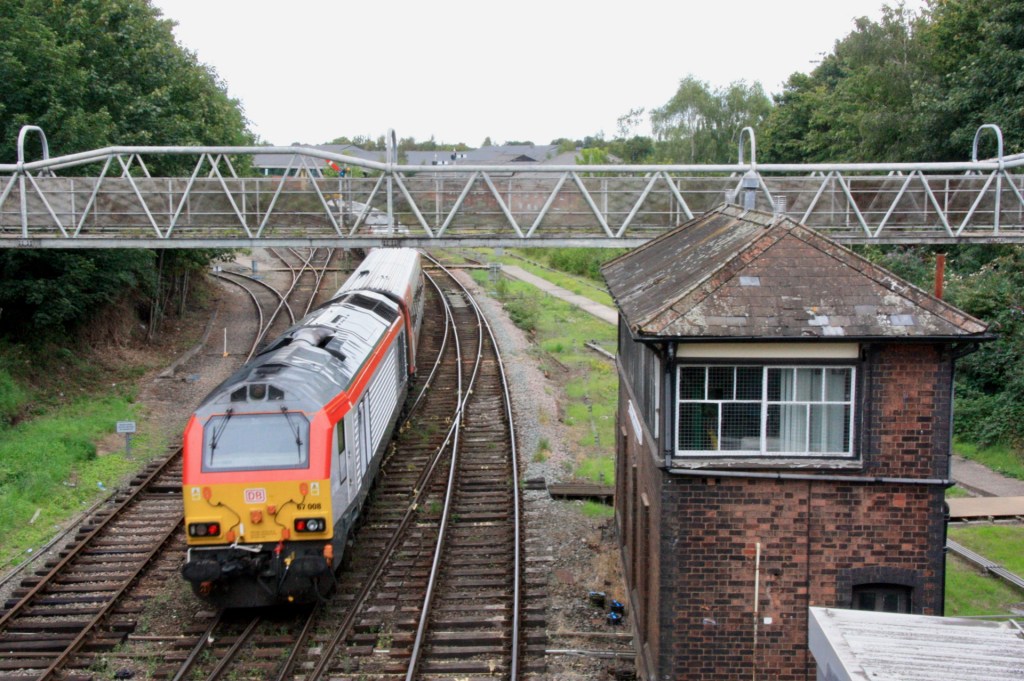
Among the ten semaphores controlled by its 61-lever frame is motor-worked down distant SUB59, now the last working lower quadrant distant signal on our national rail network. This can be seen from a main road running alongside the line, but is difficult to photograph, owing to line-side vegetation.

Semaphore signalling in the Shrewsbury area is a mixture of upper and lower quadrant signals and that is a feature of those at Sutton Bridge Junction, where SUB12, the up inner home signal on the Cambrian Line, remains a traditional GWR lower quadrant (as seen above) along with a bracket holding down home signals SUB54 (Marches Line) and SUB58 (Cambrian Line), with the others in view from the bridge being upper quadrant.
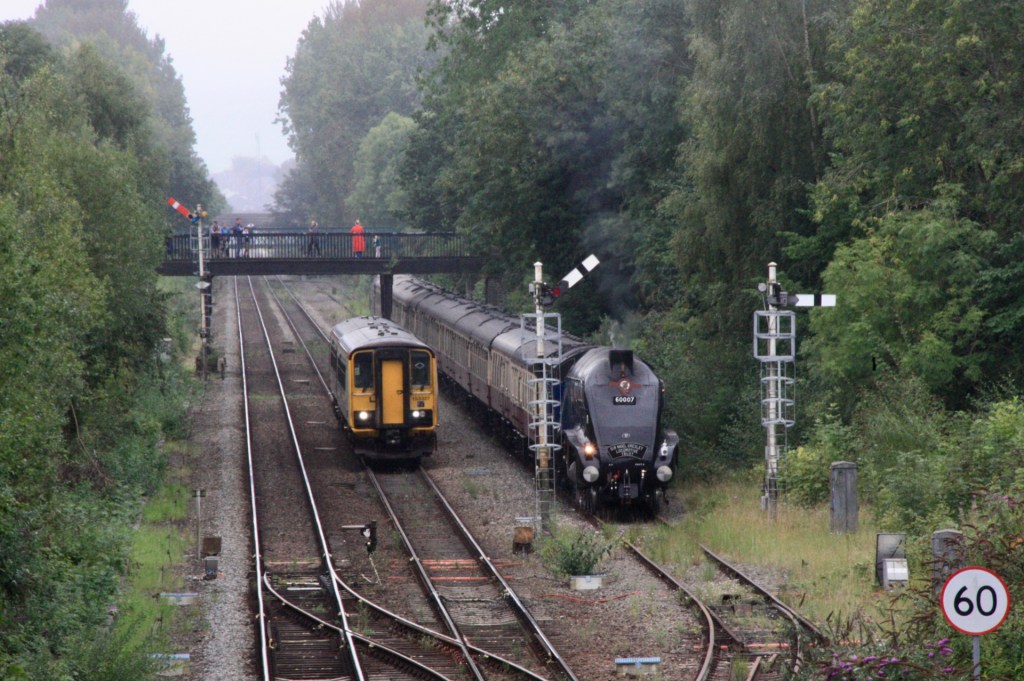
A footbridge alongside the signal box remains closed, so there is no decent vantage point now to see and photograph trains passing the semaphores alongside Coleham Yard, although another pedestrianised bridge gives a good view looking south of the diverging routes towards Cardiff and Aberystwyth and the signals controlling them.

One of the limitations this creates is being unable to get a decent shot of a Class 67-worked service when the loco is at the south (Cardiff) end of its train, so it is well worth taking a 10-minute walk to the closest of two footbridges over the line, which stands just south of down starter signal SUB57, and gives a good view back towards the signal box.

It is always good to see the huge level of interest which steam working unleashes, so local media reports of the visit by LNER A4 Sir Nigel Gresley on a Woking-Shrewsbury charter brought dozens of mothers, toddlers and others onto the normally deserted bridge next to the signal box to see real live steam.

The LNER streamliner had hauled the train from Bristol Temple Meads and was timed to go into the up goods loop at Sutton Bridge Junction and wait there to be passed by a couple of scheduled passenger services before completing its trip into Shrewsbury station.

On a day when the weather was a good deal better than forecast, with Shrewsbury missing an expected afternoon downpour, it was disappointing to see the scheduled scrap move of Merseyrail units to Sims in Newport was cancelled, but where one Class 37-worked service didn’t appear, another made up for the missing working

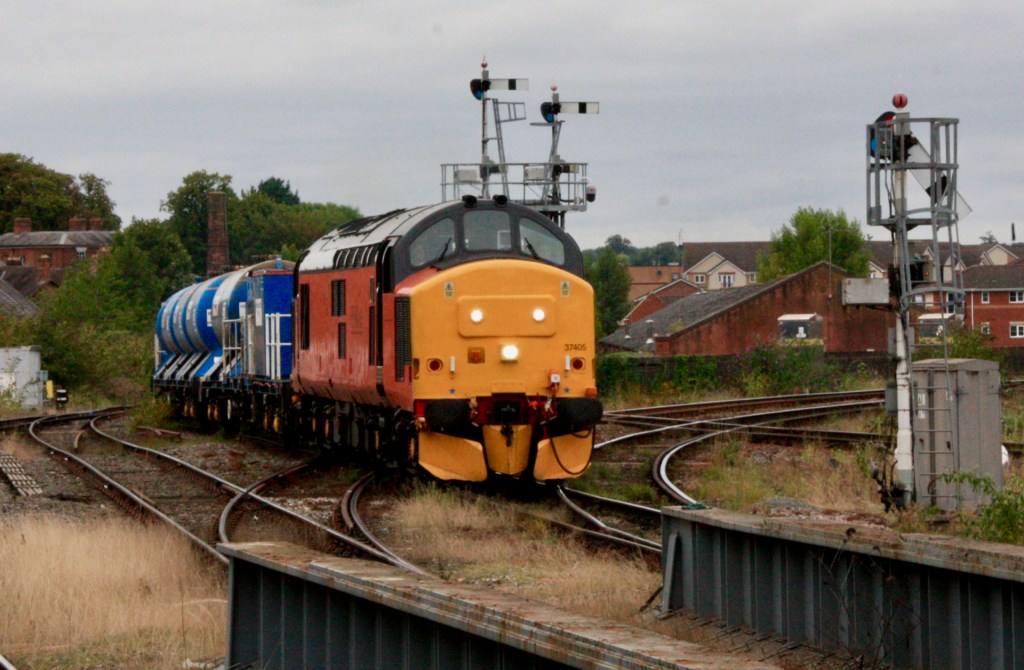
This was the appearance of Harry Needle-owned 37405 on what appeared at first sight to be a weed killing train, which rolled through platform 4 at about 16.10 with liquid spraying from its short trainload of blue tanks, while working a circuit from Bescot via Crewe and Chester to the nearby Coleham Yard.

Apart from the appearance of Class 67s on a handful of Cardiff-Manchester workings, one significant change to rolling stock since my last visit to the area has been the disappearance of Class 175 units, now few and far between, and their replacement by Class 197 units on many Marches Line workings.
 RailwayWorld.net
You must be logged in to post a comment.