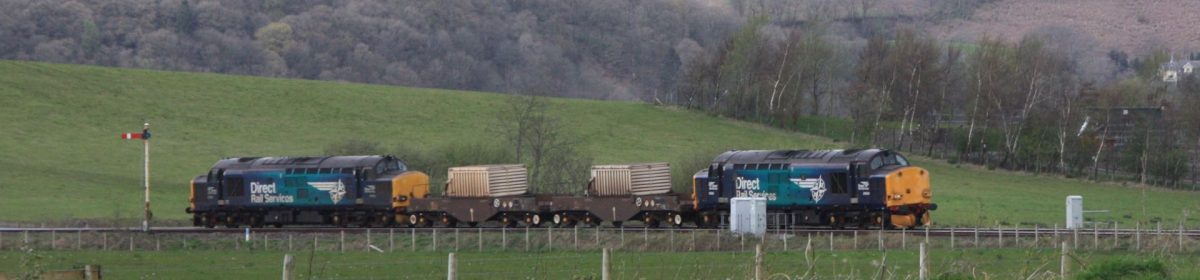
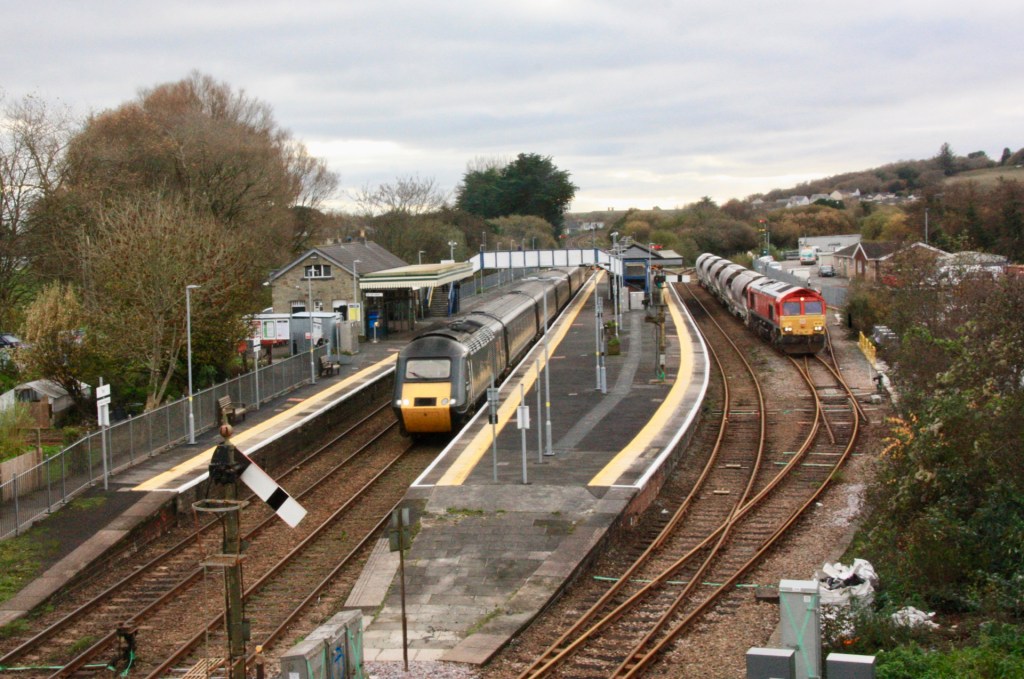
After many delays, the end is now fast approaching for the fine collection of lower quadrant semaphore signals at Par, Lostwithiel and Truro, with 27 February 2024 signalled as the date when this trio of boxes will finally close.
In the six years since I began writing this blog I have witnessed the end of mechanical signalling in places as far afield as Blackpool North, Humberside, Norfolk’s Wherry Lihes and the North Wales Coast, so now it is time for a final farewell visit (21/22 November 2023) to the Royal Duchy.
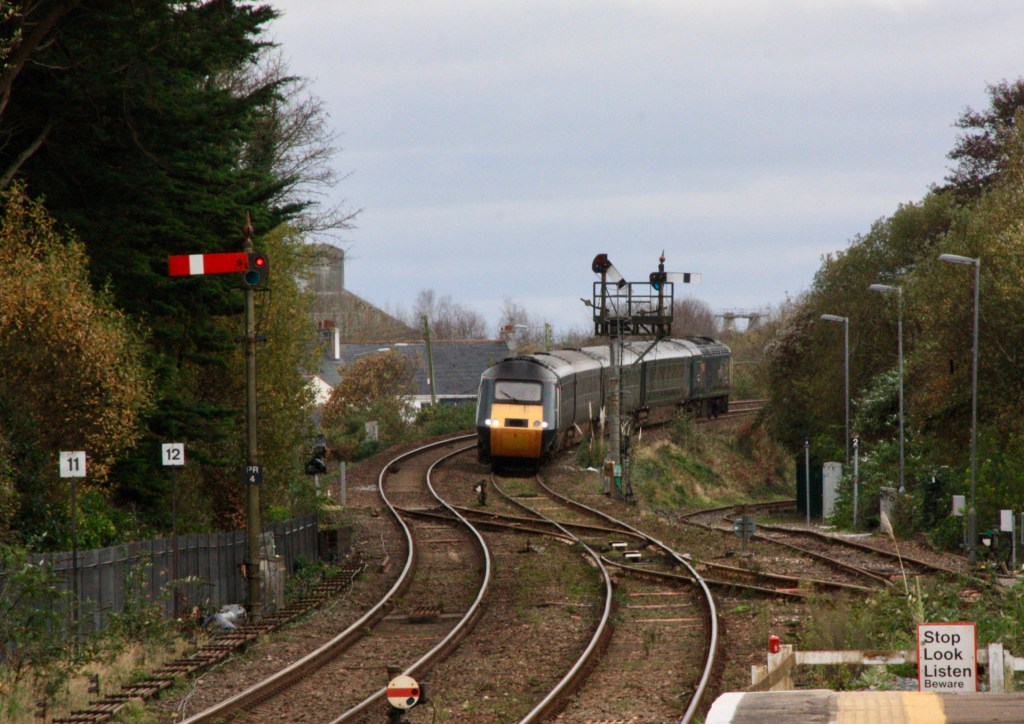
Treating myself to a night at the comfortable Royal Inn outside Par station, my plan was to spend time there and at Lostwithiel on Tuesday, 21 November, before heading down to Truro the following day to capture more final shots there of trains passing the sempahores there.
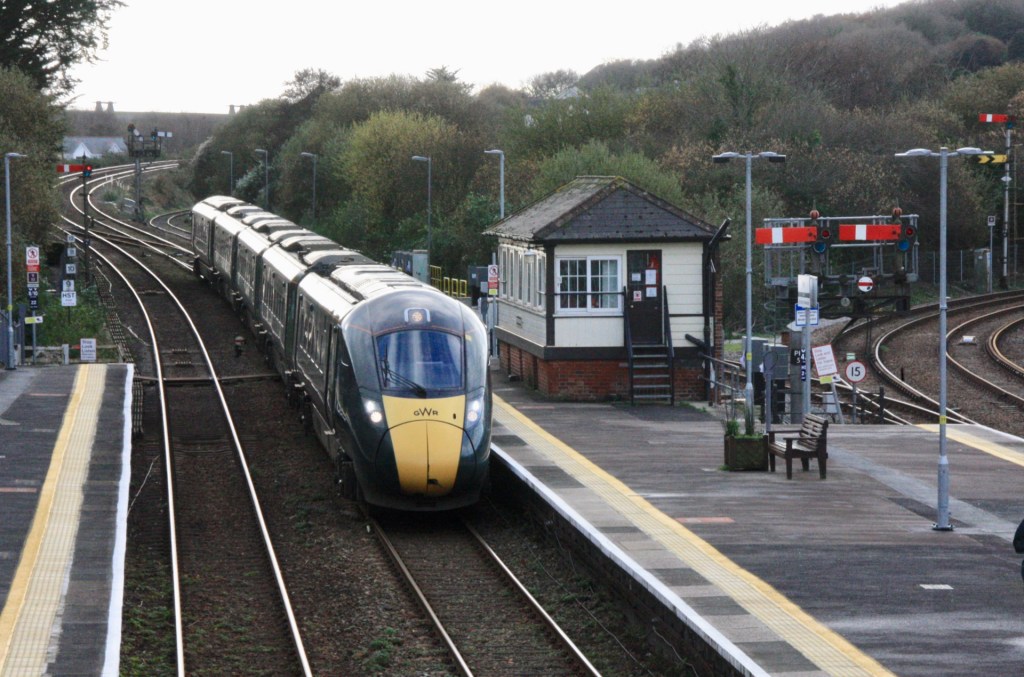
By my count, the long drawn-out resignalling project will see the removal of 36 sempahore signals – 14 at Lostwithiel, 13 at Par and nine at Truro – as control of this section of the Cornish main line is transferred to Exeter Power Signal Box.
For the moment, at least, that will leave outposts of mechanical signalling at Likeard and St. Erth on the main line, as well as at St. Blazey and Goonbarrow Junction on the soon to be upgraded Newquay branch line.
Having noted a total lack of resignalling activity on a recent trip to West Wales, things are rather different in Cornwall, where there is plenty of evidence that change is afoot, with work going on at Truro to install a new signal in front of the existing signal box and old equipment marked with a green cross to denote removal.
Most noticeable are the groups of rather unsightly grey boxes, which are mounted on black metal posts and are presumably each the control system for a single new signal or set of points. These seem to have sprung up at all three locations, as well as at other points along the main line.
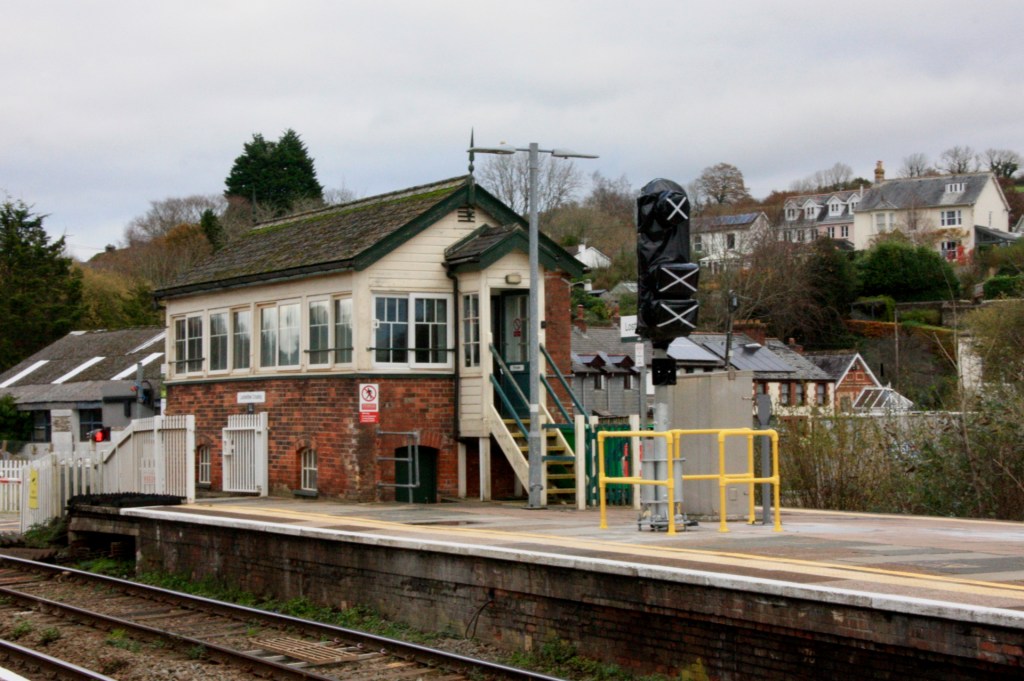
A few of the new signals have already appeared, with one already standing on the down platform at Lostwithiel, close to the listed signal box, with its lights currently covered by a black bin liner, as seen above.
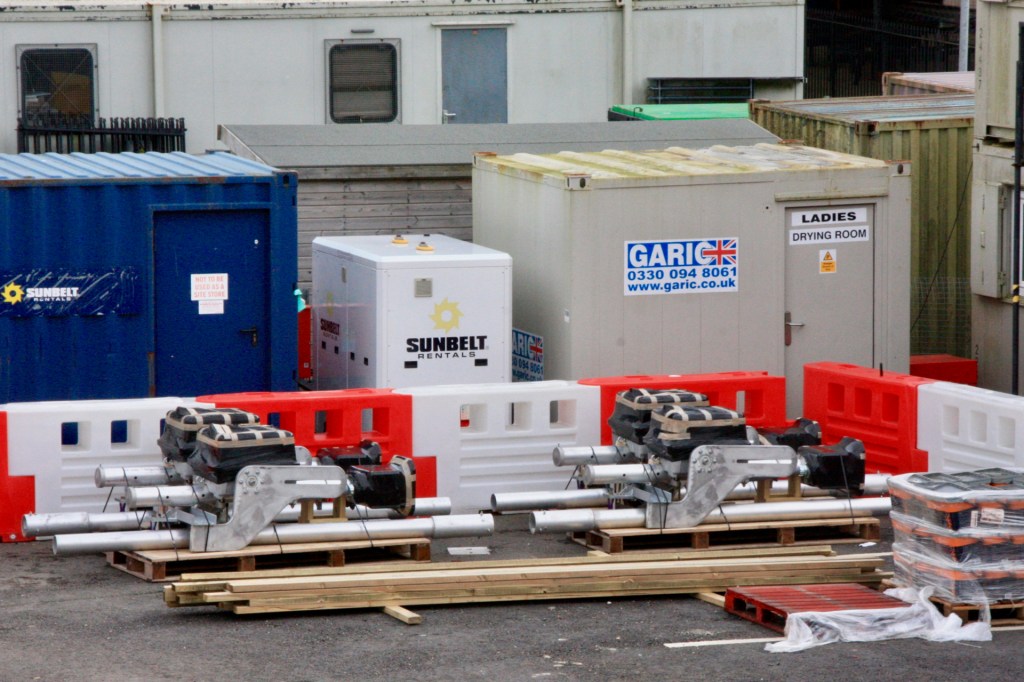
Another lies flat on the ground at the west end of Truro’s platform 2 as a replacement for signal T47, while in a compound north of the station are a pile of new signals in front of a temporary building labelled curiously as “Ladies Drying Room” (photo above).
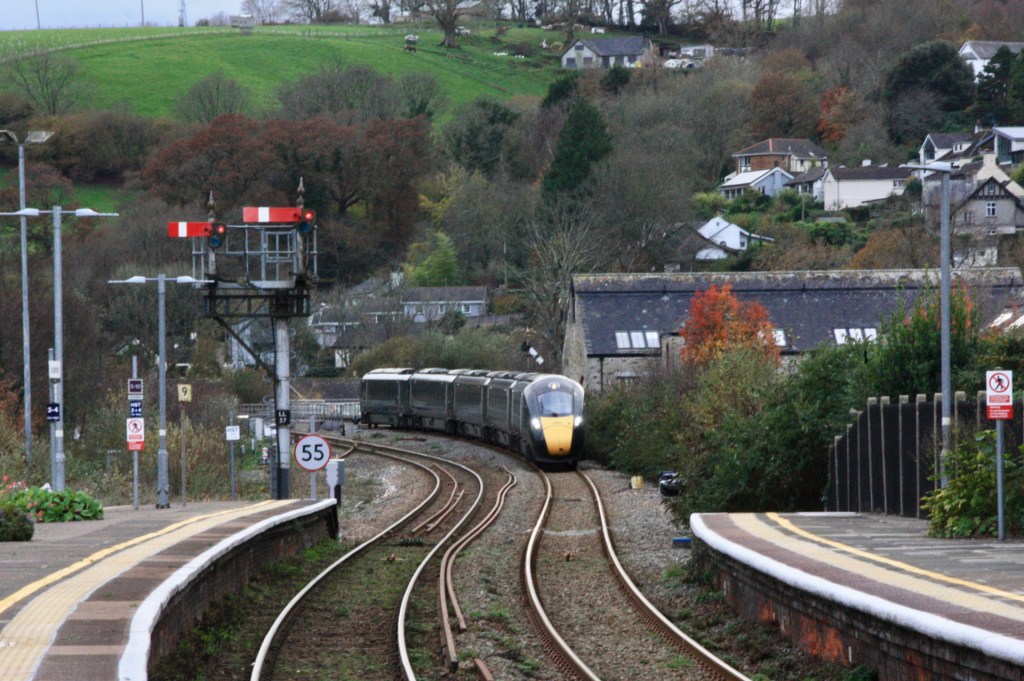
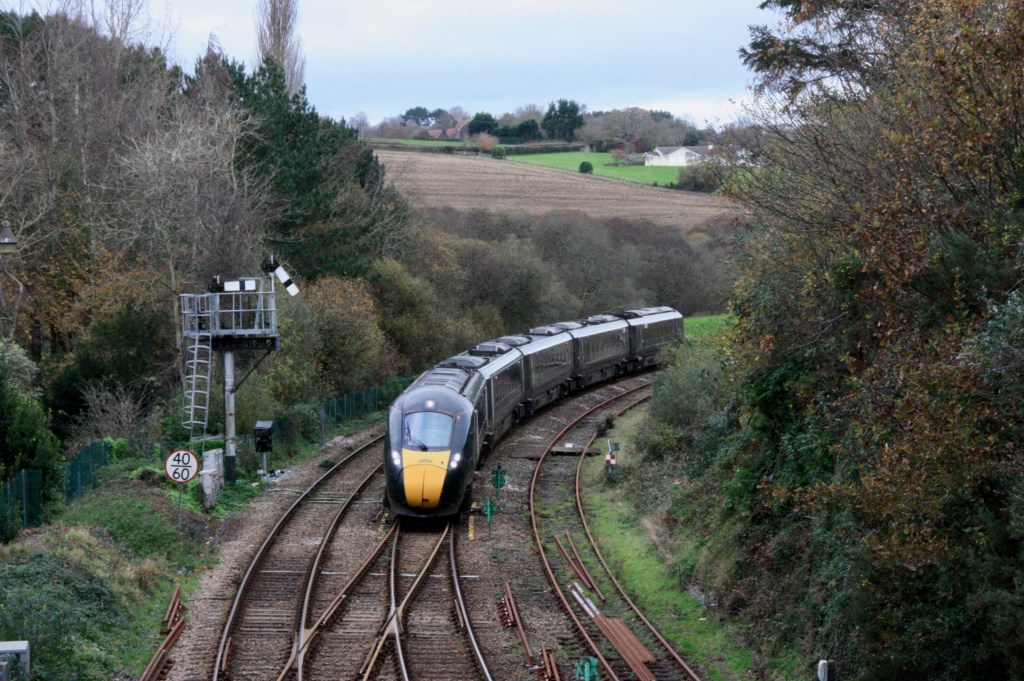
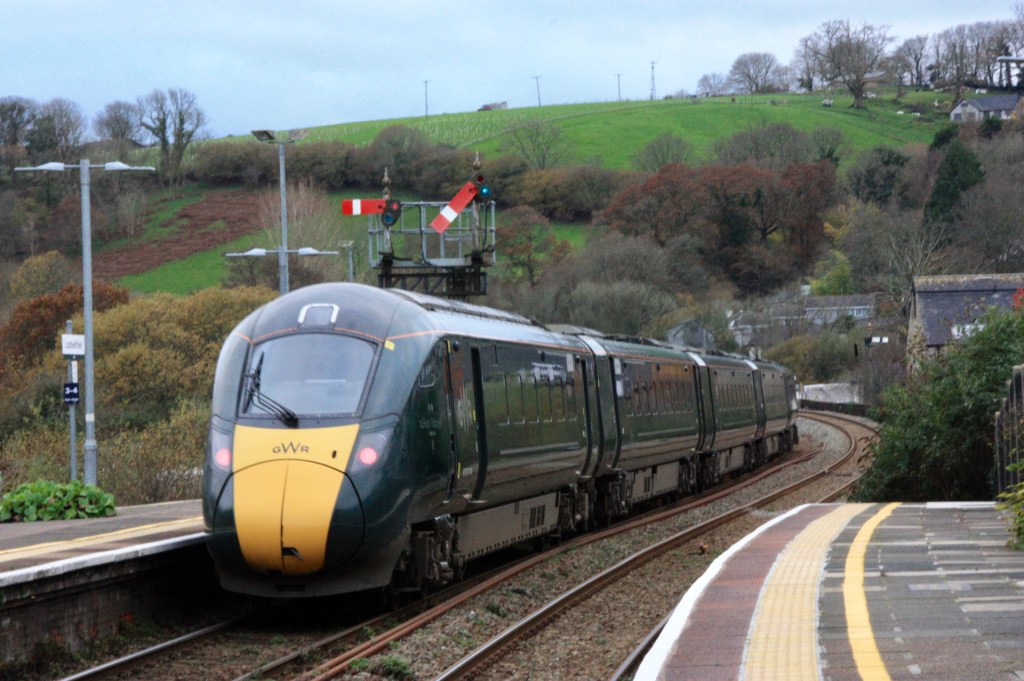
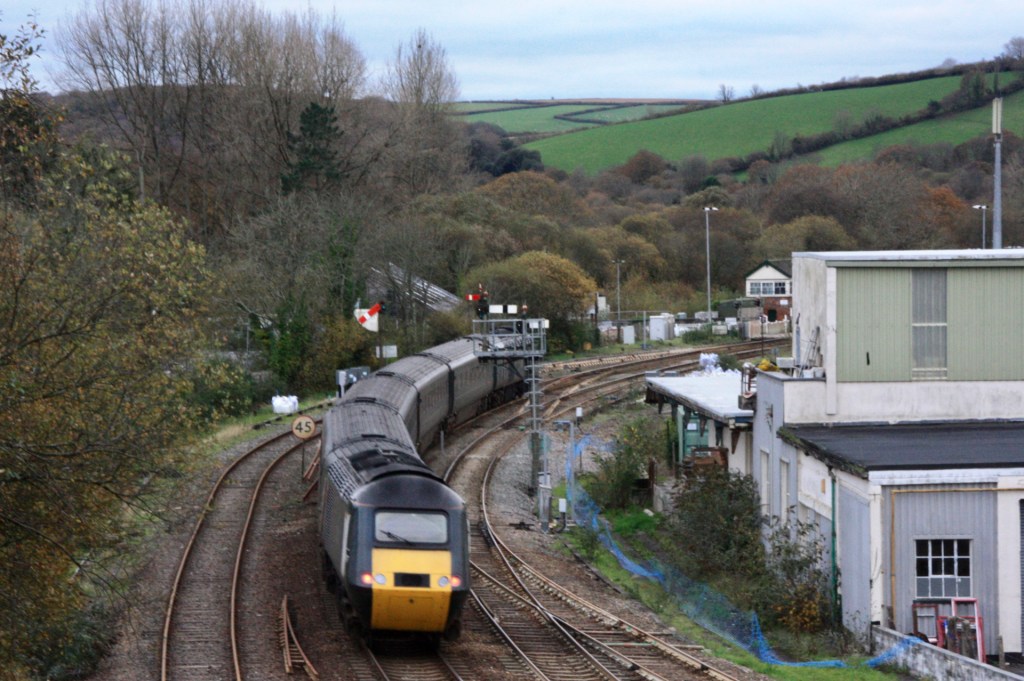
Most main line passenger services are now in the hands of Class 80x IET units, but Castle 2+4 HST sets are also in evidence and should be even more evident following the 10 December 2023 timetable change, when they will no longer travel to Bristol and Cardiff and be confined to working between Plymouth and Penzance.
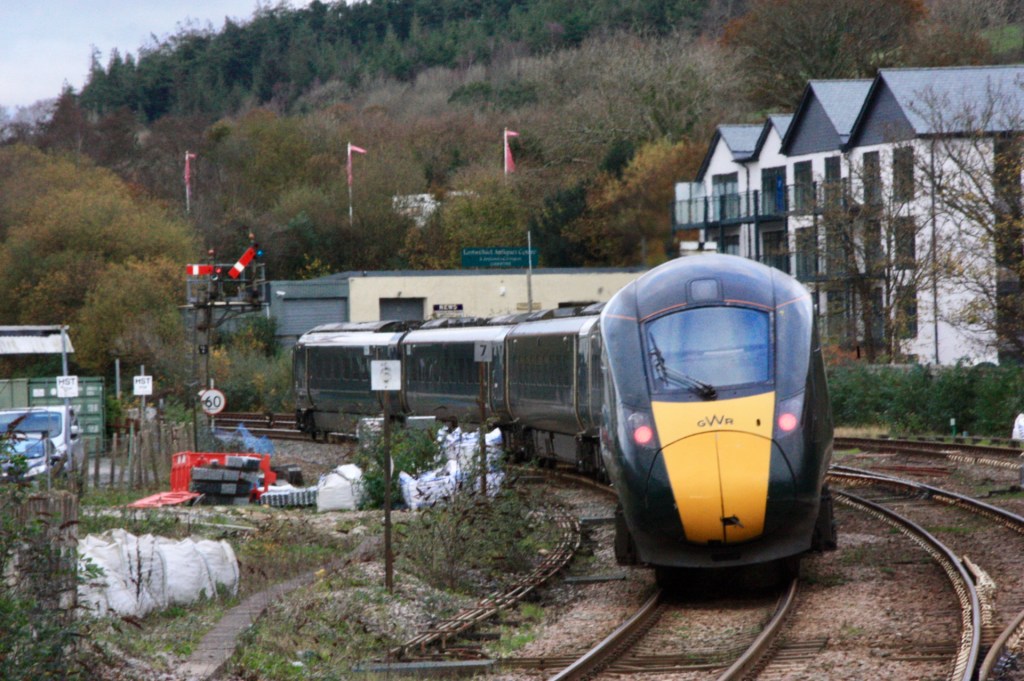
Like the semaphores signals, the popular Castle 2+4 HST sets had originally been due to cease operations for GWR at the end of 2023, but shortage of suitable replacement rolling stock has given them a reprieve and they are now expected to remain working until mid-2025.
Loco interest in Cornwall is distinctly limited and normally confined to the Class 57-worked Night Riviera service, currently running during hours of darkness, but I was lucky enough to catch two other workings on my two day trip to the Royal Duchy.
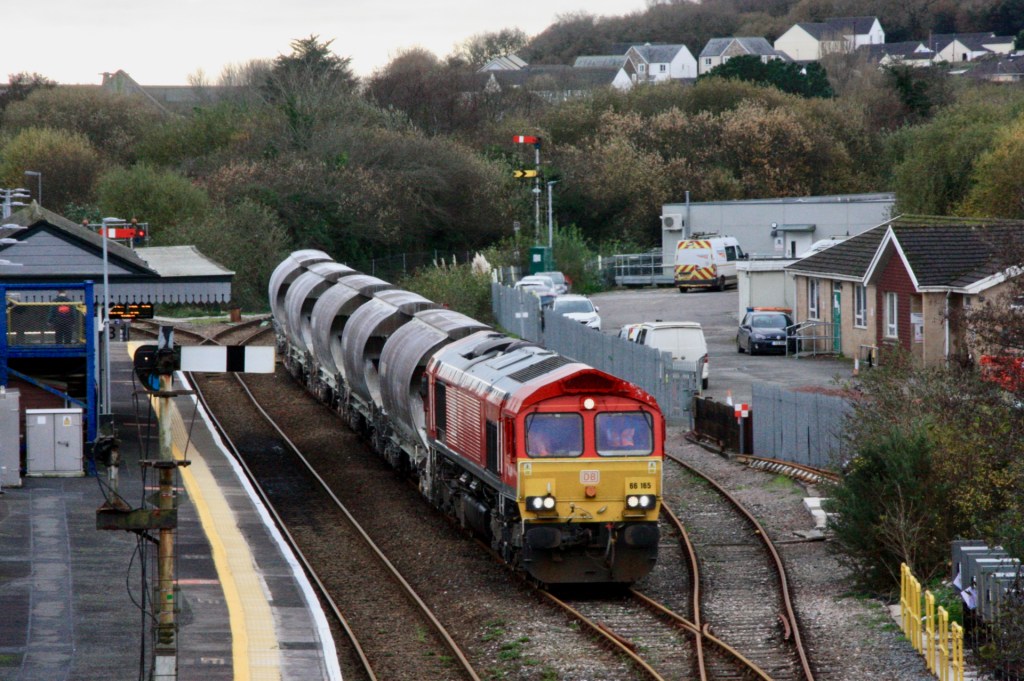
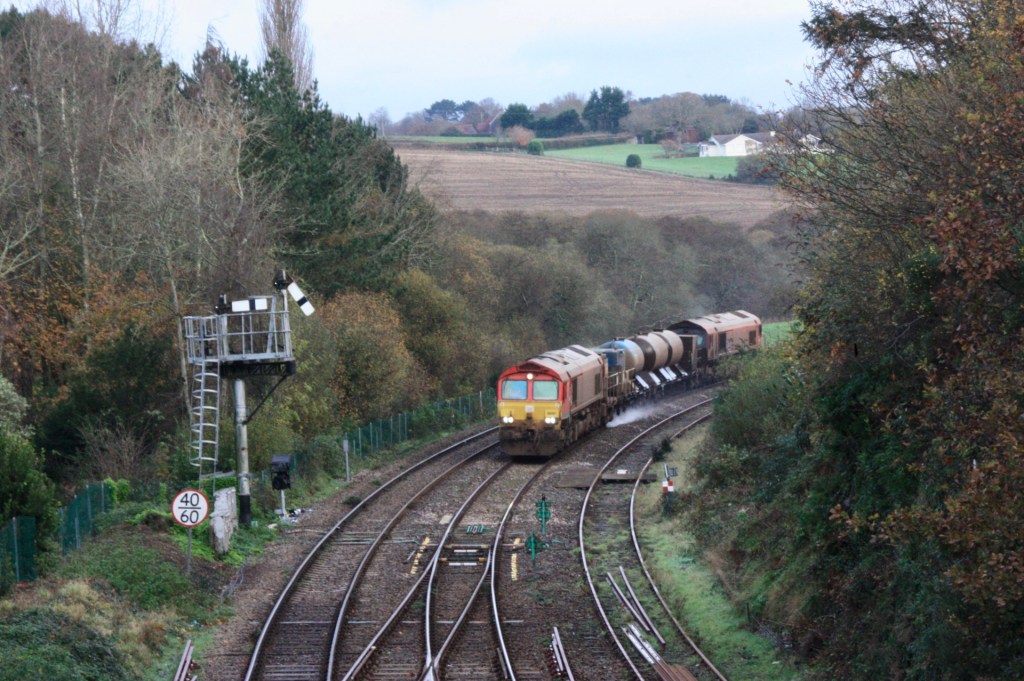
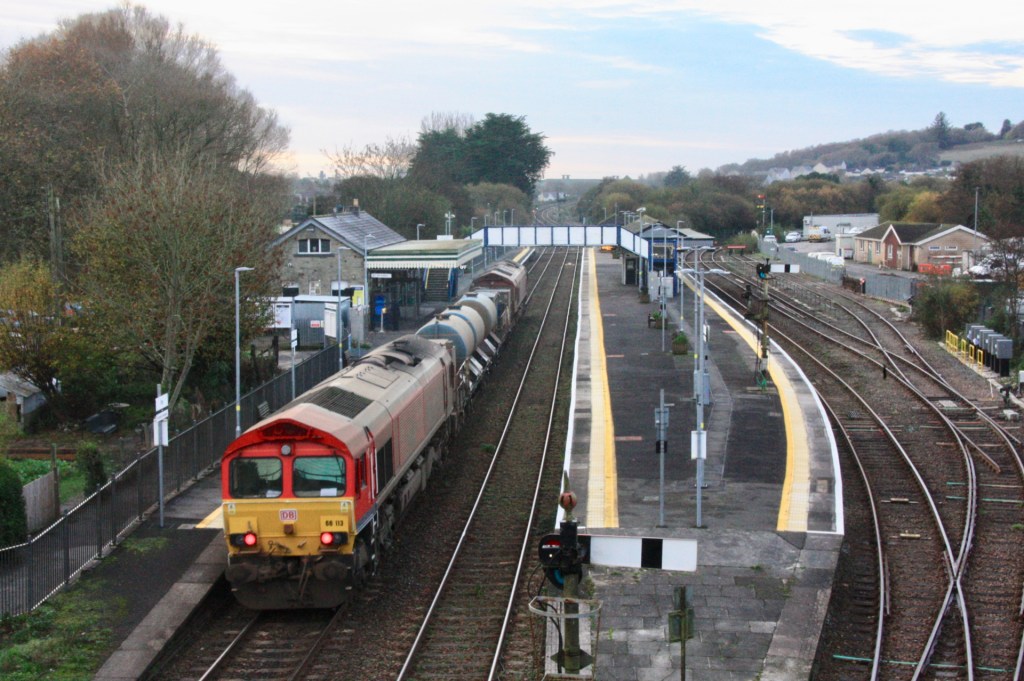
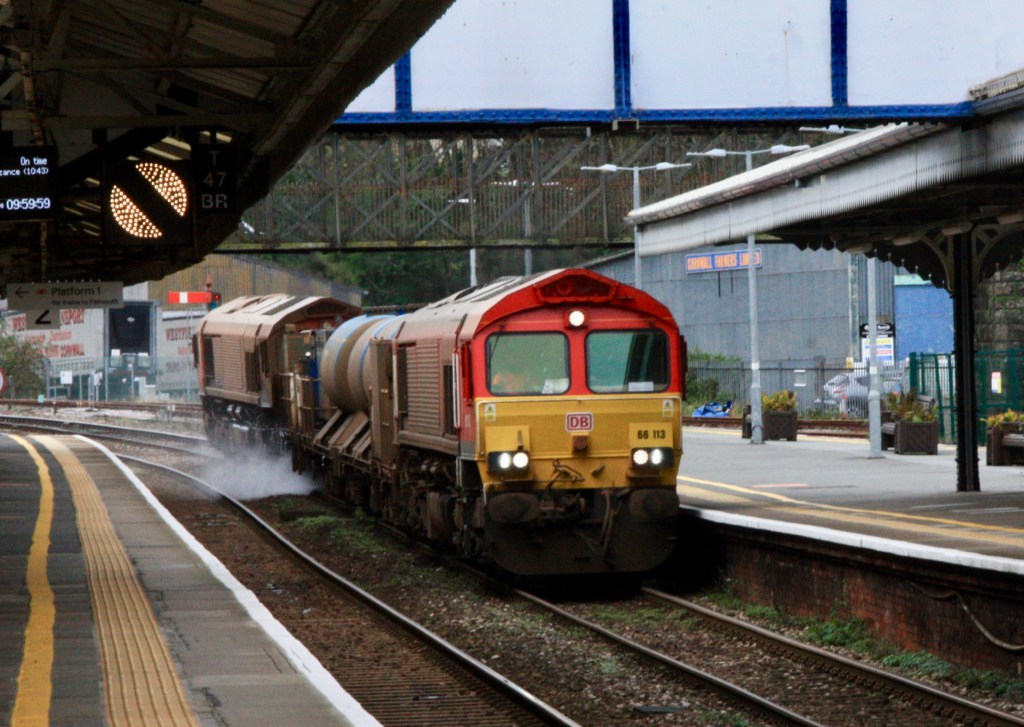
On Tuesday lunchtime DB 66165 appeared at Par with 6G09 from Goonbarrow Junction to Carne Point (via Lostwithiel) hauling just five clay tanks, while the following day (22 November) I was able to see DB 66097/113 top-and-tailing the RHTT circuit from Westbury to Penzance as it passed Par (photo below) and later on its return trip through Truro.
Having picked the one night of the week (Tuesday) when the Royal Inn at Par does not serve food, I discovered the wonderful New Inn at nearby Tywardreath, just a ten minute walk away. It is one of the finest pubs I have visited for a long time, and I cannot recommend its fish pie or Tribute ale highly enough.

While it is very sad to see a number of the semaphores have been robbed of their finials, there is still a lot to savour at these these three locations, so for those who have yet to visit, here is my take on what to see and photograph before 27 February 2024.
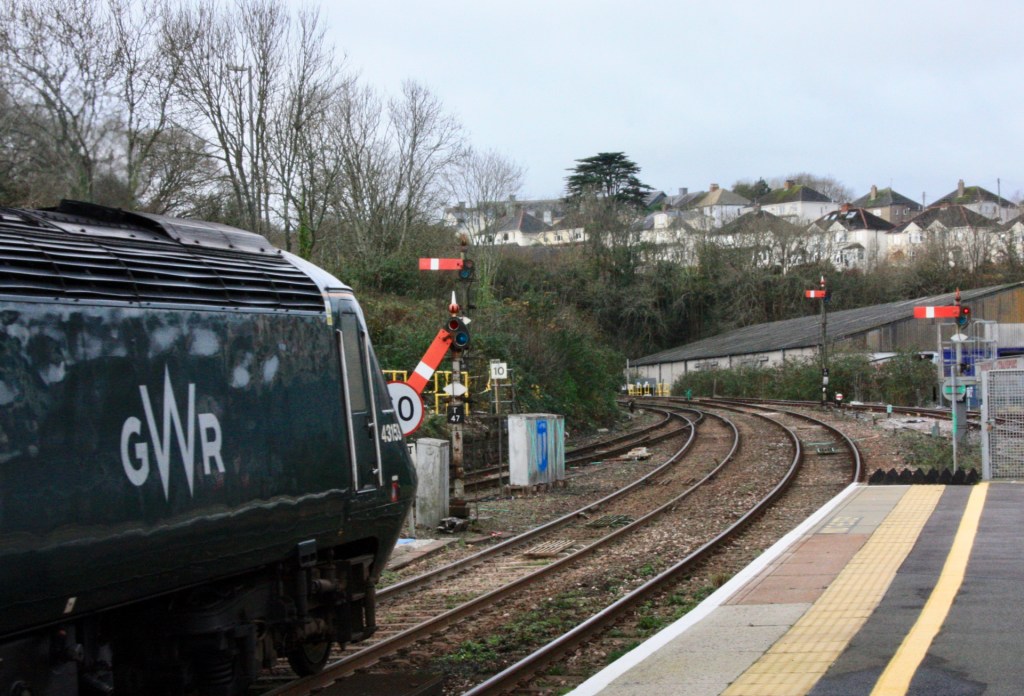
Beginning in Par, where three of the 13 semaphores here can be seen by looking west beyond the signal box and comprise a down starter (PR4) and a bracket with up home signals PR50 (for platform 3) and PR55 (for platform 2 – finial missing).
Another bracket, immediately in front of the Listed 1879-vintage signal box, reads to platform 3 and houses down home PR5 (access to the main line), PR8 (Newquay branch + shunting disc for Chapel siding), with the branch section signal PR9 round the right hand curve towards St. Blazey and mounted above St. Blazey’s fixed distant signal.
At the eastern (London) end of the station PR54 is the starter signal from the main platform (2) alongside PR52 (no finial), which controls exit from Newquay branch platform (3). East of the road bridge a bracket on the west side of the line houses down home signal PR5 (main line) and a junction arm (PR7) for services going into platform 3.
Moving on to Lostwithiel, most of its semaphores are sadly in inaccessible locations or obscured by a sighting board, as is the case with down home signal LL58. Looking west from the station platforms there is a good view as the line sweeps down and round a right hand bend of up outer home LL3 and a bracket at the end of the down platform housing LL57 (main line) and LL54 (Fowey branch line).
Taking a short walk up to a bridge carrying the A390 town by-pass over the line gives you a good view looking north of up section signal LL8 alongside a smaller semaphore (LL49) controlling exit from the up goods loop. Looking south, there is a good view of down trains passing LL58 and of northbound (up) trains as they pass starter signal LL6, which stands on a bracket alongside LL7 controlling entry to the up goods loop.
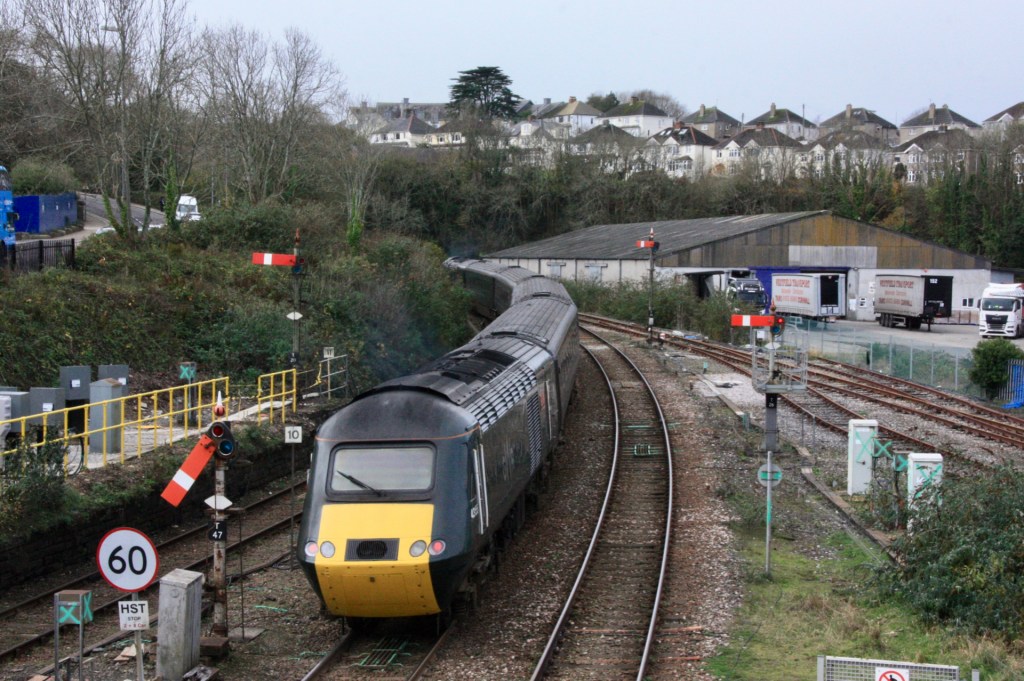
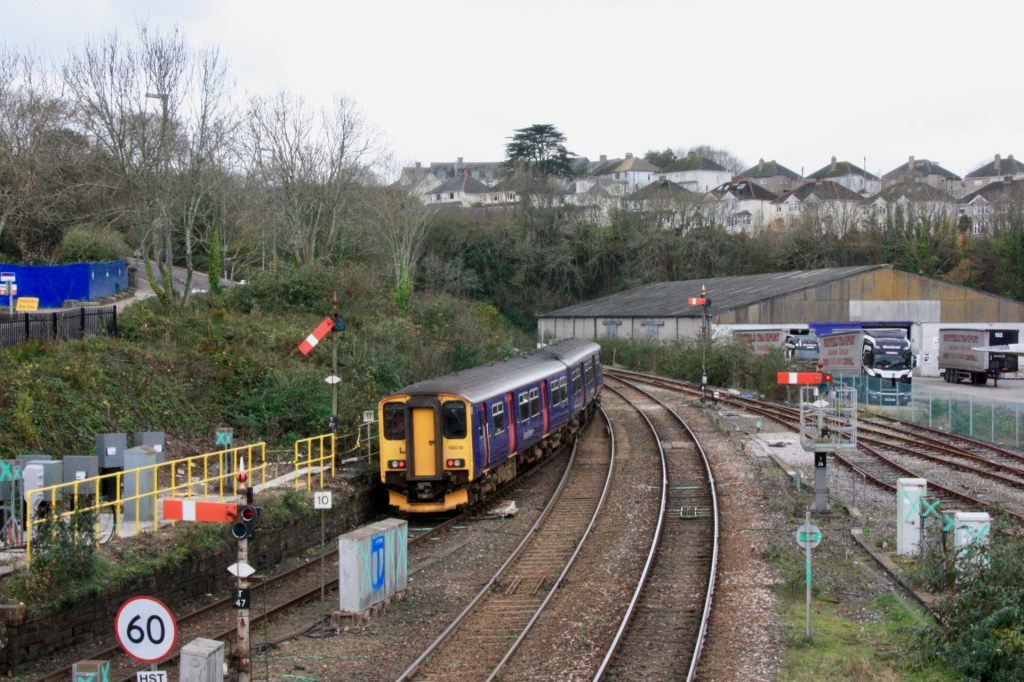
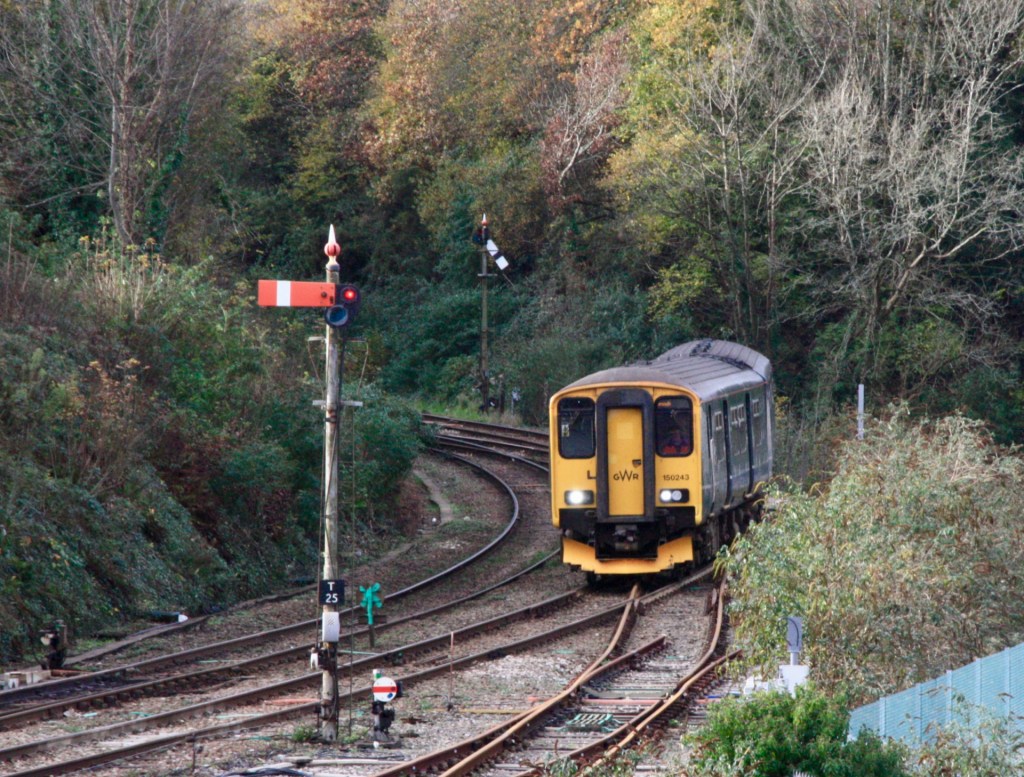
Finally Truro, and the only one of this trio of signal boxes not to be protected by having Listed status. Here the classic view from the western end of the station and a public footbridge are the four down signals, comprising T20 for exit from the Falmouth branch bay platform (1), down starter T47, the newest signal (T26), installed when frequencies on the Falmouth branch were increased to half-hourly and allowing a train in the up platform (3) to cross onto the down line, and T25 controlling exit from the sidings.
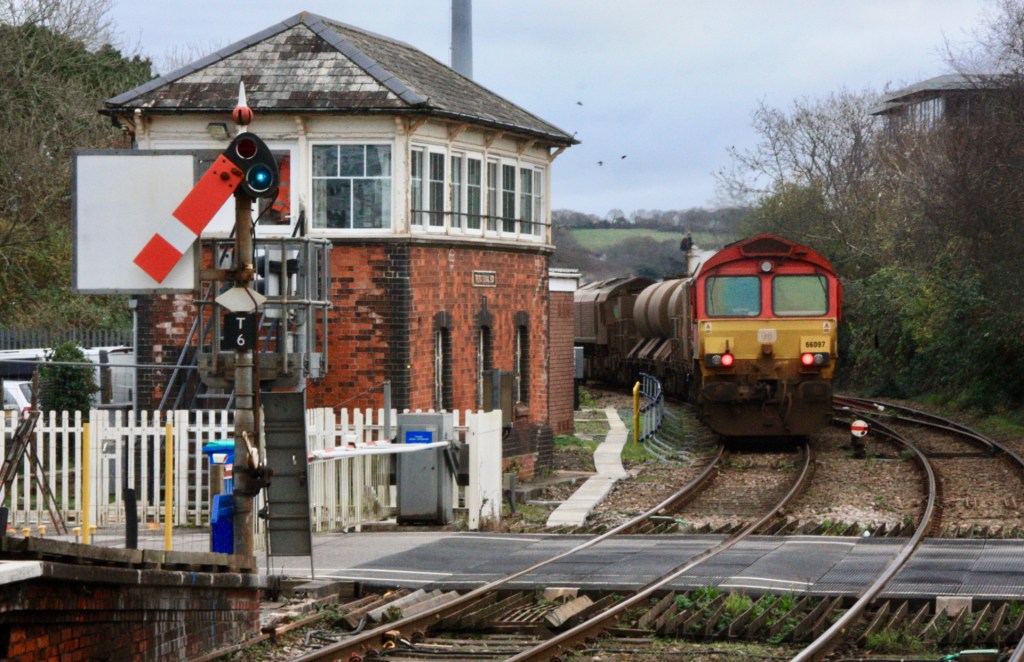
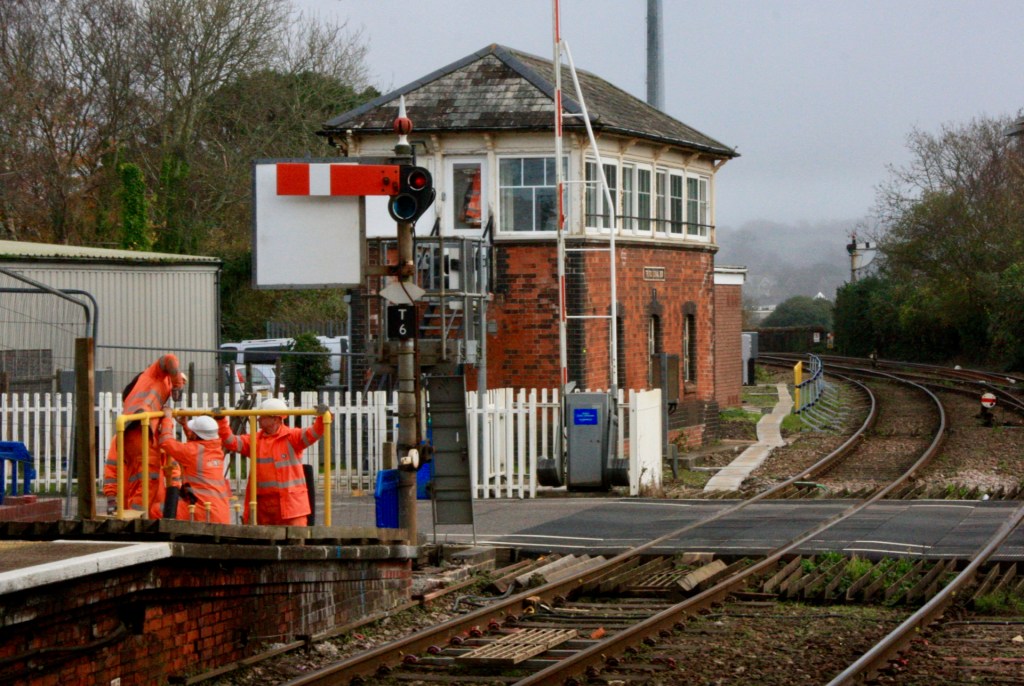
Looking east from the station platforms, up home signal T6 stands immediately in front of a level crossing and the signal box, while down home T49, also with a sighting board behind it, stands at the western end of Carvedras Viaduct a short distance distance beyond the box.

Out of sight to the west is up outer home T4, which stands in a cutting close to the entrance to Highertown Tunnel and can be seen from the northern end of the public footbridge west of the station, while in the London direction and at the eastern end of Carvedras Viaduct stand up section signal T7 and down outer home T50.
In another nod to nostalgia, and as I have written before, no weekday rail trip to the Royal Duchy would be complete without taking the chance to enjoy GWR Pullman Dining, so returning aboard 1A96 from Truro (16.55) to Reading in the convivial company of nine other fellow diners, I enjoyed ham hock terrine, followed by sage stuffed chicken and British cheeseboard (£39.50 for three courses) along with a very pleasant South African Chenin Blanc.
 RailwayWorld.net
You must be logged in to post a comment.