Loss of Cornish semaphore outposts at Par, Lostwithiel and Truro in March 2024 leaves just two main line locations in the Royal Duchy that are mechanically-signalled. These are Liskeard, which I last featured in October 2023, and St. Erth, junction for the scenic St. Ives Bay branch line.
St. Erth is a delightful and immaculately-maintained Grade II Listed station, where semaphore signalling helps retain the historic air of this busy country station, yet one that is sadly mired in controversy as its historic footbridge is replaced by a rather less attractive modern structure.

Replacement of the historic footbridge has been on the cards ever since the 2019 opening of extensive new car parking on the south side of the station, to replace the former park & ride site at Lelant Saltings for visiors travelling to St. Ives. This led to the introduction of a free shuttle bus for those unable to negotiate the footbridge’s 44 narrow steps.
While the old and listed footbridge is destined for a new lease of life at Cranmore on the East Somerset Railway, there is no doubting that its removal and replacement by a modern structure will significantly damage the aesthetic appeal of St. Erth station.
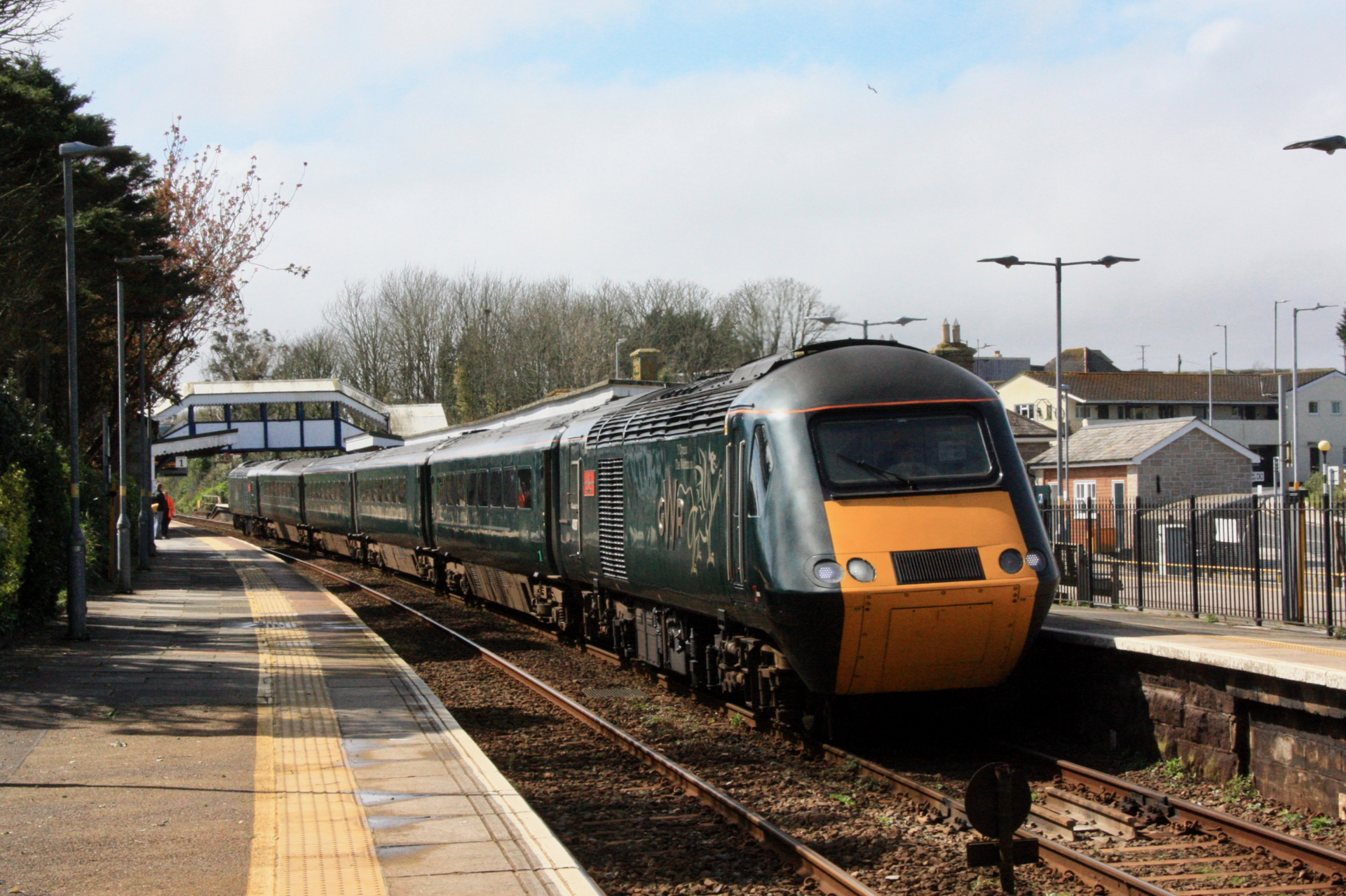
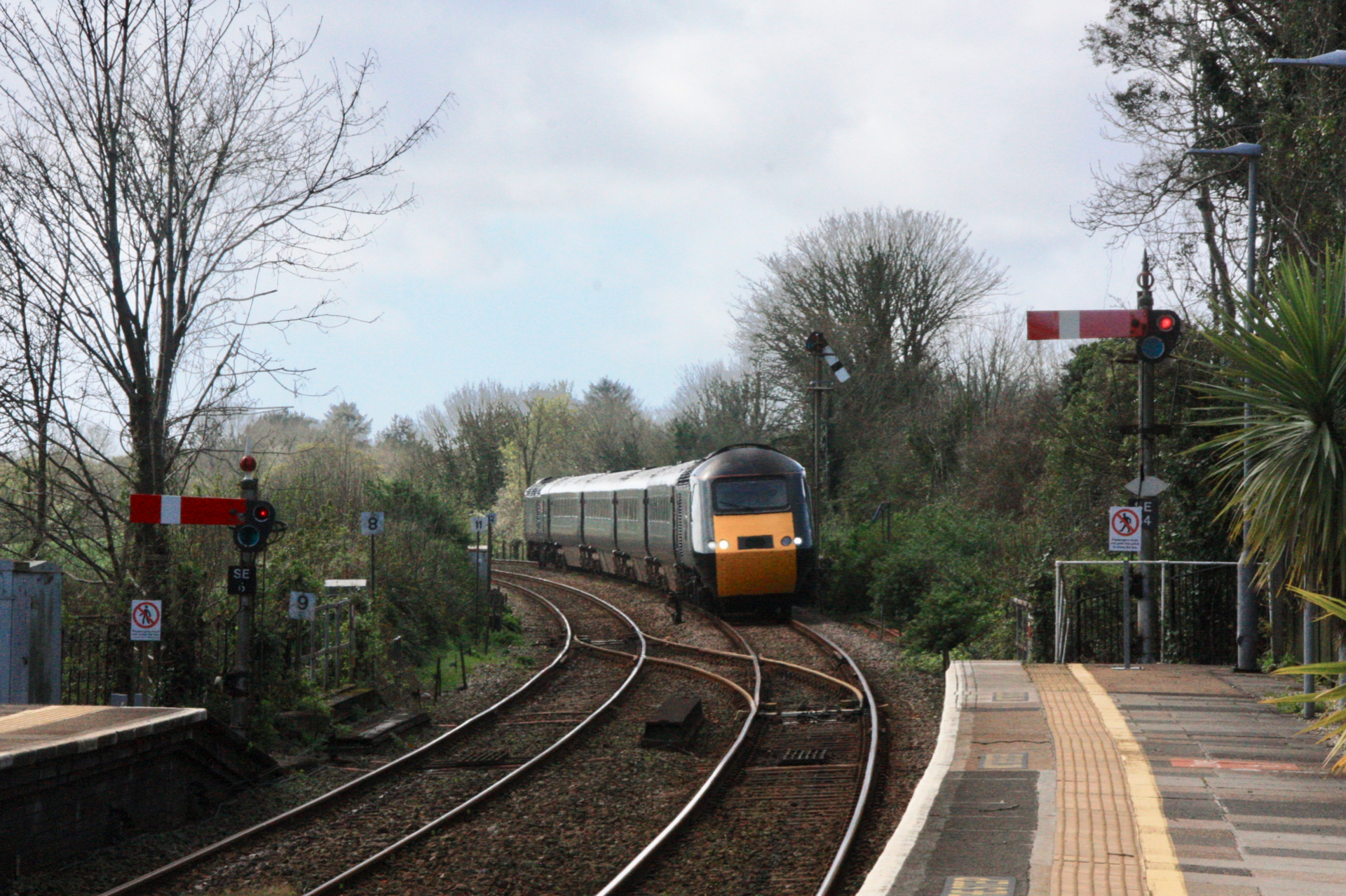
Paying a return visit to St. Erth on 8/9 April 2024, when work on building a replacement footbridge was in full swing, my main aim was to capture trains, including GWR Castle HST sets and the down Night Riviera sleeper service, passing Britain’s most southerly semaphores.

There are a total of 11 sempahore arms controlled by the 1899-vintage Great Western Railway signal box at St. Erth, comprising three each on the up and down main lines, a down starter (SE54) at the south end of up platform two, to allow a train to depart for Penzance, and four others controlling access to, or on, the St. Ives branch.
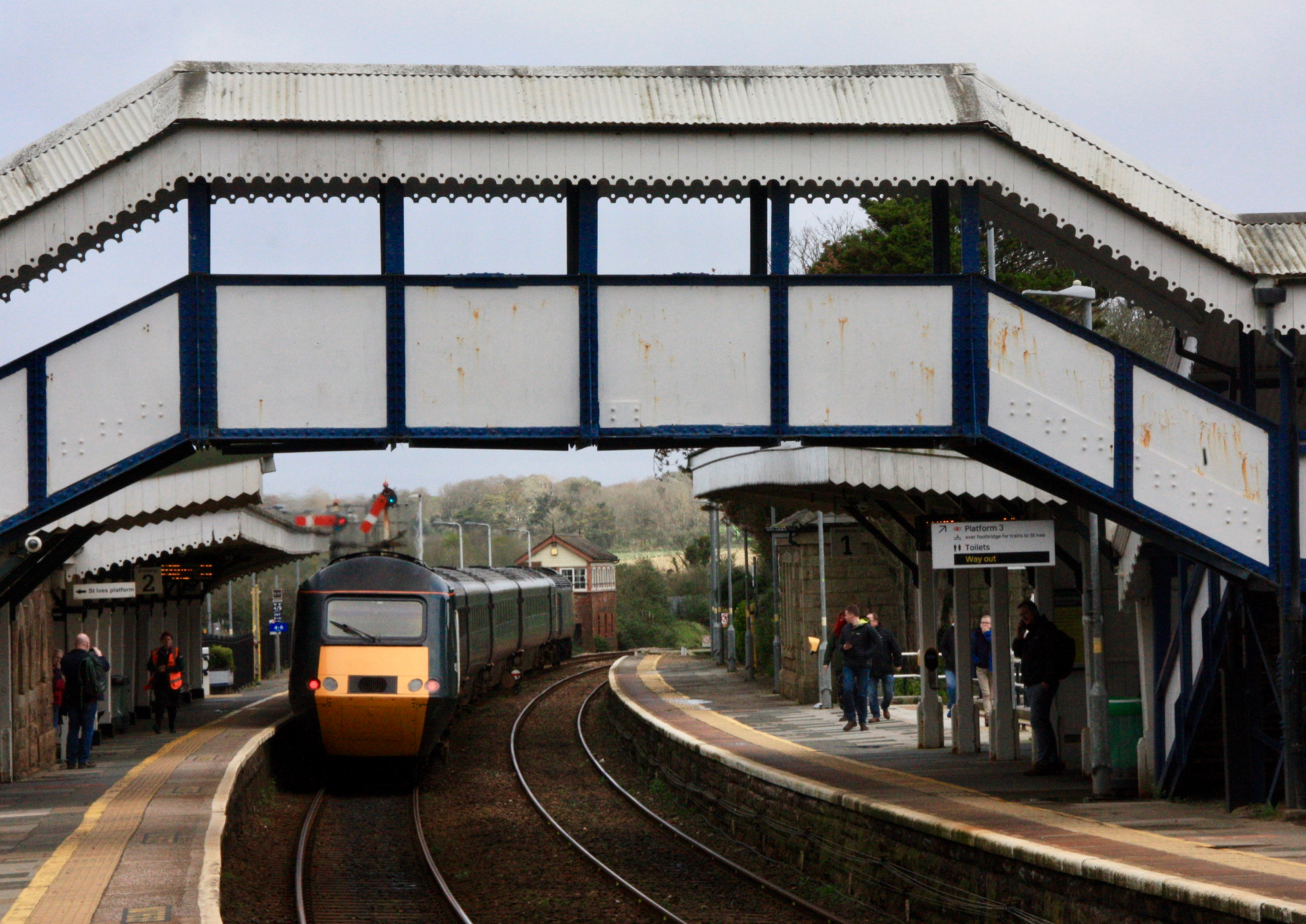
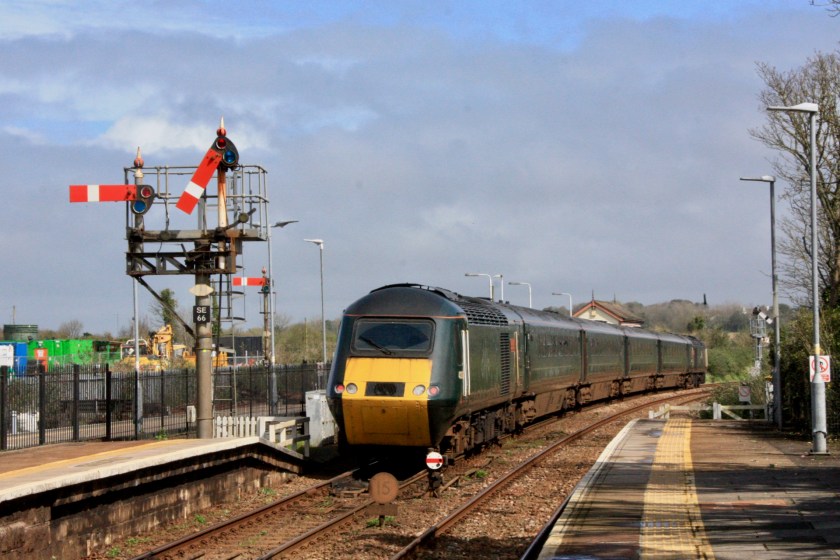
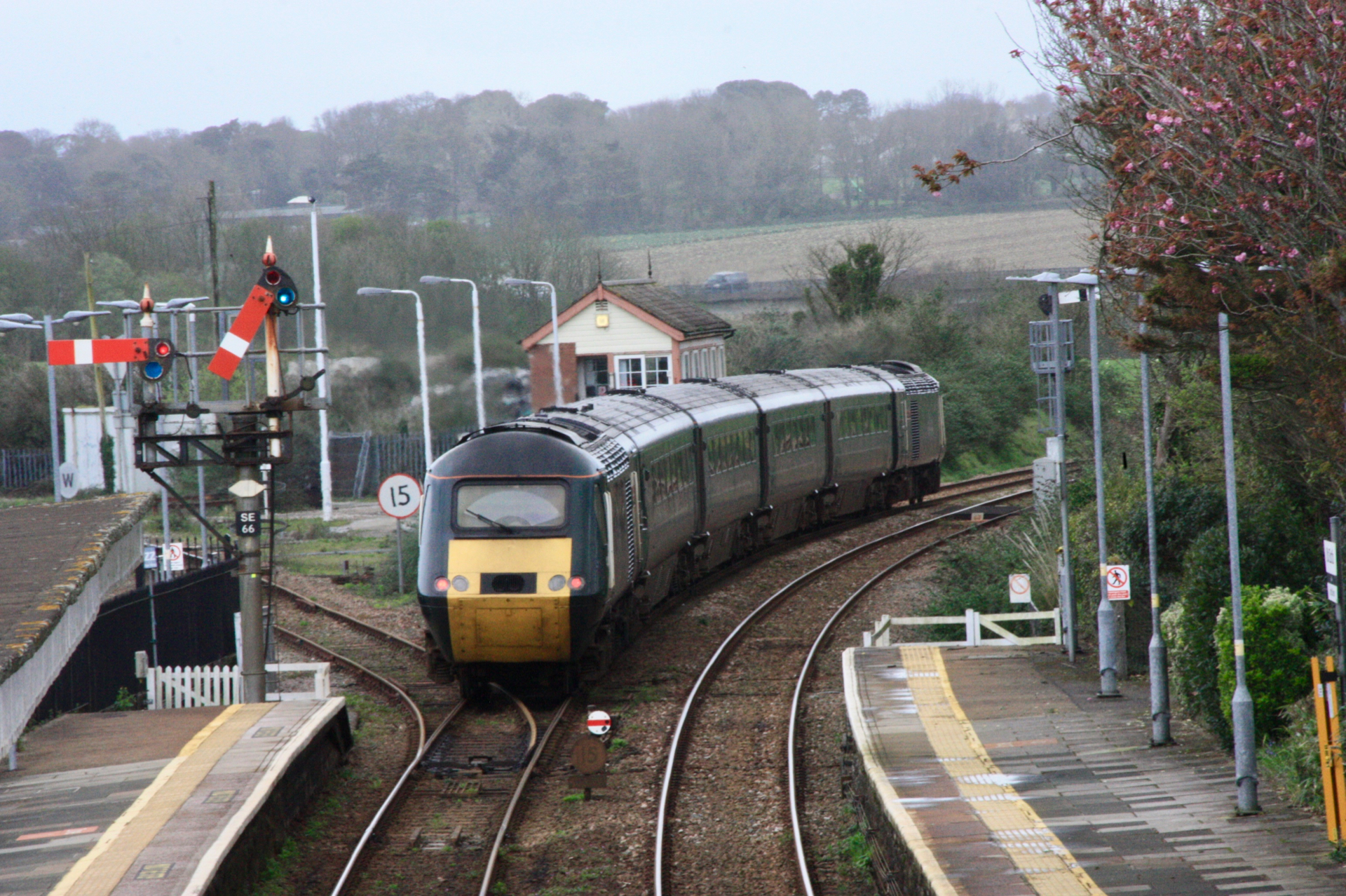
Standing on the station and looking north towards the signal box, the four semaphores in view are down home signal SE2 and a bracket housing up home SE66 alongside SE64 for access to the St. Ives branch, with exit from the St. Ives bay platform (3) controlled by SE63.

The trio of signals in view looking south are down starter SE6 on a short post at the platform end, alongside SE54 for down trains departing from up platform 2 and up intermediate home signal SE67 some way beyond.

Two semaphores out of sight on the St. Ives branch are down section signal SE62 and up home SE9, which can be seen from the near-disused station platform at Lelant Saltings (photo below).

Several weeks before my April 2024 visit I had been able to pay a brief visit to St. Erth during a week-long closure of the main line between St. Austell and St. Erth for the re-signalliing scheme, when the only rail services operating in West Cornwall were the St. Ives branch and a connecting half-hourly Class 150 shuttle between Penzance and St. Erth. This meant a rare chance in daylight to see passenger trains passing signal SE54, as seen below.

Most southerly of all the St. Erth semaphores are two that cannot be seen from the station platforms or footbridge. These are down section signal SE7 and up outer home SE68, which can both be seen a photographed from the Rosengrouse Road over-bridge (321 miles 46.25 chains), reached by taking a 15-minute walk south from the station.

Arriving at St Erth shortly before 13.00 on Monday, 8 April, it was good to see that the old footbridge was still in use – latest estimates are that it will be removed in September – and to see all three of that day’s Castle HST sets passing within the next 40 minutes.

These were 43186/198 (set GW09) with 2P15 from Penzance to Plymouth (12.58) then 43187/092 (GW06) with 2P16 from Penzance to Plymouth (13.23) closely followed by 43098/004 (GW07) with 2C68 from Plymouth to Penzance (at 13.31). Meantime the St. Ives branch had been seasonally strengthened to four cars and was being worked by 150221/266.

Returning to St Erth early on the morning of Tuesday, 9 April, when the overnight storm meant many cancellations that day, I was able to photograph that day’s St Ives branch train (150249/221) passing signal SE64 as it headed onto the branch with 2A03 from Penzance (06.58) to St Ives (photo below).
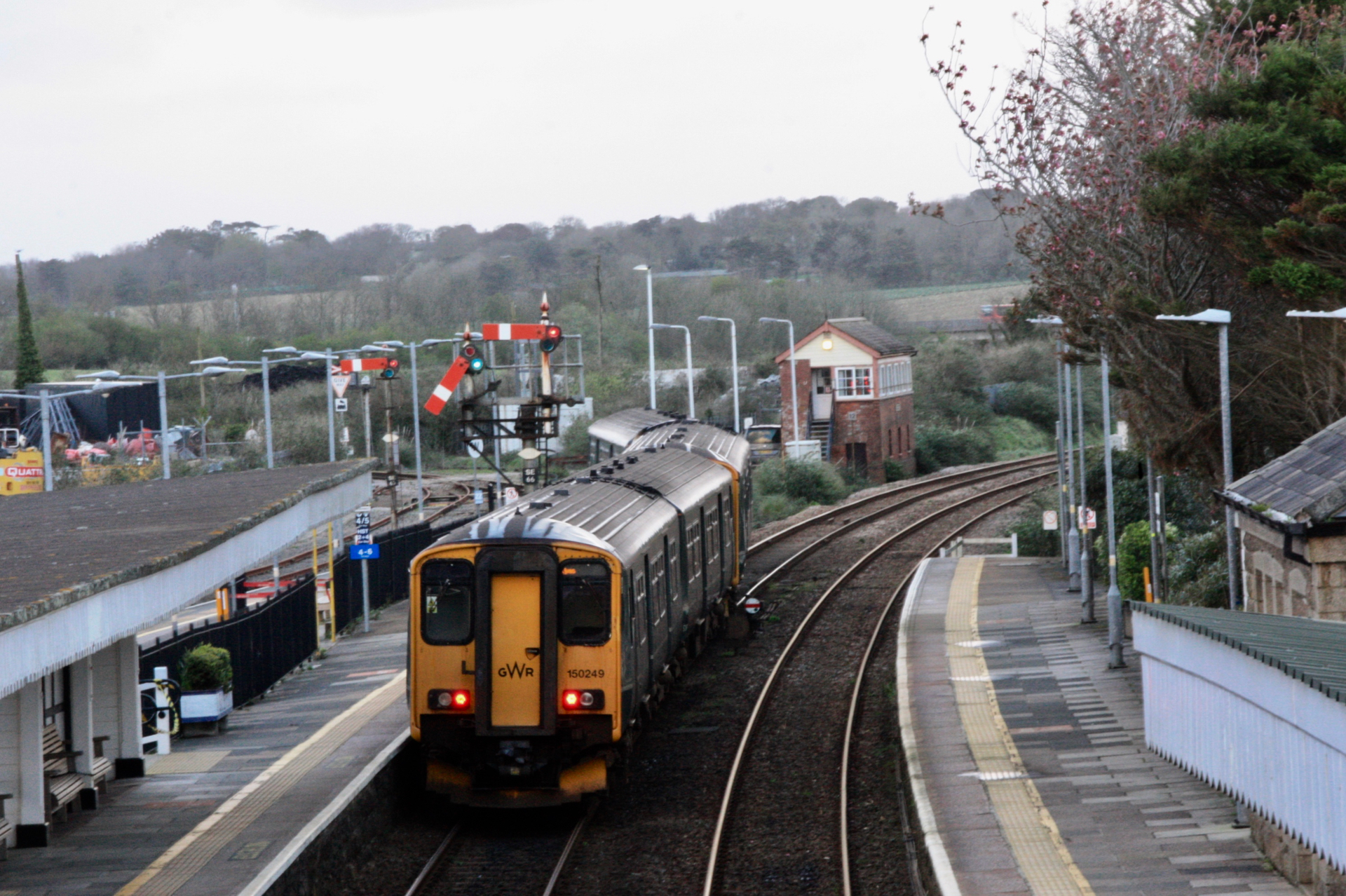
I then took a 15 minute was to the now-deserted Lelant Saltings station to photograph the return service from St Ives (2A04) passing signal SE9 before becoming the only passenger to board the one remaining weekday departure (07.52) to St Ives from the former park & ride site.

One major disappointment on my 8/9 April visit to St. Erth was that, as a consequence of ASLEF strikes and work to rule, the Class 57-worked Night Riviera sleeper service was suspended for several days, meaning I was unable to get a rare daylight shot of the down working passing signal SE7, the shot I had hoped to get from the road bridge.
 RailwayWorld.net
You must be logged in to post a comment.