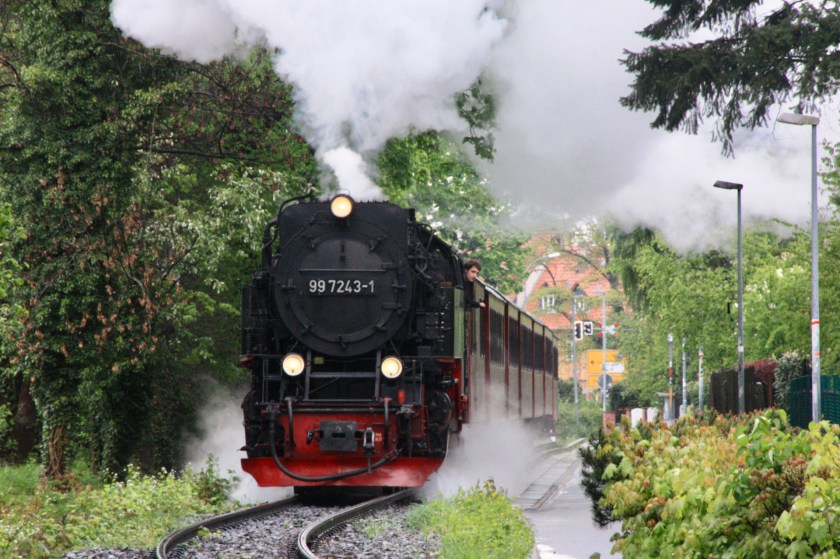
Two years after my last visit (Back in the DDR–August 2022) it is time to spend another few days travelling and photographing the finest steam-worked railway network in the world, the remarkable Harzer Schmalspur Bahnen (HSB) metre-gauge system in eastern Germany.
This time using a three-day “short holiday” (Kurzer Urlaub) network pass (€47.00/£40.50) my aim was to travel as much of the 140km/87-mile system as possible, with a mixture of steam haulage and travel in ageing diesel railcars.
My base from 16-20 April 2024 was the railway town of Wernigerode, a four-hour DB train ride south from Berlin’s Brandenburg Airport (BER), with changes in both directions at Berlin Hauptbahnhof, Braunschweig and Vienenburg but costing just €22.90 each way on advance purchase (Super Sparpreis) tickets.
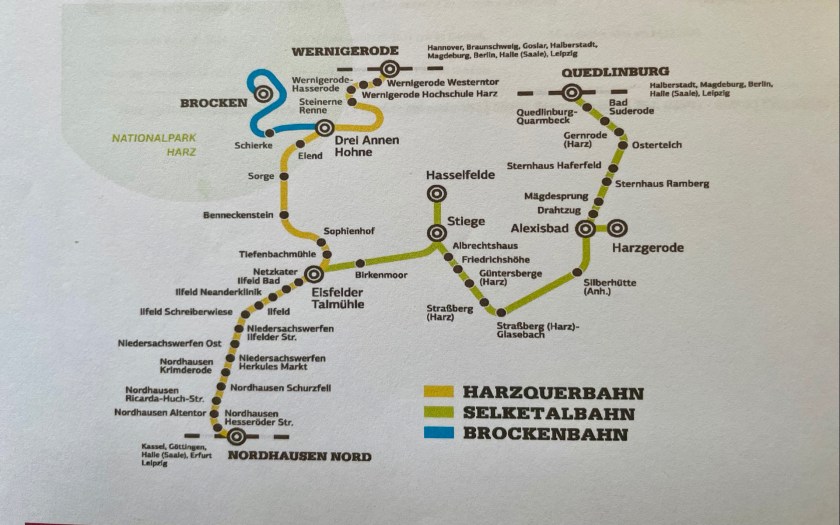 As I have described in previous HSB features, the Harz system comprises three inter-connected railways forming a Y-shape, busiest of which by far is the 34km/21 mile Brockenbahn from Wernigerode up the 1125m/3,691ft Brocken Mountain. Premium fares are charged on the Brocken route, and the final section is not included in the Kurzer Urlaub pass.
Then there is the 61km/38 mile north-south Harzquerbahn from Wernigerode to Nordhausen, from which the Brockenbahn diverges at a junction called Drei Annen Hohne and the southern 12kms/7½ miles of which, from Ilfeld to Nordhausen, is also served by dual-powered Nordhausen trams.
Finally the delightful Selketalbahn connects with the Harzquerbahn at another junction, Eisfelder Talmühle, 44kms/27½ miles south of Wernigerode and runs in a roughly north-easterly direction for 53kms/33 miles to the UNESCO World Heritage town of Quedlinburg, with short branches to Hasselfelde and Harzgerode.
The core of daily operations is HSB’s fleet of 17 powerful 2-10-2 tank engines, known as Neubaudampfloks, (99-7231-7247) which were built in the 1950s, along with two generations of single railcars and a handful of centre-cab diesels that were converted from DR standard gauge locos and are used for shunting and occasional passenger and freight workings.
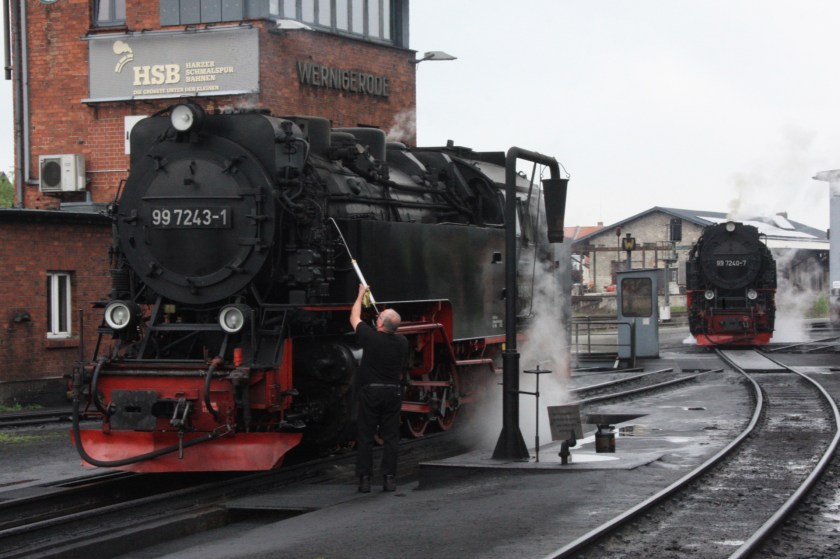
Under the winter timetable, which is in force until late April, there are a minimum of five steam diagrams each day, with three locos beginning their day at Wernigerode, one operating a long (12+ hour) diagram from its depot at Gernrode on the Selketalbahn and one beginning at Nordhausen.

One of the great bonuses of staying in a Wernigerode hotel is that in return for paying a tourist tax of €3 a night you will be given you a booklet of discount vouchers to local attractions and what is called a HATIX pass, offering unlimited free travel on the regional HVB bus network during your stay.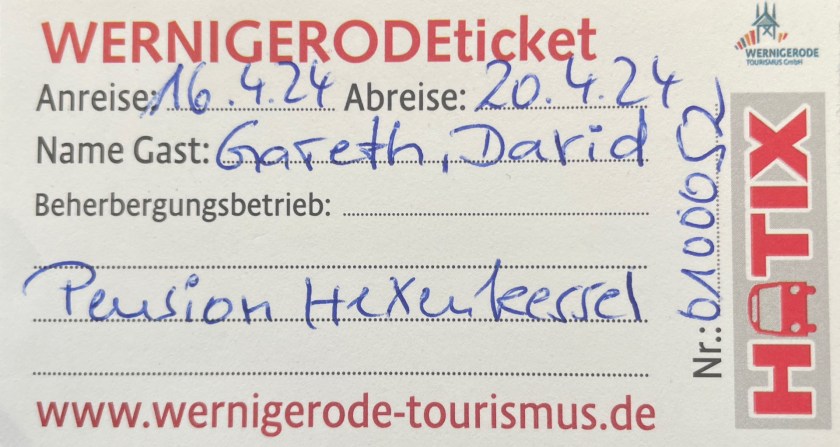 When touring the HSB system from Wernigerode there are two particularly useful bus routes that take you from Wernigerode station to Quedlinburg in about an hour (route 230) and another to Stiege and Hasselfelde (route 260), allowing you to make day-long circular tours by bus and train and avoiding the need for a lengthy return rail journey.
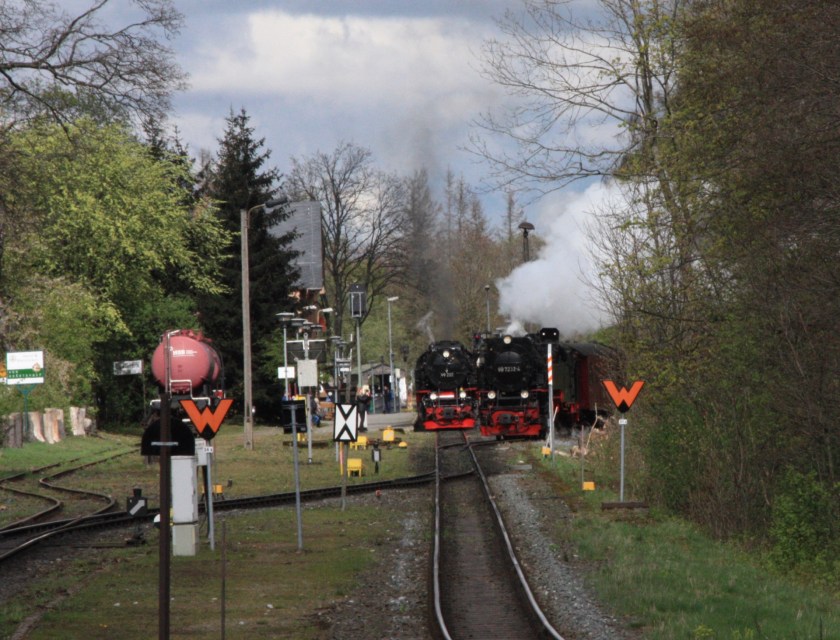
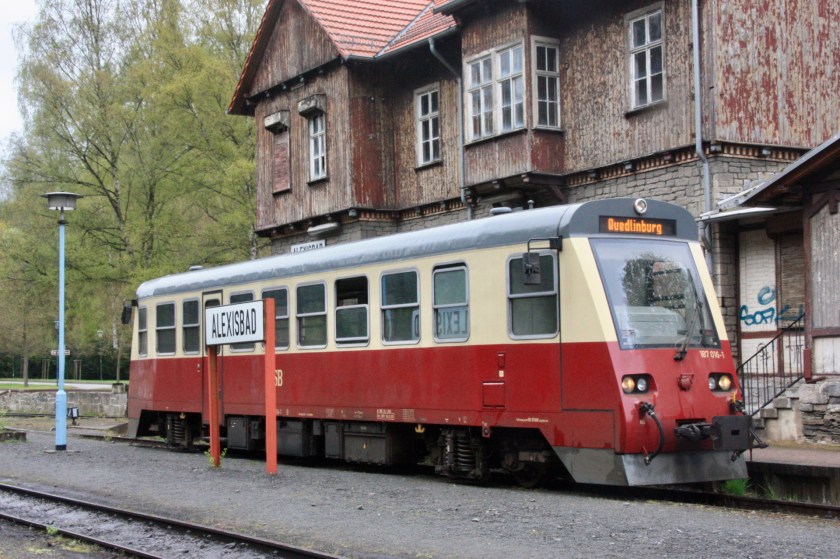
Beginning my three day tour on 17 April 2024 with a bus ride to Quedlinburg courtesy of my HATIX pass, I then joined the two-coach 10.30 departure for Alexisbad, with one coach taken up by a large group and regular passengers having to use the only other coach.
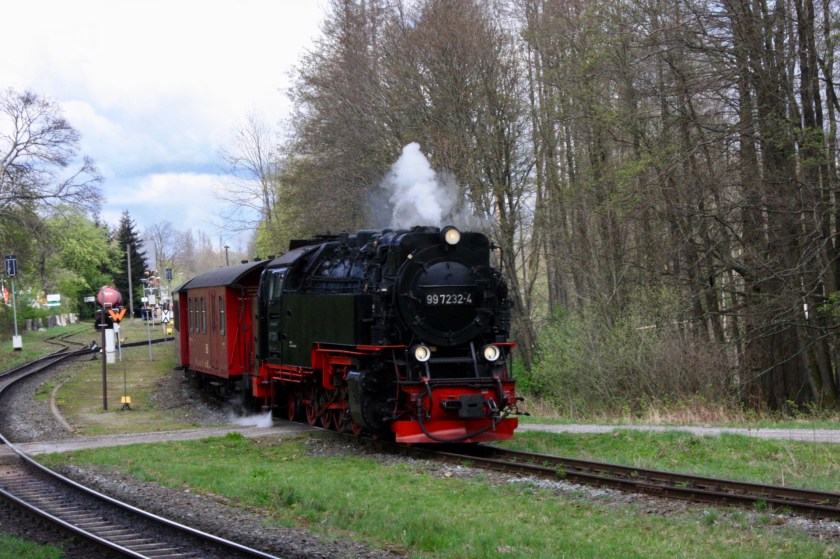
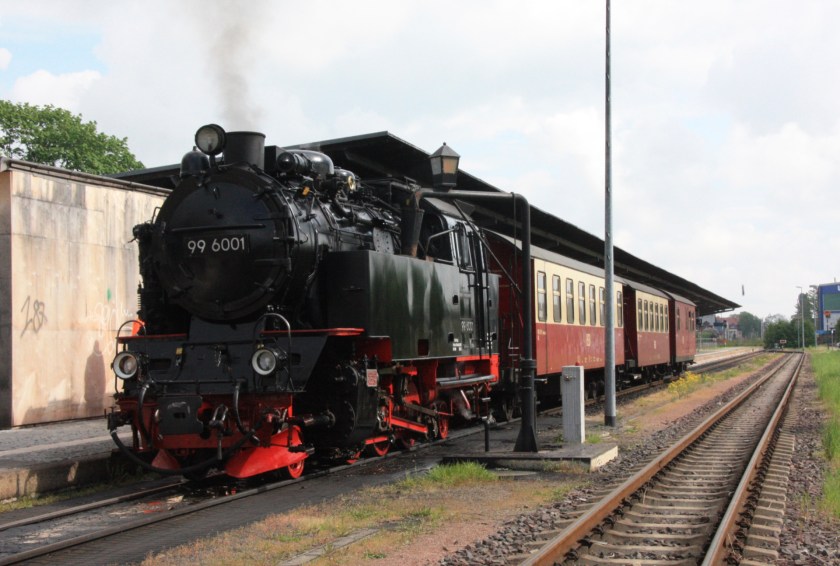
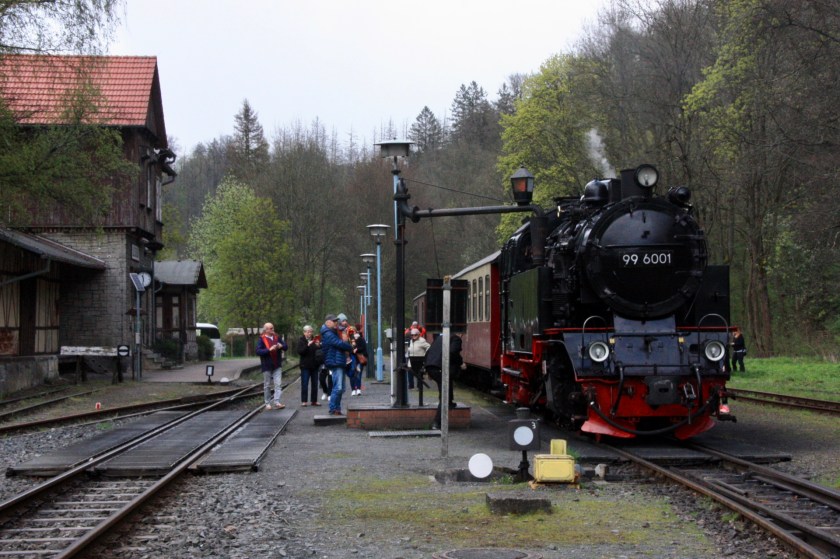
It was good to see that Selketalbahn services were being powered by the HSB’s unique 2-6-2 locomotive 99-6001, which dates fromj 1939 and was to have been the prototype for a production run, until the outbreak of World War II put paid to that plan.
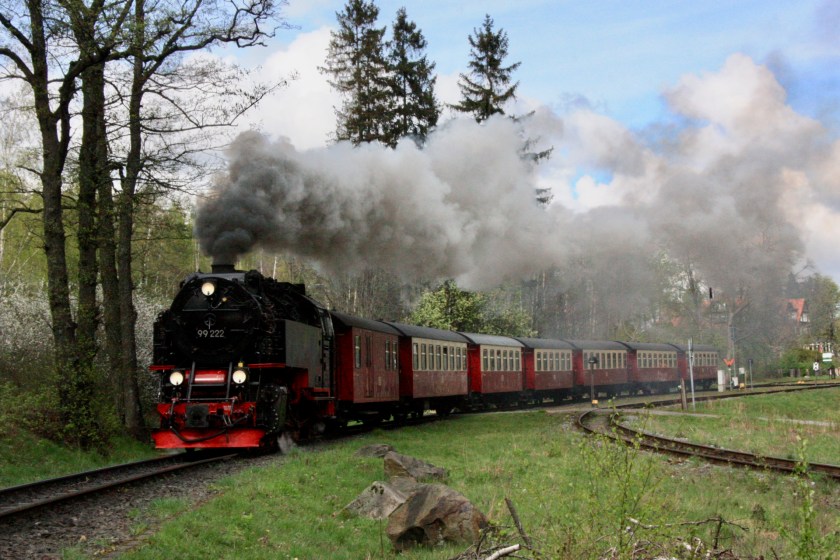
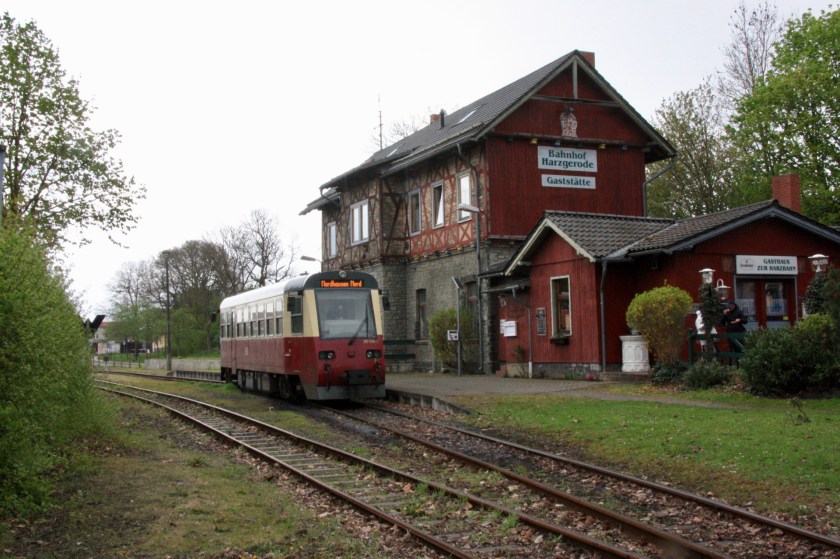
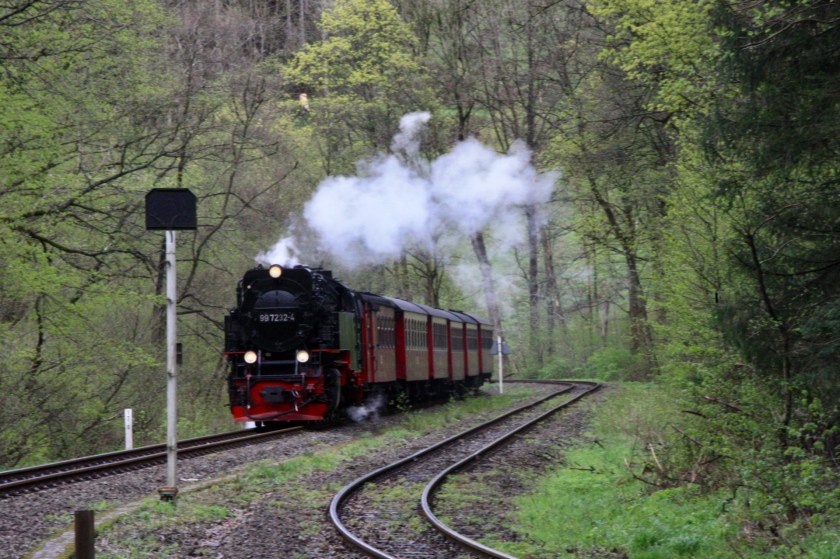
After arrival at Alexisbad I took one of the three services each day that run up the short branch to Harzgerode, before continuing on that railcar to the junction at Eisfelder Talmühle, where there was the chance to see 99-7232 approaching with the near empty 11.57 from Wernigerode.
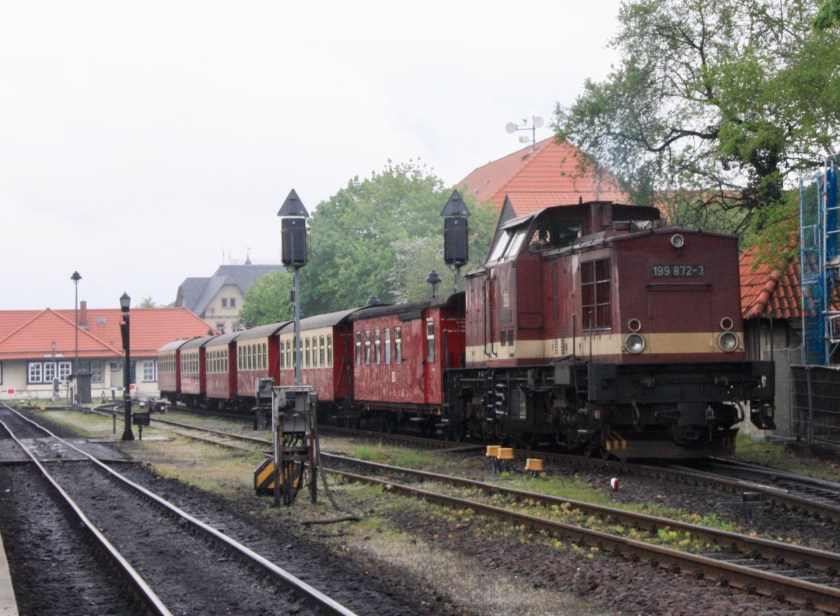
Travelling north on the return steam service as far as the other junction at Drei Annen Hohne I was again on a near-empty train, having been one of only four passengers on the railcar from Harzgerode.
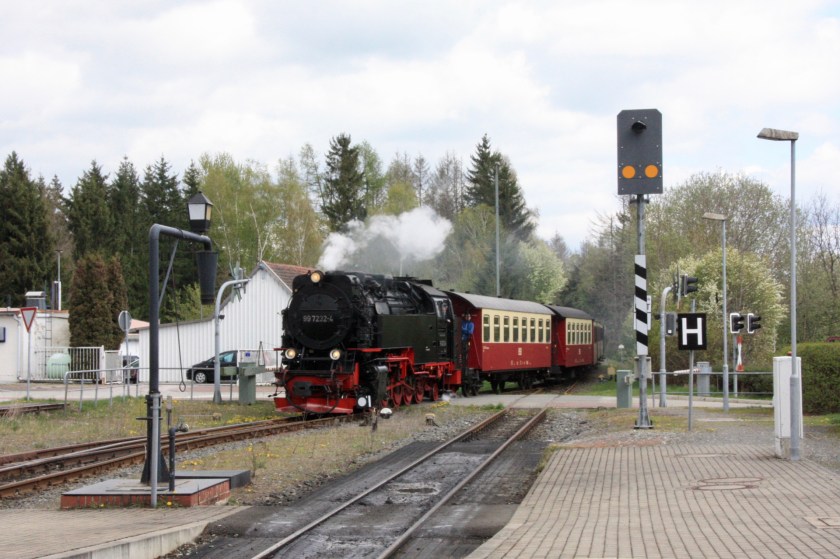
While late April is definitely low season it is curious to see how few passengers were in evidence, even on the hugely popular Brocken services, but reassuring to read that overall passenger numbers on HSB are on the increase.
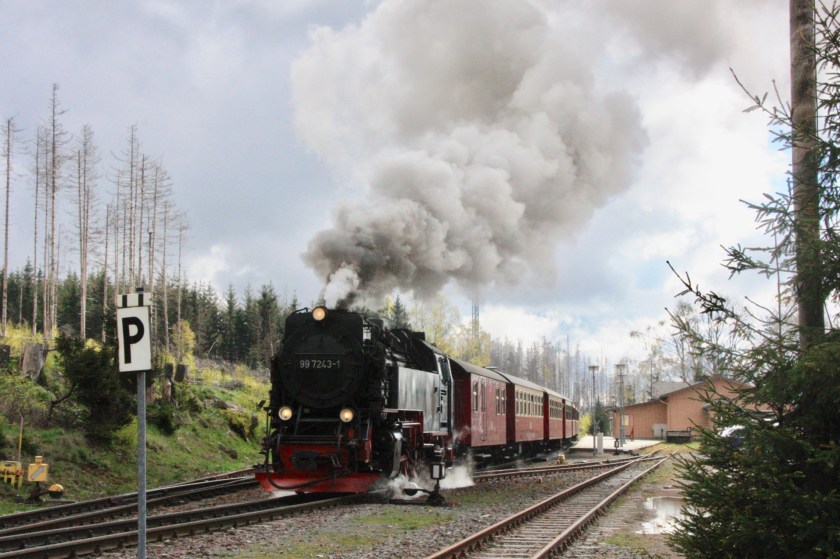
In a review of 2023 published in March 2023 HSB announced that it had carried 1.07 million passengers in 2023, a 9 per cent increase on the previous year. Around half that total (507,000) were Brocken-bound, while the much quieter Selkatalbahn carried 89,000 passengers, a 17 per cent rise on 2022.
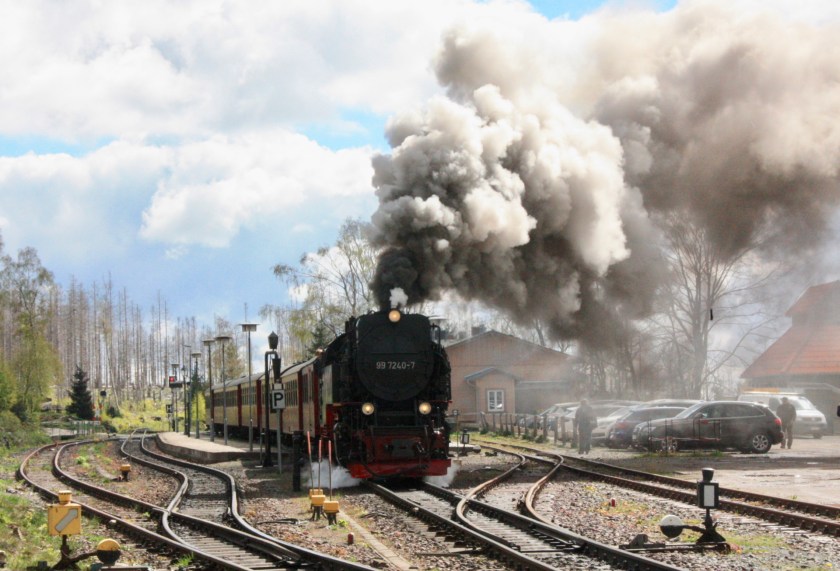
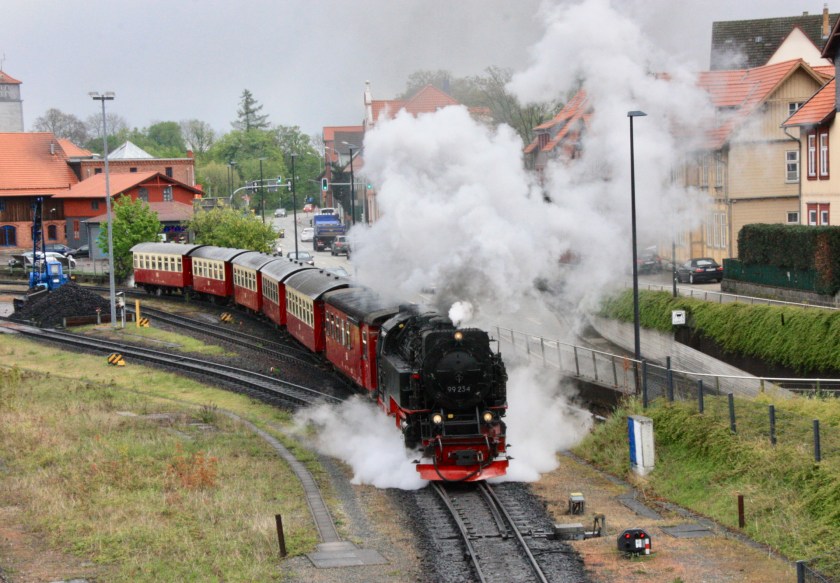
Changing my plans to reflect the weather forecast, my second day (18 April 2024) was entirely steam-hauled, beginning with a trip on the first Brocken departure from Wernigerode at 09.40 and travelling as far as Schierke, the stop before Brocken and limit for those not paying the hefty Brocken premium fare.
Here there was a chance to photograph both my train heading up the mountain and the following Brocken service departing, before returning to the junction and Drei Annen Hohne and from there heading south as far as Benneckenstein on the near-empty daily working from Wernigerode to Eisfelder Talmühle.
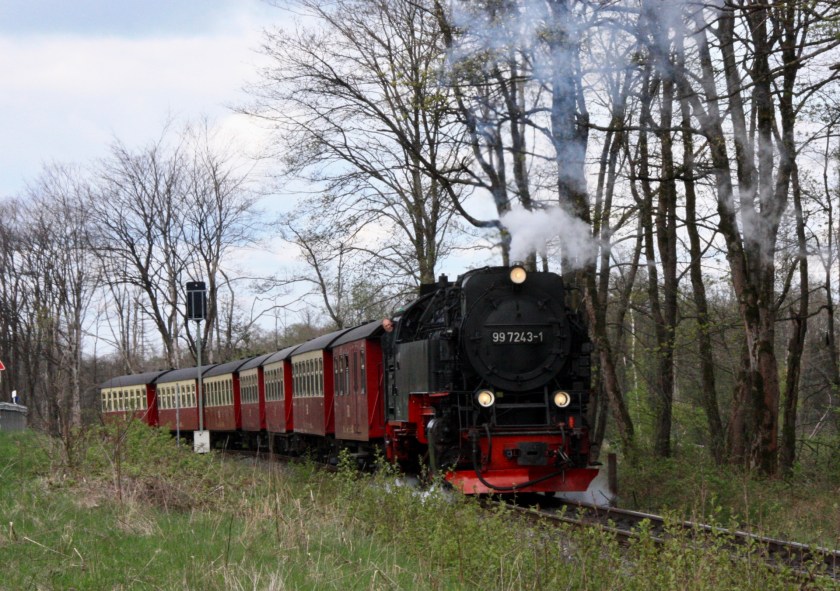
Returning to Wernigerode after a beer stop in a DDR-themed Museum close to the station I was again amazed at how few passengers there were on board, though the train soon filled up at Drei Annen Hohne where it connected with the daily Brocken-Nordhausen service and picked up large numbers of passengers from that train who were returning to Wernigerode.
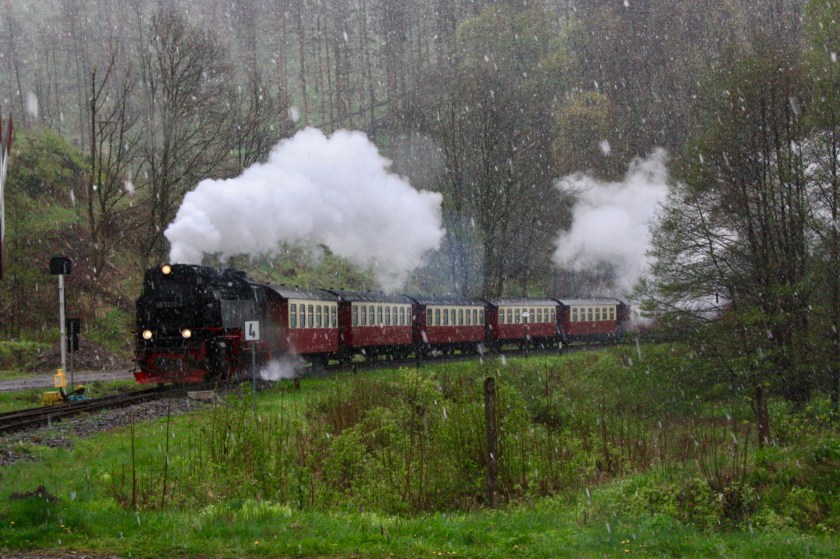 Rounding off my three day Harz tour on Friday, 19 April, I was glad to have visited Schierke on the previous day as the weather had deteriorated badly and my shot (above) of 99-7232 approaching Eisfelder Talmühle with the daily Nordhausen-Brocken working was taken during a heavy downfall of snow.
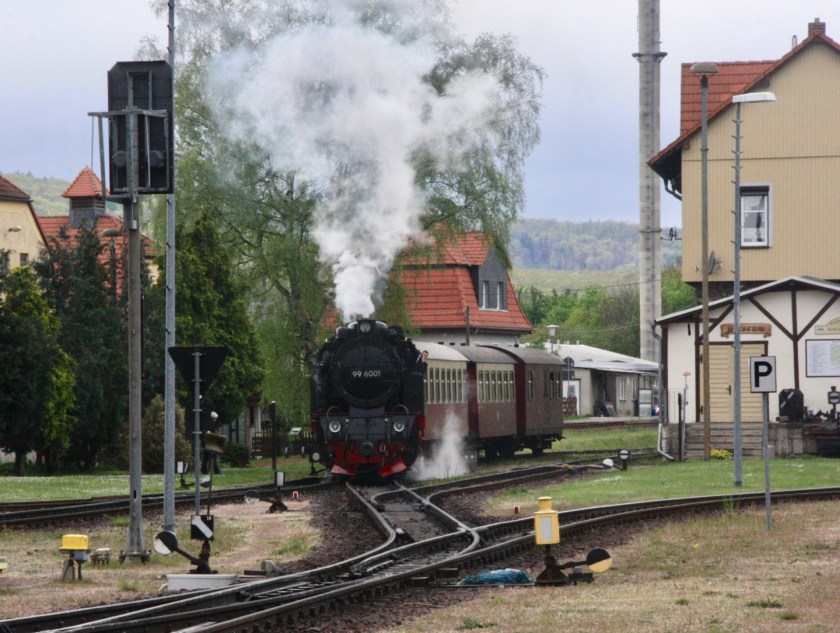
Along with a handful of other passengers I had taken the first train of the day from Wernigerode, the 08.25 railcar to Ilfeld, and after the snowy shot of 99-7232 I headed up the Selketalbahn to Gernrode aboard another very sparsely loaded railcar.
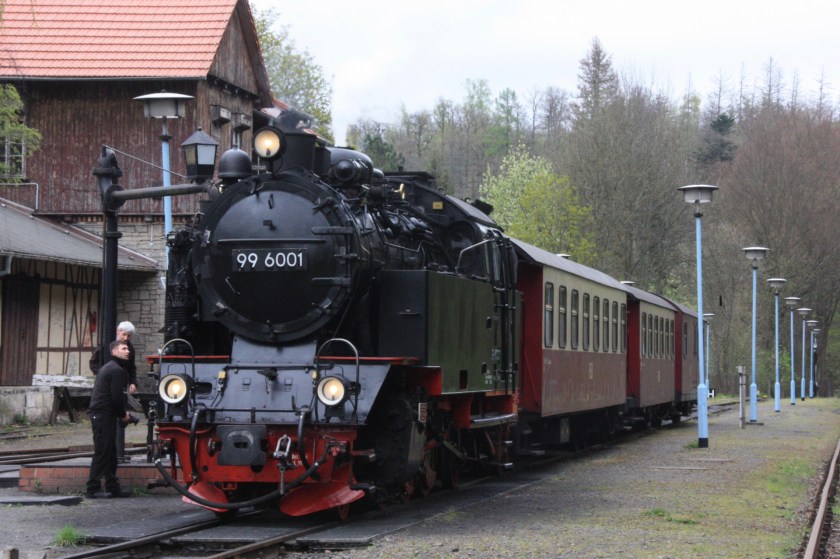
After a 45-minute break at the Selkatalbahn’s HQ I had another trip aboard 99-6001 with the 14.13 to Hasselfelde, a journey of just under two hours when, once again, passenger numbers were pretty thin, with just four of us aboard by the time of our slightly delayed arrival in Hasselfelde at 16.10 (photo below).
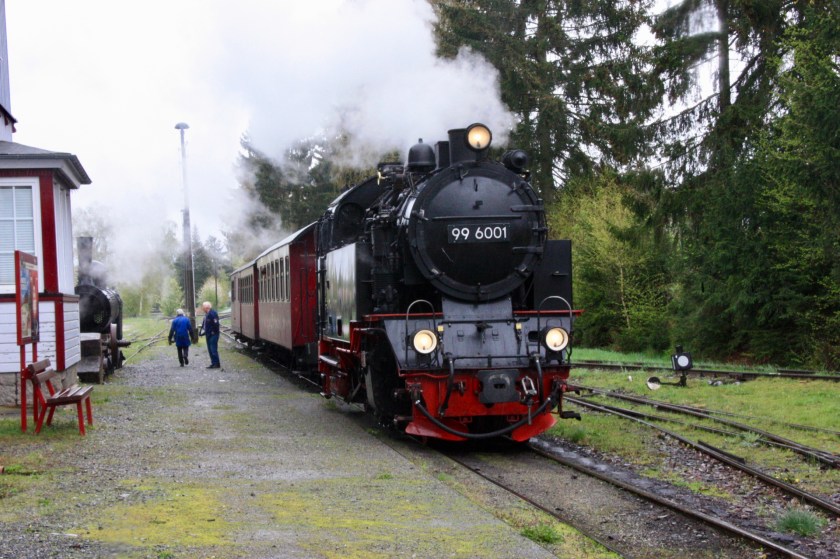
In view of the dismal weather I decided against carrying on with the steam service to Eisfelder Talmühle, and instead took a short 5-minute walk up to Hasselfelde bus station, from where the conveniently-timed 16.30 (260) bus got me back to Wernigerode in about 45 minutes.
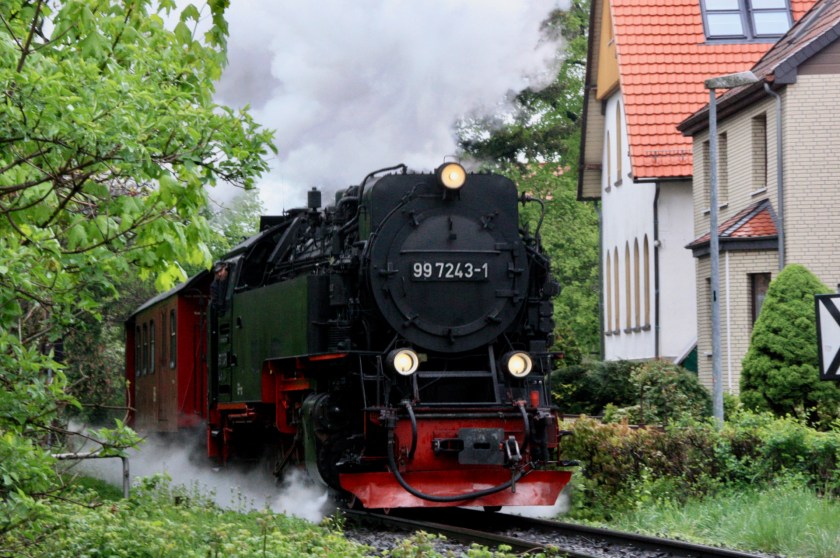
You don’t have to be a diehard rail enthusiast to appreciate the delights of the HSB and the wooded scenery of the Harz National Park and the Selke Valley (Selketal), though it probably helps when the weather is not too good.
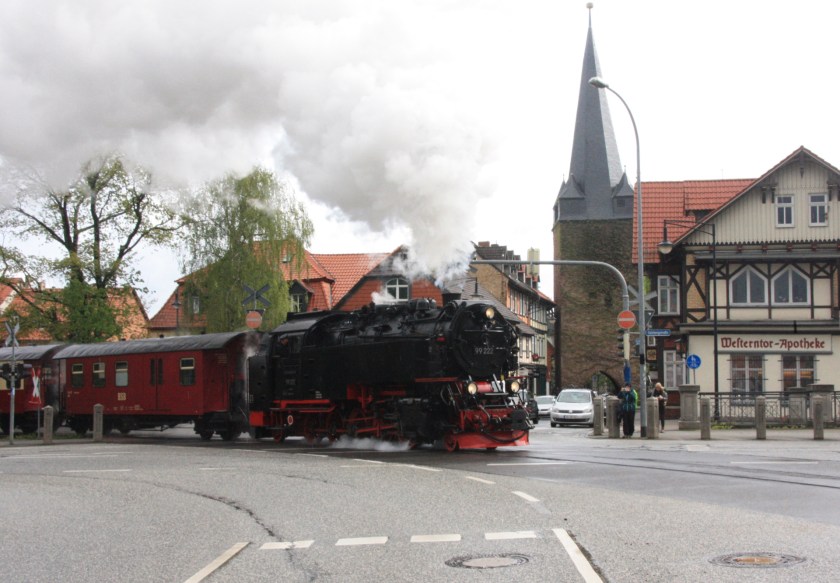
But there is plenty more to discover in historic towns like Wernigerode and Quedlinburg as well as the many walking and cycle routes across the region that can be reached on the rail and bus networks. For a taste of the real Germany, this part of the country has a lot to recommend it.
My four nights at Wernigerode were in the comfortable Pension Hexenkessel, which is in the town’s pedestrianised main street (Breite Strasse 9), only a short walk from the rail and bus stations, and costing €49.50 (£42.50) a night (room only).
 RailwayWorld.net
You must be logged in to post a comment.