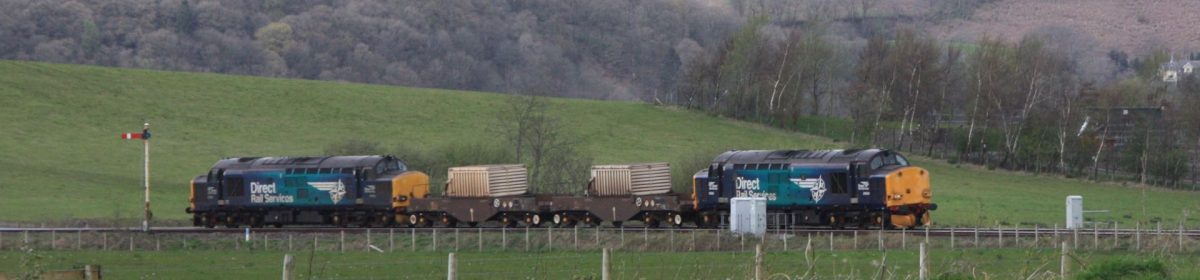
Hoping for a case of third time lucky, it is time to pay a return visit to the glorious Peak District and spend a couple of hours witnessing freight activity and mechanical signalling at Peak Forest South, on the surviving freight-only section of the former Midland Railway main line from Manchester via Bakewell to Matlock and Derby.
My two previous visits had been on a Saturday in June 2017, when nothing was moving, and in April 2022 when I was defeated by the weather, so taking the 1½-mile walk from Dove Holes Station on a reasonably fine summer’s day (27 August 2024) I was hopeful of seeing and photographing some freight action.
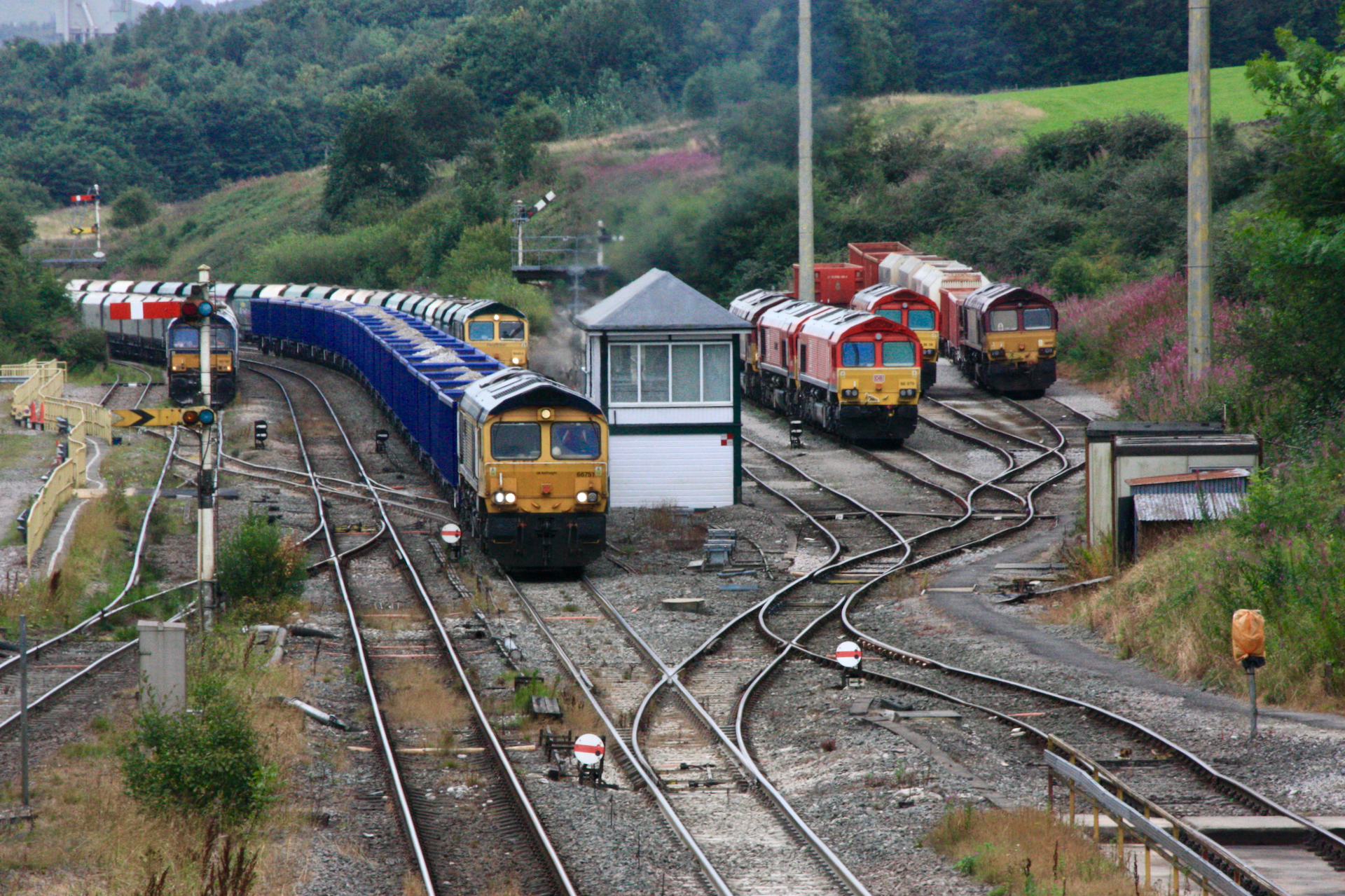
Looking south from the over-bridge on Batham Gate Road there is a fine view of the former station and the 1925-vintage Midland Railway signal box, with an array of sidings behind and the double-track route continuing to the south and round a left hand bend, with a loop on the down side and another on the up (northbound) side.
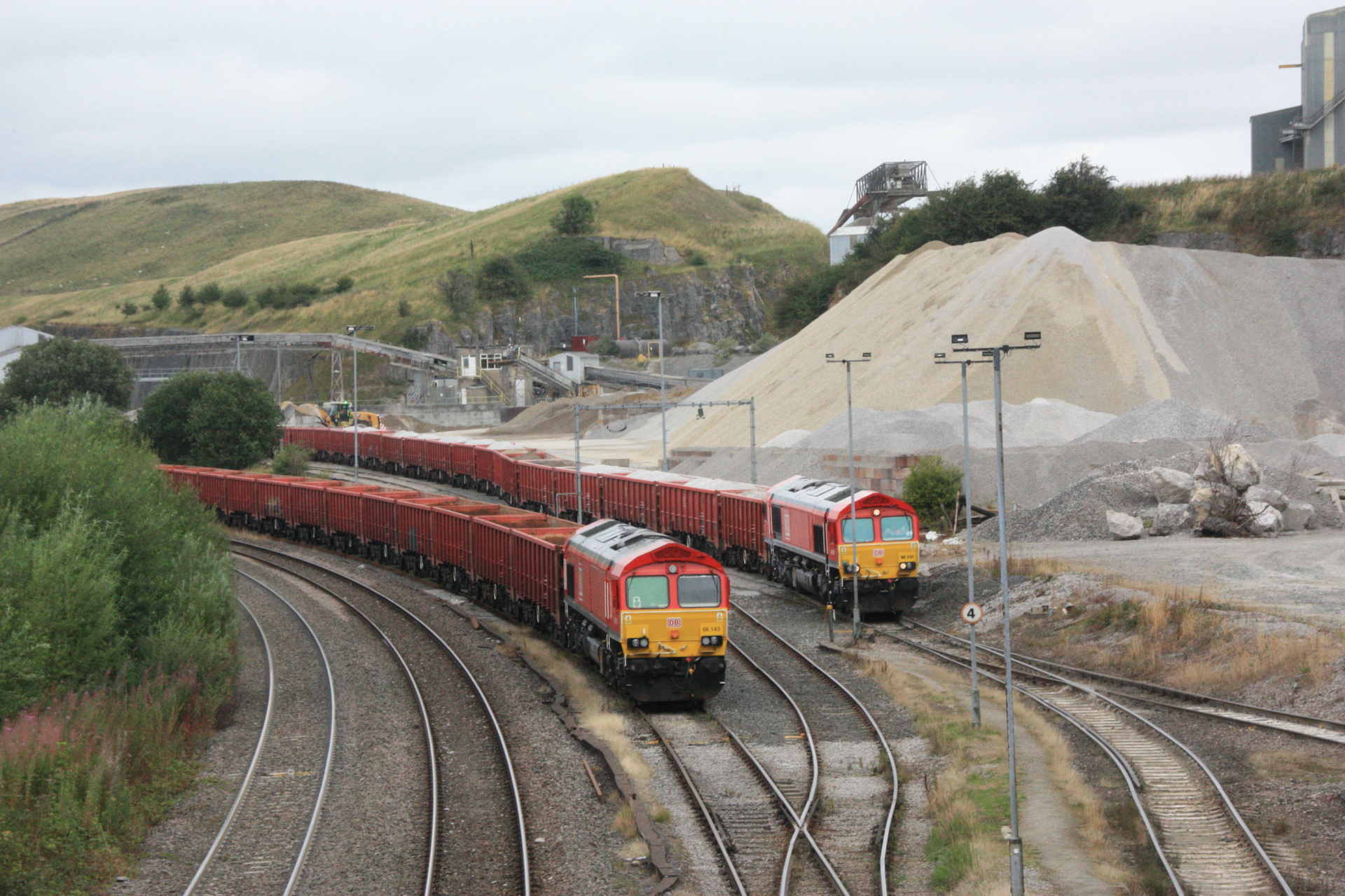
There are extensive quarry sidings to the north of this over-bridge, but these are all accessed from a connection immediately in front of the signal box, with train loads of loaded aggregates wagons being drawn into the down loop before the loco runs around and departs for the north via Chinley.
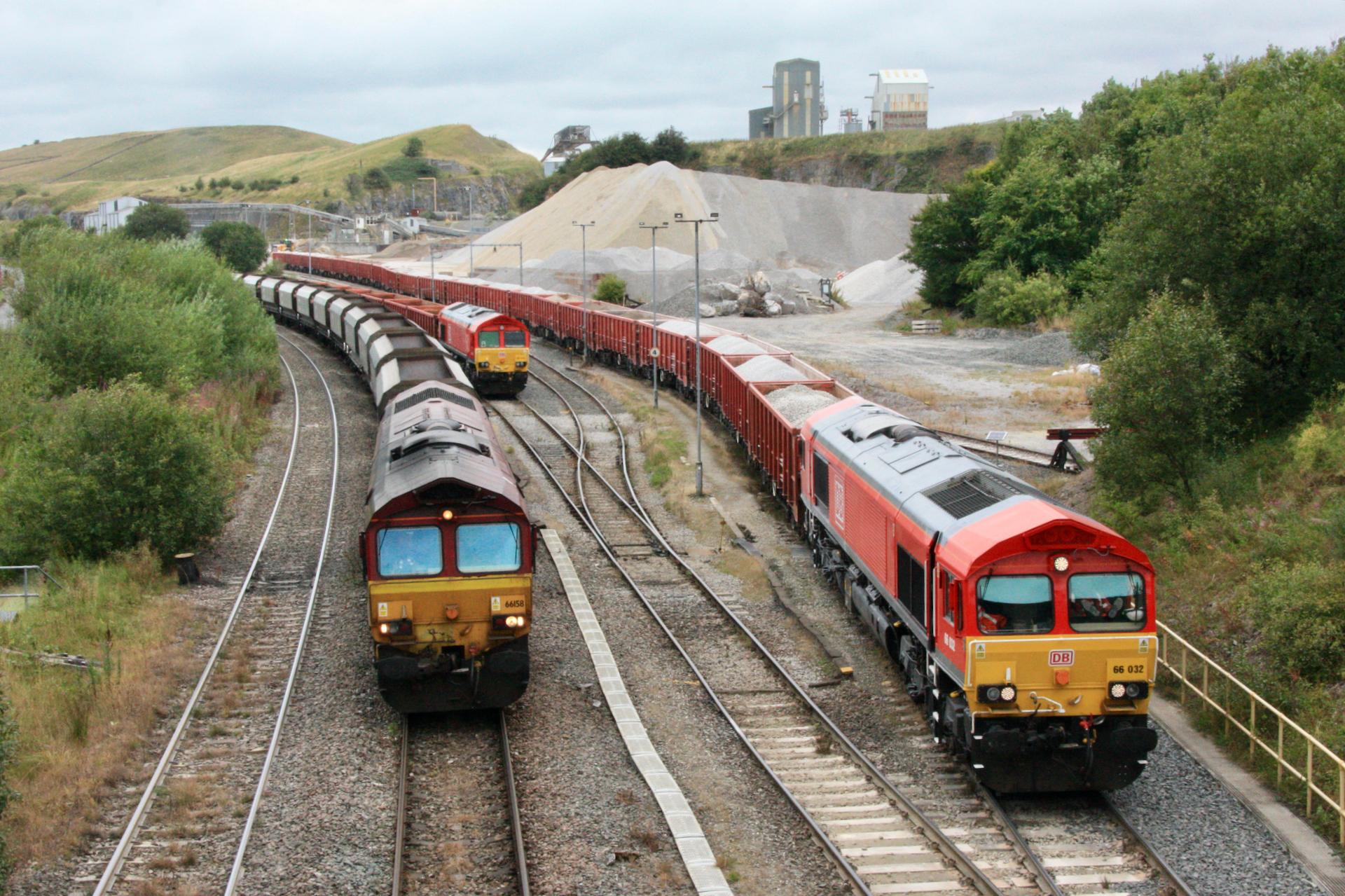
Aggregates traffic from the Peak District quarries originates at four different locations in the area. Firstly there is Peak Forest Cemex and these sidings at Peak Forest then there is Tarmac’s Tunstead Quarry and Sidings, about a mile to the south. Finally there are workings that start from quarries at Hindlow and Dowlow, south east of Buxton, from where trains will work to Buxton, before reversing and looping round to join the route to Chinley.

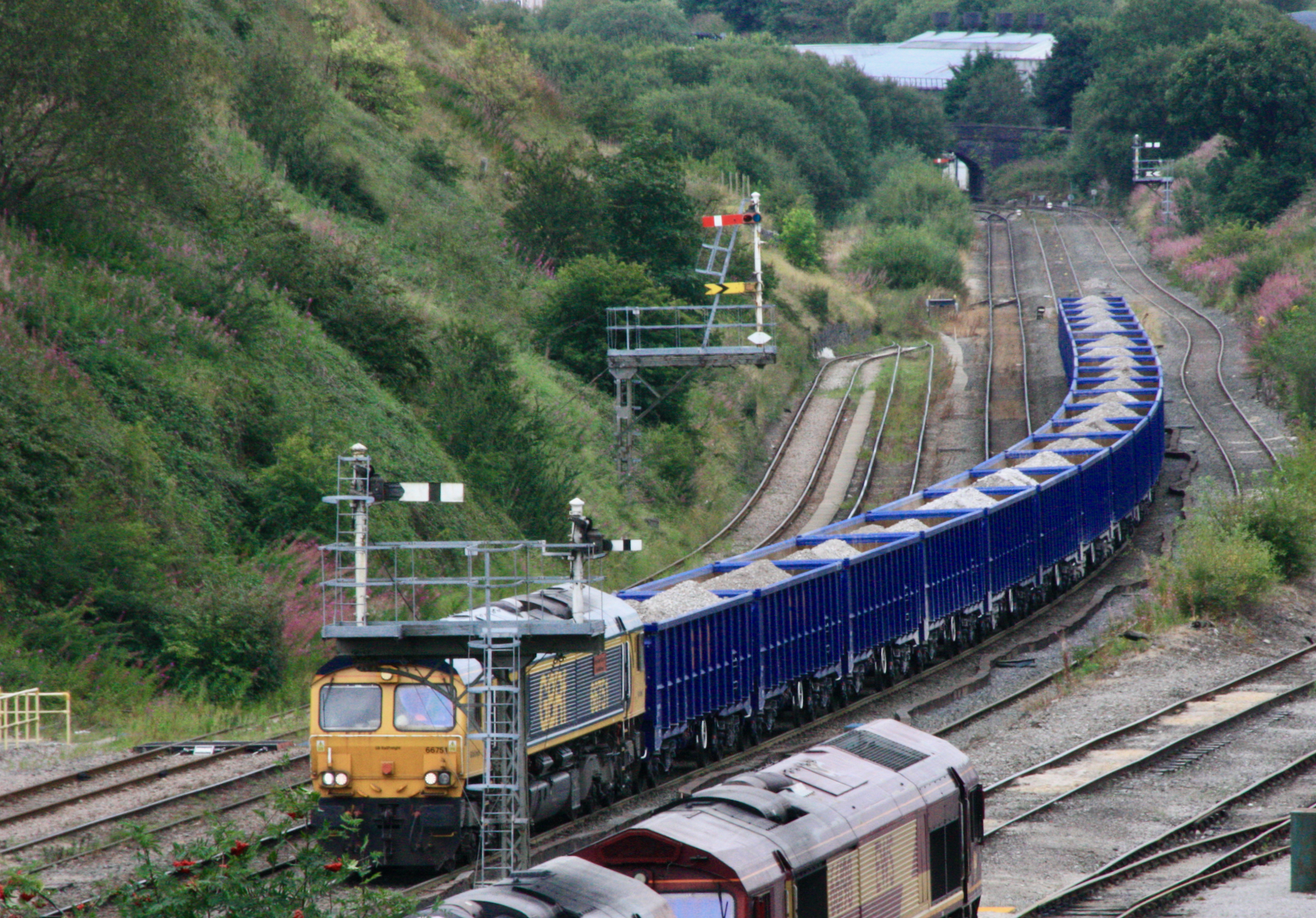
Peak Forest South Signal Box has a total of six semaphores and numerous shunting discs controlled from its 50-lever frame, most of which can be seen from the over-bridge. The semaphores comprise up starter 19, just in front of the road bridge, down home 22 (with fixed distant beneath) a bracket housing up home 17 and a subsidiary signal 13 for exit from the up loop and a down section signal 21, also with a fixed distant beneath.
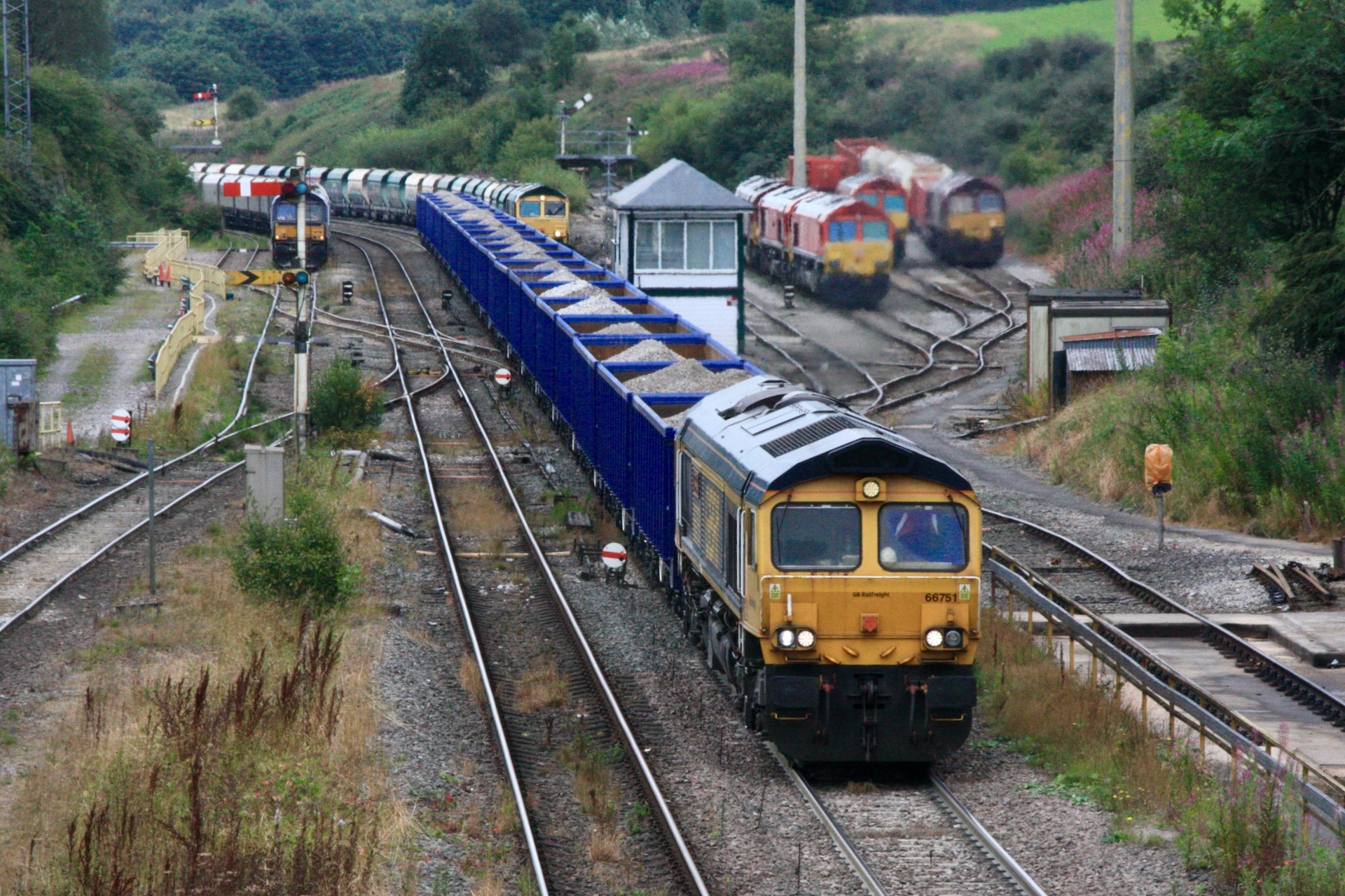
Taking a walk along a path that climbs above the railway south of the former station gives you a panoramic view of the loco stabling sidings and the route on towards Tunstead Quarry a mile to the south. This also allows you to see Peak Forest South’s final semaphore – motor-worked up distant signal (16), which is mounted below the Great Rocks section signal.
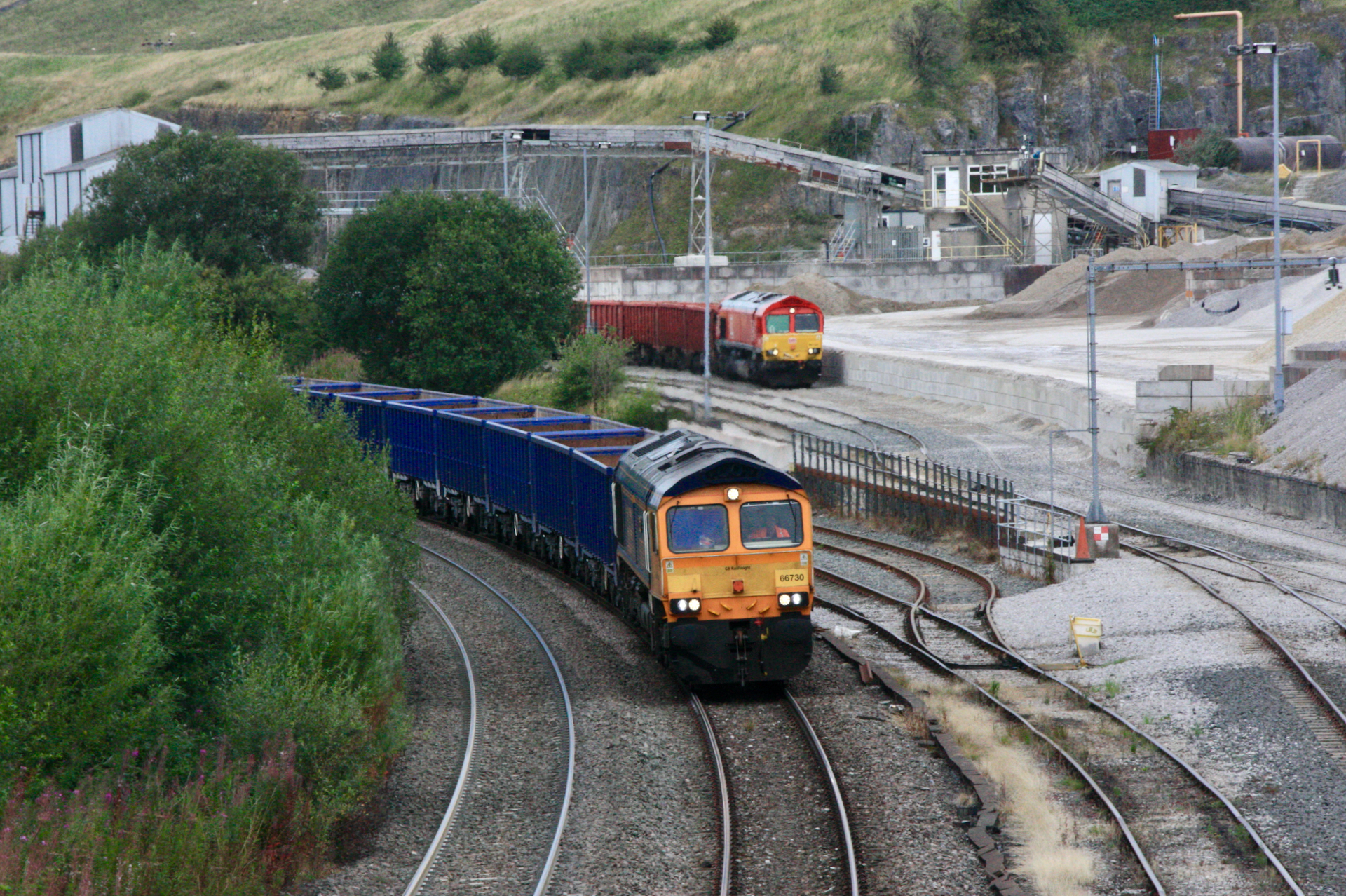
When I wrote a feature a couple of years ago about Britain’s last combined and working home and distant signals (June 2022) this one had been pointed out to me as an omission from my original article, yet when I challenged anyone to produce a photo of signal 16 pulled off, nothing was forthcoming.
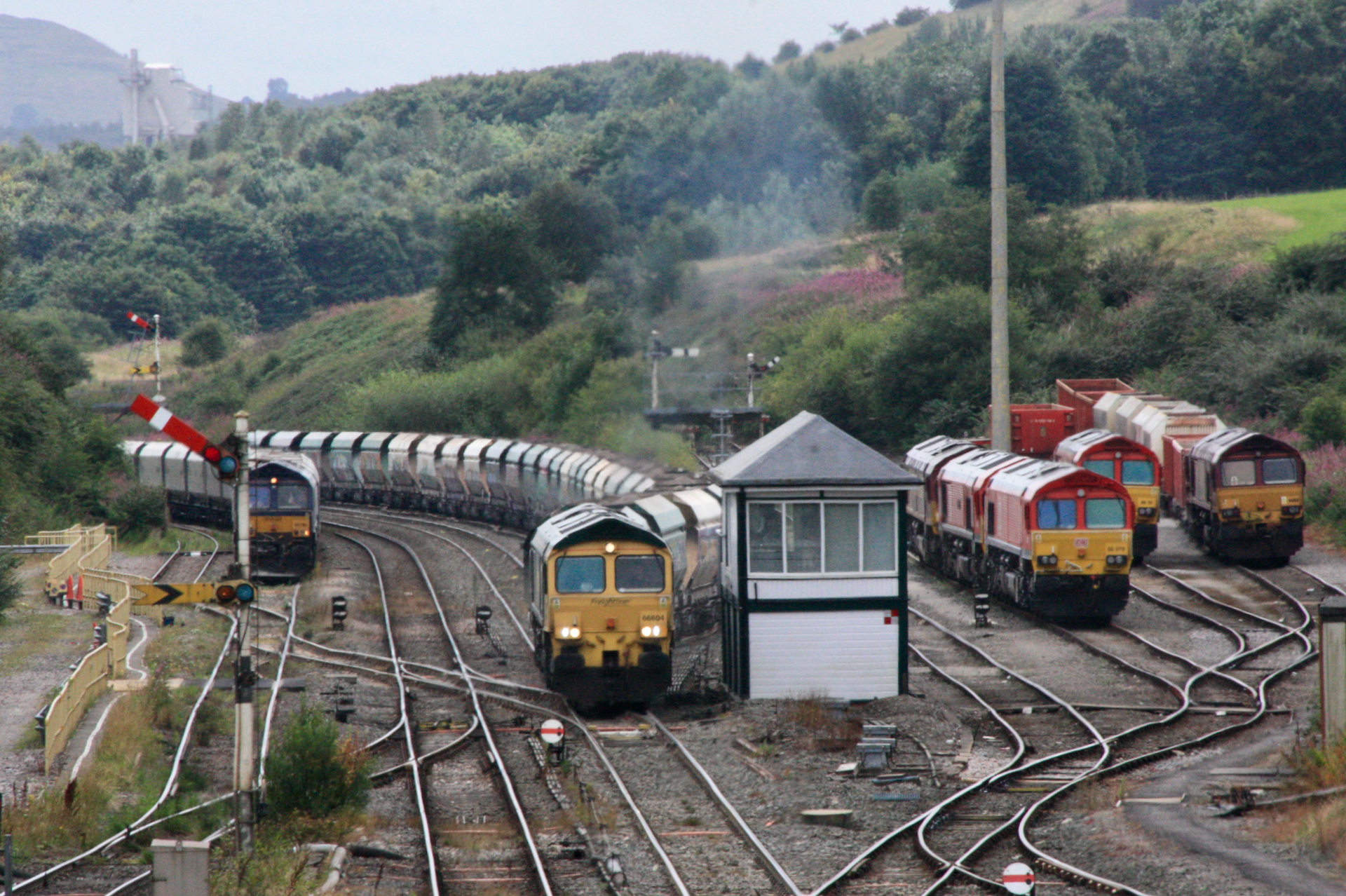
Alas, for most of the time I spent at Peak Forest the up main line was occupied by GBRf 66751 and heavily-delayed train of loaded wagons for Small Heath, so I did not see any services passing signal 16 and cannot say whether it is regularly pulled off for passing trains.
However, I have now been contacted by a resident signaller at Peak Forest who assures me it is indeed pulled off when a northbound service is cleared through to Chinley, even those pausing for a crew change at the old station.

For anyone interested in seeing and photographing heavy freight action, albeit exclusively Class 66-powered, this is a marvellous location to visit, with its dramatic backdrop, semaphore signalling and an attractive and newly-repainted signal box.

Another interesting sight on my walk down Dale Road from Dove Holes station was of Network Rail workmen re-building a circular brick ventilation shaft that stands close to the southern end of the 1¾ mile-long Dove Holes Tunnel, which extends from just north of Peak Forest all the way to Chapel-en-le-Frith.
 RailwayWorld.net
You must be logged in to post a comment.