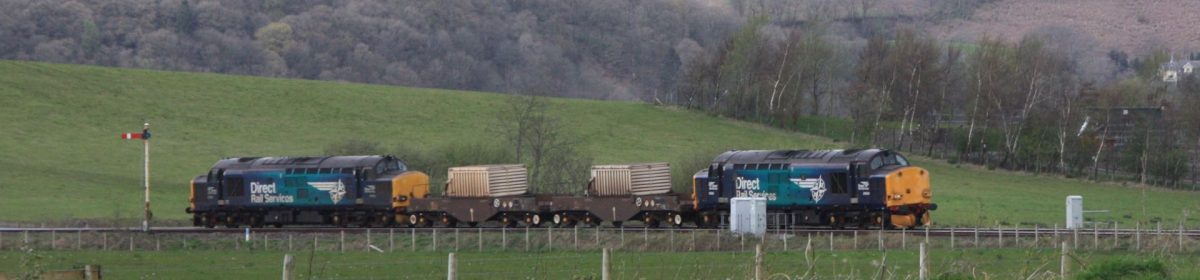
Plan a rail trip from Swansea to Shrewsbury and you will be presented with rather differing fares and journey times, depending on whether you pick the main route to Cardiff and the Marches Line via Hereford, or the slow and very scenic Heart of Wales Line via Llanelli, Llandovery and Llandrindod Wells.
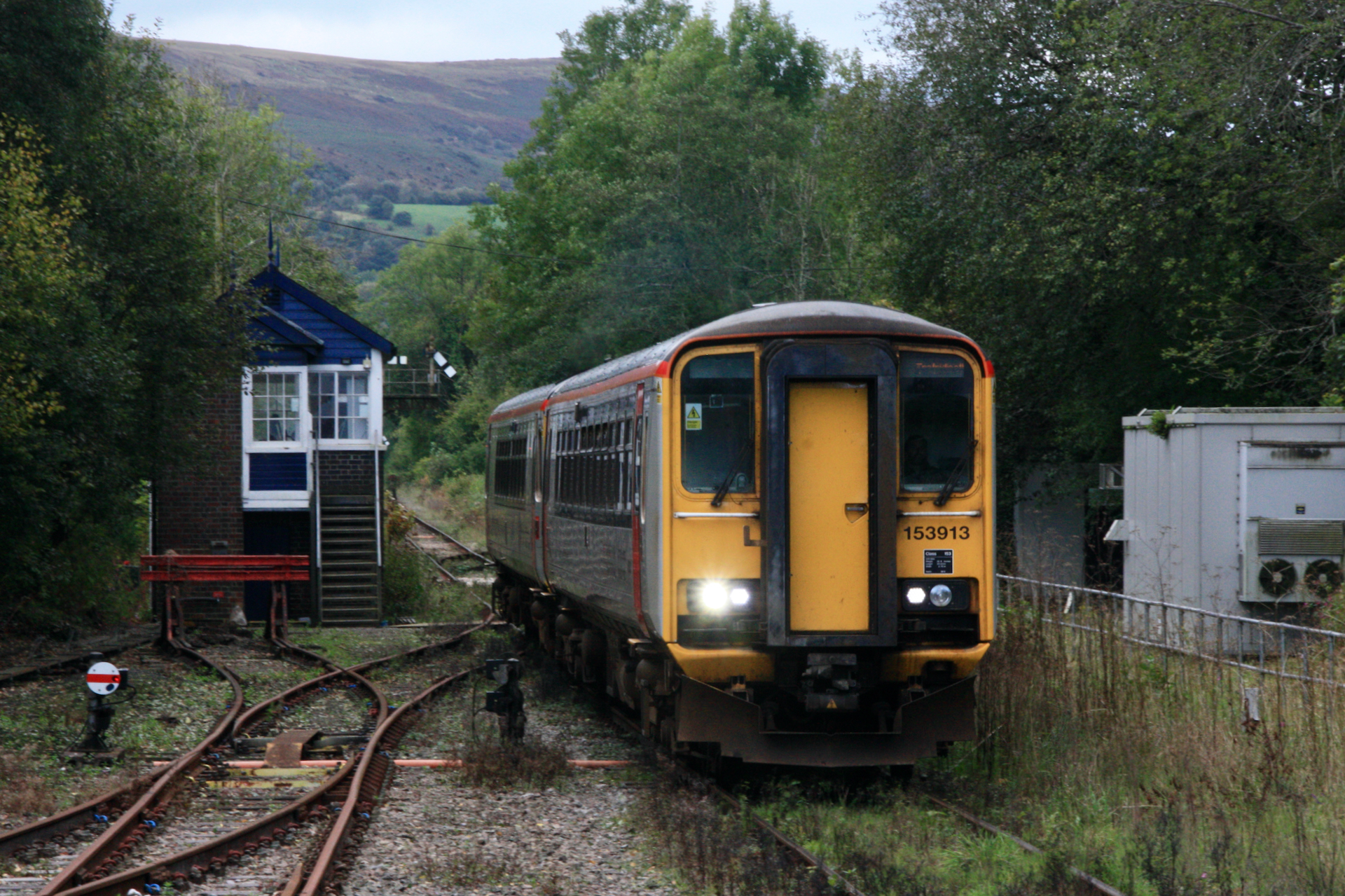
Pick the main route and you will pay significantly more for a faster journey on one of the new Class 197 units, but opting for the Heart of Wales Line will give you a much cheaper fare, and the chance to spend around four hours trundling through some of the Principality’s most beautiful scenery in an aged Class 150 or single car Class 153 unit.
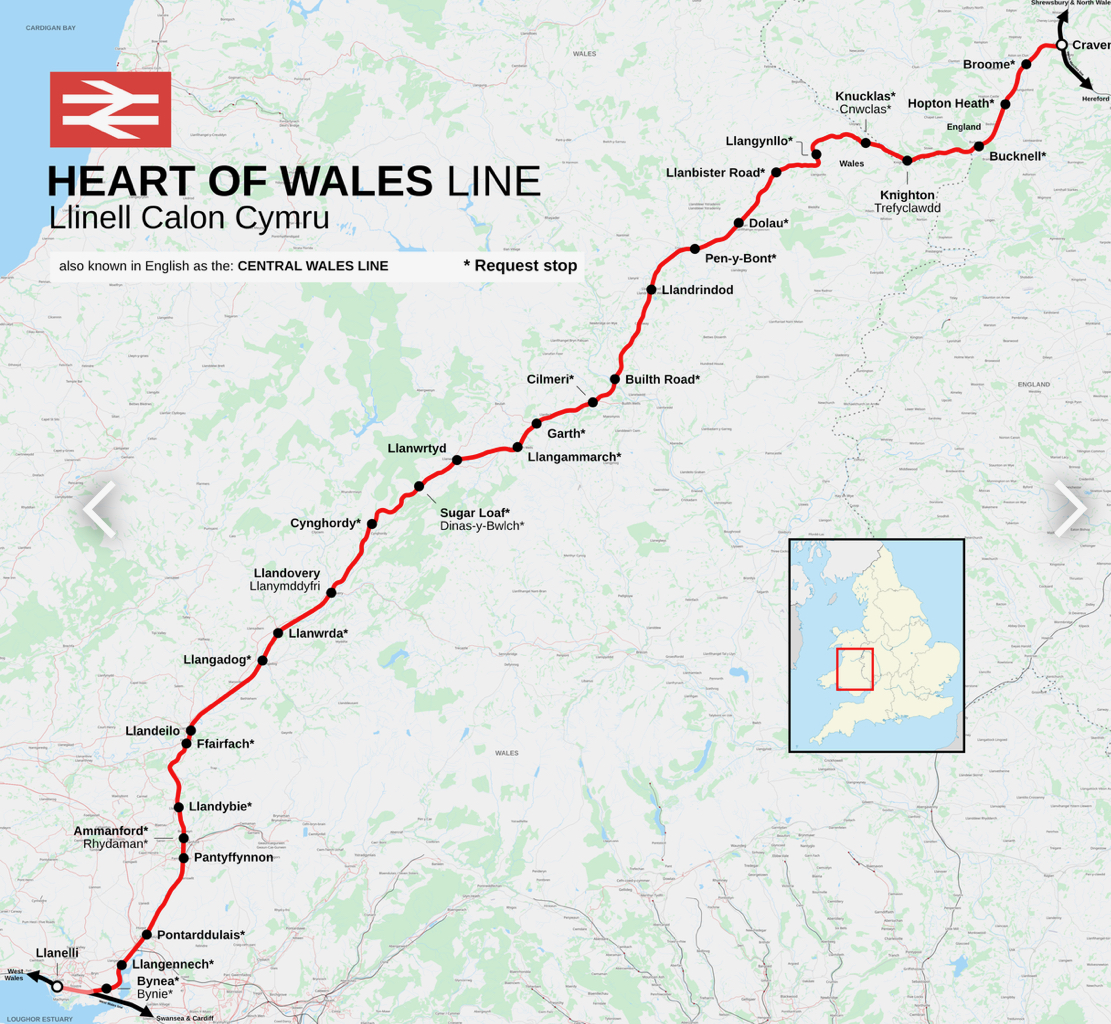
It has been a good many years since I took a trip along the line from Llandeilo to Sugar Loaf, when the latter was being featured in the media as one of Britain’s least used stations. So, on Wednesday, 2 October 2024, I decided to reacquaint myself with this remarkable route and take a trip from Llanelli to the junction station at Craven Arms, 90¼ miles to the north.
I had originally been tempted by the attractively priced “Heart of Wales Day Ranger” Round Robin (£29.70 with railcard), but given I already had a GWR ticket to Swansea on the previous day and a return from Newport for 2 October, I took the even cheaper option of advance purchase singles, with a Llanelli-Craven Arms available (with railcard) for a remarkable £7.90.
 Being keen to try for some photos at Pantyffynnon, home of semaphore signalling and control centre for the route, I had decided to travel down to Llanelli on the previous day (1 October), spend a cheap night in the Llanelli Central Travelodge, then take an early morning trip as far as Pantyffynnon, before continuing north some three hours later.
Travelling from Reading down to Swansea aboard the “Capitals United” (17.48 ex-London Paddington) meant a chance to once again sample GWR Pullman Dining, which is offered on this service to passengers joining as far along its journey as Bristol Parkway and, along with the 12.23 Swansea-Paddington, is the only chance to appreciate fine dining on the South Wales Main Line.
More must be done to promote this wonderful service as I was one of just three diners on 1 October, when we were easily outnumbered by the catering crew. My asparagus tart, breaded salmon and Selection of British cheeses (£44.00 for three courses) was excellent, and with impeccable service and some decent Chenin Blanc, this is a remarkably civilised way to travel.
My day on the Heart of Wales Line began with a pre-dawn walk through the streets of Llanelli in order to catch the first through service of the day at 06.09 (05.47 ex-Swansea) for a 20-minute ride in darkness to Pantyffynnon. Here there would be two southbound trains passing before I resumed my trip aboard the second Shrewsbury service of the day at 09.52.

Pantyffynnon boasts a superbly restored and Grade II listed station building, along with a Grade II listed signal box to the south, which is the nerve centre of the route, controlling a handful of semaphores around the station, but also overseeing the scores of user-worked crossing along the entire line.
From Pantyffynnon there are five stations with passing loops, where the train driver will have to alight and exchange tokens from a cupboard on the platform, giving a chance to take a photo, with two scheduled crossings of my train and a southbound service on our two hour 50 minute run to Craven Arms, at Llanwrtyd and Knighton.

There were around 30 of us aboard the 09.09 from Swansea when I joined it at Pantyffynnon, a number which had grown to about 40 by the time of our slightly-delayed arrival at Craven Arms. That total included numerous holders of Welsh Concessionary Bus Passes, who can travel free as far as Shrewsbury on Heart of Wales services between October and March.

Among scenic highlights of the line, one of its finest stretches is north from Llandeilo, when you will cross the “new” Glanrhyd Bridge, where there is a permanent 20mph speed restriction, through the delightful station at Llandovery, over the famous 18-arch Cynghordy Viaduct and then through the 1,000-yard long Sugar Loaf Tunnel and past the sign indicating Sugar Loaf Summit (820 feet above sea level) just to the south of the diminutive platform.
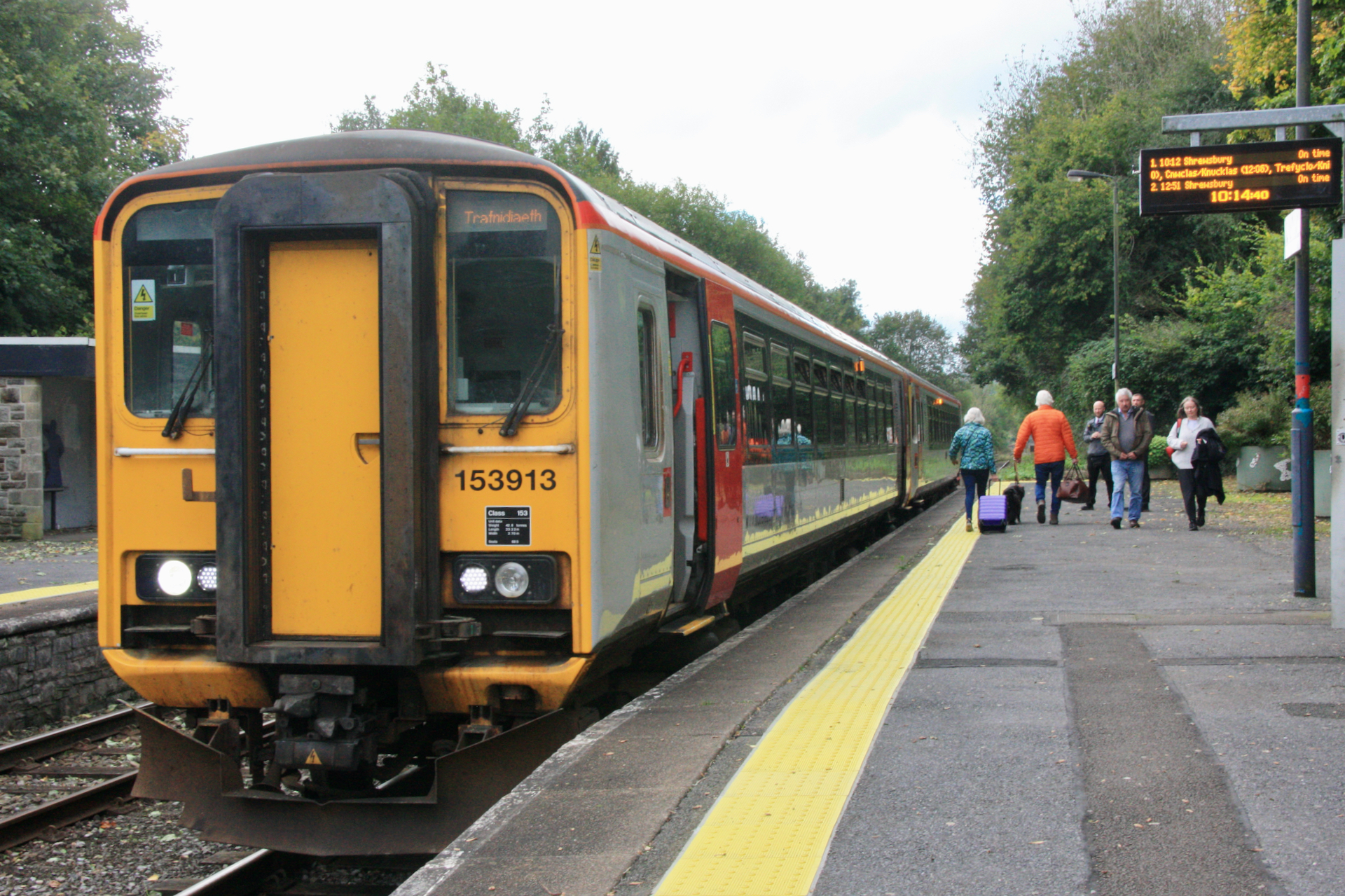
Another feature at the northern end of the line that is worthy of mention is the 13-arch Knucklas Viaduct, another Grade II listed structure standing above the attractive village of Knucklas, just a couple of miles south-west of Knighton, the final crossing point on the route as you head north towards Shrewsbury.
As I wrote in my 2017 book, Railway Renaissance, Dr. Beeching perceived the Heart of Wales Line as being another duplicate route across a sparsely populated corner of the Principality, but it was saved on the grounds that it carried a significant amount of freight traffic from industrial South Wales and it also passed through six marginal Parliamentary constituencies.

The November 1969 issue of Railway Magazine reported that what was then known as the Central Wales Line had been saved from closure: “This decision has been made by the Minister of Transport following a study of the TUCC report and all other relevant factors. He accepts that considerable inconvenience and some hardship would be caused by the closure and that a suggested replacement bus service would not provide an entirely adequate substitute for long distance through passengers.”
Having survived Beeching, the Heart of Wales Line might yet have succumbed to closure in 1987, when flooding – the cause for premature closure of both the Ruabon-Barmouth and Aberystwyth-Carmarthen routes in 1964/5 – brought tragedy to the line. On 19 October 1987 the Glanrhyd Bridge near Llandeilo, which carried the line over the River Towy, collapsed.

The 05.27 train from Swansea to Shrewsbury, formed of a two-car Class 108 diesel multiple unit, fell into the river, claiming the lives of the train driver and three passengers. But sentiment towards railways had change considerably from the dark days of the mid-1960s and, with a strong political will to ensure the line’s survival a new lightweight 65-metre steel span was installed to restore rail services.

After all its past challenges, the Heart of Wales Line remains as one of the UK’s most scenic rail routes. Its basic weekday service currently comprises five trains a day along the full length of the line, with two additional short journeys at each end of the route, as far north as Llandovery and between Shrewsbury and Llandrindod Wells. But even this service is under threat, with suggestions that one of the through journeys may be lost in the next timetable change.
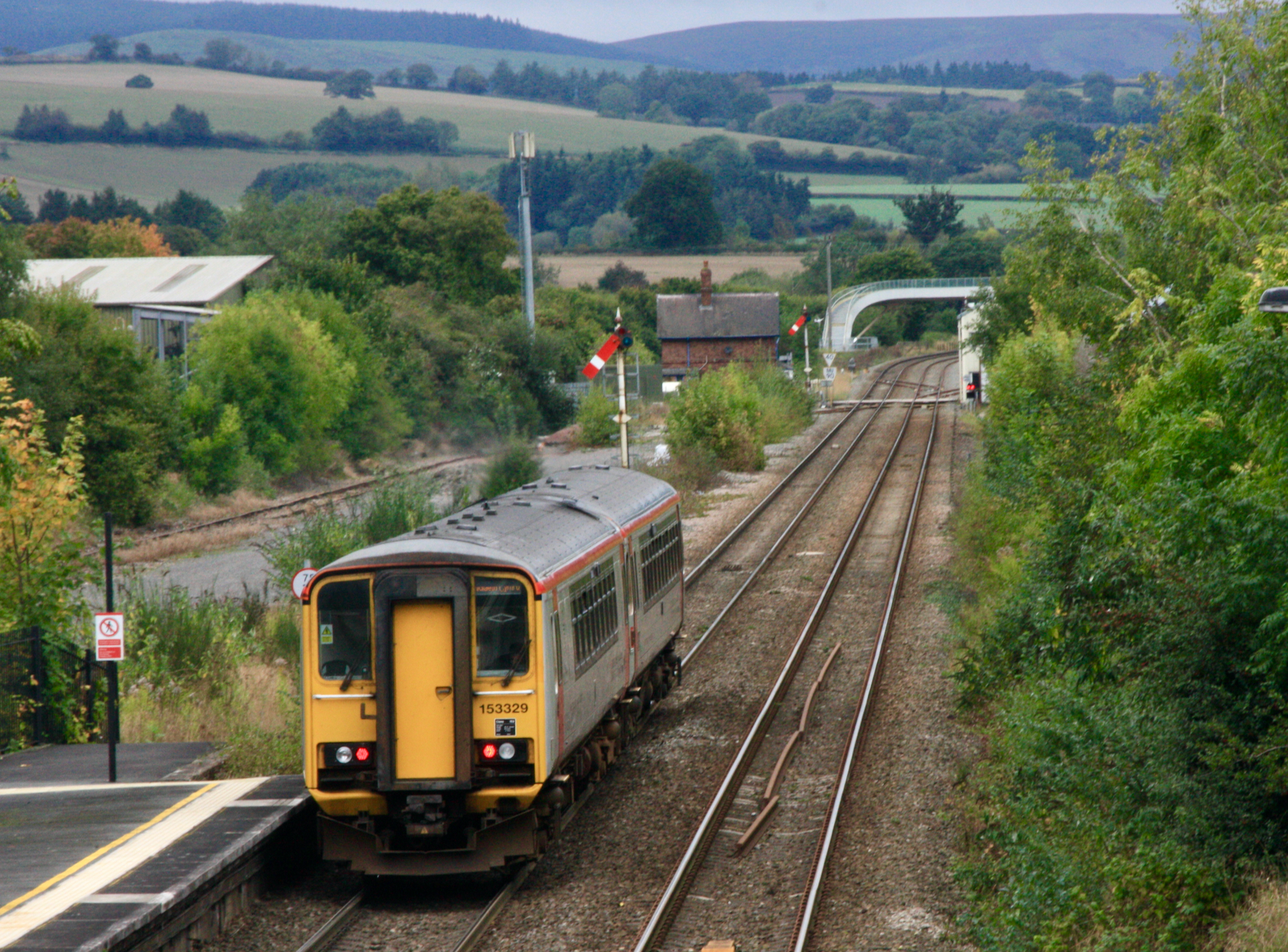
My grateful thanks to the Pantyffynnon crossing keeper – the only manned crossing on the entire route – for his wisdom and hospitality
 RailwayWorld.net
You must be logged in to post a comment.