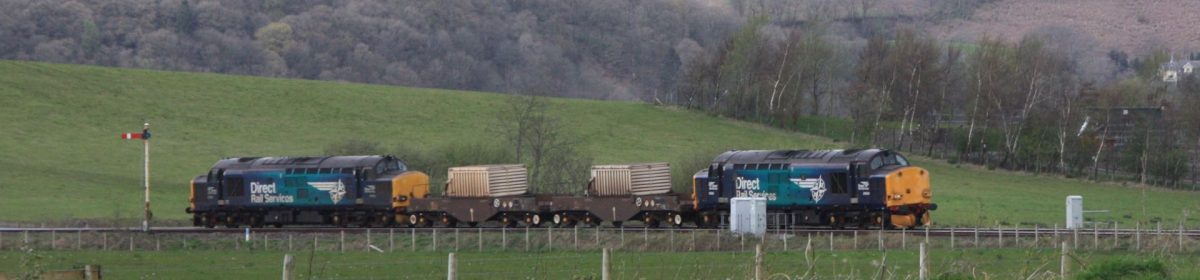

Trains testing and treating the track brought some rare loco movements to Skegness on Monday, 28 October 2024, with two special workings on behalf of Network Rail visiting the remarkable station, at the coastal end of the Poacher Line, in the space of less than an hour.
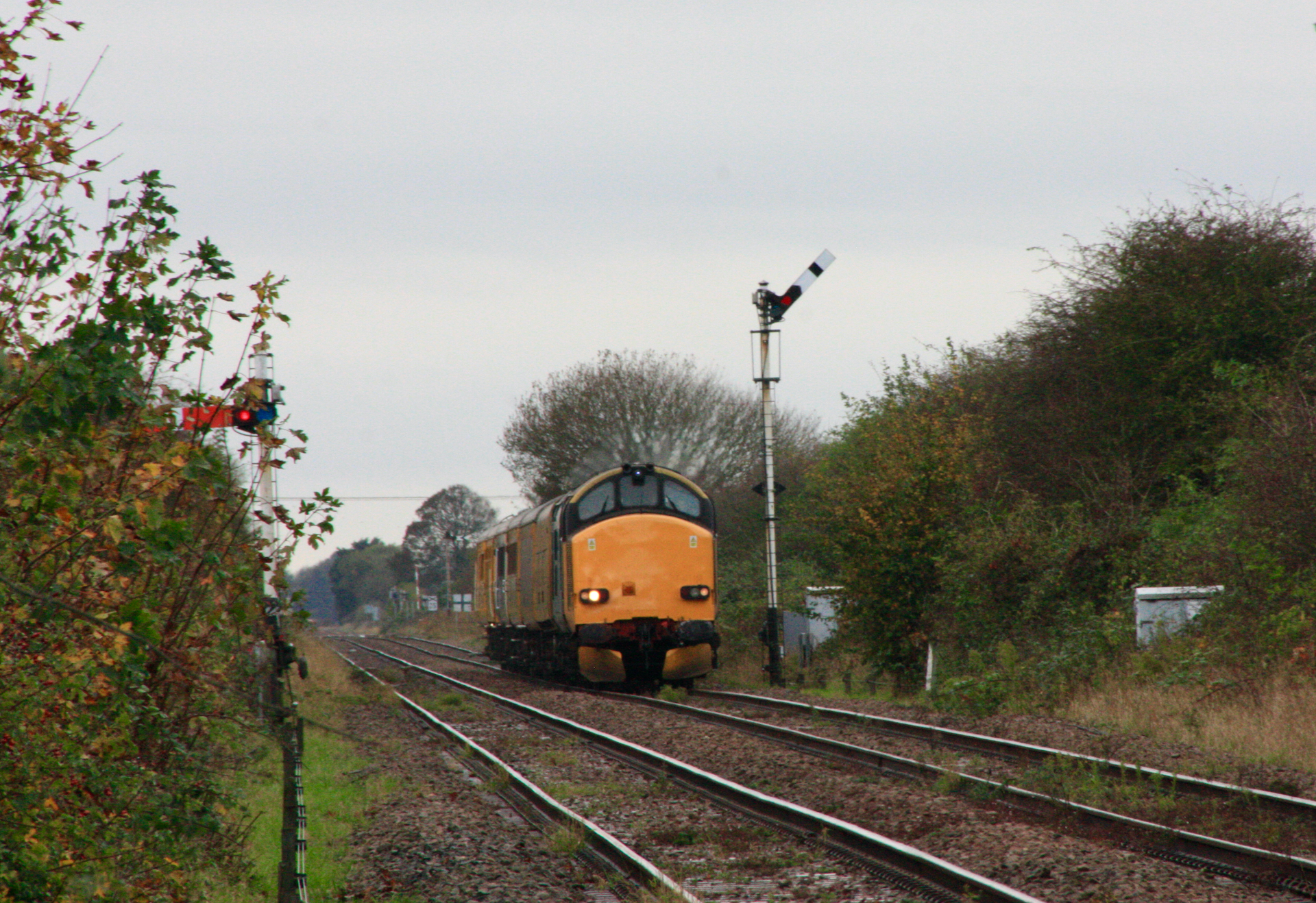
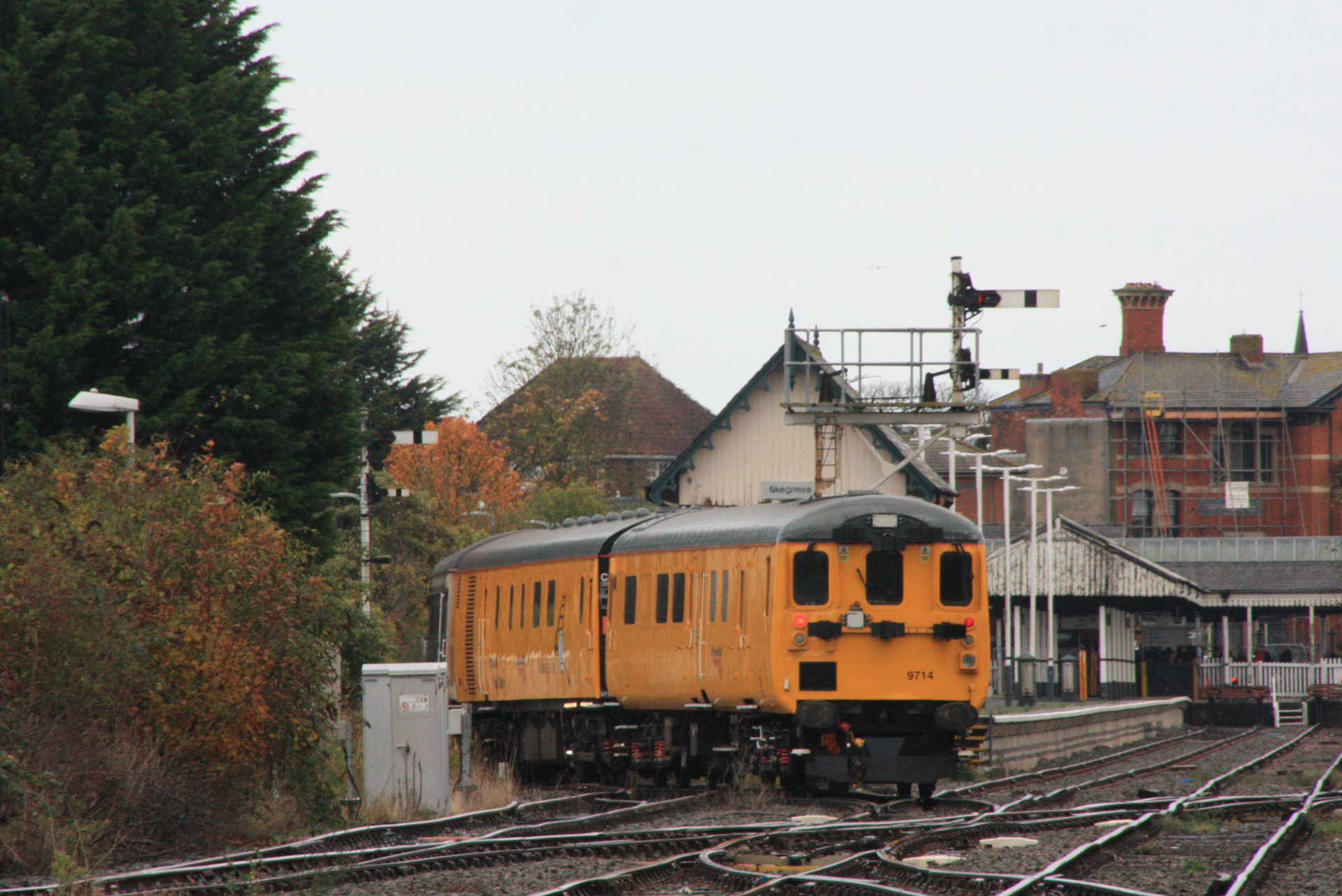
Shortly before midday came the distinctive sound of “tractor” 37610, which is operated by Colas Rail and is in British Rail blue livery, hauling Network Rail’s Ultrasonic Testing Unit (UTU), with DBSO 9714 at the rear. This had travelled from Derby on its monthly visit to the Poacher Line.
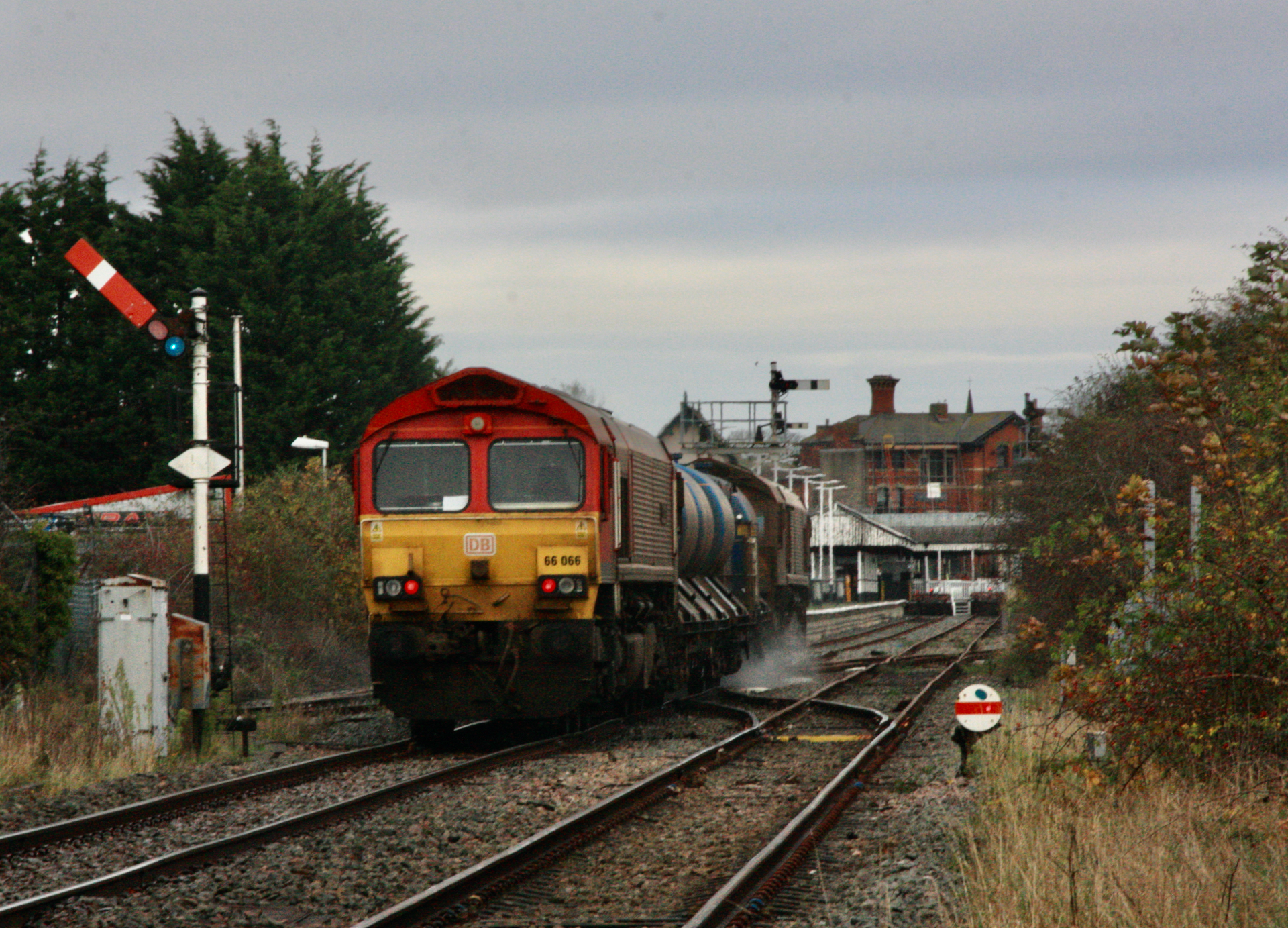
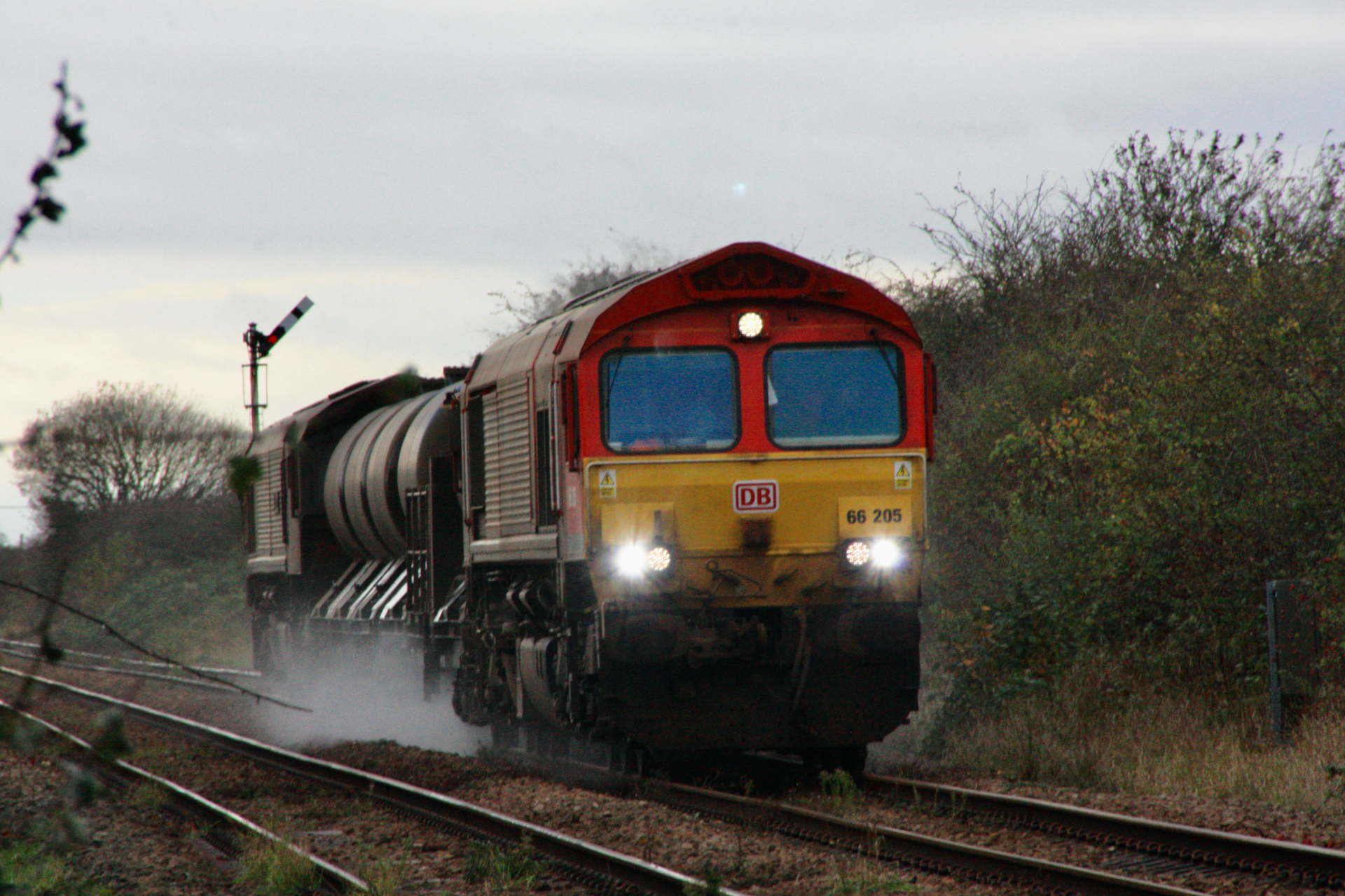
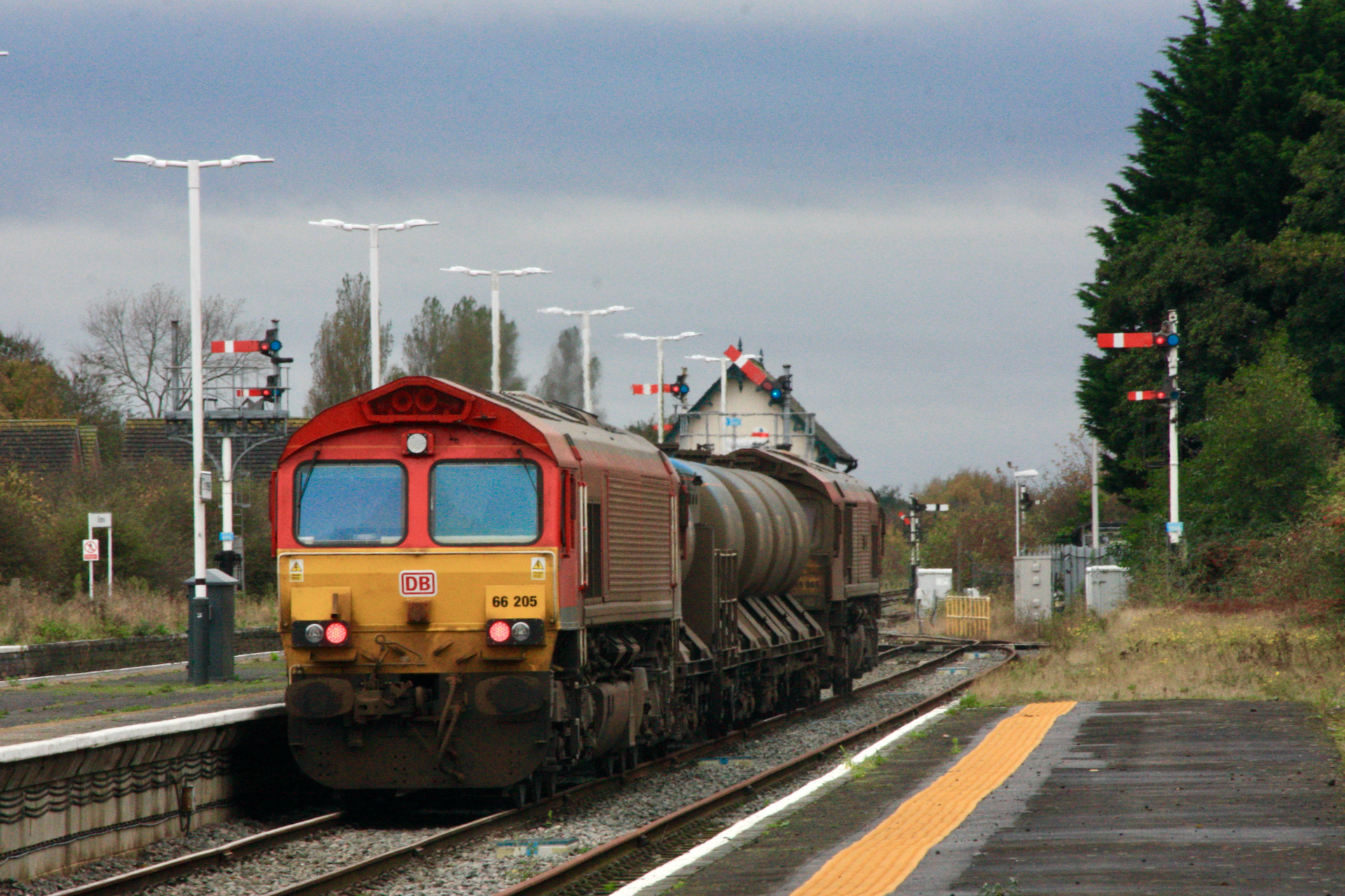
But it was not just Class 37 action that brought some variety to the railway scene at Skegness on 28 October, for no sooner had the UTU departed back to Derby, when along came DB 66205/066 with the thrice-weekly Railhead Treatment Train (RHTT) 3J42 on its seasonal circuit from Doncaster to Peterborough.
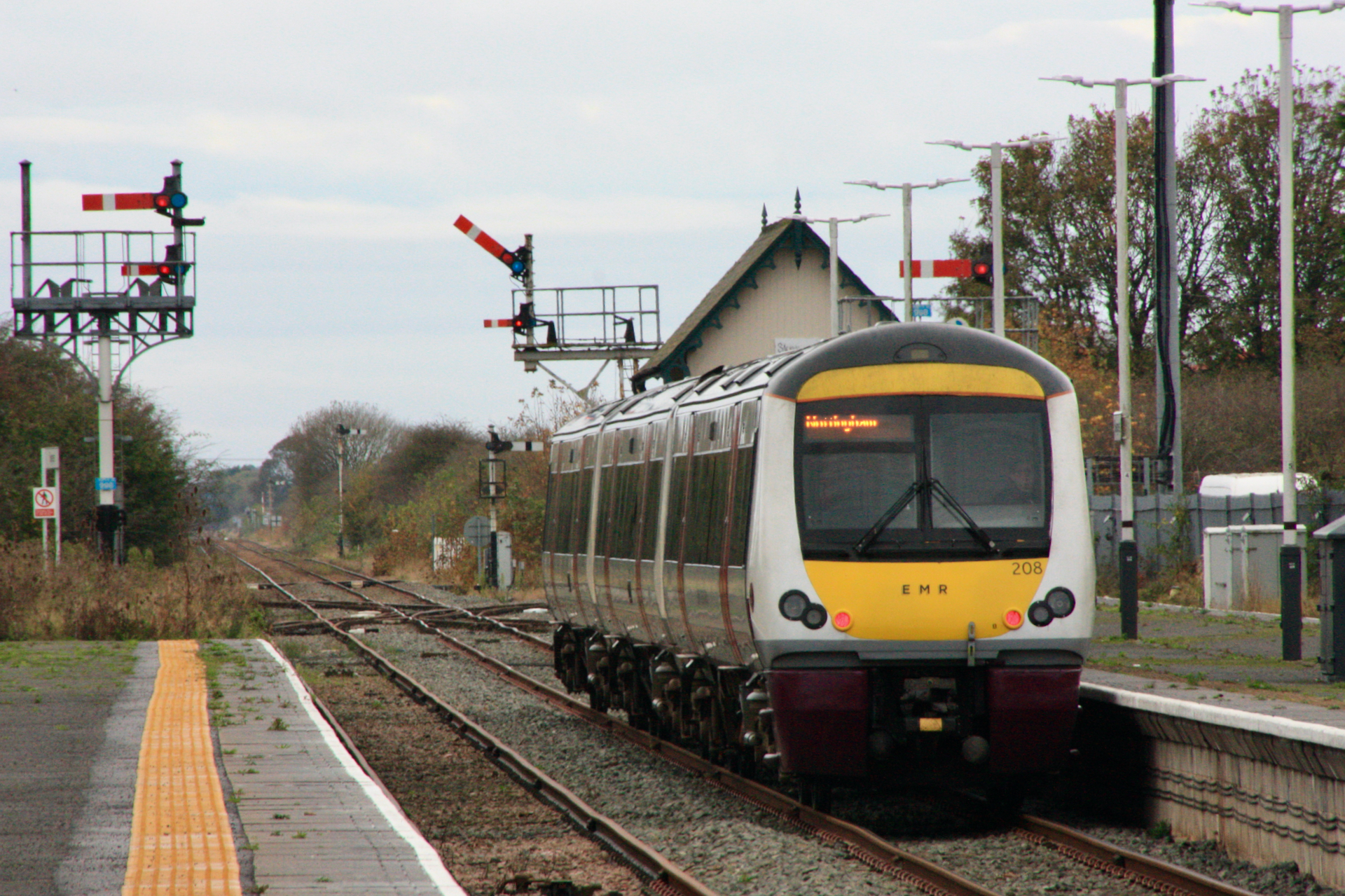
This was my first return to the famous East Coast resort since a trip in July 2022 to witness the all-too-brief appearance on the route of EMR Class 180 units, which operated two summer Saturday additional services between Derby and Skegness that ran for less than two months, until 10 September 2022, and were never to be repeated.
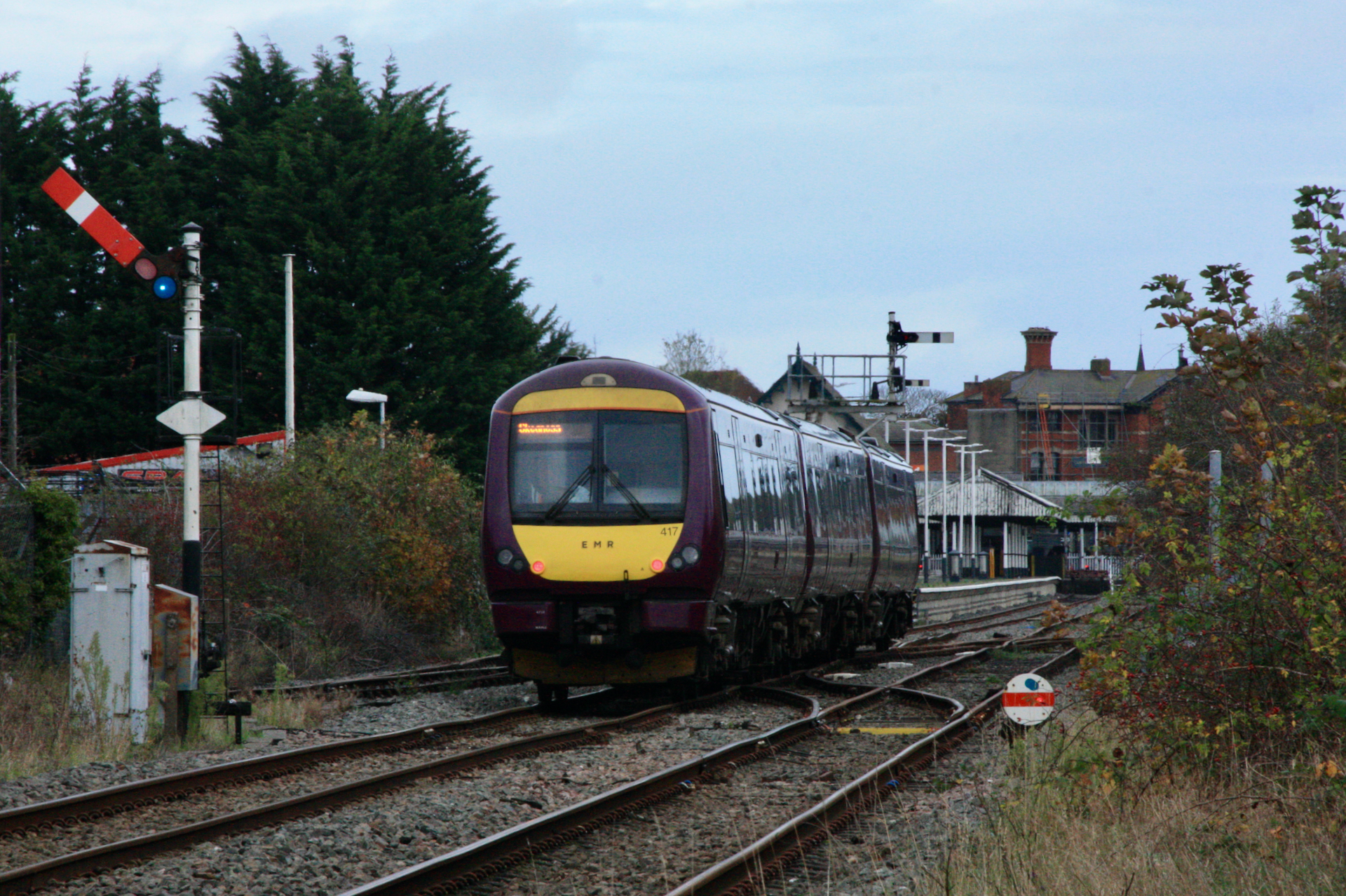
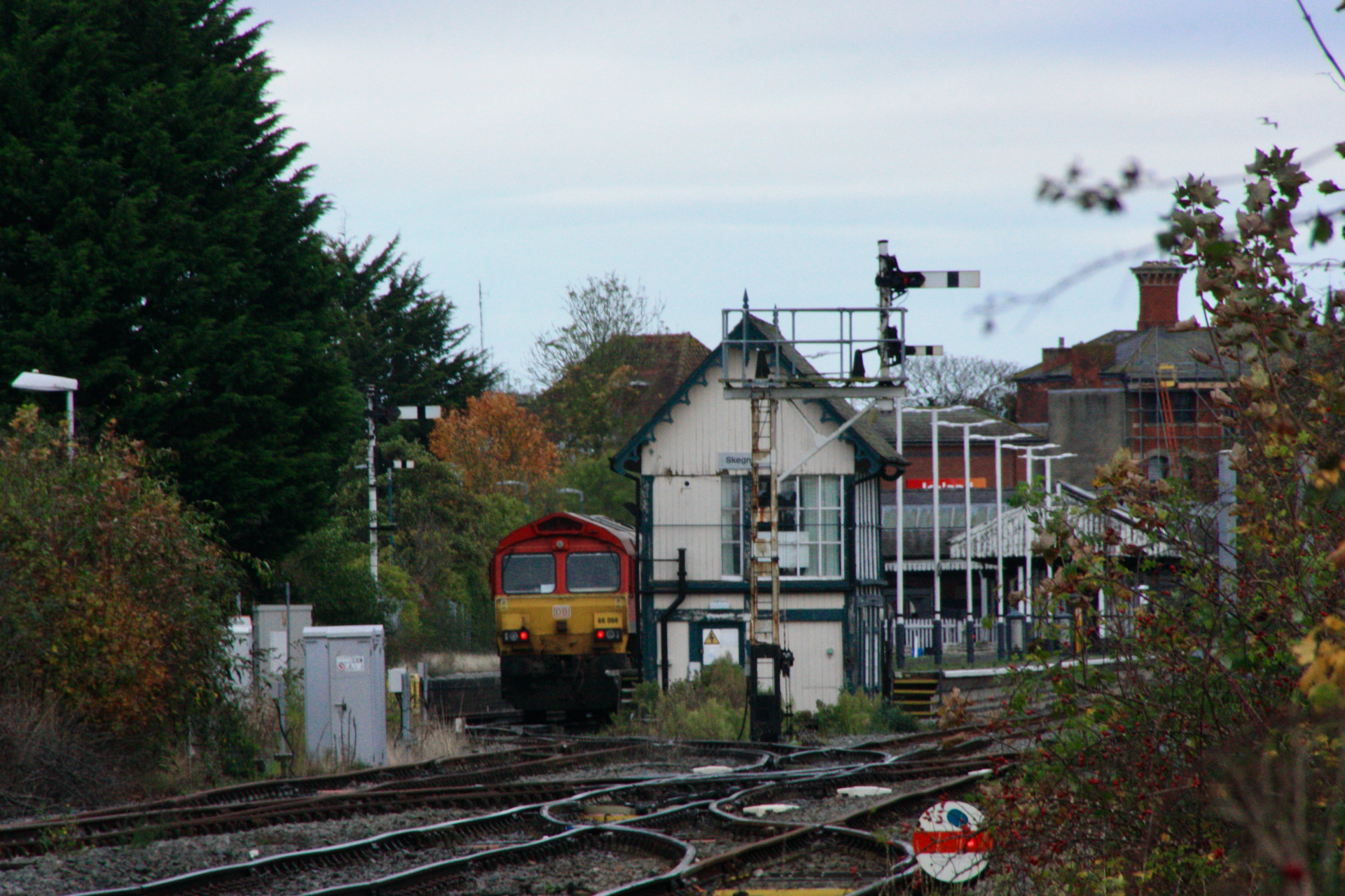
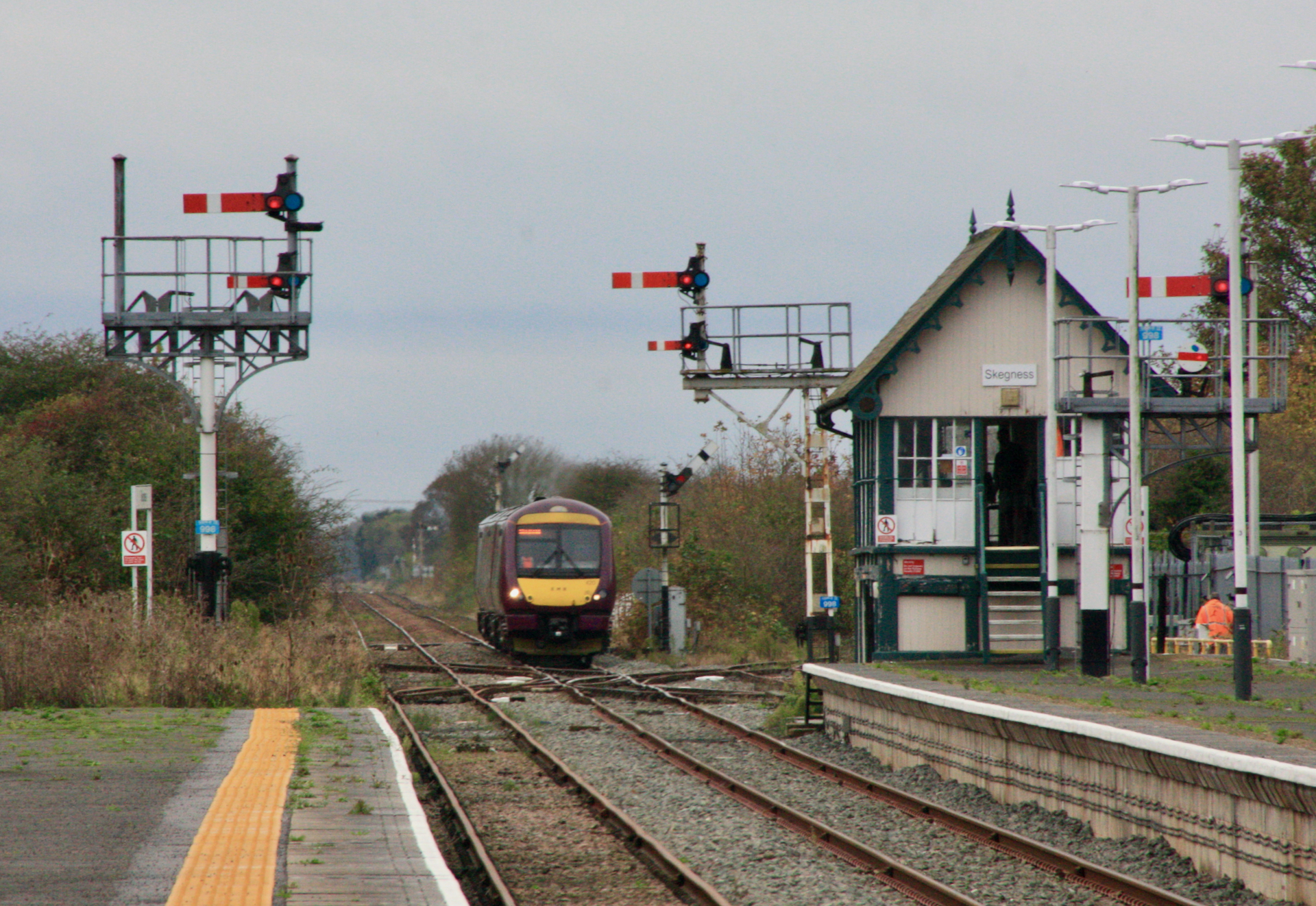
As on that occasion, the UTU and RHTT’s arrival meant the rare sight of two services in the station at the same time and, for the best vantage point, I once again made for a foot crossing of the line someway south of the station, behind a large Tesco store, from where there is a great view of the station, signal box and the semaphores it controls.
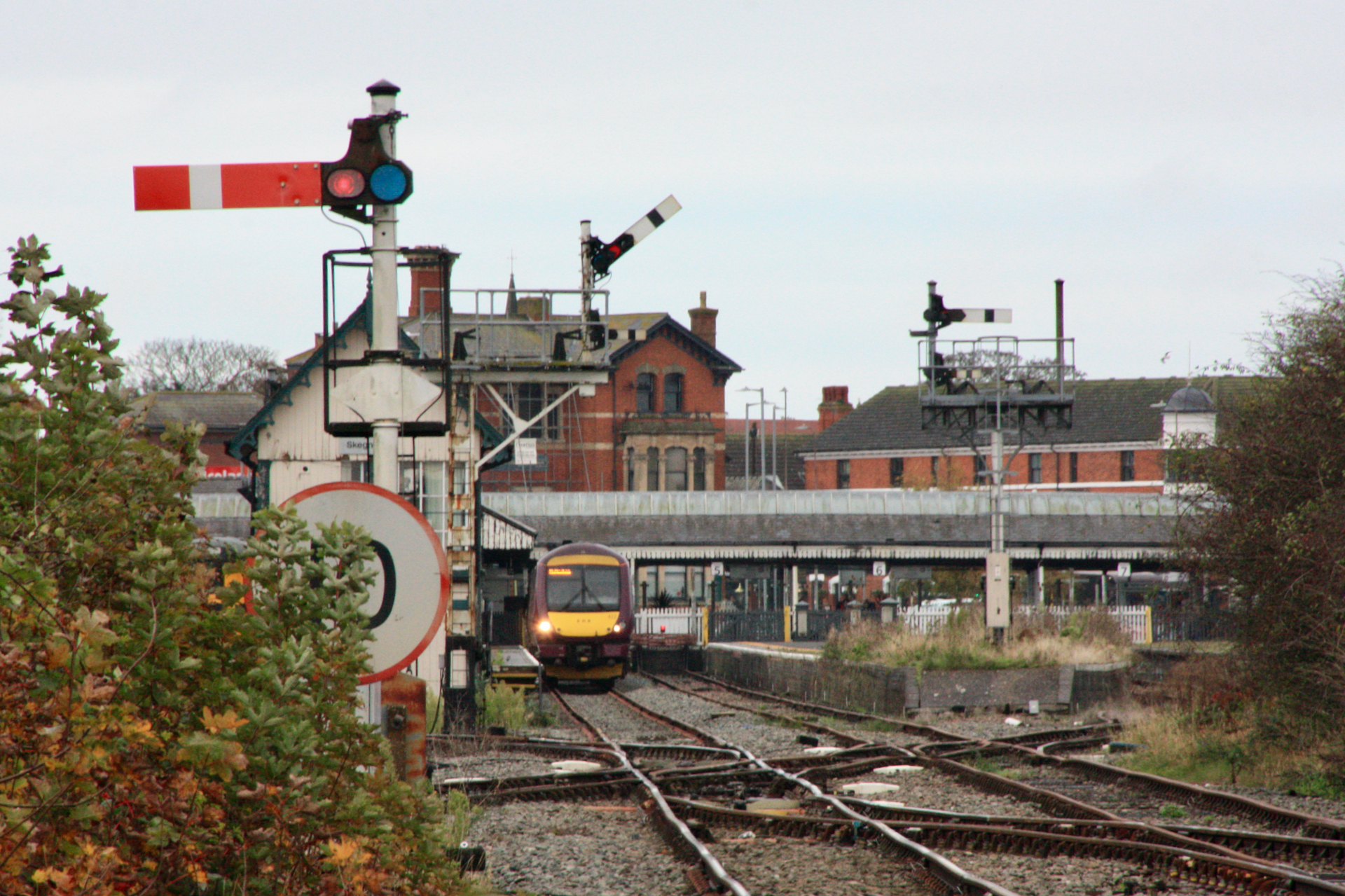
In my 2019 book on Britain’s last semaphores I described Skegness as our finest seaside terminus, with an intact and signalled six-platform layout, an impressive station building, and a Grade II-listed Great Northern Railway signal box at the end of platforms 3&4, that was extended in 1900 when its 80-lever frame was installed.
Given that that standard Poacher Line service is just one train an hour, it is perhaps surprising that there has not been more rationalisation of the layout and signalling since my original visit in 2017, with the only change being removal of the exit signal and a section of rail from platform 6.
Regular services all use platform 4, with the UTU and RHTT shown on Realtime Trains as being booked to go into platform 5, as those Class 180 units had done on my previous trip. Instead, though, both workings went into platform 3, the only other usable platform apart from 4 and 5.
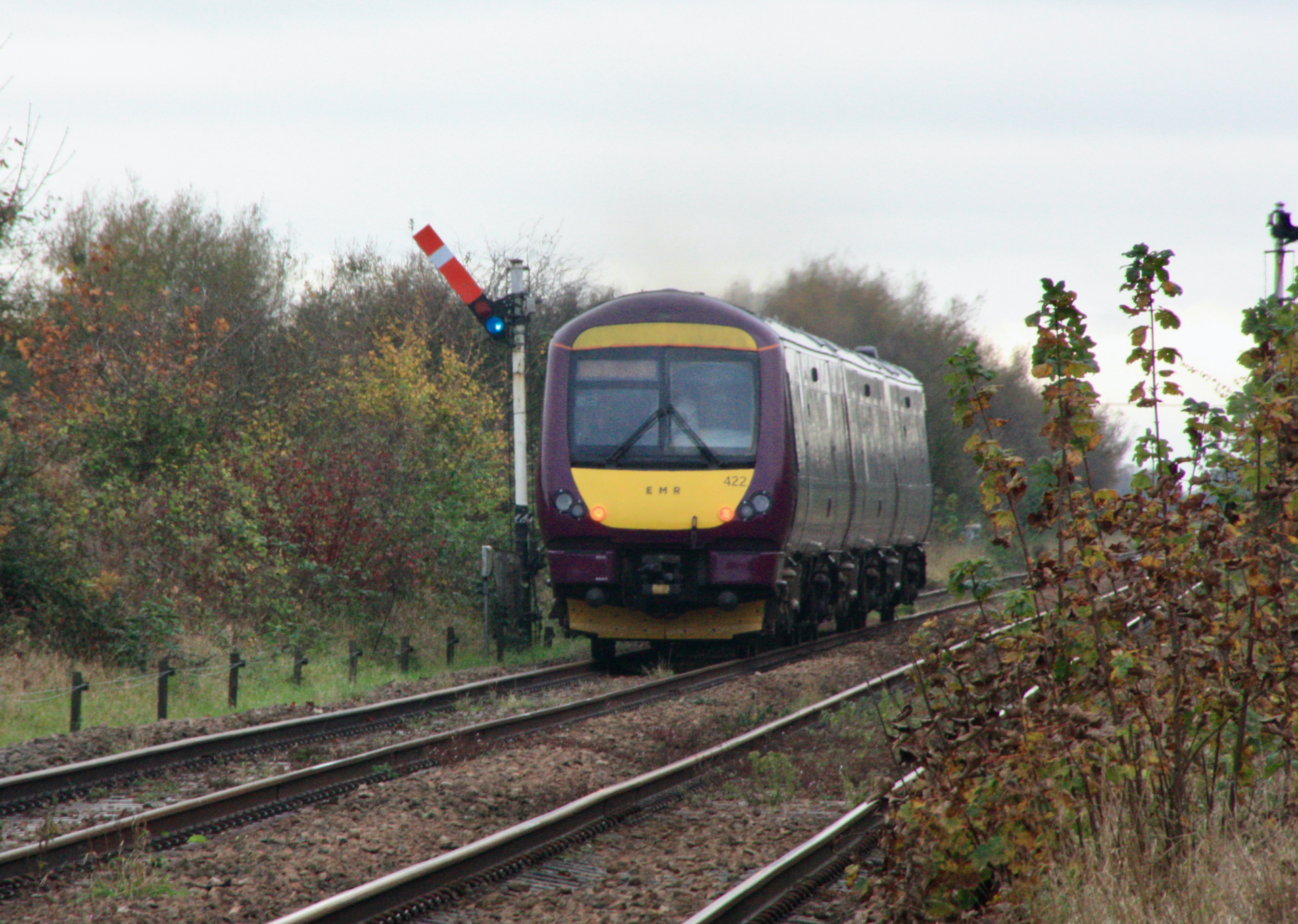
Semaphore signals that survive at Skegness comprise exit signals from platform 2/3/4/5/7 with shunting arms beneath those for platforms 2/4/5 and discs for platforms 3 and 7. Looking down the line beyond the box there are down home and outer home signals, with an up section signal and a fixed down distant signal beyond it.

There is also a little-used carriage siding with run-round loop that stands to the north of the line on the approach to the station, with a shunting arm controlling exit from it. For a view of this siding and its exit signal, the foot crossing near Tesco goes over both the running lines and this carriage siding.
 Skegness Signal Box was described in its Listing as “a rare example of a timber-framed Type 1 GNR box, and the largest of this type to survive…both external and internal detail survive well, including its lever frame.” From an historical perspective, the 1900 enlargement “illustrates the need to accommodate a longer frame as the amount of track at the station expanded in response to the increase of traffic.”
One notable feature on the Skegness station concourse is a statue of the Jolly Fisherman, who was created by an artist named John Hassall for a GNR advertising poster in 1908 and whose tagline Skegness is SO bracing made it one of the most famous holiday adverts of all time, and helped put the town firmly on tourist map.
Like the Cumbrian Coast which I recently re-visited, the Poacher Line is a remarkable outpost of mechanical signalling. As I noted following my May 2022 visit, for example, there are no less than five working semaphore distant signals in the up direction along a 36-mile stretch of this route, namely those controlled by the boxes at Wainfleet, Bellwater Junction, Hubbert’s Bridge, Heckington and Ancaster.
Travelling to Skegness before the off-peak watershed, I discovered that splitting the fare from Grantham at Sleaford – so buying an anytime return from Grantham to Sleaford then another from Sleaford to Skegness – was considerably cheaper than buying an anytime return from Grantham to Skegness.
Poacher Line services all seem to be worked by EMR’s sizeable fleet of Class 170 units. Many of these are hand-me-downs from other operators, including ScotRail and Greater Anglia, and on both my journeys between Grantham and Skegness I was able to enjoy a bit of extra comfort by travelling in the de-classified first class section of the train.
 RailwayWorld.net
You must be logged in to post a comment.