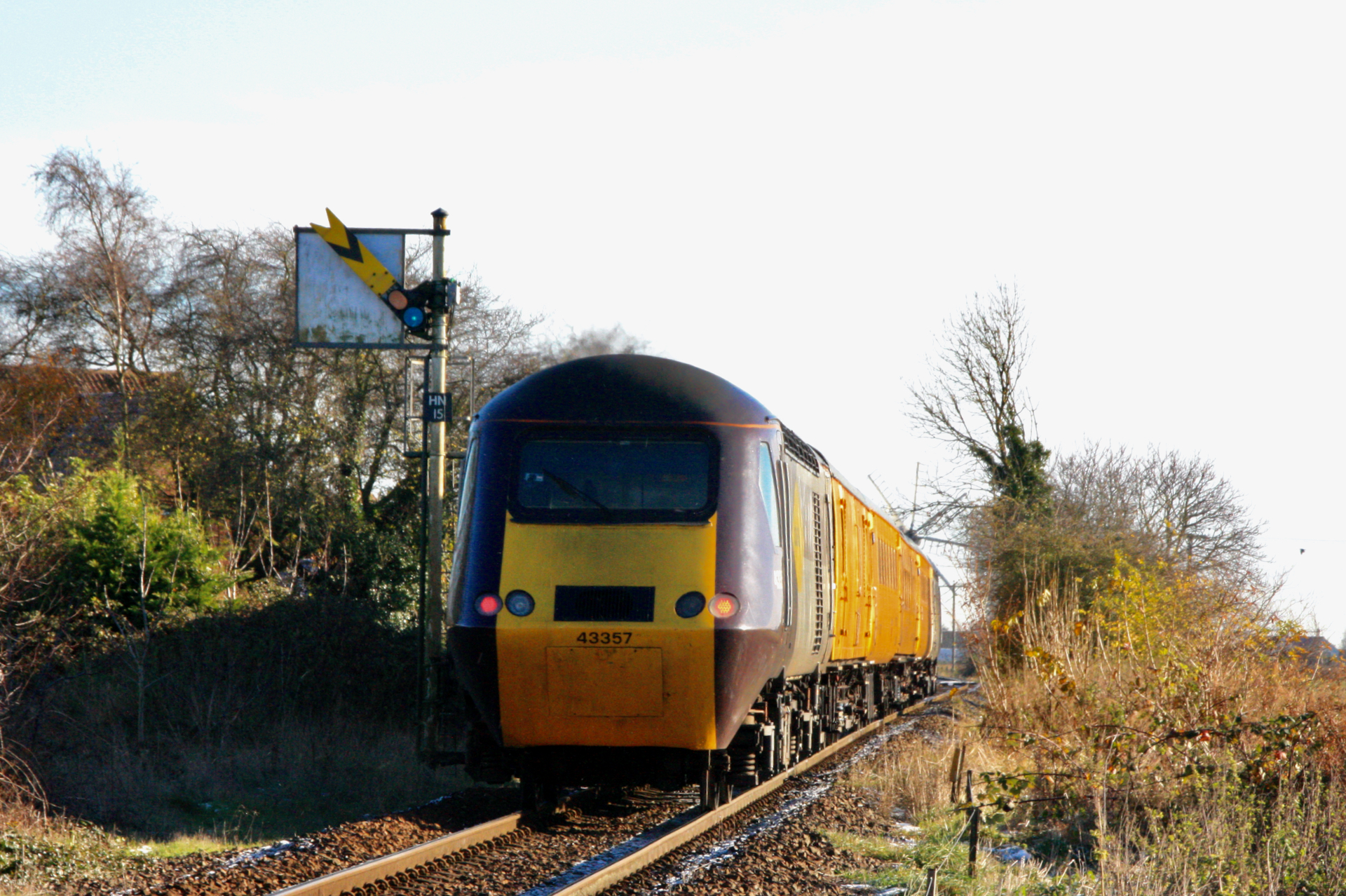
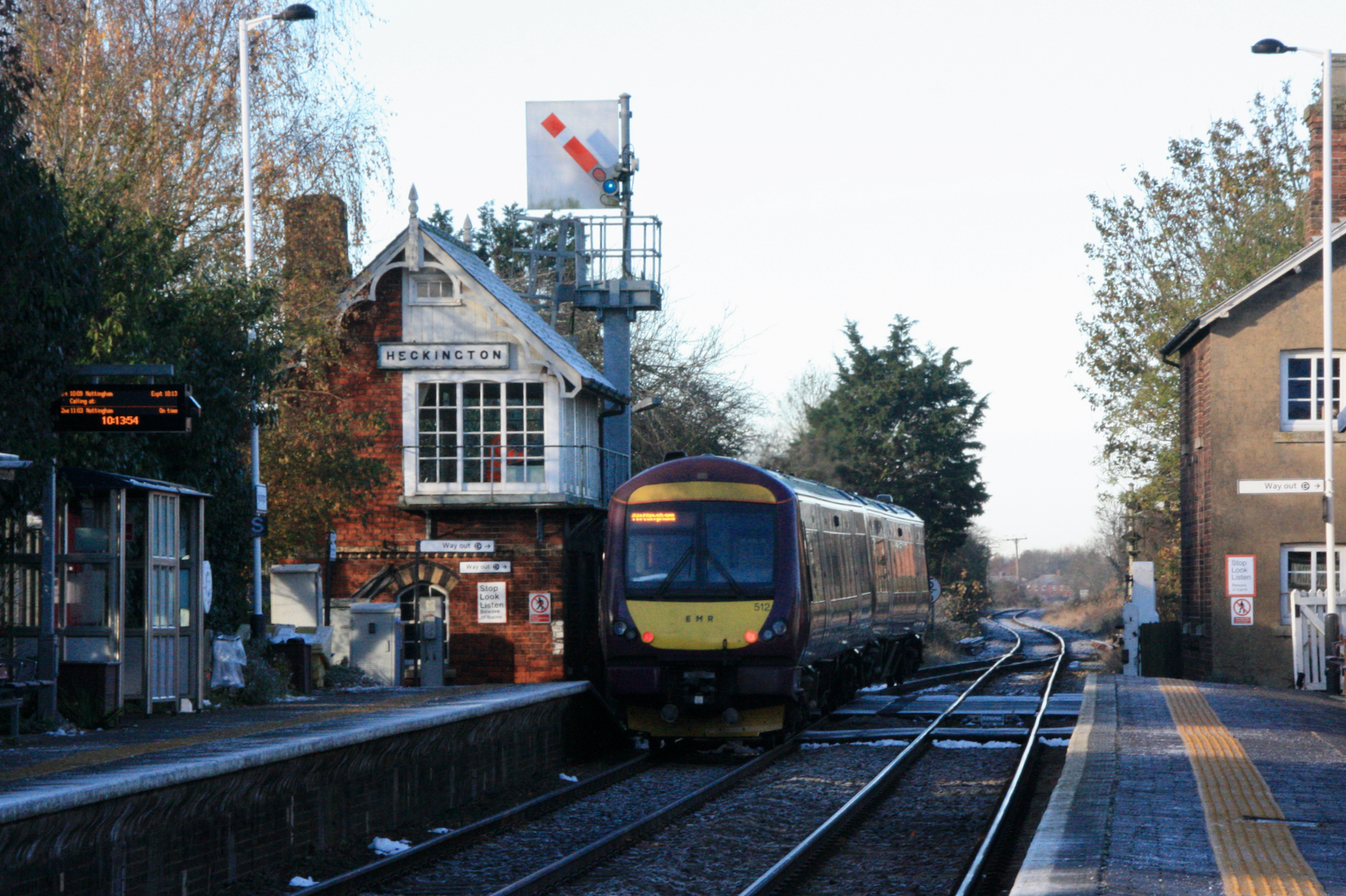
More than three years after my last visit (June 2021), the irregular appearance of a Class 43-powered Network Rail test train makes the perfect excuse to pay an overdue return on Thursday, 21 November 2024 to delightful Heckington, first station east of Sleaford on the Poacher Line to Boston and Skegness.
Having been lucky enough to see another NR test train, the Class 37-powered Ultrasonic Testing Unit (UTU) at Skegness in October, my main aim this time was to photograph a different type of test working passing both the down distant signal, which is only pulled off for trains not calling at Heckington, and the up distant signal some way east of the station.
This time the test train (1Q49) was undertaking Plain Line Pattern Recognition (PLPR), which I read “uses a variety of tools to measure and detect defects and potential problems that might arise in track condition. PLPR uses equipment such as: 4 foot camera used to check the track condition, thermal imaging to check rail temperature, fasteners are checked with diagonal and top down cameras.”
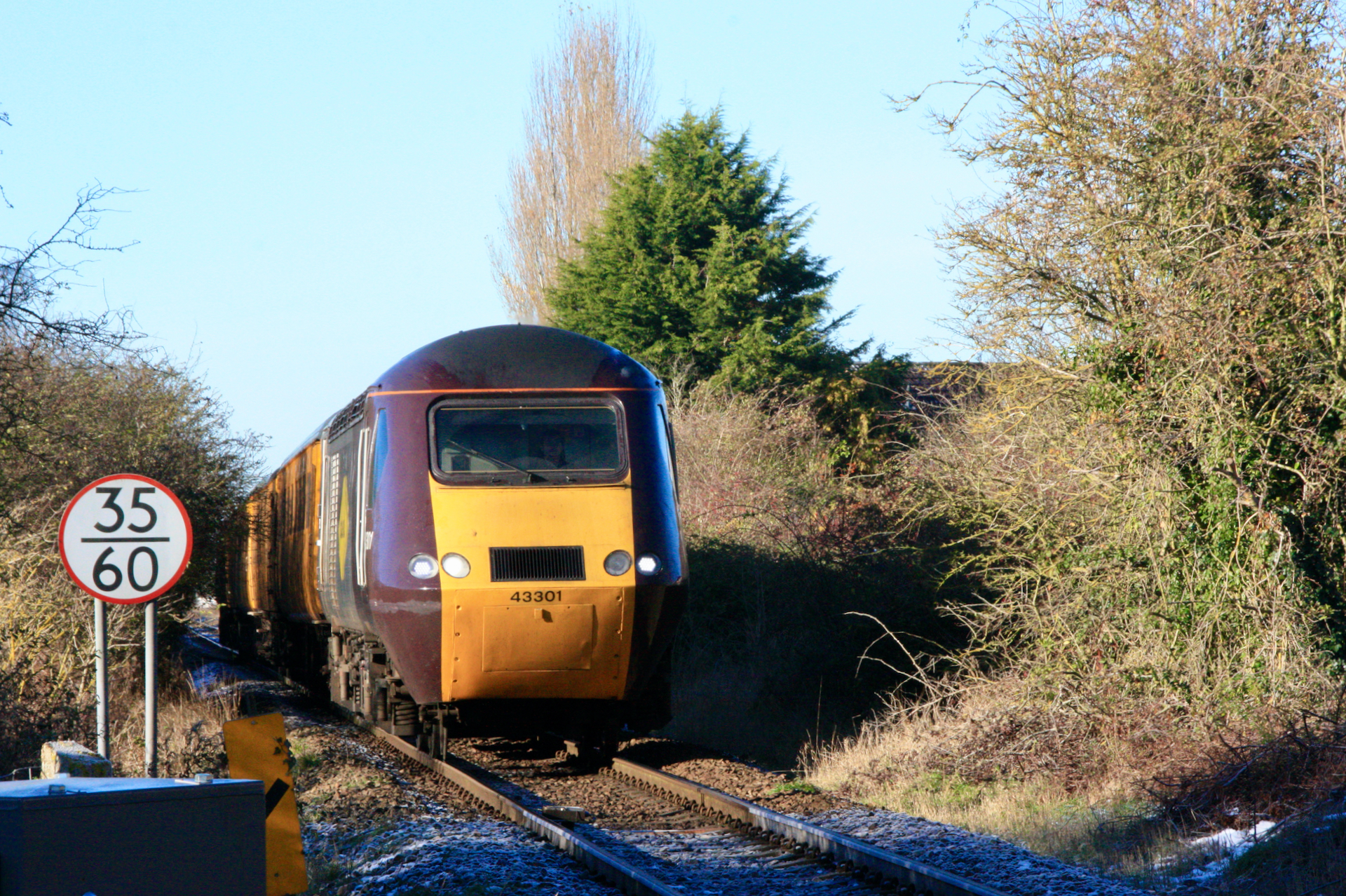
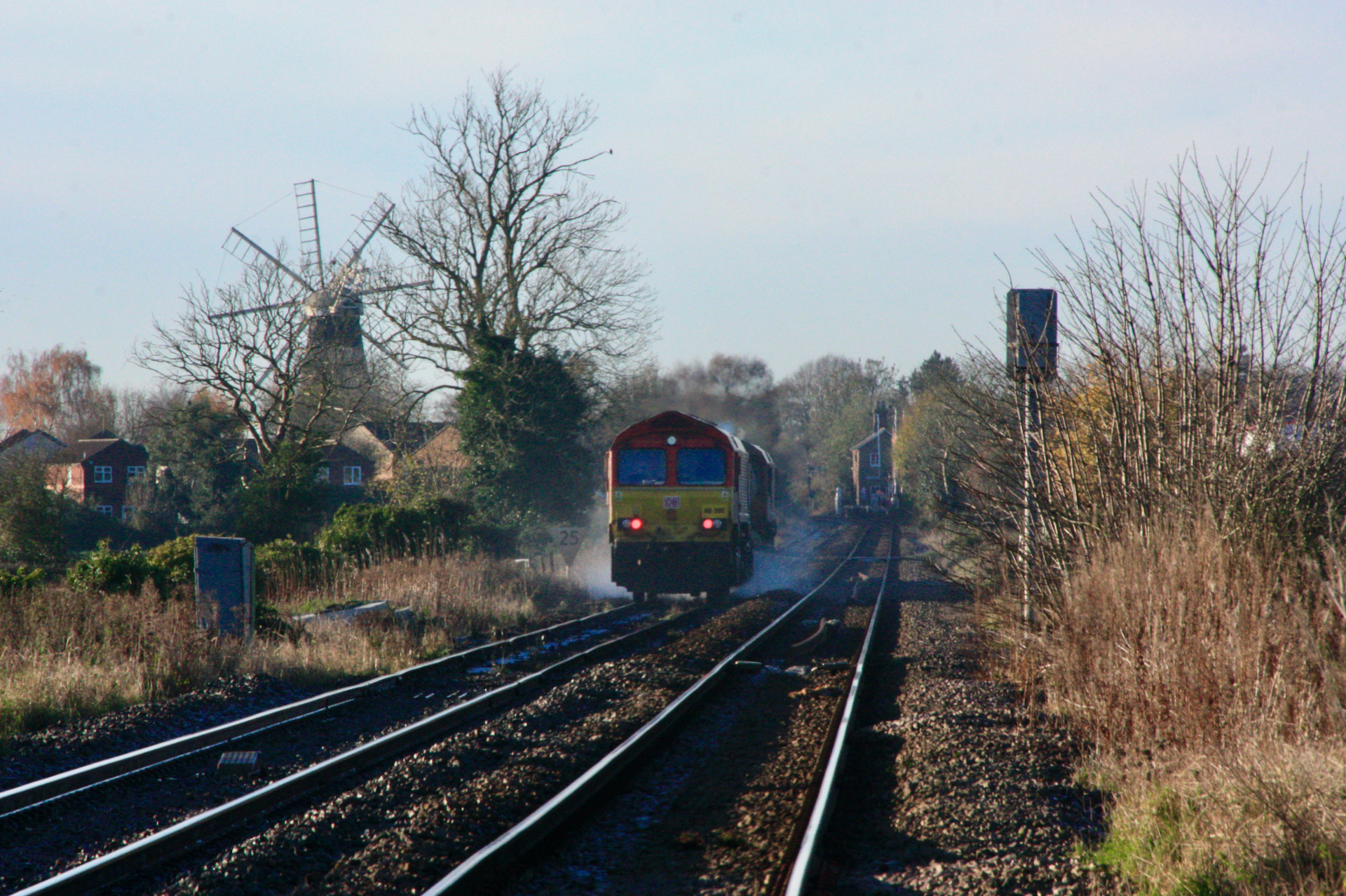
Not knowing what powered the PLPR, I was pleasantly surprised when Colas Rail HST power cars 43301/357 appeared at Burton Lane No. 2 Level Crossing right on schedule at 11.27 with the train formed of four yellow coaches, two Mk 1 vehicles and two Mk IIs.

For those with an interest in our signalling heritage, Heckington is one of the few places on the national rail network to boast two working semaphore distant signals, although like Millom and Uttoxeter only one of the two is regularly pulled off, with the other remaining at caution when passed by a stopping train.

At the western end of its up platform stands Heckington’s Listed 1876-vintage Great Northern Railway (GNR) signal box, having earned its listing primarily for being a good example and attractive of a GNR Type 1 design. Its listing citation describes the box as having “elaborate detailing, such as the pointed Gothic arch polychromatic windows, thought to be unique for the GNR.”

It was also identified for the high degree of its intactness – the only alterations being the removal of the fireplace, and the replacement of the steps – and for its setting close to level crossing gates, the original station building and a magnificent and unique Grade I-Listed 8-sail windmill.

Within the box an 18-lever Saxby & Farmer frame, dating from 1925, controls a total of five semaphore arms, closest of which to the box is up starter HN3 on a tall and modern square galvanised iron post that looks very out of place in this historic setting.

Looking west, where the double track from Hubbert’s Bridge near Boston becomes a single line to Sleaford, a down home signal (HN14) is in view, while further west, and close to an automatic half-barrier crossing (Burton Lane No. 2) – a 15-minute walk from the station – is down distant signal HN15.

As I discovered on my June 2021 visit, HN15 is not pulled off for the hourly EMR Class 170-worked Nottingham-Skegness services that will all call at Heckington, but was thankfully pulled off when the PLPR test train passed on its circuit from Derby to Derby via Skegness.
To the east of Heckington station, down section signal HN13 is a colour light, up home signal HN2 is a semaphore, and by taking a 20-minute walk to the hamlet of Great Hale, turning left into Grove Street and onto a road called Great Hale Drove you reach Great Hale Drove No. 1 Level Crossing, from where there is a good view of up distant HN1.

On a clear day it is possible to look east from the end of the down platform at Heckington, along the dead straight railway alignment, and photograph a train passing up distant signal HN1 and up home HN2, although the latter has recently been replaced, and the new signal is now sadly obscured by a sighting board.
 Besides the attraction of its historic signal box, semaphores and windmill, Heckington is a charming place to visit, which also boasts a Grade I Listed parish church (St. Andrew’s), two attractive looking pubs. But only yards from the station is the 8 Sail Brewery tap, beneath the windmill, where I enjoyed an excellent pint of its award-winning Millwright Mild (3.5%/£3.00).
 RailwayWorld.net
You must be logged in to post a comment.