Re-signalling of the South Wales Main Line between Swansea and Carmarthen is running late, so after my latest feature on the surviving semaphores at Pembrey & Burry Port, it is a great pleasure to be invited by Network Rail to take a look at all four of the signal boxes that will be closed when the Port Talbot West 2 (PTW2) project is completed.
This is a remarkably varied quartet, with the most traditional being Pembrey and Ferryside, which both retain lever frames and semaphores, one at Kidwelly that is a curious hybrid, where a 1950s top has been built on an 1885 GW base, and finally the most modern of all being a BR (WR) structure from 1956 at Carmarthen Junction.

Control of this section of the London-Fishguard main line is by Absolute Block (AB), the system of signalling that means only one train may occupy any single “block” at one time. So, in the case of a westbound train, the signaller at Pembrey will offer it to the box at Kidwelly and, only if the section is clear, will the train be accepted by Kidwelly and the signals at Pembrey can be pulled off to allow the train to continue.

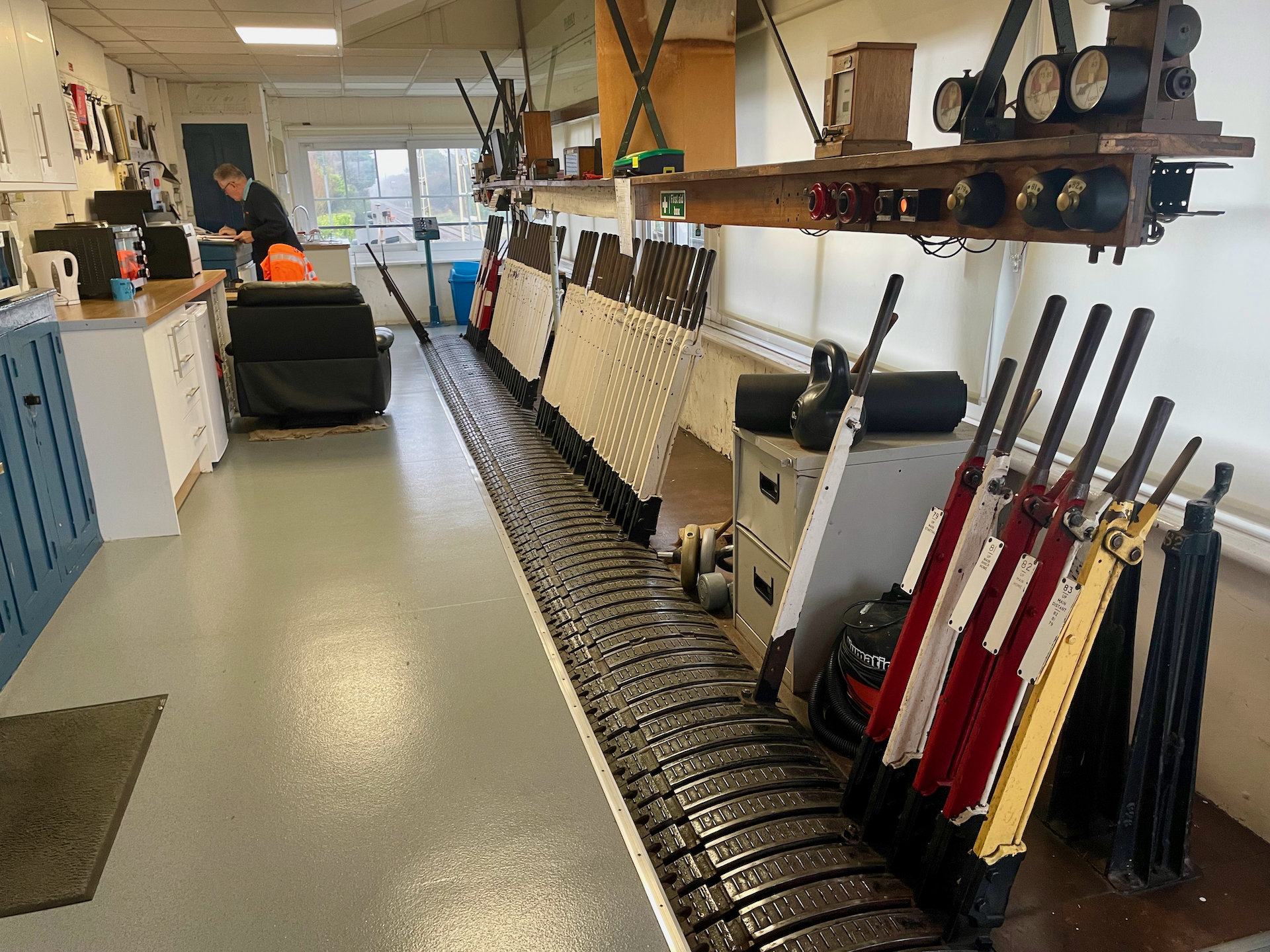
Beginning my whistle-stop tour at the largest and most imposing of the doomed boxes, what strikes you about the former Pembrey East box is just how busy the area must have been to justify its impressive 83-lever frame. Sadly, things are rather quieter now, with a mere nine levers in use, grouped at each end of the sizeable frame, as seen in the top photo.
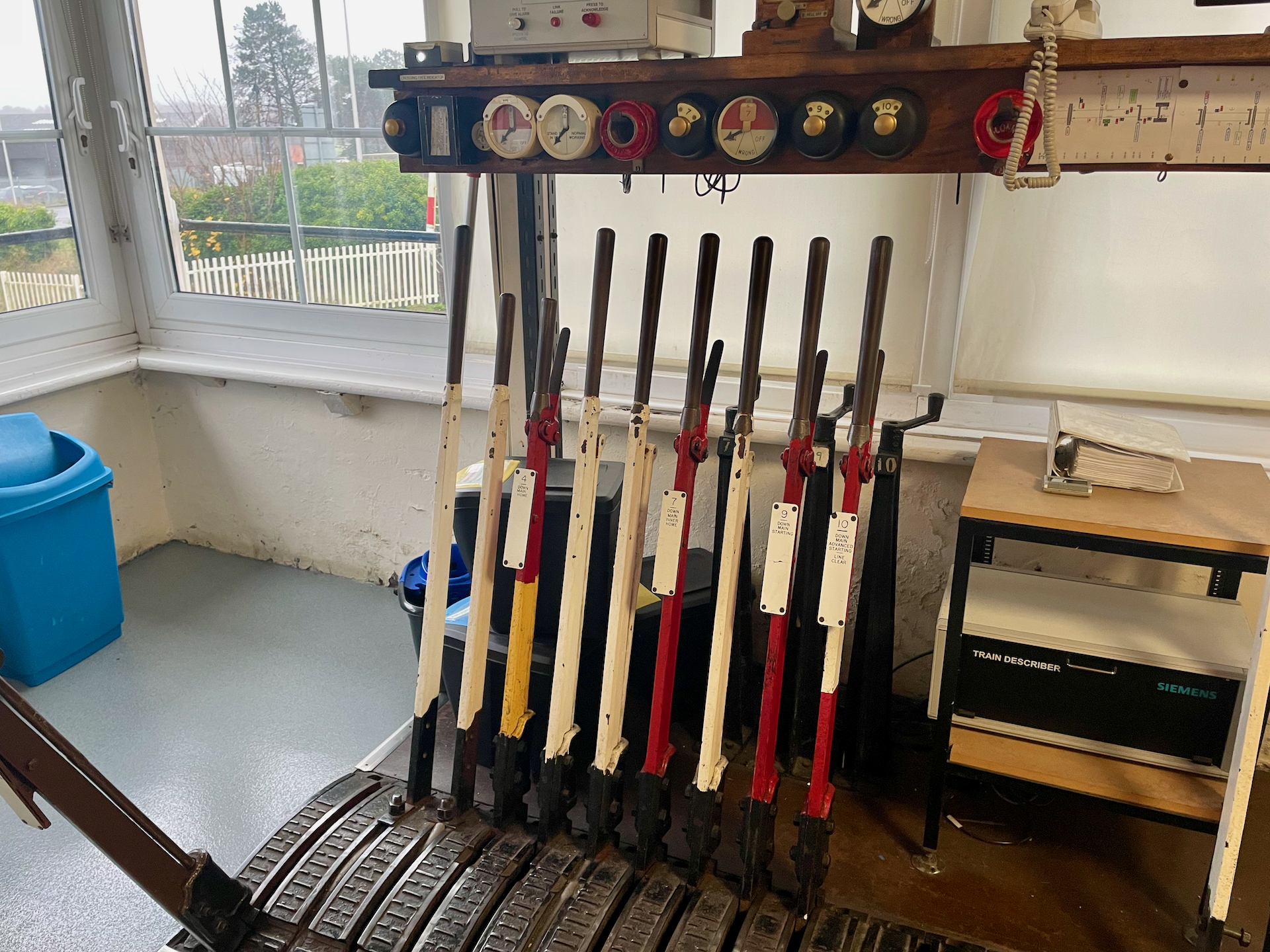 Flanking a huge row of white (disused) levers five working levers at the eastern end of the box comprise level crossing lock (PY1), a short lever PY4 for the colour light down home signal, then the three down semaphores, PY7 (inner home) PY9 (starter) and section signal PY10, as seen above.
 Four working (up direction) levers at the western end of the box, close to the entrance door and internal staircase, are short PY83 (colour light distant), PY82 (home), PY81 (inner home and closest to the box) and short PY79 (Colour light section signal), as seen above.

When it is finally completed, PTW2 will see control of the route from Swansea West Loop (215m 14ch) to Whitland (250m 0ch) pass to the signalling centre at Port Talbot, with closure of the four signal boxes at Pembrey, Kidwelly, Ferryside and Carmarthen Junction.

The original intention had been to re-control this section of line to the Railway Operating Centre (ROC) at Cardiff, but it has apparently run out of space, so a new panel is being installed at Port Talbot instead to assume control of the route.

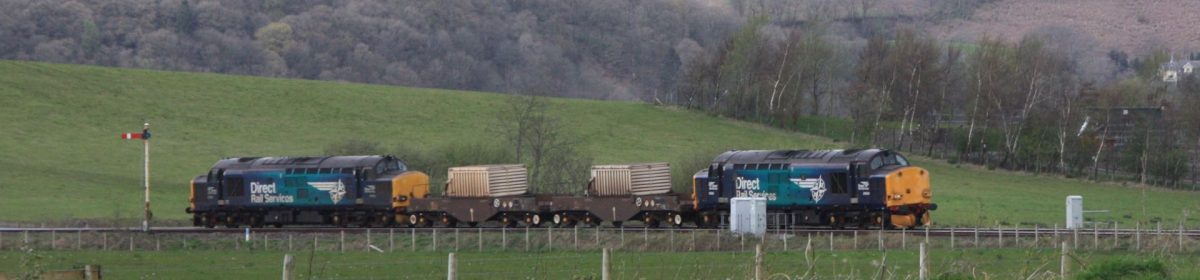
Rail traffic on this scenic section of main line currently comprises five-car GWR Class 80x IET units on Carmarthen-Paddington workings and TfW Class 197 “Marvins” on virtually all the other services, with occasional appearance of Class 153 units on services between Swansea and Pembroke Dock. The only regular freight traffic is the one or two daily oil tank workings to and from Robeston Sidings near Milford Haven.
 While Ferryside Signal Box has the security of a Grade II Listing, things look rather less rosy for the former Pembrey East Signal Box, which is a rather magnificent structure whose appearance would be transformed if a little TLC could be applied to its very rusty and barely-legible name board.

When a local heritage group submitted a Listing request regarding the Pembrey box in 2018 it was rebuffed by Cadw, the Welsh Government’s historic environment service. Cadw stated: “We have assessed the building against the criteria again in light of the information you provided on the historical importance of the box, but this is not enough to overcome its overall lack of architectural interest.
 “Our approach is been to select the best examples of particular types of signal box and to list these. We have listed a GWR type 7(a) at Llangollen and other GWR examples at Llanelli and Pantyffynnon. The example of Burry Port has been judged to be not of the required standard when compared to these boxes.”
Heading 5¼ miles west from Pembrey brings you to a very different box in both appearance and functionality. Kidwelly is a British Rail (WR) type 35 box dating from 1950s that was built on top of a Great Western Type 3 base from 1885, into which a “home made” Panel produced by the BR S&T department at Llanelli was installed 1983.

Resident signaller Mark Hartwell has worked the box for the past 24 years and says it is unique in being a four-switch track circuit panel worked by Absolute Block. It is similar in function to an NX (eNtrance-eXit) panel, which my signalling atlas helpfully explains “requires the signaller to operate a switch at a point immediately in front of a passing train and one at the exit from the block section.”
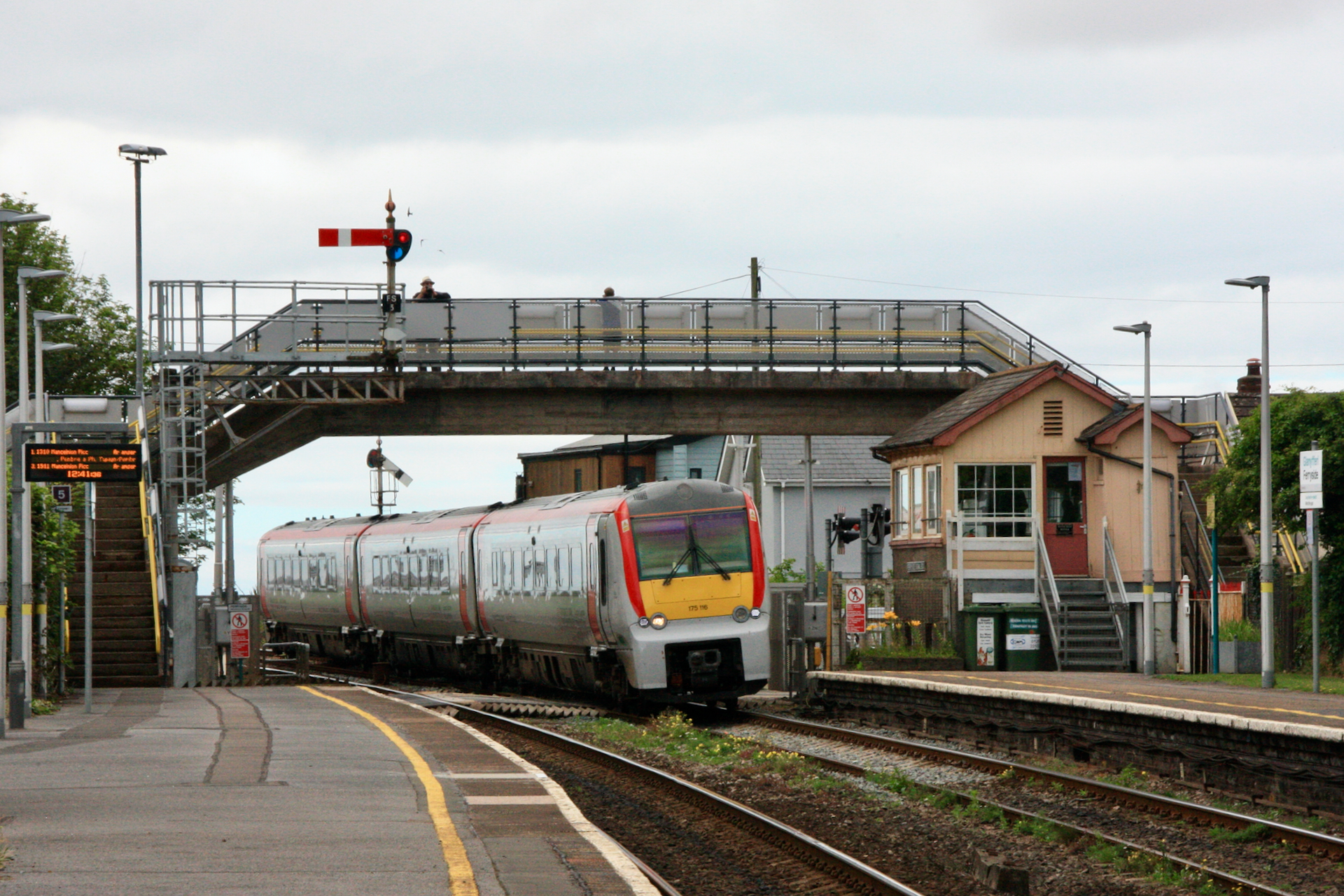
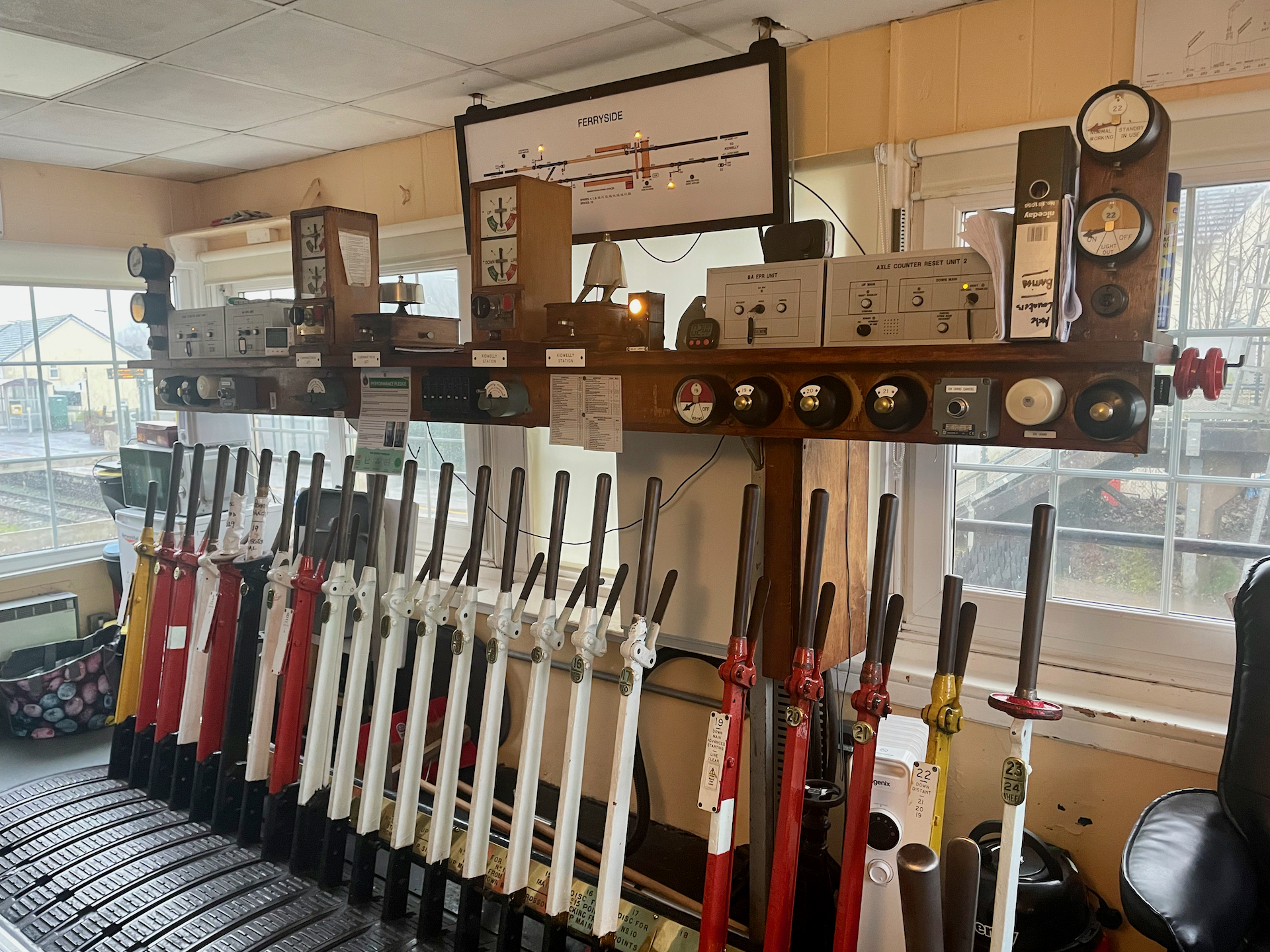
Next up, and a mere 4¼ miles west of Kidwelly, comes picturesque Ferryside. The Grade II-Listed GW type 3 box here (photo above) dates from the early 1880s and, like Pembrey, there are a total of five semaphore signals controlled, in this case, from a 24-lever frame, which dates from 1898.
Again, there are three semaphores in the down direction, comprising FS21 (minus its finial) alongside the sea wall just south of the station and box, then starter FS20 and section signal FS21 to the west of the station platforms. The two up semaphores are outer home FS2 and inner home FS3, opposite the box and immediately in front of the station footbridge.
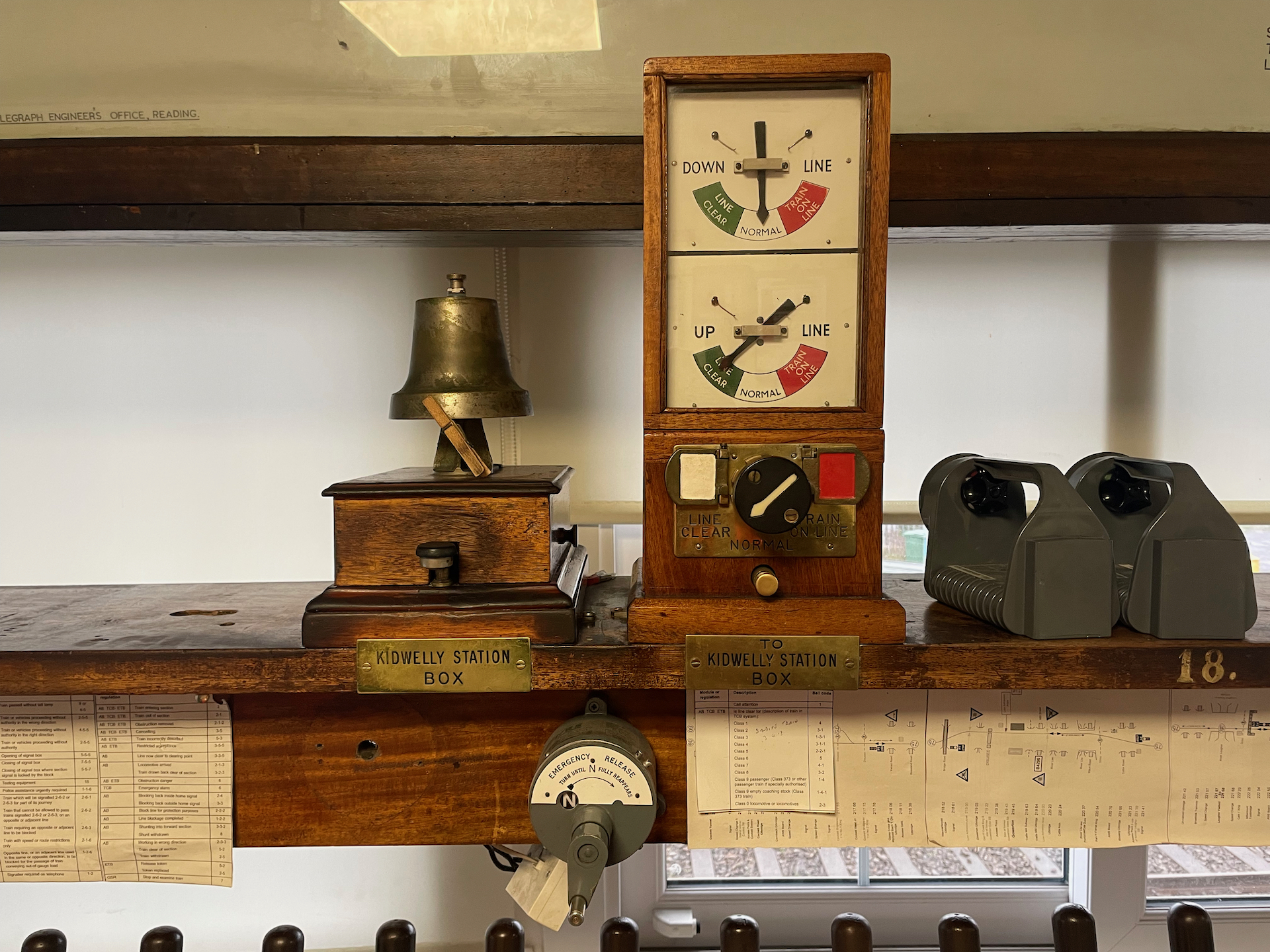 Ferryside is a delightful place to visit, with views across the Towy estuary of Llansteffan Castle. Its signal box is a real gem and, fortunately, the subject of interest from a local preservation group, with Great Western block instruments and bells above the lever frame and the box diagram behind.
Finally we reach Carmarthen Junction at the southern point of a triangular junction, where the double track continues along the western side of the triangle towards Whitland, with a single lead junction used by the vast majority of passing trains as they travel to or from Carmarthen.
 Here the signalling technology differs from the Kidwelly NX panel, with what is called an OCS Panel controlling train movements. Once again consulting my Signalling Atlas, I learn that this is also a “route setting” panel, with the slight variation that each “entrance” point for a train has separate switches for each possible route the train could take, which is logical given that the box controls a busy triangular junction.

Like Pembrey, access is by means of an internal staircase, but there the similarity ends. Carmarthen Junction was originally equipped with a 78-lever frame at the back of the spacious first floor, but that was removed in 1985, when the current OCS Panel was installed. Such is the size of the first floor that the box has already been identified for potential use as a local NR training facility, once its working days are over.
 In an official NR comment I received in October 2024, the message was that the PTW2 project should be commissioned by the end of 2025. The protracted delays to completion being blamed on “the geographic size of the project and difficulties in gaining access to the railway.”
Meantime, it was good to meet an enthusiastic and able trainee signaller on my visit to the box at Ferryside, and to learn from my host for the day that there are still a handful of signallers in training locally, in order to maintain the head count of five resident signallers at each box and six reliefs.
My sincere thanks to Emma Hutchins of the Network Rail media team in Cardiff for organising my 5 December 2024 visits, to Local Operations Manager Scott Brockway for escorting me, and to the signallers I met on the day – Kelvin Bowen at Pembrey, Mark Hartwell at Kidwelly, Leigh Hopkins at Ferryside and Shaun Kelly at Carmarthen Junction.
 RailwayWorld.net
You must be logged in to post a comment.