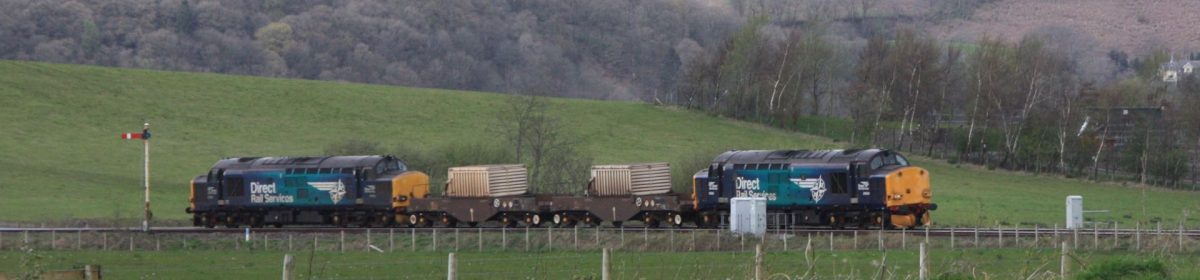
This is my sixth annual look back at a year on our railway, as seen through the lens of my trusty Canon camera, a year that began with the sad loss of mechanical signalling at Par, Lostwithiel and Truro in Cornwall and ended in a chance to travel on the first weekday services to run on the Northumberland Line, one of two lines to re-open on our network during the course of the year.
It was a year too, when I paid visits to two locations where there is nothing but freight action and semaphore signalling, as well as paying return visits to a number of my favourite photographic locations, including Kingussie and Auchterarder in Scotland, the Poacher Line to Skegness, the Cumbrian Coast Line, Burry Port and Holyhead.
 But my year began with a January 2024 visit to re-visit the last surviving main line semaphores in East Anglia, with those at Whttlesea due to make their delayed departure imminently, while those at Manea are expected to last a little longer. My pick of that day’s shots is this view of GBRf 66735 passing Whittlesea’s attractive signal box with 4M28 from Felixstowe North to Birch Coppice.

Later in January I paid a return visit to ever-charming Abergavenny, where a spot I had not previously visited was some newly-cleared woodland south of the station, from where there was a great view of the lower quadrant semaphores, with my favourite shot being of DB 67025 heading away from the station with 1V37 from Manchester Piccadilly (08.30) to Cardiff Central.

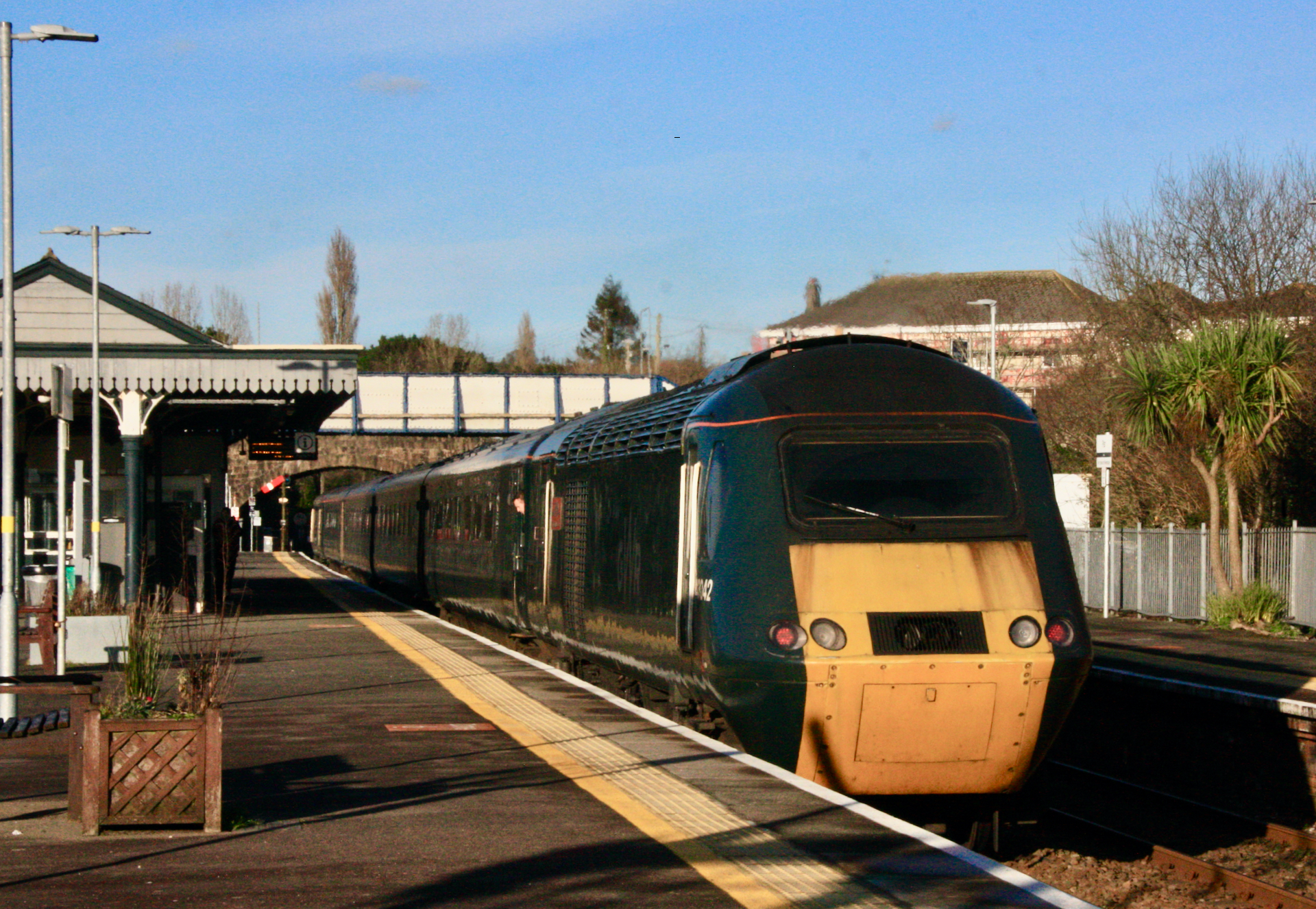
Having enjoyed a fine sunny day in Abergavenny, my luck was also in for a farewell visit to Par where, apart from being lucky enough to have a visit to the doomed signal box, my pick of the shots on another fine sunny day (19 January) was this view (above) from the road bridge of 43198/093 (GW08) approaching the station with 2C26 from Plymouth (13.42) to Penzance.
 My farewell tour of the three doomed Cornish signal boxes continued with a 29 January 2024 visit to Truro in rather gloomy weather. My pick from that day shows the newest signal at Truro (T26) pulled off as 150263 unusually departs from up platform 2 with the 16.15 service to Falmouth Docks 2F85).

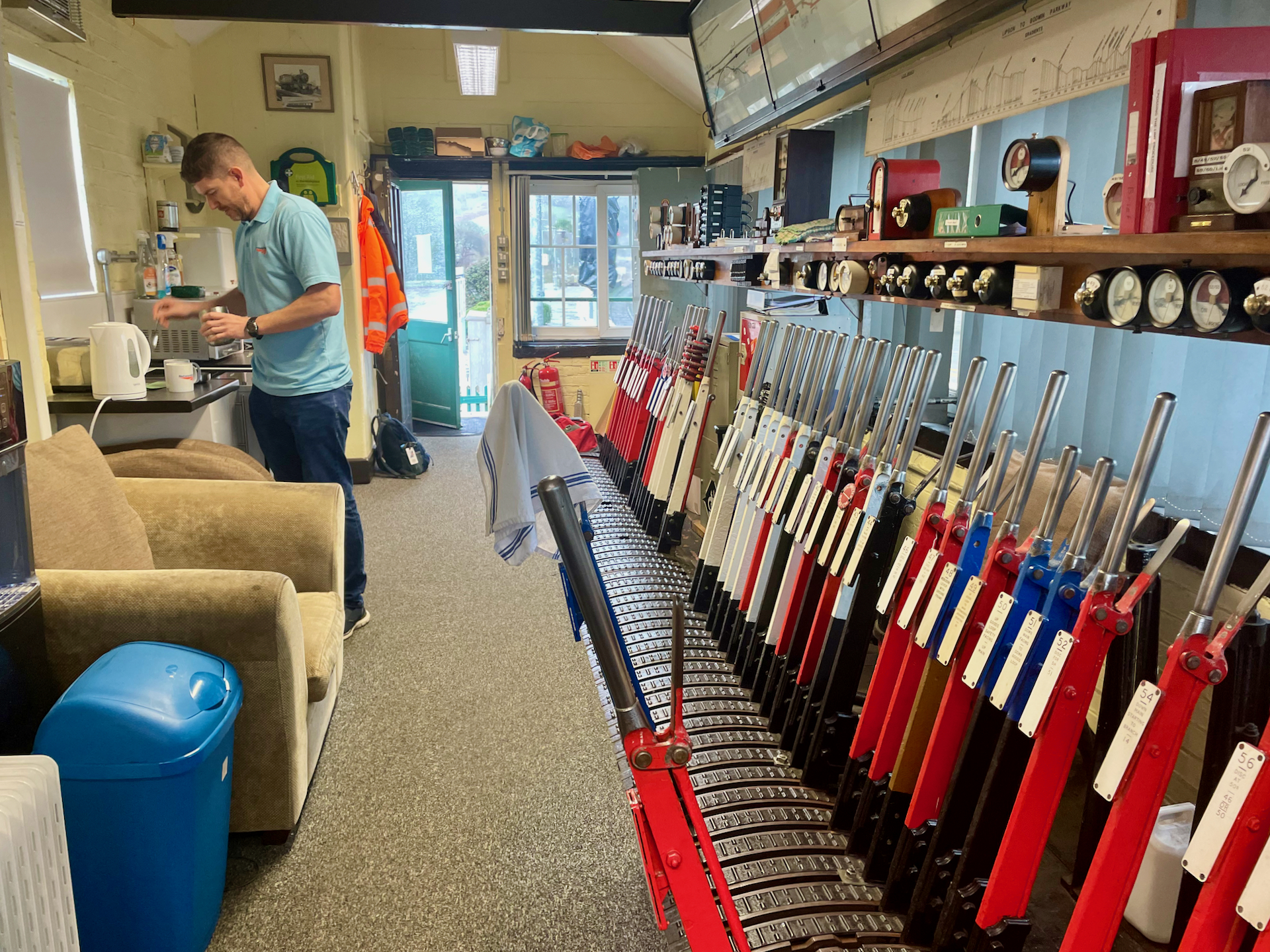
A few days later (9 February) it was time for my final visit to Lostwithiel before closure of the box later that month. My pick of the shots from another dismal and wet day shows 43187/098 (GW09) passing signal LL6 with 2P16 from Penzance (13.15) to Plymouth, while the image below shows signaller Sam Clark performing that vital function for any signaller – making tea!
Heading north of the border, I paid an overnight return to Kingussie in early March, where my selected shot from 12 March (below) shows 66304+73071 about to depart with the down (northbound) Inverness portion of the Caledonian Sleeper service from London Euston (1S25).

The following day saw me take a trip from the Scottish capital to Auchterarder (train to Dunblane then bus and walk) where, from a convenient farm track over-bridge, my pick of the shots that day (below) shows Scotrail Inter7City HSTs 43179/124 passing the remote signal box and former station site with 1T26 from Aberdeen (09.44) to Glasgow Queen Street.

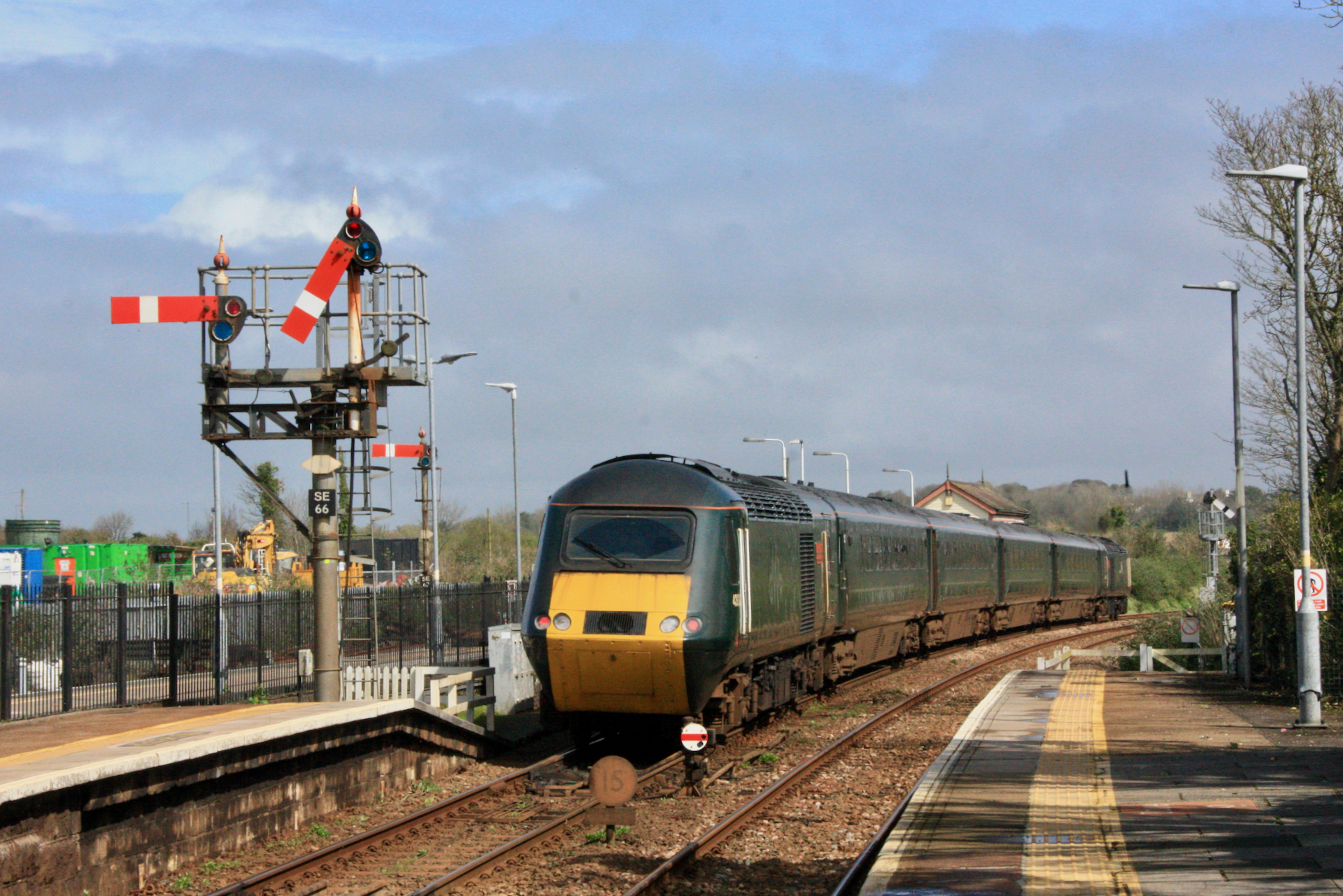
From one end of our rail network to the other in April, as I paid a return visit to St. Erth, now one of only two remaining outposts (along with Liskeard) of mechanical signalling on the main line in the Royal Duchy. My pick of the shots I got on 8 April is this view (below) of 43197/092 departing the station and passing the signal box with 2P16 from Penzance (13.15) to Plymouth.
I have long been fascinated by “Parliamentary” services on our network and, having done most of those in Northern territory, including Chathill, Brigg, Stockport-Stalybridge and Helsby-Ellesmere Port, I was finally able to complete the set with a couple of trips aboard the Leeds-Pontefract-Goole service on 23-24 May. This view of Hensall station (below) shows 150203 arriving on 23 May to return me to Leeds at 20.03.

Another location I had never previously visited was Crag Hall, the only passing place and signal box on a freight-only branch line from Saltburn to the Boulby potash mine. The pick of my two days spent in the area is this shot (below) of Freightliner 66553 departing Crag Hall for Middlesbrough on 25 June with heavily-delayed 6F24 from Boulby.

One year on from photographing a pair of “Mazey Day” specials passing the doomed semaphores at Par, I paid a visit to Liskeard on 29 June in the hope of a repeat. Train cancellations, however, meant I missed one, although I was just in time to see Statesman Rail special 1Z69 from Wolverhampton, powered by a pair of LSL-owned Class 47s (47712/810), as they approached the signal box and station.
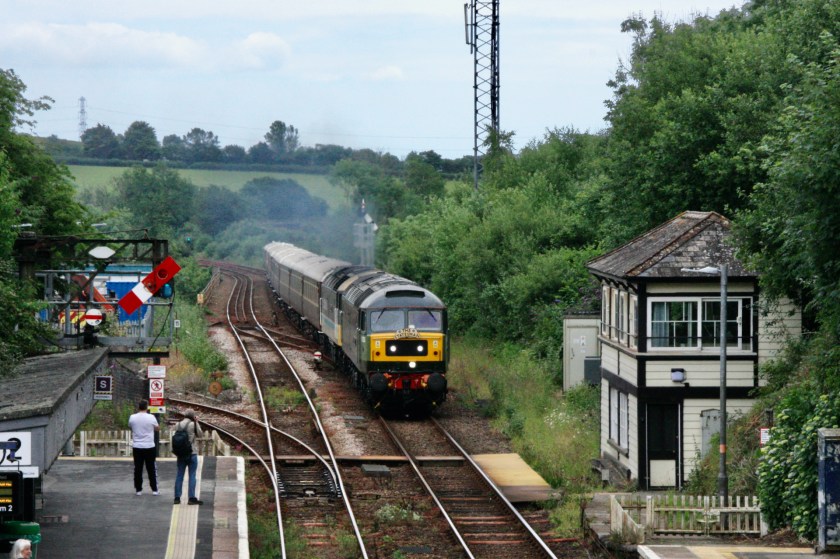
Pembrey & Burry Port is a place I have enjoyed visiting on many occasions, but I had not been lucky enough to see any freight action here until a visit on 2 July, when an overnight stay in Carmarthen meant I could wait late enough to see the two westbound workings of oil tanks to Robeston Sidings, including DB 66155 (maroon) and 66205 (red) with 6B41 from Westerleigh Puma.
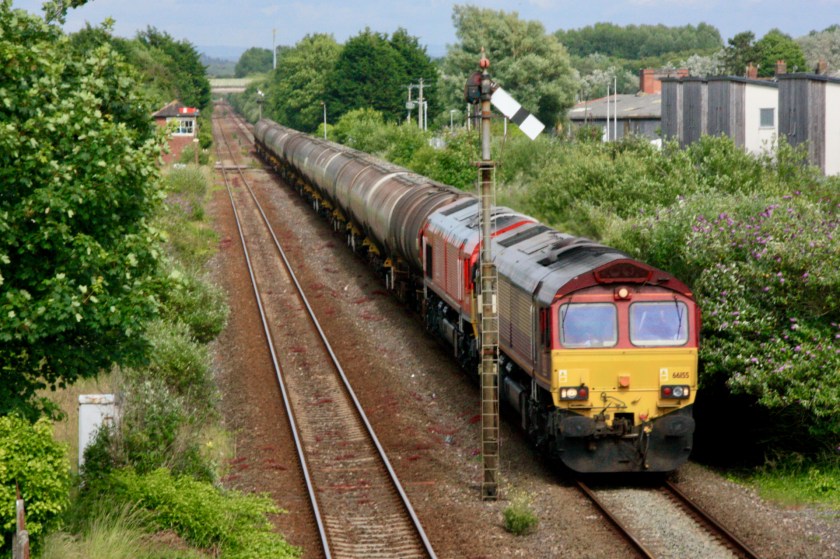
The Marches Line between Shrewsbury and Newport boasts a handful of the oldest surviving signal boxes on our national network, including the 1872 LNWR design at Dorrington, the first box south of Sutton Bridge Junction in Shrewsbury. Semaphores here go both up and down, as can be seen as Freightliner 66428 passes on 21 August with the diverted Tesco container train (4V44) from Daventry to Wentloog.

After my June visit to Crag Hall, a freight location that I visited twice during the year was picturesque Peak Forest, where on 27 August I was able to witness a huge volume of Class 66-worked freight to and from the four stone quarries. My pick from that day shows GBRf 66751 departing with 6G92 from Tunstead to Small Heath as, from left to right, are locos 66780 (down loop) 66604 (up loop) and 66079/035/198/115/158 in sidings behind the signal box.

My second trip north of the border during 2024 took me to Blackford, home of Highland Spring water, where I had identified a panoramic viewpoint from a road bridge carrying the A9 east of the signal box, water plant and former station. From that noisy and windswept spot, this photo from 14 September shows Inter7City 43034/132 passing signal BK11 with 1A41 from Glasgow Queen Street (11.41) to Aberdeen.

Railway re-openings are something of a rarity, so on the day after my trip to Blackford (15 September) it was a great pleasure to be able to sample the new 5½-mile rail link from Thornton North Junction, near Glenrothes, to Leven, on the Fifeshire coast, which had re-opened on 2 June. This view of the new station (below) shows 170405 arriving with 2K03 from Edinburgh Waverley (14.16).

A return visit to West Cumbria later in the month was a chance to see the remarkable amount of mechanical signalling that survives on the Cumbrian Coast and Furness Lines. Among highlights are three of the UK’s ten surviving and working home and distant signal combinations, which are within a mile of each other and protect two level crossings north of Millom. In this view (below) 156468 approaches Kirksanton LC on 24 September with 2C39 from Barrow-in-Furness (18.07) to Carlisle.
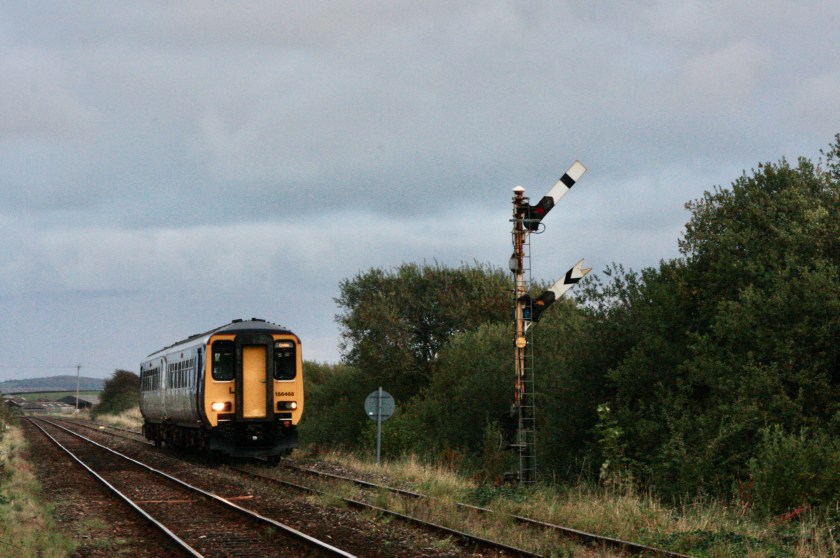
Heading back to the Principality at the start of October, one route I had long-planned to revisit was the Heart of Wales Line from Llanelli to Craven Arms. So after an overnight stay in Llanelli, I began the trip north at dawn on 1 October, spending some time in the company of the Pantyfynnon gate-keeper and capturing this early morning view of TfW 153323 departing with 2V04 from Shrewsbury (05.22) to Swansea.
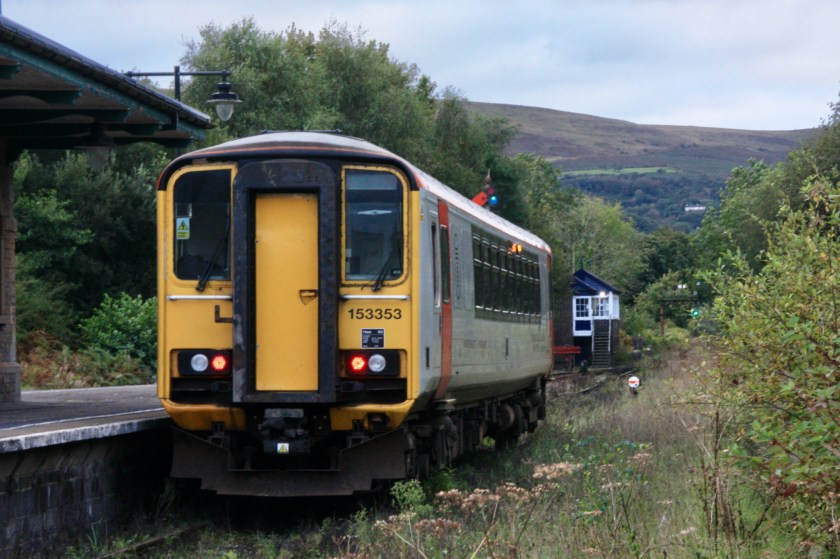
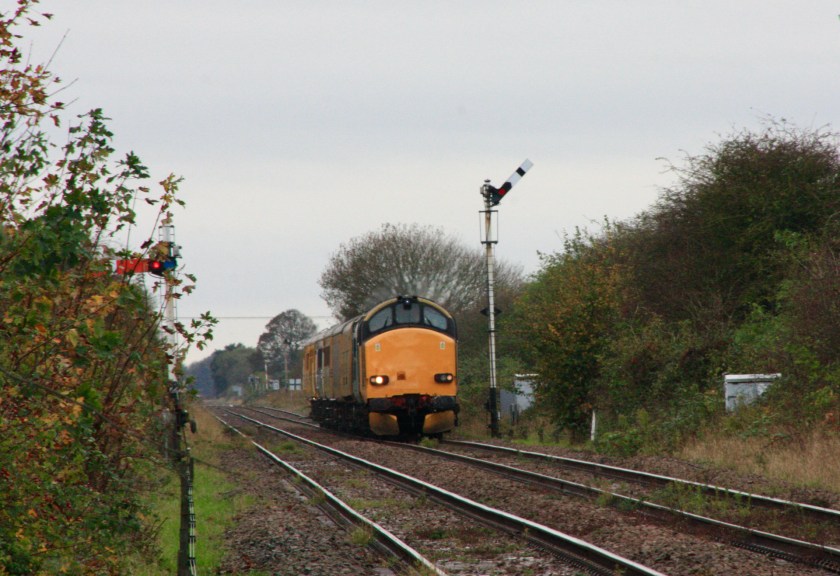
Like the Cumbrian Coast route, the Poacher Line in Lincolnshire is another marvellous outpost of mechanical signalling, so on 28 October I paid an overdue return visit to Skegness. Here I was able to capture some rare loco-hauled action when Colas Rail 37610 arrived in BR blue livery hauling the NR Ultrasonic Testing Unit (UTU) train on its circuit from Derby RTC.
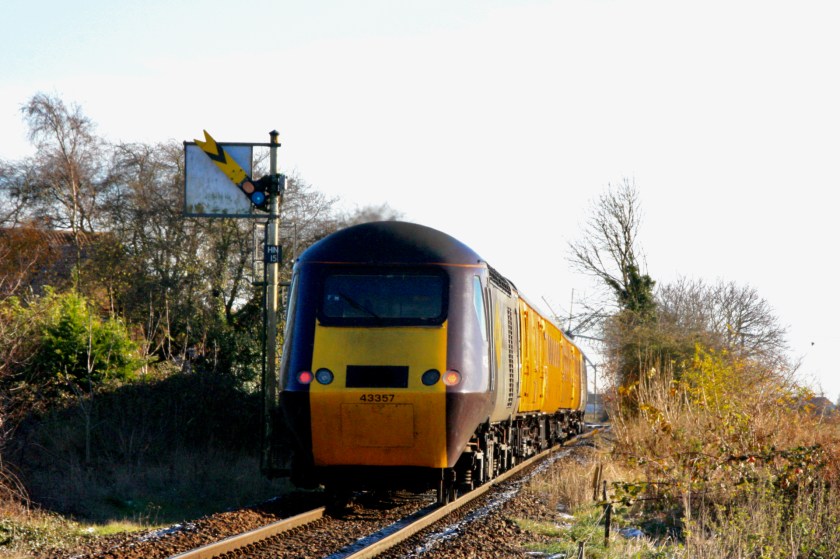
Just a month later and it was a different type of NR test train visiting the Poacher Line, when I travelled to delightful Heckington to see Colas Rail HST power cars 43301/357 with test train 1Q49, which was undertaking Plain Line Pattern Recognition (PLPR) and is seen here on 21 November as it passes the down distant signal HN15, with the famous Grade I Listed 8-sail windmill just visible in the background.
For the second year running I decided to pay a short visit to Anglesey in late November, returning via Llandudno in order to capture the second of two surviving distant signals in the Principality, having spent the previous day photographing the other one at Ty Croes.

On a fine winter’s morning (29 November) this view (above) looking west shows 197021 as it has just passed the Deganwy up distant signal (DY5), forming 1H86 from Llandudno (10.42) to Manchester Airport, with the Maesdu golf course in the foreground and the North Wales Club beyond the railway line.
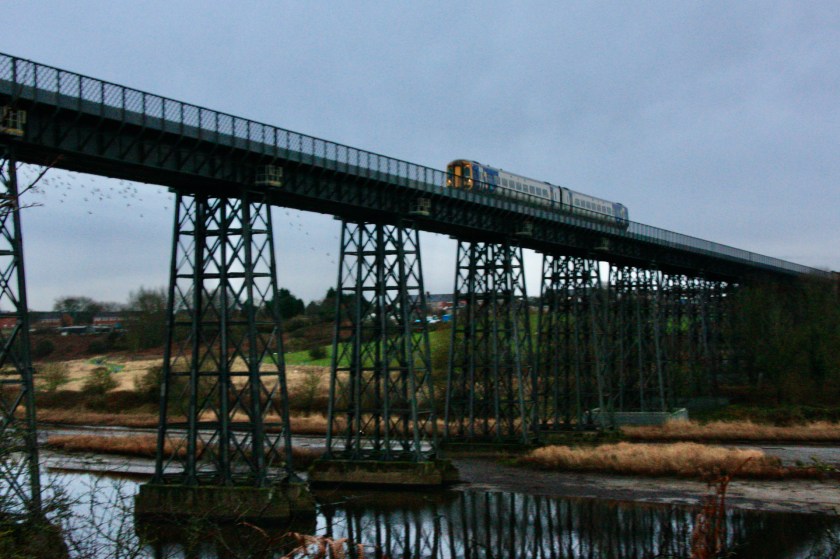
Rounding off the year I was keen to follow my September visit to Leven with a trip on the only other railway line to re-open during 2024, the 18-mile long Northumberland Line from Newcastle to Ashington, which re-opened on 15 December. Travelling the line over the following two days, this view (above) shows 158859 crossing North Seaton Viaduct (the Black Bridge) on 17 December with 2T15 from Newcastle (08.50) to Ashington.
To see more on any of the locations featured above, go to the chronological index on the right hand side of the www.railwayworld.net homepage and click on the relevant month. As this will be my final post of the year, I would like to wish all my friends and readers a very Happy Christmas and a safe and prosperous New Year.
 RailwayWorld.net
You must be logged in to post a comment.