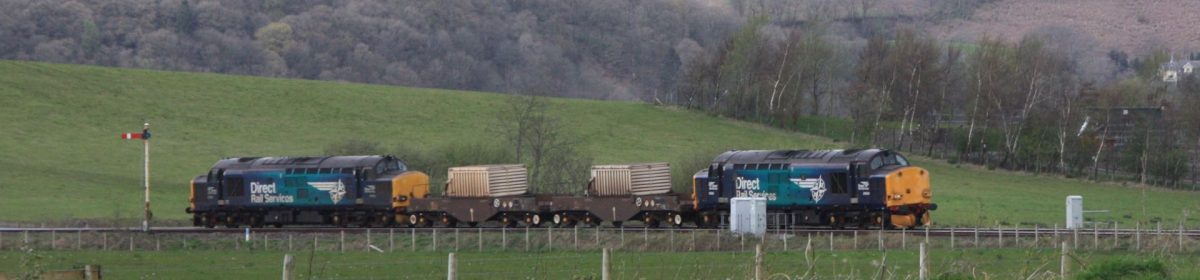
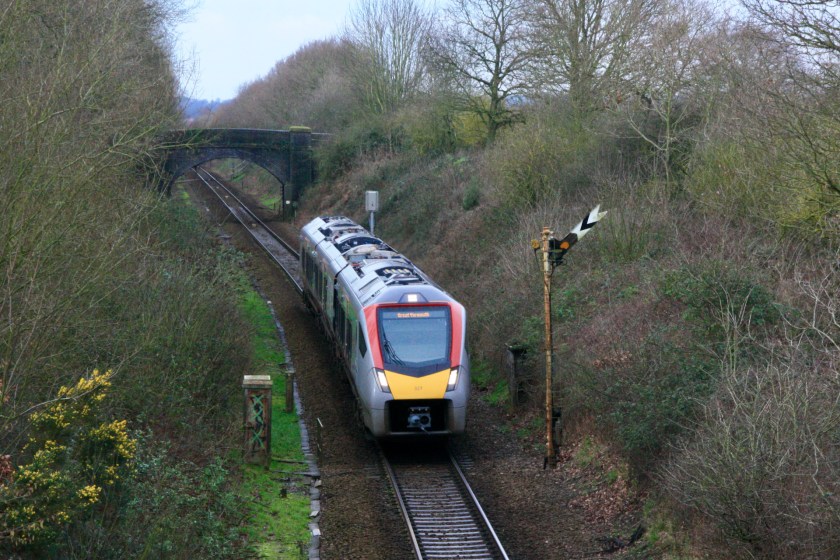
Sunday, 2 February 2025 marked exactly five years since the 23.35 Lowestoft-Norwich service (2J99) brought the curtain down on a remarkable outpost of mechanical signalling, by being the last service to be signalled by the six signal and gate boxes between Lowestoft Central and Brundall Junction.
Having paid numerous visits to the charming Wherry Lines during the final weeks of mechanical signalling, this notable fifth anniversary seems like an appropriate excuse to look back at the fine collection of signal boxes and semaphores that had lasted many years longer than expected.
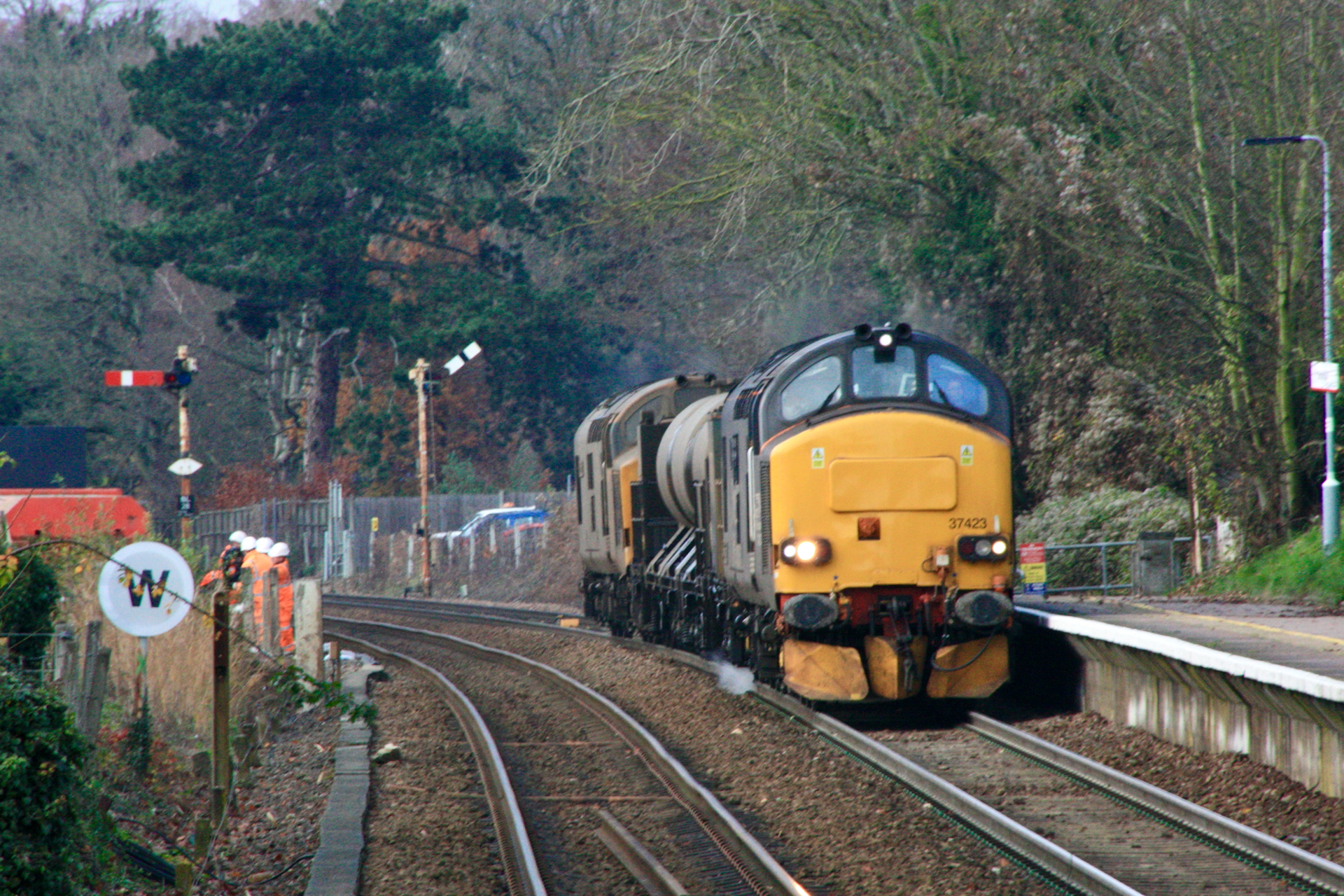
The Wherry Lines from Norwich to Great Yarmouth and Lowestoft had a number of notable signalling features, with a total of eight signal boxes in use until the re-signalling, along with the two manually worked level crossings at Lingwood which controlled a total of three semaphore distant signals.

Working semaphore distant signals were a particular feature of the Wherry Lines that survived until re-signalling, and in addition to the three at Lingwood there were two at Brundall (both in the up direction), one at Acle, two at Cantley and one down distant controlled by the signal box at Oulton Broad North.
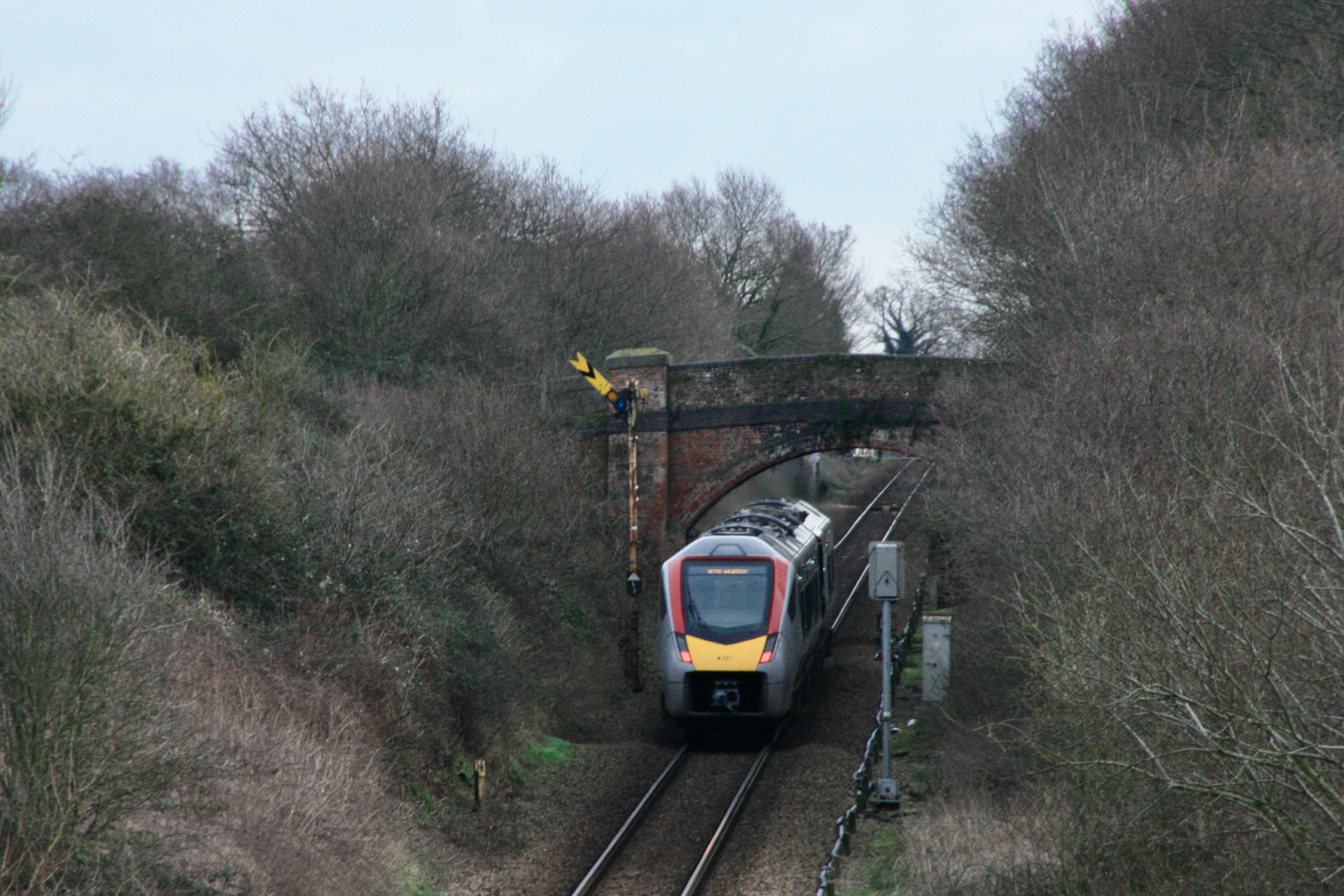
This was a time of great change on the Wherry Lines for, in addition to the re-signalling programme, there was a rolling stock transformation as the Class 153/156/170 units and the Class 37-worked “short set” gradually gave way during 2019 to the Class 755 units that are now the mainstay of regional services across East Anglia.
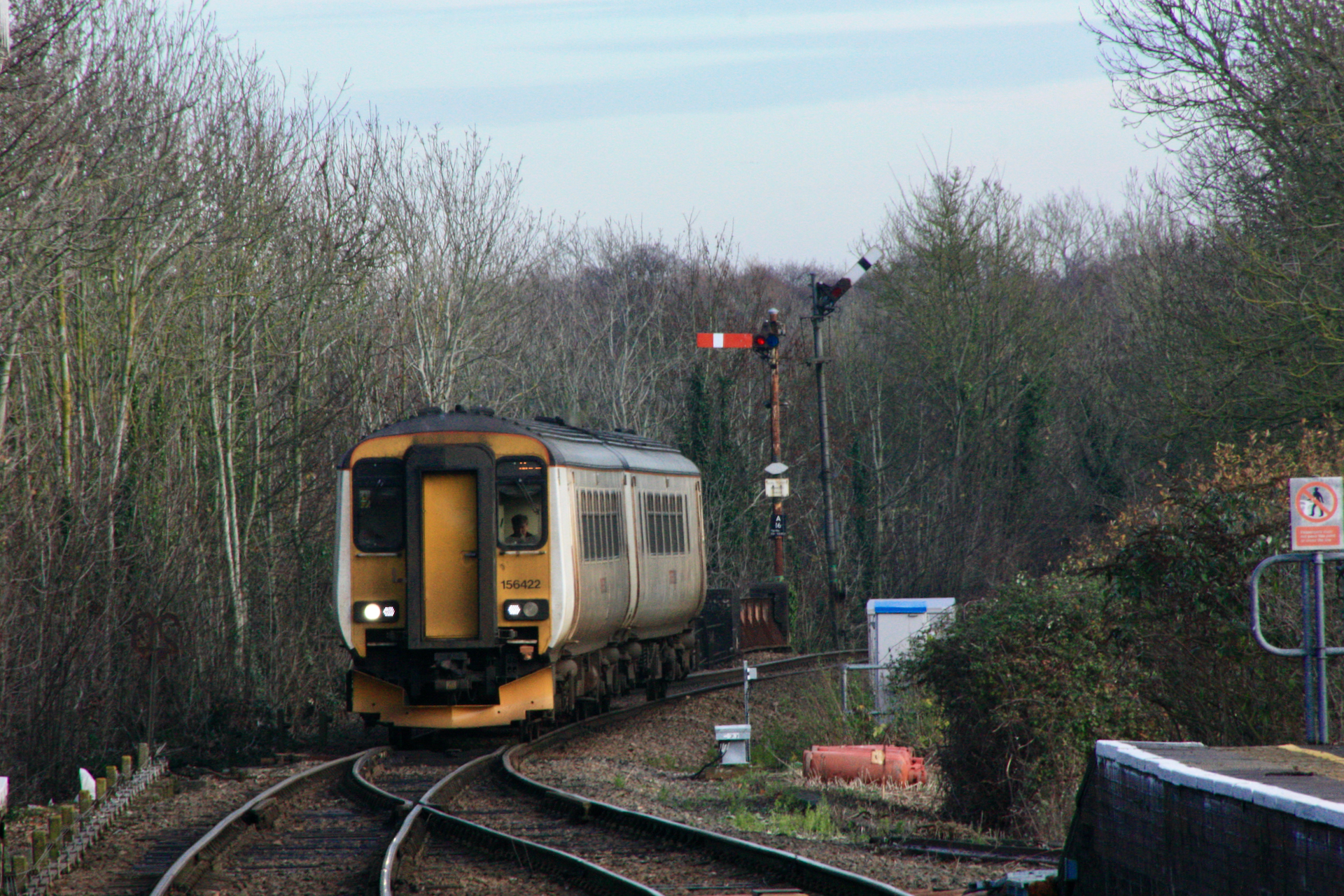
But just as the re-signalling was implemented more than a year behind schedule, so the rolling stock change-over was not without incident, and in the early months of their operation the new Stadler Class 755 units earned the unfortunate nickname of Basils, due to their many faults and cancelled services.

For those unfamiliar with the Wherry Lines, the network comprises a 23½-mile double track route heading south-east from Norwich to Lowestoft, from which a 12½-mile single track to Great Yarmouth diverges at Brundall Junction (5¾ miles from Norwich) and runs eastwards via Acle, while a second 8¼-mile single track to Great Yarmouth diverges at Reedham (12¼ miles from Norwich) and runs in a north-easterly direction via remote Berney Arms.
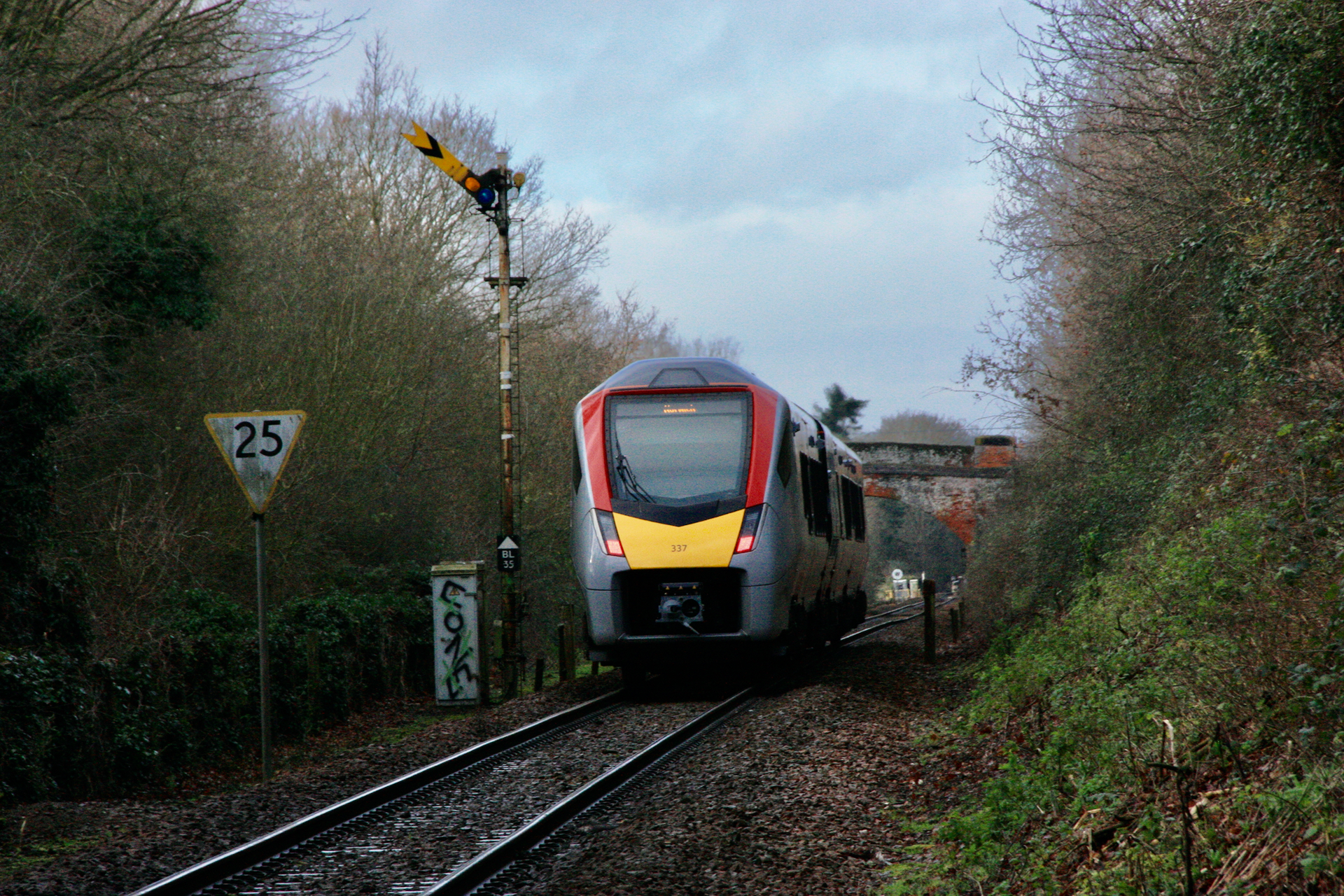
Heading east from Norwich, the first semaphores you would encounter were those at Brundall, where a Grade II-Listed GER Type 3 box dating from 1883 was the oldest of the surviving Wherry Line signal boxes. Despite some rationalisation of the track work ahead of full re-signalling, the box controlled a dozen semaphores, including two up distants and an impressive bracket housing junction signals opposite the box.

Brundall was a delightful place to photograph the semaphores, all of which could be captured from the staggered platforms, from a foot crossing west of the station and, in the case of the two distant signals, by taking a fairly lengthy walk east from the village to a foot crossing near Strumpshaw on the Acle route and another on the Lowestoft line near Strumpshaw Fen RSPB bird reserve.
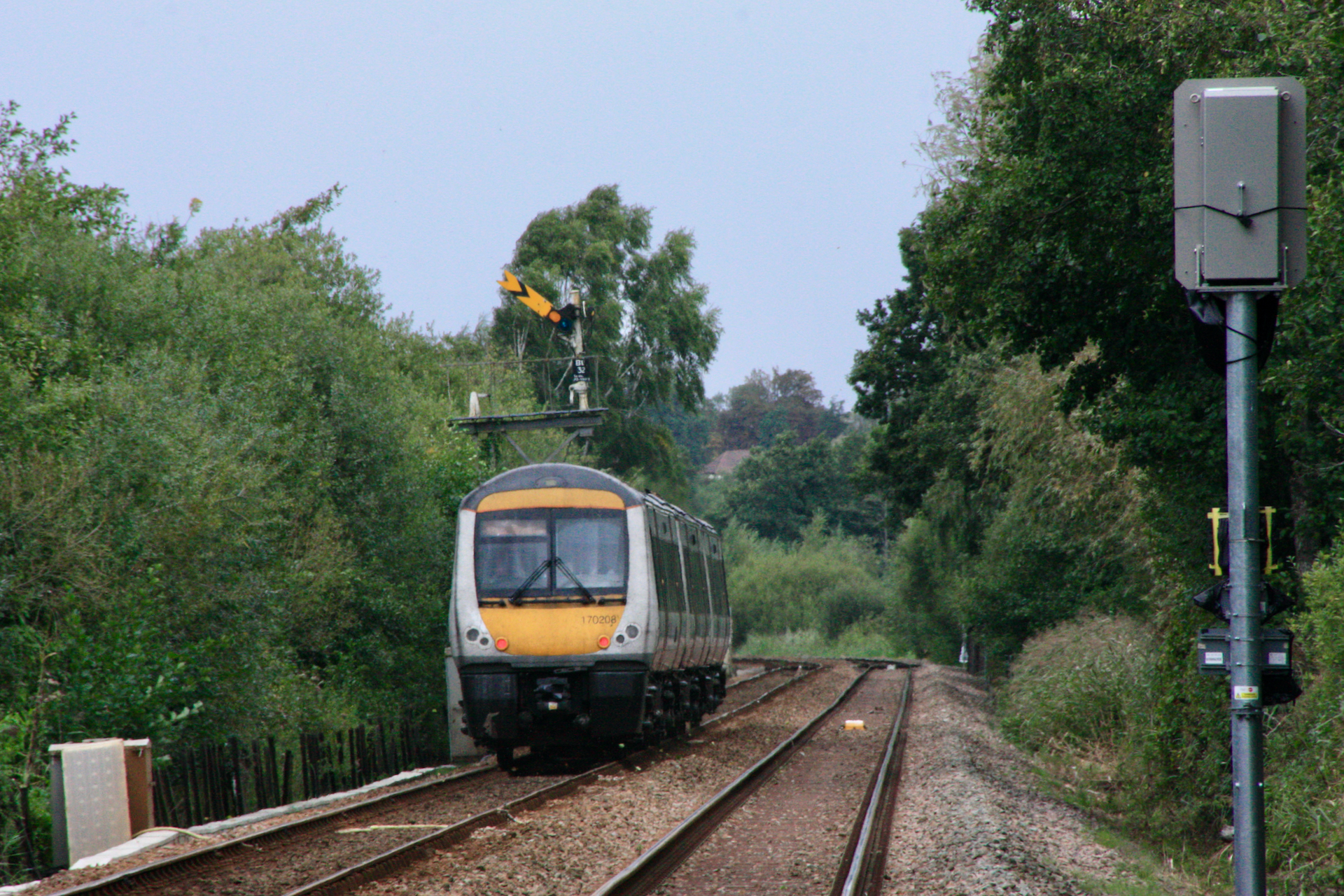
Continuing eastwards, another great vantage point was Hemblington Road over-bridge in the village of Strumpshaw – a 30-minute walk from either Brundall or Lingwood stations. From here there was the unique opportunity to see a train passing two consecutive distant signals, firstly CR1 which was controlled by the gate-keeper at Chapel Road Level Crossing, then a second down distant (L3) controlled by Lingwood Level Crossing.

After pausing at Lingwood, the next stop is Acle, sole passing place on this route, where a diminutive signal box stands on the down platform of this charmingly preserved station. Like Brundall, this is a GER Type 3 design that dates from 1883 and housed a 20-lever frame, on which were seven working semaphores – the down distant being a colour light.

Arriving at the end of the line you will pass the largest and grandest of the signal boxes that survived until early 2020. Yarmouth Vauxhall is a GER Type 4 design that dates from 1884, housing a 63-lever frame.

Ironically for a box with the largest frame of all those that survived, it had the fewest operational semaphores at just three (all at the platform ends), along with a number of two-aspect colour light signals on the twin track section of line from Breydon Junction.

Heading now down the Lowestoft line from Brundall, the next sighting of semaphores was at Cantley, whose box had been reduced to the status of a gate-box during some earlier rationalisation ahead of full re-signalling, but retaining semaphore distant signals in both directions (C22/C1) as well as its famous co-acting down home signal (C21), as seen above.

Reedham Junction Signal Box (since moved to the North Norfolk Railway) had closed well before completion of the re-signalling and the Berney Arms route was closed for a couple of years as a consequence, with the next semaphores to have survived until 2020 being those controlled by the Reedham and Somerleyton Swing Bridges.

On my last visit to see the semaphores (31 January 2020) I paid a visit to Somerleyton, where I had been intrigued by the photographic potential of a farm crossing of the line that is just round the left hand curve in the line beyond the station in the Lowestoft direction.
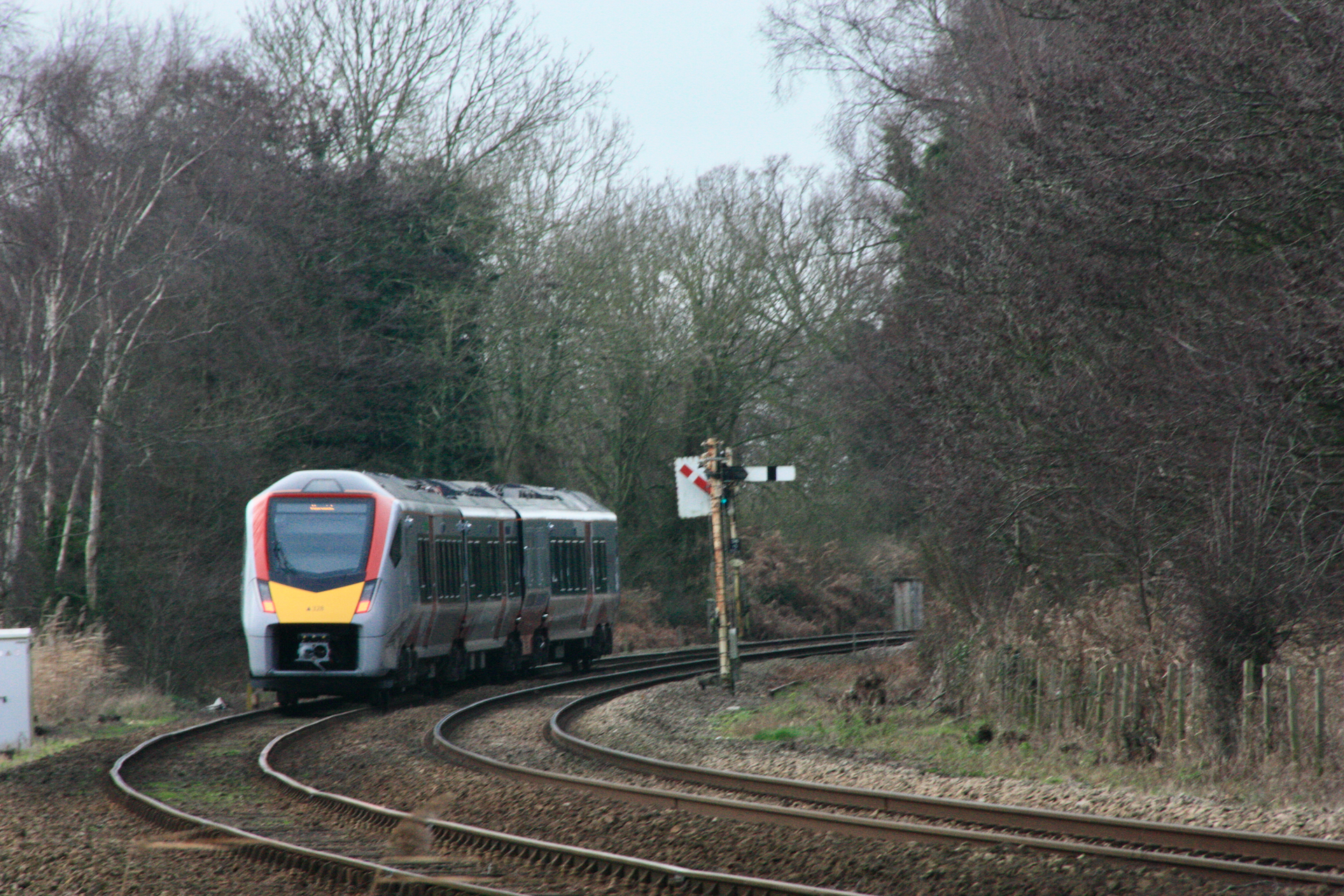
A brisk 15-minute walk from the station, and then down a muddy track, signed as the Angles Way, proved well worth the trek. Looking back towards the station there was a view of down section signal SB10, with the up outer home (SB13) in front of a sighting board visible just beyond – a signal almost impossible to see from the station platform.
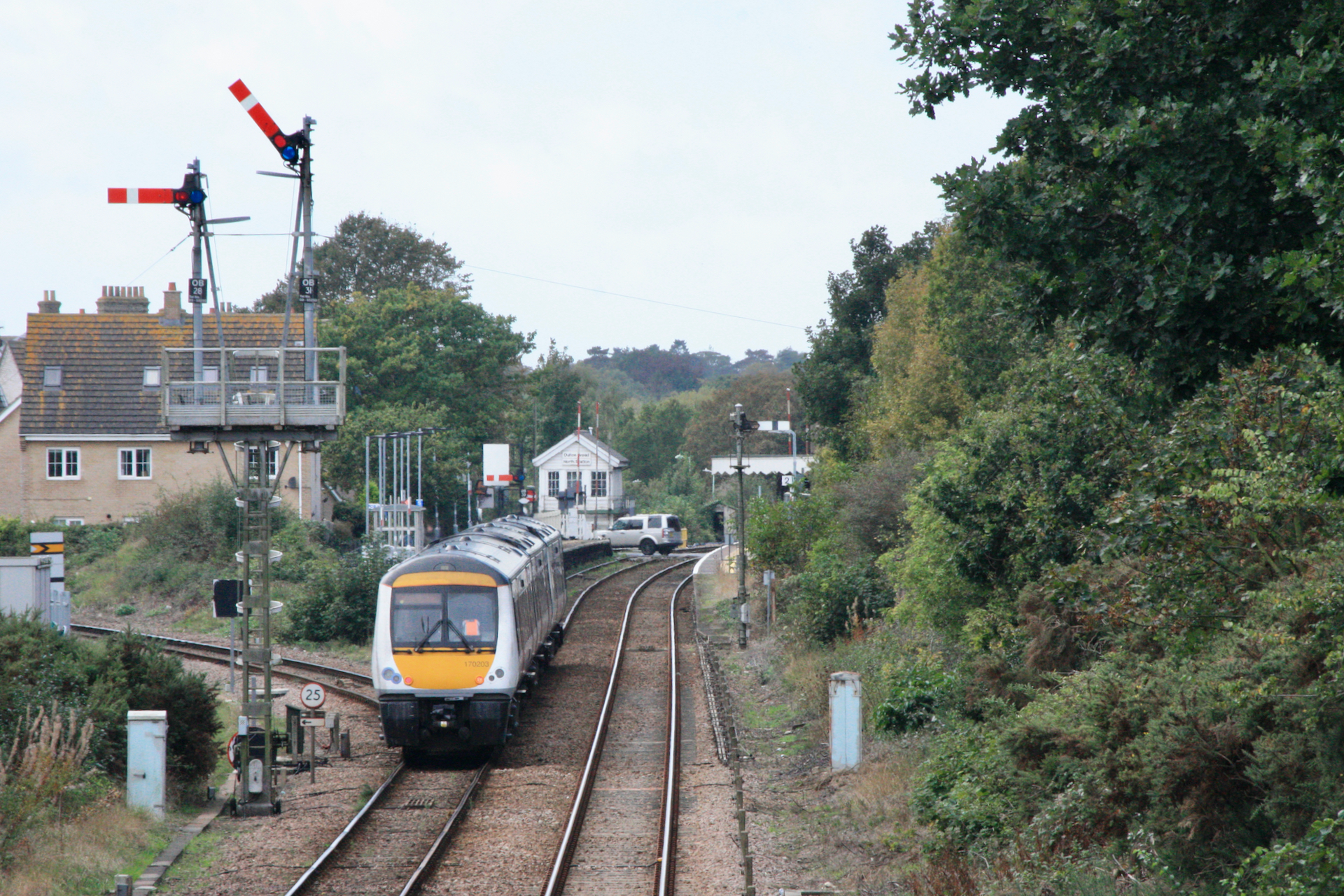
Next up on the trip to Lowestoft was Oulton Broad North, where a Great Eastern Railway (GER) Type 7 box dated from 1901. It boasted a 35-lever frame, with just seven remaining semaphores, including a down distant (OB3) and junction signals (OB31/28) at the point where the Norwich route and East Suffolk Lines divide east of the station.
 Oulton Broad North Signal Box also controlled a number of colour light signals standing either side of Oulton Broad Swing Bridge on the East Suffolk Line, and also controlled a release lever (20) for the swing bridge, which, like the signalling, is now controlled from the signalling centre at Colchester.
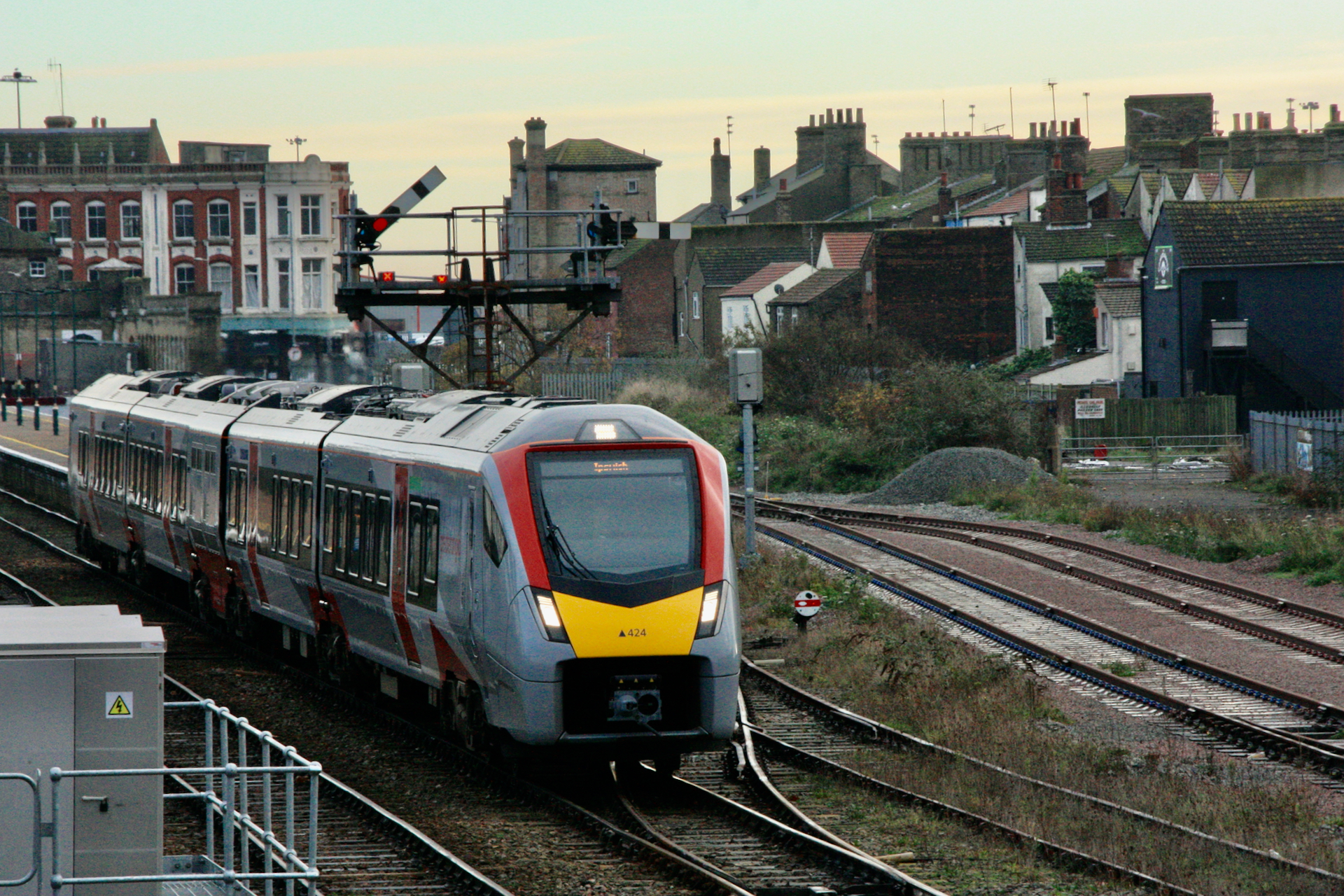
Finally journey’s end at Lowestoft Central and the one surviving box that did not control any colour lights. Here an attractive GER Type 6 design dating from 1885 housed a 61 lever frame, on which it had just six working semaphores.
 RailwayWorld.net
You must be logged in to post a comment.