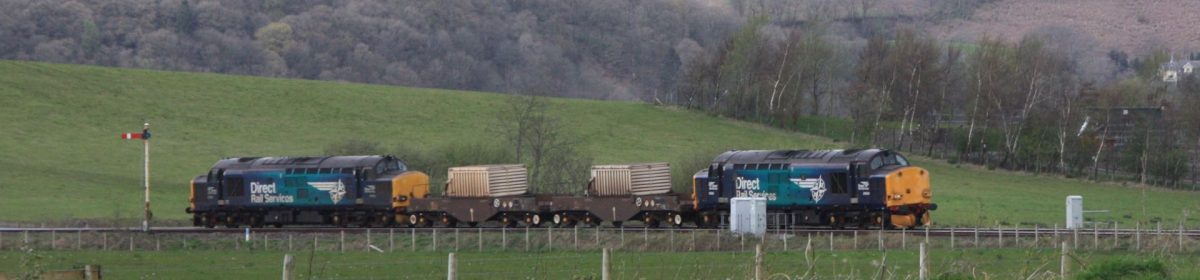
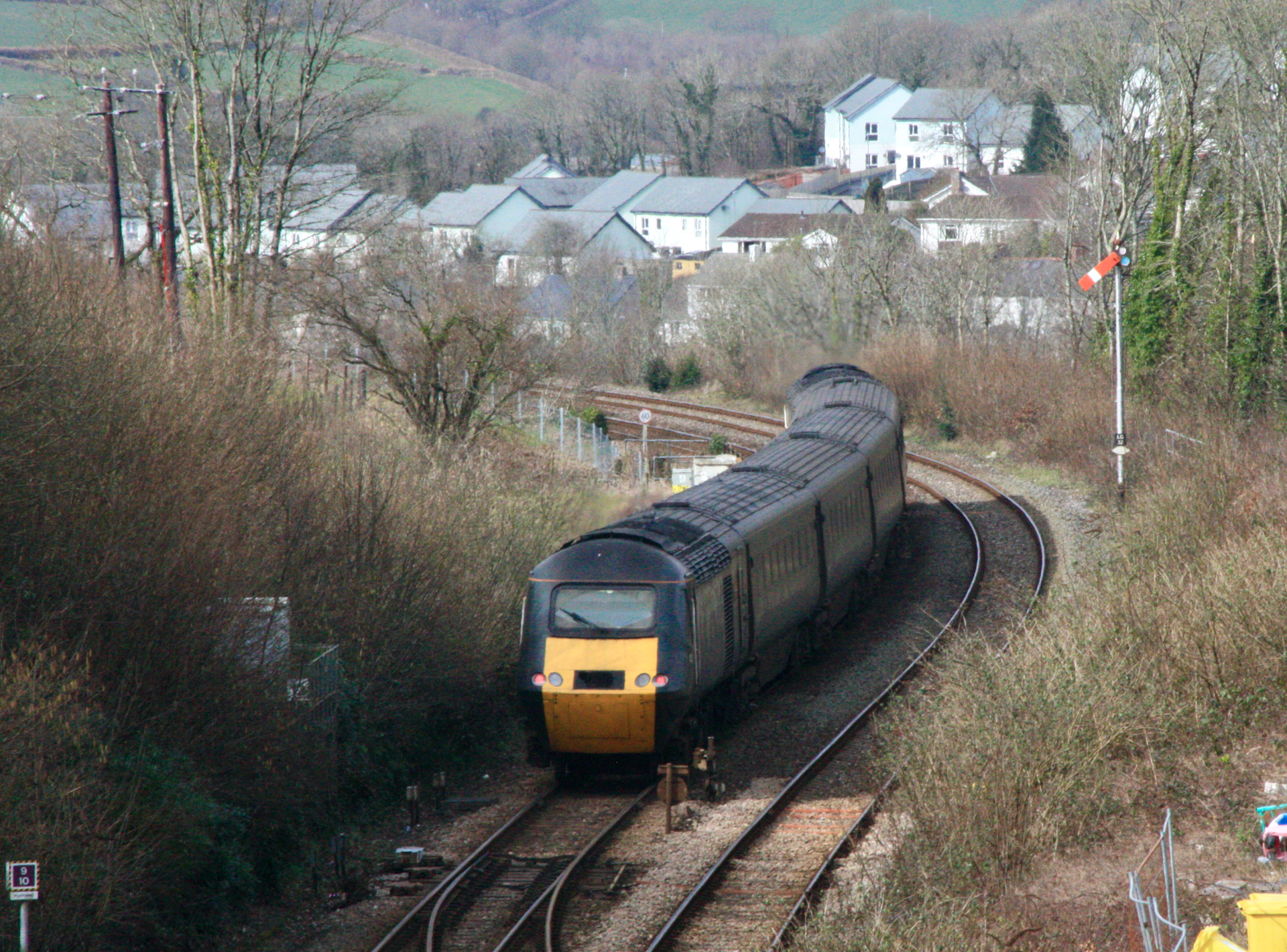
A forecast of fine weather persuaded me to take make a springtime return to Liskeard on Thursday, 6 March 2025, when my challenge was to see if it is possible to get any decent shots from west of the station showing trains approaching up outer home signal LD2 and crossing Moorswater Viaduct.
Having previously trekked out eastwards from the station to photograph trains passing down outer home signal LD35, this would hopefully be an opportunity to photograph the one of Liskeard’s six semaphores that had so far eluded my camera, and also what has been described as Cornwall’s most spectacular viaduct.
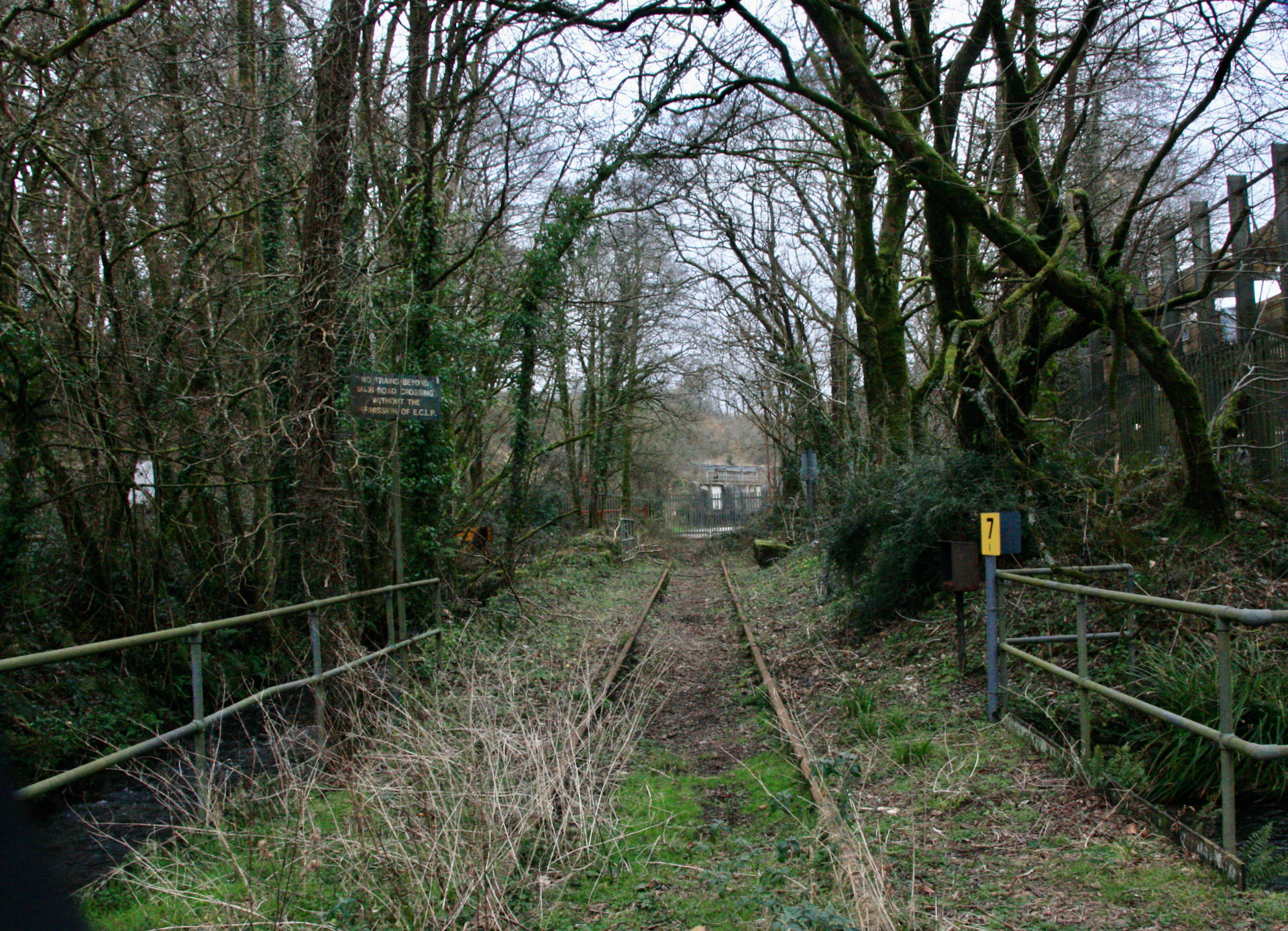
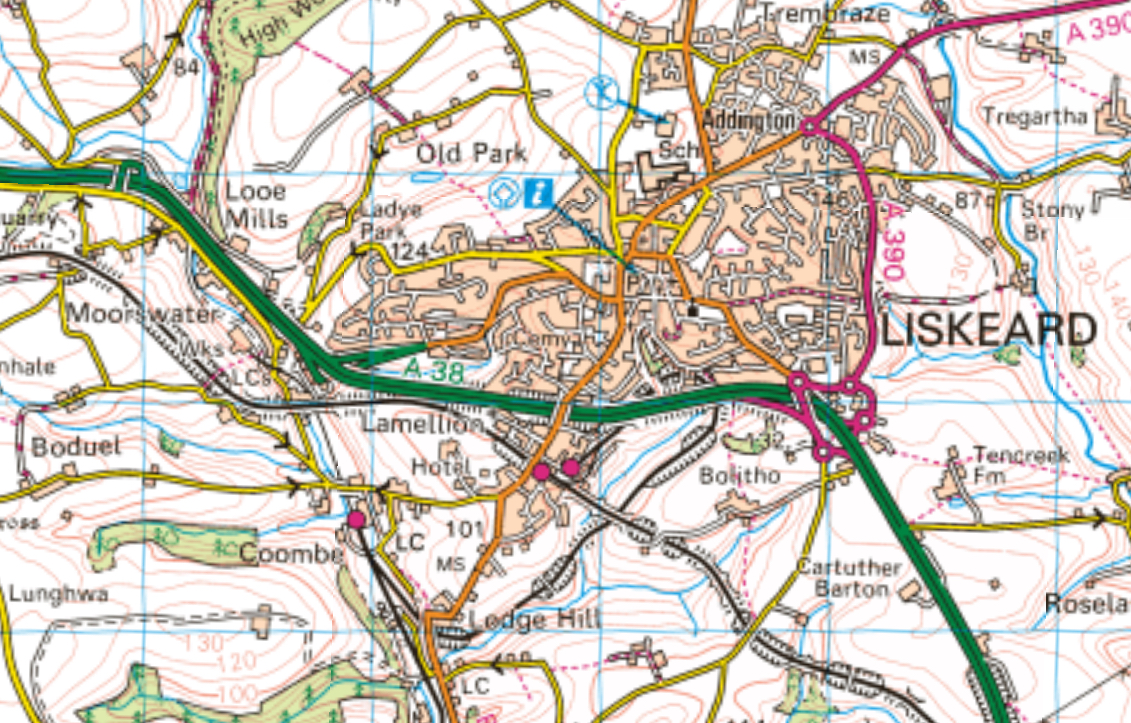
Heading west from the station, I was inspired by the directions for a circular walk that I had stumbled across during an internet search. This took me south from the station to cross the “mothballed” route towards Moorswater Cement Works just north of Coombe Junction Halt, before heading right towards the viaduct then bearing left up a narrow lane until I reached the railway and Moorswater footbridge.
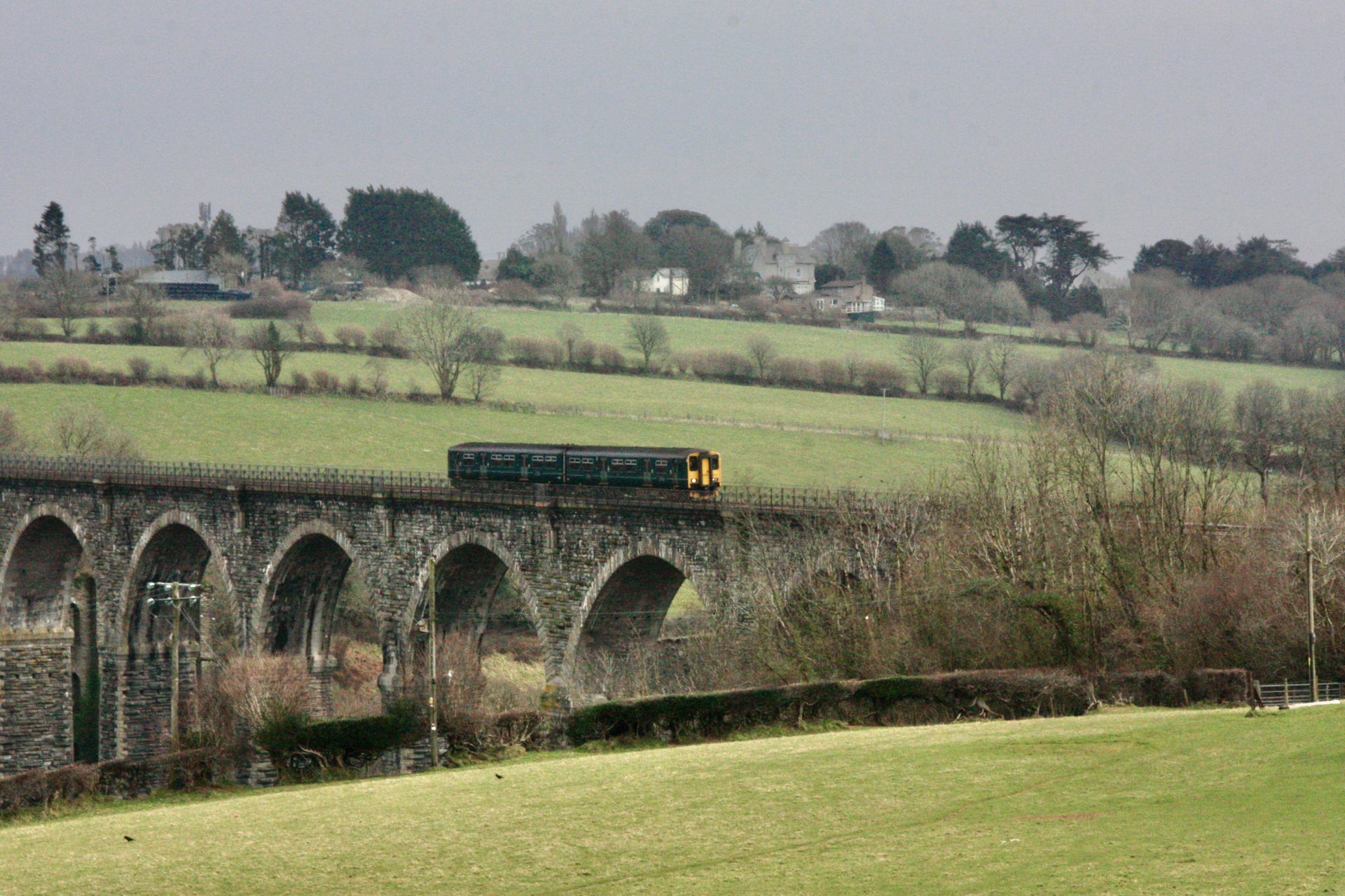
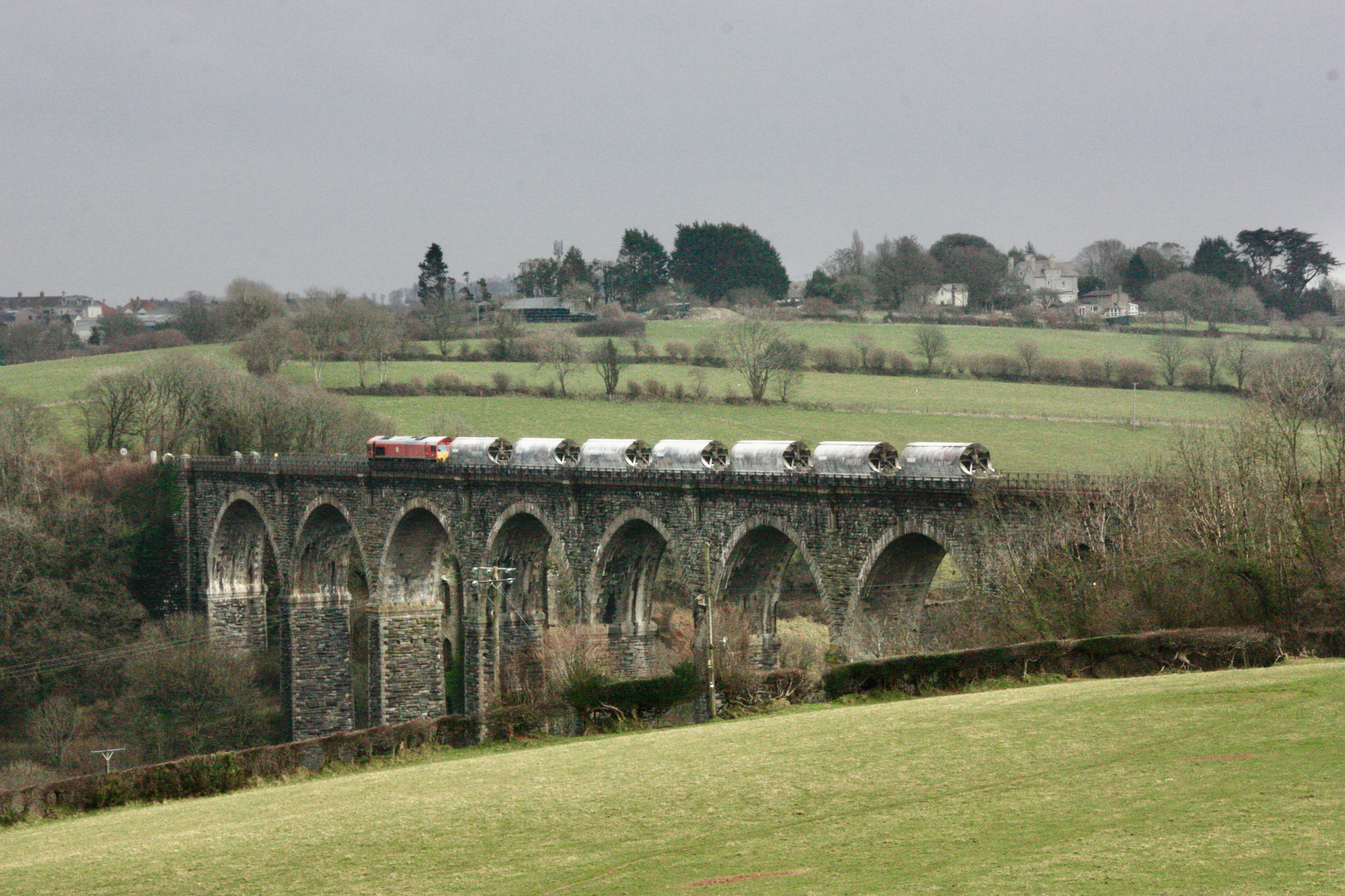
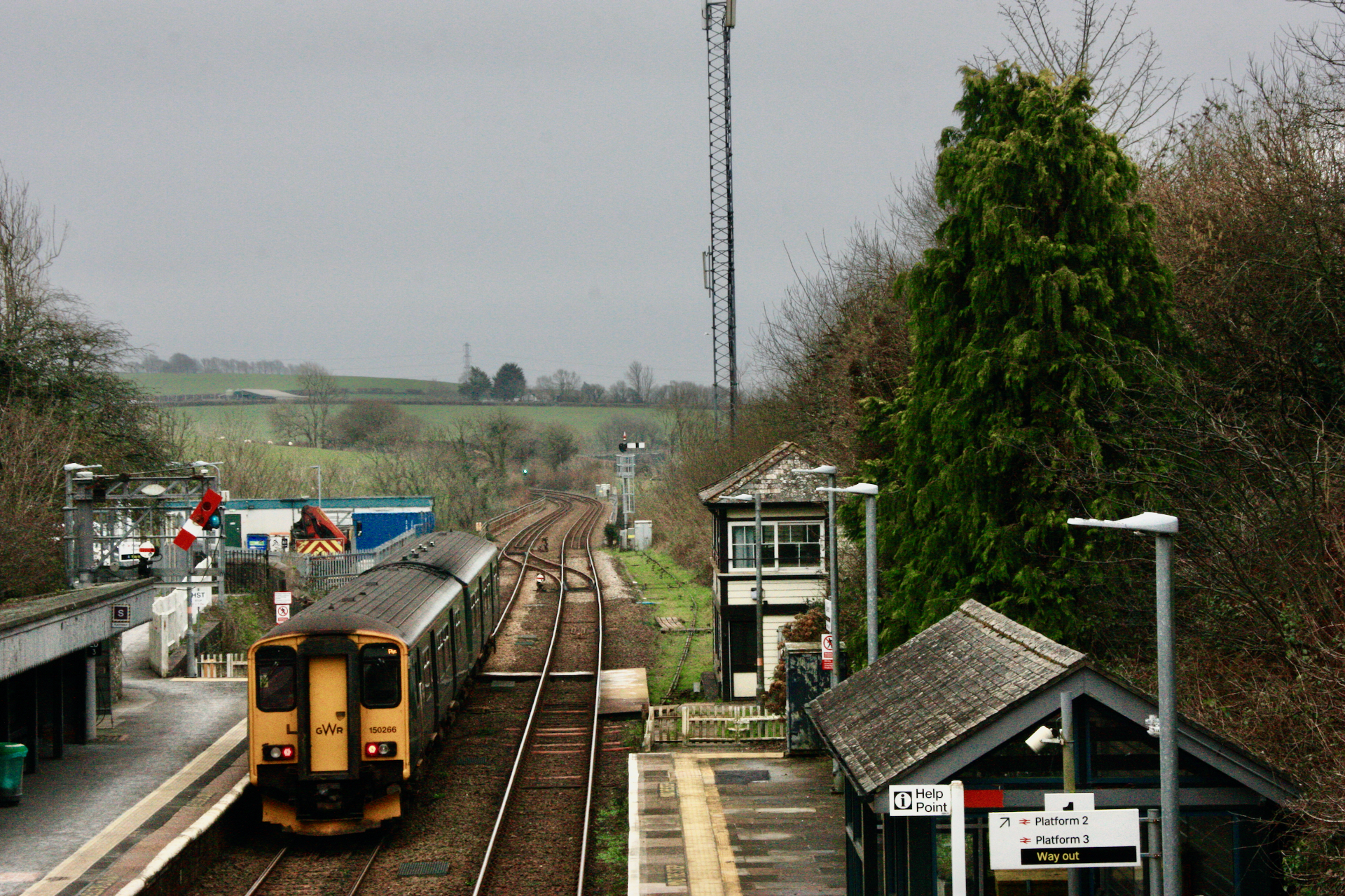
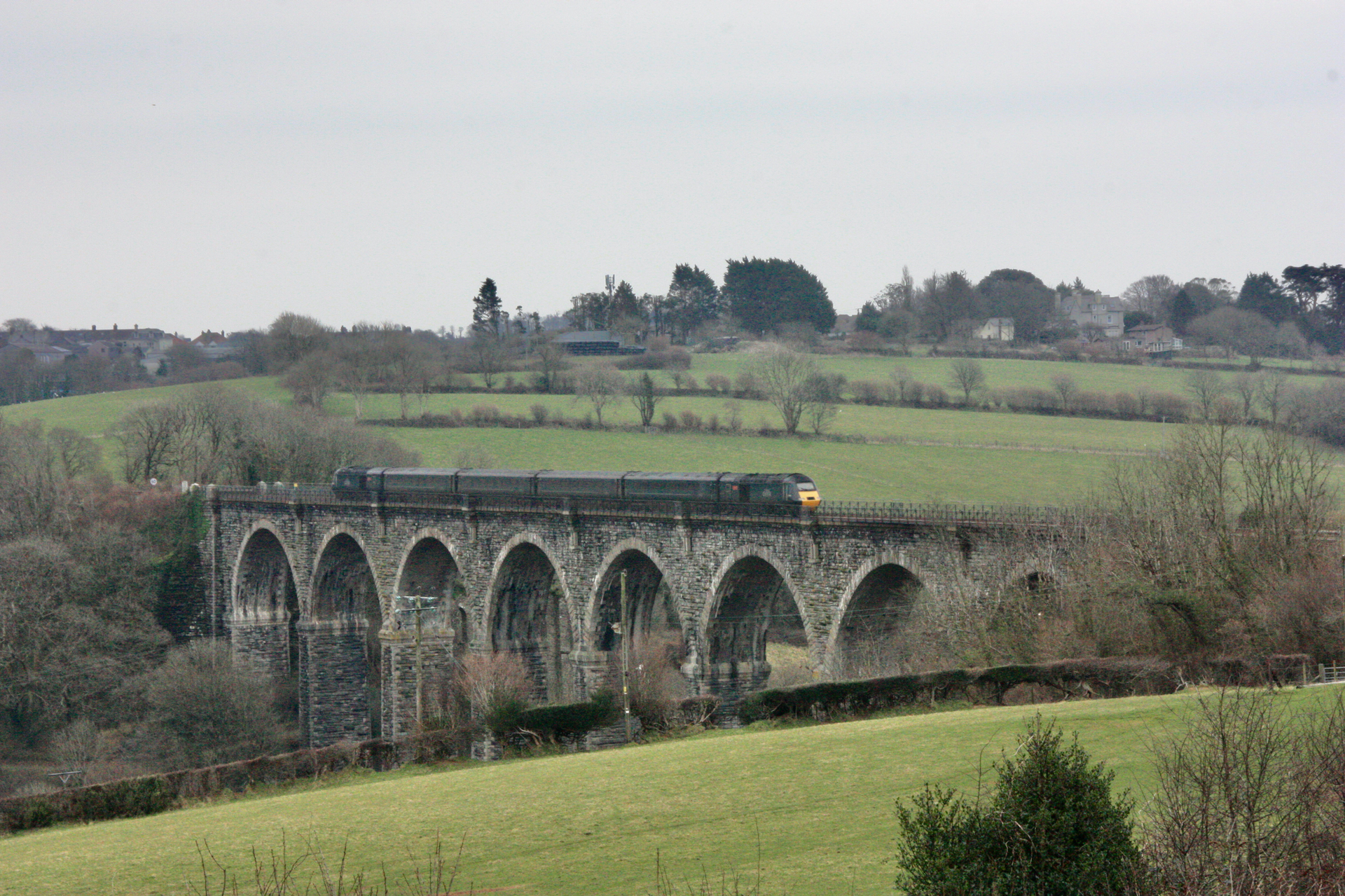
From this footbridge there is only a very distant glimpse of up outer home signal LD2 through trees between the railway and A38, ruling out any signal shots from this point, but it does offer wonderful panoramic views in both directions, and the chance to capture trains crossing the marvellous stone viaduct.
Moorswater Viaduct is an eight-arch stone structure with 14 buttressed piers and cast iron parapets that is 147ft high and 954ft long. It was completed in February 1881 and replaced one of Brunel’s famous timber viaducts. Both the 1881 viaduct and six surviving piers of the original structure were given Grade II Listings in 1985.
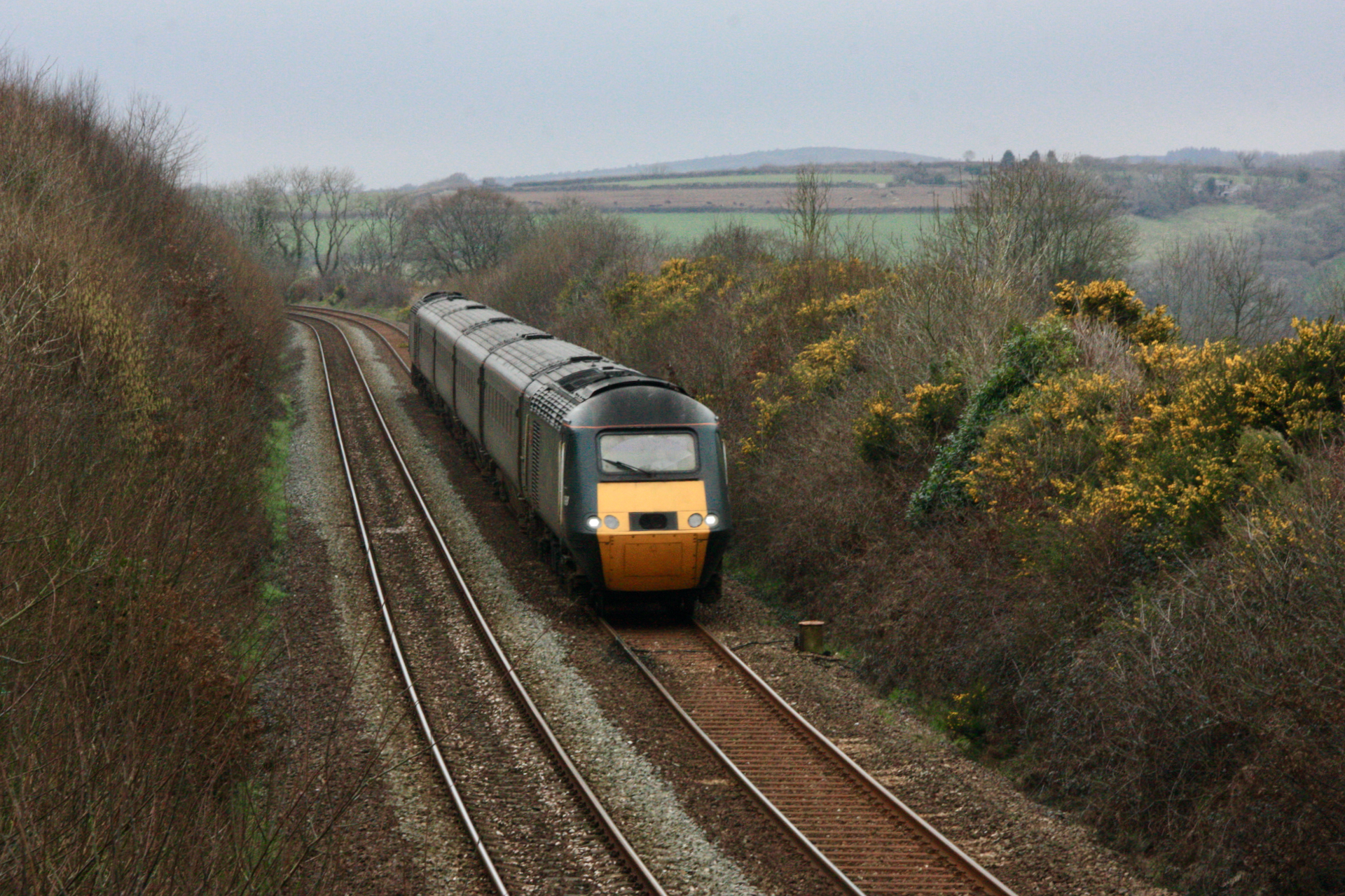
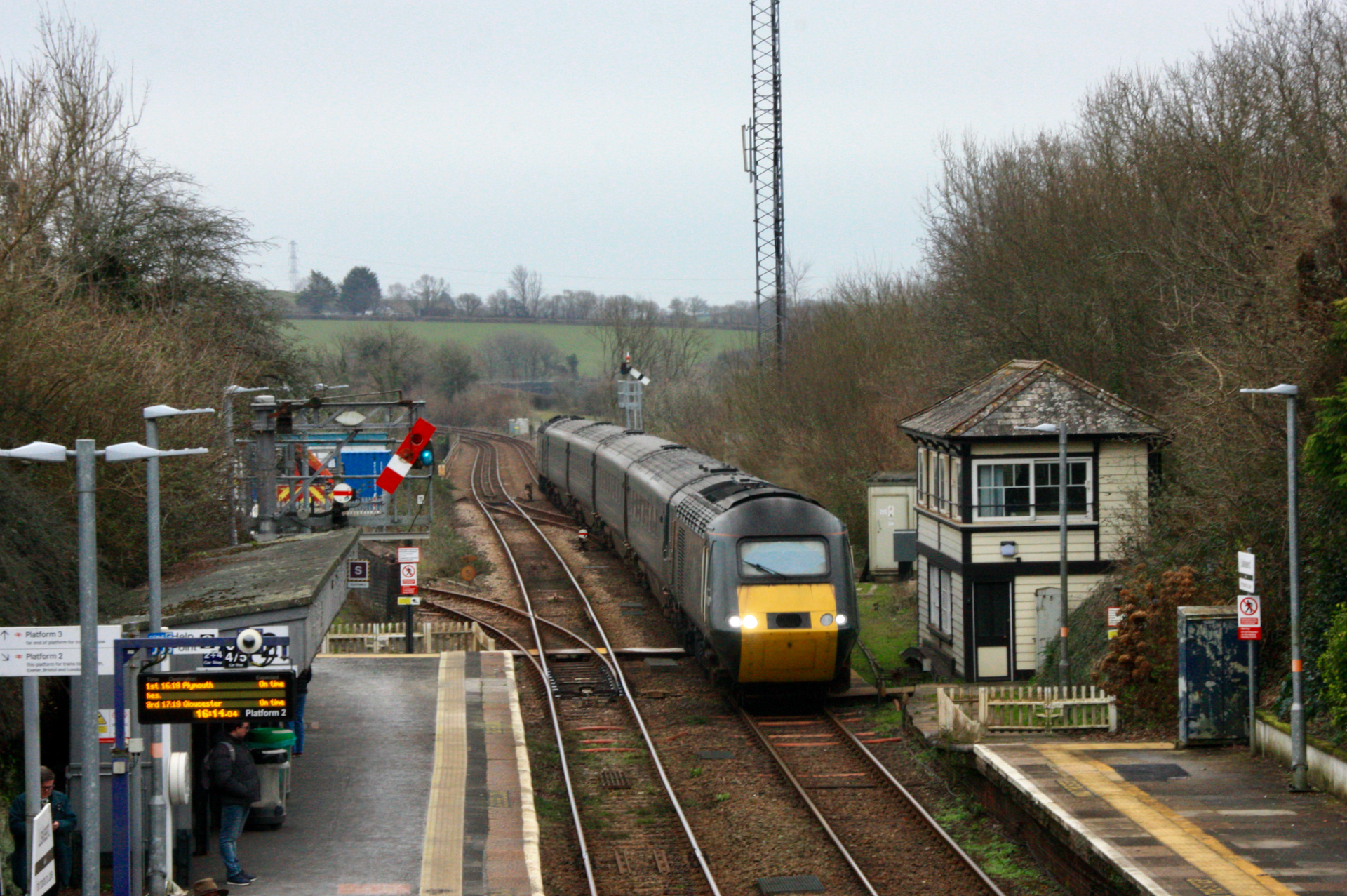
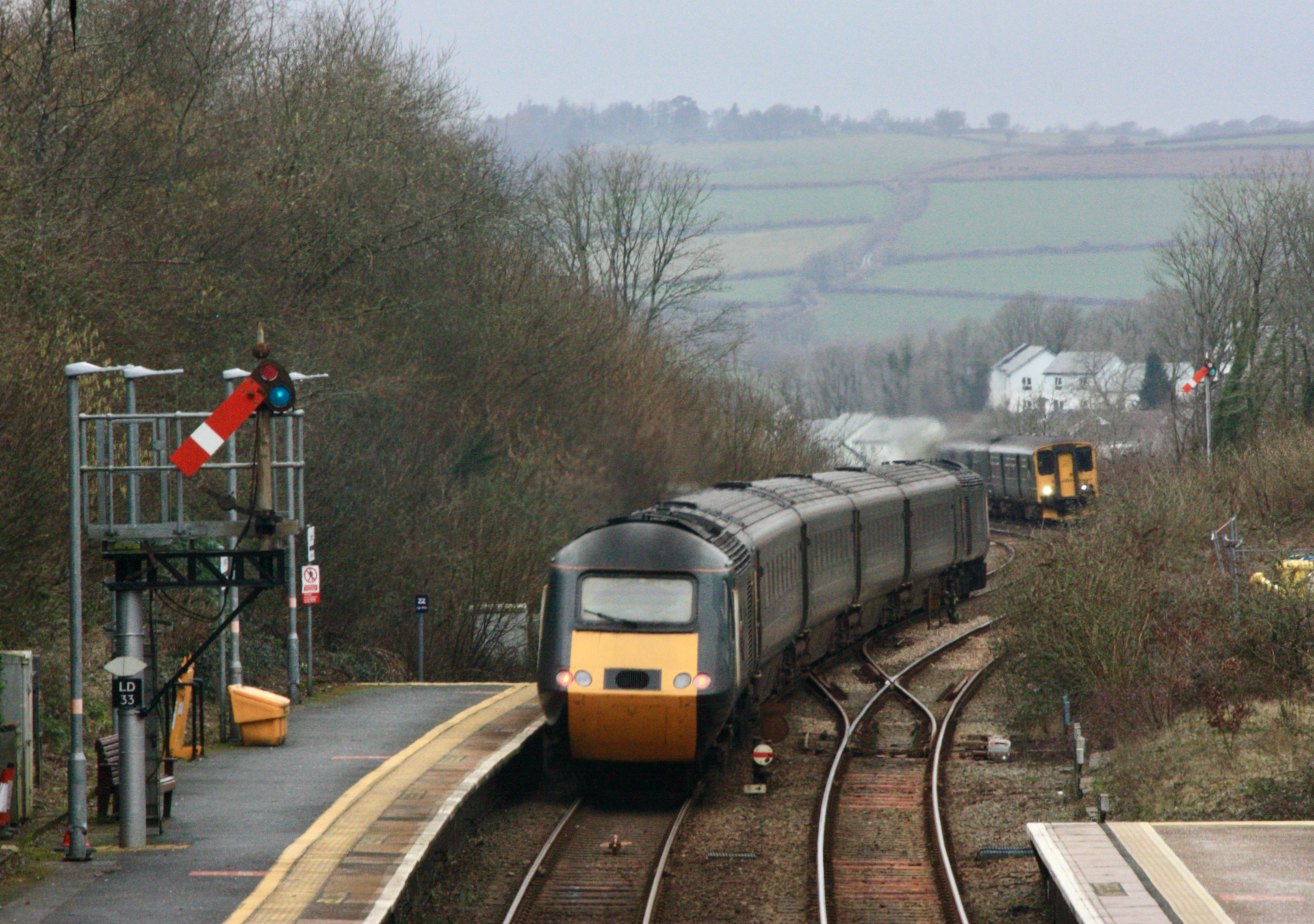
Setting out after photographing the arrival and departure from Liskeard at 12.11 of the Castle HST set GW08 (43004/093) forming 2C68 from Plymouth to Penzance, it took about 25 minutes to reach Moorswater footbridge and a similar time to complete my circular walk by heading down to the old cement works, crossing the old line, then walking under the A38 and up towards the town centre.
There are currently three weekday diagrams for GWR’s HST 2+4 Castle fleet and, after seeing the set forming the first of those diagrams while at Liskeard station, I later managed to capture the other two, with 43189/098 (GW09) forming 2P15 from Penzance (12.50) at Moorswater footbridge, then back at the station 43092/188 (GW06) working 2C69 from Plymouth (15.47).
Besides the Castle set workings, the bulk of passenger workings on the main line are formed of Class 80x IETs, with most Paddington-Penzance workings being a 9-car set and those between Cardiff/Plymouth and Penzance 5-car. The only other unit I noted was 2-car 150266 with 2C23 from Plymouth (12.18) to Penzance, then returning with 2P19 from Penzance (14.50) to Plymouth.
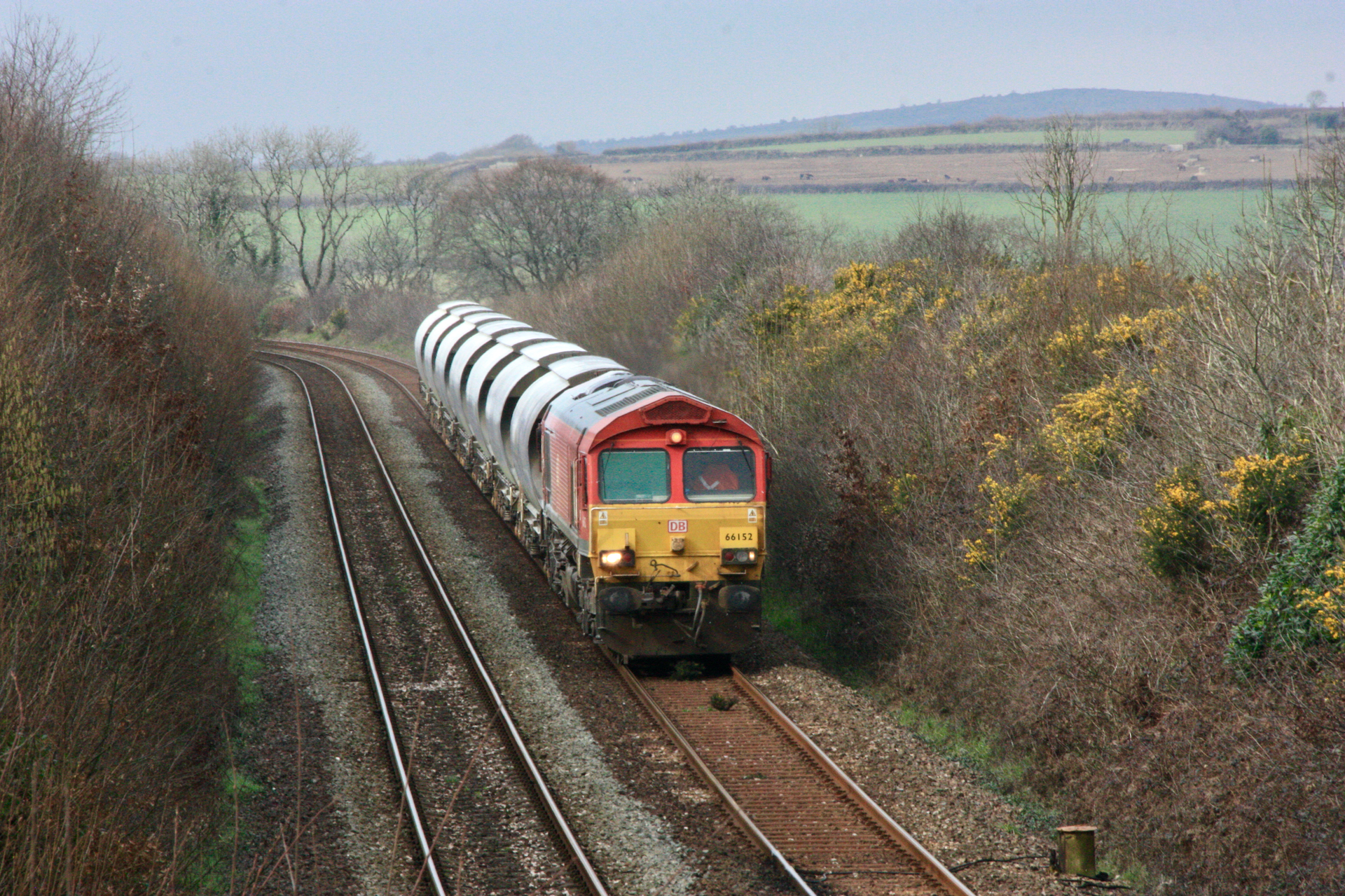
Freight traffic in the Royal Duchy is almost non-existent, but I was lucky enough to see the only non-passenger movement in the entire day at Liskeard when DB 66152 passed at 13.50 with a short train of seven clay tanks that were being hauled from Parkandillack to Cliffe Vale Junction (Stoke-on-Trent), with the train not reaching its destination until 03.17 the following day!
As I have written before, Liskeard’s 1915 Great Western Railway signal box is painted an attractive chocolate and cream colour, but lacks any form of name board, which is a shame given the attractive heritage-style nameplates that were fitted to the boxes at Par and Truro, both of which are now closed.
Four of its six semaphores are in the down direction, with outer home LD35 followed by home signal LD34 at the station end of Liskeard Viaduct, starter LD33 at the end of the down platform and section signal LD32 beyond and on the right of the running lines for sighting reasons. The only up semaphore signal visible from the station is celebrity home signal LD3, a wooden-armed centre-pivot signal at the end of the up platform.
 RailwayWorld.net
You must be logged in to post a comment.