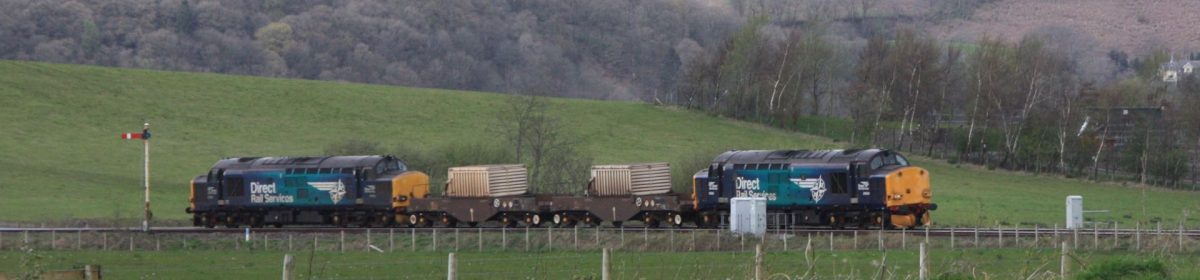
Removal of a number of the semaphore signals controlled by Whittlesea Signal Box in early 2025 and imminent removal of its remaining down trio will leave just one significant outpost of mechanical signalling in East Anglia, apart from a few shunting arms at March and a solitary semaphore controlled by King’s Lynn Junction Signal Box.
That one remaining outpost of main-line mechanical signalling is Manea, a rather remote and sparsely-served village mid-way between March and Ely, where the elimination of main line mechanical signalling in East Anglia is expected to be completed when its quartet of semaphores is finally replaced.
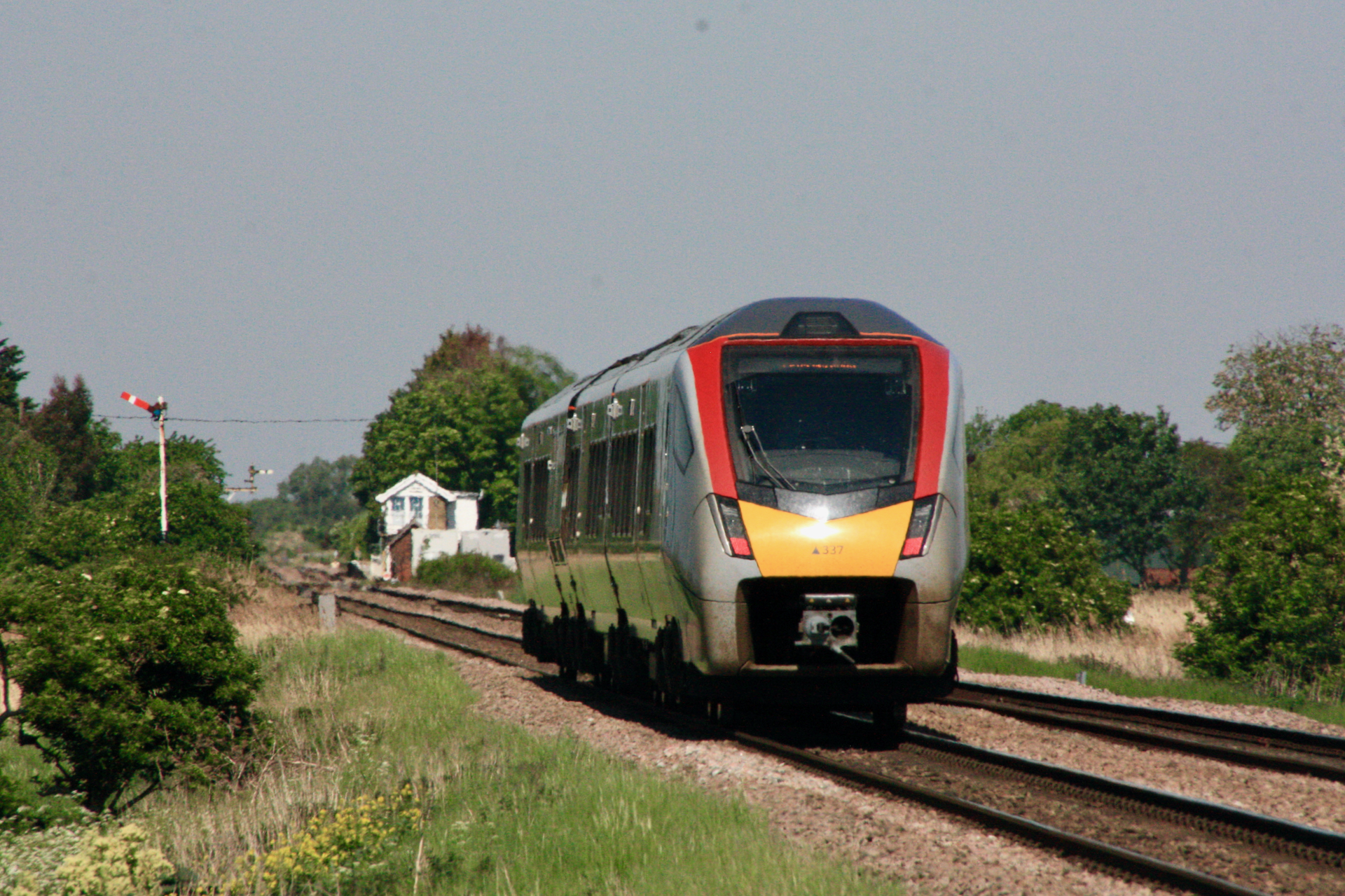
Making what is likely to be last visit here (12 May 2025) before removal of the semaphores, I was keen to try photographing passing trains from Welney Road Level Crossing, which stands around ¾ rail mile south-east of the station and can be reached from the station by taking a 20-minute walk into the village and then a left turn onto Wisbech Road.
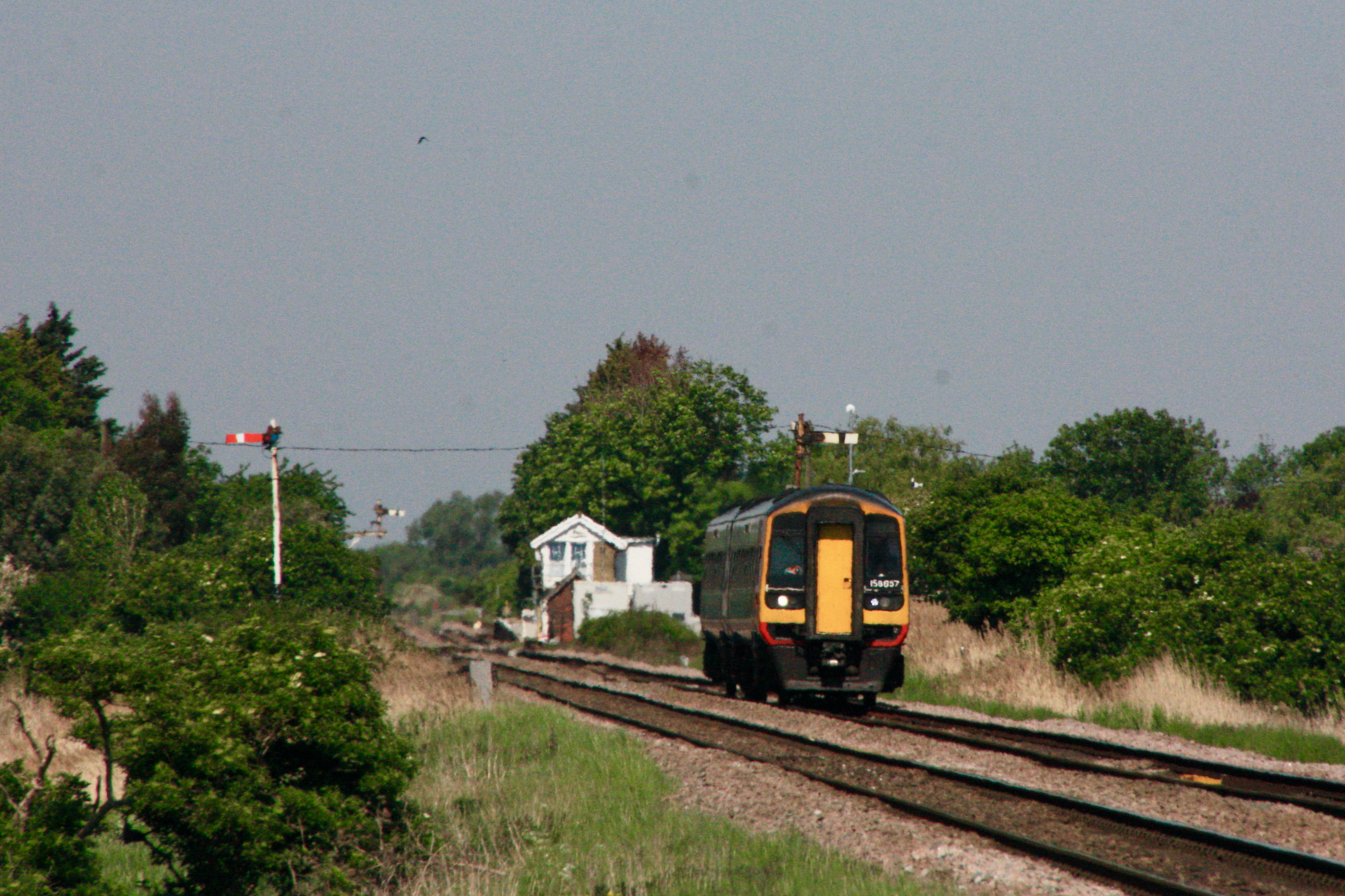
But after making the trek there on a hot sunny morning it was disappointing to see that up (Ely-bound) trains were being halted at the signal box and then being authorised to pass up section signal M21 at danger, due apparently to a track circuit failure somewhere between Manea and Ely.
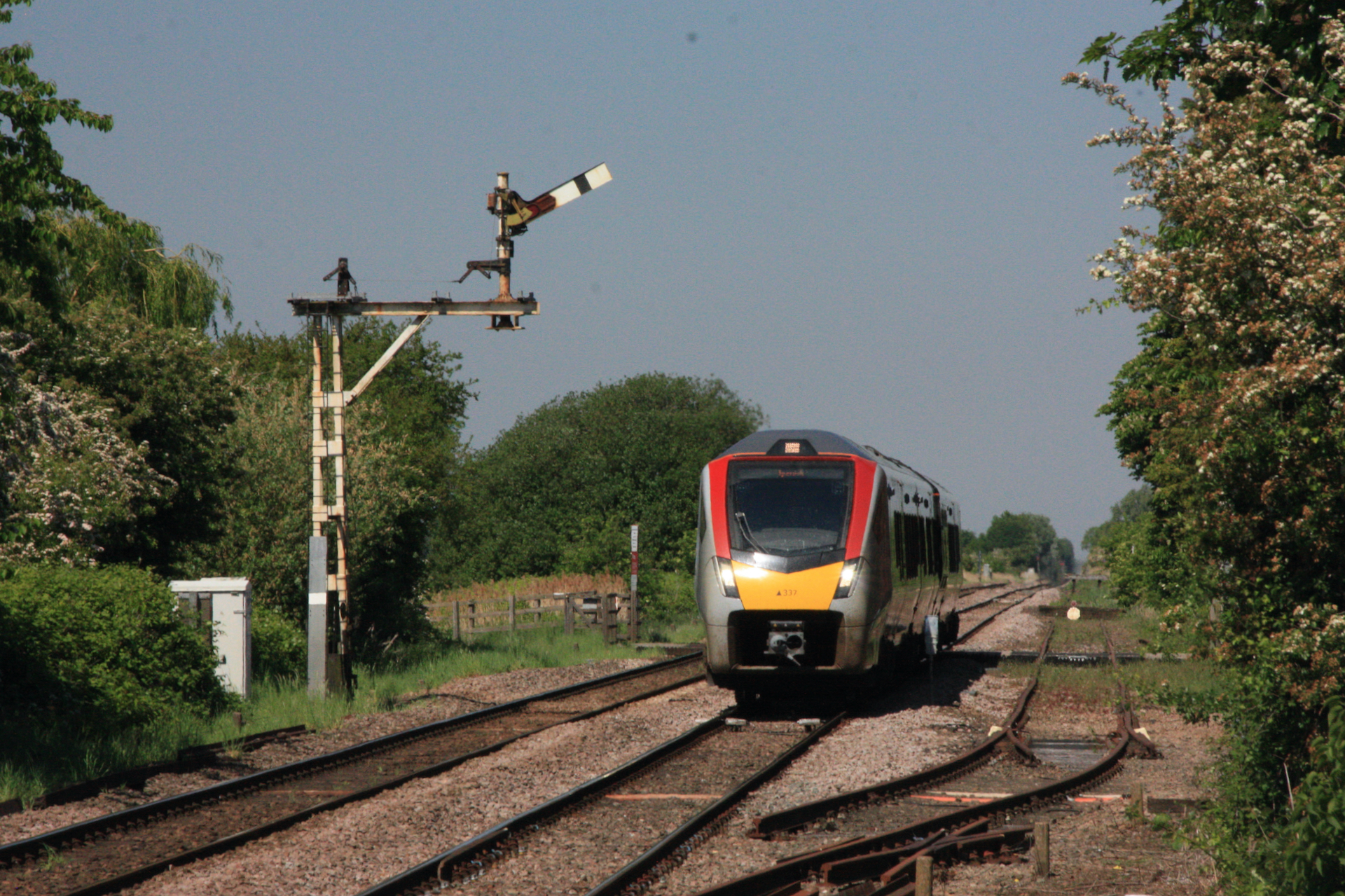
That led to some late morning delays, but the problem was eventually solved, so signal M21 could be pulled off once again and up trains were able to pass through at line speed, without being held at the signal box.
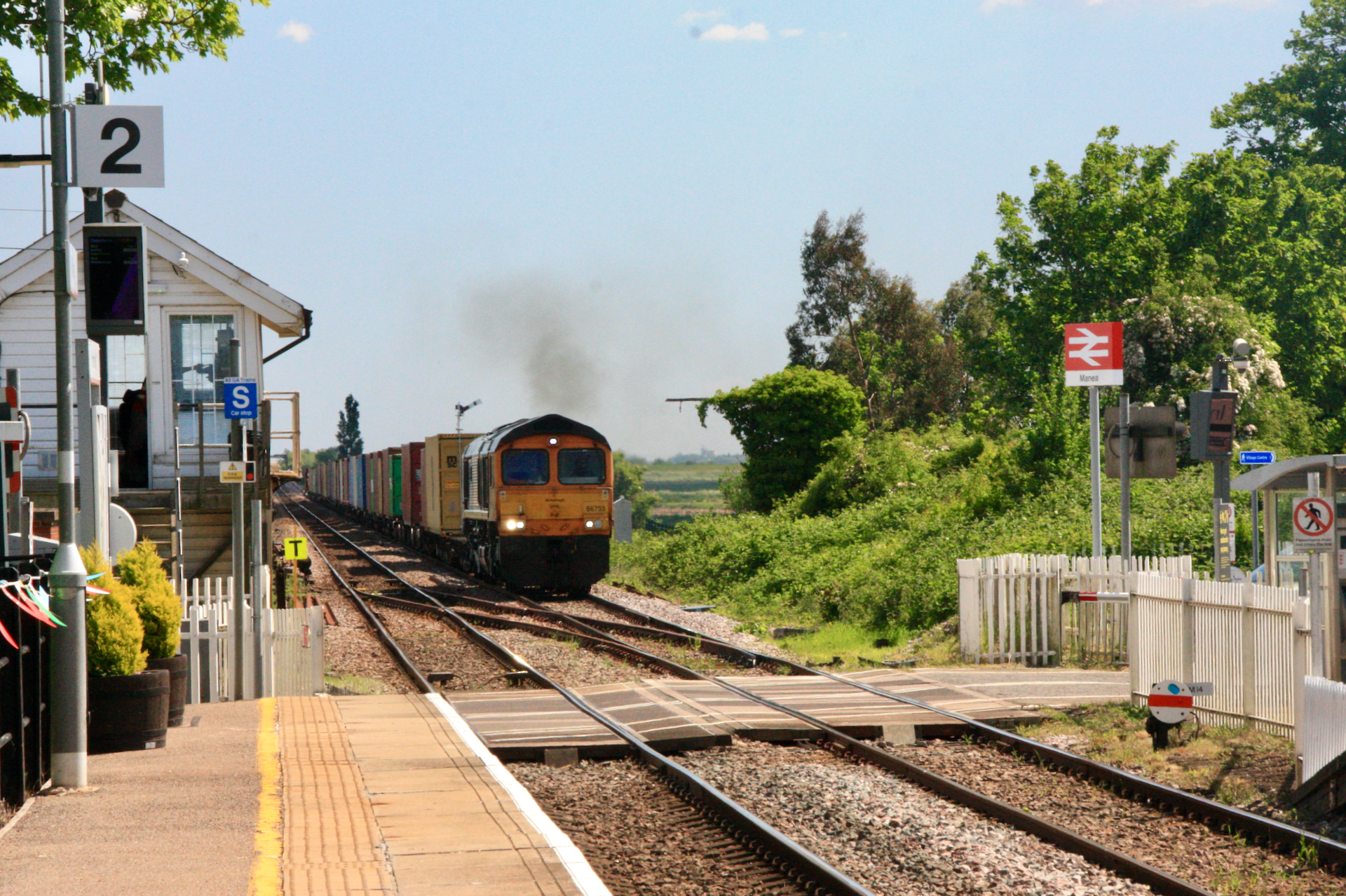
Manea boasts an 1883-vintage Great Eastern Railway Type 3 signal box with a 25-lever McKenzie & Holland frame. It stands next to the station and level crossing, just to the east of the up (Ely-bound) platform. On this platform is a rather delightful waiting hut that is cared for by the Hereward Community Rail Partnership.
The four semaphores here comprise the up section signal M21 mentioned above, and a down home signal M2, both of which can be seen from the station looking south-east towards Ely, while looking west, up home signal M23 is on a bracket on the left hand side of the line, with down section signal M3 beyond.
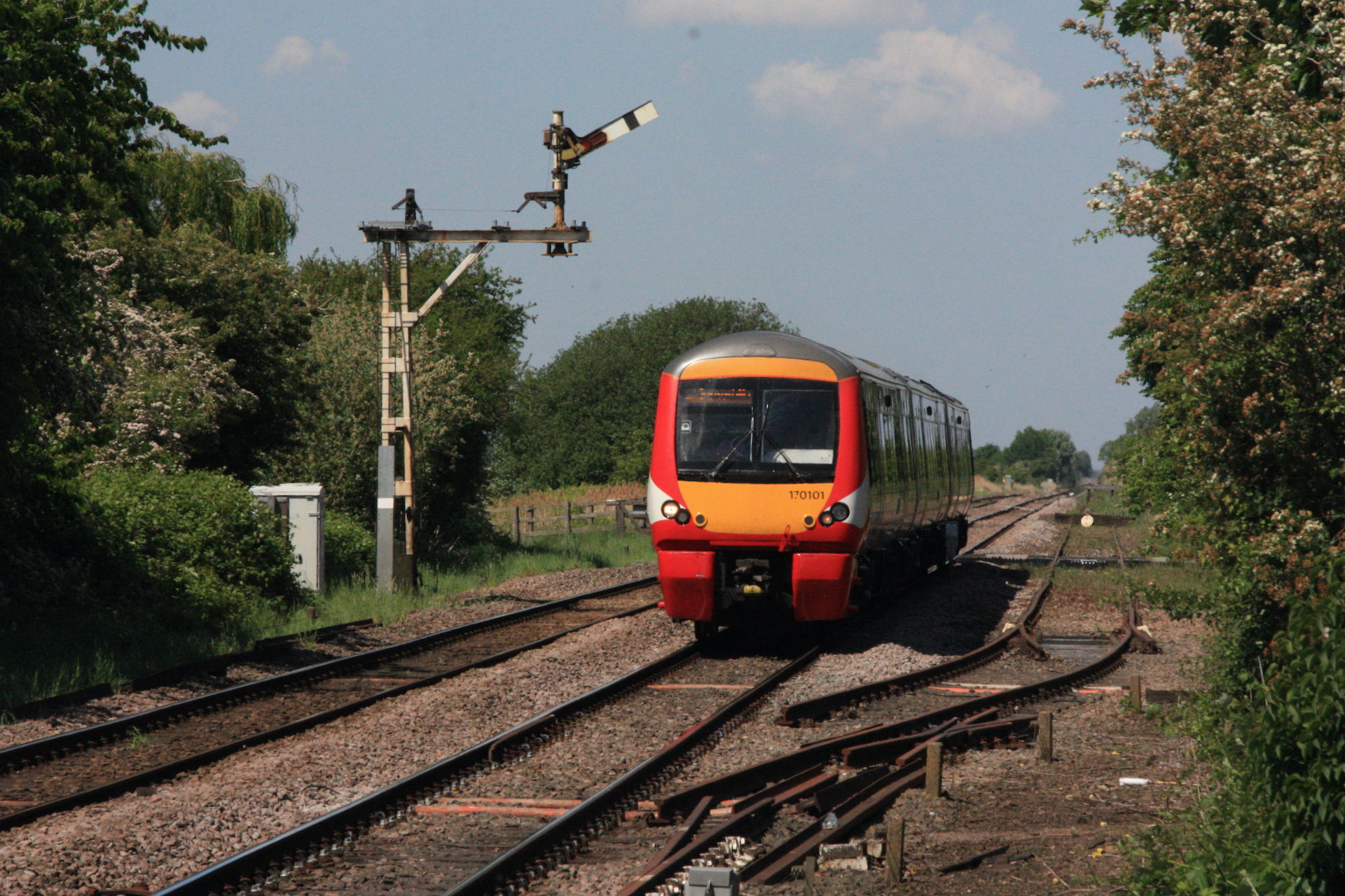
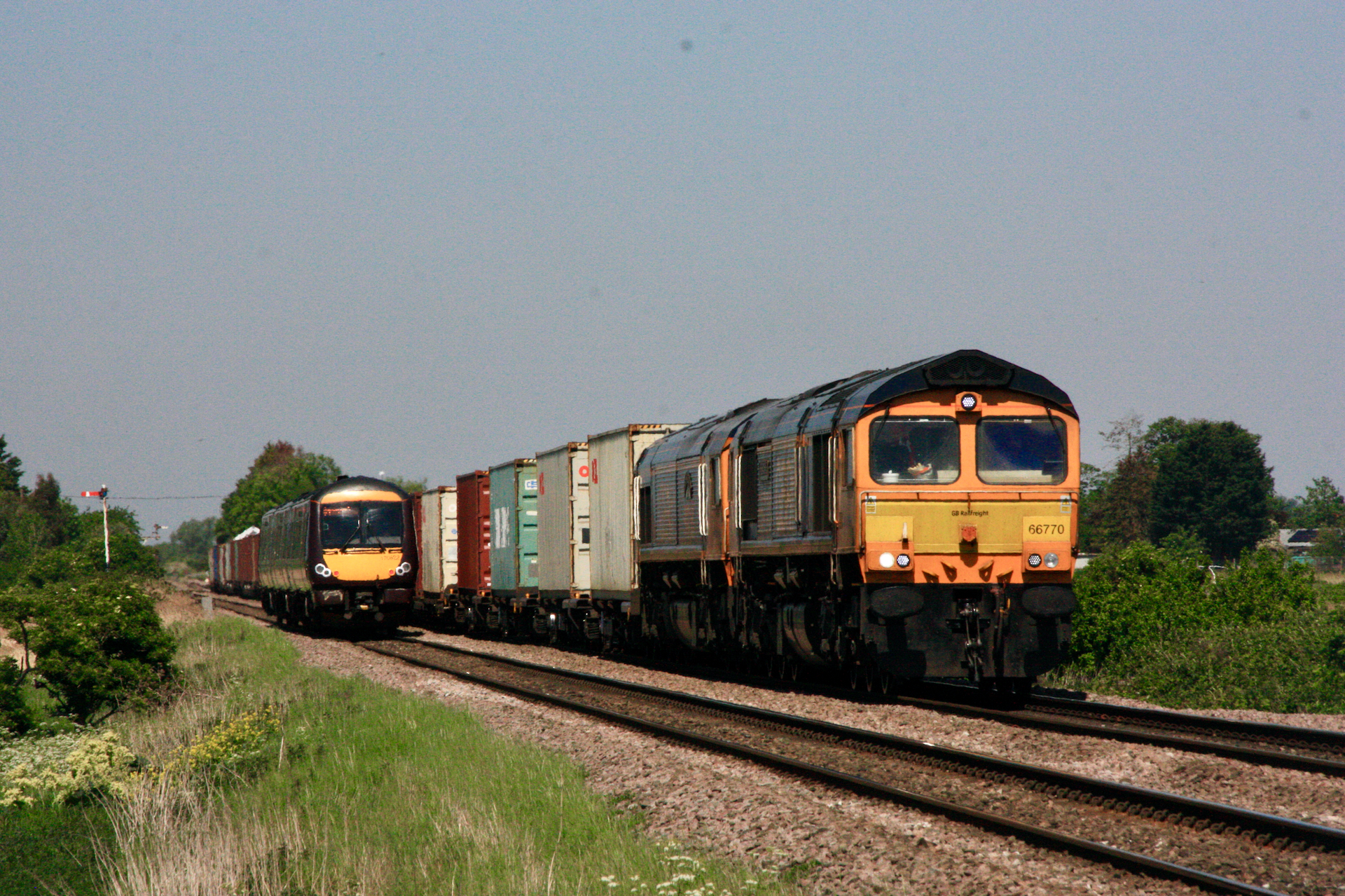
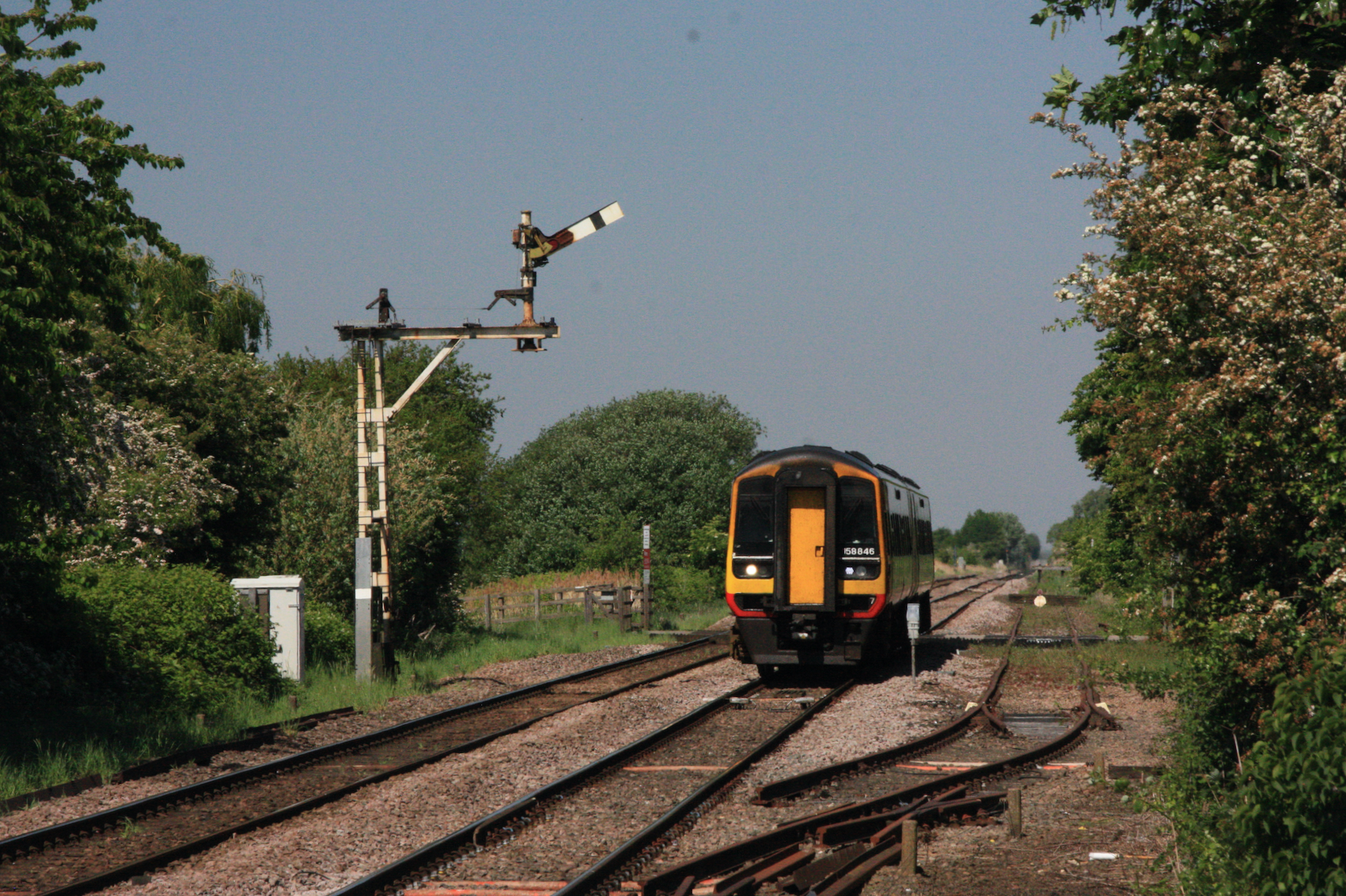
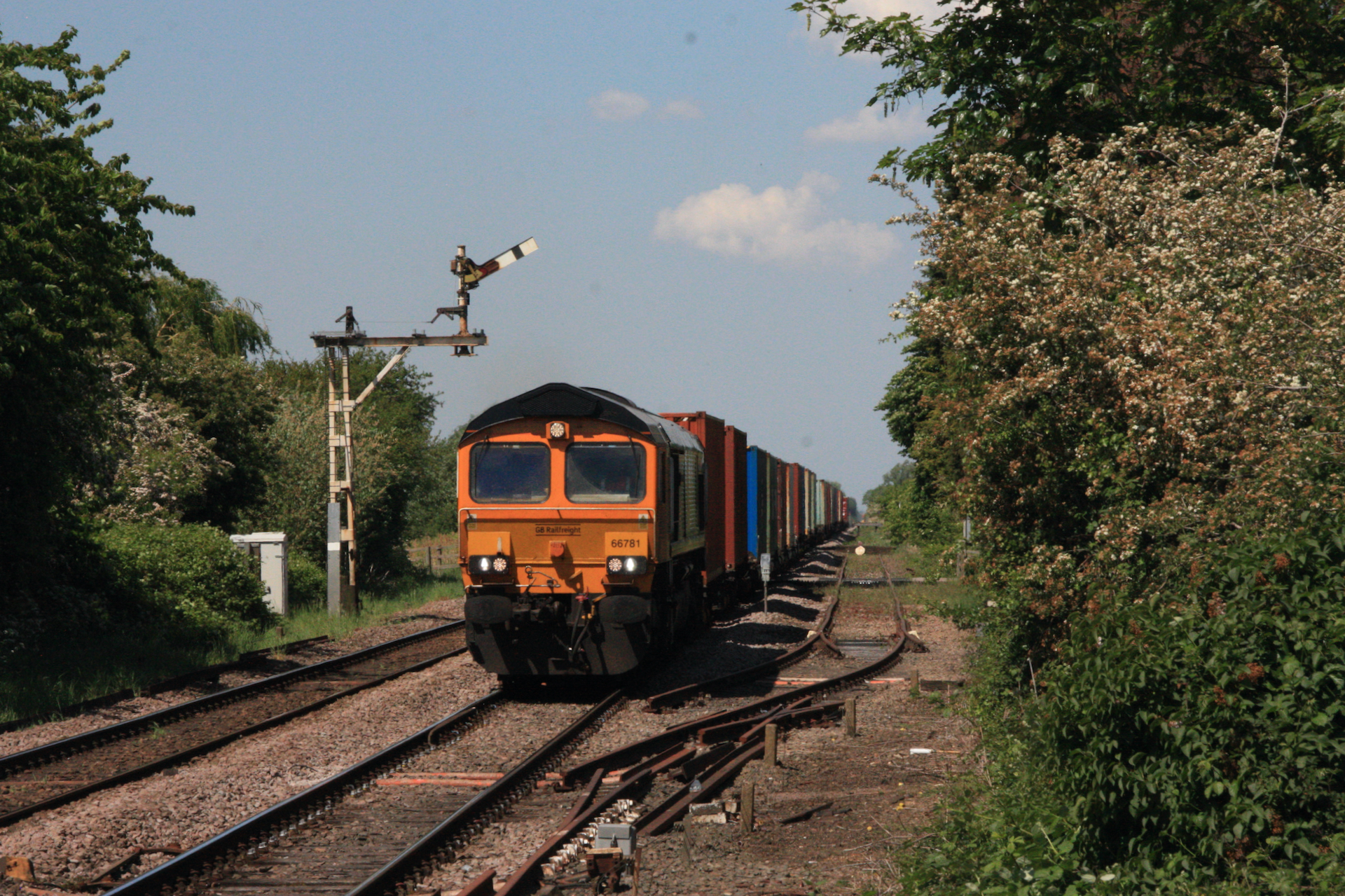
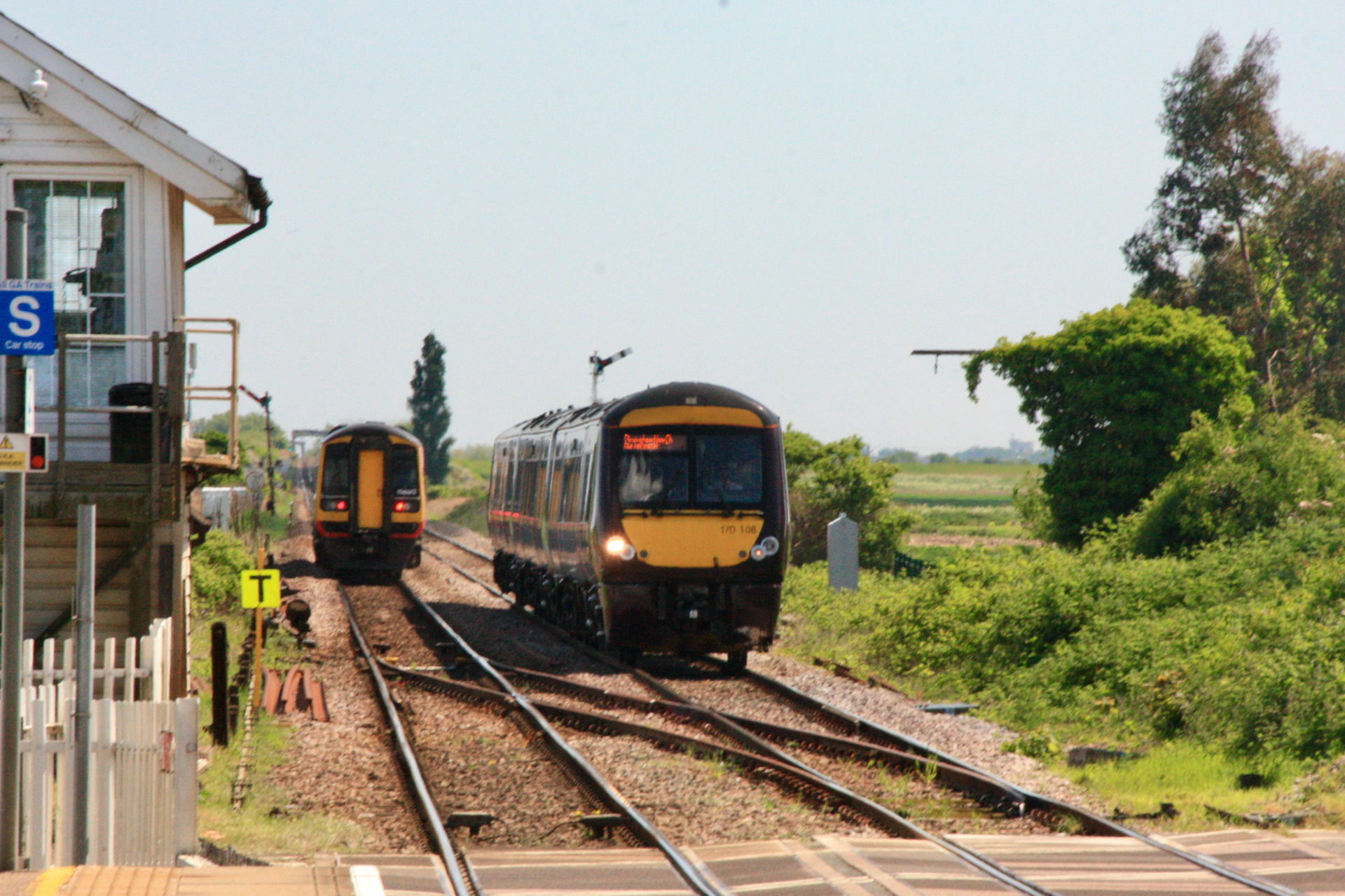
What makes Manea and the Peterborough-Ely route particularly interesting is the amount and variety of passing trains, which comprise Class 158/170 (EMR), class 170 (XC) and GA class 755-worked passenger services, along with a steady succession of Class 66-hauled freight traffic, most of which is running to or from Felixstowe Docks.
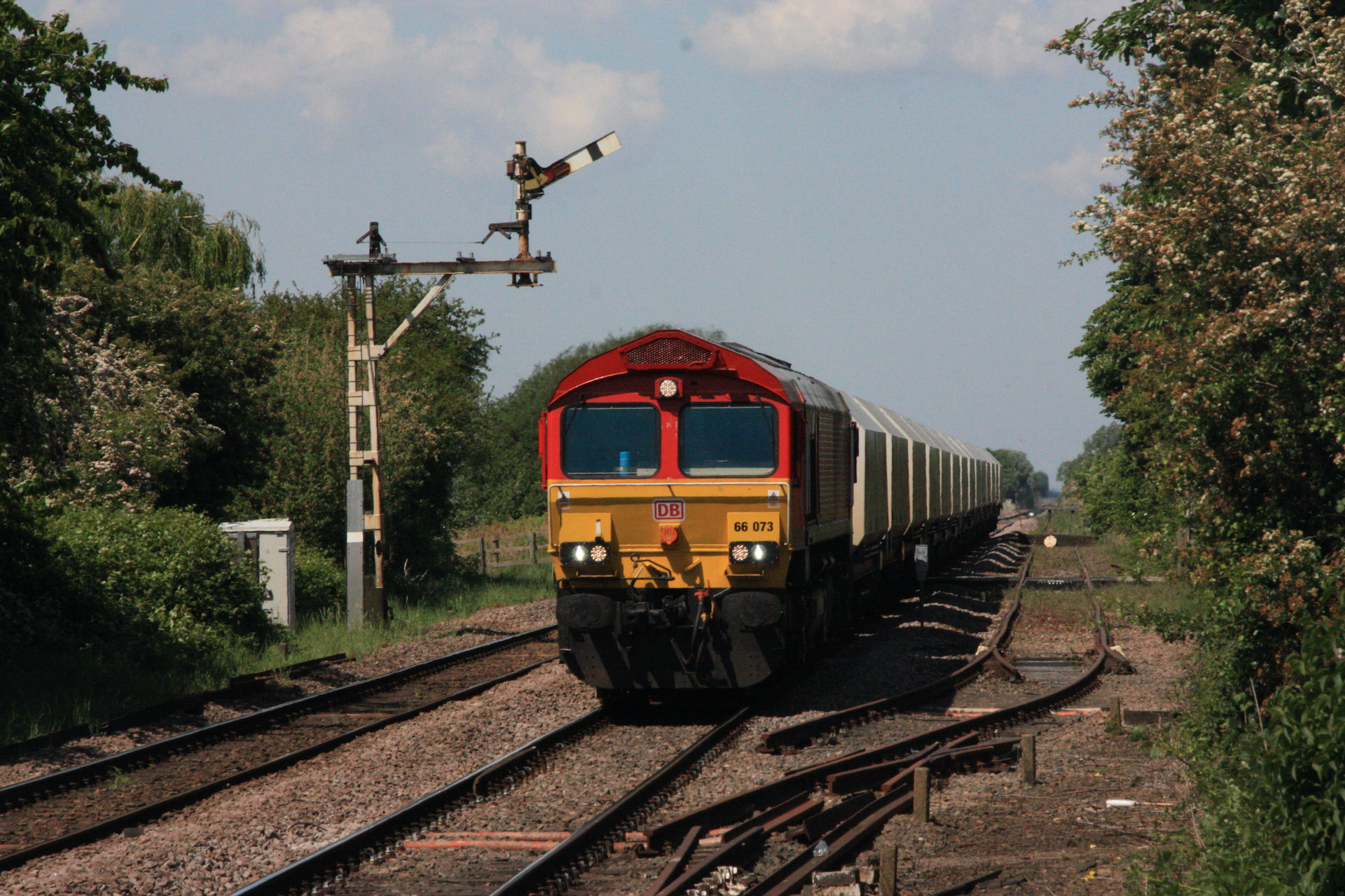
During my 3½ hours at Manea I saw a total of six Class 66-hauled freight workings, one of which was double-headed with 66770/736, along with the usual diet of Class 158 and 170 workings, the highlight of passenger services being the sight of EMR 170101, which has recently been refurbished and out-shopped in a smart new corporate livery.
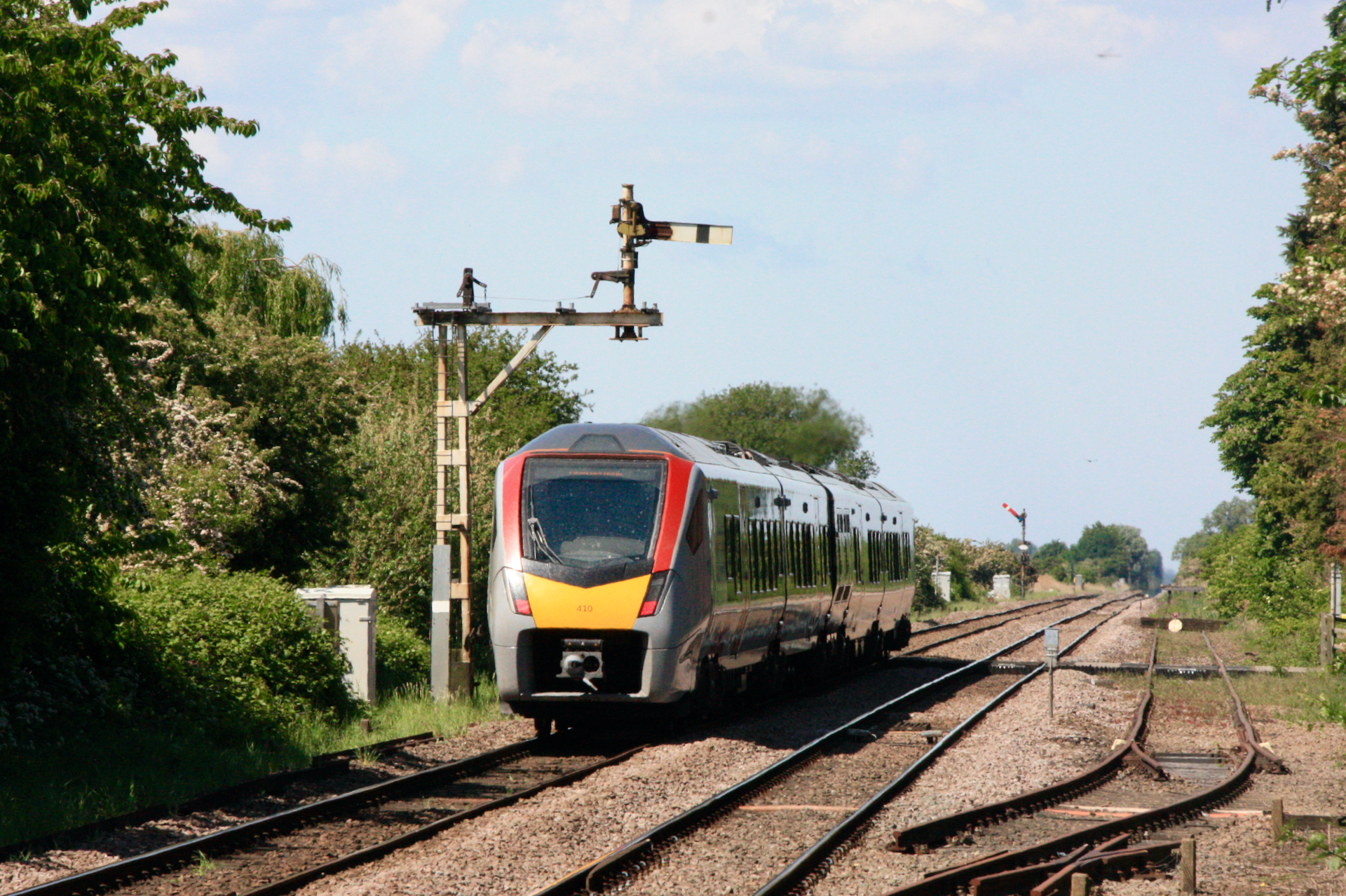
The Hereward Line Community Rail Partnership does a good job at promoting the Peterborough-Ely line and I picked up an excellent walking and cycling map of Manea from the station waiting room. But for all the campaigning there is only one train every two hours and there were only three cars in the spacious new station car park.
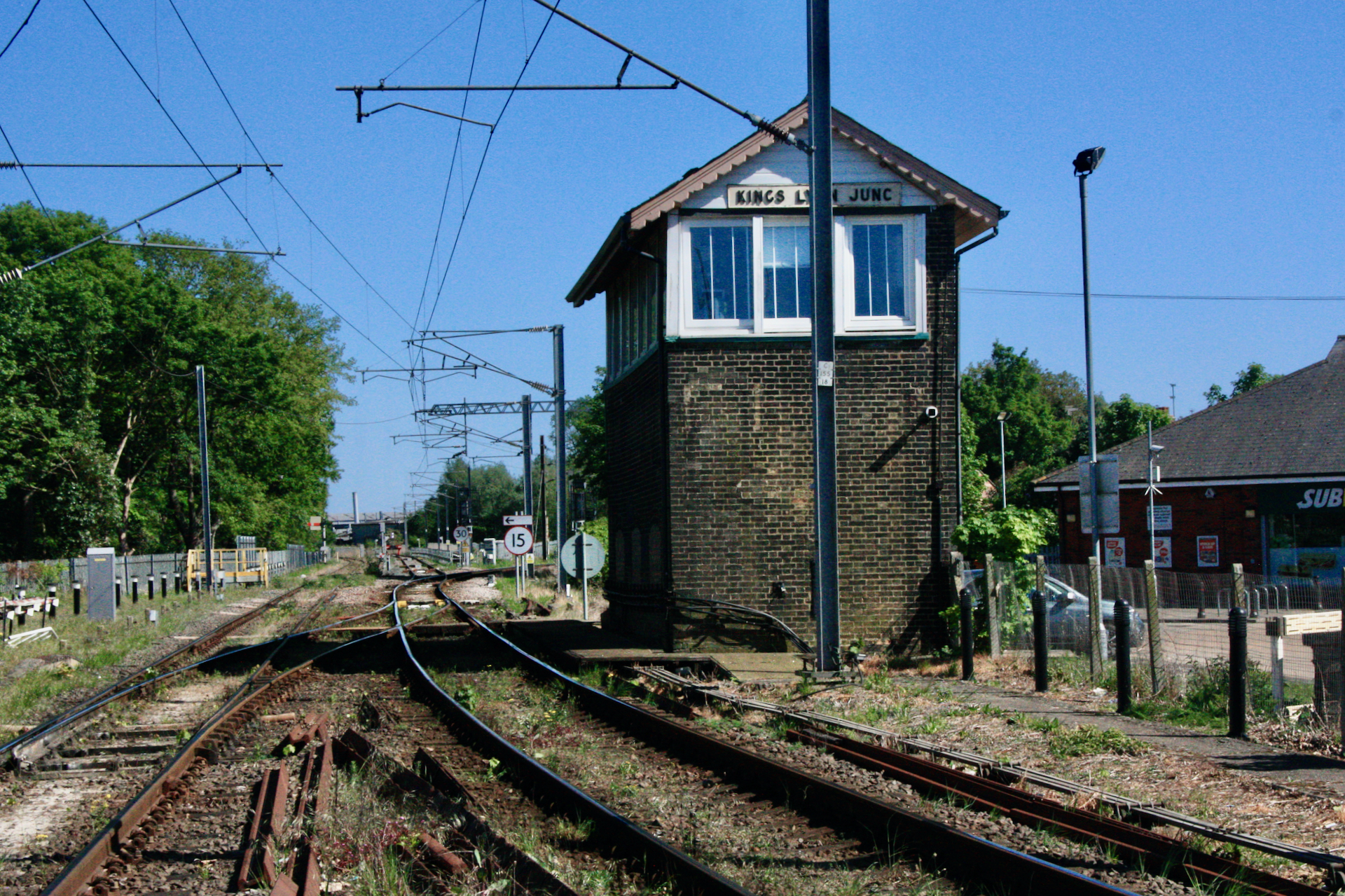
Having said farewell to the Manea semaphores, I decided to make a detour on my rail journey back to London, by travelling from Ely to King’s Lynn in order to photograph the one remaining semaphore controlled by King’s Lynn Junction Signal Box, this being signal KL8 that controls access onto the freight branch to Middleton Towers.
Getting a sight and photo of KL8 means a rather pleasant five-minute walk from King’s Lynn Station through a delightful park called “The Walks” just south of the station to a level crossing on Tennyson Avenue (B1144) from where there is a good view of the 1880-vintage signal box and signal KL8 alongside an electrified carriage siding, as seen below.
 RailwayWorld.net
You must be logged in to post a comment.