Only days after the Midland Railway signal box was celebrating its 100th birthday (5 July 2025) it is time to pay a return visit (on 8 July 2025) to fascinating Peak Forest, near Buxton, and hope to photograph again some of the heavy stone traffic passing the semaphore signals controlled by Peak Forest South Signal Box.
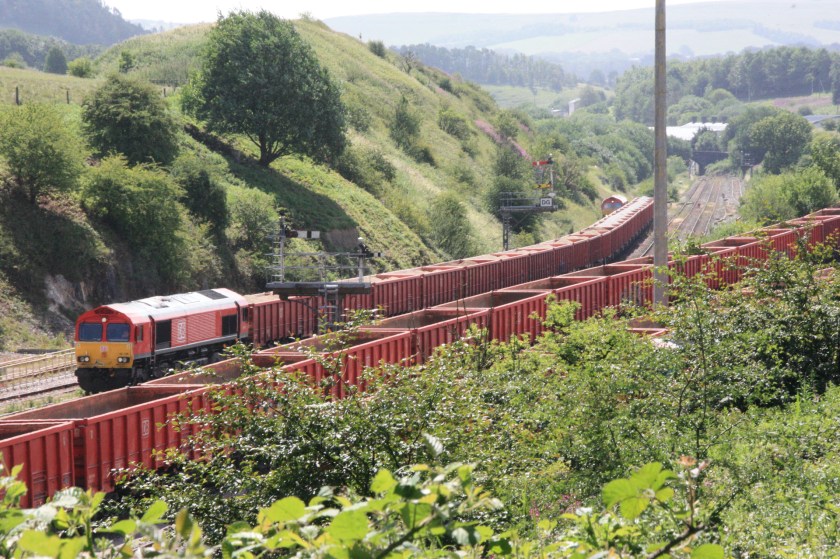
After two highly enjoyable visits in August and November 2024, my ambition this time was to capture a train passing up signal PF16, the motor-worked distant that is mounted beneath Great Rocks Junction’s section signal GR14, and is one of less than a dozen surviving working home and distant signals on the national network.
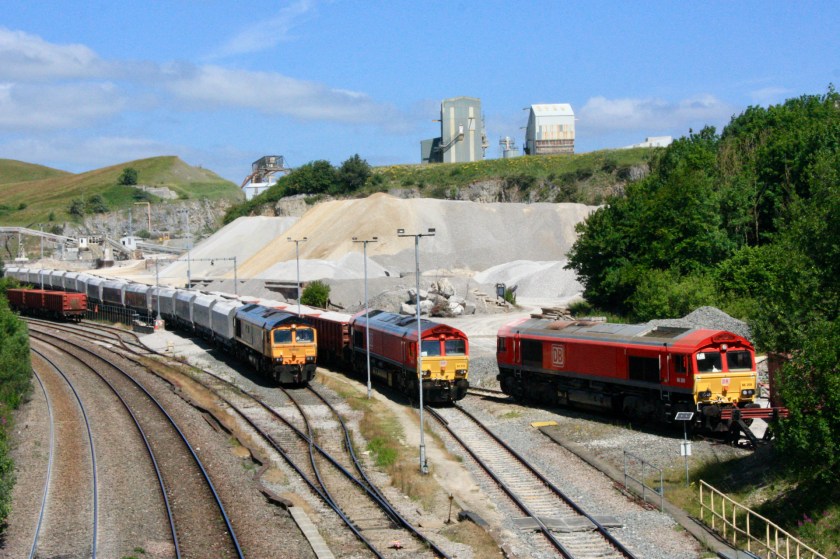
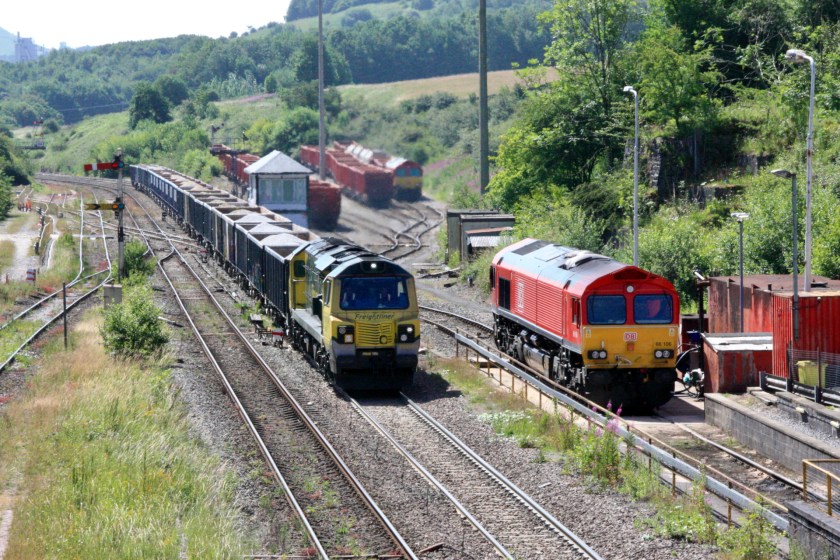
As I have written before, and many readers will be aware, there is a great view looking south from a road over-bridge on Batham Gate Road, with the former railway station building now DB offices, immediately in front of you, then the signal box beyond, with loco sidings to the rear of the box and the double track heading south towards Great Rocks, with loops on either side of the main running lines.
Alas, I was delayed getting to Peak Forest, when closure of the M60 motorway meant huge delays to buses in the Stockport area, including the 199 service I had planned to catch. I therefore reverted to rail and took the scenic Buxton Line and then a dismal 25-minute walk from Dove Holes station, arriving at Peak Forest too late to photograph Freightliner 70005 heading north with 6H52 from Dowlow Quarry and passing the distant signal.
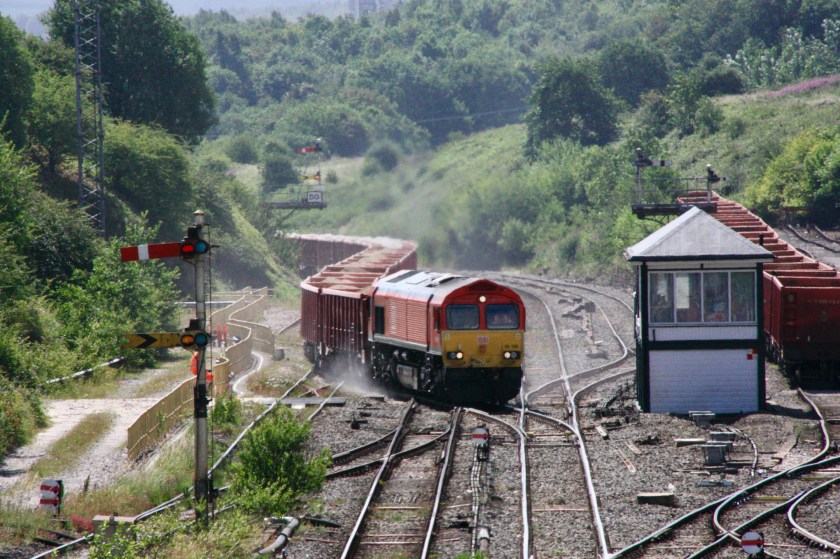
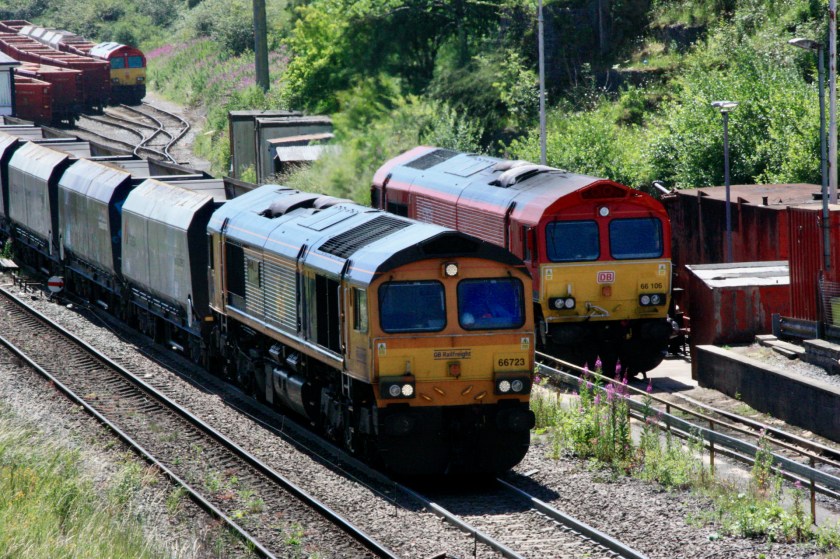
During the couple of hours I spent at Peak Forest that was the only working to head north from Great Rocks, although there was plenty of other action to savour, mainly involving orange liveried DB Class 66 locos, but along with Freightliner there was one other operator represented, when GBRf 66723 emerged from the Cemex quarry and latter departed with its trainload of aggregates bound for Selby.
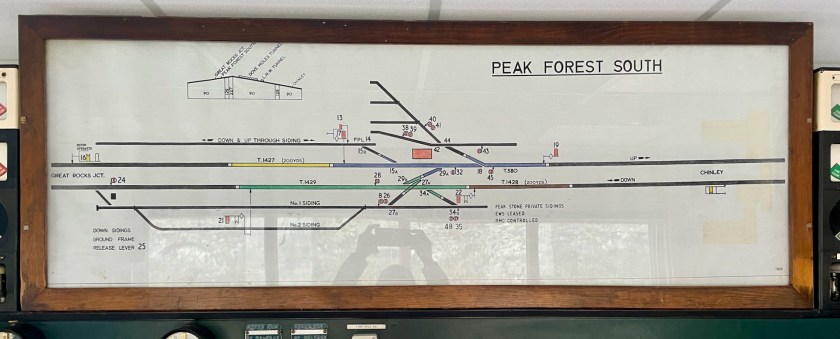
Peak Forest South Signal Box handles up to 70 loco movements each day, which is entirely stone traffic to and from four nearby quarries. Closest to the box is Peak Forest Cemex, immediately north of the road-bridge and Tunstead Quarry and Sidings about a mile to the south, and just beyond Great Rocks Junction Signal Box.
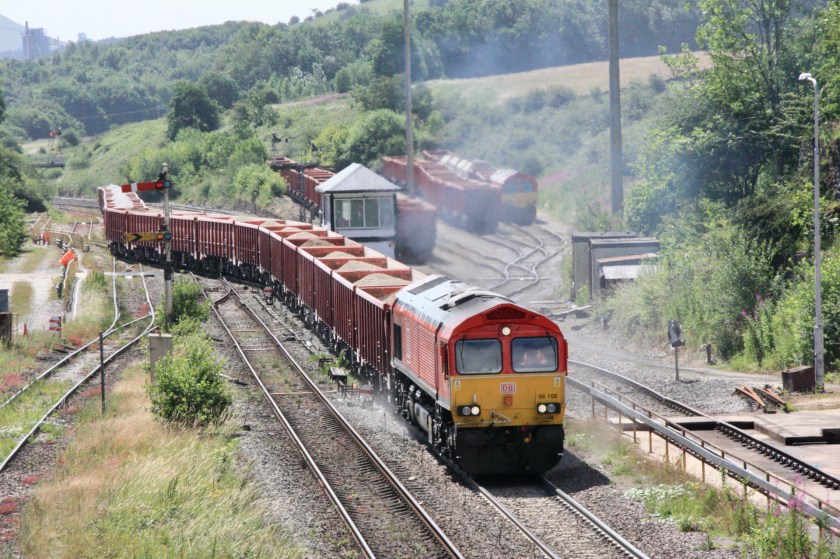
Two other rail-served Peak District stone quarries are Hindlow and Dowlow, south-east of Buxton. Trains from these two will work to Buxton, before reversing and looping round to join the route via Peak Forest to Chinley, which is a surviving stub of the former Midland Railway main line from Manchester to Matlock and St. Pancras.
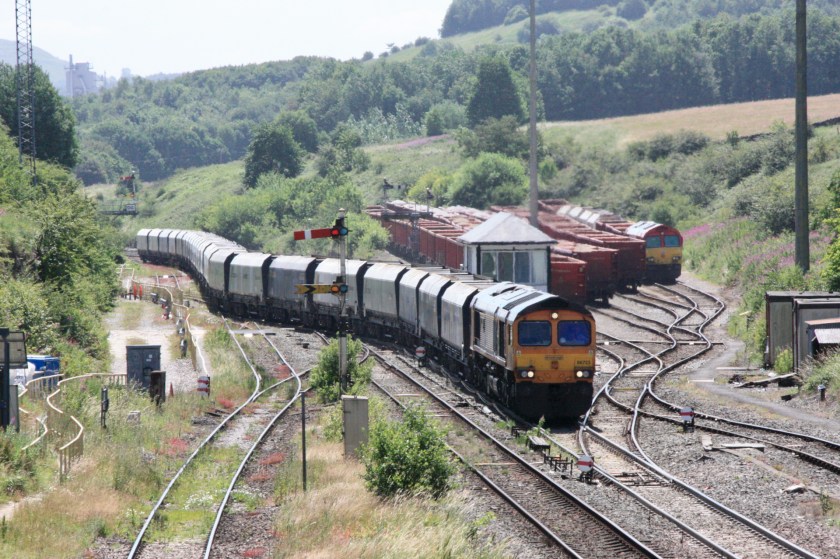
Besides its distant signal (PF16), Peak Forest South Signal Box controls five other semaphores and numerous shunting discs from its 50-lever frame. These semaphores comprise up (northbound) starter PF19 just in front of the road bridge, down home PF22 (with fixed distant beneath) a bracket housing up home PF17 and a subsidiary signal PF13 for exit from the up loop and down section signal PF21, also with a fixed distant beneath.
For a panoramic view of signal GR14/PF16, and the route heading south towards Great Rocks, you need to follow a path that climbs above the railway south of the former station gives you a panoramic view of the loco stabling sidings and the route on towards Tunstead Quarry, a mile to the south.
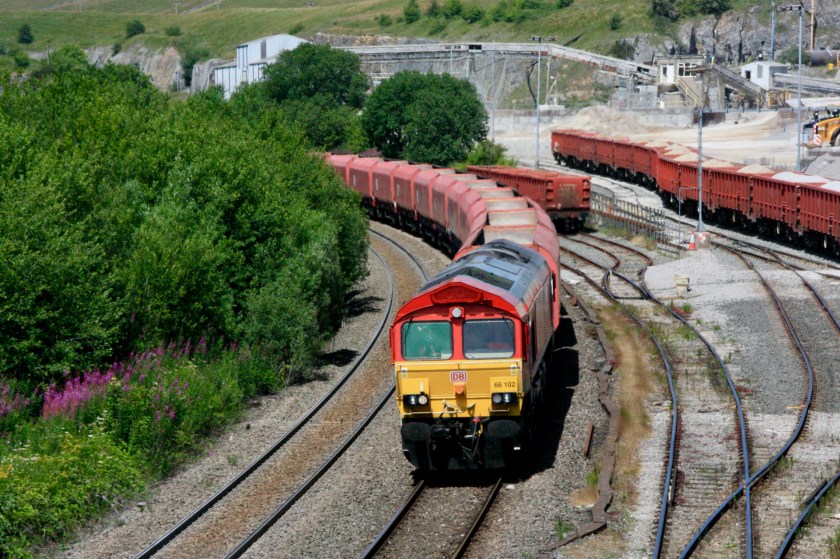
Peak Forest is a great place to observe heavy Class 66-worked freight trains departing and arriving at what is one of only two locations I am aware of where mechanical signalling controls exclusively freight traffic, Crag Hall on Teesside being the other.
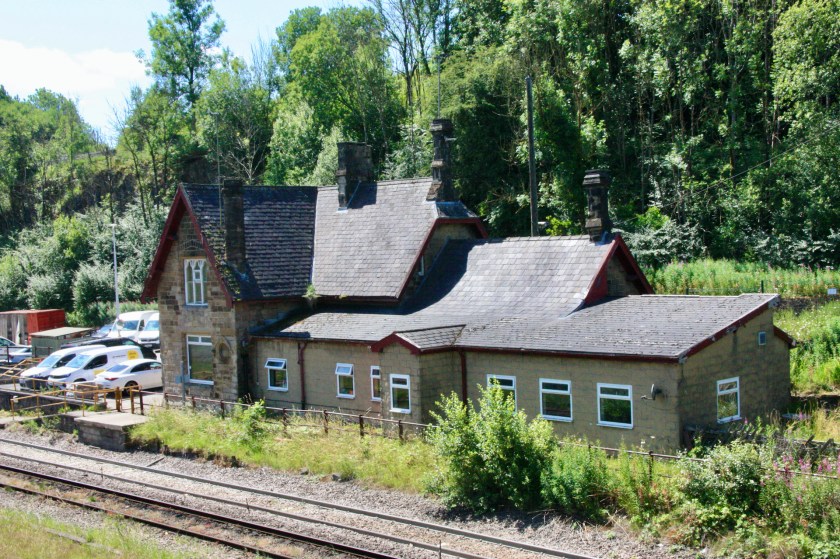
While it is rather hard to visualise the crack Manchester Central-London St. Pancras expresses that would thunder through Peak Forest station until the route’s closure in 1967, it is good to see that in its centenary year, Peak Forest South Signal Box remains a key part of the local railway infrastructure
 RailwayWorld.net
You must be logged in to post a comment.