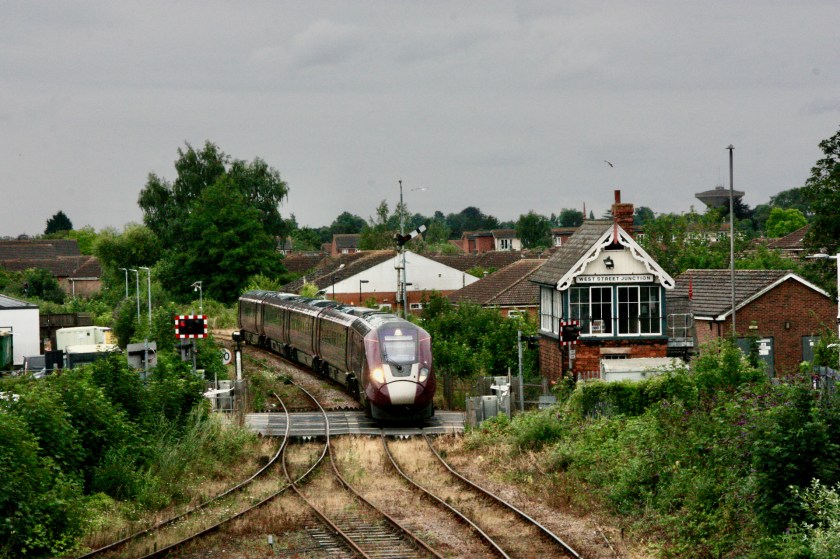
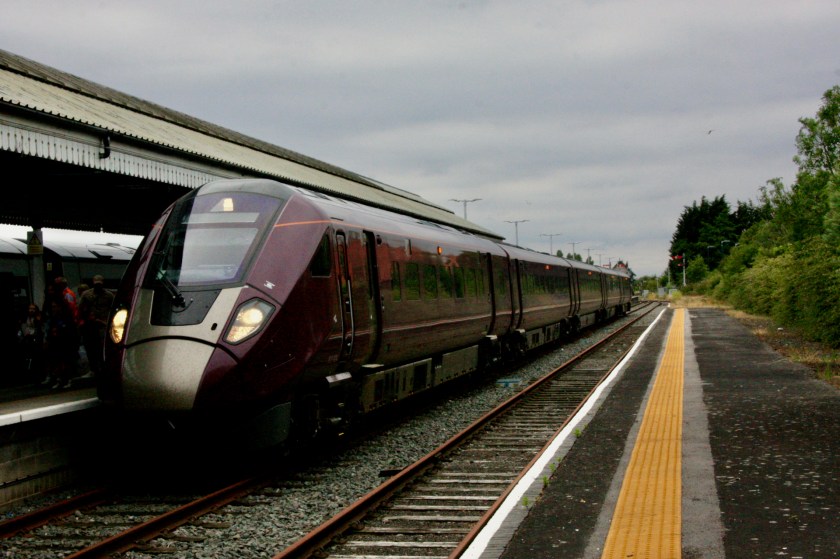
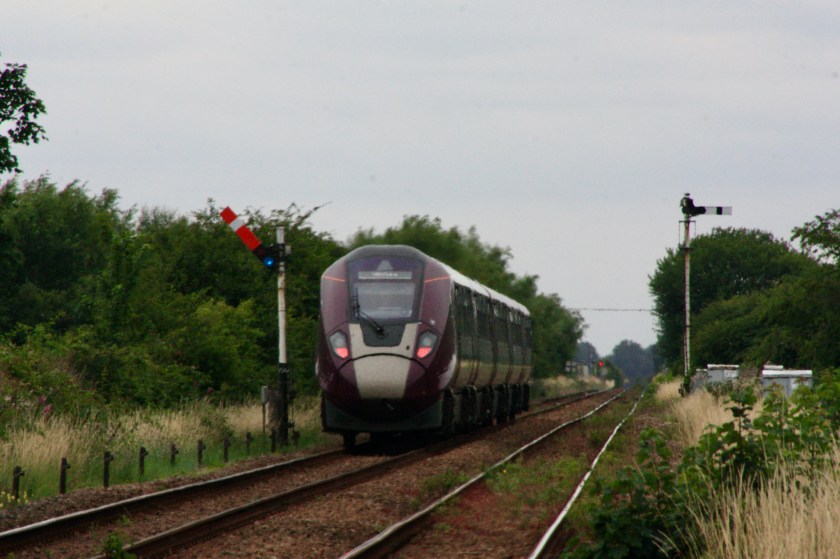
Thursday, 17 July 2025 proved to be an historic day on the splendid East Midlands Railway (EMR)-operated Grantham-Skegness Poacher Line, with a first ever visit to the route by one of the new EMR Class 810 Aurora units.
A fleet of 33 bi-mode 5-car Class 810s is destined to replace the Class 222 Meridian units on longer distance EMR services, but introduction of the Hitachi-built units has been beset by repeated delays.
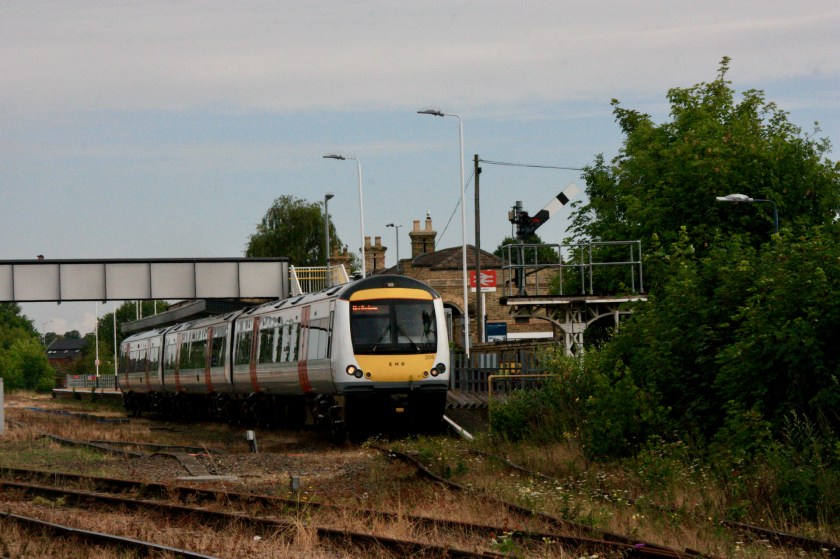
It is not yet known when the first sets will enter passenger service, with a number of the fleet currently in store, amongst which is unit 810004, that is one of a number of Auroras currently residing at the Old Dalby test track near Melton Mowbray.
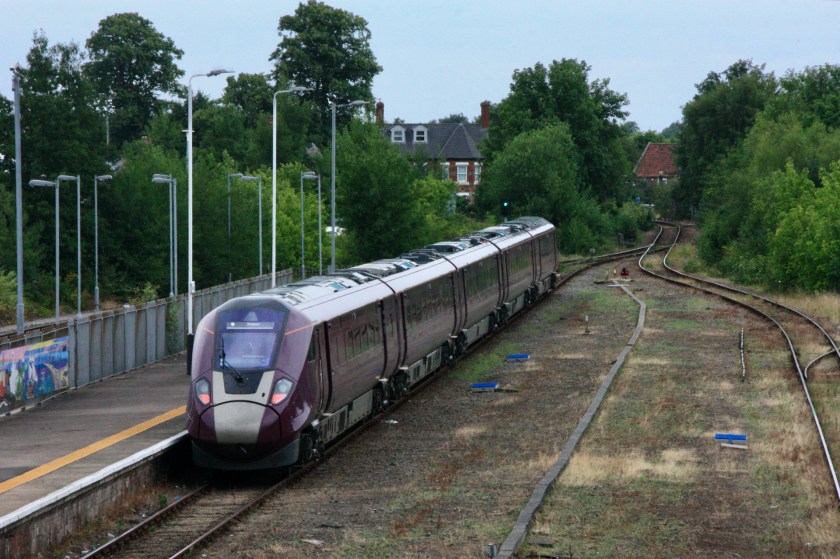
The Poacher Line test working was 5Q61 formed by 810004 and departing Old Dalby at 08.46. After a number of stops along the route to test for clearances, the train reached its seaside destination at 13.24, returning from Skegness at 14.30 as 5Q62.
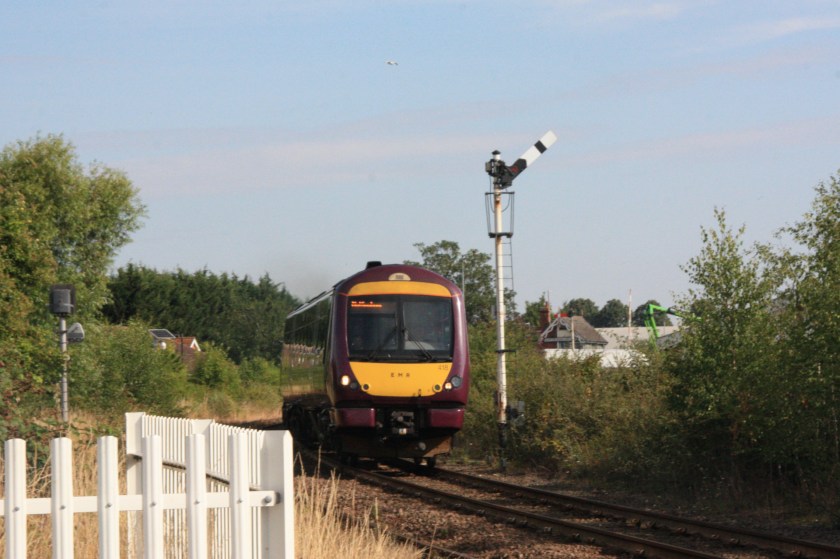
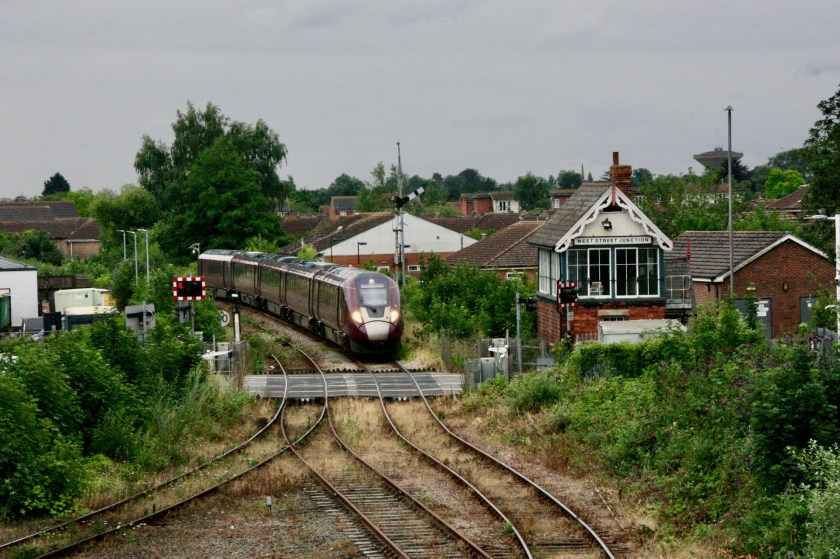
Paying a second visit of the year to the ever-delightful Poacher Line, following a successful couple of days at Wainfleet in March 2025, my intention had been to spend my time at Boston, the route’s principal intermediate station, for a look at its mechanical signalling and Listed signal box (West Street Junction).
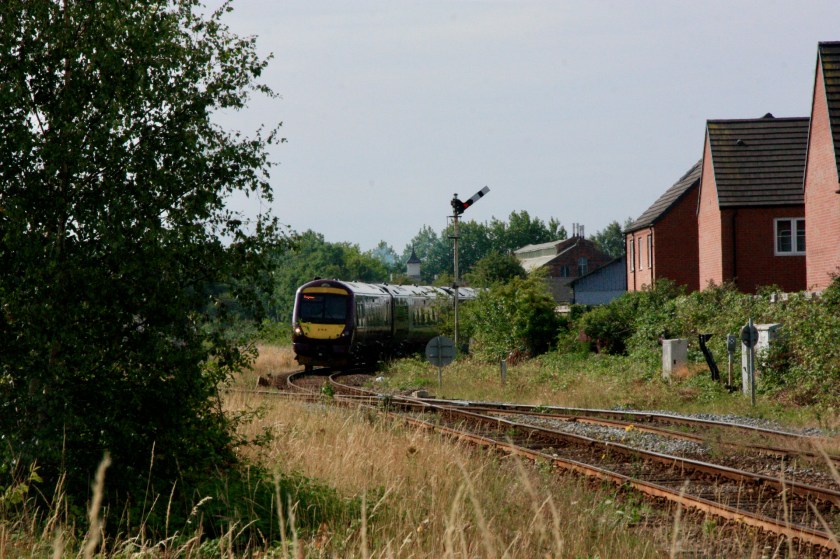
My trip on 16/17 July 2025 had originally been planned in order to photograph the monthly NR HST Test Train visit to the Poacher Line, but with that having been put back by a week it was a pleasant surprise to discover the Class 810 diagram appear on my day in Boston, and persuaded me to follow it to Skegness to also capture it there.
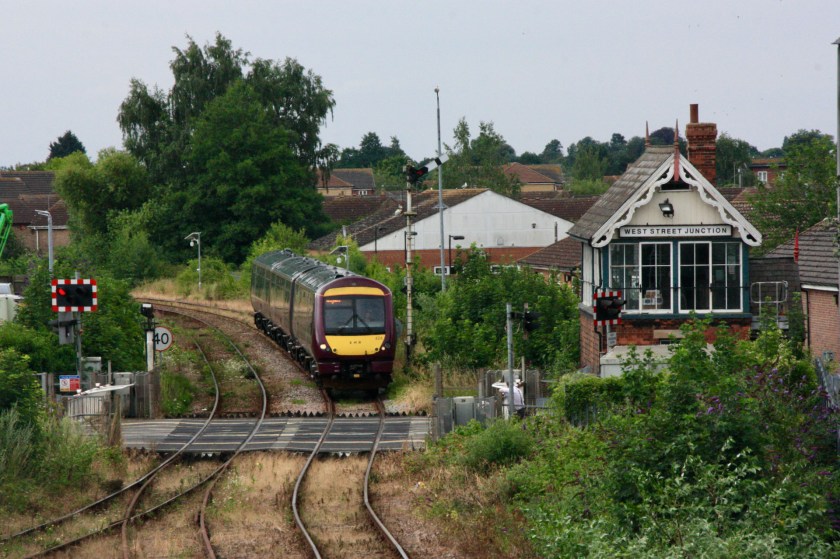
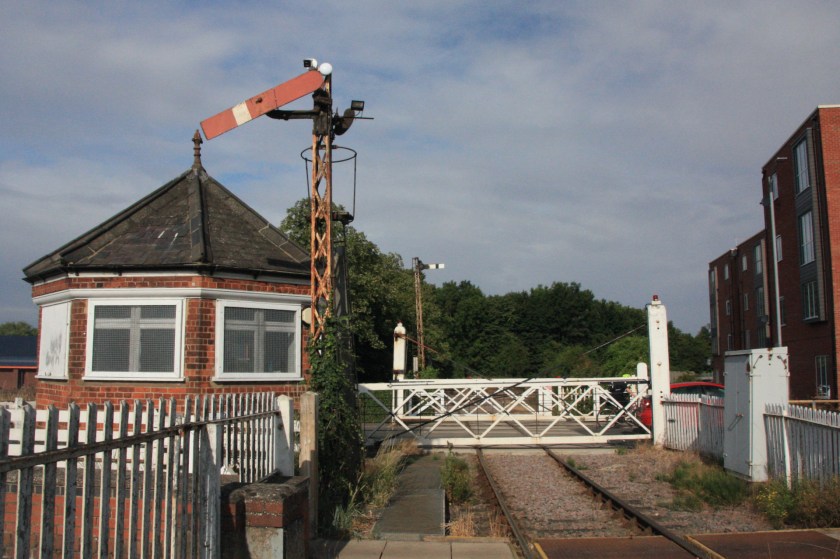
For those yet to savour the quaint charm of the 58-mile long Poacher Line, there are a total of 12 signal boxes along the route, with semaphore signalling controlled by seven of that dozen. West Street Junction Signal Box is a Grade II-Listed structure and, having been built in 1874, is the oldest Great Northern Railway (GNR) box still in use.
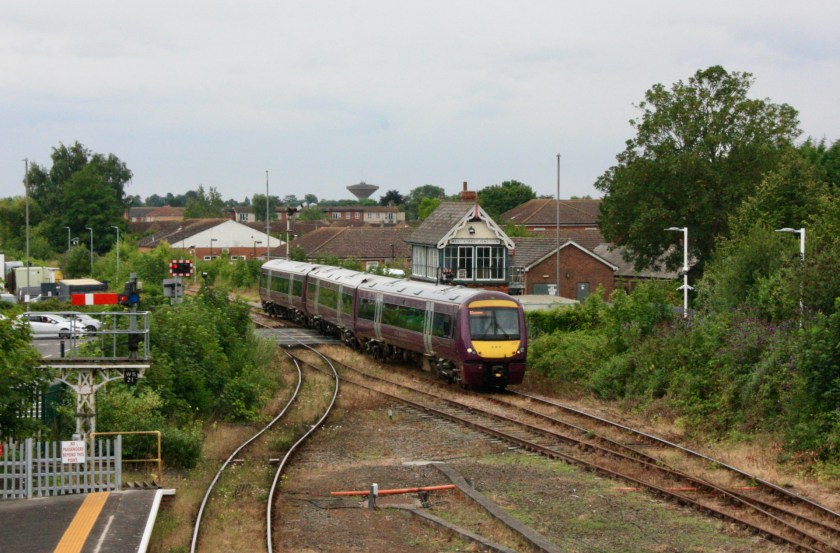
West Street Junction Signal Box stands to the south of the station and next to a busy level crossing, which it controls along with a quartet of semaphore signals from its 36-lever frame. These are up home signal WS21 at the south end of platform 1, motor-worked up starter WS22, motor-worked down outer home WS30 and, closest to the box, down home WS29.
Boston ceased to be an important railway junction when a route southwards to Spalding was closed in October 1970 and today the track layout is just an extended passing loop on one of two sections of single track along the Poacher Line, in this case from Hubbert’s Bridge to the west and Sibsey to the north.
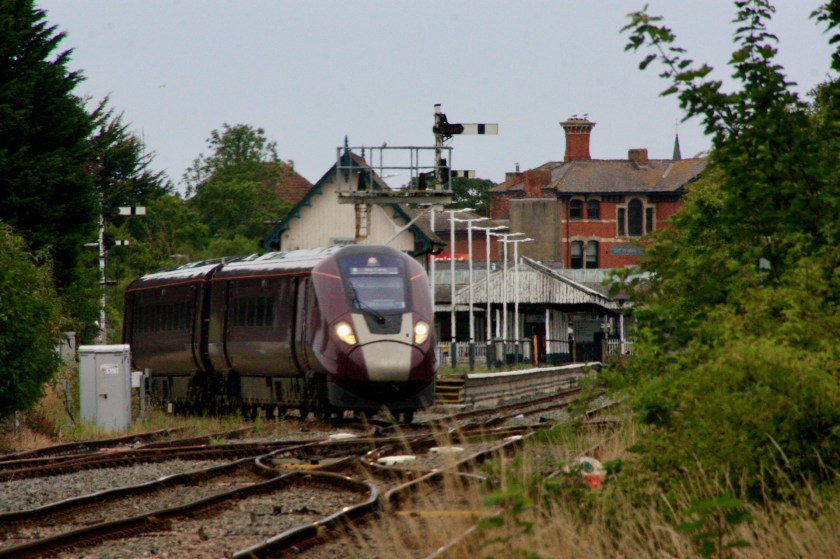
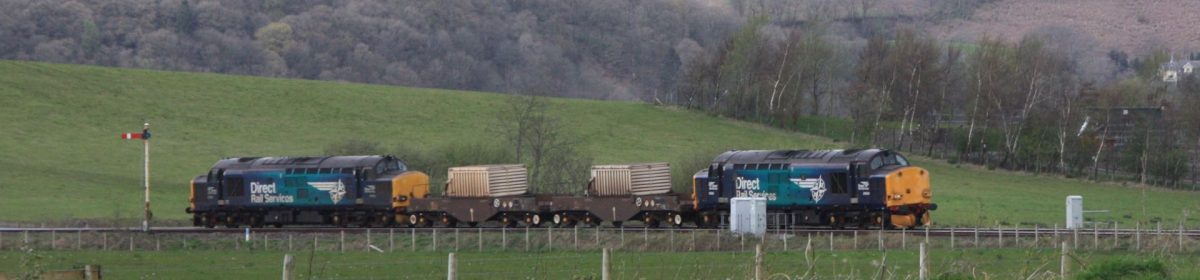
Besides the loop there are also sidings and a junction for the short branch line to Boston Docks, which sees occasional freight traffic and will take freight trains over the 1884-built and Grade II-Listed Boston Swing Bridge, Swing Bridge Signal Box (also Grade II Listed) and passing the only surviving example, excluding preserved railways, of a “somersault” signal, that were once a notable feature of the Poacher Line, and pictured below.
Reminded of the opportunity following my March trip to Wainfleet, my mid-afternoon arrival at Boston on Wednesday (16 July) was ideal timing for a short rail trip on to Wainfleet, and a chance to join the weekly 16.30hrs tour of the wonderful Bateman’s Brewery, only yards from the railway station.
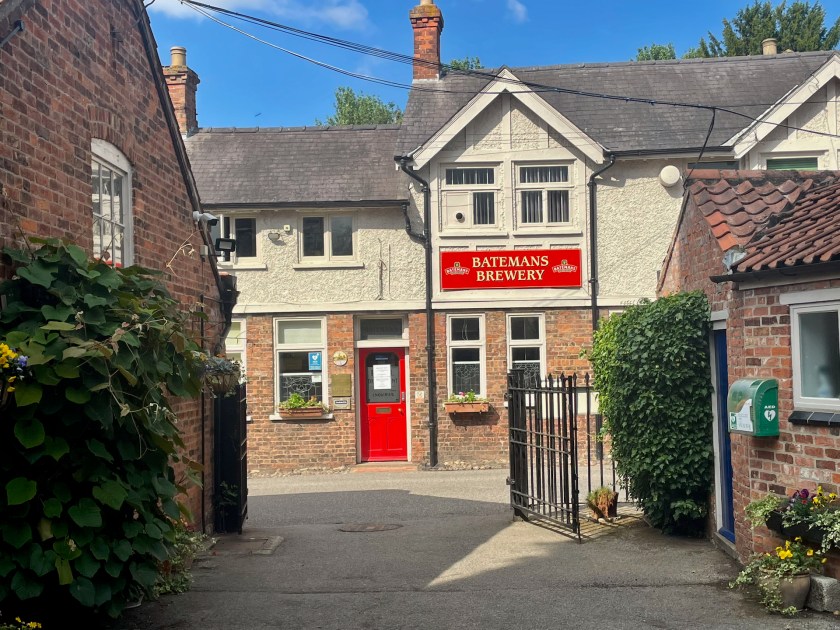
For those, like me, whose passion for railways is matched by a passion for good beer, a visit to Bateman’s (£14.95 including tastings) is something I can’t recommend highly enough.
The small group I joined was led by a highly enthusiastic and knowledgeable guide and we were given a generous sampling of the beers at both the beginning and end of our two-hour tour, and sent away with a rather special bottle of ten year old premium (7.2%) ale. Not to be missed!
 RailwayWorld.net
You must be logged in to post a comment.