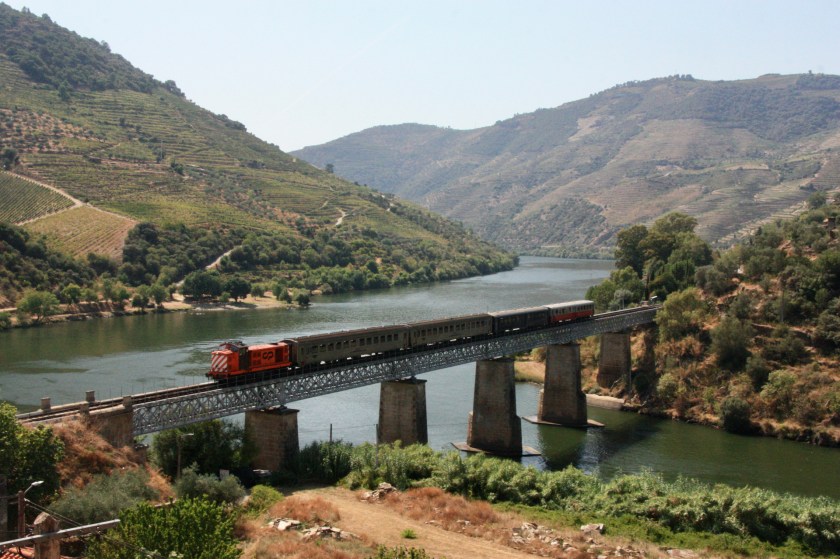
Imagine one of Europe’s most scenic railway lines, almost 100 miles in length, where virtually all services are worked by vintage British-designed diesel locos from the 1960s hauling equally-aged passenger coaches, with the added bonus of a seasonal weekend historical train along part of the route.
It may sound too good to be true, but this is the Douro Line in Portugal (Linha do Douro) which runs inland from Porto along the north bank – later crossing to the south bank – of the Douro River, and until a few years ago linked up a handful of remarkable narrow gauge railways that ran north from the Douro Line up picturesque tributary river valleys.
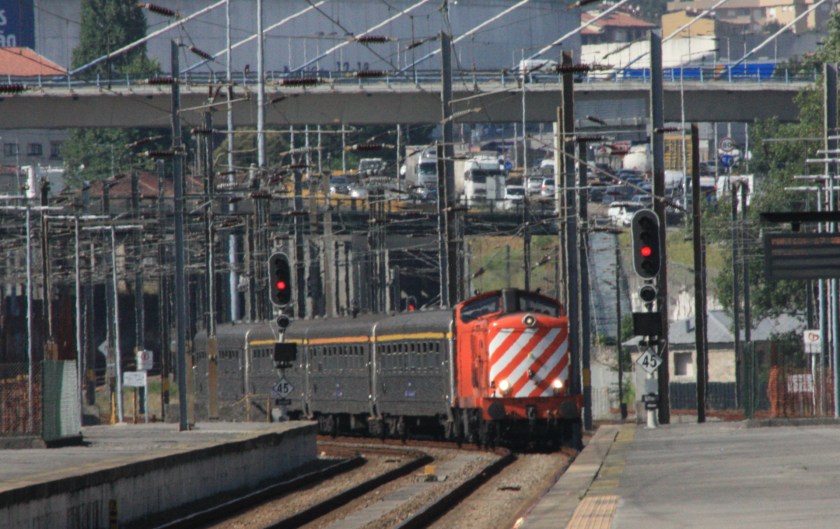
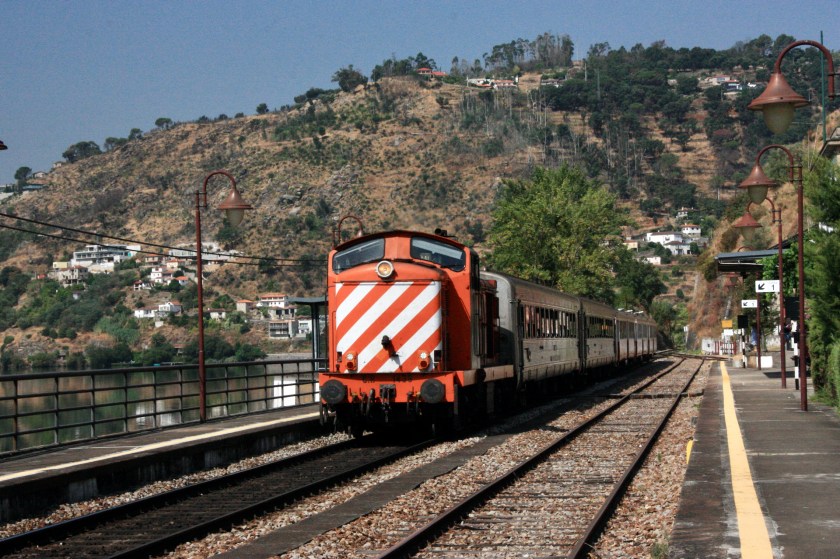
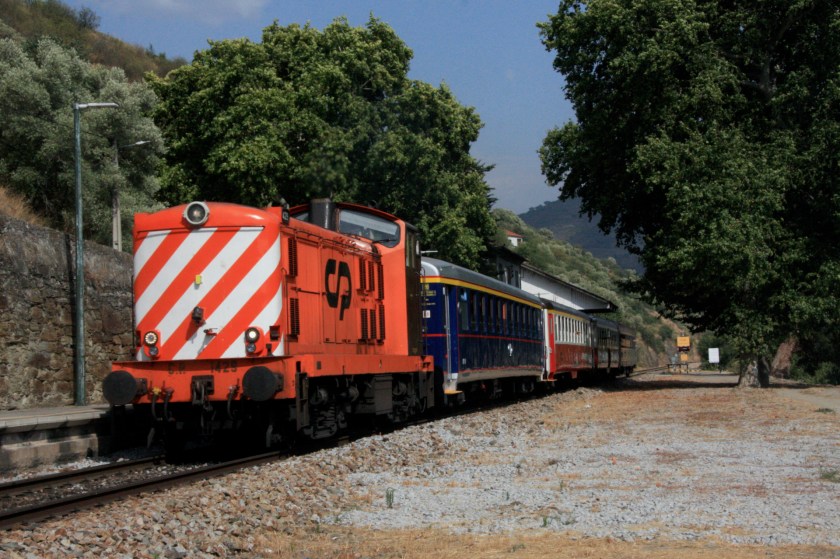
While the last of these remarkable metre-gauge lines were sadly closed in 2009 there is still something very special about the Douro Line and its daily diet of inter-regional (IR) services that are powered by English Electric-designed Class 1400 locos, the first ten of which were built at Newton-le-Willows, with the remainder built under licence in Portugal by rail manufacturer Sorefame.
Having not visited the area since a family holiday on the Minho estuary in 2004 gave me the chance to drive my young son to Villa Real and take a memorable and unrepeatable railcar ride on the metre-gauge Corgo line to Régua and back, I felt it was high time to pay a return visit and sample some of the historic railway scene.
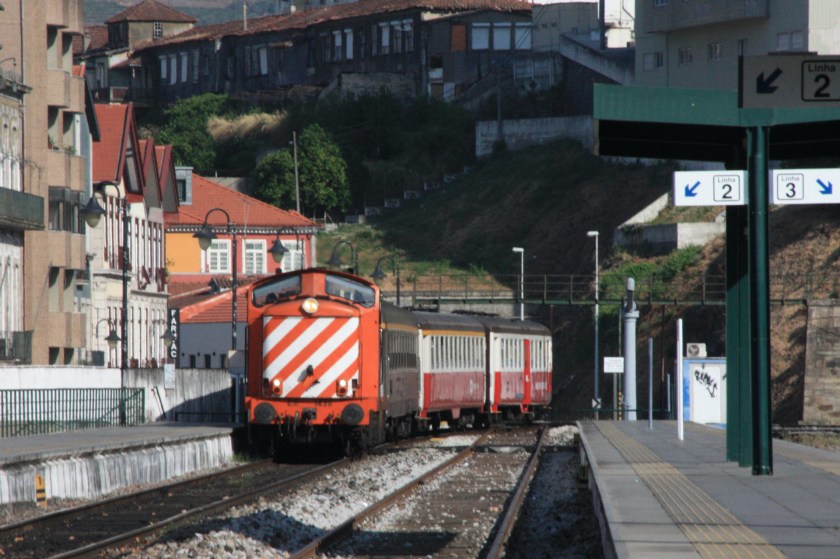
Flying from London to Porto on 6 August 2025 I took Metro Line E to Porto Campanhã station before heading off up the Douro at 17.25 for a four night stay in Peso de Régua where I had picked the nearest hotel (Imperio) I could find to Régua station and what looked like an ideal starting point for riding and photographing the line.
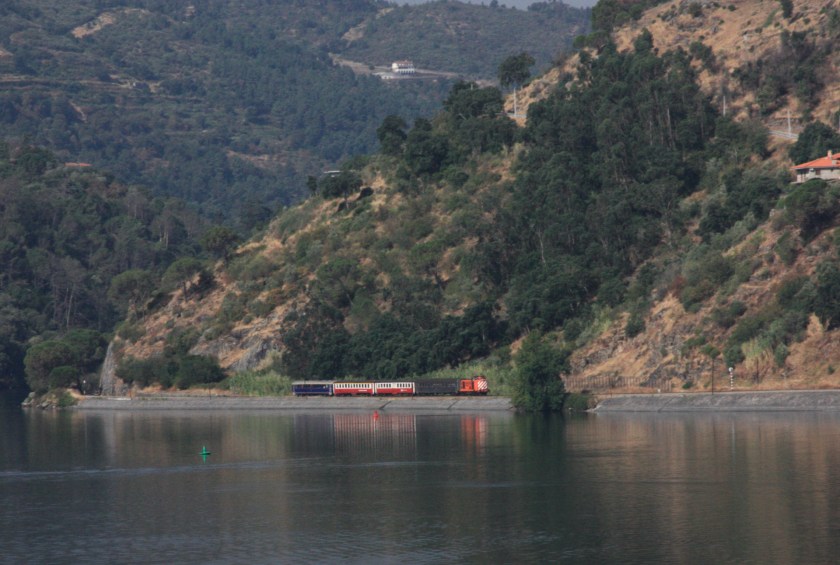
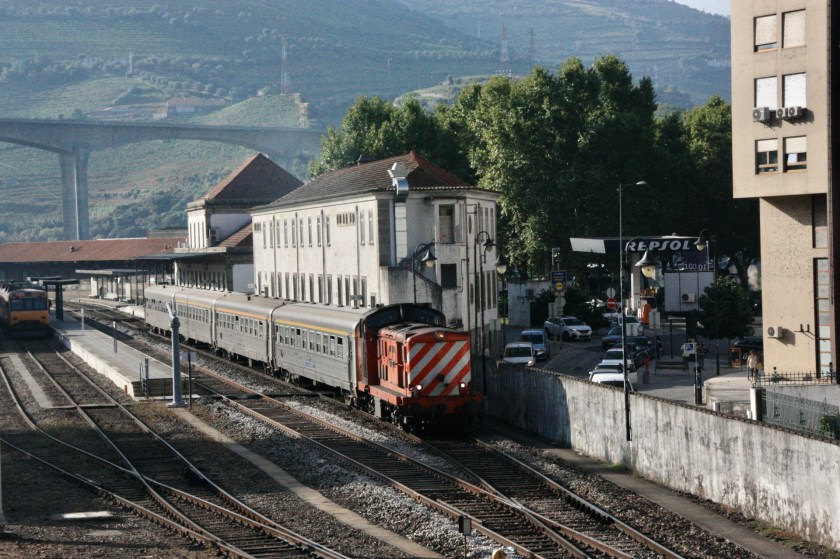
For my busy departure from Porto’s main station I opted to travel in one of the stainless steel Sorefame coaches that was built in 1972 and had ludicrously sumptuous seating that was rather more comfortable that the seating in the truly vintage 1940s Schindler coaches that also form part of most Douro Line trains.
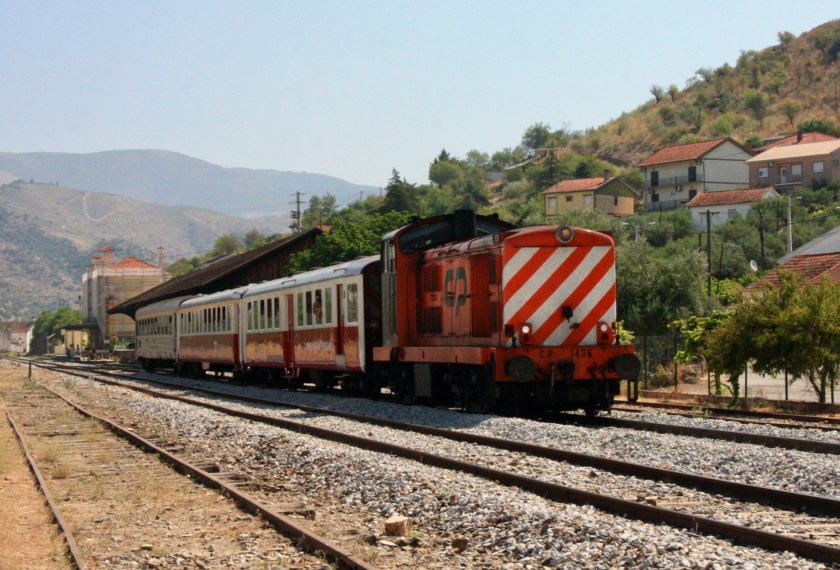
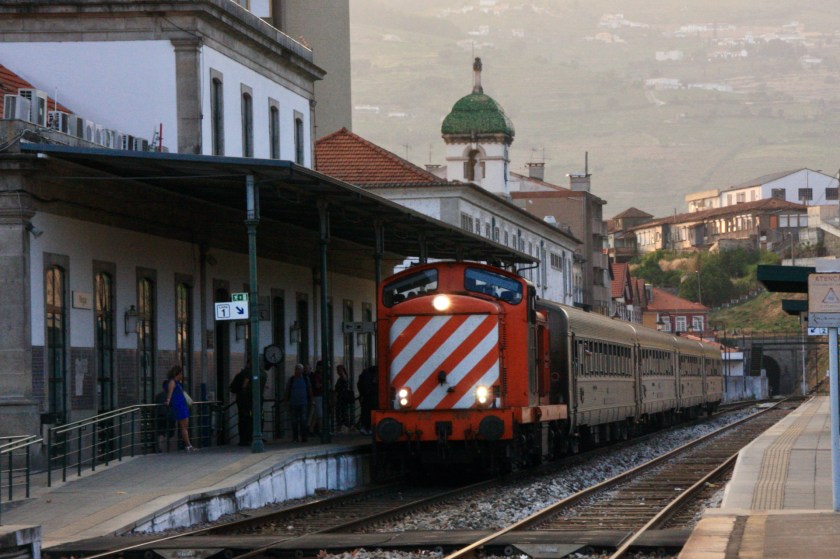
The two-hourly Douro services from Porto are all formed by veteran English Electric designed Class 1400 series locos hauling a mixture of the refurbished Schindler coaches that date from the late 1940s and Sorefame vehicles from the early 1970s, giving this route the appearance of a very long, scenic and bargain-priced heritage line.
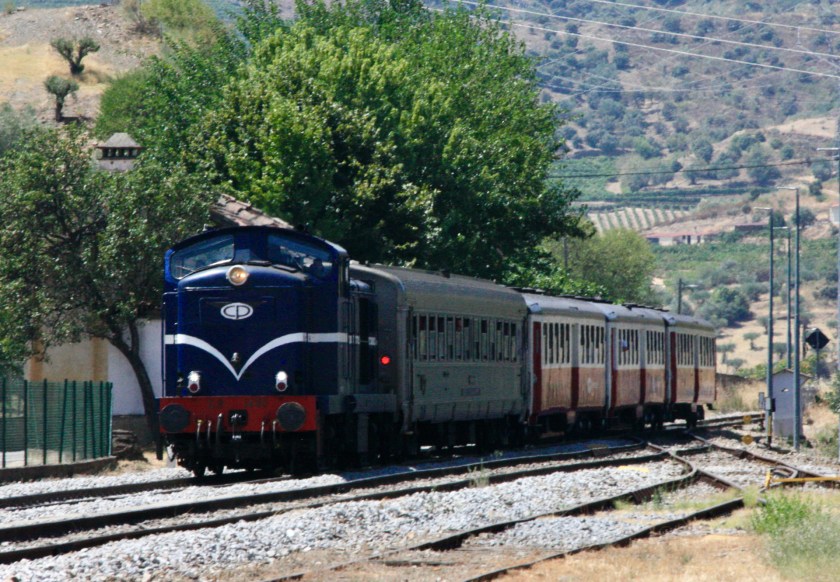
It is hard to describe what a truly remarkable line this is. Once beyond the electrification at Marco de Canaveses and then picking up the Douro River at the next station, Mosteiro, what follows is two hours of the most spectacularly scenic railway journey anywhere in the world, with the familiar engine sound and open windows creating an unforgettable experience.
Fares on Comboios de Portugal (CP) are remarkably cheap by UK standards. A single from Porto to Régua currently costs €10.70 and Régua to Pocinho is €7.50, with the over 65s automatically qualifying for half price, without the need to buy any sort of railcard.
After a comfortable night in the Imperio Hotel, literally outside the station at Regua, I began my photographic chronicling of this remarkable line by heading for any ancient iron footbridge just west of the station, from where there was a great view of the station and a Porto-bound train.
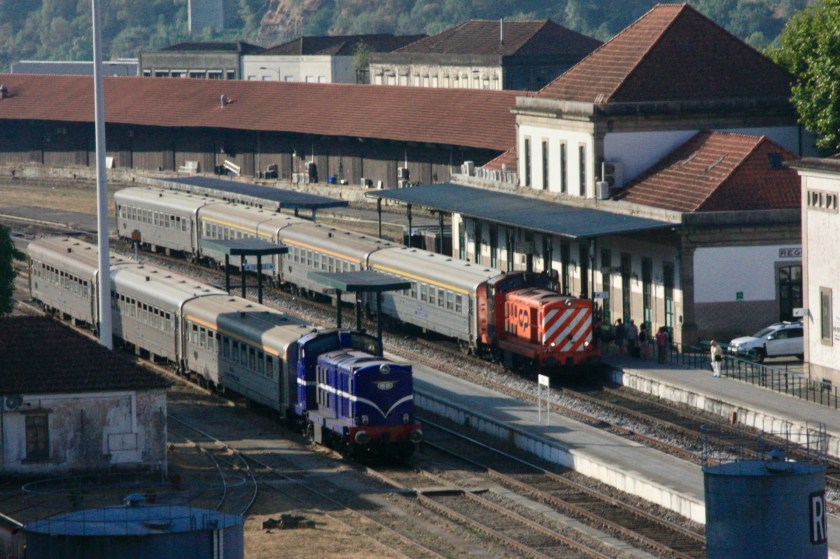
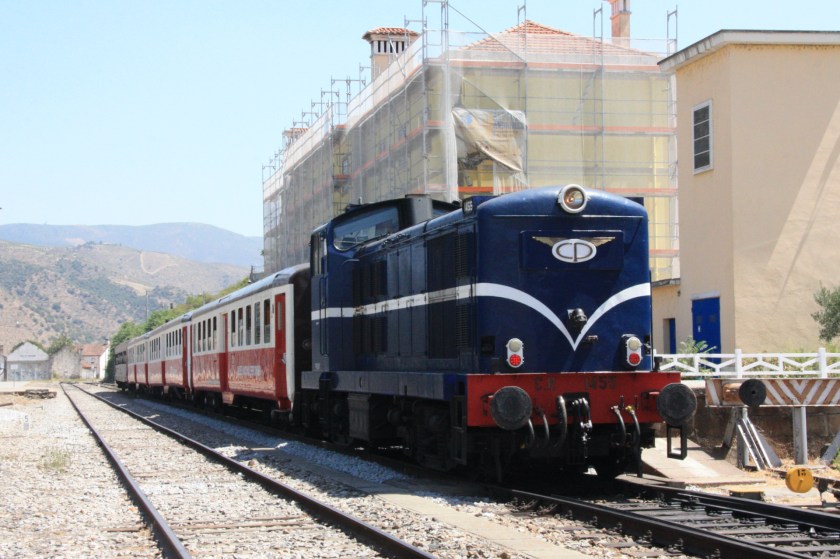
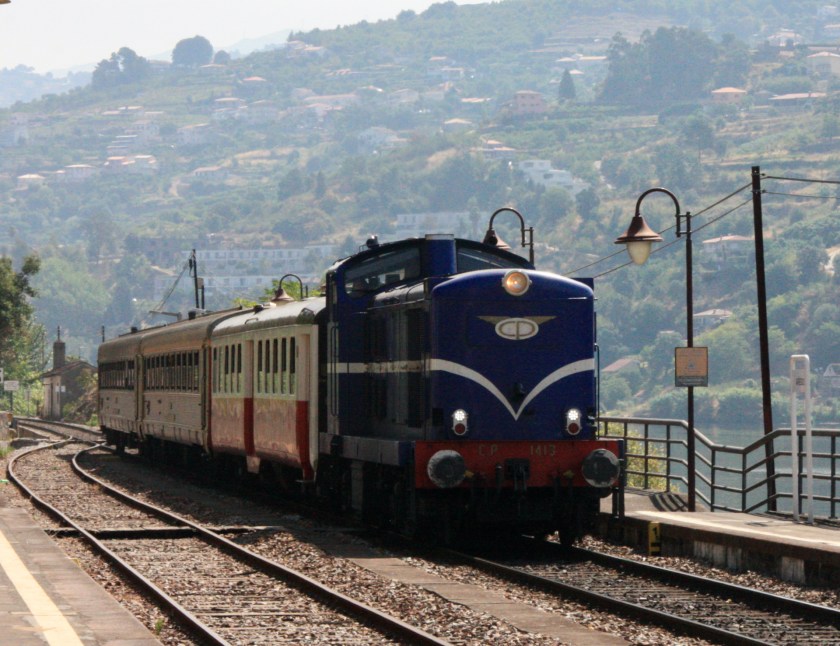
At the time of my visit there on 7 August one of the two 1400s to be painted in the historic CP blue livery (1413) was standing in a siding with Sorefame stock to form the 10.35 service from Régua to Porto Sao Bento, while close to the mixed gauge turntable stood the last remaining Corgo Line Mallet (2-4-6-0) loco E208, looking rather forlorn.
Apart from E208 there is another steam loco at Régua, with E1 plinthed at the eastern end of the station, apparently the last Corgo Line loco to be steamed (in 1980). Little else remains of the wonderful metre gauge apart from track in the four bay platforms from where the little trains would depart for Villa Real and Chaves.
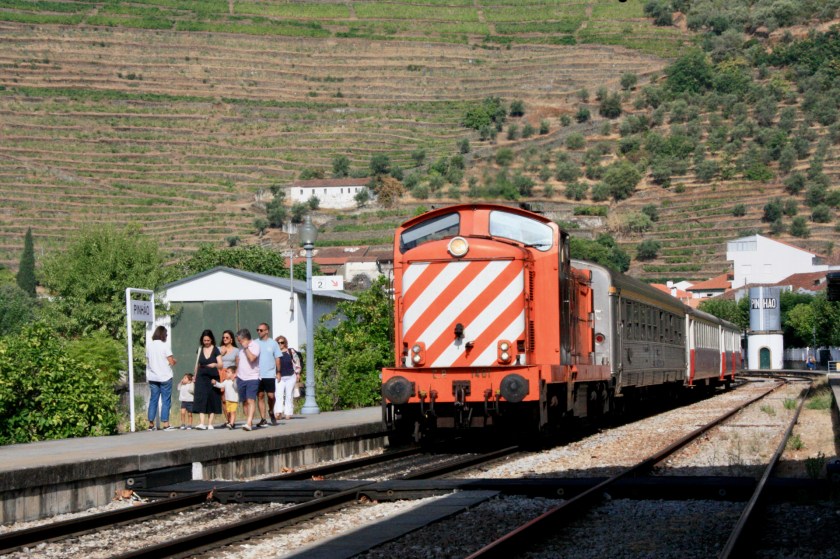
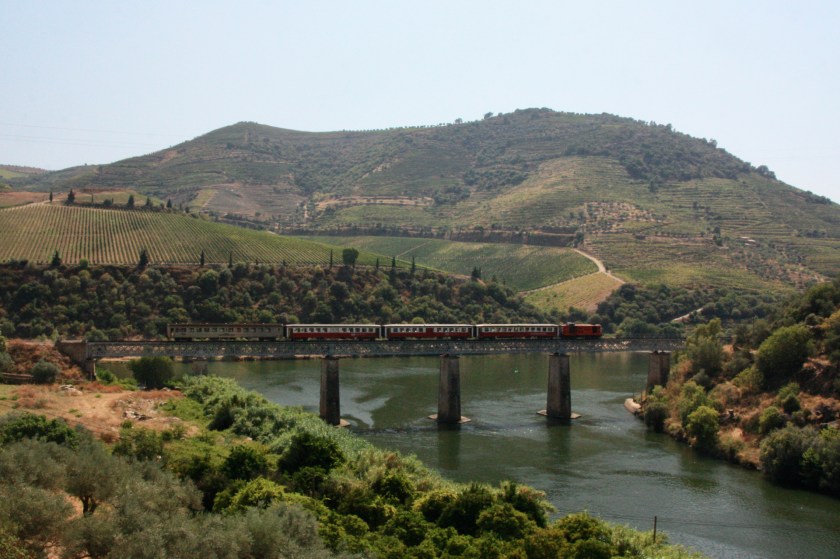
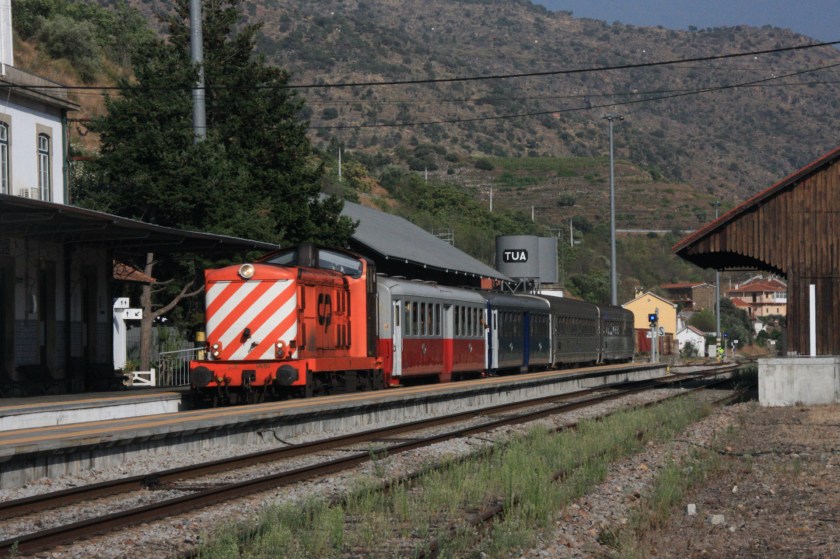
From Régua to the current end of the line at Pocinho is a remarkable 80-minute journey along the banks of the Douro, passing through the popular cruise boat destinations of Pinhão and Tua and passing mile after mile of terraced wine estates and some familiar British names such as Graham’s, Dow’s and Warre’s for those who know their port.
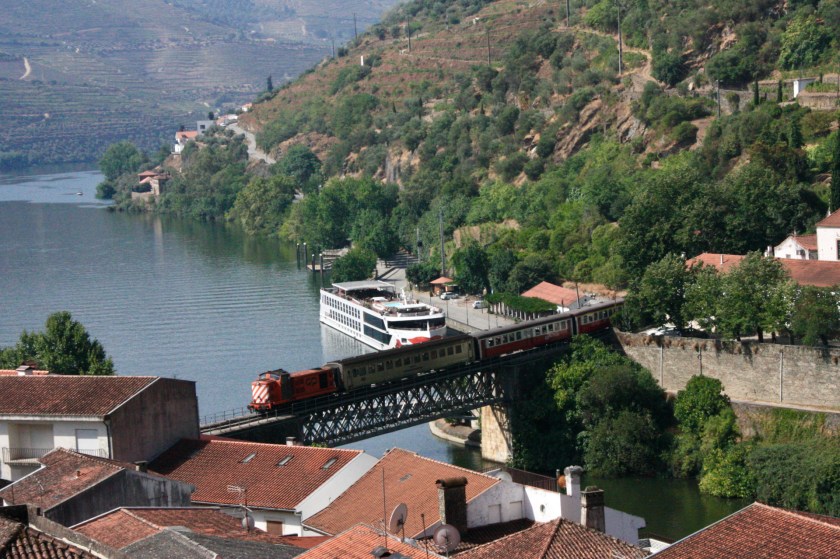
Pocinho is very much an end of the line place, with a tourist office presence in the station, but no sign of any cafe or restaurant to encourage the tourist to do more than wait around 20 minutes for the loco to run around its train and depart for the three hour run back to Porto.
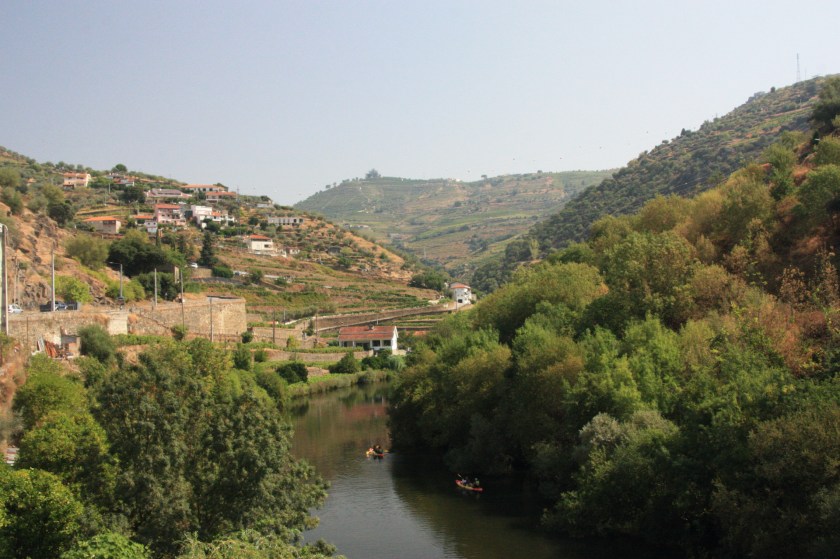
But for the enthusiast willing to spend a couple of hours here there is the chance to get a shot of the departing train from the north side of the extensive station yard, and an opportunity to capture an arriving train either from this spot or by walking away from the station and reaching a lineside spot near a short viaduct.
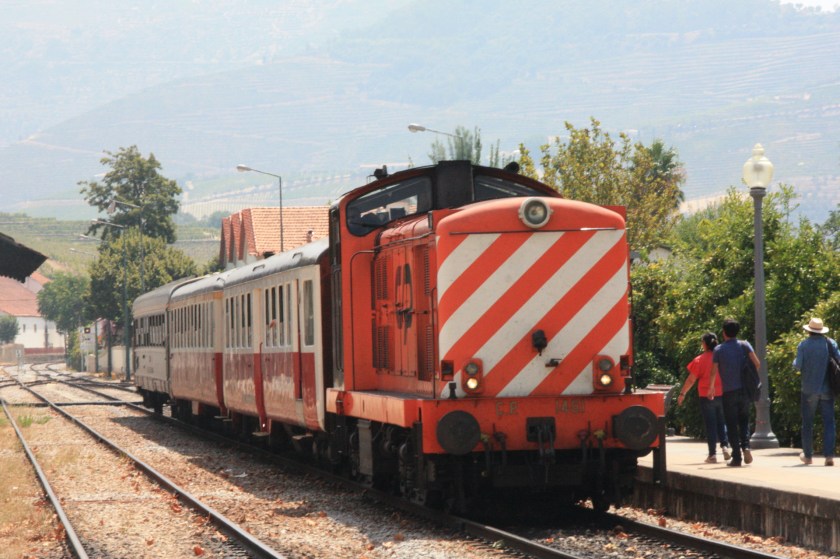
Pocinho has been a terminus for Douro services since an eastward continuation to a place called Barca d’Alva was closed in 1988, four years after a route onwards into Spain had been closed by Spanish Railways (RENFE). There is now talk of re-opening the route to Barca d’Alva, although like electrification of the Douro Line it remains just a plan.
Returning from Pocinho to Régua on 7 August, I decided to pay a call at Tua, a one-time junction for the metre-gauge branch to Mirandela and Bragança, on which I had a memorable and unrepeatable loco-hauled trip to Mirandela in May 1995, behind one of the Class 9000 locos now powering heritage workings on Portugal’s last surviving narrow gauge system, the Vouga Line.
Metre-gauge workings from Tua sadly ceased in 2008, but the track into the station remains in situ and has become a footpath which happens to be the easiest route from the station to a fabulous photo spot near where the narrow gauge route passes under a main road. Go up from the NG line onto the road and there is a great view of a viaduct taking the Douro Line over the Tua River.
Day two of my stay at Régua and a short (25-minute) trip today to Pinhão (€3.10 single) where there is another rail crossing of a Douro tributary, the Pinhão River, just west of the station, which I was able to photograph being crossed by Pocinho-bound services from two separate locations in this charming town.
Firstly I headed toward the centre from the railway station then turned right up a steep path that took me to a spot with a fine view of the bridge and a large Douro cruise boat moored just beyond. Having got the shot I wanted here, I then followed the road to the only road crossing of the Pinhão River, from where there was another good view of the railway bridge.
As if the lure of travelling in 1940s rolling stock was not enough to attract tourists onto the Linha do Douro, on summer weekends and Wednesdays CP runs an historical train from Régua to Tua and back, using a collection of five ancient four-wheel coaches that are kept locked in a compound opposite the station at Régua.
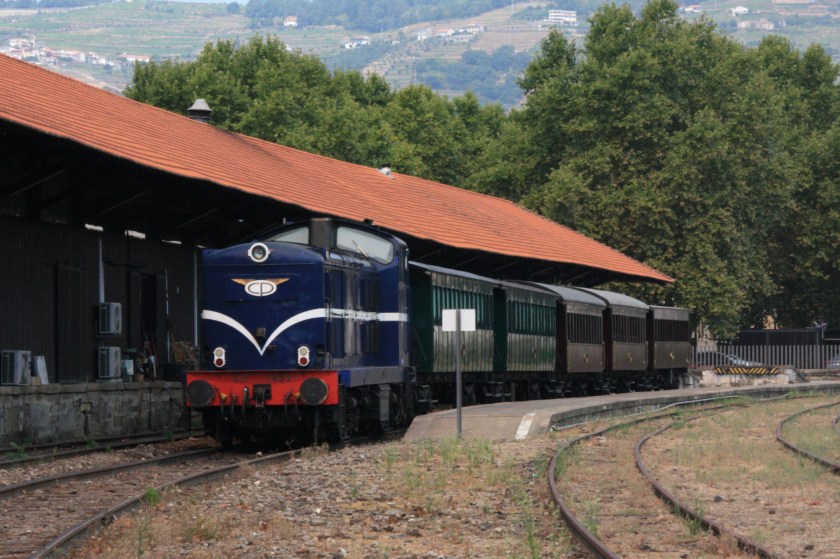
In past years this has been worked by CP steam tank engine 0186, but this year’s trains are being powered by one of the blue Class 1400s, apparently due to the track condition. At €59 for the round trip the fare is a vast premium to the current adult return fare of just €8.80, though I wonder how many of the unsuspecting passengers realise what a huge premium they are paying.
For anyone tempted to visit this fabulous line but daunted by the potential language barrier at ticket offices, I can highly recommend downloading and then registering on the CP app, where you can buy any tickets you need – applying any discount such as senior citizen in the process – and having the tickets sent immediately to your phone.
Then for those who really want to know what to expect and updates on the many delays that occur on a single track line such as this one, I can also highly recommend an enthusiast-powered website called http://www.trainstatus.pt, where by inputting the reporting number of the train you want to catch you can discover if it is delayed and sometimes even see what loco is powering it.
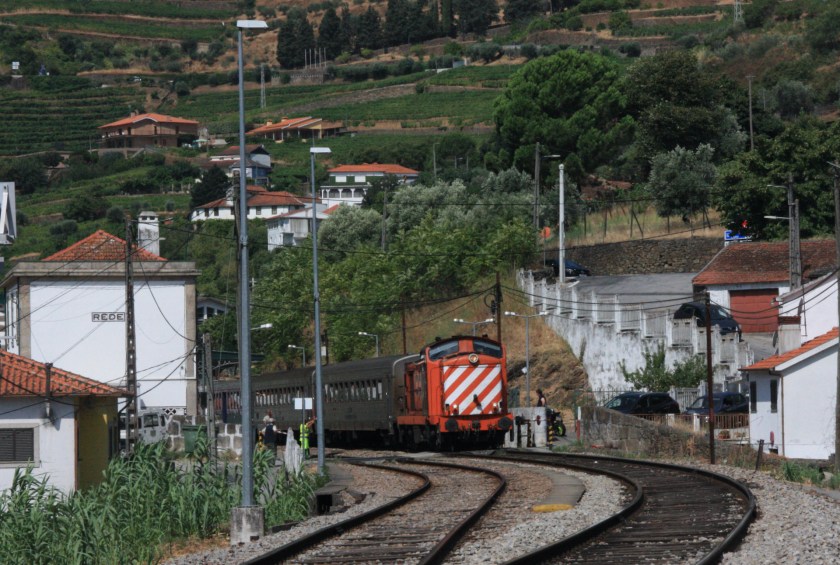
There were originally a total of 67 Class 1400 locos built for CP, that are very similar mechanically to the UK’s Class 20 locos. A number were sold to Argentina around 20 years ago, but many remain active with CP and during my time on the Douro I noted a total of seven in service: 1413/15/29/36/54/55/61 of which 1413 and 1455 are in the historic blue livery and the remainder orange.
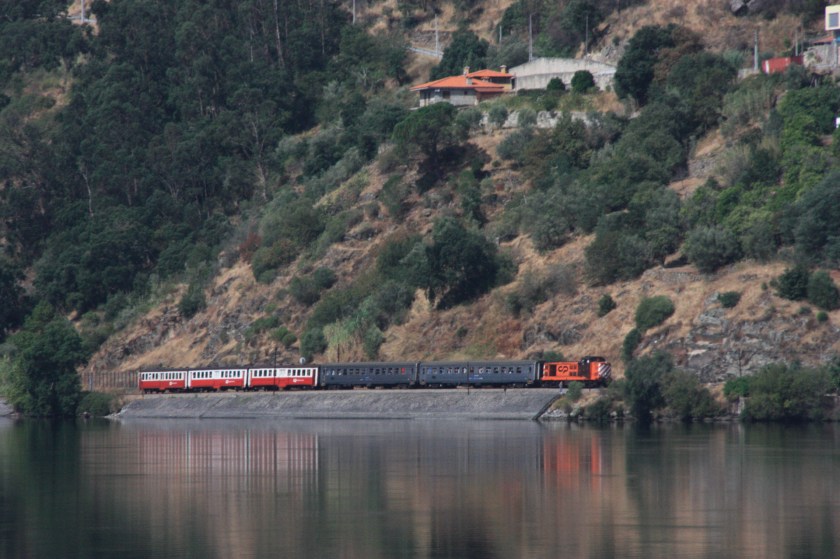
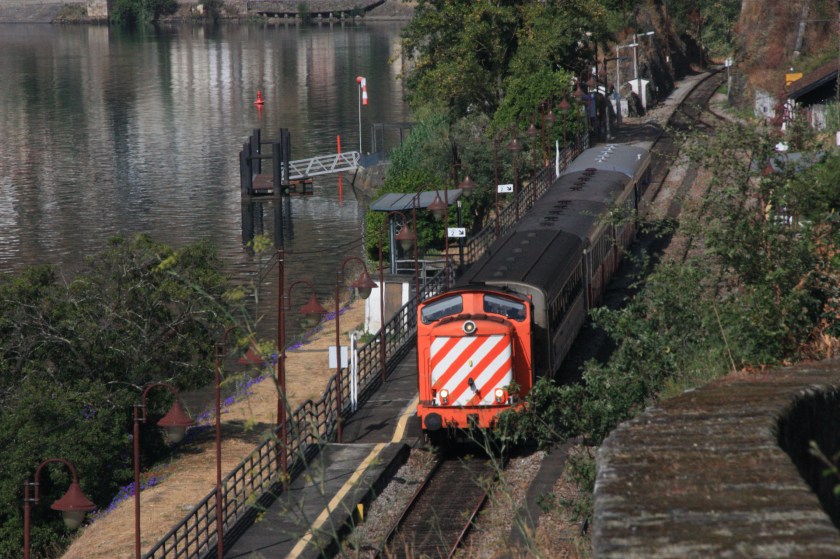
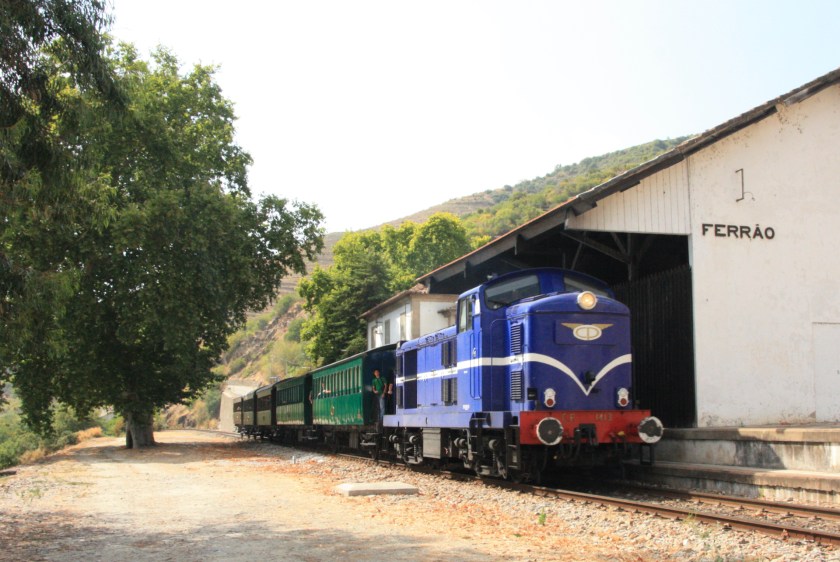
For my final full day in Régua (9 August 2025) I had decided to photograph the historical train as it passed a wayside station near Pinhao called Ferrão, but before heading there I took a 25-minute ride in the opposite direction to a charming and remote riverside station called Aregos, from where there was the chance to get distant shots of trains running alongside the river.
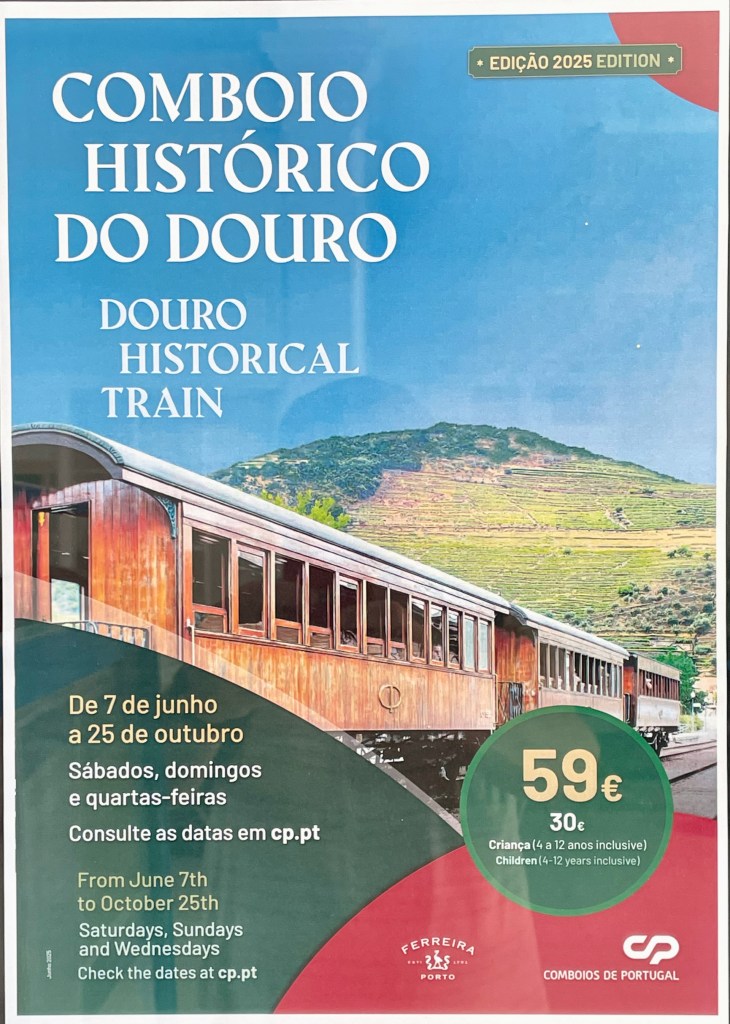
Photographing the packed historical train, hauled by loco 1413 as it passed remote Ferrão was a reminder of how popular tourist rail travel can be. There are leaflets promoting this service at stations like Régua, but nothing to tell the visitor that most of the other services through the station are of remarkable historic significance. While most Douro services are busy it is hard to escape the conclusion that CP could be doing a lot more to promote them.
 RailwayWorld.net
You must be logged in to post a comment.