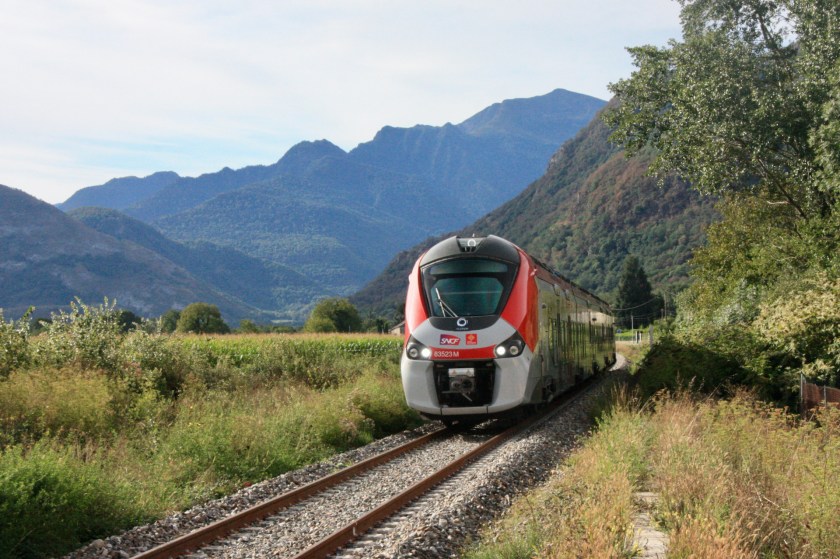
After all the sadness at Felletin, proof that rural railways in France can be revived comes when I travel from the now rail-less town to Limoges by bus, then head south by rail via Toulouse to a place south-west of Toulouse called Montréjeau-Gourdan-Polignan to sample a 36km (22½-mile) branch line to a ski resort called Luchon that re-opened to passengers on 22 June 2025, after being closed since November 2014.
The Occitanie région of France seems to have a rather different approach to rural railways to that prevailing in Nouvelle-Aquitaine and this eagerly-awaited re-opening, after a total investment of €67 million, is planned to be the first of a number of railway revivals across this part of southern France.
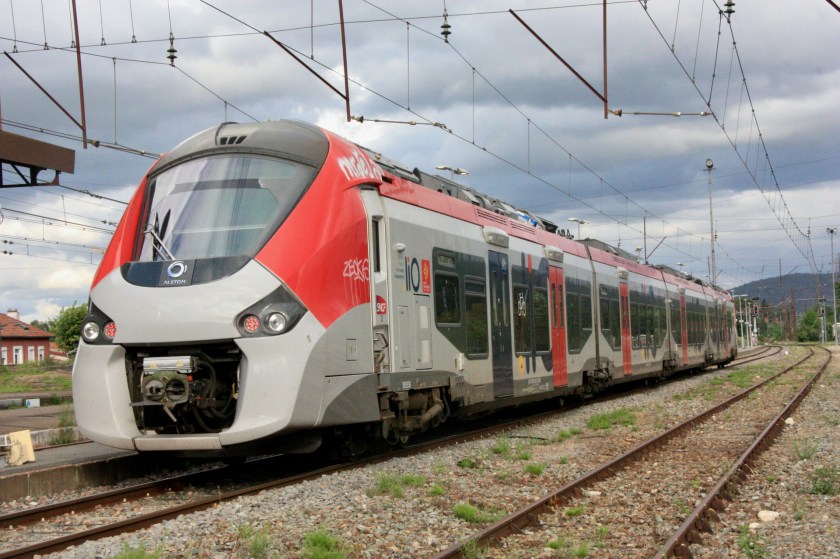
Rail services to the Pyrénéan resort, known in full as Bagnères-de-Luchon, had been halted in November 2014 due to weather damage to the line’s ageing infrastructure, which at the time included overhead electrification. With the electrification removed, the eventual plan now is to trial use on the line of three hydrogen-powered trainsets being built by Alstom, using hydrogen produced with power from a local hydro-electric station.
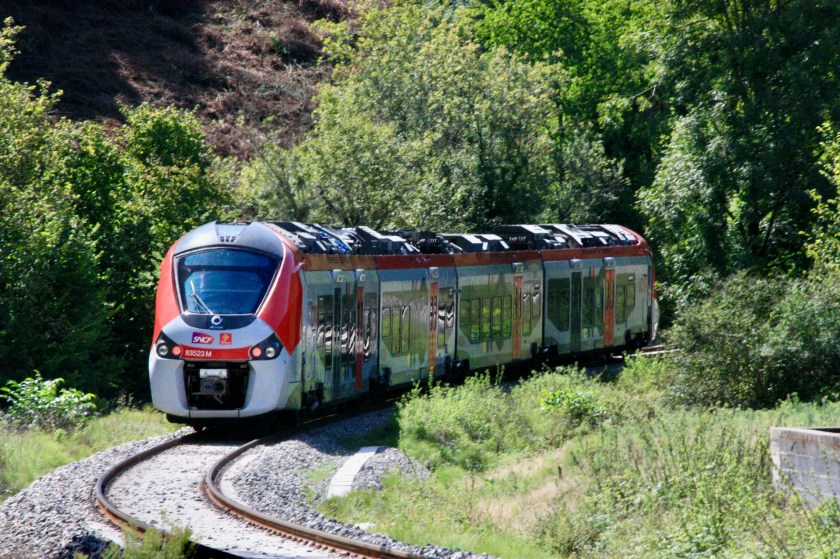
An initial timetable for the Luchon branch sees six round trips each weekday, with the Alstom Régiolis bi-mode four-car multiple-unit working the branch being changed each day, with the first departure from Luchon at 06.14 running through to Toulouse and the first journey down the branch being a through service from Toulouse (06.39) that departs from Montréjeau at 08.12.
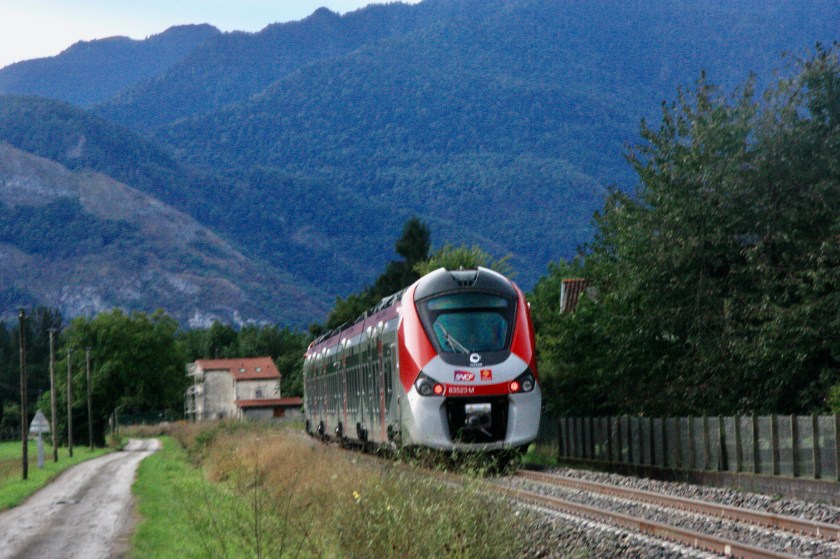
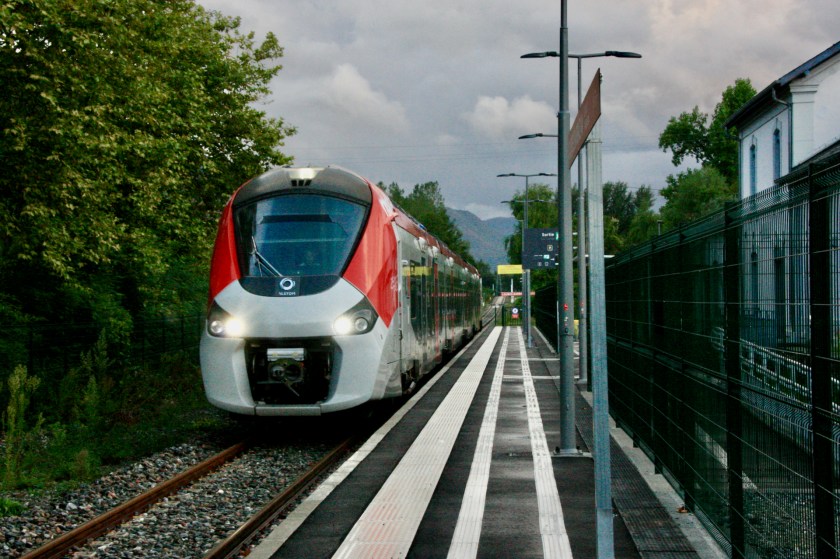
The end-to-end journey time of 35 minutes includes three intermediate stops, with those at Marignac-Saint-Béat, Loures-Barbazan and the Luchon terminus having all been modernised as part of the line’s revival, and the third intermediate station, Saléchan-Siradan, moved 550m from its original location, at local request.
A promotional fare of €3.00 is currently on offer for the Montréjeau–Luchon journey, with the standard fare being €6.40. But this being France, the new service currently has to compete for custom with seven daily buses on the route, that feature when booking online, are set to continue operating until at least the start of 2026, and charge just €2.00.
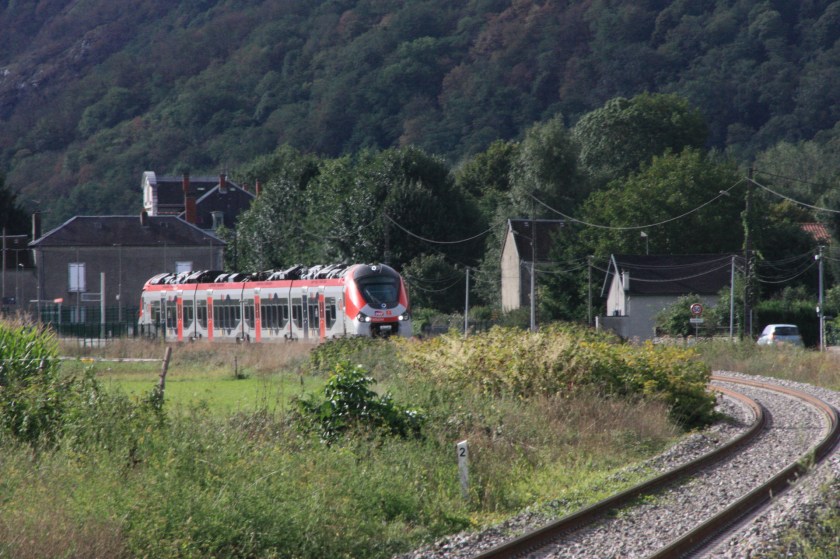
Travelling aboard a regional stopping train from Toulouse on 1 September 2025, I was impressed by the guard reassuring any passengers for the branch to Luchon that a connection would be held (by around 20 minutes) as the preceding semi-fast service from Toulouse that I had planned to catch, and was an advertised connection for Luchon, had been cancelled.
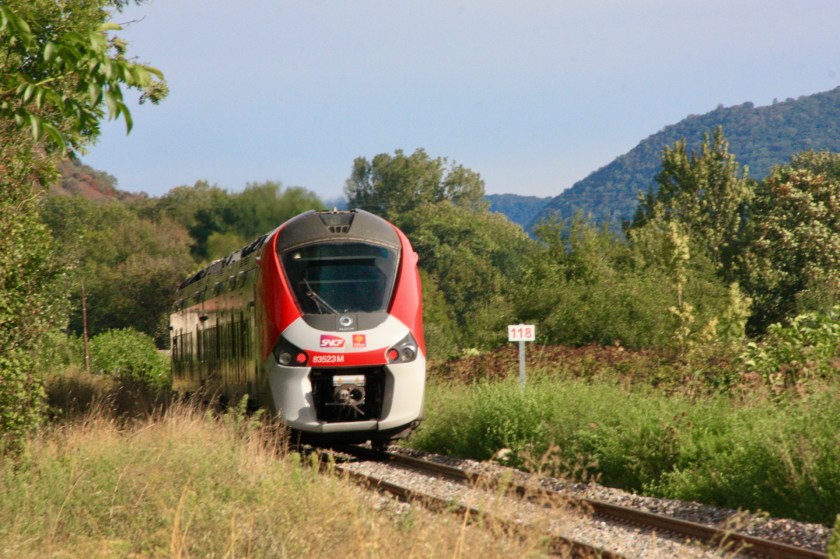
Having found my rather modest hotel at the north end of the Avenue de la Gare in Montréjeau, I decided on an early evening visit to the first of the three intermediate stations along the Luchon branch, Loures-Barbazan, and would then spend the following day making calls at the three other stations.
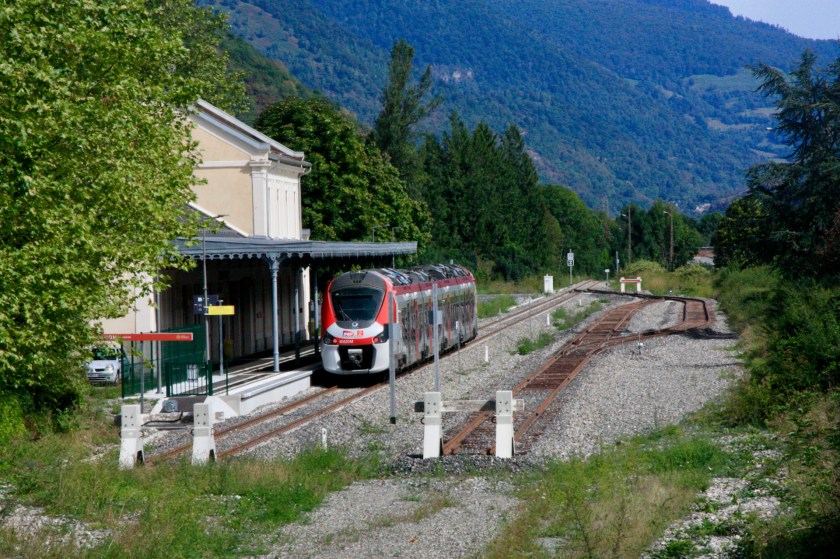
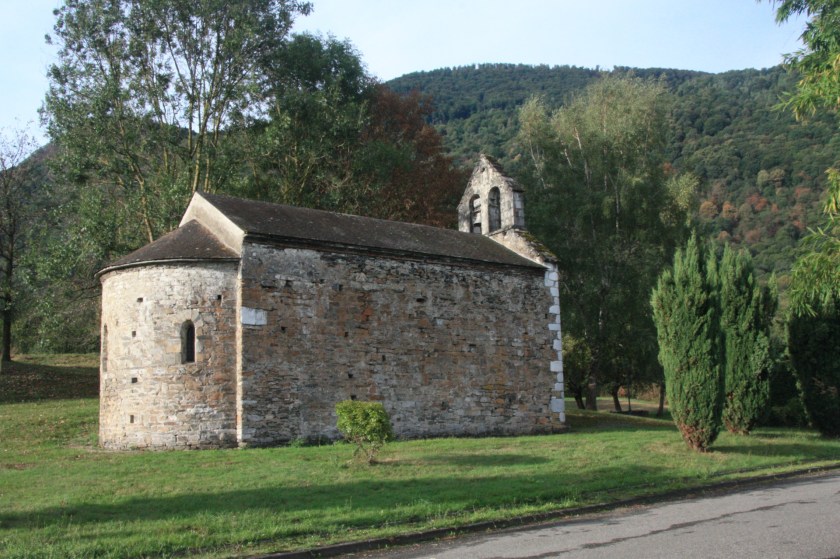
This is a pleasantly rural line that steadily ascends towards the Pyrénéan resort town, with fine mountain views and some attractive small towns along the route. Perhaps most attractive of all is the small village of Saléchan, where the new station is closer to the village than the one it replaced and near the impressive 12th century Chapelle St. Julien.
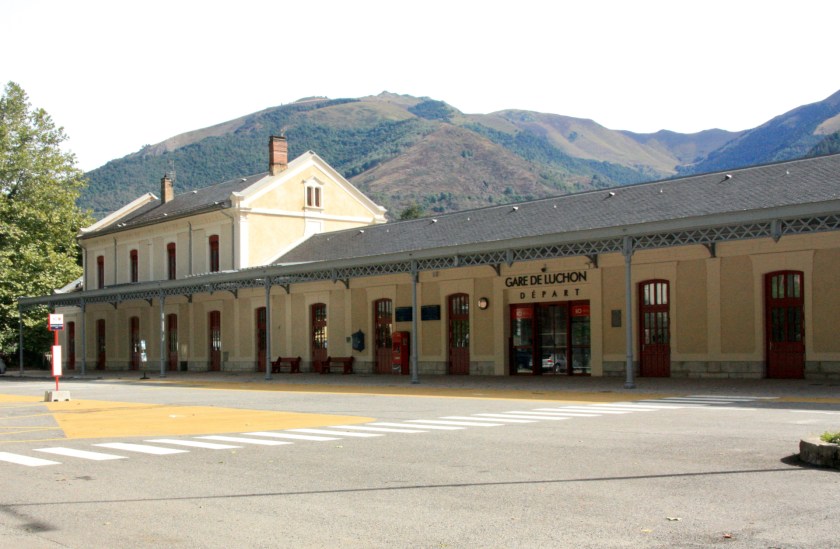
Having had a lengthy morning break at Saléchan on 2 September 2025, I travelled on to the end of the line at Luchon, a busy town even after the summer and before the ski season, with the only one of the four surviving station buildings along the line to remain in railway use.
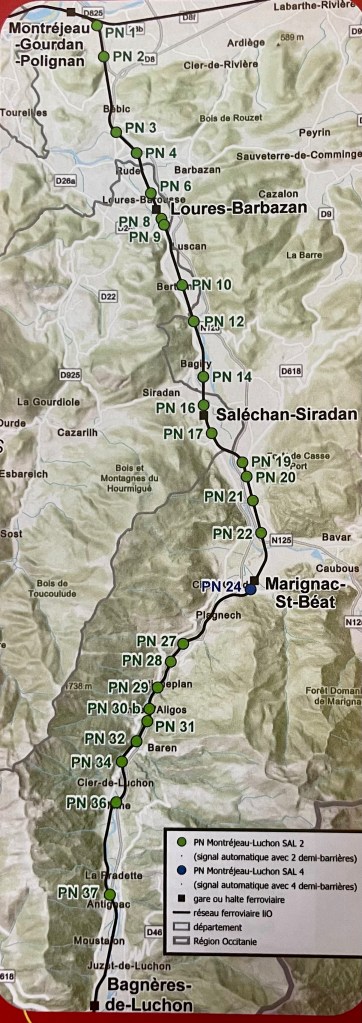
There are no passing loops along the branch, but there is a short loop at the terminus, which could accommodate a second train. As this plan of the route shows there are no less than 37 half-barrier automatic level crossings (PN) along the branch, all of which were renewed as part of its refurbishment.
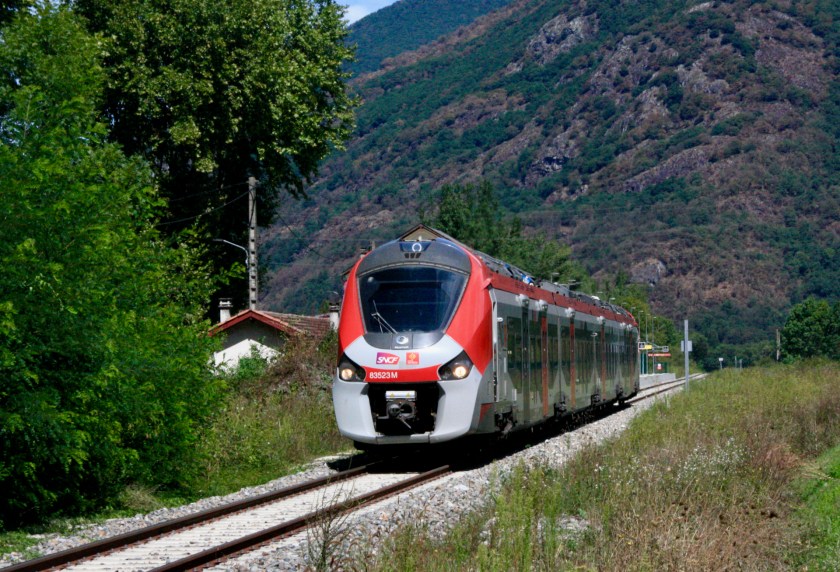
Being the end of the summer season and ahead of the revived route’s first ski season, passenger numbers were predictably modest on the two days I spent travelling, although local reports have painted an encouraging picture of initial patronage and this will no doubt improve further, if an when the competing bus services are discontinued.
In a nod to what has just happened at Felletin, Carole Delga, President of the Occitanie region, has said that 4,000km of French rural lines are threatened with closure, including 1,000km in Occitanie alone. She has suggested that France’s national government funds the necessary renewal works using revenue from motorways (estimated at €2bn), taxes on lorries in transit (estimated to be €1bn) and emissions quota credits (€2bn).

 RailwayWorld.net
You must be logged in to post a comment.