After my summer visit to the wonderful Douro Valley in Portugal it is time to pay a return visit to another delightful outpost of heritage rolling stock in Continental Europe and the one and only narrow gauge railway run by Bulgarian state operator BDZ, the Septemvri-Dobrinishte railway.
For the fourth time in four years I am back at Velingrad “Spa capital of the Balkans” to travel and photograph this remarkable 78-mile (125km) long 760mm (2’ 6”) gauge route that wends its way up from a main line junction on the Sofia-Plovdiv route to the renowned ski resort of Bansko, and terminates at Dobrinishte, a few miles further on.
My visit a year ago (October 2024) had been marred by an acute motive power shortage, with only two locos in operation and replacement buses covering numerous services. But happily that situation had changed during my latest four days at Velingrad (7-10 October 2025), when I was able to see and photograph no less than five of the railway’s seven working locomotives.
This is very much a railway for local people, but is also hugely attractive for tourists wishing to visit Velingrad, Bansko or simply to appreciate the scenic splendour of the Rhodope and Rila mountain ranges.
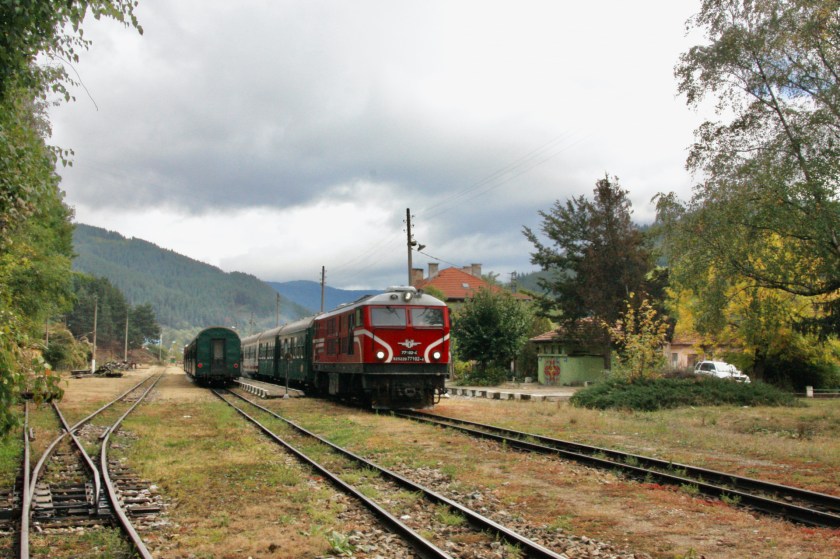
Two outstanding features of the route are its perilous passage high on a narrow stone embankment alongside a road and the Chepinska River before reaching Velingrad, where there is a 15kmph speed limit, then four spirals and around two dozen tunnels that allow the line’s ascent from Velingrad to Avramovo, the highest station in the Balkans at 1267m (4,157ft).
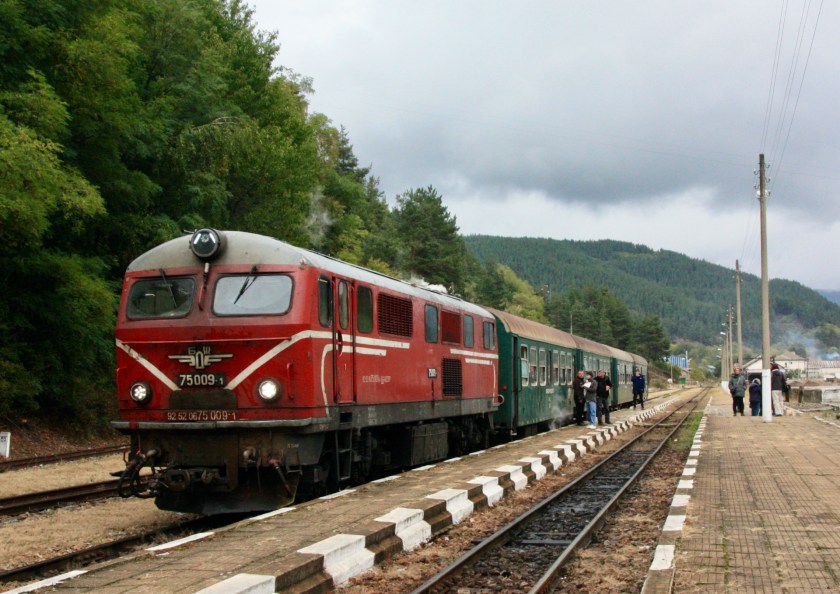
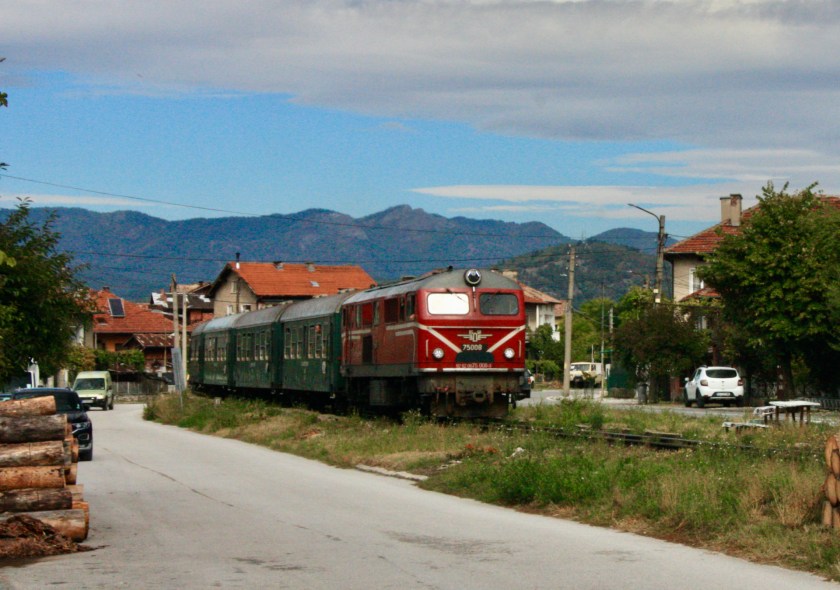
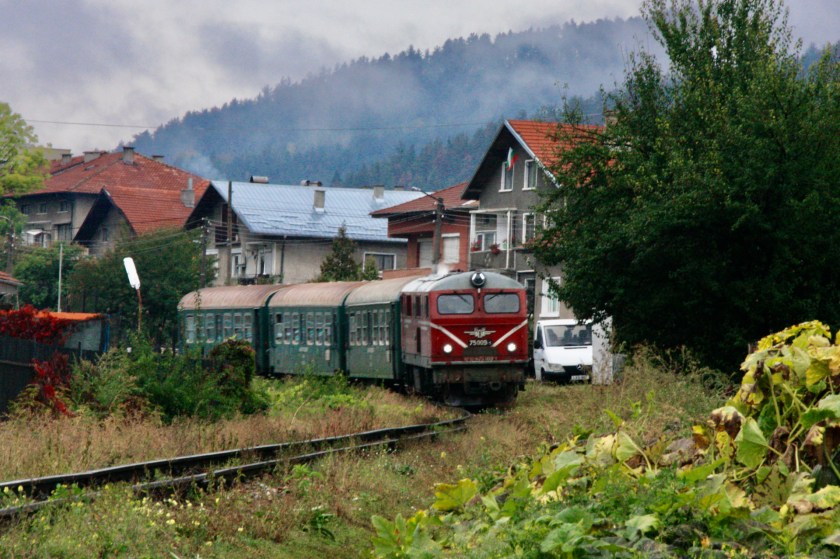
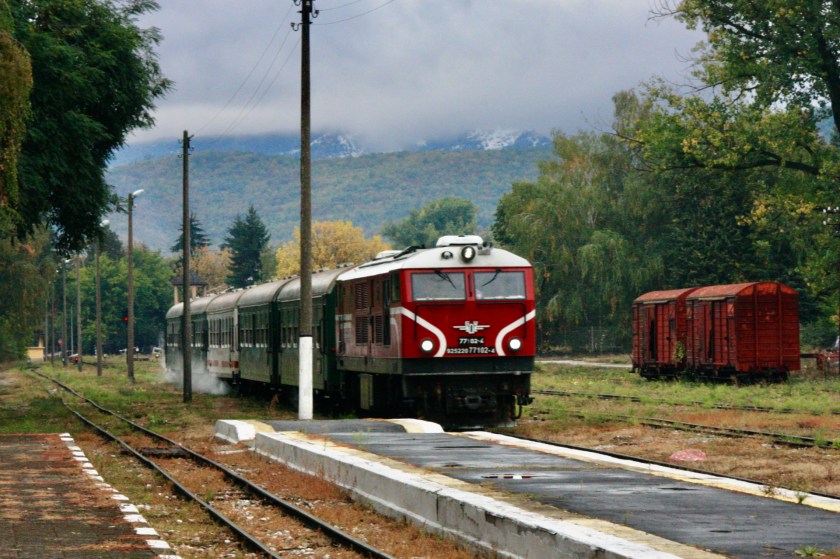
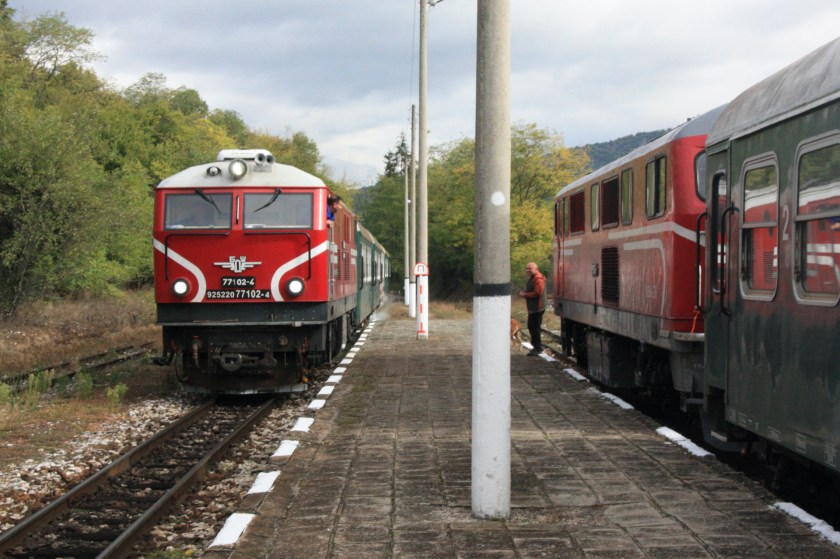
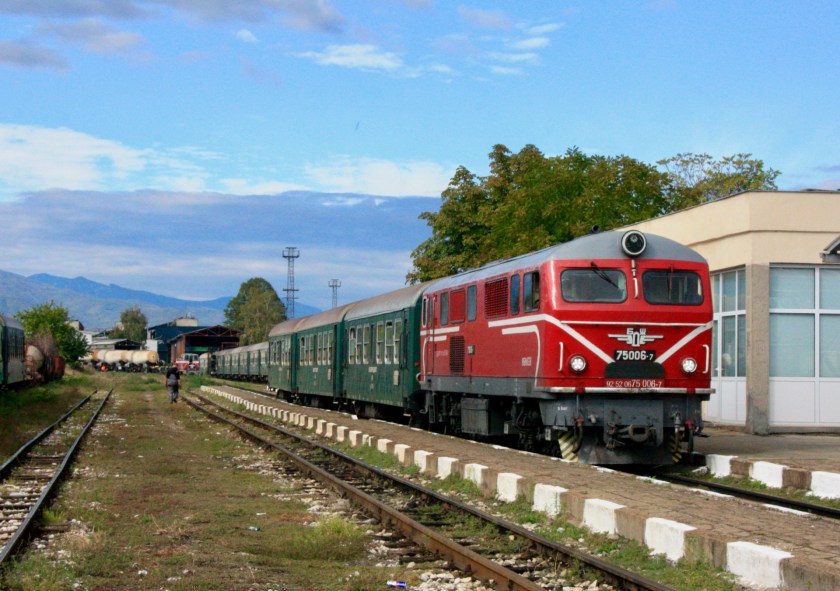
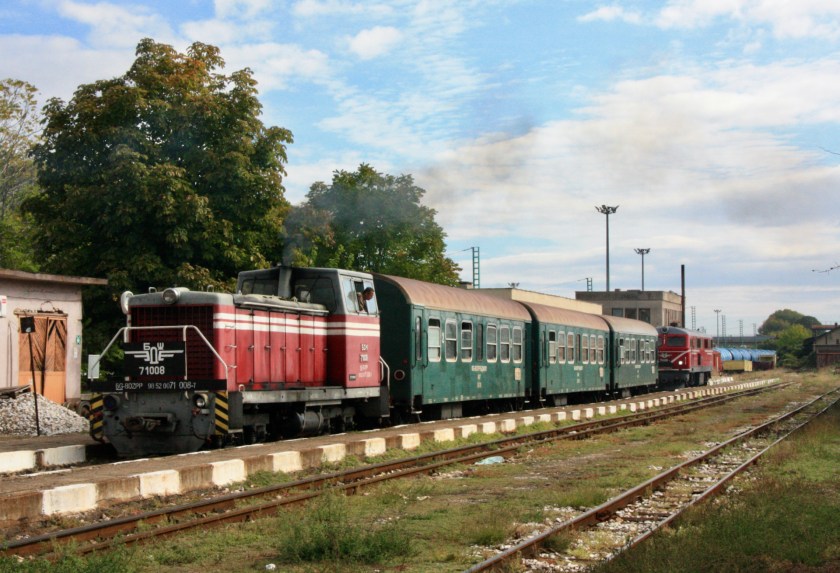
Heritage locos and steam-heated carriages are another attraction of this remarkable line, and over the course of my latest visit I noted three of the 1965/6 Class 75 Henschel diesels in action (75-006/8/9) along with both of the later (1988) Romanian-built Class 77 units (77-102/109), which have been extensively modernised in recent years.
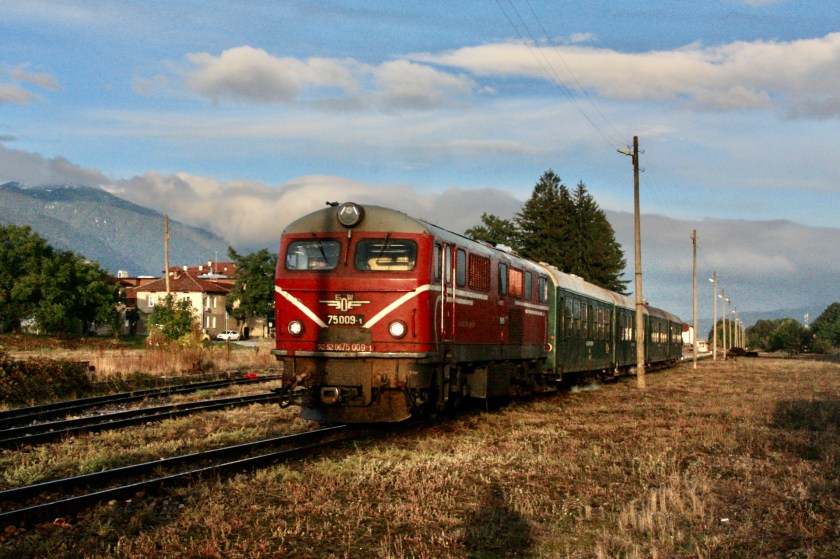
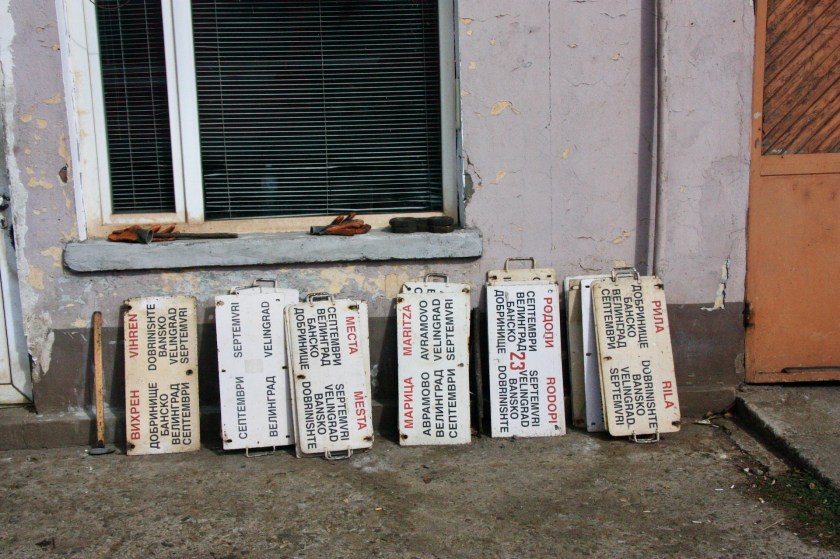
The first of these modernised locos (77-102) powered the crack Rodopi express on all four days of my visit, but there was considerable rotation of motive power on the slower regional services, which comprise three other full length trips, taking almost five hours, along with a short early morning working from a remote station called Tsvetino, via Velingrad to Septemvri and an evening return from Septemvri to Velingrad.
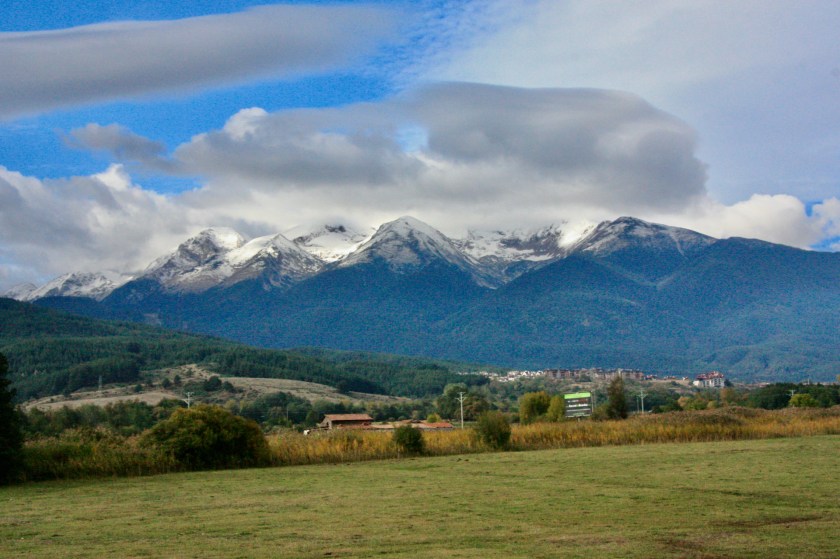
By contrast to these slower regional services, the Rodopi skips numerous stops and covers the route in a time of four hours 26 minutes, departing Septemvri at 08.55 and reaching the end of the line at 13.21, taking slightly longer on its return from Dobrinishte at 14.25 and reaching Septemvri at 19.00. That means it covers the 78-mile route at an average speed of 18mph!
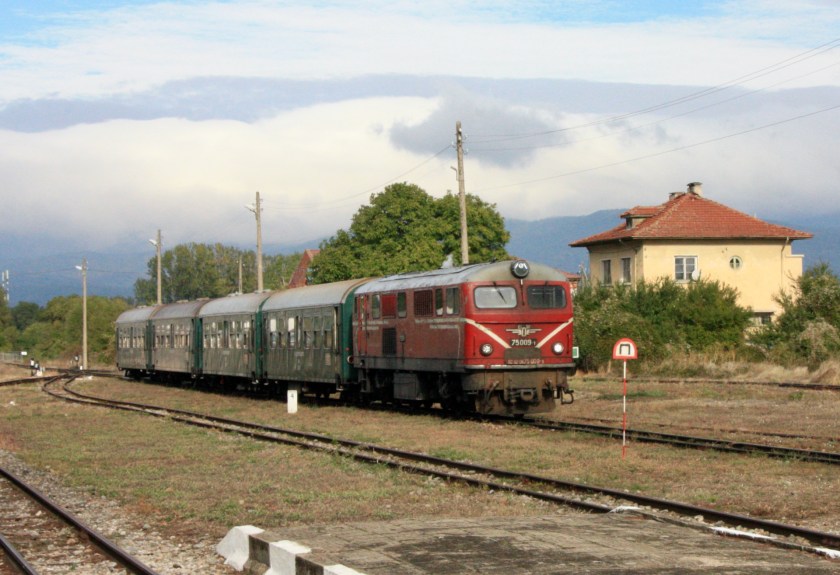
On a previous trip I had wondered where the evening Kleptuza working (19.15 Septemvri-Velingrad) was parked overnight, but that mystery was solved when I joined the nocturnal Vihren service (03.30 from Septemvri) at Velingrad (05.02) and later visited the station after dark to see what became of the loco and single coach that form the Kleptuza.
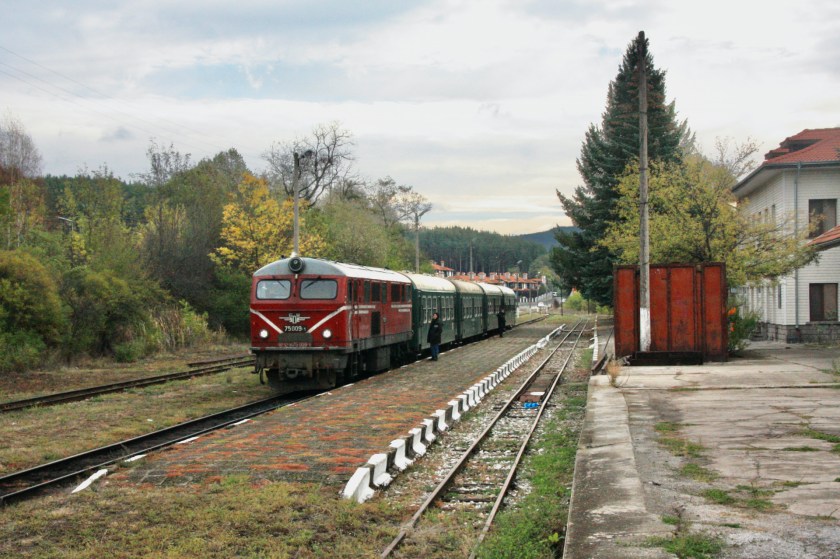
The Vihren service arrives double-headed into Velingrad at 04.57 then stops 30 minutes later at Tsvetino, where the leading loco is detached and runs round the train, attaches to the rear coach, which is detached and will the form the early morning 06.15 Kleptuza service back to Septemvri via Velingrad.
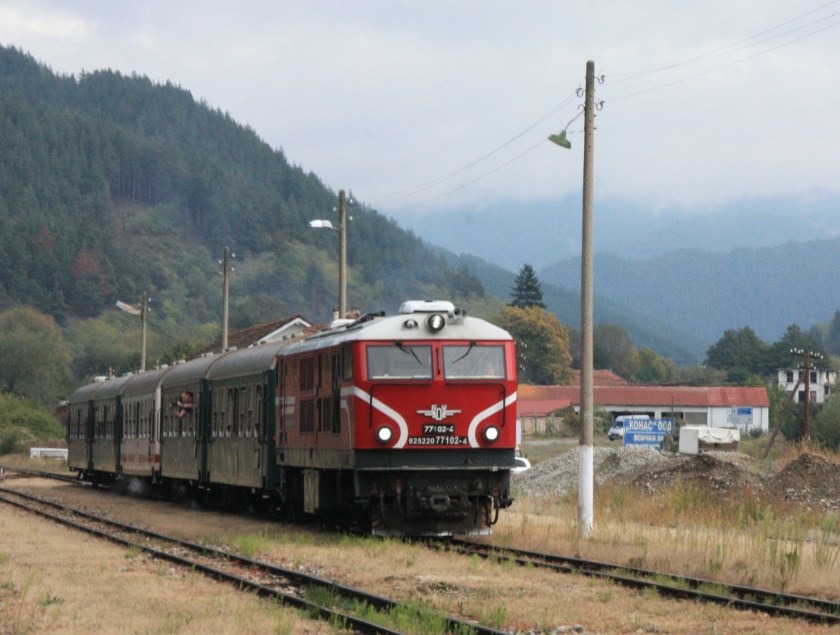
This process is then repeated in reverse at Velingrad late in the evening, when the final northbound service of the day, the Mesta, arrives at 21.22. Then the loco that has worked the one-coach Kleptuza service and arrived at 20.45 attaches its coach to the rear of the four-coach Mesta service then runs round to attach to the front of this train, which is double-headed back to Septemvri.
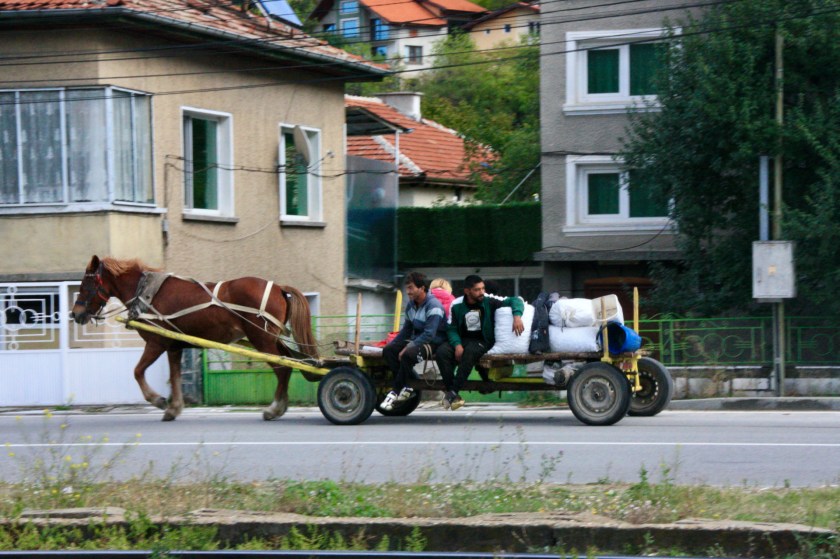
On my first full day at Velingrad (8 October) I decided to visit a place I had not previously visited, a town called Yakoruda, so caught the Rodopi (10.19 ex-Velingrad) which got me there at 11.55 and meant a rather too long four hours to explore the pleasant town before catching the northbound Rodopi and returning to Velingrad at 15.56.
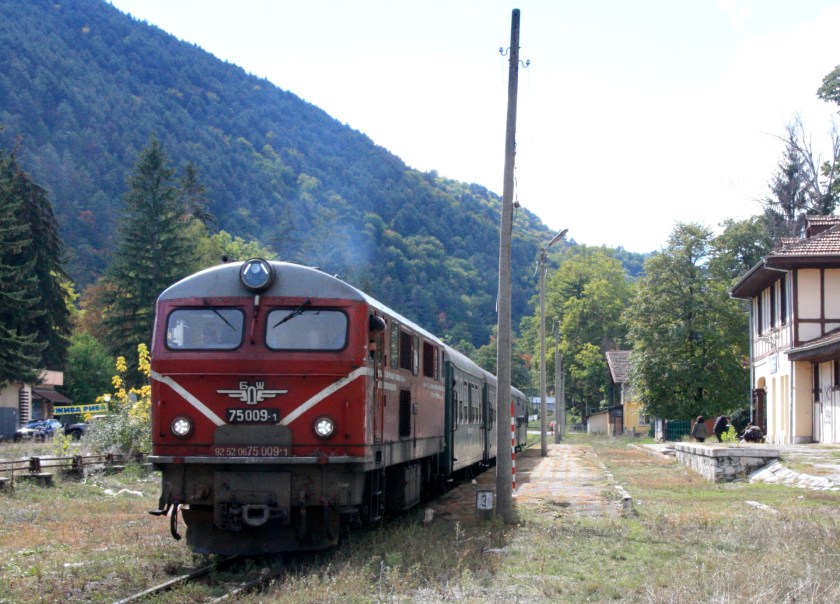
The centre of Yakoruda is an easy ten-minute stroll from the railway station, with a number of bars and eating place around the pedestrianised main square. What was slightly disturbing were A4 sized posters of recently deceased former residents that seemed to be attached to almost every door I walked past and gave a slightly eerie feeling!
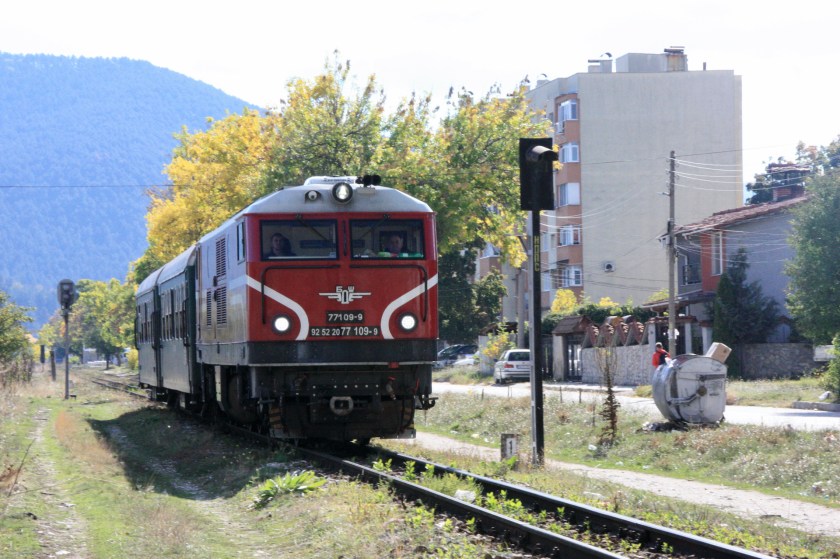
My second day (9 October) and an early start on the Vihren service (05.02 ex-Velingrad) meant I was at Bansko by 08.07 to photograph its departure for the terminus at Dobrinishte and later its arrival after working the short Pirin suburban service from the next station back down the line, Razlog, before joining it to get to the end of the line at Dobrinishte.
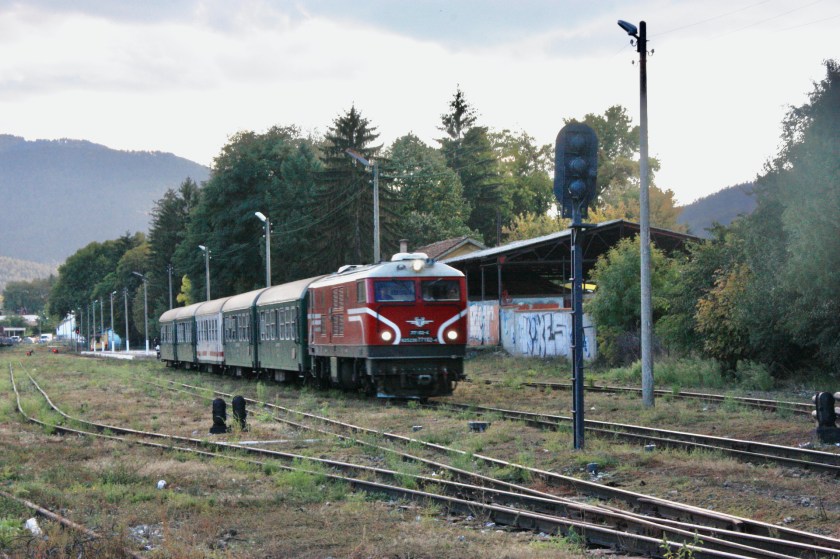
Returning almost immediately on the northbound Vihren (10.25 ex-Dobrinishte) I decided to alight at Velingrad South so that I could follow the railway 1½ miles north to Velingrad, where the line runs un-fenced between two roads, and capture a couple of shots of trains travelling this interesting section of route.
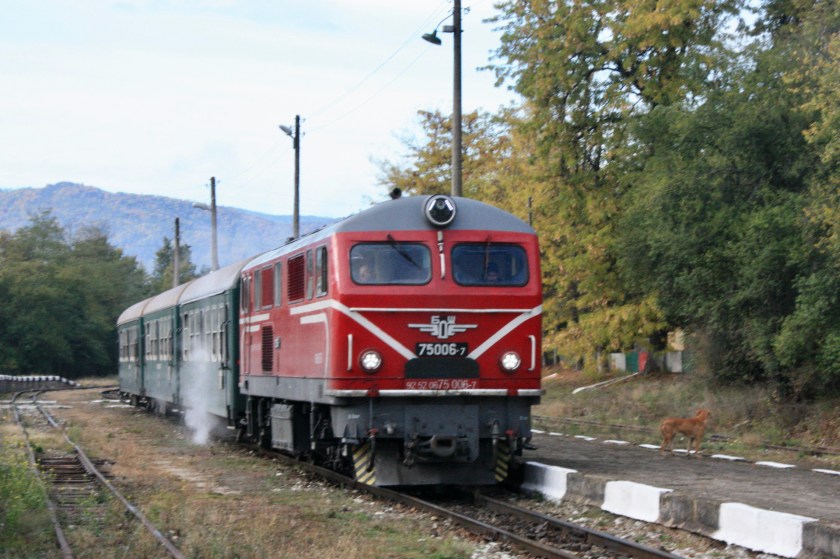
As I discovered last year, the cheapest way to get from Haslemere to Velingrad in a single day is to travel on the final train of the day (23.27) to Waterloo, from where I took a National Express A8 coach at 01.18 that got to Stansted at 02.55, just as security control was opening up for the day and in plenty of time for my Ryanair flight to Sofia, departing at 07.25.
Once at Sofia Airport (12.25) I again took a two-stop trip on Metro Line M4 to a suburban station called Iskarsko Shose, from where Septemvri is a painfully slow two-hour journey, with little sign of any work or progress on a route modernization that has been going on along this stretch of line for many years and means single line working for most of that trip.
Fares on Bulgarian Railways are remarkably cheap by UK standards and again using the state railway company’s website http://www.bdz.bg I paid just Lev 12.90 (£5.90) for my journey from Iskarsko Shose to Velingrad, with the two hours on the main line to Septemvri being in First Class. My three-hour journey from Velingrad to Bansko cost a mere Lev 10.10 return (£4.60) though would have cost slightly more on the Rodopi, where you are required to pay a reservation fee of Lev 1.00 (45p) for each trip!
In Velingrad I once again spent three nights in a delightfully comfortable and well-equipped apartment within a building called Shoshovi Guest House and costing about £32.00 a night, that is less than 100 yards from the station. I can highly recommend it, and for anyone tempted to visit the area, the owners can be contacted via email: shoshovi@abv.bg or by text +359 8822 48484. Do mention my recommendation!
 RailwayWorld.net
You must be logged in to post a comment.