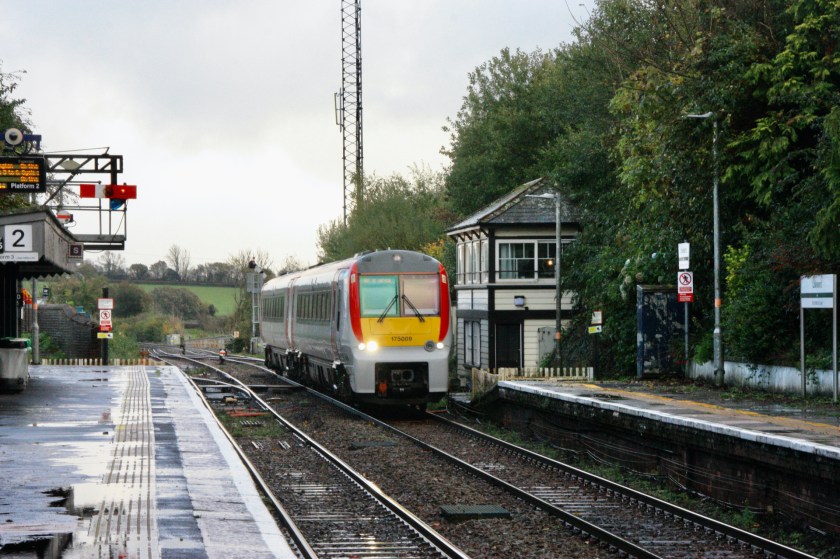
Less than two months before withdrawal of the GWR Castle HST sets in mid-December 2025 and with crew training now beginning on the replacement Class 175 units meant the perfect excuse to pay a return visit to Liskeard on 20 October 2025 to capture the changing face of Cornwall’s main line.
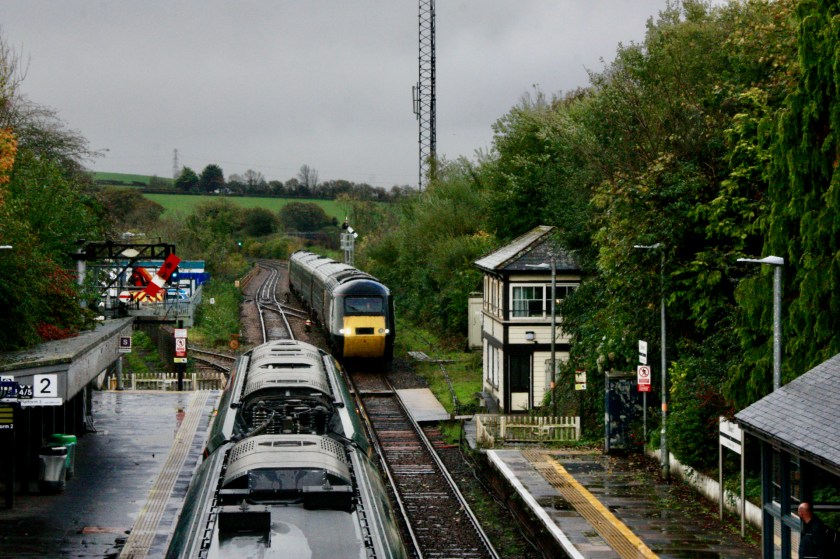
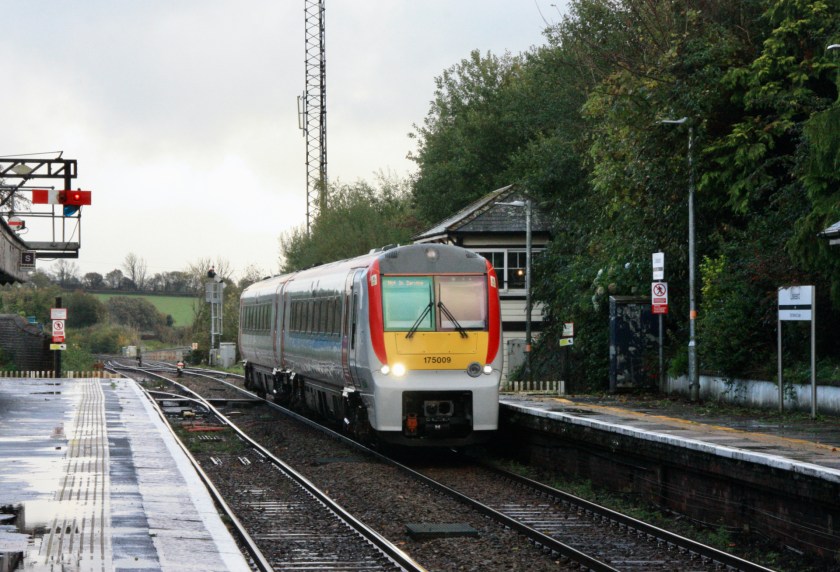
Despite pretty dire weather for much of the day, a few hours on the rather photogenic station meant a chance to photograph 175009 on two of the day’s crew training runs along with the only two Class 255 HST “Castle” sets in action that day, after the third diagram had been curtailed and replaced with a two-car Class 150 unit.
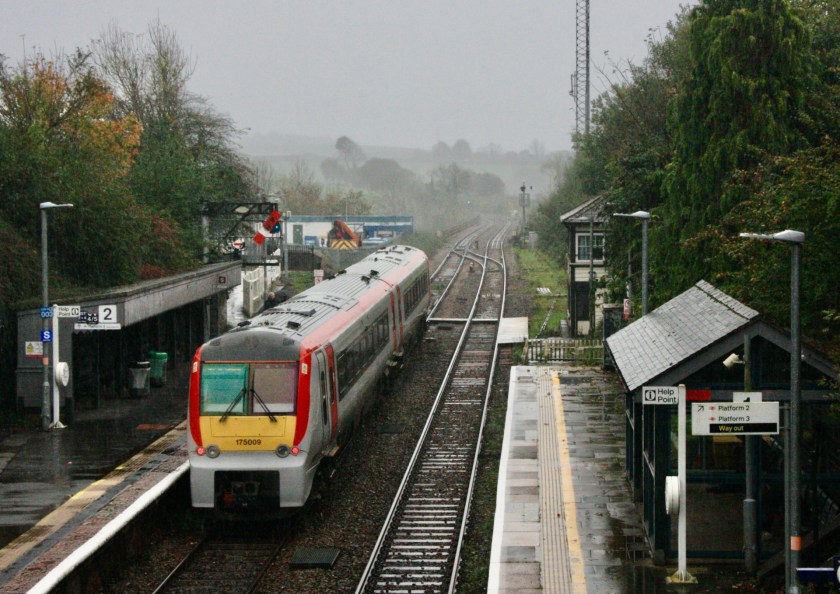
Monday, 20 October looks like being the start of regular Class 175 training runs ahead of the Castle sets being withdrawn on 13 December, with 175007 out on an early morning Plymouth – Penzance round trip (5Z21) and 175009 making a number of trips between Newton Abbot, Plymouth and Penzance, including the workings 5Z12/13 which I saw at Liskeard.
These two units are part of a 27-strong fleet comprising 11 two-car units (175001-11) and 16 three-car sets (175101-116) that have all been acquired by GWR to replace the Castle sets and displace the five-car Class 80x Hitachi units currently being used on some local services between Penzance, Exeter and Cardiff.
Both units in action on 20 October, and those visible outside Laira depot at Plymouth, are in the grey and red colours of their former operator, Transport for Wales, and it remains to be seen whether they will now acquire the dark green GWR colours, given the current uncertainty about when GWR will be nationalised.
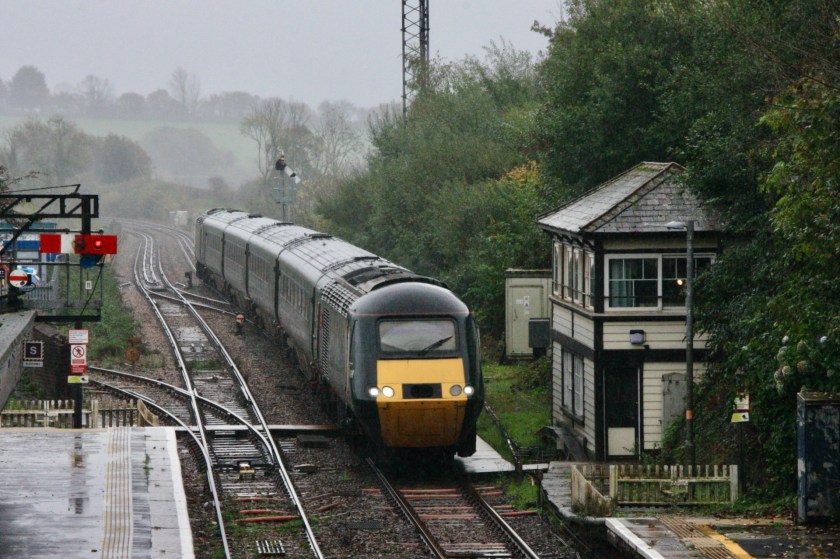
For anyone keen to see the Castle HST sets in action during their final weeks of working life, a 90-minute lunchtime wait at Liskeard should have produced all three of the scheduled weekday diagrams.
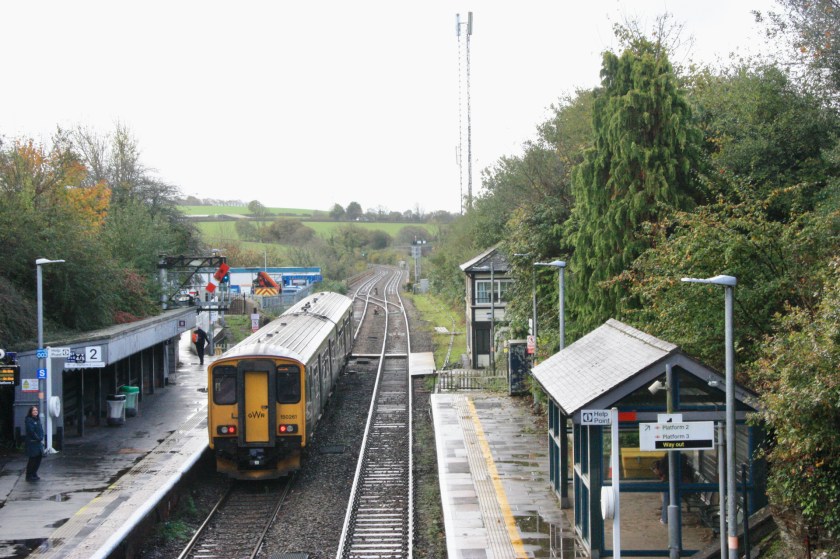
But after seeing 43093/042 (GW09) pass at 13.07 with 2C20 from Exeter St David’s (11.27) to Penzance then 43189/092 (GW07) at 14.13 with 2C26 from Plymouth (13.40) to Penzance, there was disappointment with the set diagrammed to form 2P16 (13.15 Penzance – Plymouth) was stood down and replaced by 150261.
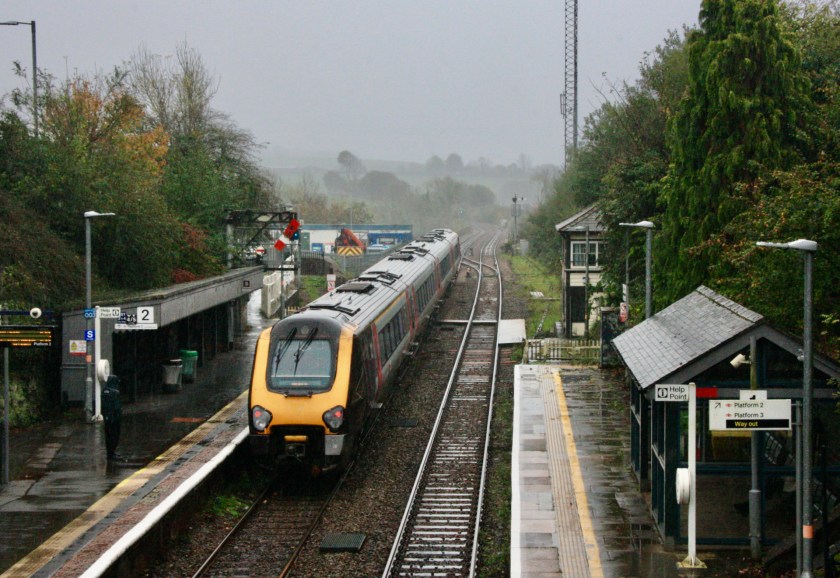
Besides the Class 175 and 255 action, one other notable working to pass Liskeard was CrossCountry (XC) four-car Voyager unit 222007 on its epic 11-hour run (1S53) from Penzance (11.15) to Edinburgh Waverley (22.15), which at 646½ miles is now the longest UK day time train service, with second place held by the 581¾-mile Highland Chieftain service from London King’s Cross to Inverness.
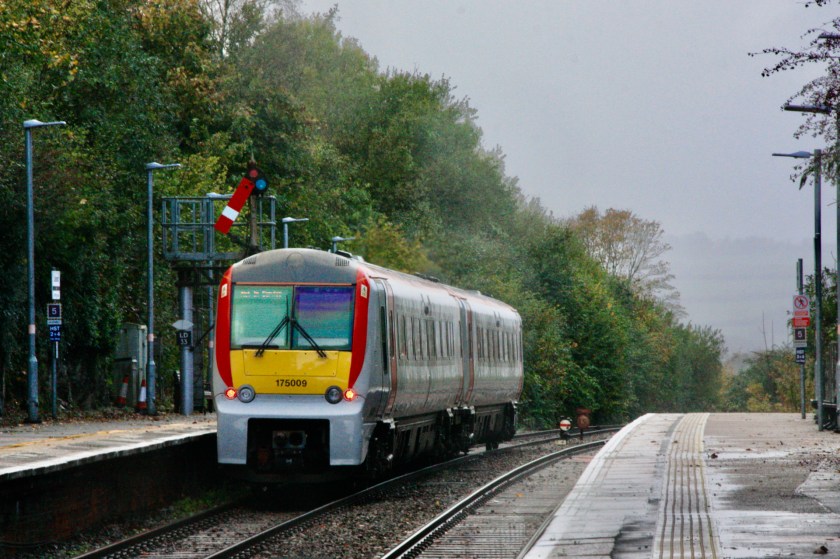
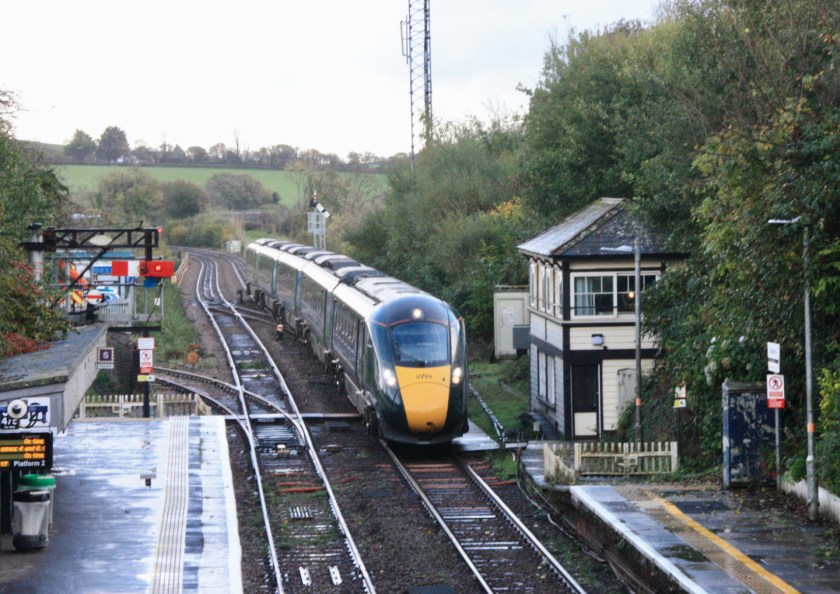
For those yet to pay a visit, Liskeard is one of only two remaining outposts of mechanical signalling on the Cornish main, line with its attractive 1915 signal box controlling a total of six semaphores, four of which can be seen at photographed from the station and its footbridge, including celebrity up home signal LD3 opposite the signal box.
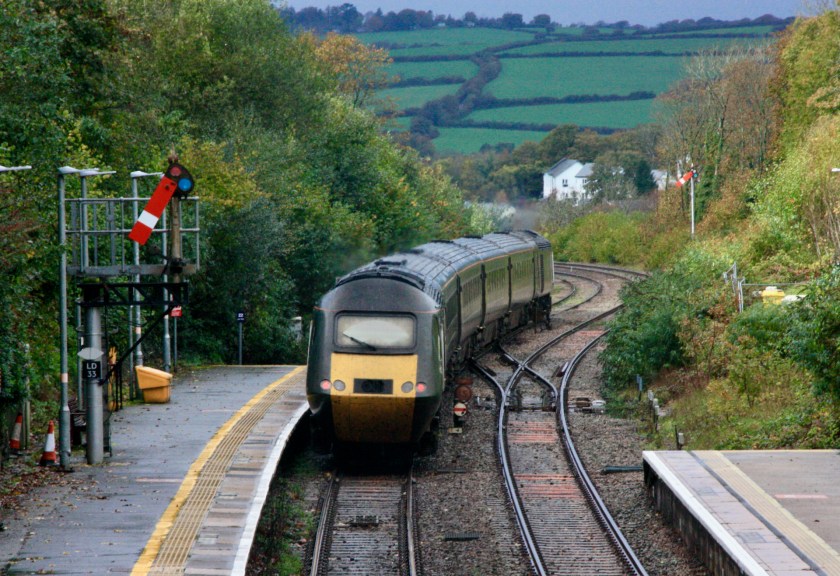
Four of its six semaphores are in the down direction, with outer home LD35 followed by home signal LD34 at the station end of Liskeard Viaduct, starter LD33 at the end of the down platform and section signal LD32 beyond and on the right of the running lines for sighting reasons. Along with LD35 the other semaphore not visible from the station is up outer home LD2.
 RailwayWorld.net
You must be logged in to post a comment.