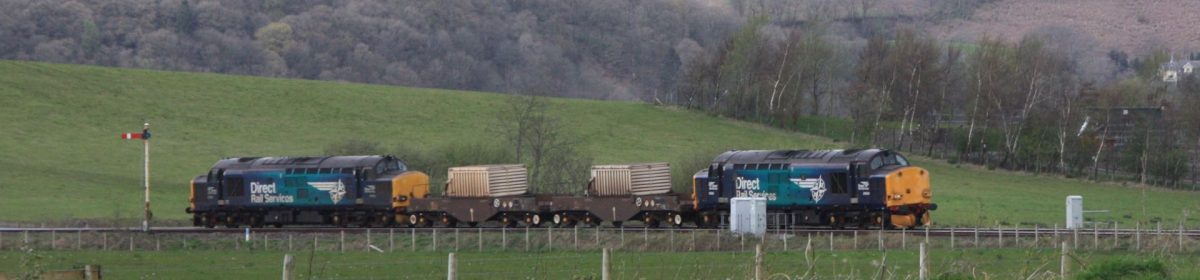
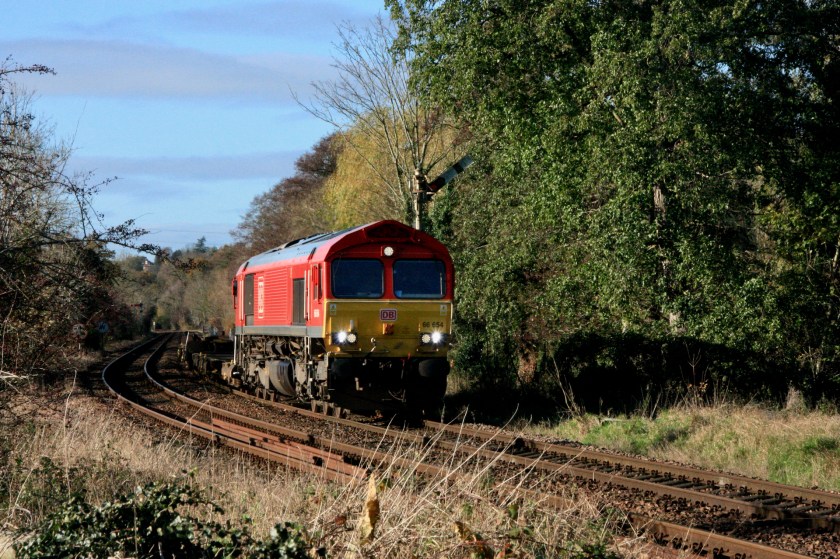
Almost five years after my previous visit (April 2021) I am tempted to make a return visit to Uttoxeter, mid-point of North Staffordshire route between Derby and Stoke-on-Trent, to capture trains passing its fine set of semaphores and in the hope of capturing some non-passenger action.
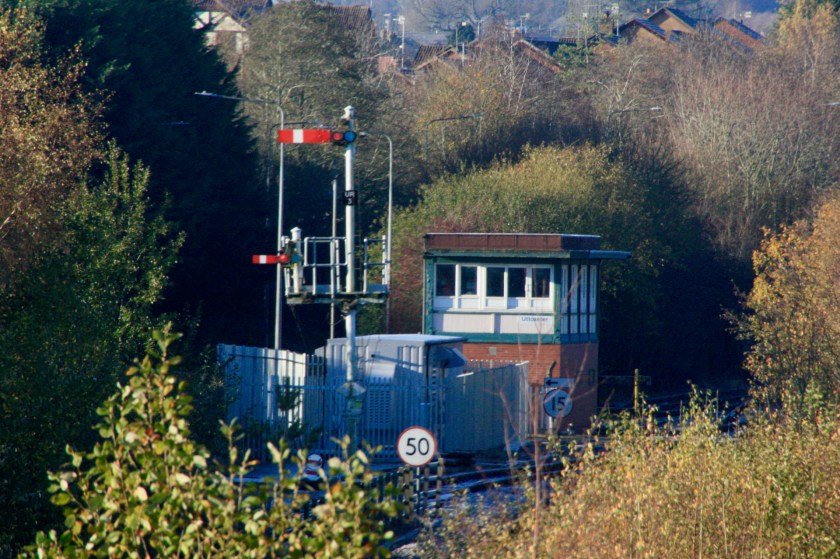
Uttoxeter is probably best known as home of the Midlands Grand National, but earned a place in railway history for being home to England’s very last mechanical signal box, a BR (London Midland Region) Type 15 design, which opened in January 1981 and is equipped with a re-conditioned 40-lever frame, now controlling a total of ten semaphore signals.
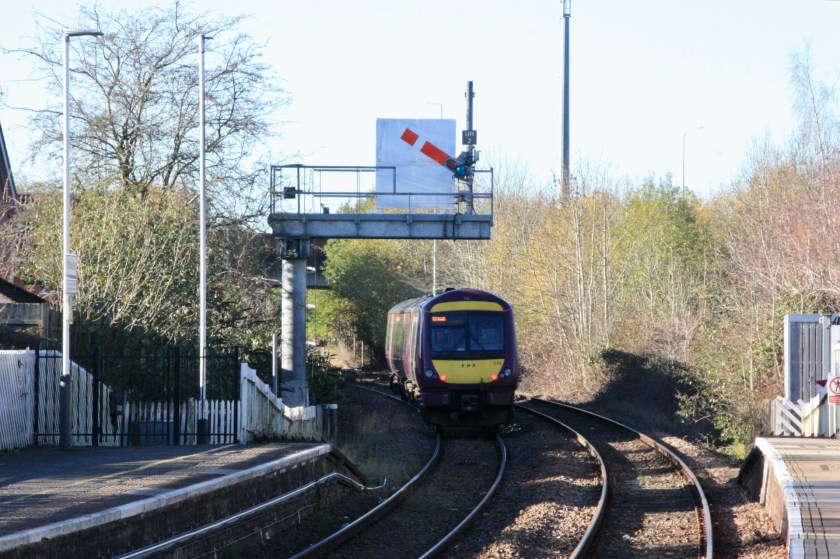
These ten signals are unique on our rail network in representing a complete set of semaphores in both directions, and comprise on the down line UR1 (distant), UR2 (outer home), UR3 (home), UR4 (starter) and UR5 (section), while in the up (eastbound) direction you will find UR40 (distant), UR39 (outer home), UR38 (home), UR37 (starter) and UR36 (section).
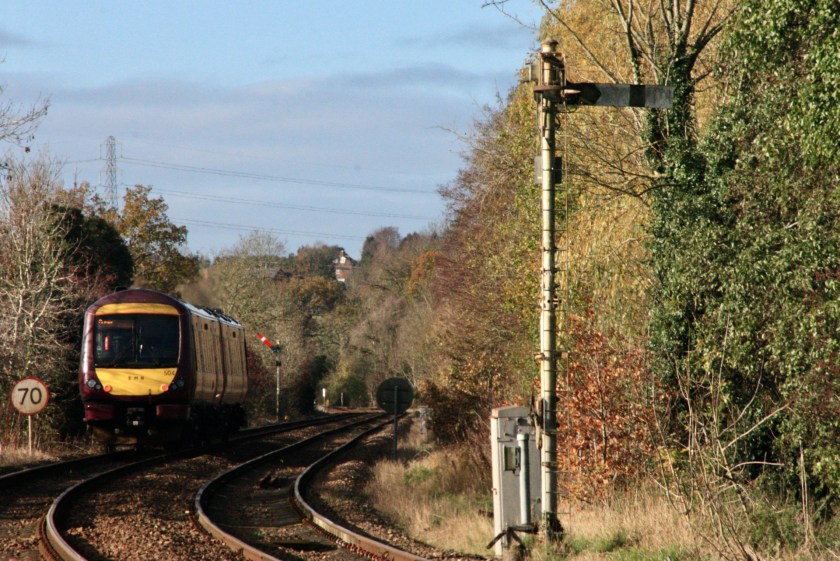
Among the ten semaphores are two working distant signals, UR1 in the down (westbound) direction and UR40 on the up line. On my previous visit I had looked in vain for a spot west of the town from which to photograph UR40, but had found a spot alongside the racecourse, east of the station, from which to capture trains passing UR1.
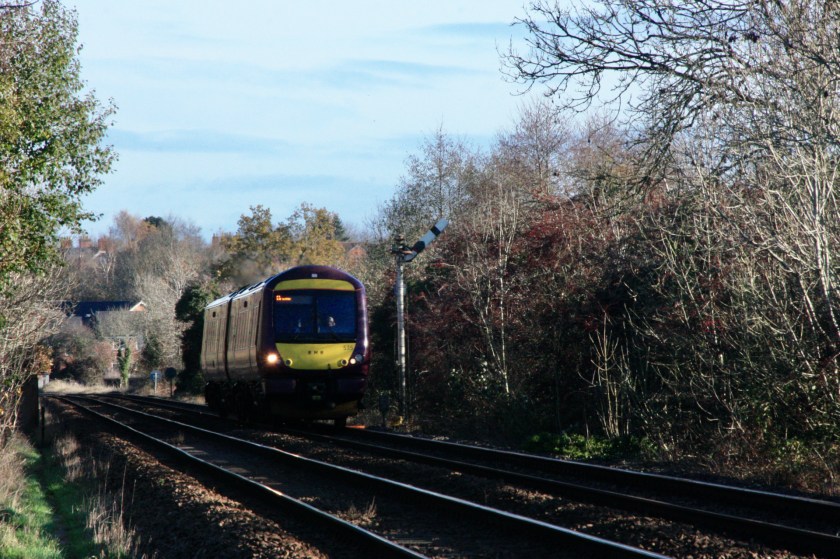
Alas though, on my 20/21 November 2025 visit I began venturing from the railway station towards this good vantage point close to signals UR36 and UR1, but was forced to abandon the quest due to boggy ground and a flooded footpath.
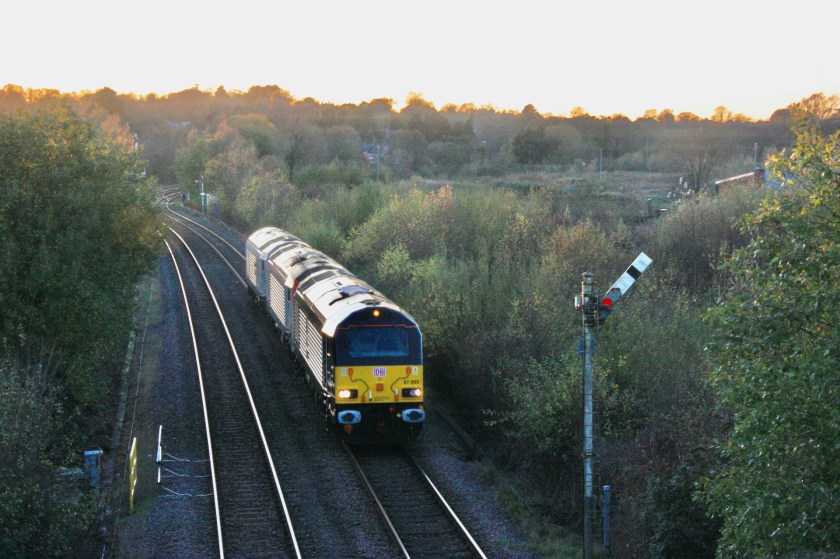
The signal box at Uttoxeter is not easy to photograph at close quarters, standing next to the A518 town by-pass and at the former Pinfold Street level crossing, now open only to pedestrians. But there is a reasonable view of it, and nearby signals, from the ring road bridge immediately west of the station.
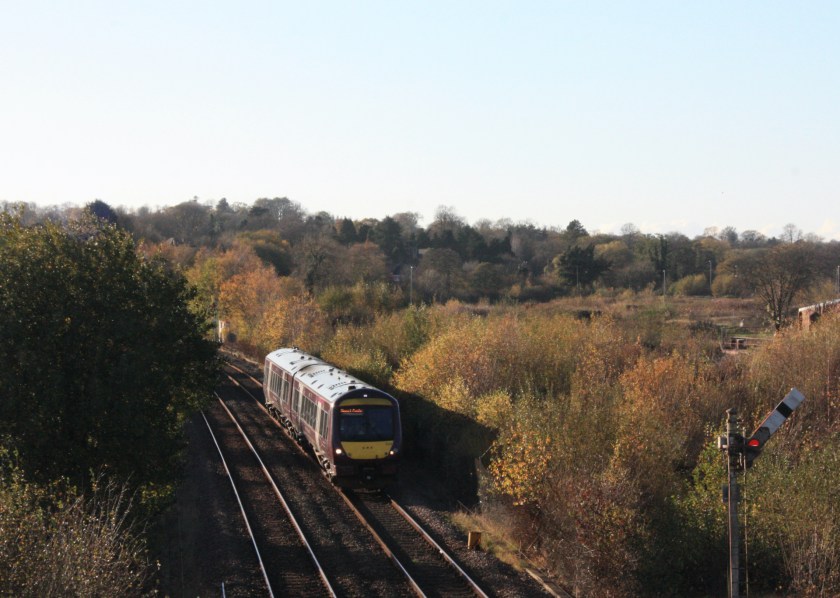
On the western edge of the town, another good vantage point is Hockley Road level crossing, controlled by Uttoxeter Signal Box, which stands out of sight round a left hand bend, but is only 400 yards away. Here there is a wooden fence which it is possible to sit on and photograph services passing signals UR39 (up outer home) and UR5 (down section signal).
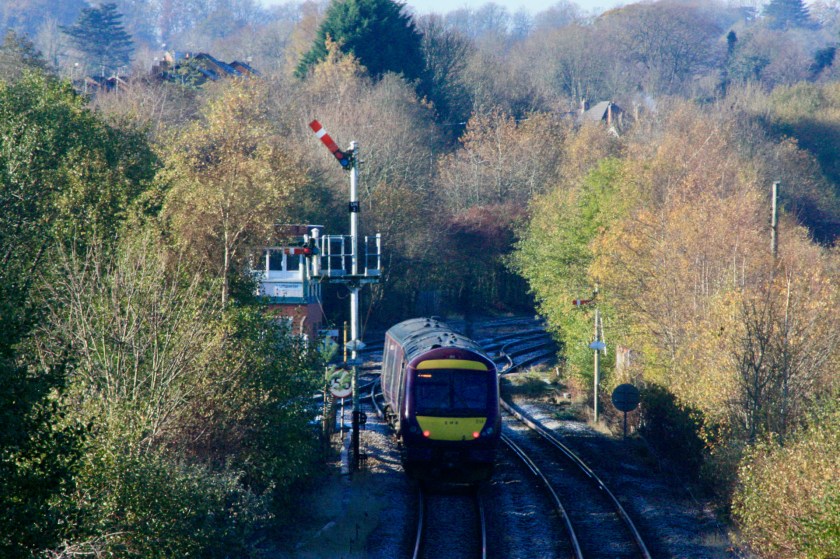
One final vantage point from which to see the Uttoxeter semaphores can be reached by taking a walk along a path that leads west from Hockley Road Level Crossing on the north side of the line and through the very pleasant Bramshall Road Park until you reach a foot crossing of the line, from where there is a view looking back towards the signal box and town of trains passing signal UR5.
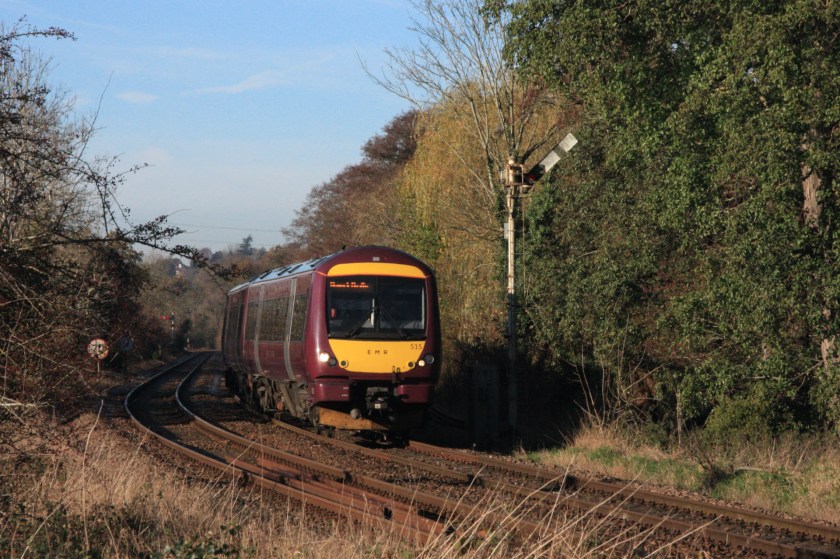
Uttoxeter station is a Spartan affair, equipped with no more that large bus shelters on each platform, standing close to the racecourse at the southern edge of this sleepy market town. For those with an interest in our signalling heritage it makes for a pleasant place to visit and, for those tempted to stay overnight, I can recommend the Premier Inn, just a mile north from the station at the junction of the A518 and A50 trunk roads.
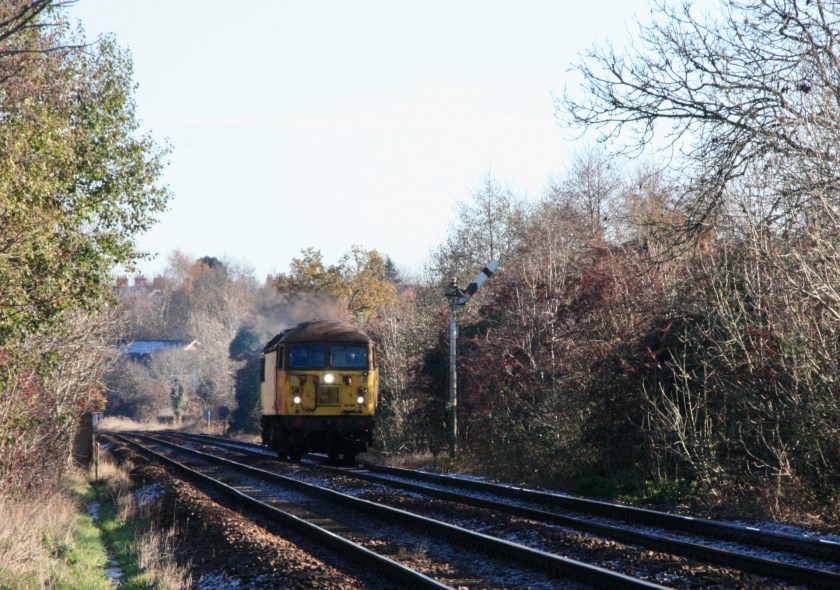
The charmingly rural and East Midlands Railway-operated North Staffordshire Line sees hourly services between Crewe and Newark Castle via Stoke-on-Trent and Derby worked by two-car Class 170 units. Uttoxeter is one of five locations along the route where semaphores survive, the others being Foley Crossing (Longton), Scropton Crossing, Tutbury & Hatton and Egginton Junction.
For a break from the railway action I can recommend the Wetherspoon-owned Old Swan in the town’s charming Market Place, just a five-minute walk from Uttoxeter station, where I enjoyed a couple of delicious pints of a dark Christmas ale from Otter Brewery in Devon, Otter Claus (5.0%), for the delicious price of just £2.10 a pint.
 RailwayWorld.net
You must be logged in to post a comment.