Visiting signal boxes is a rare treat that gives you a real insight into how Victorian technology is still safely controlling many parts of our national rail network, so it was a rather special day (25 November 2025) when I was kindly invited by Network Rail to visit the Isle of Anglesey’s five historic signal and gate boxes.
Over the course of the final 21 miles of the North Wales Main Line, from Llanfairpwll to Holyhead, this quintet of boxes includes three Grade II-Listed structures at Llanfairpwll, Ty Croes and Valley, along with a LNWR box dating from 1882 at remote Gaerwen and a large LMS box at Holyhead, which is youngest of all, and only dates from 1937.
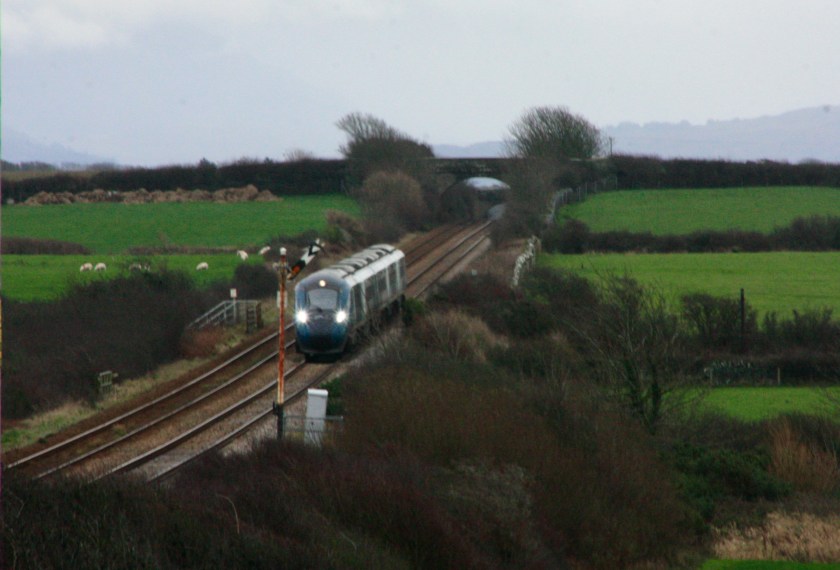
There is semaphore signalling controlled by the westernmost four of these boxes, with the star feature being a down distant signal controlled by the gate box at Ty Croes (TC1) that is one of only two surviving semaphore distant signals in Wales, the other being an up distant signal at Deganwy (DY5) on the branch from Llandudno Junction to Llandudno, which I featured last year.
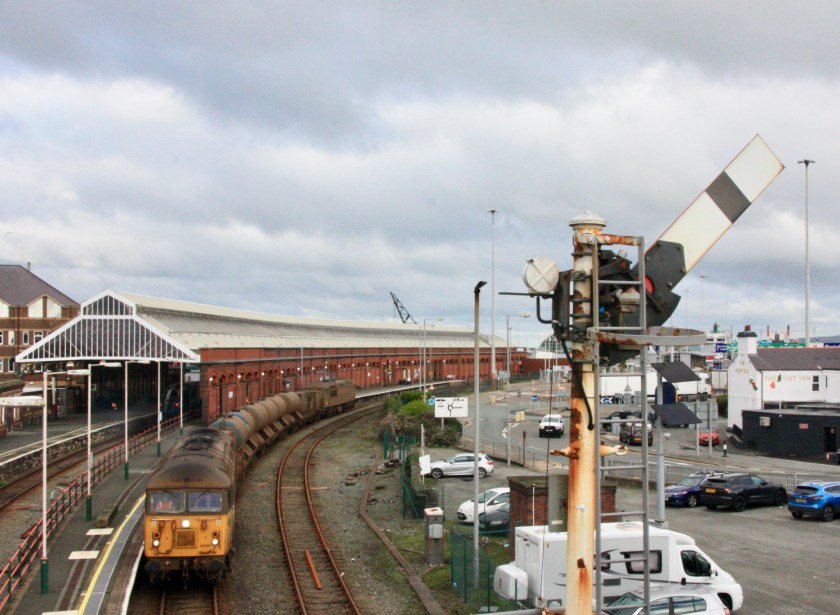
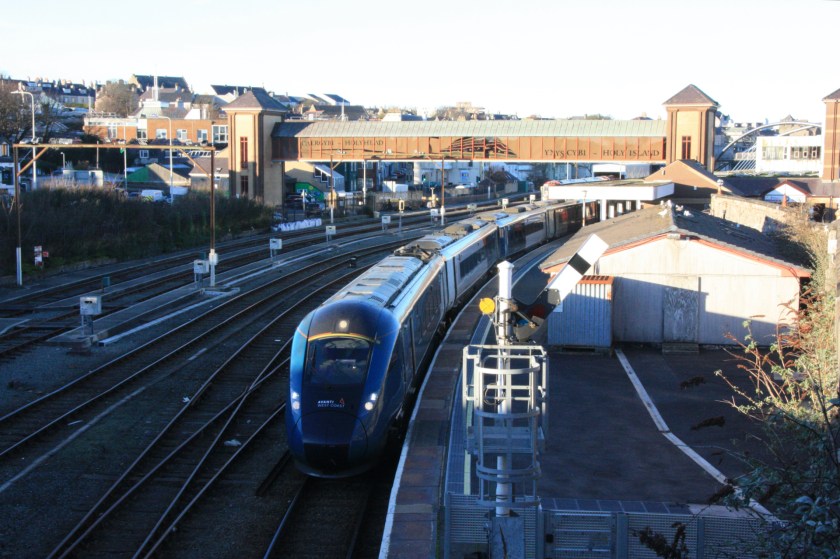
Grandest of this quintet is the large box at Holyhead, which stands just east of the terminus and controls a handful of semaphores from its huge 100-lever frame. These comprise a trio of signals for trains departing the station, with recently-renewed HD35 (platform 1), HD38 (platform 2) and HD23 (platform 3) after which an up train will pass the signal box then section signal HD39.
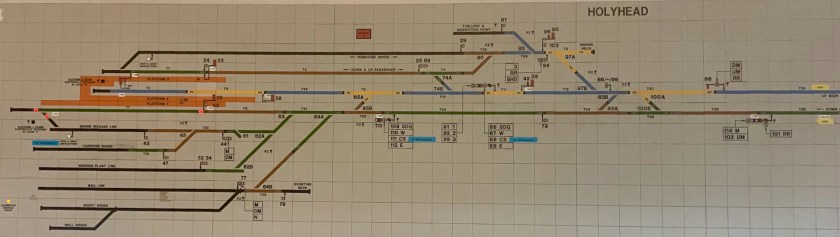
In addition to these there is a down shunting arm (HD86) for trains entering a stabling yard behind the signal box, another pair of arms (HD95/6) for those exiting the sidings and, perhaps most interesting of all, a short shunting arm on platform 3 of the station that is mounted below a real rarity, a fixed semaphore stop signal (the only other one I am aware of is at Carnforth).
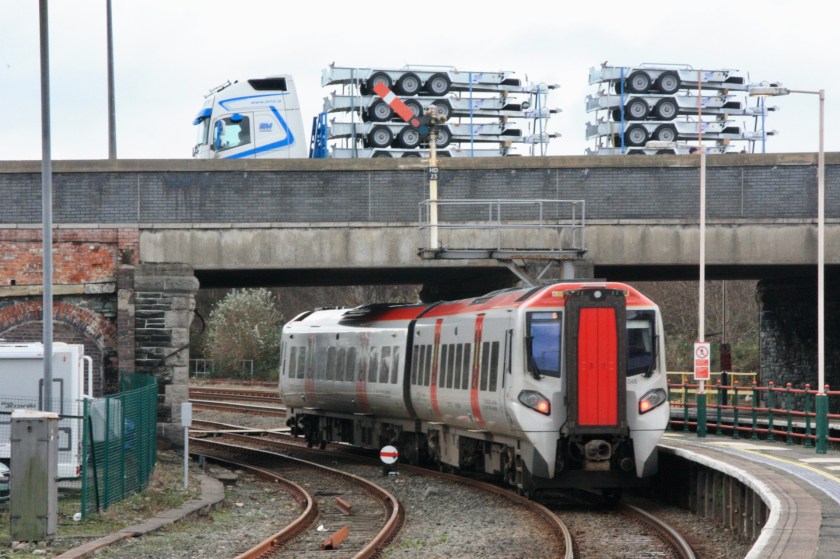
Despite the limited number of mechanical signals, it is remarkable to see that no less than 59 of the Holyhead levers remain in use, and include shunting arms beneath each of the four main semaphore signals, as well as points and an array of shunting discs around the station area.
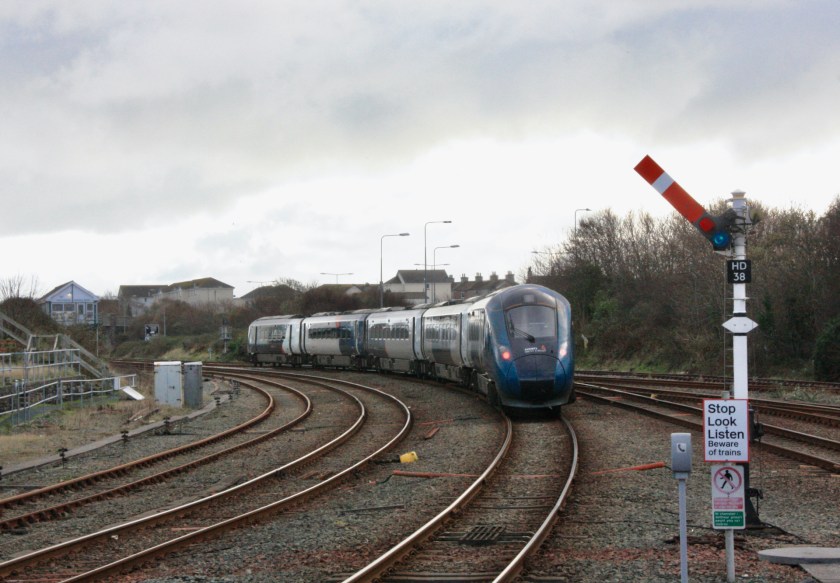
As I wrote last year, photographing trains passing the Holyhead semaphores is easily done from the platform ends, as well as from the busy road-bridge close to the station approach and from a footbridge some distance away and south of the depot, where it is vital to bring a folding stool to see over its high parapet.
In marked contrast to the grandeur of Holyhead is the attractive and diminutive box at nearby Valley, a Grade II-Listed two-storey London & North Western Railway timber structure dating from 1904. It was extensively renovated in 2021 and houses a 25-lever frame, with ten working levers and controlling just a pair of semaphore signals (VY24 and VY23), both in the up direction.
Up inner home signal VY23 stands immediately in front of the signal box at the eastern end of up platform 1, with up outer home VY24 not visible from the box or station platforms, but easily photographed from a road over-bridge on Spencer Road that is a short walk north-west of the station and signal box.
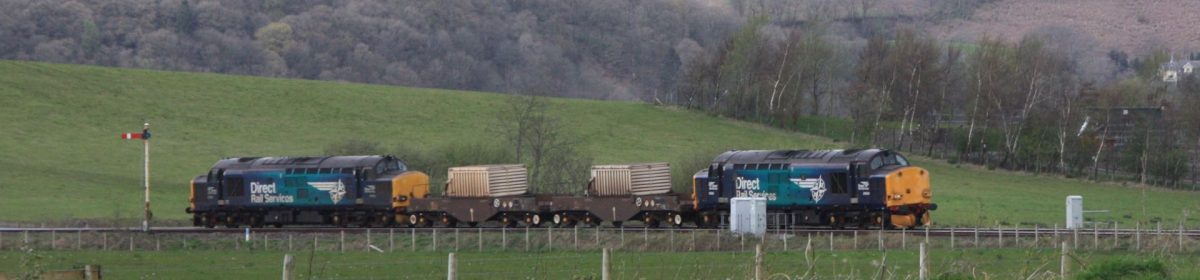
Looking at the box diagram for Valley you will see that it controls access to a triangle east of the station (described as “DRS freight siding”) that was built for the shipment of nuclear flasks from the former Wylfa power station, a site now earmarked for two new smaller reactors, with the triangle seeing use by any steam loco that needs turning after working a special train to Holyhead.
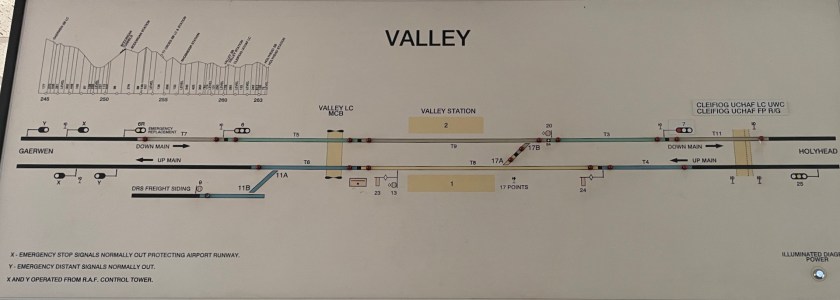
Another fascinating feature on the left hand side of the diagram is a pair of unlit colour light signals in each direction that are designated x (stop) and y (distant) and are controlled not by the box, but by the control tower at nearby RAF Valley and designed for activation in the event of an aircraft coming down onto the railway lines – something which has never happened.
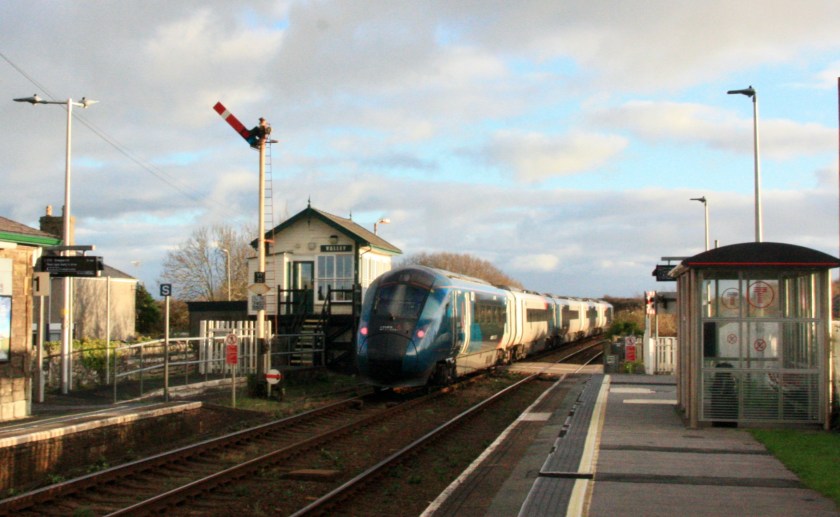
Valley is one of four request stops on Anglesey, along with Rhosneigr, Ty Croes and Bodorgan. The station closed in 1966, but was re-opened following successful local campaigning in 1982 and, like Ty Croes, can boast both a listed signal box and a listed station building. Sadly, though, the station buildings at both Valley and Ty Croes are boarded up and each is in what looks like a pretty sorry state of repair.
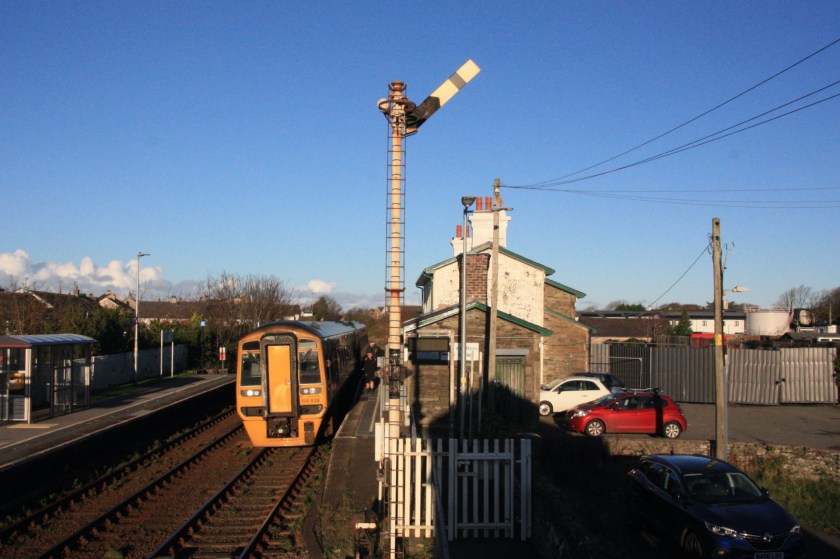
Heading six miles south-east from Valley brings you to the next outpost of mechanical signalling on Anglesey and the historic gate box at Ty Croes, which dates from 1872, yet remarkably is not the oldest surviving box on the island, a distinction which goes to the other gate box at Llanfairpwll, which was reputedly built a year earlier, in 1871.
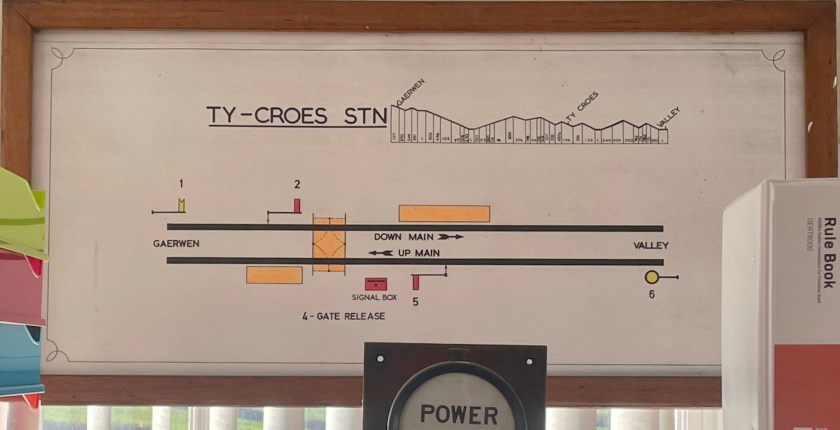
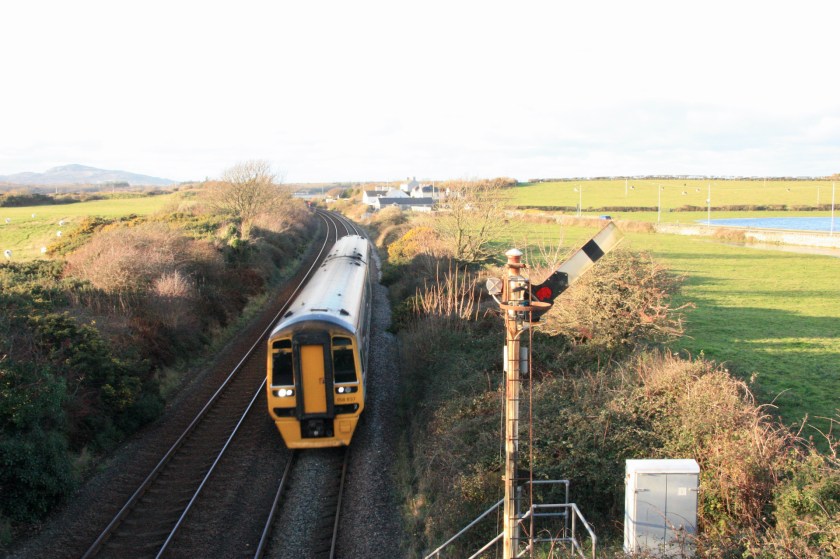
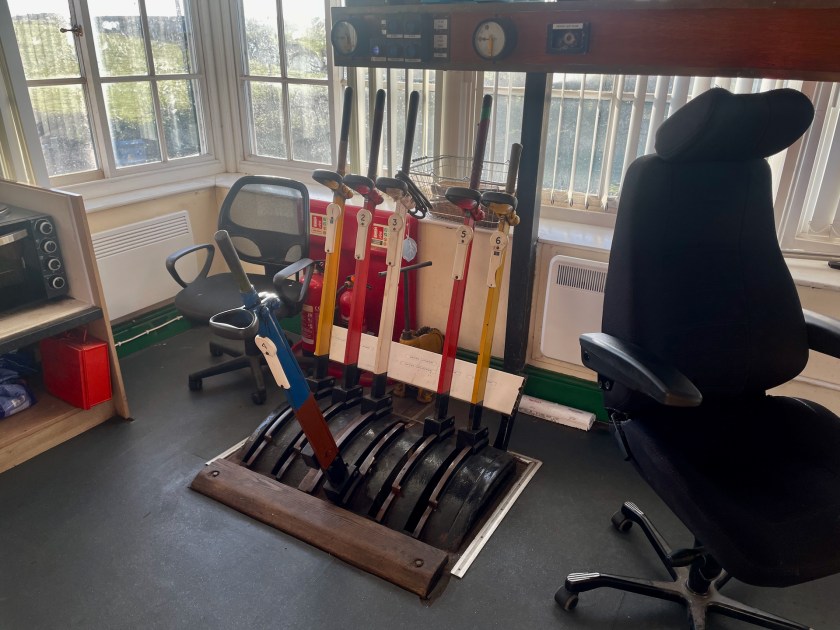
From its diminutive six-lever frame – reduced in size when the box was downgraded – Ty Croes controls a trio of semaphore signals, comprising up home TC5, down home TC2 and, most remarkable of all, its wire-worked down distant signal TC1, which stands around a mile from the box and represents a heroic pull for the signaller, officially categorised as a “heavy pull” (50Kg). Two other working levers are a gate lock (4) and a colour light up distant signal (6).
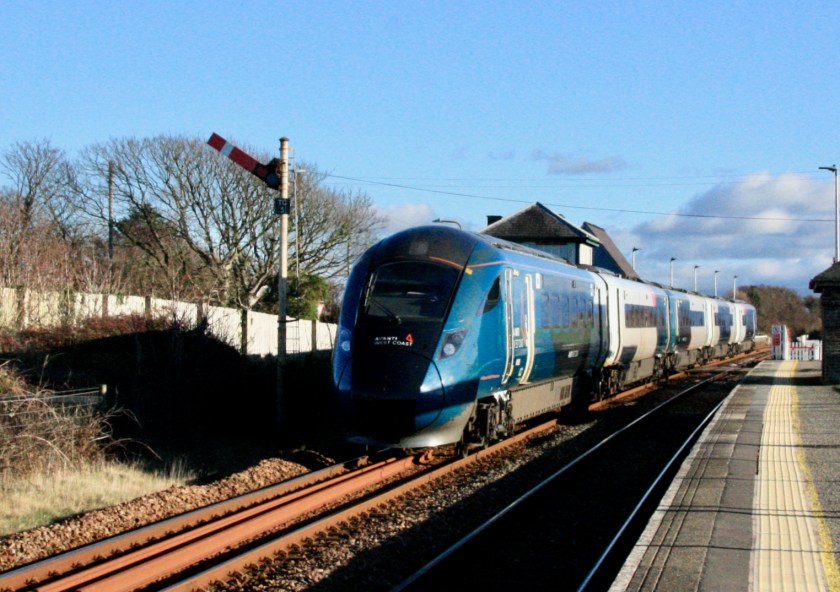
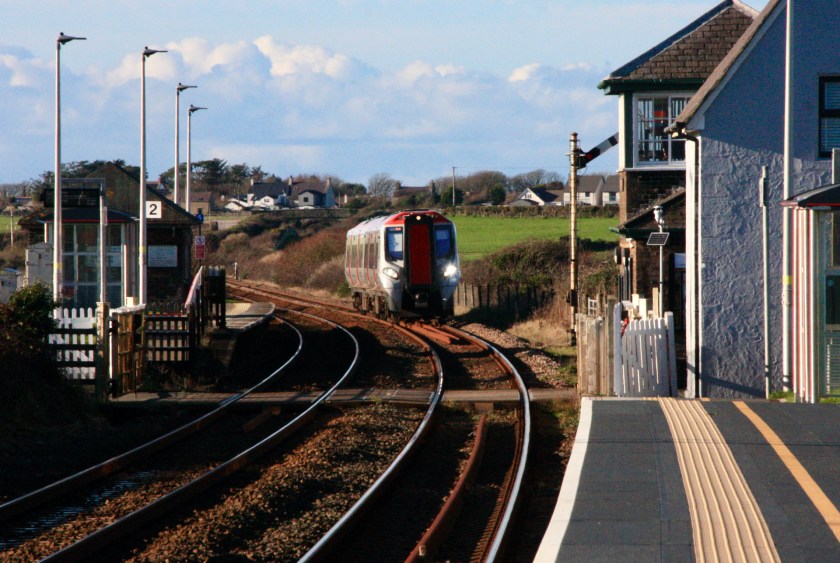
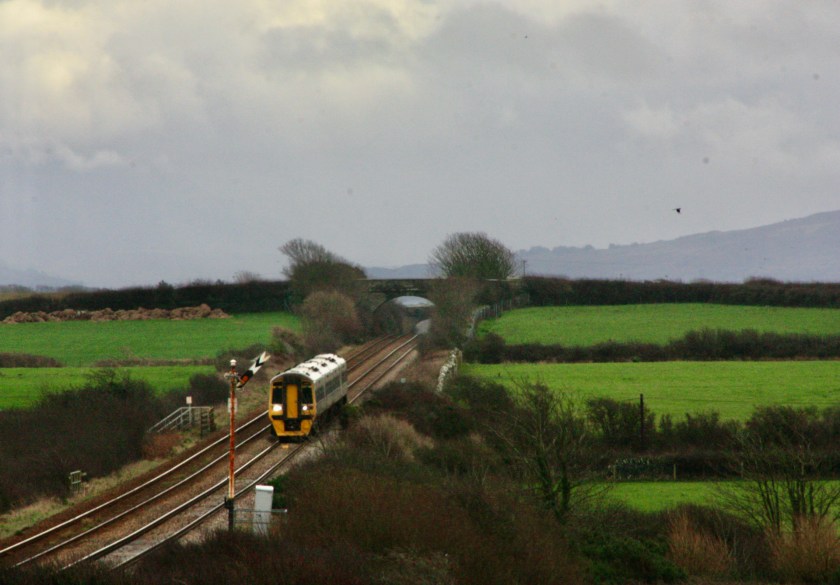
Both home signals are easily photographed from the station’s staggered platforms, but to get a good view of TC1 requires an easy 15 minute walk down a quiet lane to Pen-Henilys over-bridge, from where there is a great view looking east towards what is one of the very few remaining wire-worked distant signals anywhere on the British rail network.
Last of the four Anglesey boxes to control semaphore signalling is remote Gaerwen, one-time junction for a 17½-mile branch line running to Amlwch on the island’s north coast, that closed to passengers in 1964, but remained open to freight traffic for another three decades (until 1993) and is the subject of long-running re-opening efforts.
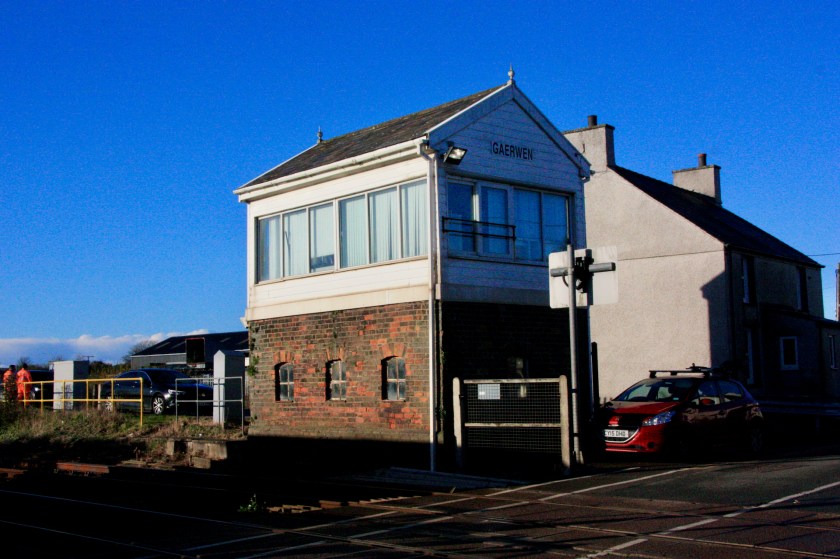
Gaerwen station outlived the Amlwch branch line’s closure by just two years, succumbing like Valley and others on 14 February 1966, yet it remained a block post and is still controlling the adjacent level crossing to this day. One notable feature of this 1882 LNWR box is a post box built into its base and alongside the level crossing.
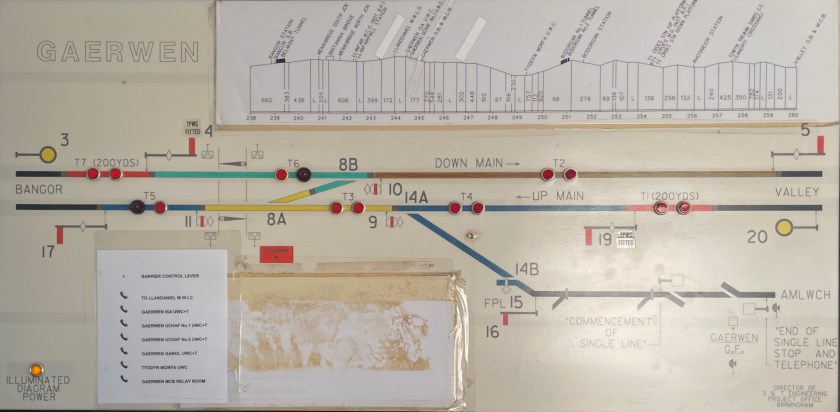
Four semaphores remain under the control of its 20-lever frame, with home signal GN4 and section signal GN5 in the down direction and up signals GN19 (home) and GN17. But look closely in the trees west of the signal box and you will also spot GN16, protecting exit from the long-disconnected Amlwch branch.
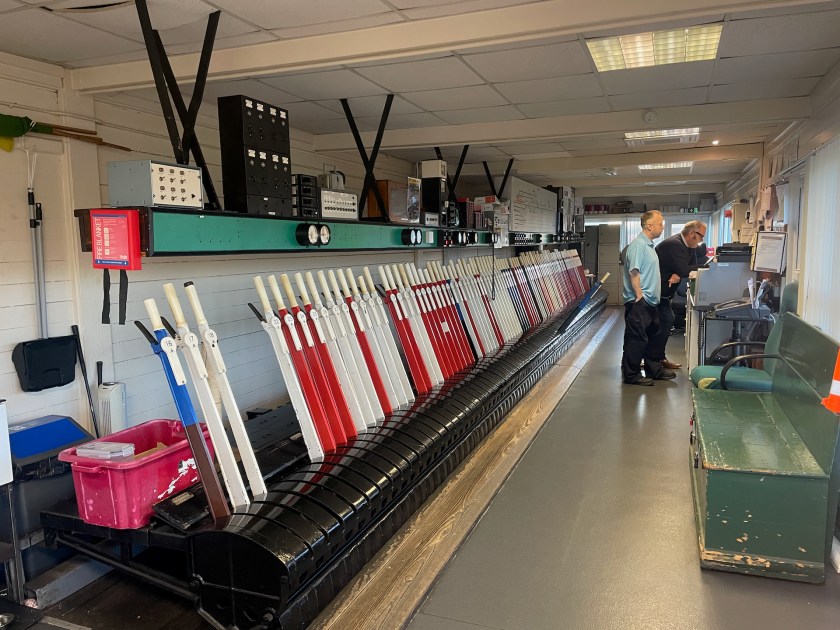
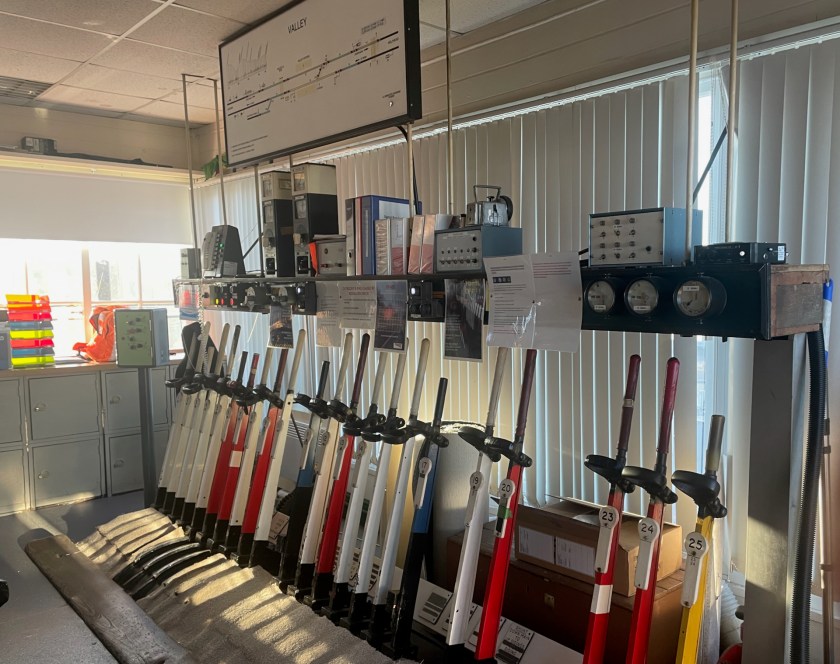
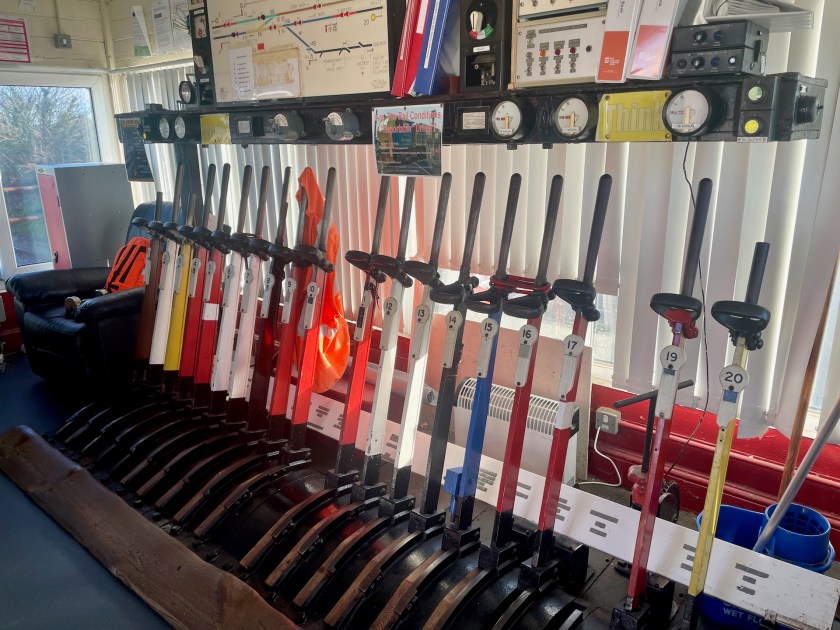
Take a look at the Gaerwen frame (photo below) and you will see a collar across levers 15 and 16 to prevent their being pulled. These are the signal (16) protecting exit from the long-disconnected Amlwch branch and the related catch points (15), both of which remain nominally active more than 30 years after the last train travelled the branch line!
Last of the five signal boxes and gate boxes on Anglesey is the oldest of all, and the only one not to control any semaphore signalling. This is the 1871-vintage gate box and Llanfairpwll, less than three miles east of Gaerwen and close to another re-opened station, whose full name is the longest station name in Britain (58 characters).
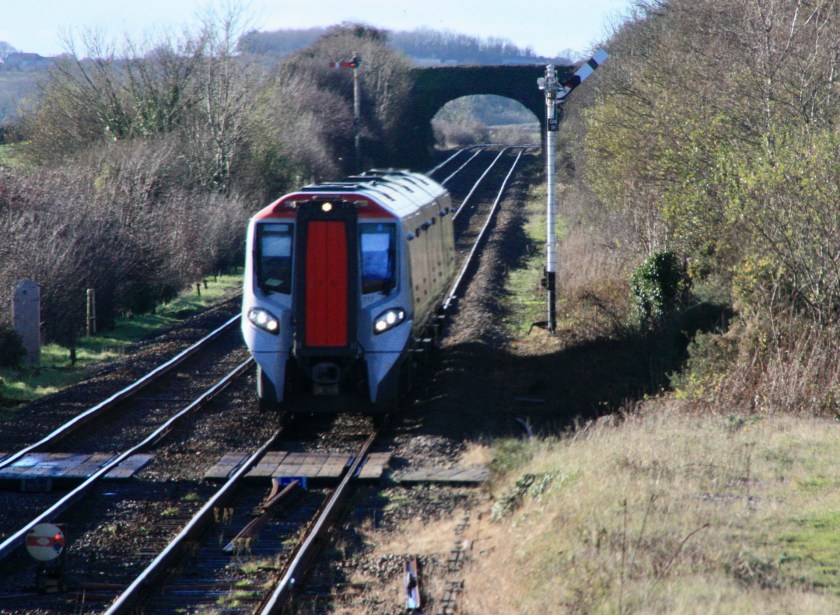
Llanfairpwll box is unique amongst the Anglesey quintet in not being open and manned for 24 hours a day, with the road being shut to traffic when the box closes at 23.00hrs each night and not re-opening until the early shift gate keeper arrives at 07.00. It is also unique in not controlling any signalling, with its four levers purely operating as locks for the main and wicket gates.
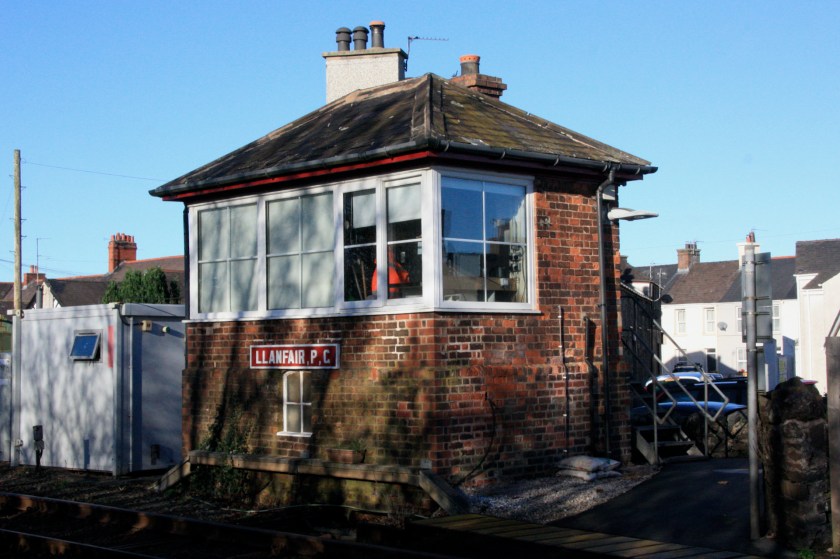
The box does, though, have switches that can be used in emergency to control the two colour light signals closest to, and protecting, the level crossing, BR11 on the down line and BR59 on the up line. This can only be done, however, by the Bangor signaller pulling electrical release lever 38 in Bangor Signal Box.
Despite its often dismal weather, Anglesey is a delightful place to savour the changing face of our railway network and capture photographs of modem rolling stock like the TfW Class 197 ‘Marvins’ and the even newer Avanti Class 805 Evero units passing semaphore signalling and historic railway buildings.
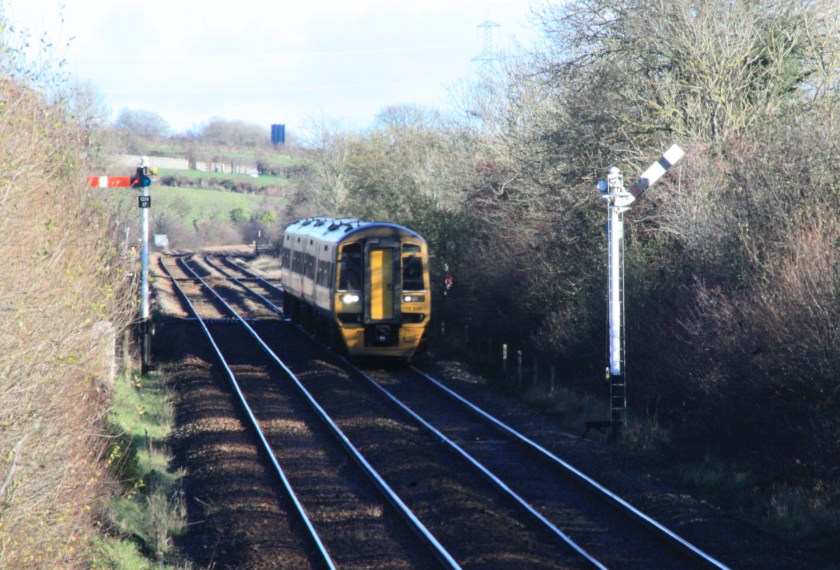
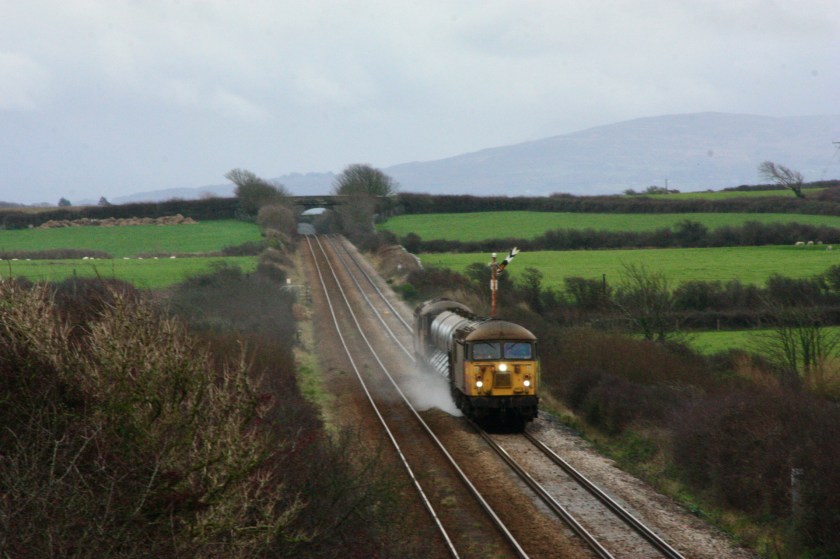
Loco-hauled action on Anglesey is very limited and, with no freight action west of Penmaenmawr, is confined to the daily TfW Holyhead-Cardiff Class 67-powered working, which departs in darkness from the ferry port at 05.27 (1V91) and returns late evening at 22.06 (1W96).
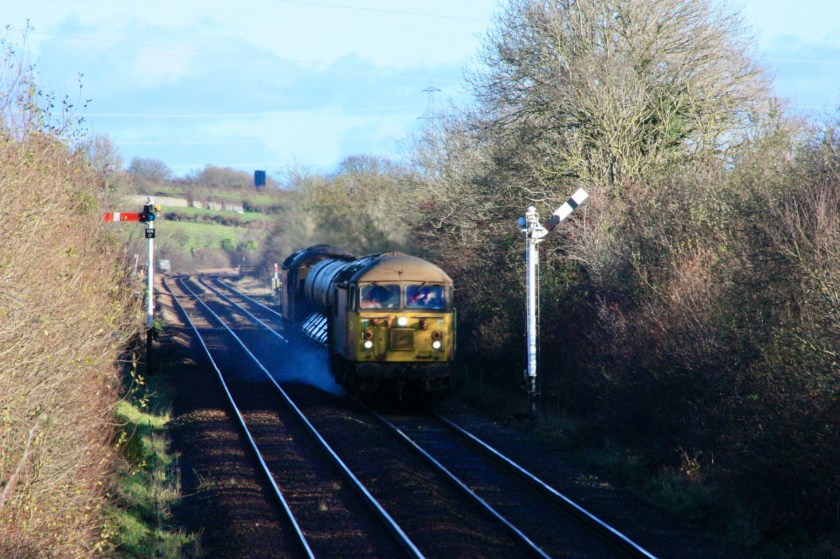
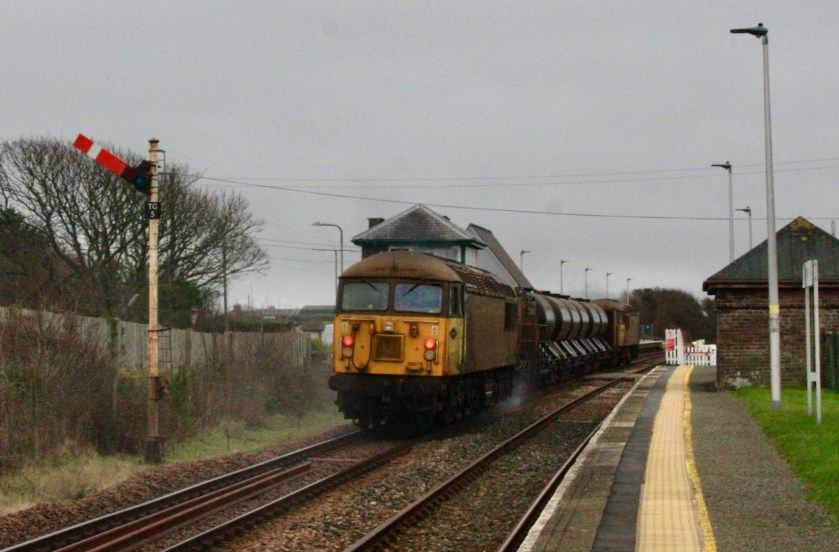
But there is some seasonal action in the form of the daily Rail Head Treatment Train (RHTT) which is once again being top-and-tailed this season by a pair of Colas Rail Class 56 locos on its lengthy circuit 3S71 from and to Coleham Yard in Shrewsbury, and was being worked during the days of my visit by 56078/302.
For somewhere convenient and economical to stay, I continue to patronise and recommend the Holyhead Travelodge, just five minutes’ walk from the station and offering some bargain out of season rates. Good beer is virtually impossible to find in the town and, just as on my November 2024 visit, there was none on offer at the only pub in Holyhead that claims to serve cask ale, the JW Lees-owned Holland Inn.
My sincere thanks to Emma Hutchins of the Network Rail Media Relations team in Cardiff for organising my 25 November 2025 visits, to Local Operations Manager Mark Owen from Bangor for hosting me, and to the helpful and friendly signallers I met on the day – Dave Jones at Holyhead, Adam Williams at Valley, Phil Owen at Ty Croes, Ian Griffiths at Gaerwen and Paul Lewis at Llanfairpwll.
 RailwayWorld.net
You must be logged in to post a comment.