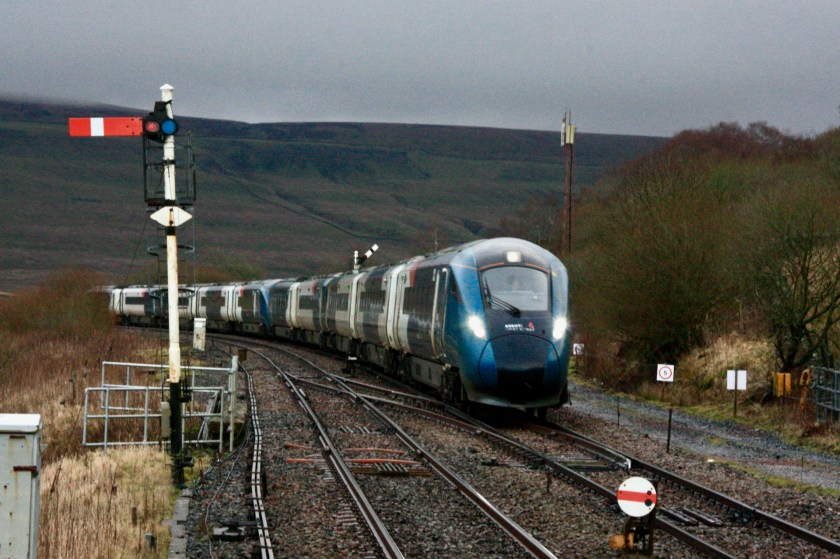
Diverting West Coast Main Line trains over the scenic Settle-Carlisle Line was once standard practice when the WCML was blocked between Preston and Carlisle, but the famously scenic route had not been used for this purpose for more than ten years, until it regained this role during the first two weeks of 2026.
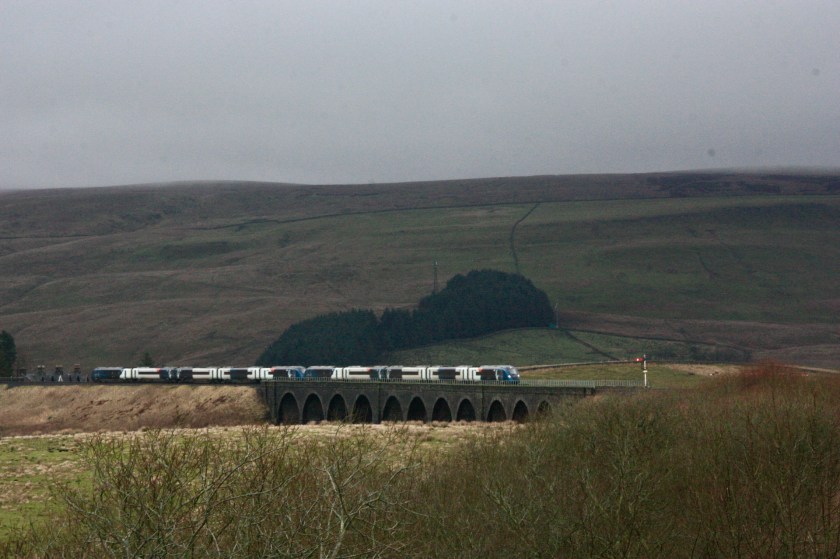
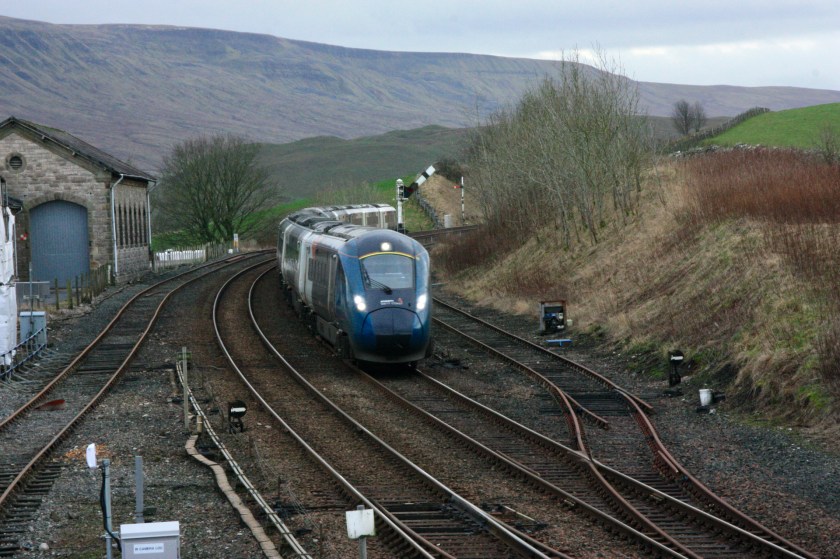
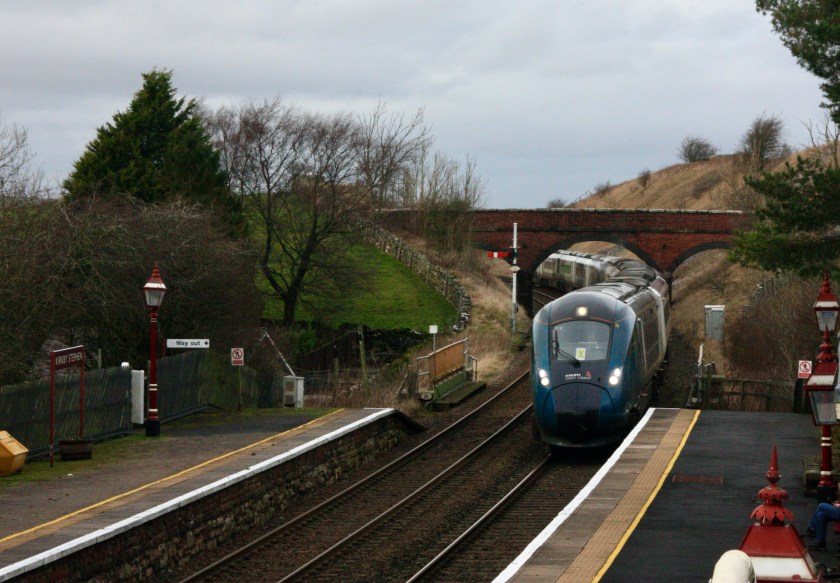
What made it possible now was the arrival into service of Avanti West Coast’s new bi-mode Class 805 Evero units, primarily designed to operate services between London Euston and Holyhead, but ideally suited to operating the Preston-Carlisle shuttles that were run from 1st to 14th January 2026.
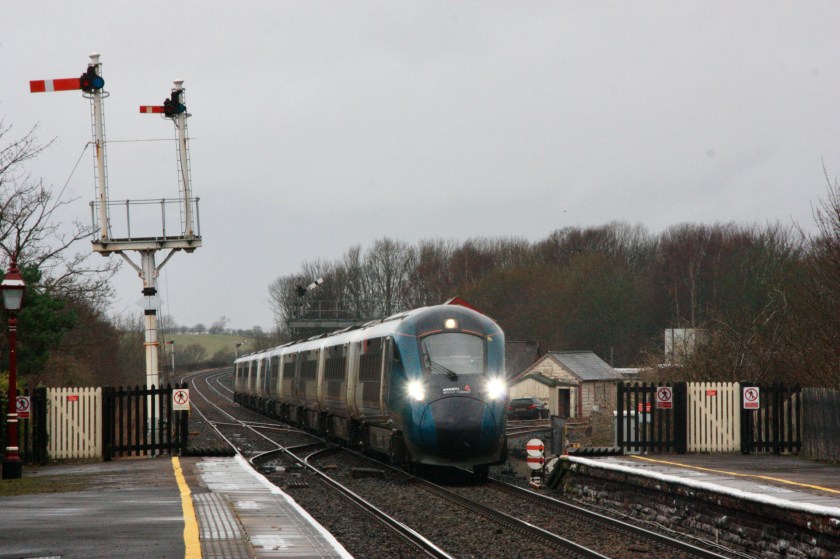
With no certainty as to whether this will ever be repeated, I paid a return visit to the Royal Oak in Appleby on 12 January 2026, for a three-night stay in order to capture some of these special workings as they passed a trio of the route’s highly photogenic stations – Appleby, Kirkby Stephen and Garsdale.
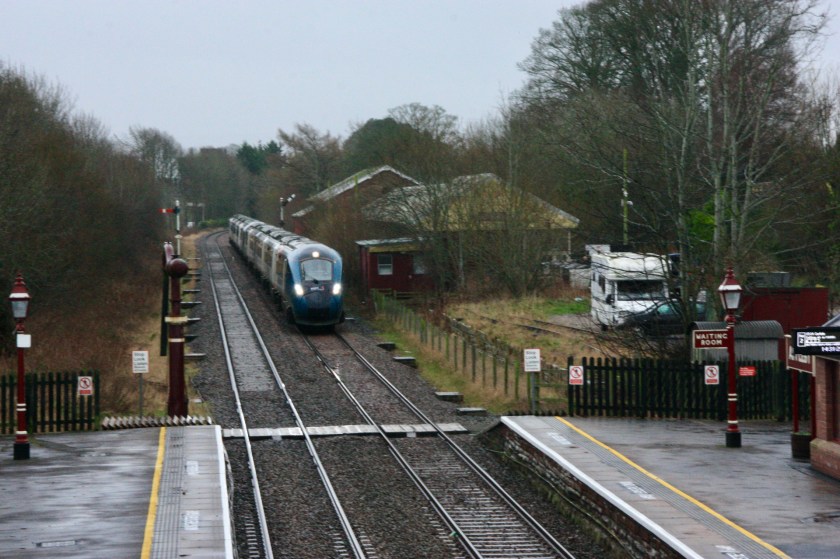
During those final three days of diversionary action there were a total of seven northbound services, running approximately every two hours, with a first departure from Preston at 05.53 and the last at 18.07, while in the southbound direction there were a total of eight workings, with the first departing Carlisle at 07.26 and the last at 21.48.
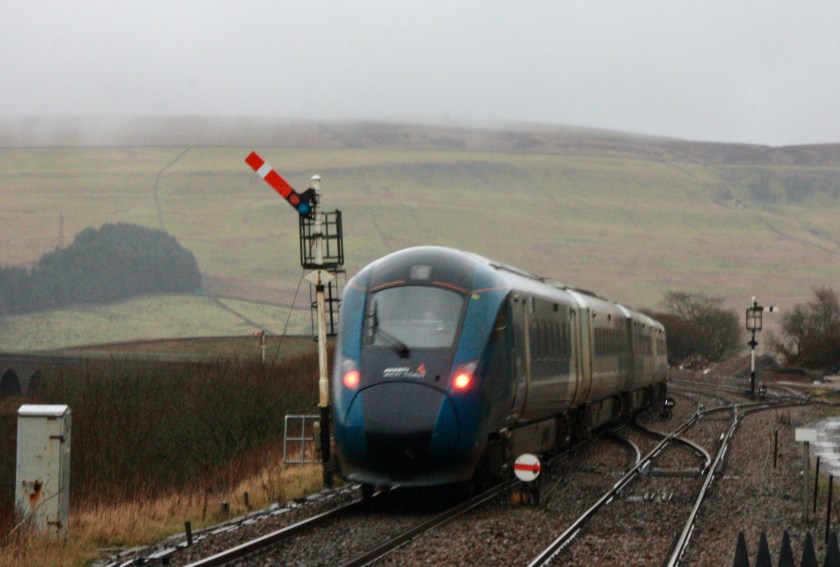
There had been some issues with delays and cancellations during the first week of diverted services but that seemed to have been largely overcome during the final three days of the WCML diversions, when most of the Avanti workings were roughly on time.

The diversionary timetable was based on pairs of Class 805 units, with all services running as 10-car formations with the exception of certain early and late workings, which were formed of a single five-car set. On 12/13 January, for example, the northbound 05.53 ex-Preston ran as a single unit, but had been strengthened to 10-cars by the final day of the special timetable on 14 January.
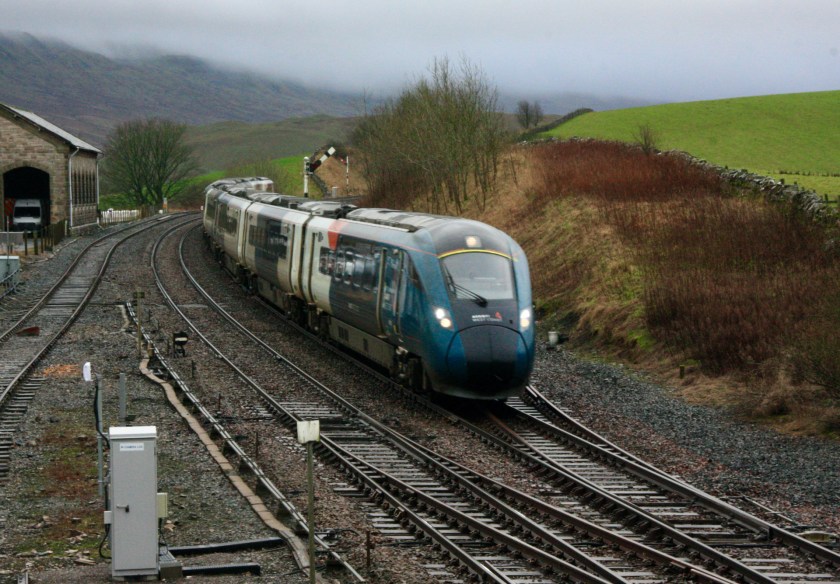
All other northbound services on all three days were 10-car formations. In the up (southbound) direction the first service of the day (07.26 ex-Carlisle) was a single unit on all three days, with the next departure (09.23) being a single unit on 12/13 January but strengthened to 10-cars for the final diversionary day. The only other five-car working in the up direction was the final service of the day (21.48 ex-Carlisle) on 12/13 January, but this ran with 10-cars on 14 January.
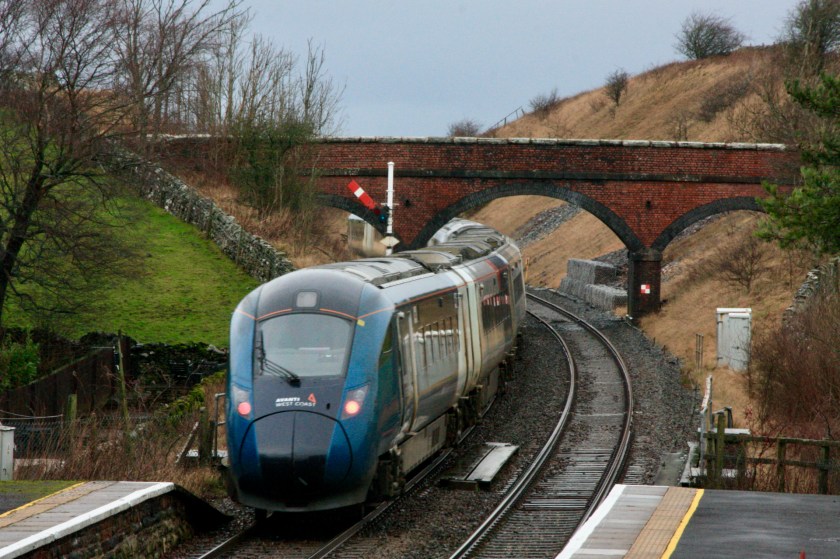
There were a total of 11 different units in use over the period 12-14 January, namely 805001/2/3/6/7/8/9/10/11/12/13 of which six were required each day, with only two sets (805002/008) appearing on all three days, three operating on two of these days (805008/10/13) and the remainder (805001/3/6/9/11/12) operating on just one of these days.
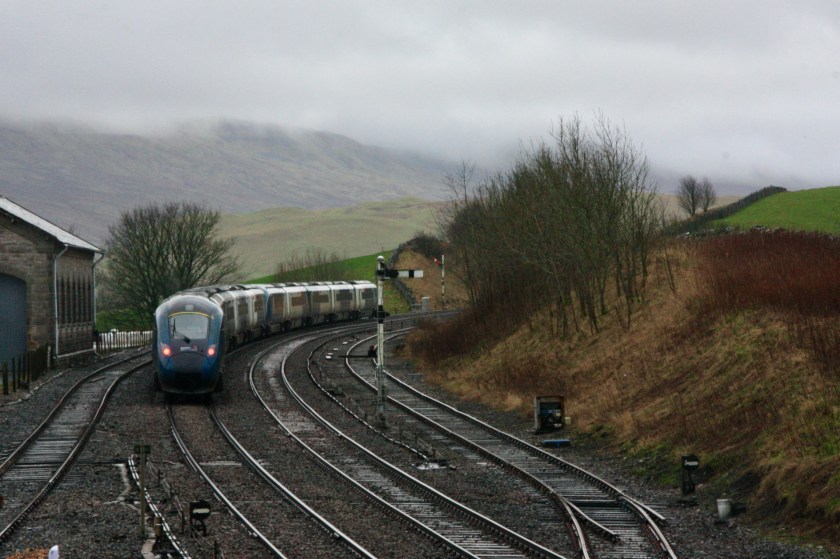
Apart from the Class 805 specials and the regular diet of Class 158-worked Leeds-Carlisle services in a mixture of two, three and four car formations, there was little non-passenger activity, with no appearance of the Carlisle-Chirk log train and only one appearance (12 January) by another regular, the cement tanks from Carlisle to Clitheroe Castle Cement (4N03).
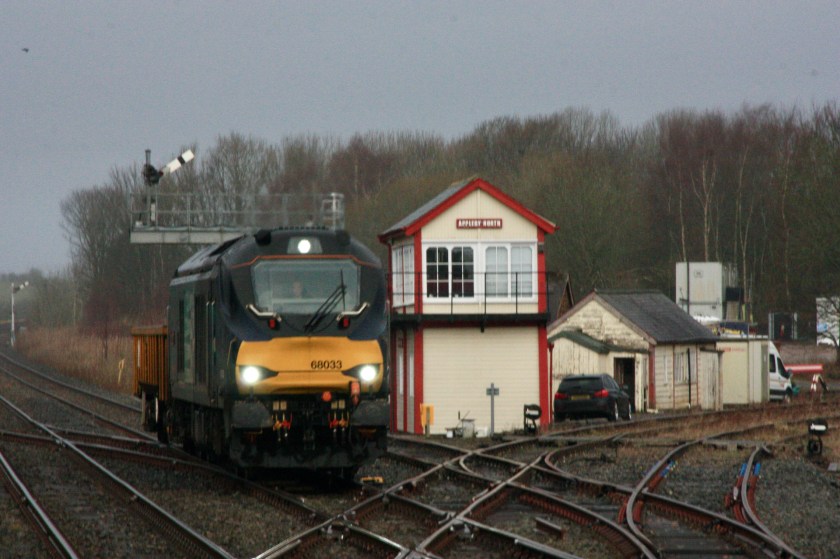
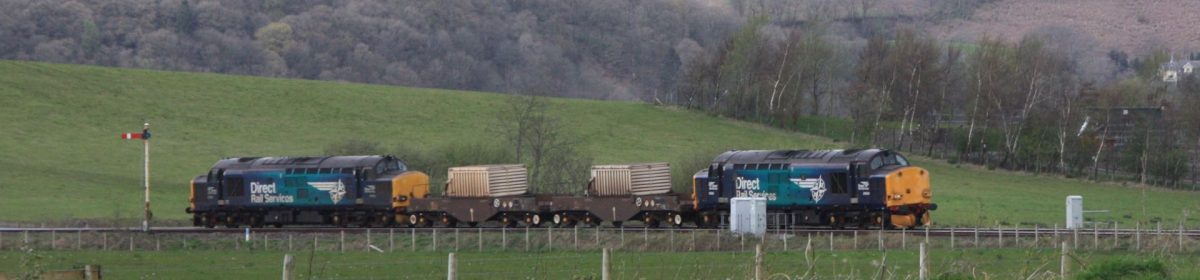
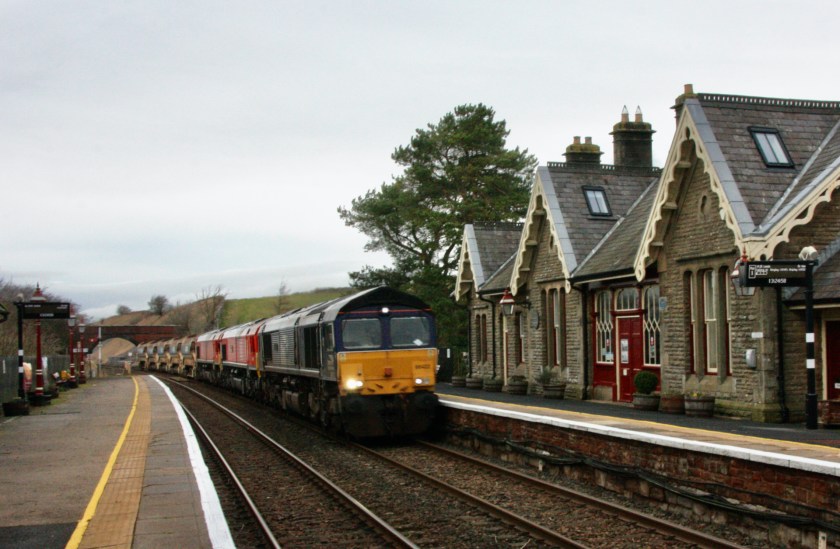
But one regular performer is 6K05, a departmental working from Carlisle to Crewe Basford Hall, that produces a variety of motive power and load from day to day. On 12 January I captured it at Appleby being worked by a DRS Class 68 with a featherweight load of just one wagon, while two days later I saw the same working at Kirkby Stephen being powered by a trio of Class 66 locos.
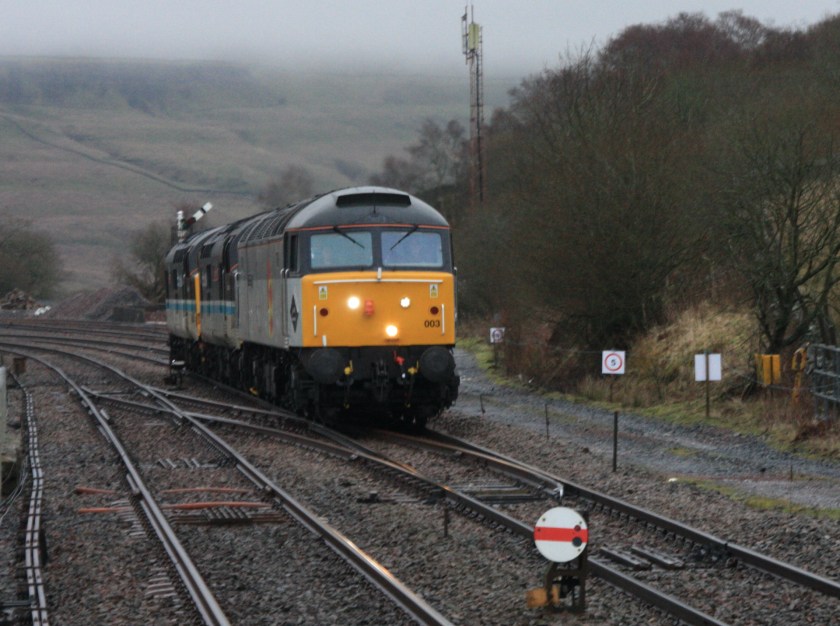
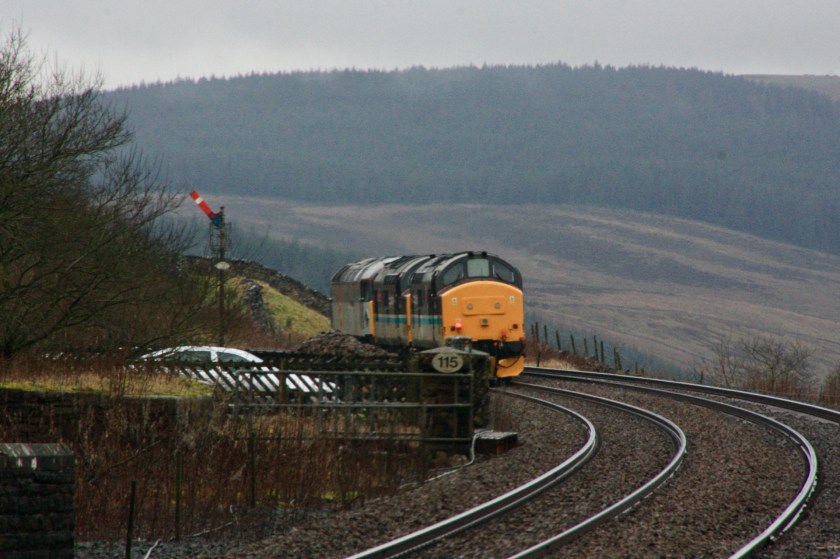
There was even more non-passenger interest on 14 January in the form of a Carlisle-Sellafield working with a brace of DRS Class 68s top-and-tailing a pair of nuclear flasks, a pair of WCR Class 57 locos moving from Carlisle to Steamtown at Carnforth, and an LSL working which saw 57003 in Railfreight grey livery hauling ScotRail liveried 37409/401 from Carlisle to Barrow Hill.
As I have written in past features on the route, the Settle-Carlisle Line is a remarkable example of living railway history, with a succession of magnificently preserved Midland Railway buildings at stations along the 72-mile route and the added bonus of semaphore signalling at no less than nine locations.
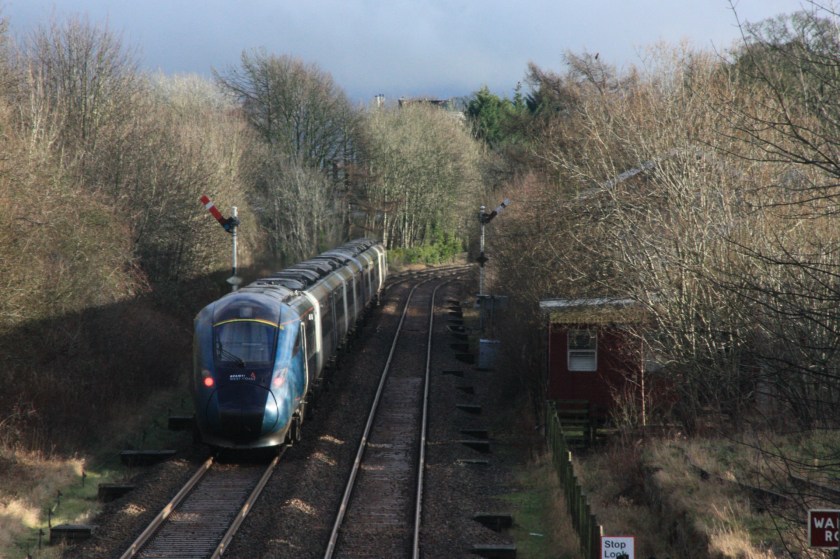
My visit this time took me to a trio of stations that boast both heritage Listed buildings as well as signal boxes and mechanical signalling. In mid-January an important feature of all three is comfortable and heated waiting rooms, a far cry from my recent experience, and what purports to be a waiting room, at Milton Keynes Central – a couple of benches on a windswept platform!
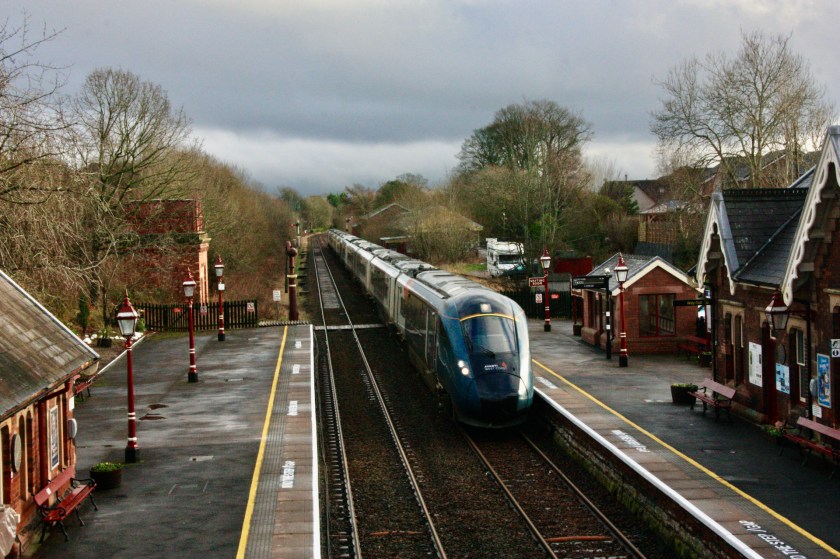
Appleby station (formerly Appleby West) is the S-C route’s second most important intermediate station (after Settle) and is a superbly preserved (and Grade II Listed) Midland Railway (MR) station that retains much period detail, including historic lamp standards on the platforms, a wrought iron footbridge, and a working water tank and crane.

Appleby North Signal Box is a British Railways structure dating from 1951 that replaced an earlier box that had been destroyed by fire. It stands a short distance to the north of the station platforms on the east side of the line, controlling the station area and sidings that also form a physical link with the partly-preserved Eden Valley Darlington to Penrith route (closed in 1962) that served nearby Appleby East station.
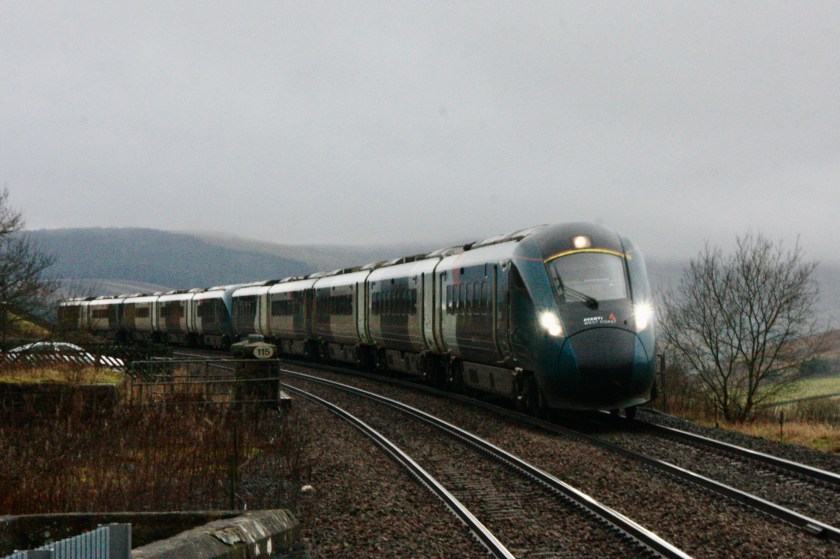
There are a total of six semaphore signals on the main line, with a shunt signal mounted alongside the down home signal (AN23) for access to sidings behind the box. Looking north from the station the furthest signals are down section signal AN22 and up outer home signal AN2, with up home signal AN3 on a bracket immediately adjacent to the signal box.
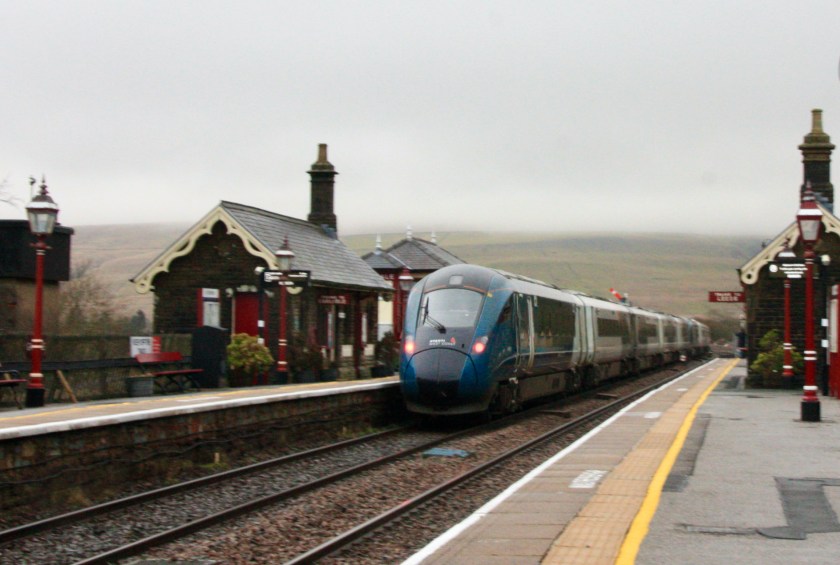
To the south you will see the final two Appleby North semaphores, with up section signal AN4 some 200 yards south of the platform end and down outer home signal AN24 just beyond and close to sheds housing a variety of preserved rolling stock.
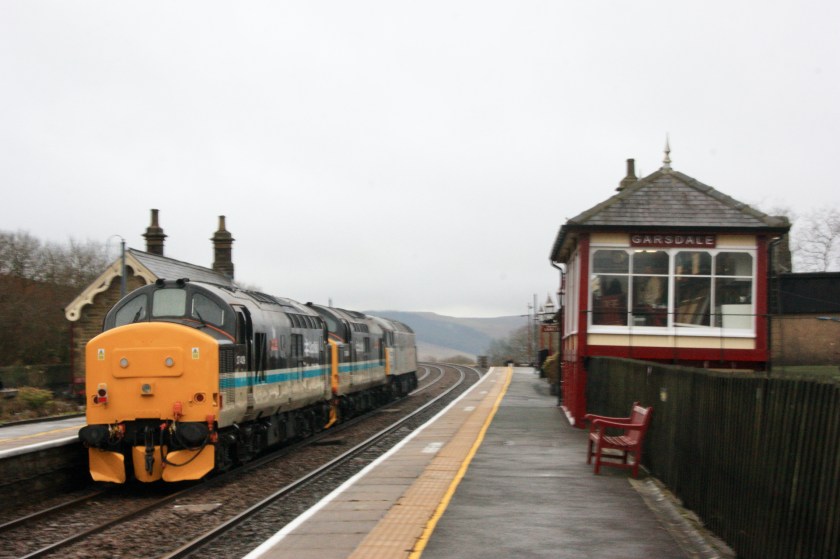
10¾ railway miles south of Appleby stands Kirkby Stephen station, formerly Kirkby Stephen West, and another fine MR station that has been superbly restored, with waiting rooms on both platforms, more traditional lamp standards, and the main station building now used as holiday accommodation.
Here the BR (LMR) 1974-vintage box is undergoing refurbishment and is largely shrouded in plastic sheeting. It stands just south of the station where there are sidings on both sides of the line and an old goods shed beyond. Three of its four semaphores can be seen from the station, with down home signal KS19 opposite the box, and section signal KS18 north of the platform.
In the up (southbound) direction, home signal KS2 stands out of sight behind a brick bridge carrying a farm track just north of the station, while up section signal KS3 stands some way south of the station and round a curve beyond the old goods shed, but can be seen from the station footbridge.

Like both Appleby and Kirkby Stephen, Garsdale is another gem of a station, with more superbly preserved Midland Railway station buildings and a recently-restored 1910 Midland Railway signal box on the down platform which, along with the fine station buildings, is protected by its Grade II Listing.
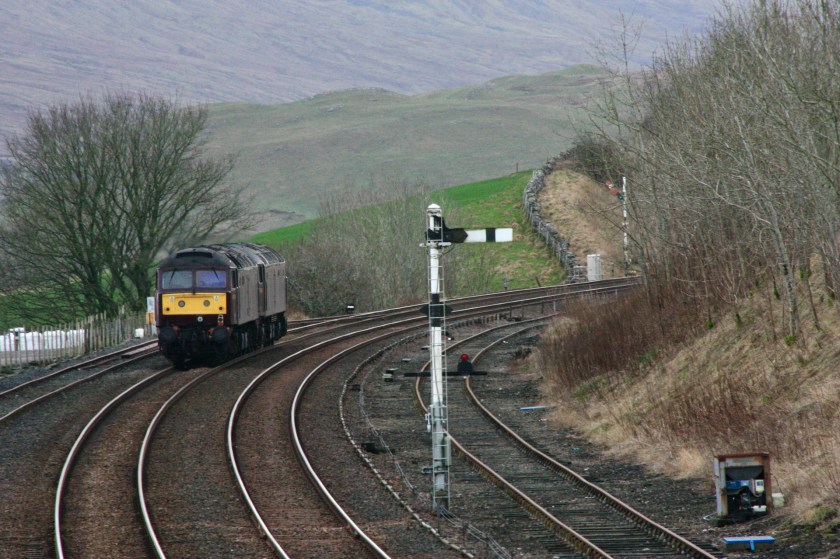
Garsdale Signal Box has four semaphores under its control, all visible from the station platforms. To the north you will see a down home signal G19 then further out up home signal G24, with a down section signal (G20) just visible as the line sweeps around to the left and on to Dandry Mire Viaduct. Looking south, again around a left hand bend, up section signal G22 stands some 300 yards away.
Two other notable features of Garsdale station are the chance to see red squirrels scampering along the platform – there is a sanctuary nearby – and a bronze statue on the up platform of a dog named Ruswarp, who featured in the remarkable 1980s campaign to prevent closure of the line. Ruswarp was a Border Collie belonging to a leading light in the anti-closure campaign, Graham Nuttall, and had signed the anti-closure petition with a paw print.
Nuttall disappeared while walking in the Welsh Mountains with Ruswarp on 20 January 1990 and his body was not discovered until 7 April, after Ruswarp had been standing by his master’s body for 11 weeks. Ruswarp died shortly after his master’s funeral and his statue was unveiled on 11 April 2009, to mark the 20th anniversary of the line being saved from closure.
Closure of the WCML from 1-14 January 2026 was to allow Network Rail to carry out the £60m replacement of Clifton Bridge, which carries takes the railway over the M6 motorway south of Penrith. Weight restrictions on the 60-year old bridge meant it could only carry one train at a time, meaning potential delays to services on this busy route.
Installation of a new bridge eliminates this significant bottleneck, and means rail services can cross the M6 without restriction, so helping to speed up journeys along the route and make them more reliable. This project is the first stage of a major renewal programme over the next few years along the northern end of the WCML.
 RailwayWorld.net
You must be logged in to post a comment.