Three years after its installation and opening (January 2023) it is time to pay a return visit to the revolutionary lightweight footbridge that stands north of Craven Arms on the busy Newport-Shrewsbury Marches Line, and offers a great vantage point from which to watch trains passing the semaphores controlled by Craven Arms Crossing Signal Box.
Despite the loss of five semaphores when a cross-over for Heart of Wales-bound trains was moved from north to south of Craven Arms station, the rather hideous-looking signal box still controls seven semaphores, with an up (northbound) trio comprising home (CA2) and starter signals, (CA3), both visible from the station, and section signal CA4 north of the footbridge.
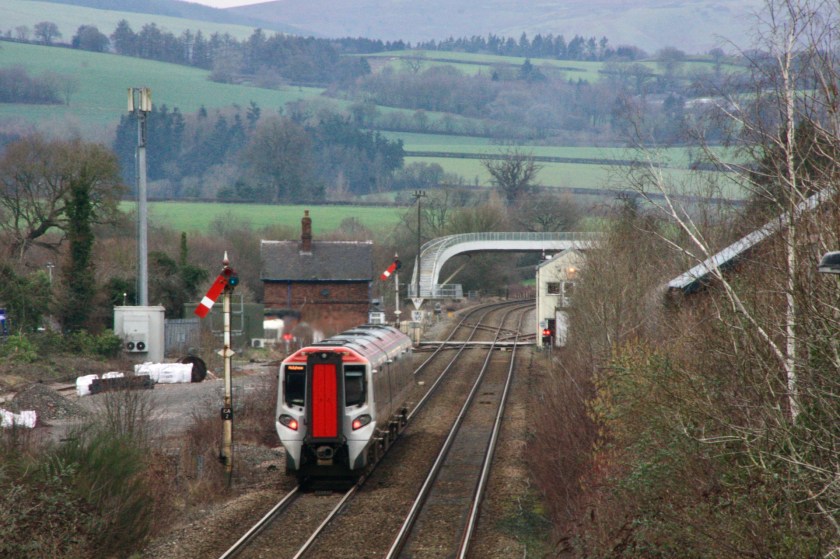
In the down (southbound) direction, the four survivors are a two-arm bracket (CA27) on which a subsidiary signal controls entrance to the down goods loop, with exit from the loop controlled by CA24, which stands close to down home signal CA26 to the north of the level crossing and signal box.
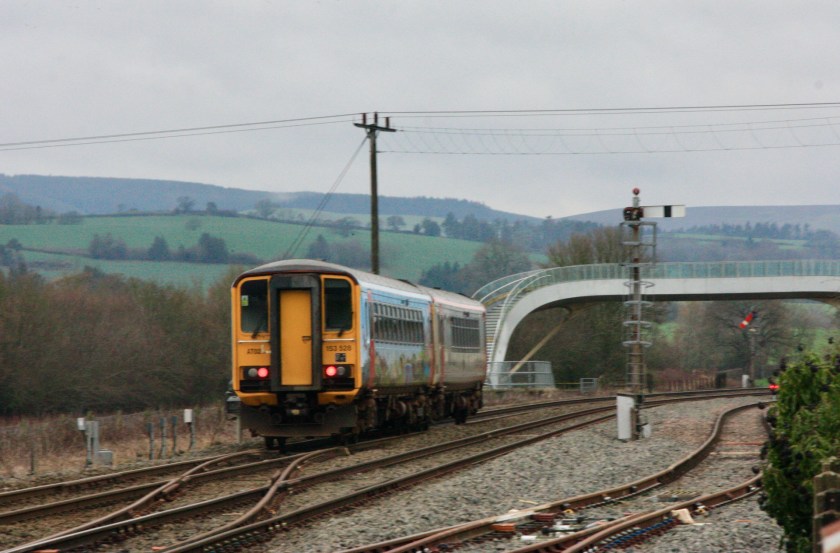
Craven Arms Crossing Signal Box was re-built in 2000, when a steel structure was constructed around a life-expired GWR box dating from 1947, with the latter then being removed, while the signalling equipment, including a 30-lever frame, remained to control its lower quadrant semaphore signals.
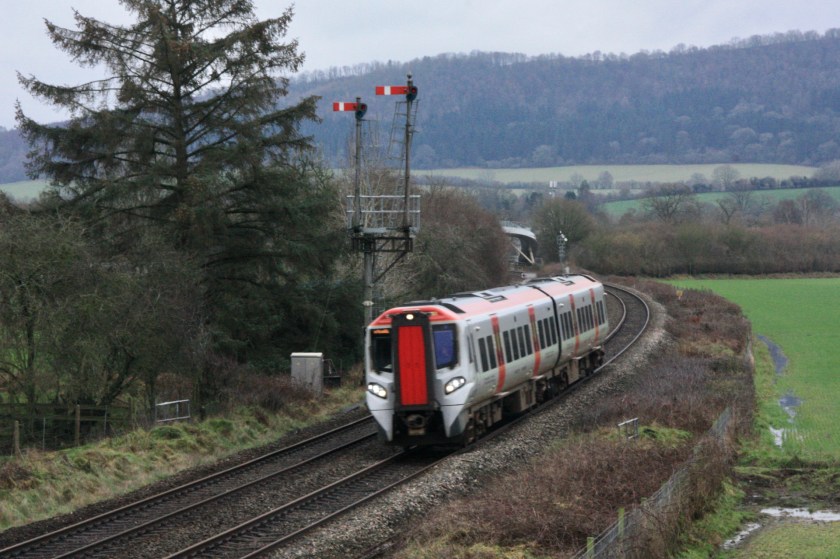
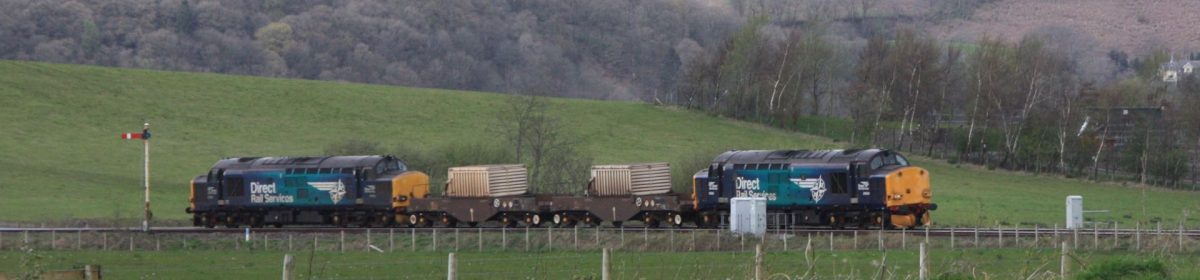
Travelling from Newport to Craven Arms on 2 February, courtesy of more cut-price tickets secured in the January Rail Sale, my principal aim once again was to capture some loco action, in the form of the regular Dee Marsh-Margam freight (6V75), along with two pairs of Cardiff-Manchester workings due to pass and be Class 67-powered.
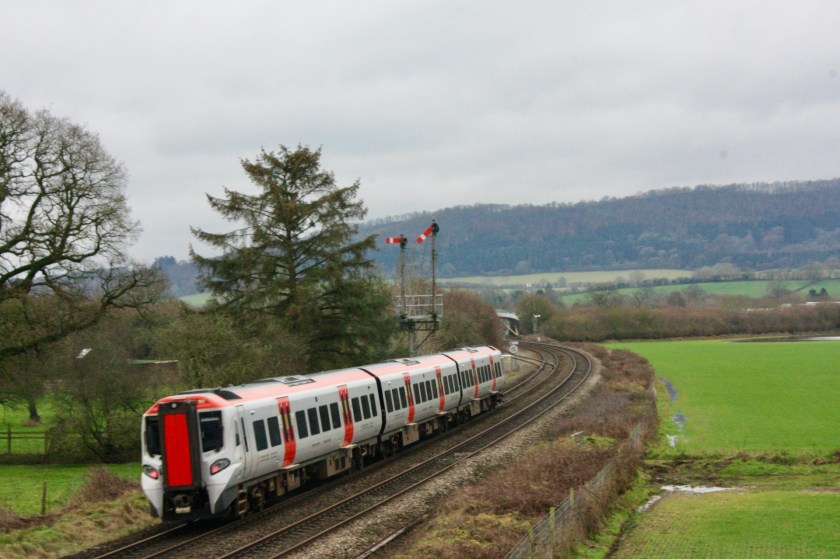
Alas, though, 6V75 was inexplicably cancelled on 2 February 2026, while two of the diagrammed Class 67 services were worked by Class 197 units – 1W57 from Cardiff Central (10.53) to Manchester Piccadilly and 1V42 from Manchester Piccadilly (12.30) to Cardiff Central.
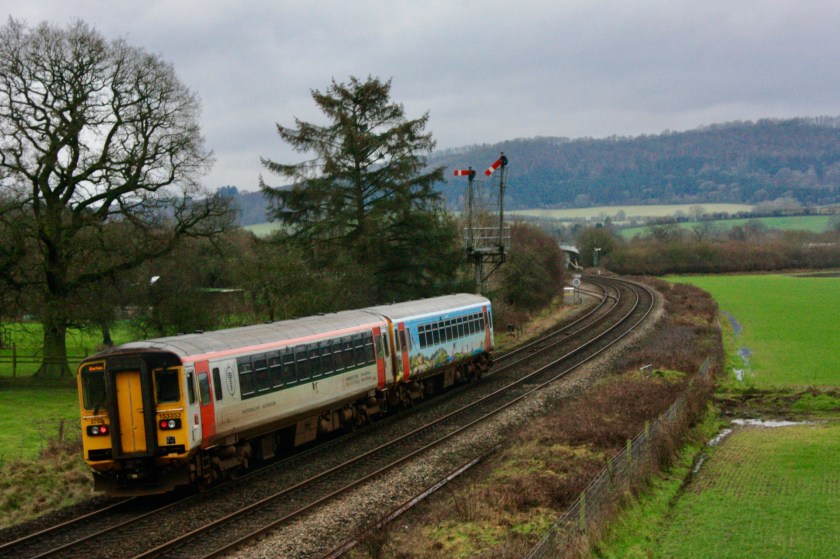
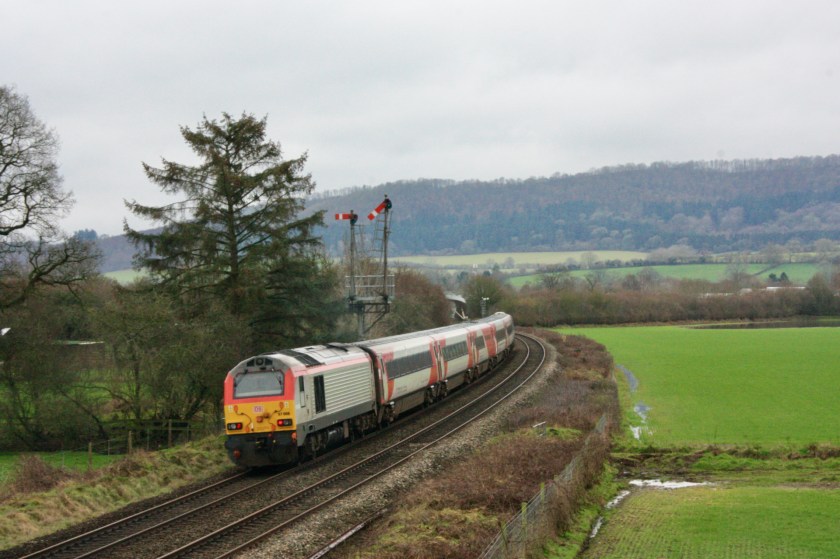
That left two loco-powered workings passing during the three hours I spent at Craven Arms, with 67008 propelling set HD02 on 1V39 from Manchester Piccadilly (10.30) to Cardiff Central and 67015 pushing set HD05 with 1W59 from Cardiff Central (12.54) to Manchester Piccadilly.
As I wrote after my February 2023 visit, the revolutionary lightweight “FLOW” footbridge was designed and funded by Network Rail’s Research and Development (R&D) team, in order “to provide a faster, more sustainable and affordable option to assist with the closure of dangerous railway foot crossings around the UK.”
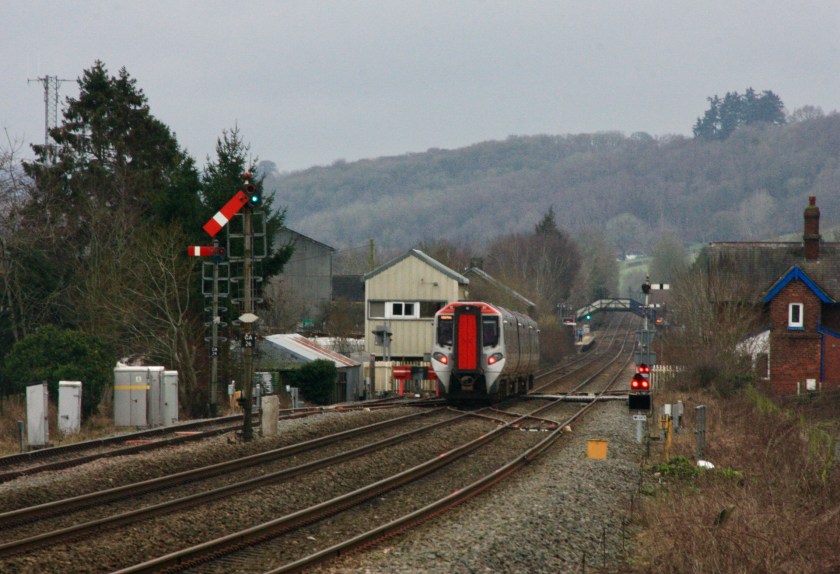
The 21m-long FLOW (fibre-reinforced polymer (FRP), lower-cost, optimised-design, working bridge) bridge costs around 40 per cent less than a traditional steel structure, with no concrete is used in the foundations in order to reduce its carbon footprint, and it weighs only half of a traditional steel bridge.
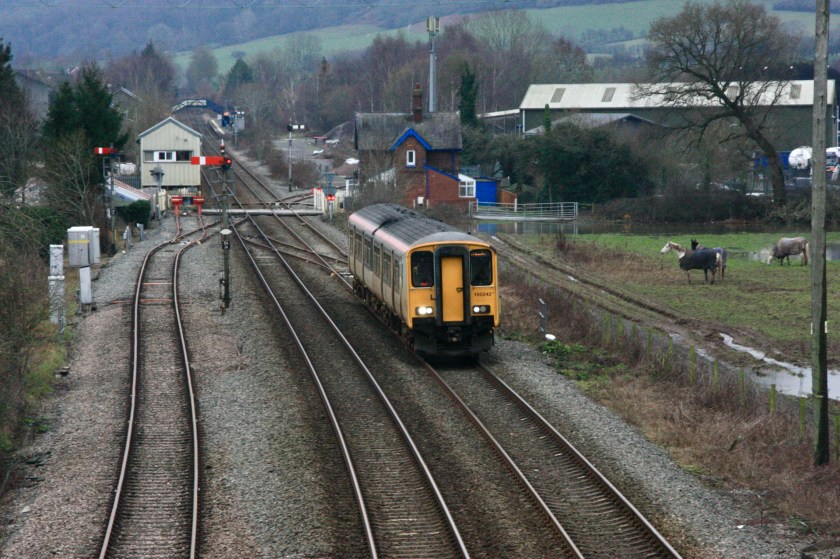
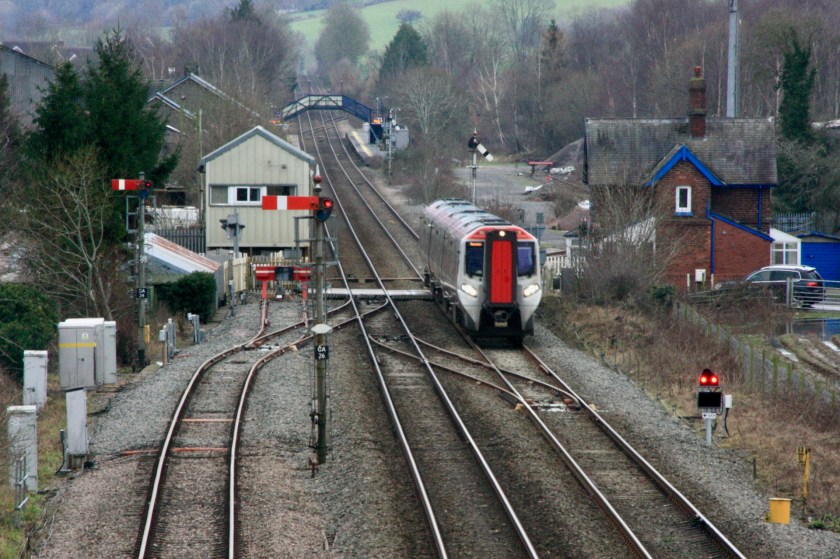
Looking south from the footbridge gives you a good view of the signal box and station beyond, along with four of its seven surviving semaphore signals, namely CA24 for exit from the down goods loop alongside down home CA26, while beyond the level crossing are up home CA3 and up outer home CA2.
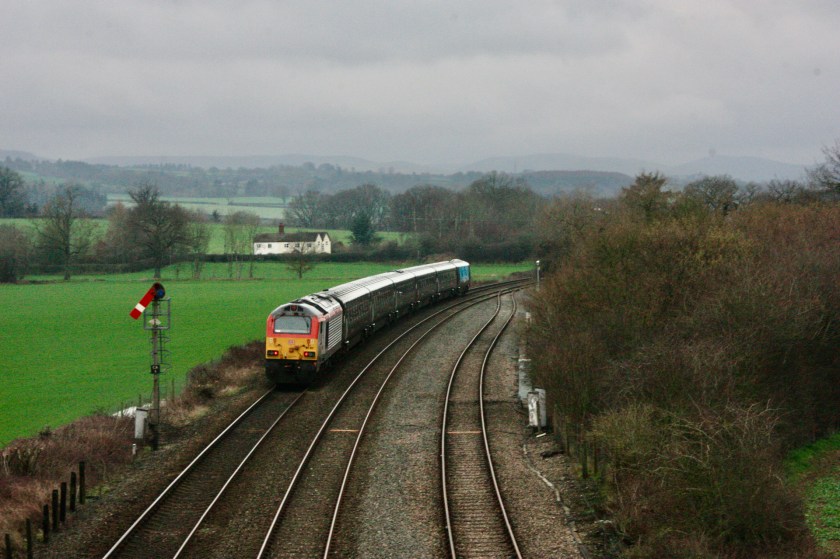
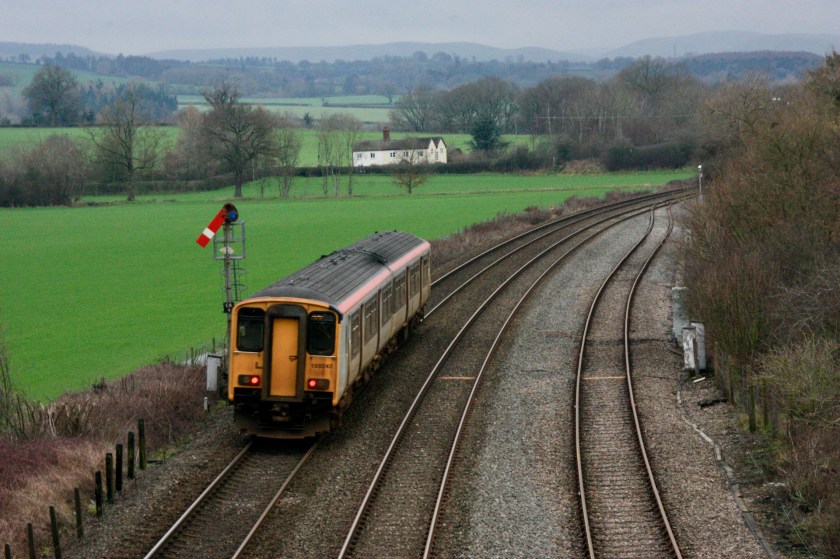
Turning north from the bridge you will see up section signal CA4, while almost out of view around a right hand curve in the line is the tall bracket (CA27) with a subsidiary arm for access to the down goods loop. For view of trains passing CA27 it is worth taking another ten-minute walk, up the A49 and left down Longville Road to an over-bridge offering a fine view of the bracket signal.
 RailwayWorld.net
You must be logged in to post a comment.