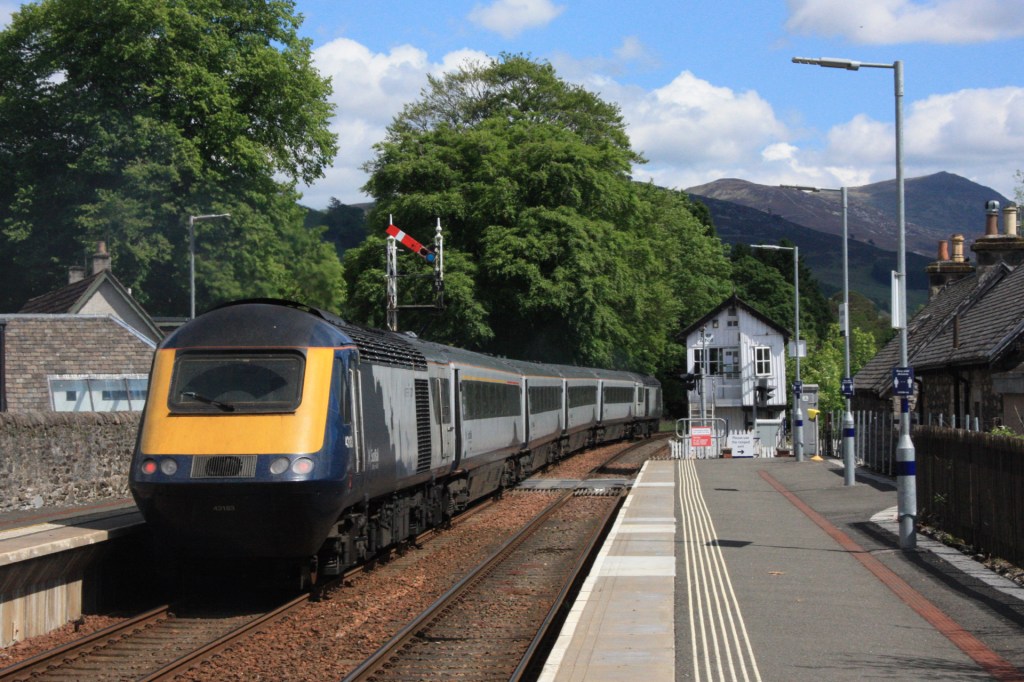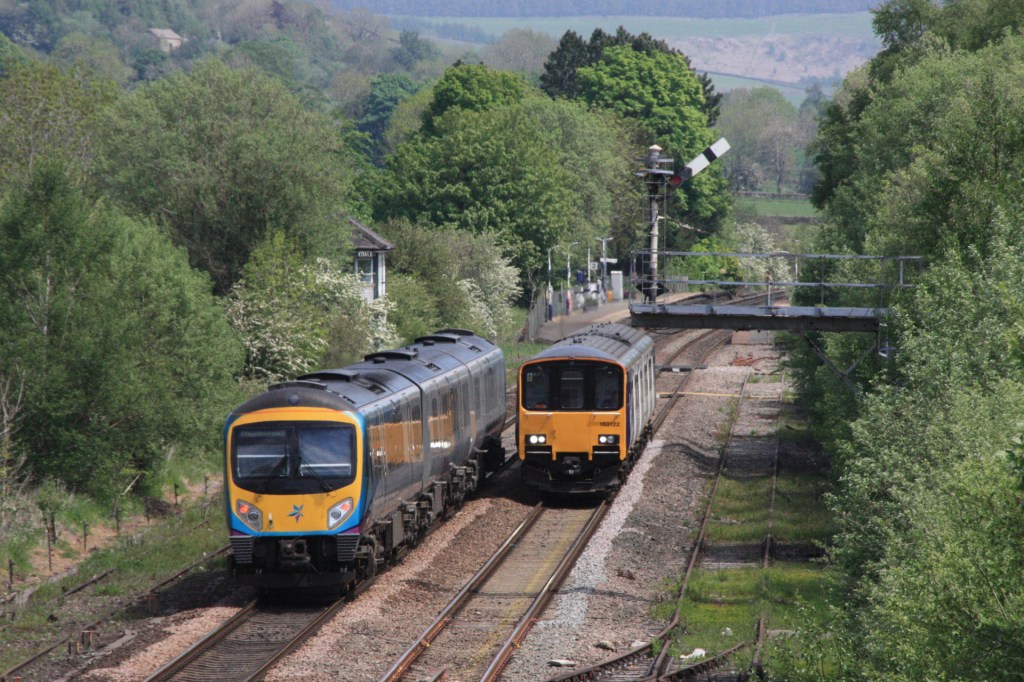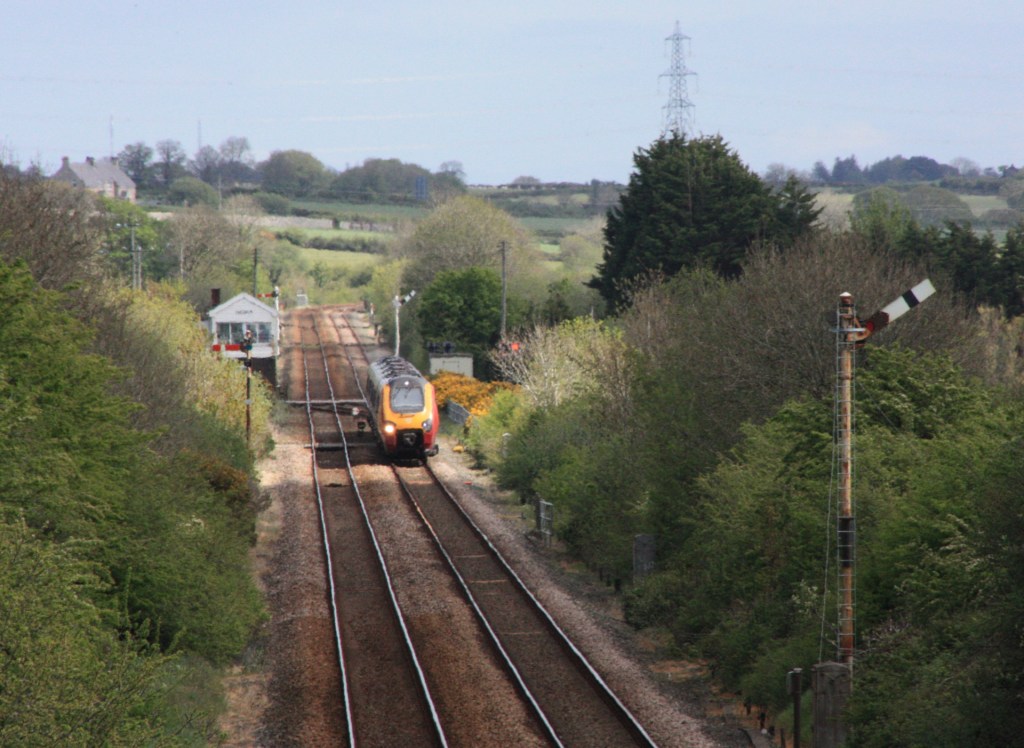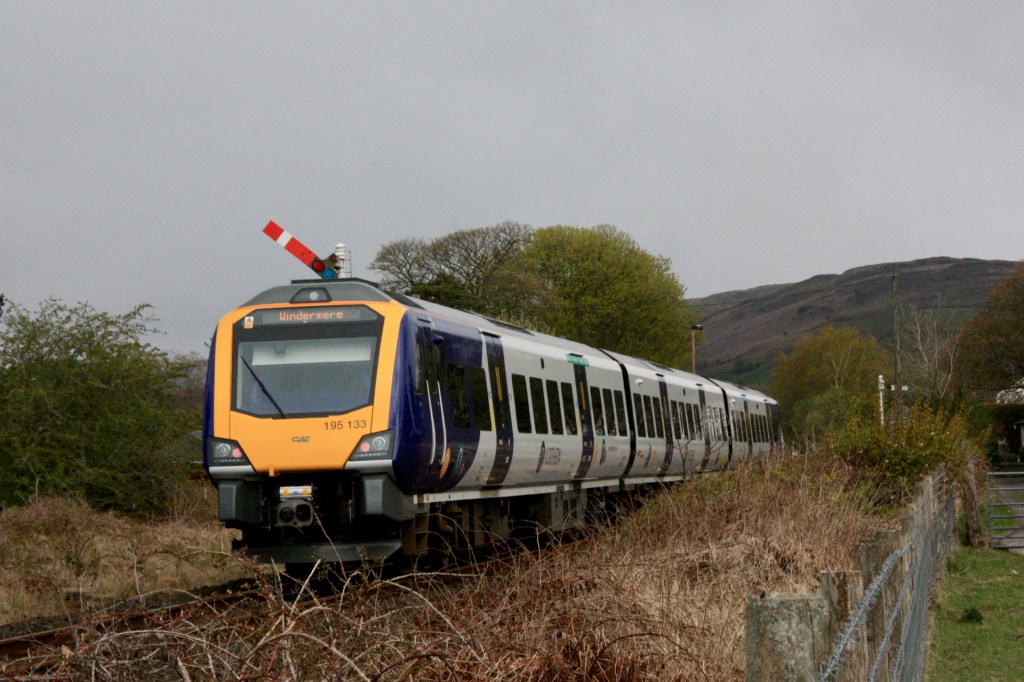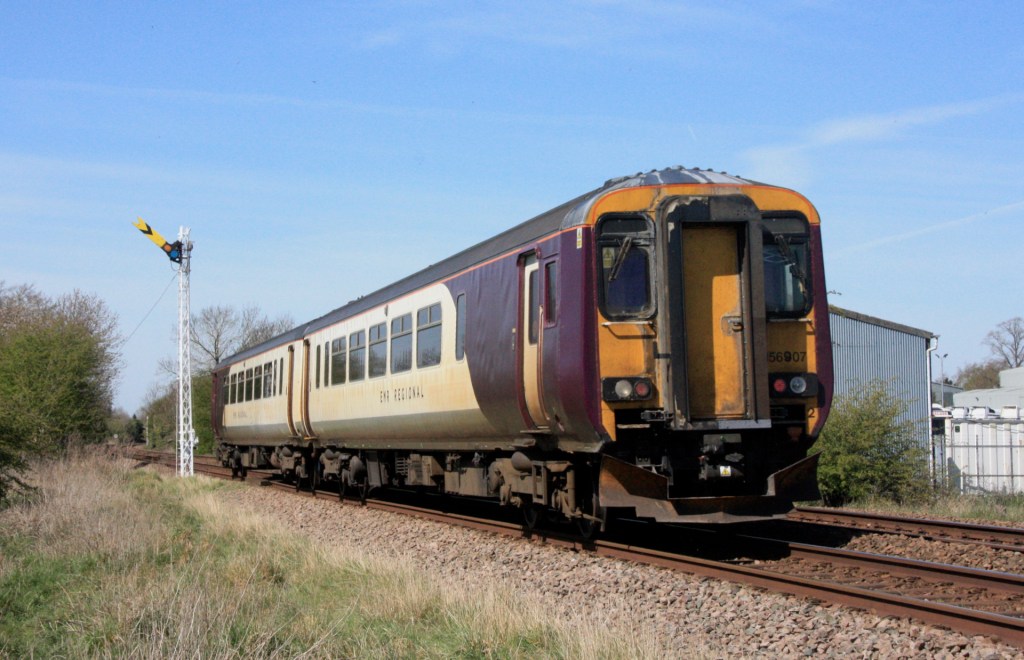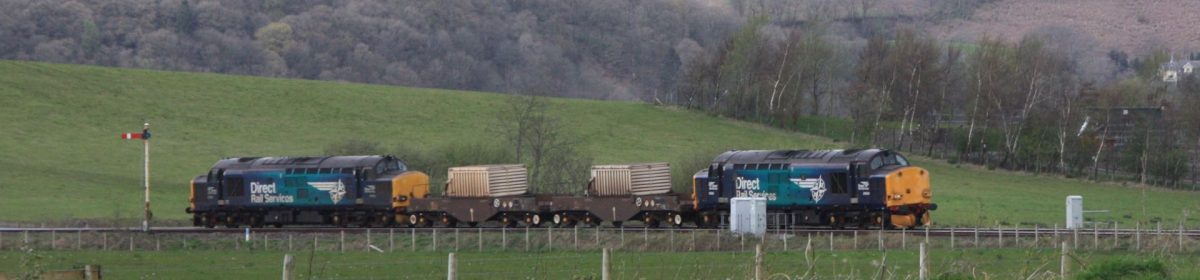
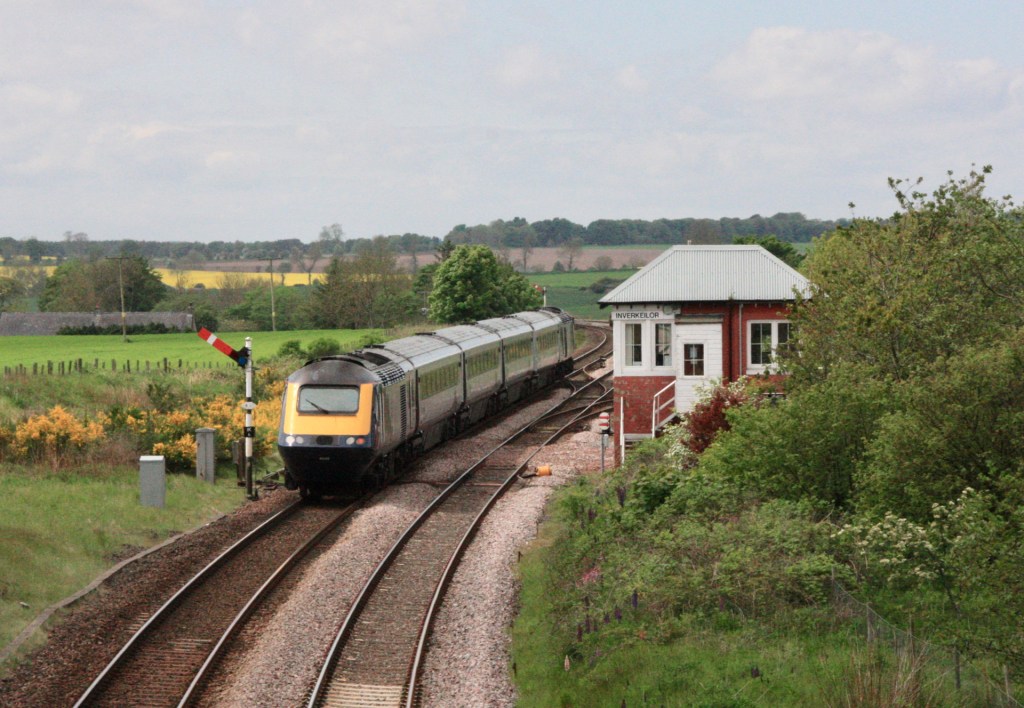
Fantastic Foxfield

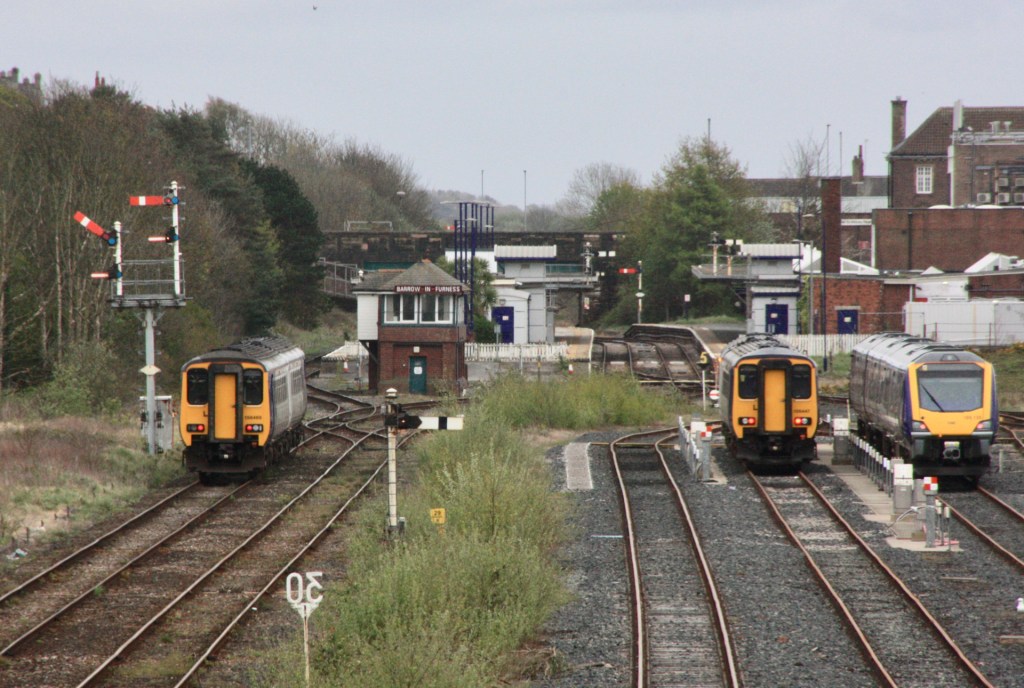
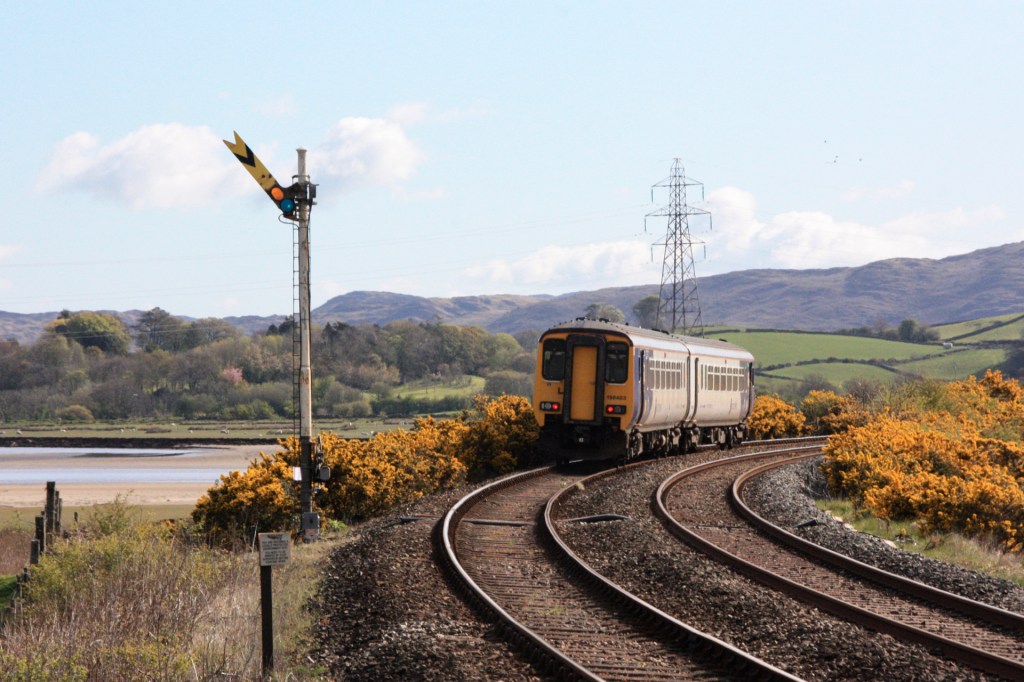
Time seems to stand still in signalling terms along the delightful Cumbrian Coast Line, a route that is our finest remaining outpost of semaphore signalling, but change is taking place at Foxfield, a location featured in my December 2020 post on working distant signals around Millom.

Paying a return visit to seek out a couple of photographic locations that I was unable to get to in December, I learn that the two Foxfield distant signals are being motorised, ending the heroic pulls signallers have had to make from the station’s 1879-vintage wooden signal box.

Continue reading “Fantastic Foxfield”

Semaphore swansong in South Wales

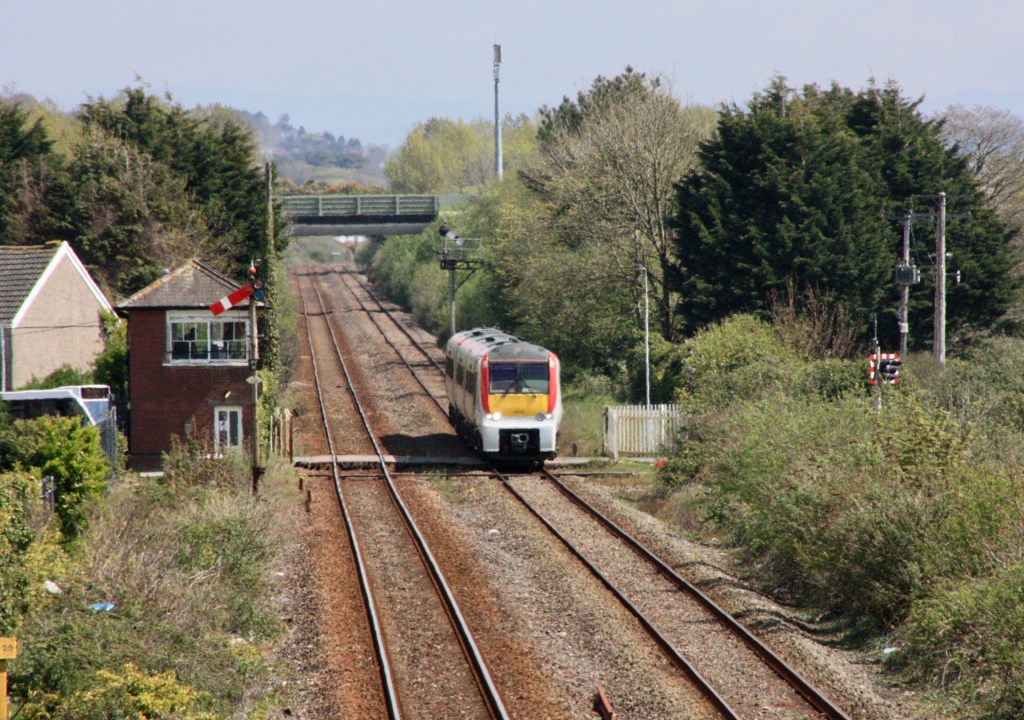
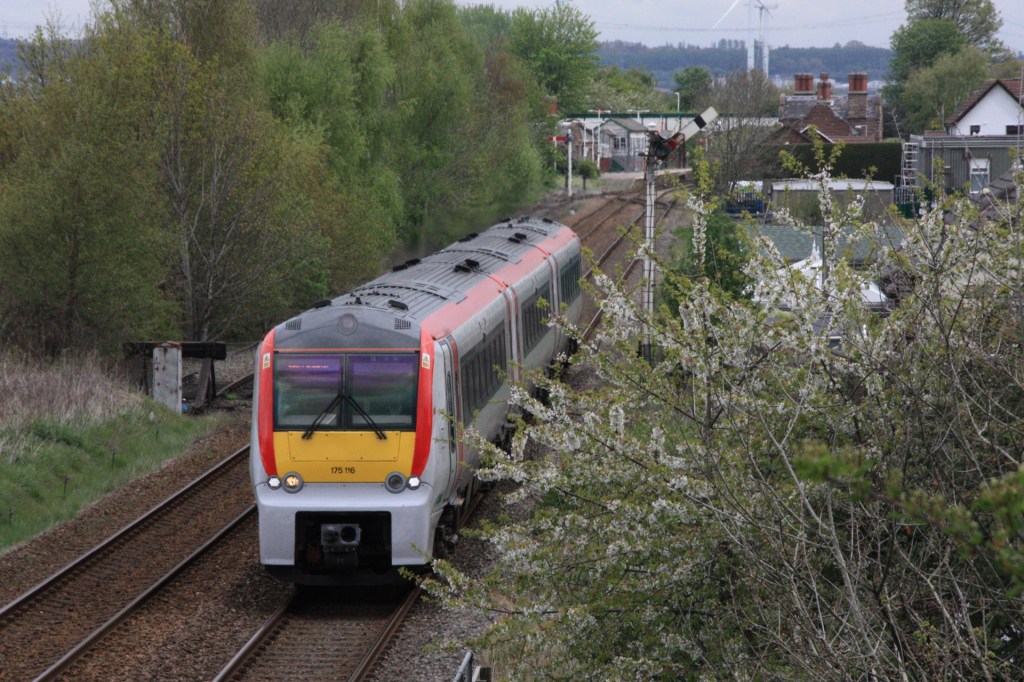
Time is fast running out for the last two outposts of mechanical signalling on the South Wales Main Line, with planned re-signalling of 35 route miles from Swansea to Whitland by September 2023 spelling an end to the semaphores at Ferryside and at Pembrey & Burry Port. 

Paying a return visit to Pembrey on 30 April 2021, my aim was to find locations both east and west of the station from which to photograph the five remaining semaphores controlled by the former Pembrey East Signal Box.

Continue reading “Semaphore swansong in South Wales”

Day return to Helsby Junction

Almost four years after my last visit it is time to pay an overdue return to one of the most charming outposts of mechanical signalling in the North-West, at Helsby Junction in Cheshire, roughly mid-way between Warrington and Chester.

Since that June 2017 visit the semaphores have been replaced at nearby Frodsham Junction, as part of the Halton Curve revival, but Helsby remains an oasis of traditional signalling controlled by its Grade II-Listed London & North Western Railway signal box.

Continue reading “Day return to Helsby Junction”

Distant delights in North Staffordshire

Working semaphore distant signals have become a great rarity across the British rail network, as I have written many times, so after my successful December visit to west Cumbria it was time to revisit another area notable for its distant signals.

My only previous visit to the North Staffordshire Line (in March 2017) had taken me to Tutbury & Hatton, Scropton Crossing and Uttoxeter to photograph semaphore home signals at each location, but I had not had enough time to seek out the six working distant signals.

Continue reading “Distant delights in North Staffordshire”

Two notable Marches Line signal boxes

Among 14 signal boxes controlling the busy Marches Line between Shrewsbury and Newport, two of the finest and most historic survivors are identical LNWR/GW joint designs at Leominster and at nearby Woofferton Junction (seen above) both believed to date from 1875.

The Marches Line remains a charming outpost of mechanical signalling, and despite last year’s loss of semaphores at Tram Inn no less than ten of the route’s boxes control some semaphore signalling, including the neighbouring boxes at Leominster and Woofferton.

Continue reading “Two notable Marches Line signal boxes”

Britain’s oldest signal boxes

After 150 years of faithful service, the 1870-vintage North Eastern Railway signal box at Norton South signalled its last service on Friday (5 February 2021), and the network’s oldest working signal box closed to await its fate and likely demolition.

The final up service to pass the doomed box was Northern Rail 156475 at 22.47 with 2N58 from Carlisle to Middlesbrough, while an hour later the very last service to be signalled by Norton South was Class 60 60085 passing at 23.53 with 6N55, empty coal wagons from Drax Power Station to Tyne Coal Terminal.

Yet a century and a half after they were built there are still a number of signal boxes dating from the early 1870s that control 21st century rail services, including Bootle featured above and below, so this is a look at nine remarkable survivors that are all believed to date from 1871 and 1872.

Continue reading “Britain’s oldest signal boxes”

The final week of Teesside semaphores

Later this month a significant part of our signalling heritage will be lost when the handful of historic signal boxes around Norton-on-Tees close for the last time, as control of the Durham Coast line between Stockton and Billingham passes to the Railway Operating Centre (ROC) at York.

As I wrote following my second visit to the area last September, this short section of route includes the UK’s joint oldest working signal boxes, along with what is probably the finest collection of main line semaphores to survive anywhere on the national network.

Continue reading “The final week of Teesside semaphores”

“This is Carbis Bay: alight here for the G7 Summit”

News that Prime Minister Boris Johnson shares a love of trains with new US President Joe Biden presents them with a classic bonding opportunity when the two men get together in June for the G7 Summit of world leaders.

Johnson’s choice of venue – the Carbis Bay Hotel – stands just below Carbis Bay station on the delightful St. Ives branch, so giving the two world leaders an opportunity to sample the scenic delights of the 4¼-mile line.

Continue reading ““This is Carbis Bay: alight here for the G7 Summit””

Five years of lost semaphores

FIVE YEARS after I began touring Britain in search of surviving semaphores to describe and photograph for my planned book seems like a timely moment to take a look back at the many places which have lost their mechanical signalling in that time. 

While there are still some wonderful outposts of mechanical signalling, a considerable amount has been lost in the period since 2016, notably on Humberside, in North Wales, Preston to Blackpool North and the Wherry Lines in Norfolk, all of which feature below.

Continue reading “Five years of lost semaphores”

You only live twice

Sunday, 3 January 2021, marks the end of an era on our national railway network, when the last pre-WWII rolling stock to remain in use is finally pensioned off after eight decades of service, and the Isle of Wight’s Island Line closes for its long-awaited upgrade.

Like many others I had planned to pay my final respects to the Class 483s on Sunday, before COVID-19 travel restrictions put paid to my plans. So, to mark this historic and sad occasion, here is a photographic trip down the line featuring shots of the final five of the 1938-vintage units to remain in action.

Continue reading “You only live twice”