End of an era on the Portsmouth Direct Line

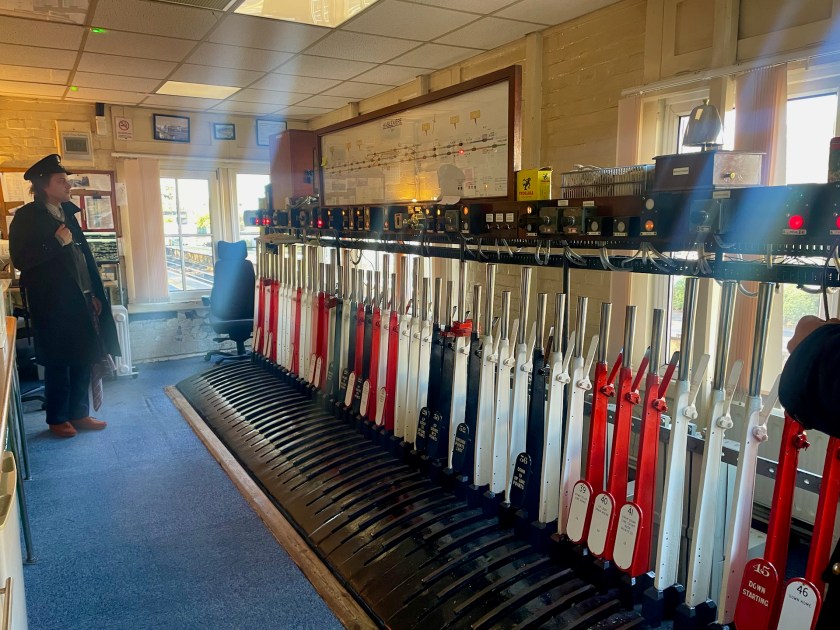
To mark his final shift and imminent closure of the box on 24 October 2025 Haslemere signaller Ashley was encouraging all passing drivers to sound their horns as they approached the station!

At 00.34 in the early hours of Saturday, 25 October 2025, SWR Class 444 units 444009/040, which formed train 2P77 from London Waterloo (departing at 23.22 on Friday night) earned a place in railway history when it became the last passenger train ever to be signalled by Haslemere Signal Box. After 130 years of faithful service the signal box bells fell silent and its working life was over.

Under Network Rail’s (NR) heavily-delayed re-signalling plans, the box at Haslemere has closed, along with those at Farncombe and Petersfield, with control of the Portsmouth Direct Line being taken over by the NR Railway Operating Centre (ROC) at Basingstoke and the route scheduled to re-open, after a nine-closure, on Monday, 3 November 2025.

Continue reading “End of an era on the Portsmouth Direct Line”

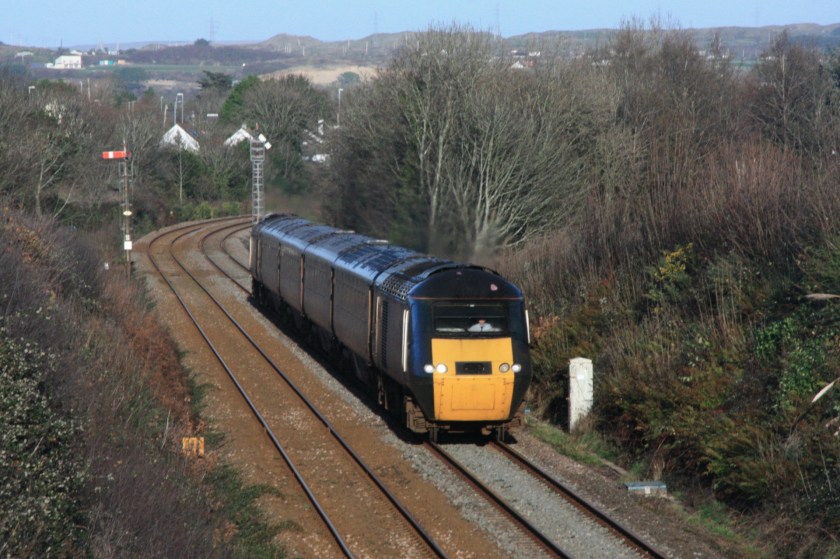
Last HST to pass the Pembrey semaphores

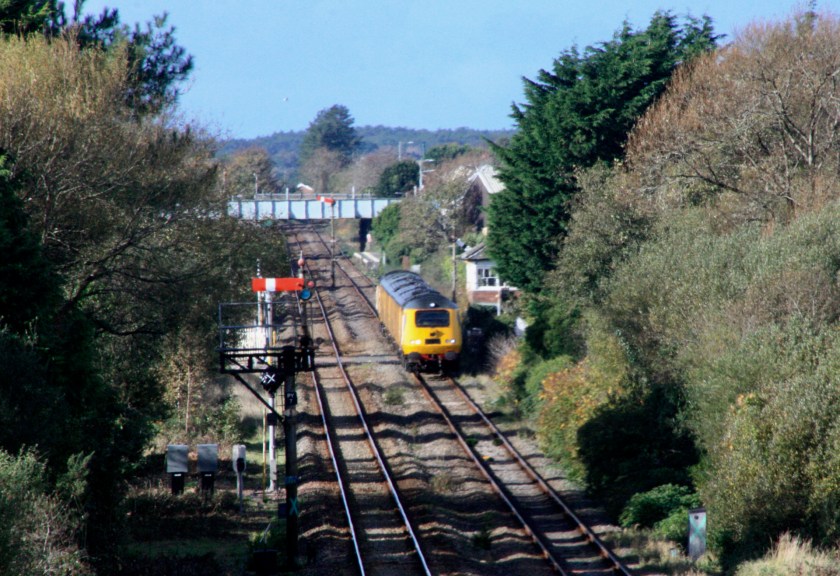
43013/14 pass Pembrey Signal Box on 22 October 2025 with 1Q16 from Landore to Derby RTC

Another piece of railway history was written at 11.16 on Wednesday, 22 October 2025, when Network Rail “flying banana” test train 1Q16 became the last ever high speed train (HST) to pass the semaphores controlled by Pembrey Signal Box.

Just eight days before the box closes as part of the long-delayed Port Talbot West 2 (PTW2) re-signalling project, Colas Rail-operated power cars 43013/14 headed east towards Derby after their monthly tour of West Wales branches, and visits to Milford Haven, Fishguard Harbour and Pembroke Dock.

Continue reading “Last HST to pass the Pembrey semaphores”

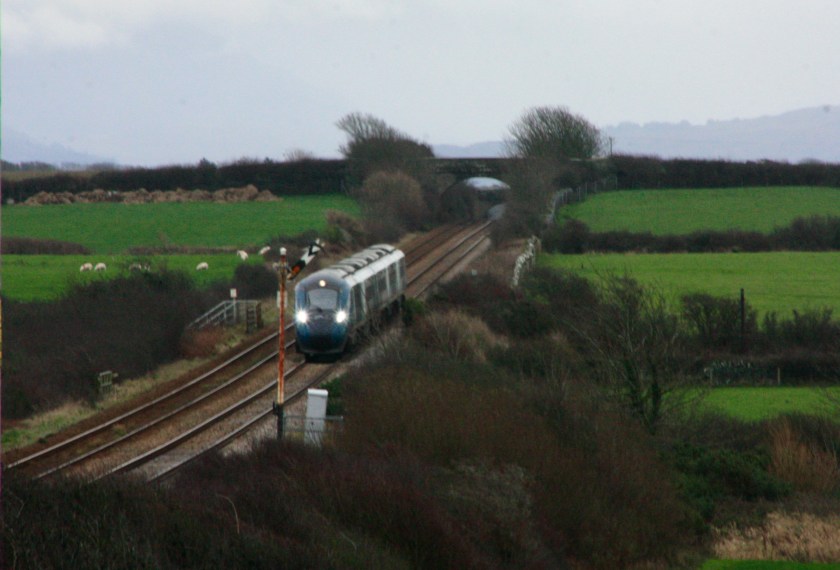
The new order and the old at Liskeard


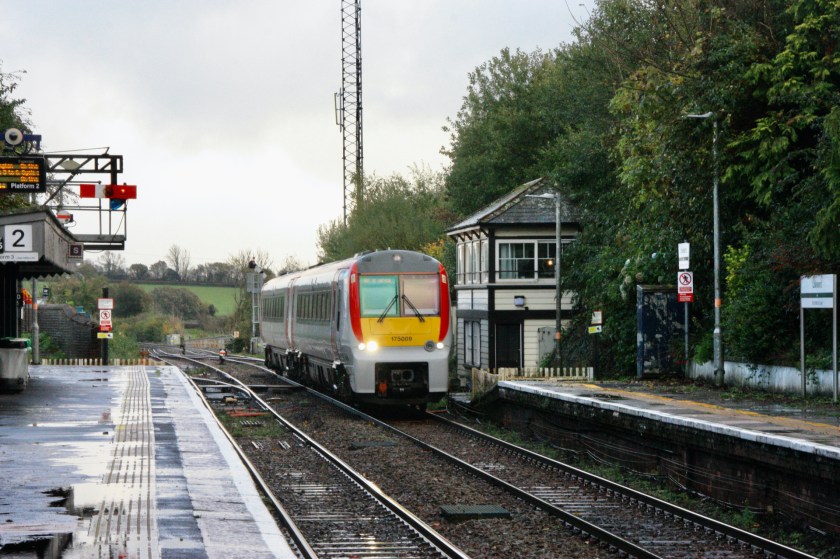
175009 approaches Liskeard with training run 5Z13 from Newton Abbot to Penzance

Less than two months before withdrawal of the GWR Castle HST sets in mid-December 2025 and with crew training now beginning on the replacement Class 175 units meant the perfect excuse to pay a return visit to Liskeard on 20 October 2025 to capture the changing face of Cornwall’s main line.

Despite pretty dire weather for much of the day, a few hours on the rather photogenic station meant a chance to photograph 175009 on two of the day’s crew training runs along with the only two Class 255 HST “Castle” sets in action that day, after the third diagram had been curtailed and replaced with a two-car Class 150 unit.

Continue reading “The new order and the old at Liskeard”

Return to the Rhodope Mountains

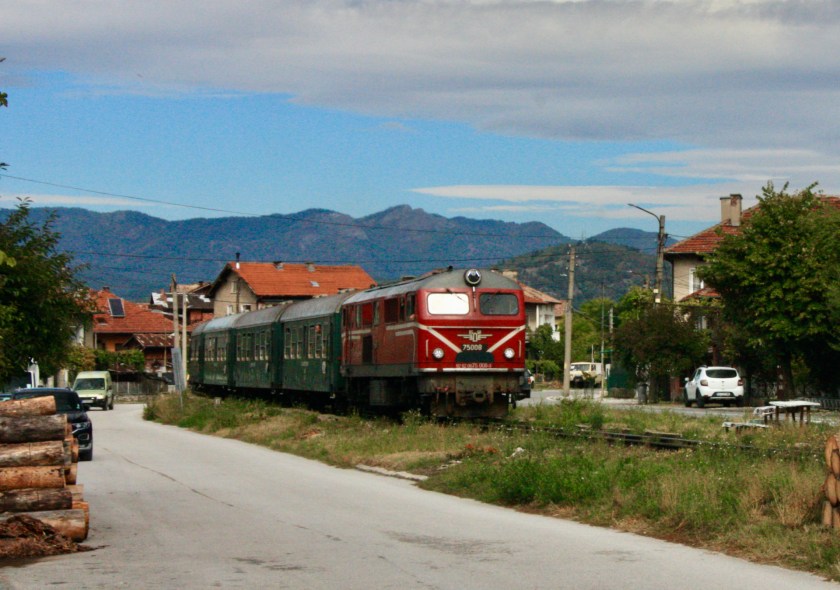
75-008 approaches Velingrad South on 9 October 2025 with the Mesta from Septemvri (12.40)

After my summer visit to the wonderful Douro Valley in Portugal it is time to pay a return visit to another delightful outpost of heritage rolling stock in Continental Europe and the one and only narrow gauge railway run by Bulgarian state operator BDZ, the Septemvri-Dobrinishte railway.

For the fourth time in four years I am back at Velingrad “Spa capital of the Balkans” to travel and photograph this remarkable 78-mile (125km) long 760mm (2’ 6”) gauge route that wends its way up from a main line junction on the Sofia-Plovdiv route to the renowned ski resort of Bansko, and terminates at Dobrinishte, a few miles further on.

Continue reading “Return to the Rhodope Mountains”

Last days of the South Wales semaphores

150267 approaches Ferryside on 11 September with 2B52 from Pembroke Dock (07.07) to Cardiff

Only weeks remain before another outpost of lower quadrant semaphore signalling is consigned to railway history, when much-delayed re-signalling of the main line between Swansea and Carmarthen spells closure for four signal boxes and with it the loss of mechanical signalling at Pembrey & Burry Port and at Ferryside.

Paying what could well be my last visit to the area (on 10/11 September 2025) before the new signalling is commissioned on 3 November, my aim was to capture for one last time trains passing the handful of semaphores at both locations, hopefully including one of the route’s only scheduled freight workings, the oil tanks to and from Robeston Sidings, near Milford Haven.

Continue reading “Last days of the South Wales semaphores”

Branch line revival in SW France

Alstom Régiolis bi-mode unit 83523 approaches the former Saléchan station on 2 September 2025 with the 09.36 Luchon-Montréjeau service

After all the sadness at Felletin, proof that rural railways in France can be revived comes when I travel from the now rail-less town to Limoges by bus, then head south by rail via Toulouse to a place south-west of Toulouse called Montréjeau-Gourdan-Polignan to sample a 36km (22½-mile) branch line to a ski resort called Luchon that re-opened to passengers on 22 June 2025, after being closed since November 2014.

The Occitanie région of France seems to have a rather different approach to rural railways to that prevailing in Nouvelle-Aquitaine and this eagerly-awaited re-opening, after a total investment of €67 million, is planned to be the first of a number of railway revivals across this part of southern France.

Continue reading “Branch line revival in SW France”

Final train to Felletin

Fireworks and a huge demonstration greet railcar X73810 on arrival with the last train to Felletin

Shortly before 7.15pm on Sunday, 31 August 2025 the 143-year life of Felletin railway station was brought to an end when railcar X73810 drew into the station with train TER 868716 from Limoges Bénédictins, setting off numerous detonators as it drew in, and became the last ever passenger train to serve this attractive small town in the Nouvelle-Aquitaine region of Central France.

Despite an energetic local campaign, with demonstrations, an anti-closure petition attracting more than 30,000 signatures and a visit by local dignitaries to meet political leaders in Paris, the scenic 33km (21-mile) branch line from a junction at Busseau-sur-Creuse, around 60 miles east of the city of Limoges, has gone the way of so many similar rural lines across France.

Continue reading “Final train to Felletin”

Rendezvous at Ramsbottom

34092 storms away from Ramsbottom on 22 August 2025 with the 10.40 Heywood-Rawtenstall

Concluding my trio of summer visits to heritage railways affiliated to the Watercress Line – meaning free travel for working volunteers like me – I head north for an overnight stay in Bury and a couple of days on the charming East Lancashire Railway (ELR).

The town’s former main station, Bury Bolton Street, is headquarters of the 12½-mile line, which from there runs three miles east to Heywood and a link to the national Rail network at Castleton and 9 miles north alongside the Irwell River to Rawtenstall.

Continue reading “Rendezvous at Ramsbottom”

Sun and semaphores at Droitwich Spa

172335/008 pass Droitwich Spa Signal Box with 2V52 from Dorridge (12.03) to Worcester FS

Planning on taking a day train trip from Cheltenham Spa to Bridgnorth to reacquaint myself with the fully re-opened Severn Valley Railway, I was persuaded to put off my SVR journey by a day when I spoke to a couple of enthusiasts in the Cafe Loco at Worcester Shrub Hill to ask why Rail Operations Group Class 37 37800 Cassiopeia was parked up in the centre siding.

I learned that it was there to provide Thunderbird breakdown cover for Porterbrook’s converted Class 319 Hydroflex unit 799201, which was scheduled to be making a test run from Long Marston to Shrub Hill and back later in the day (12 August 2025), but also heard of another interesting special working that day departing from the rail storage facility at Long Marston.

Continue reading “Sun and semaphores at Droitwich Spa”

Vintage British diesels in the spectacular Douro Valley

1461 crosses the Tua River on 7 August 2025 with IR869 from Porto Sao Bento (13.20) to Pocinho

Imagine one of Europe’s most scenic railway lines, almost 100 miles in length, where virtually all services are worked by vintage British-designed diesel locos from the 1960s hauling equally-aged passenger coaches, with the added bonus of a seasonal weekend historical train along part of the route.

It may sound too good to be true, but this is the Douro Line in Portugal (Linha do Douro) which runs inland from Porto along the north bank – later crossing to the south bank – of the Douro River, and until a few years ago linked up a handful of remarkable narrow gauge railways that ran north from the Douro Line up picturesque tributary river valleys.

Continue reading “Vintage British diesels in the spectacular Douro Valley”