Portugal was once home to a fine collection of narrow-gauge railways, but their ranks have sadly diminished over recent decades until the present day, when just one route remains to give travellers a small taste of once was a truly fantastic collection of scenic little railways.
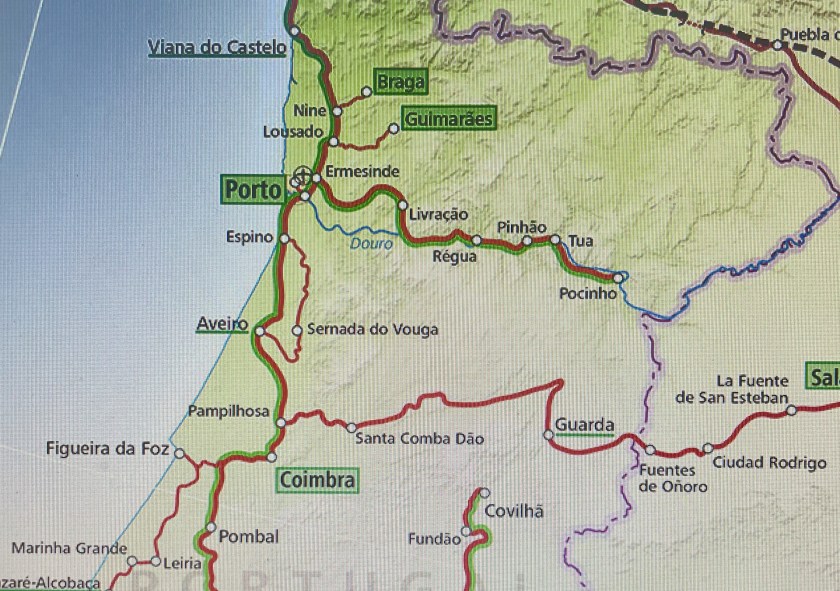
That last surviving metre-gauge line is the Linha do Vouga, which extends in a 96km (60-mile) loop inland from the seaside town of Espinho, on the main line not far south of Porto, to its headquarters at Sernada do Vouga, then westwards to via the town of Águeda to another junction on the main line leading south from Porto at Aveiro.
While the truncated Vouga system may lack the scenic splendour of the remarkable Corgo, Tâmega and Tua lines, which ran up tributary valleys north of the Douro River and finally closed in 2009, it nevertheless remains an interesting and remarkable survivor, now enjoying a new lease of life after years of being under threat of closure.
Substantial investment is being made in the Vouga system and, after having been replaced by a twice-daily replacement taxi service for over a decade, this year (2026) should finally see re-opening of a central section of the line between Oliveira de Azeméis and Sernada do Vouga that has seen the Vouga operated as two separate services since that central section was closed to public services in 2013.
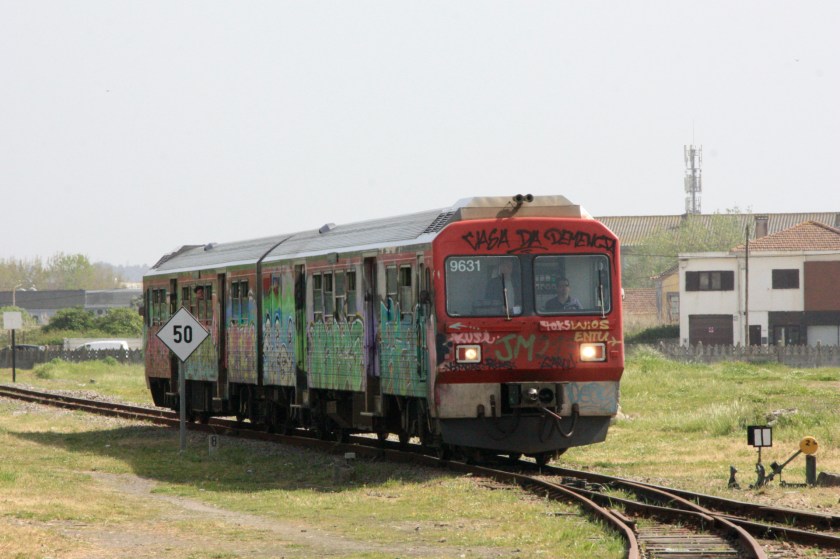
In late 2023 the Portuguese government granted road and rail infrastructure manager Infraestruturas de Portugal approval for a €4·9m project to begin rehabilitation work on this 30km (18¾-mile) Oliveira de Azeméis–Sernada do Vouga section of the route. Work has included station refurbishment, track renewal and installation of modern signalling to protect level crossings.
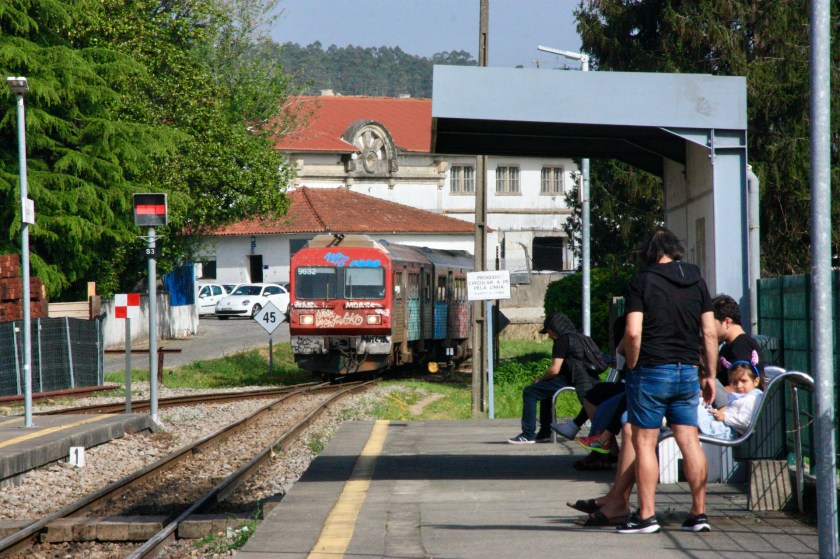
This approval followed work on the 15kms (9½-miles) between Águeda and Sernada do Vouga, and 12km (7½-miles) of route from Oliveira de Azeméis to Santa Maria da Feira. Meantime a study is being carried out on a short extension the route in Espinho to bring services back to the new CP main line station.
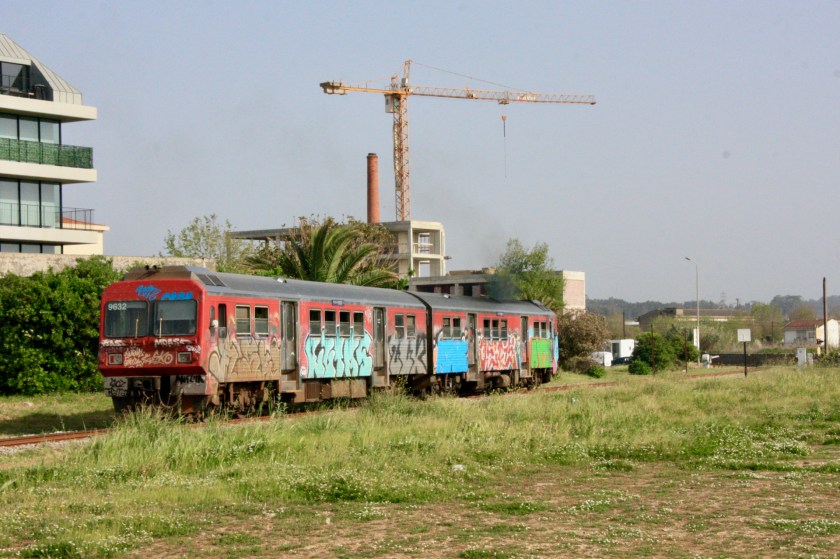
Following work on upgrading the southern end of the Vouga Line, between Sernada do Vouga and Aveiro, the current timetable has a total of eight through services, as well as two others running from Aveiro through Águeda as far as the museum station of Macinhata, just short of Sernada do Vouga. That compares with just two Aveiro-Sernada do Vouga services shown in my 2002 Vouga timetable.
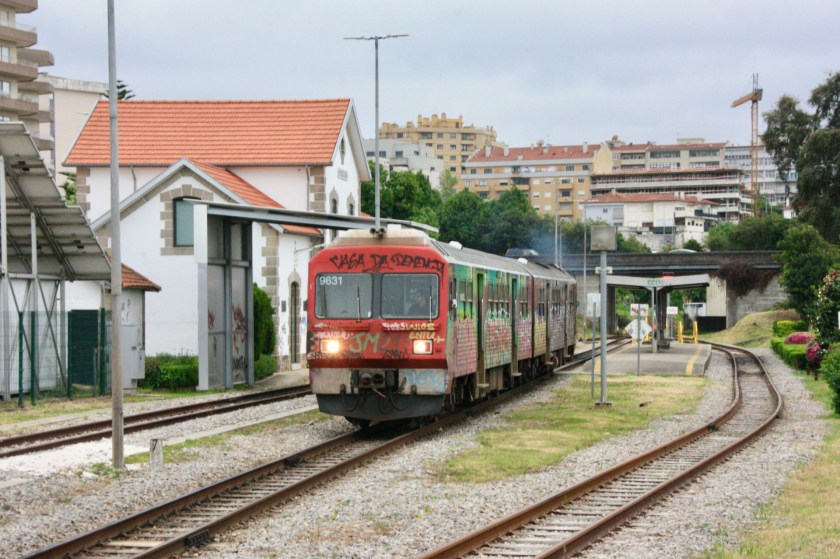
Returning to the Vouga system for the first time since my only previous visit (August 2004), I spent the weekend (10-13 April 2026) in a fine seafront apartment in Espinho and planned to take a few trips over the course of a long weekend to re-visit Sernada do Vouga, the railway museum nearby at Macinhata, and to sample the long-running taxi replacement service!
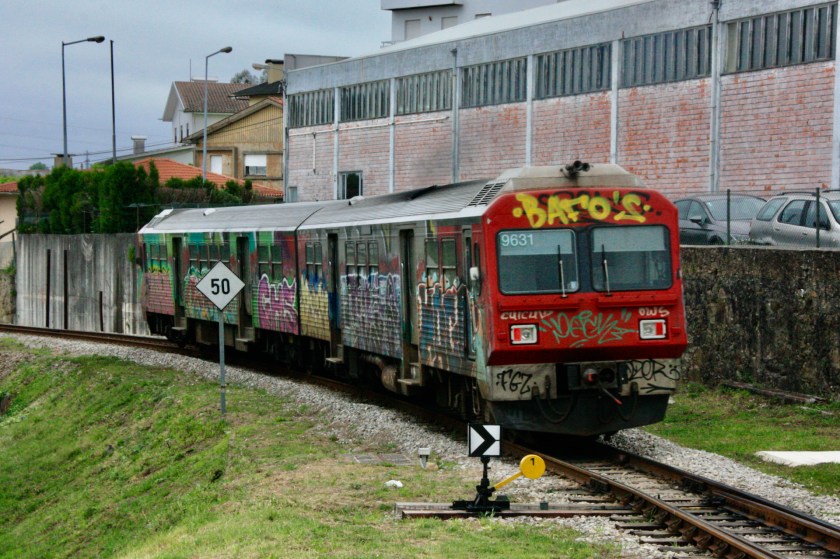
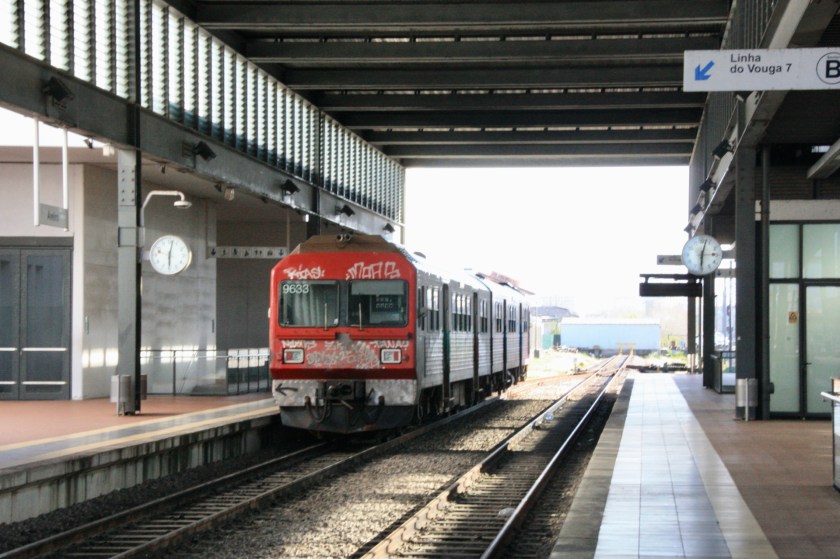
Current passenger operations on the two separate sections of the Vouga system are provided by a fleet of seven two-car Série 9630 diesel multiple units (9631-37), which were built by local manufacturer Sorefame and delivered in 1991 as replacements for the previous ex-Yugoslav Série 9700 DMUs and Dutch-built (Allan) Série 9300 railcars.
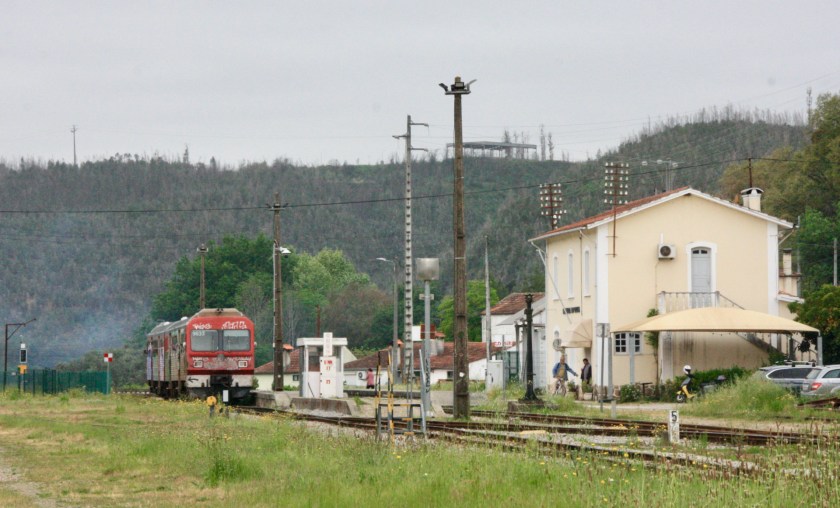
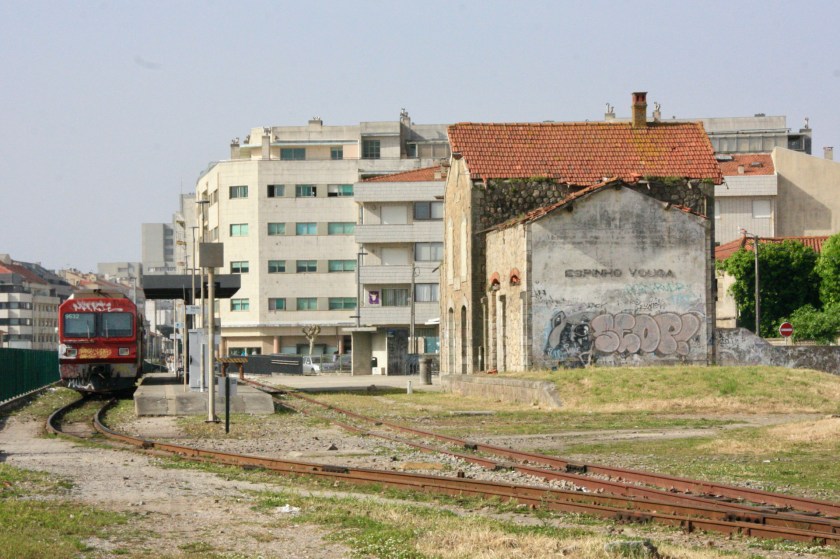
Services at the northern end of the Vouga route no longer serve the main line Comboios de Portugal (CP) station at Espinho, with metre-gauge services having been truncated when the main station was moved underground (in 2008) to terminate at a halt 500 metres south of the main station called Espinho-Vouga.
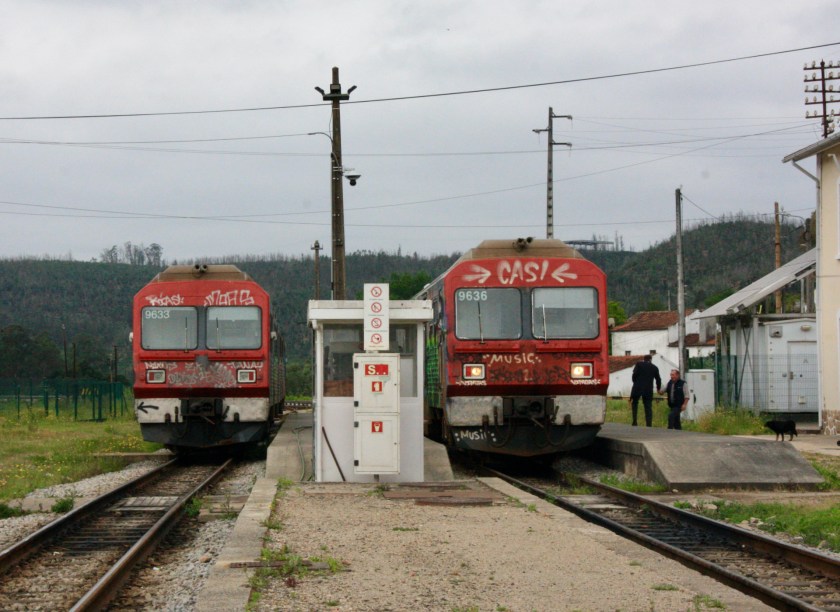
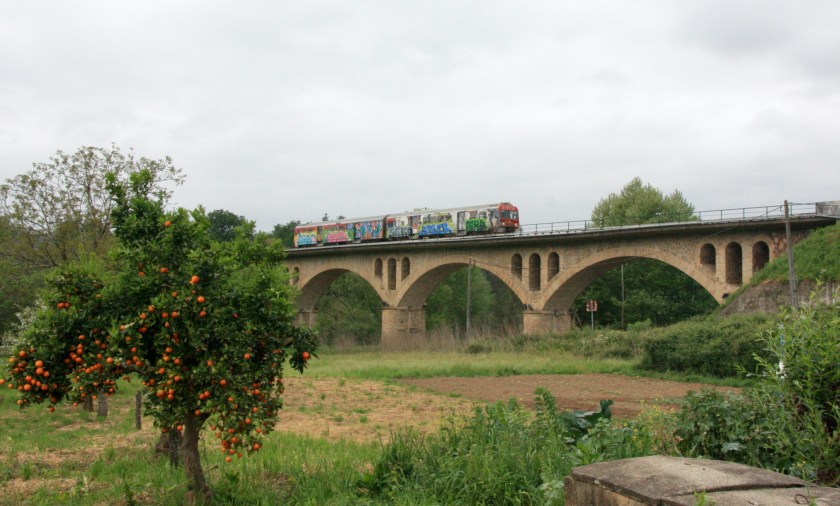
Beginning my metre-gauge weekend after taking a 20-minute suburban train ride from Porto to Espinho on Friday, 10 April 2026 I took an easy five-minute walk from the new subterranean main line station, and the first and most obvious thing to note is that all the narrow-gauge railcars are covered in hideous graffiti, something which does not seem to affect the main line rolling stock, and a very depressing sight.
A second thing to note is that one coach is far noisier than the other, being on top of the 35-year old motors powering the 9630 series railcars. Once inside the quieter vehicle the challenge then is to find a window that you can see out of, since the lower part of most has been obscured by graffiti, with nothing seemingly done to remove it.
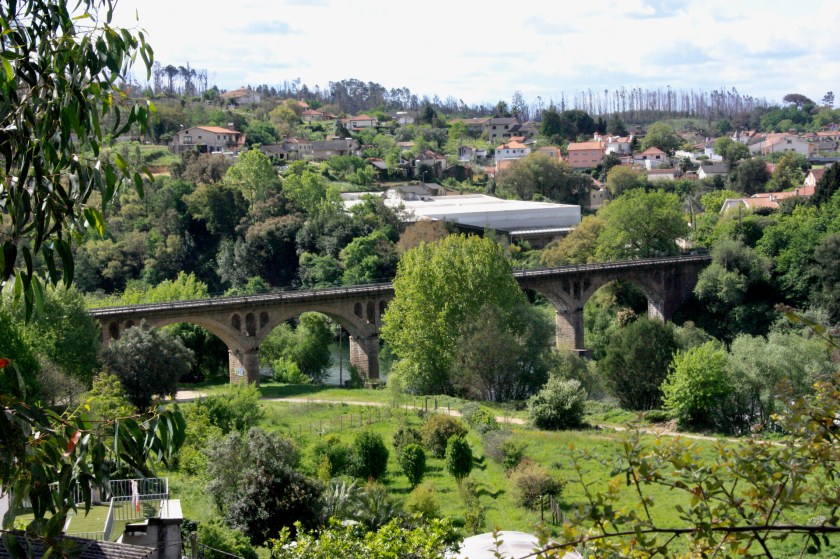
For my first trip on the Vouga system I joined a huge crowd of school children and others on a short journey to the first of the three passing places on the route and a place called Paços de Brandão, where I found a pleasant bar outside the station and had a welcome first taste of Portugal’s national beer, Super Bock, before returning to Espinho-Vouga, from where my seafront apartment was a mere three-minute walk away.
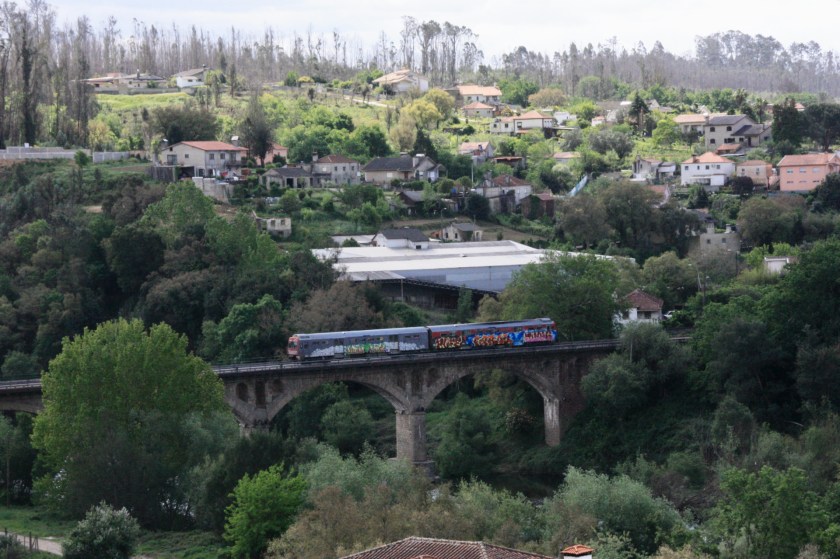
Intent on sampling the whole Vouga system the following day (Saturday, 11 April 2026) I travelled out on a much more lightly-loaded railcar to its temporary terminus at Oliveira de Azeméis, photographing its departure and then having a 40-minute wait for my replacement taxi, timed to connect with the following arrival from Espinho-Vouga.
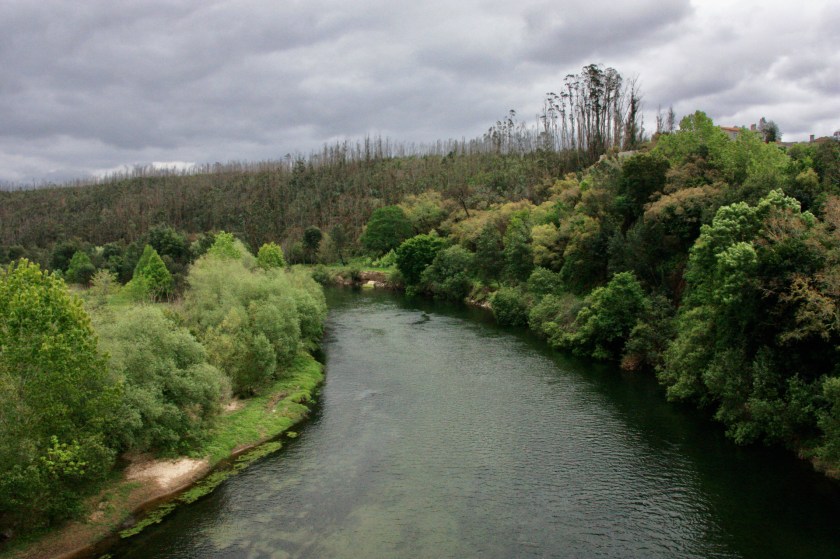
Sitting outside the deserted station I had my doubts that anything would turn up, but right on schedule at 10.30 two local taxis turned up. I was the only taker and then had to wait while the driver went into the station and returned with my ticket – unlike all my other journeys this could not be booked on the CP app – and I paid the princely sum of €3.25 (£2.80) for the interesting 40-minute trip to Sernada do Vouga, seeing much of the currently-closed railway on the journey, and repeated the experience the following day.
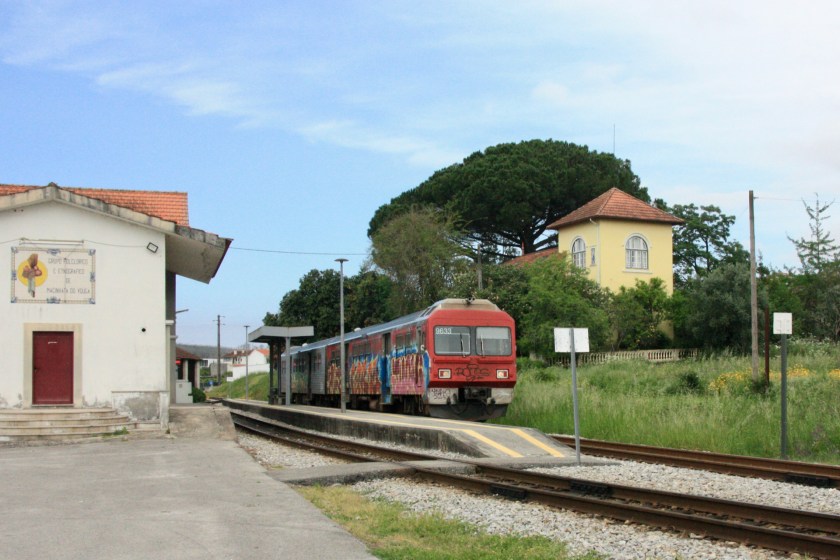
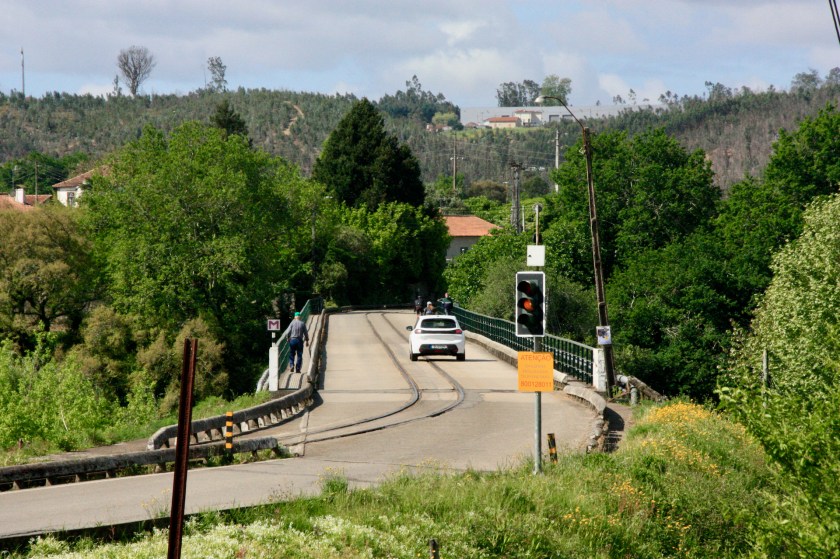
Sernada do Vouga is a small and sleepy place, but home to the railway workshops, with a delightful watering hole in the station called Vieira’s Bar – a chance for some more Super Bock – and an impressive viaduct over the River Vouga called the Ponte sobre o Rio Vouga, which the railway shares with a road that is closed to traffic when a train crosses it.
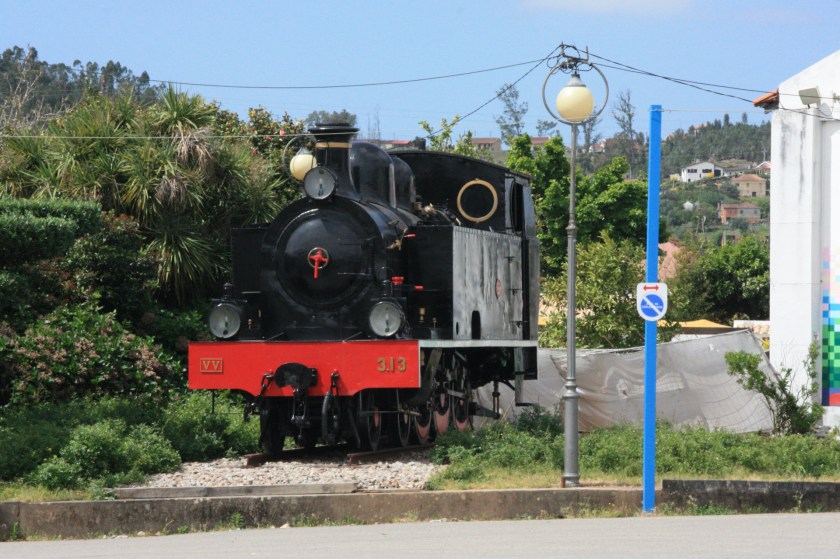
After my leisurely lunchtime break here I took the short trip to the first station on the route to Aveiro, Macinhata, where there is an excellent railway museum celebrating Portugal’s narrow gauge railways, and home to four preserved steam locos and a number of historic railcars – all happily graffiti-free.
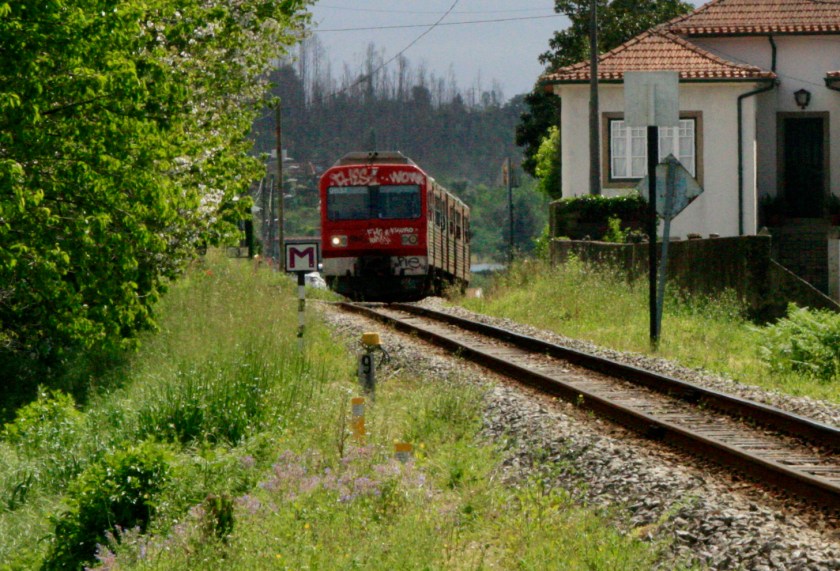
From Macinhata I travelled on to the principal town on this section of the route, Águeda, taking an afternoon break here before continuing on to Aveiro, where in a change to the situation on my only previous (2004) visit, Vouga trains now come into the main CP station, rather than terminating some distance away. Aveiro back to Espinho takes around 35 minutes on one of the regular main line suburban trains.
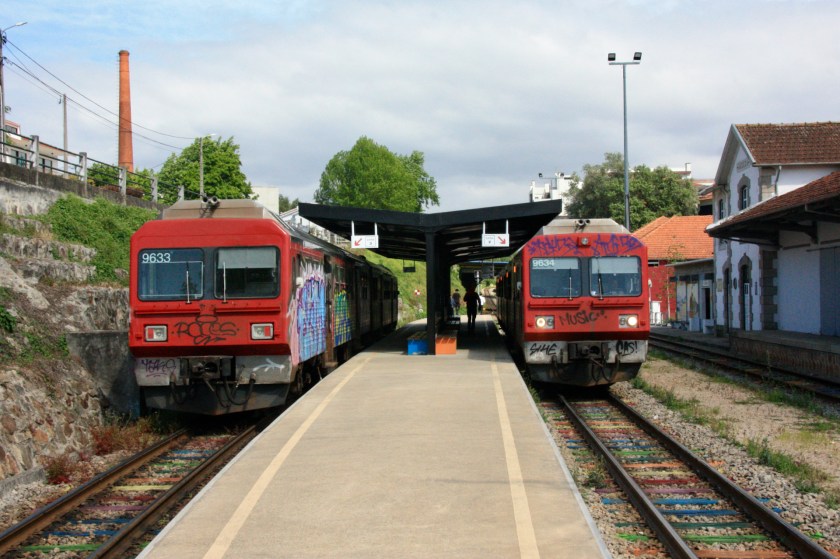
Aside from the hideous graffiti, which really needs to be dealt with, the Vouga system is a delightful railway to spend a couple of days travelling. The route is very scenic in parts and the trains seem completely devoid of tourists, CP fares are very modest and Espinho is a pleasant place to stay, with a number of very fine seafood restaurant just yards from my seafront apartment (Guest House A&Z – highly recommended).
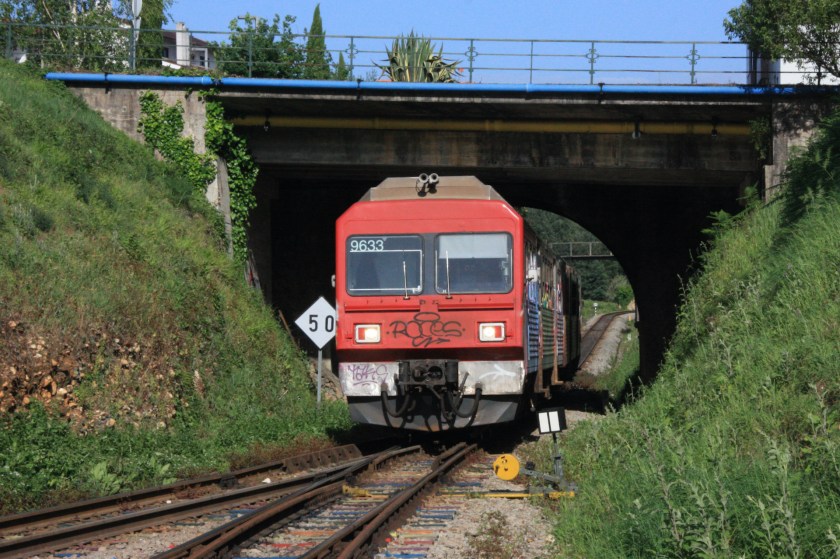
Besides regular DMU services along the Vouga, CP also operates a seasonal historic service between Aveiro and the museum station at Macinhata do Vouga using historic carriages and powered for most of the year by preserved and blue-liveried Bo-Bo diesel 9004 (Alstom, 1958), with steam power (Mallet 2-4-6-0T) E214 (Henschel, 1923) confined winter services, due to fire risk.
Today’s surviving Vouga system is the truncated remains of what was once a much more extensive metre-gauge network. This comprised a route heading eastwards from Sernada do Vouga to a town called Visieu, which closed in January 1990, and another line heading south from Visieu to Santa Comba Dão, the Dão Line, closed in 1988.
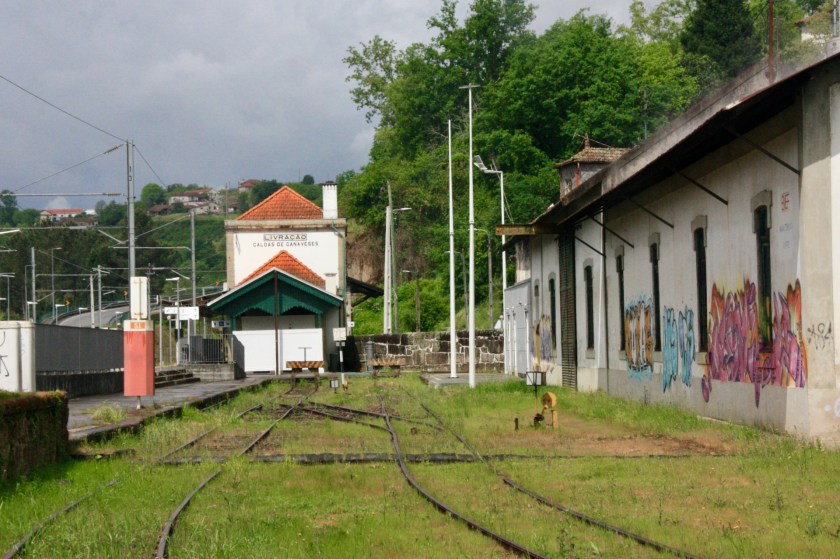
Having done two complete tours of the Vouga system over the weekend (11/12 April 2026) and with time on my hands before my flight home from Porto on 13 April, I took a short trip up the Linha do Douro to revisit the former junction at Livração, from where I had caught a metre-gauge Tâmega Line railcar to Amarente in August 2004, five years before closure of the line in 2009.
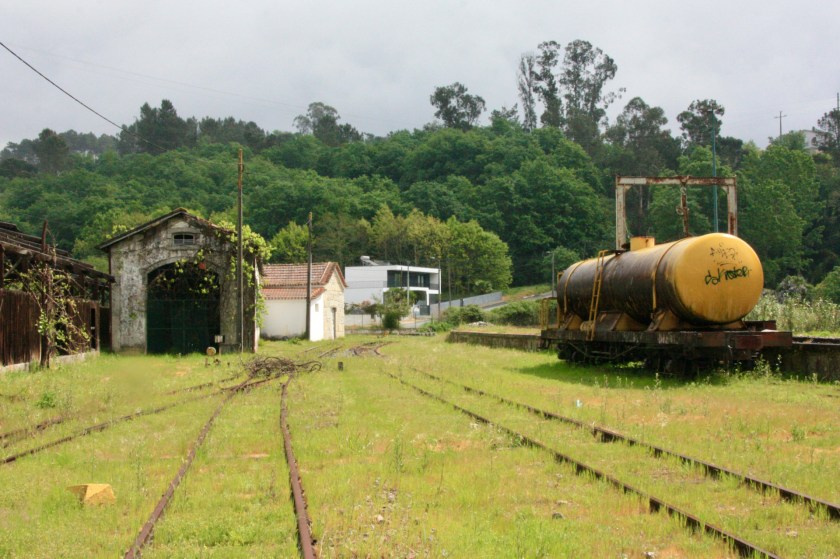
The metre gauge tracks in the station remain completely intact 17 years after closure, as seen above, although the track is lifted from just beyond the station complex, while in a locked engine shed (pictured above) you can get tantalising glimpses of two stored (preserved) steam locomotives, E143, a Mikado 2-8-2T (Henschel, 1931) and E162, a Mallet 0-4-4-0T (Henschel, 1905).


You must be logged in to post a comment.