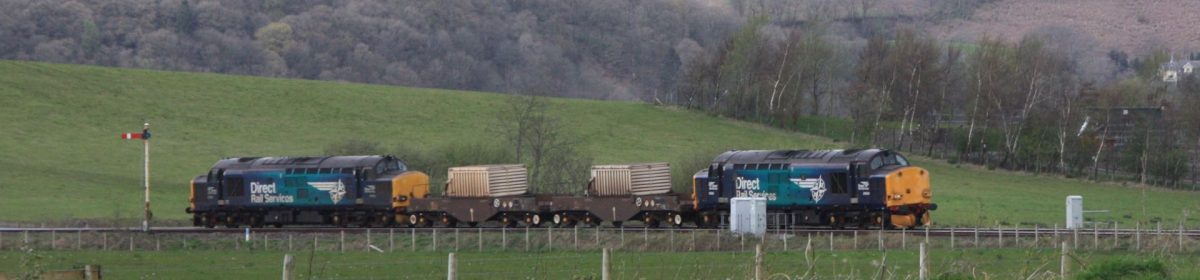
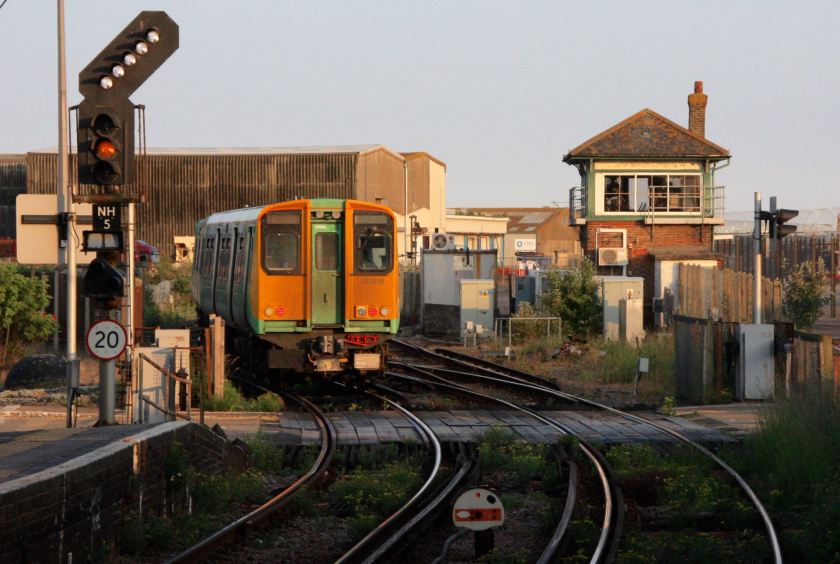
 During the long hot summer of 1976 I arrived at Newhaven Marine on a boat train from London Victoria on my first teenage visit to Paris, boarding a Sealink ferry to Dieppe, where a connecting train whisked me off to Gare St. Lazare in the French capital.
 Paying a return visit to Newhaven 41 years later it is sad to see that Newhaven Marine station appears to have just been demolished, albeit more than a decade after it saw its last passengers. It effectively closed in 2006, due to safety concerns, and would be passengers were re-directed to the nearby Harbour station. Continue reading “Ghost train to Newhaven Marine”
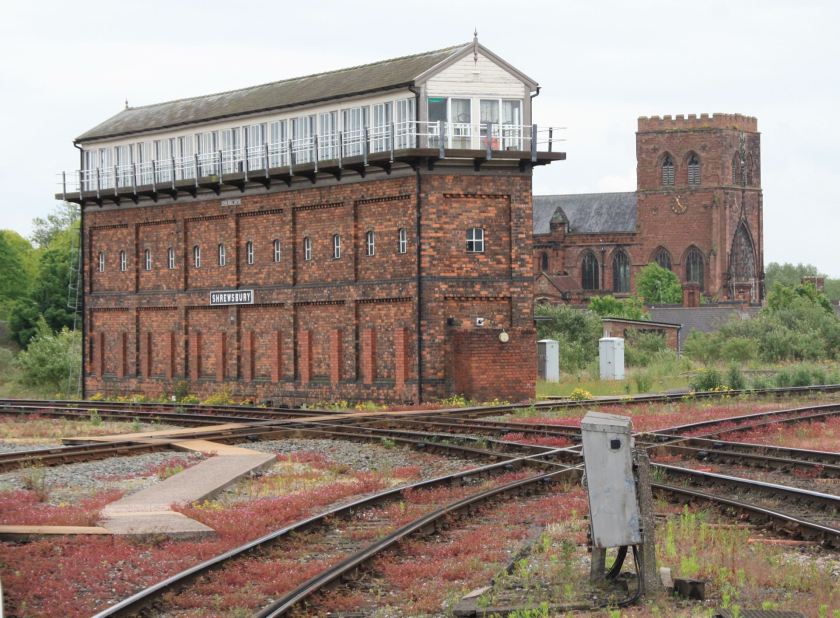 Anyone with an interest in our signalling heritage simply must pay a visit to Shrewsbury, home to the world’s largest working mechanical signal box, Severn Bridge Junction. This is one of three boxes that can be seen from the station platforms, along with more than two dozen working mechanical signals.
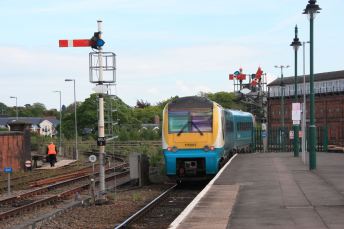 Amongst these, the real gem is SBJ11, a pair of extremely rare lower quadrant centre pivot signals controlling the southern end of platform 7. Severn Bridge Junction is one of two listed boxes at Shrewsbury, the other being the almost equally impressive Crewe Junction box at the north end of the station, where the route to Crewe diverges from the line to Chester.


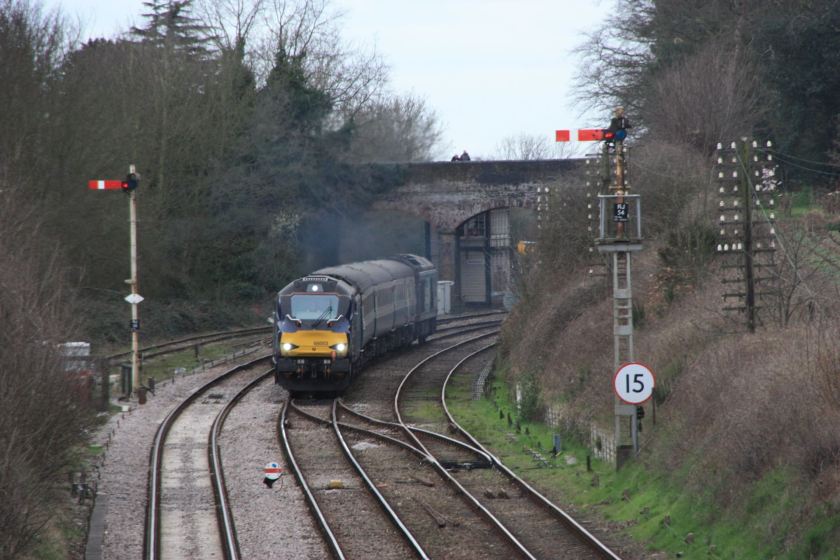 Reedham can claim to be one of the most picturesque places on the Norfolk Broads, but for me the real magic of the place is finding a country junction on the busy Wherry Lines route from Norwich to Lowestoft, where a branch diverges off for Berney Arms and Great Yarmouth, complete with fine signal box, an array of semaphore signals and a working swing bridge, with a very pleasant pub alongside.
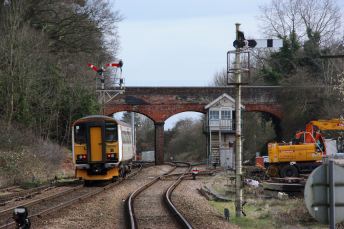 From a photographic point of view, Reedham has everything, with good vantage points from no less that three road over bridges, all within a mile of the station and one offering a view over the swing bridge, as well as panoramic views of trains as they head in a south easterly direction to and from the terminus at Lowestoft.


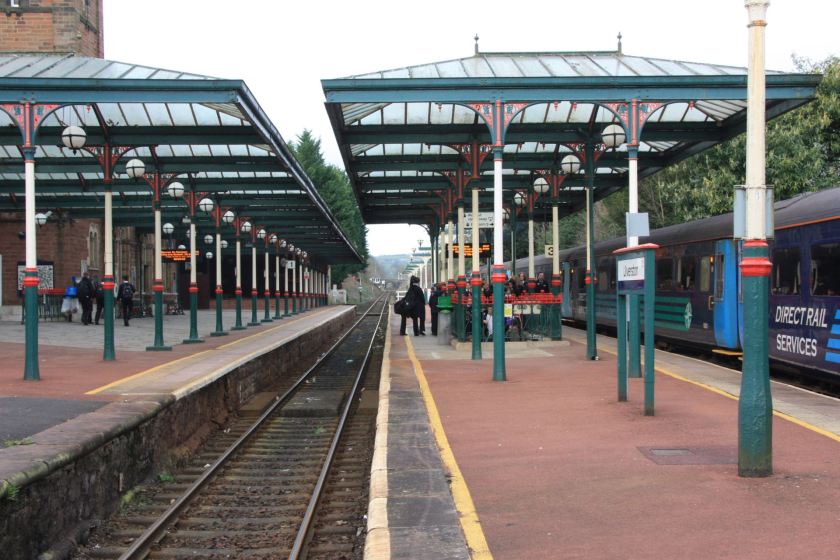 There are numerous photogenic locations on the Cumbrian Coast route from Lancaster to Barrow and on to Workington and Carlisle, but one which I found particularly attractive was Ulverston, birthplace of comedian Stan Laurel of Laurel and Hardy fame, and home to an attractive Grade II-listed station. This opened in 1874, replacing an earlier Furness Railway terminus station on completion of the route to Barrow.
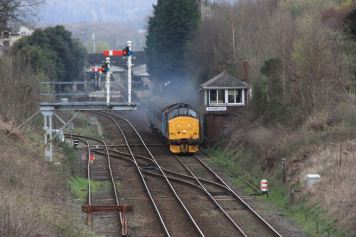 It has an unusual layout similar to that at Yeovil Pen Mill in having an island platform and a main down platform with platform 2 not in regular use (and not numbered) so all up trains serve platform 3, while in the down (westbound) direction train doors are only opened on platform 1.
 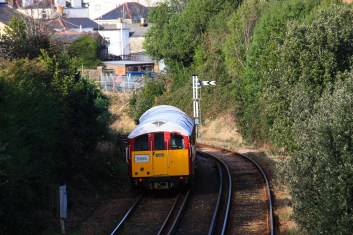 Spending £172 to buy an annual season ticket covering a one-mile train journey on the picturesque Isle of Wight may sound like a rather bizarre way to save money on rail travel, but it is a deal which savvy rail travellers in London, the south of England, the West Midlands and East Anglia would do well to consider.
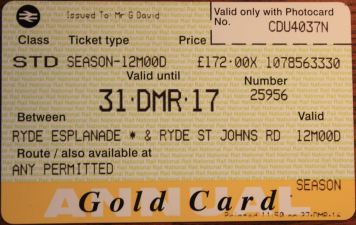 While the annual “Gold Card” from Ryde Esplanade to Ryde St. John’s Road covers a journey which few of us will ever make, as the cheapest such ticket for any daily journey within the South West Trains franchise area, it represents a sound investment for anyone not qualifying for any railcard apart from the Network Railcard and looking to save money on their train travel.
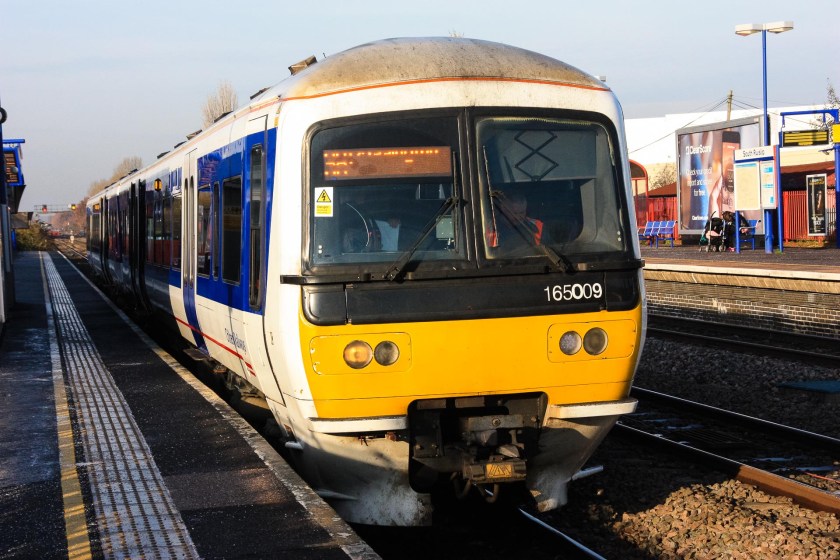 Take a trip out of London on a West Ruislip-bound Central Line service and for a lengthy part of the journey – from North Action to South Ruislip – a little used and partly single track railway line runs alongside, and there are even a clutch of mechanically-worked semaphore signals to be seen as the tube train approaches Greenford station.
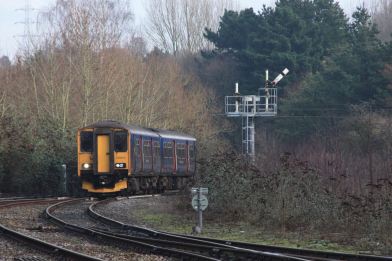 Despite having been scheduled for replacement during 2016, Yeovil Pen Mill signal box remains an isolated outpost of semaphore signalling in the south of England, where the nearest surviving manual signals are those at Liskeard in Cornwall and at Marchwood on the freight-only Fawley branch near Southampton.
 RailwayWorld.net
You must be logged in to post a comment.