Having enjoyed the sight of some interesting special workings in Devon and Cornwall over the past couple of weeks, the promise of more loco action tempts me to pay my first visit for two and a half years (on 2 July 2026) to ever-charming Abergavenny on the Marches Line from Newport to Shrewsbury.
My last visit in January 2024 had led me to discovering a fine vantage point in some woods just south of the station and signal box, so after taking shots looking south from the station’s old footbridge, my plan was to venture back to this spot in the hope of photographing some loco workings passing the Abergavenny semaphores.
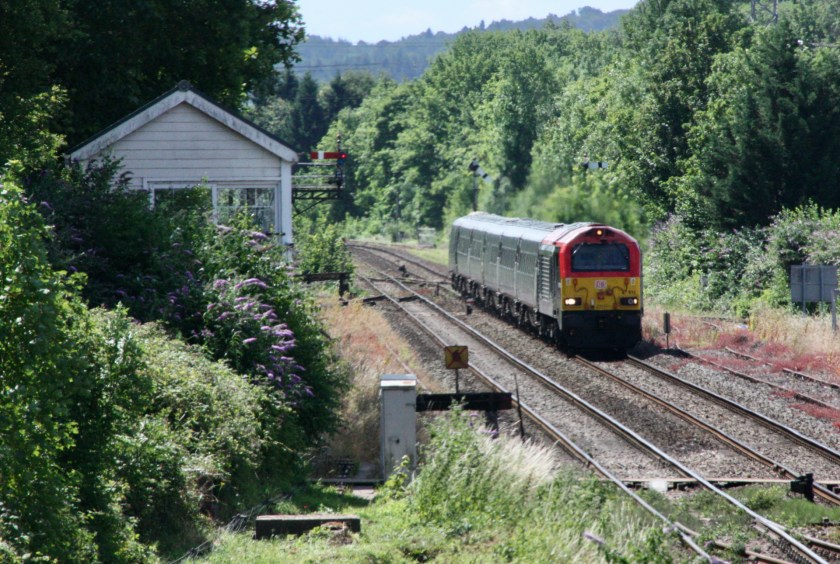
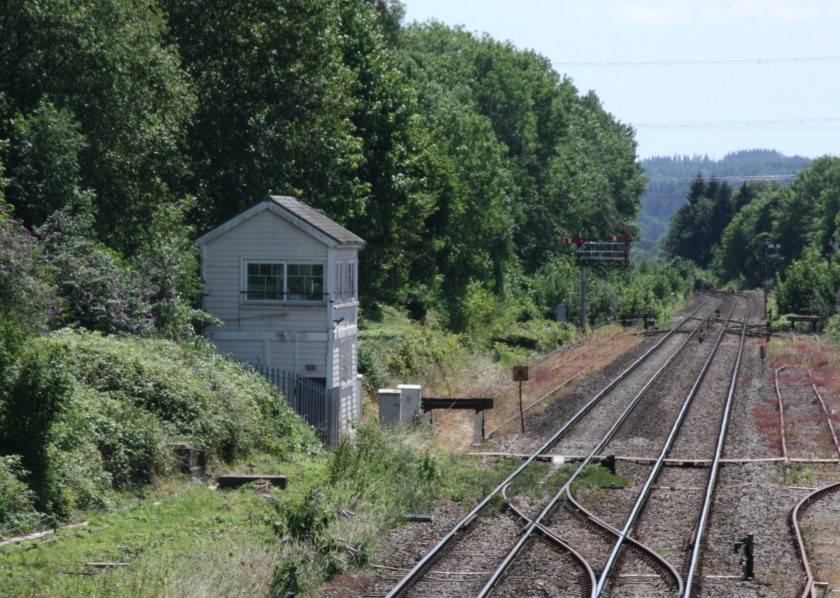
As I have written before, Abergavenny is one of those places that are always a pleasure to visit, with an excellent view looking south from original station footbridge towards its timber 1934 Great Western Railway signal box on the left, with most of its semaphore signals in view, along with a rare yellow shunting disc signal.
Abergavenny Signal Box controls a total of 11 semaphores, comprising four on the up (northbound) main line, four on the down main, with two controlling entry to a loop on the up side of the line and one controlling exit from a refuge siding on the down side of the line, immediately south of the signal box.
For those with a more detailed interest in its signalling, the northbound quartet comprise an outer home (AY2) on a bracket with a subsidiary signal for access to the up loop, a home signal (AY3), starter (AY4) and section signal AY5 at the north end of the lengthy up platform. All but AY2 can be seen from the station, with AY2 visible from a footpath crossing of the line south of the station.
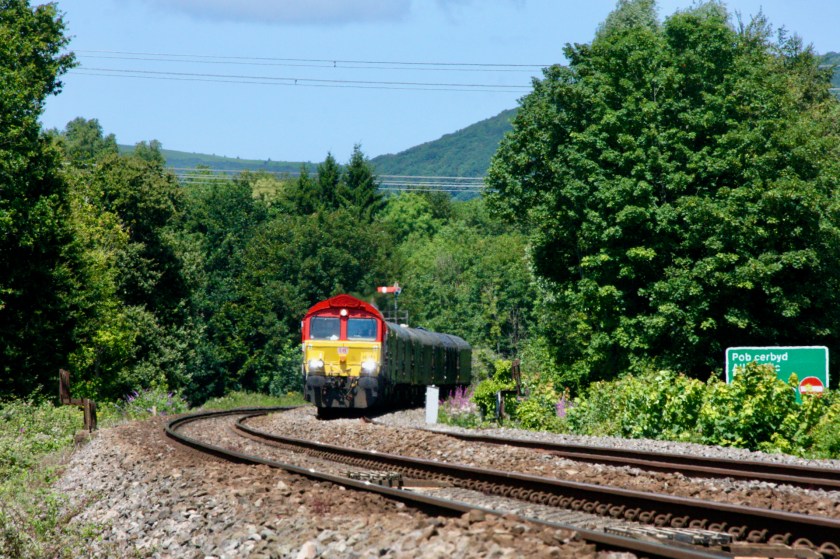
The four main semaphore signals in the down (southbound) direction comprise an outer home signal (AY51) that can be seen from a footbridge and road bridge north of the station, home signal AY50 that stands immediately in front of the original station footbridge at the end of the down platform, starter AY44 close to the signal box and section signal AY42 some distance beyond.
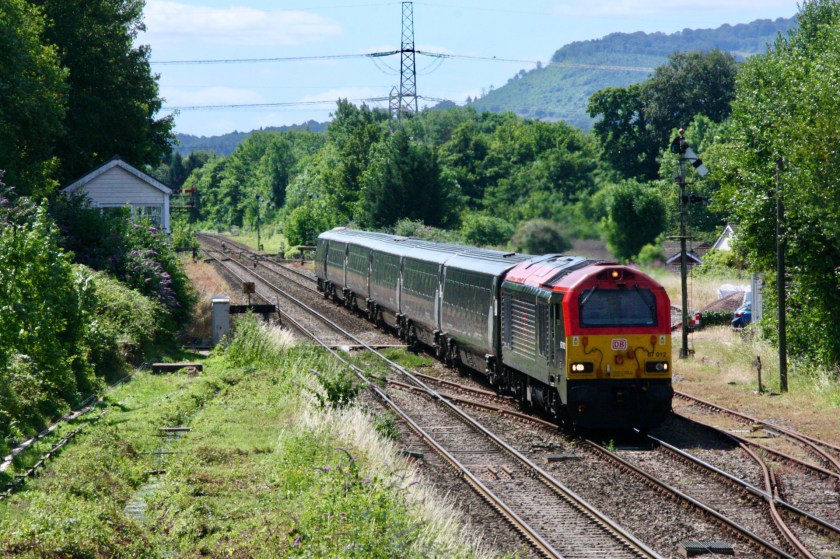
Weekday passenger services at Abergavenny largely comprise Class 197 units working services between Cardiff or West Wales (Milford Haven/Fishguard Harbour) to Holyhead and Manchester Piccadilly, with the loco-interest being a handful of Cardiff-Manchester services that are formed of DB Class 67 locos powering four MkIV coaches and a driving van trailer (DVT).
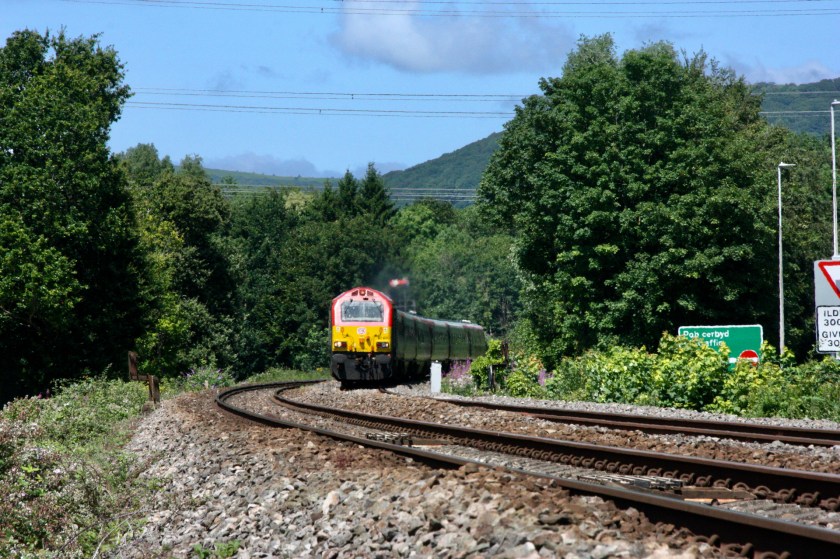
These Class 67-worked services are sadly prone to short-notice replacement by Class 197 units, and for photographers there is the added lottery of not knowing which end the loco will be on, but my time in Abergavenny on 2 July was scheduled to produce two pairs of these services, so I was hopeful that my luck would be in.
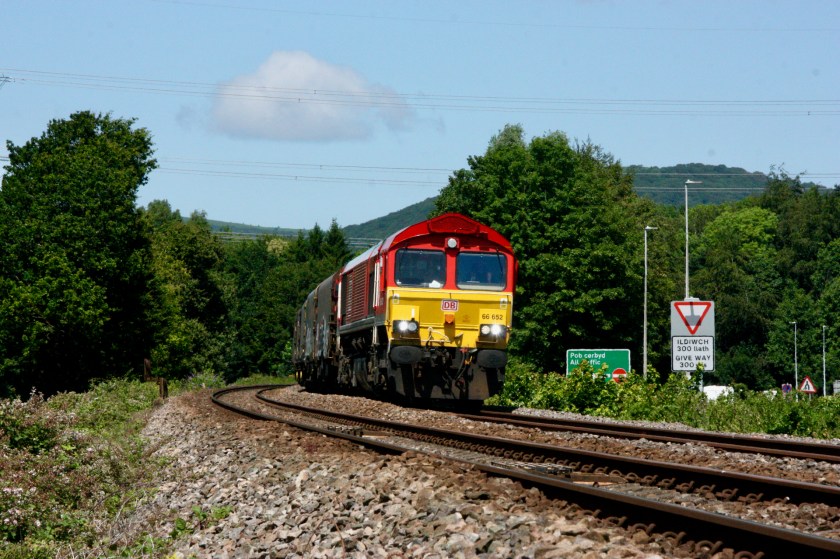
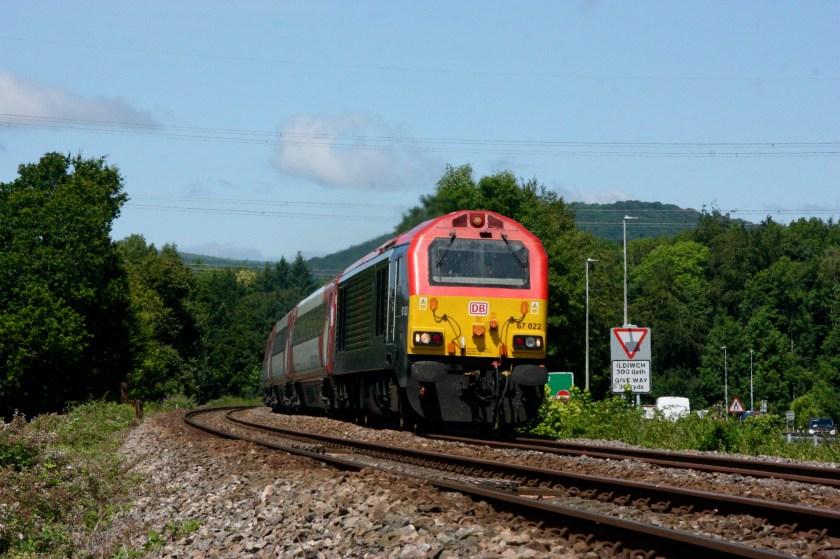
I did have some luck when two of the four scheduled Class 67 workings actually materialised, with TfW black-liveried 67012 and set HD04 passing at 11.33 with 1W57 from Cardiff Central (10.53) and 67022 with set HD02 working 1V39 from Manchester Piccadilly (10.30), with both locos leading their respective trains.
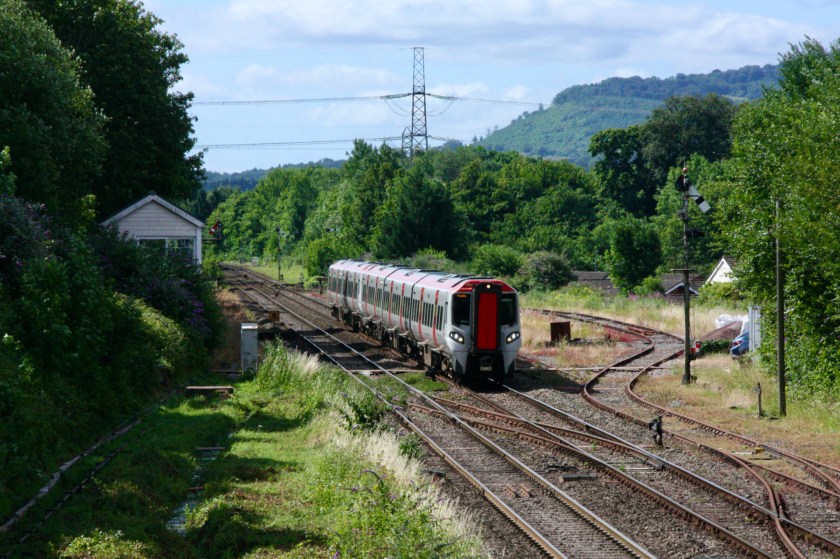
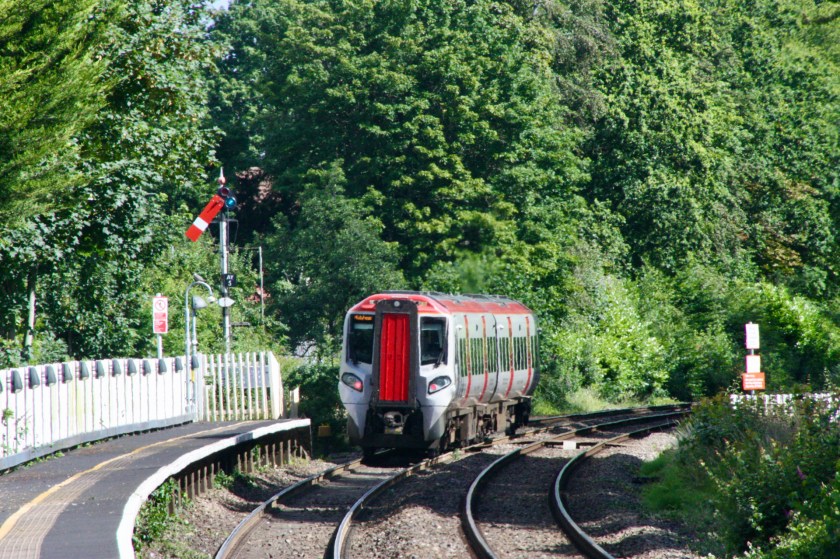
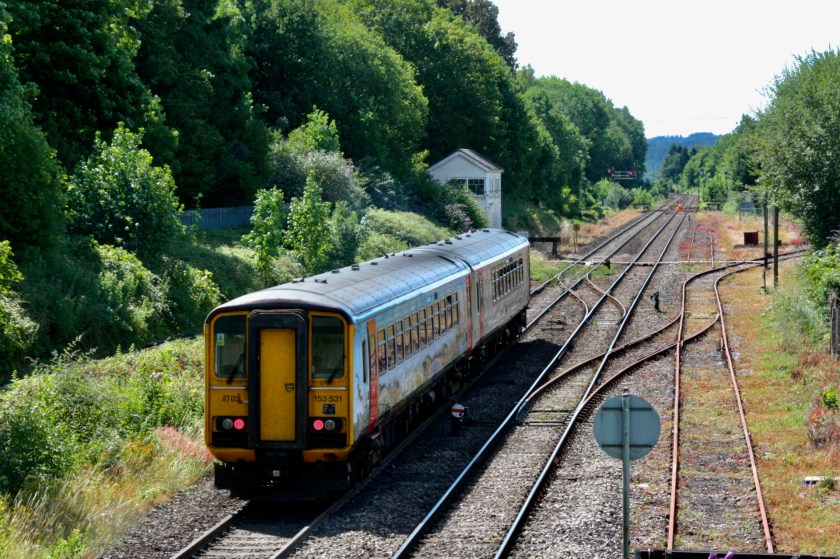
Another of the diagrammed Class 67 turns saw 197010/007 substituting for loco power with 1W59 from Cardiff Central (12.55) while most bizarre of all was the use of Active Travel set AT03 (153303/531) on 1V37 from Manchester Piccadilly (08.30) to Cardiff Central, as seen below, meaning passengers would find no first class or dining and very limited seating, but no shortage of cycle space!
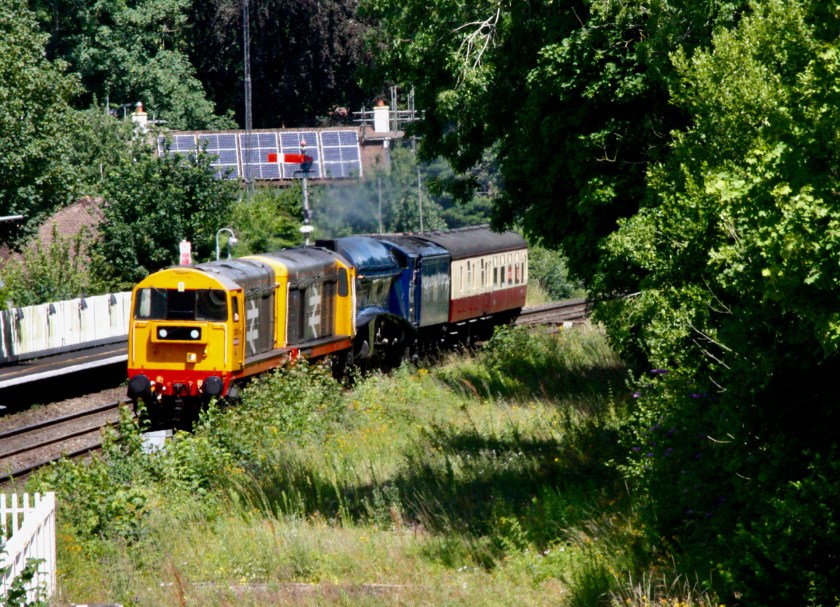
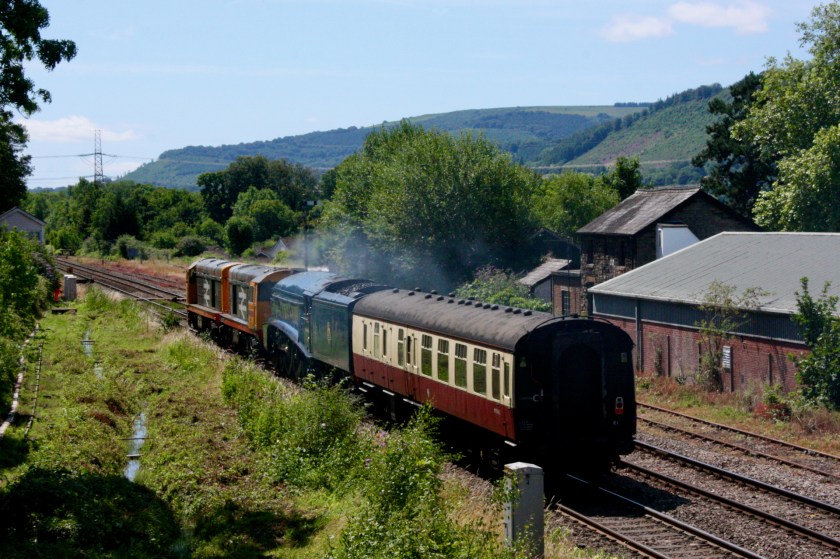
In addition to the Class 67s, there was the prospect of seeing a departmental working, the route’s one regular freight service – 6V75 from Dee Marsh to Margam – and, most interesting of all, a pair of Locomotive Services Limited Class 20 locos in British Rail Railfreight grey hauling LNER A4 60007 Sir Nigel Gresley (5Z07) from Crewe to Bishop’s Lydiard for the A4’s weekend guest appearance on the West Somerset Railway.
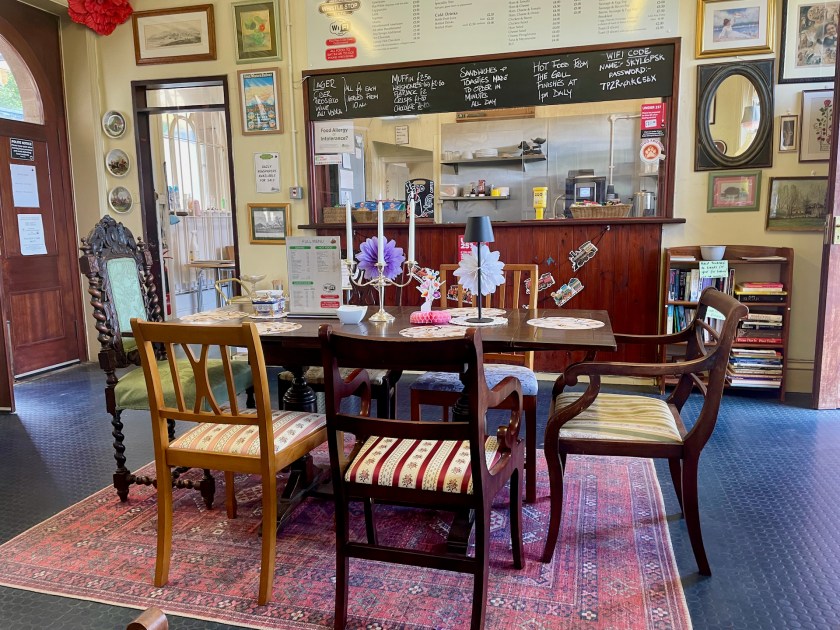
Whilst I could not find a way into the now-overgrown woods south of the station, and settled instead for a foot crossing close to A40 with a view of signal AY2, Abergavenny is a delightful spot to spend a few hours with a camera, and for a break from trains I can highly recommend the independently-run Whistle Stop café within the Grade II-Listed station building, as seen below.
Network Rail comes in for plenty of criticism for the way tracks become weed strewn and lineside vegetation appears to be allowed to spread un-checked, so having been concerned at how Abergavenny Signal Box was fast disappearing behind bushes, it was pleasing to note on my return to the station, after an absence of less than two hours, that the vegetation evident in my earlier photos had been significantly cut back, as seen below.


You must be logged in to post a comment.