Two days in Provence

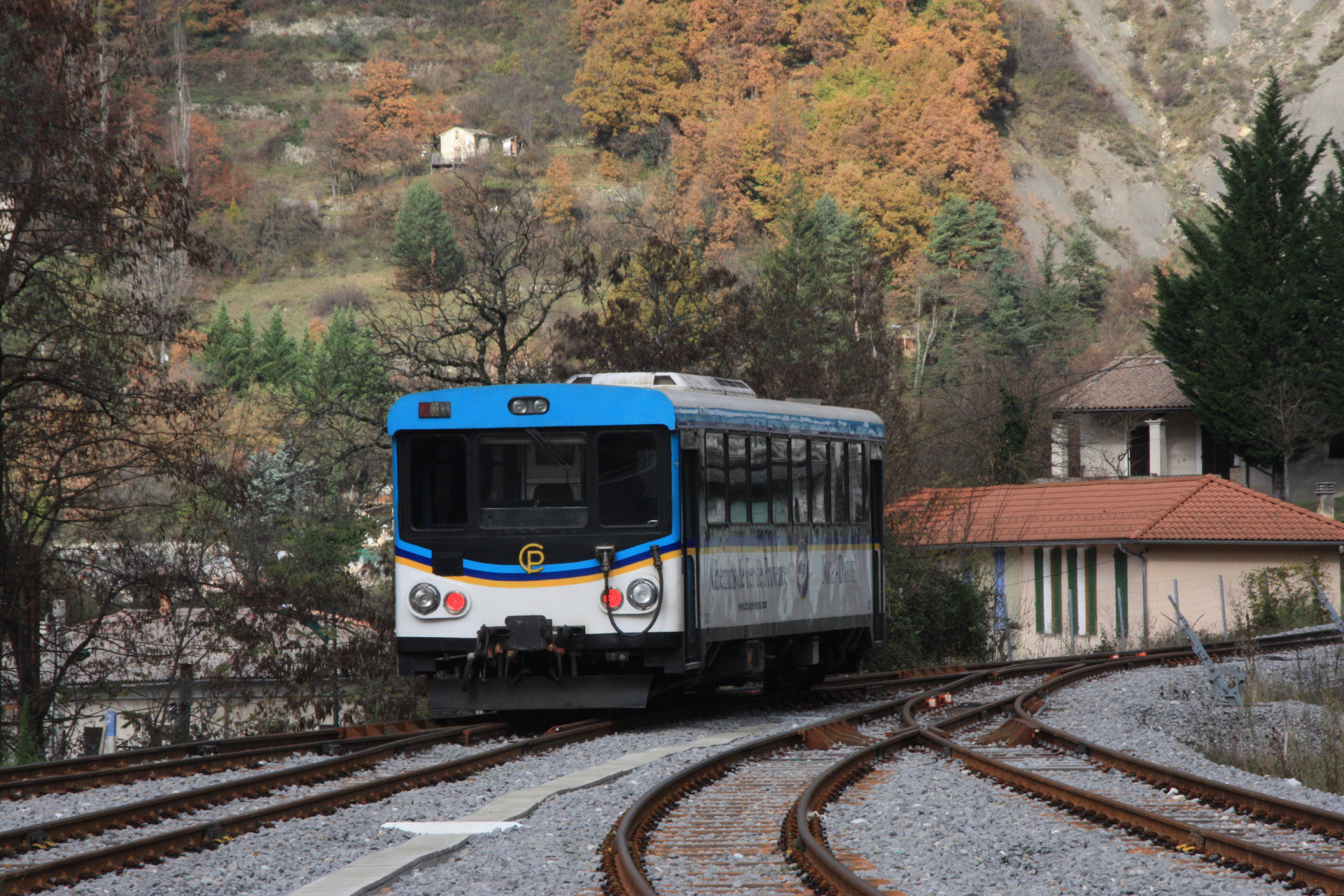
IMG_0043Paying a long overdue return to the remarkable Chemins de Fer de Provence (CP) metre-gauge line from Nice to Digne-les-Bains, almost exactly 30 years after my first visit, it was interesting to see how much has changed, but also what has not.
My original trip in late September 1988 had taken me on a famous named train called the Alpazur from the splendid Gare du Sud in Nice to Digne, where a SNCF railcar waited with the onward portion of the Alpazur to Grenoble. Continue reading “Two days in Provence”

Goodbye Gilberdyke

IMG_4285

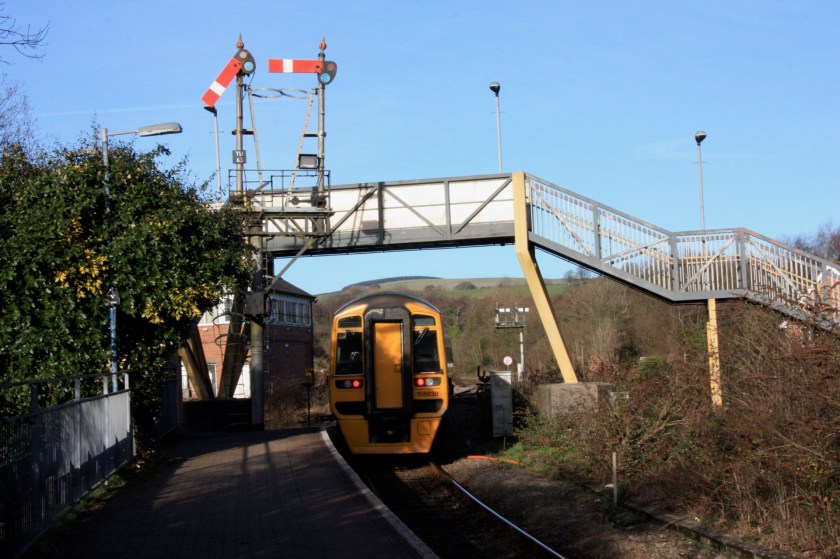
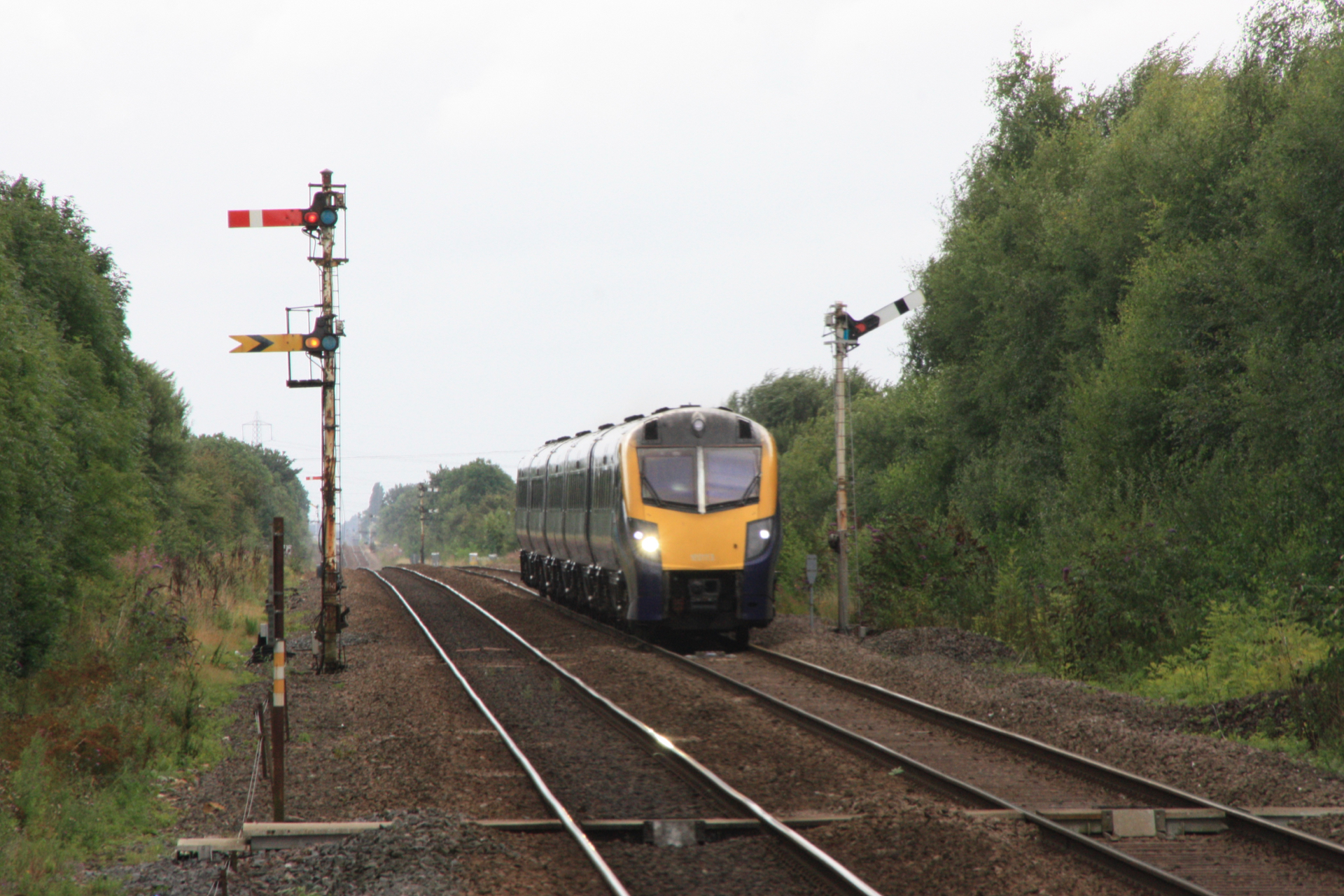
Like most other projects on our national railway network it is running late and over budget, but later this month the splendid semaphore signalling along ten miles of main line from Gilberdyke to Ferriby, on the north bank of the River Humber, will finally disappear, as control of the route passes to the Railway Operating Centre at York.

It will come as no surprise to those who read my September 2017 feature “Humberside re-signalling delayed” – which, incidentally, provoked outrage from one local NR manager at the time – to see that the planned spring 2018 completion date has been missed by eight months.

But it is also interesting is to see that what was billed as a £34.5 million project when  contracts were first let in February 2016 has, according to the most recent Network Rail press release, now become a £50 million project. Continue reading “Goodbye Gilberdyke”

Plastic Pigs Are Go

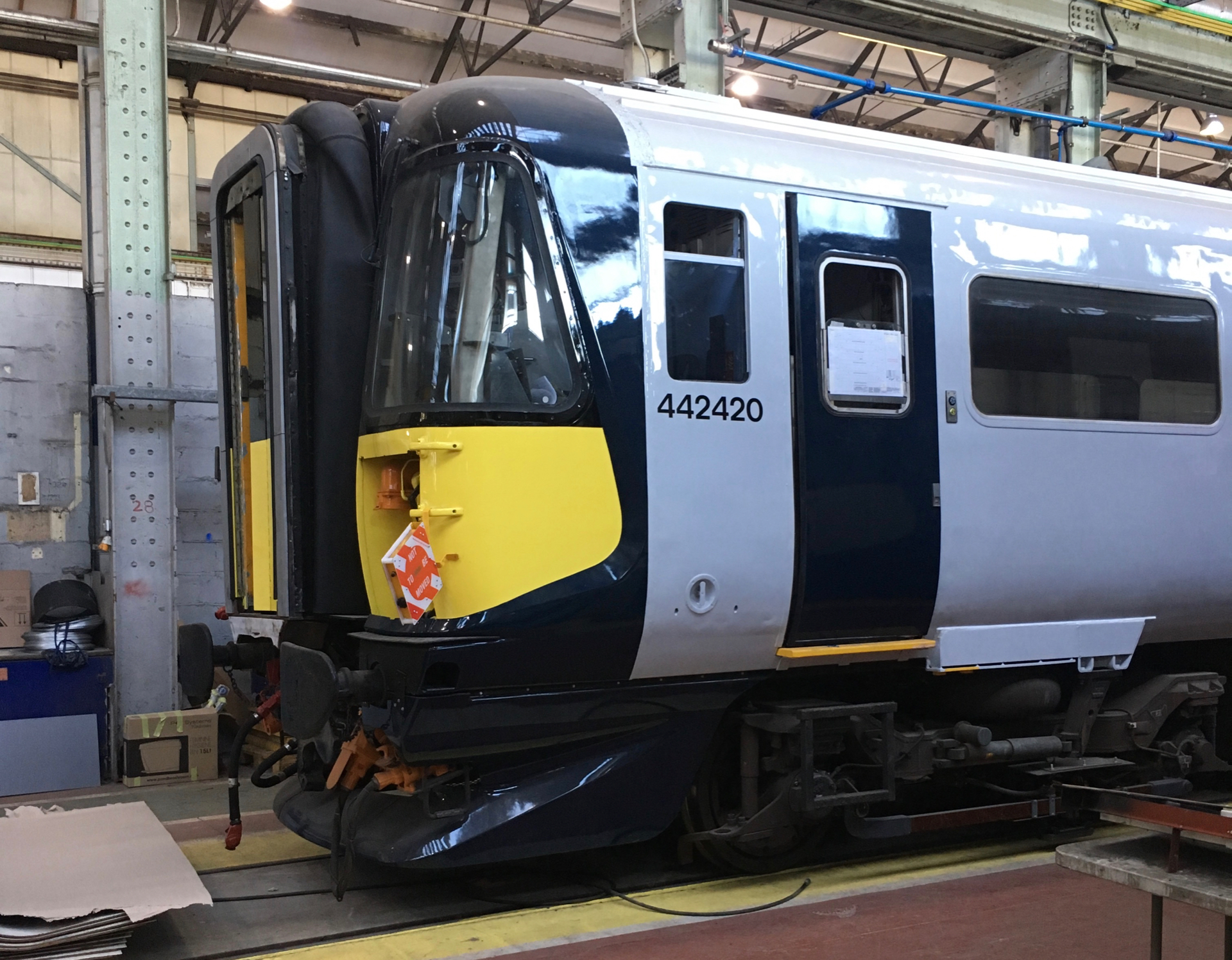
IMG_2772Work is well underway at Eastleigh on a major refurbishment of the first four Class 442 “Plastic Pigs”, which are due to be reintroduced onto the Portsmouth Direct Line next month, almost 12 years after their withdrawal in February 2007 by former franchisee South West Trains.
    As part of its new franchise commitment, South Western Railway (SWR) has taken 18 of the 24-strong fleet of Wessex Electrics units and pledged to use them alongside its existing Class 444 units on fast services from Portsmouth Harbour to London Waterloo.

Continue reading “Plastic Pigs Are Go”

Favourite photo-spots: Grange-over-Sands

IMG_8862Having spent much of last year touring the length and breadth of Great Britain in search of surviving semaphore signals to feature in my forthcoming book, I can confidently say that the finest stretch of mechanical signalling in Britain is the 94½ mile stretch of Cumbrian Coast from Arnside, north of Lancaster, along the Furness Line to Barrow-in-Furness, and then on up the Cumbrian Coast Line to Wigton, south-west of Carlisle.

This fascinating and scenic route, boasts no less than 17 signal boxes and two gate boxes controlling semaphore signals, most of which are at stations, and so easily accessible to the rail-borne traveller. Getting around is relatively straightforward (strikes permitting, of course) with Northern Rail services along the routes being roughly hourly from Carlisle to Barrow, with a slightly higher frequency between Barrow and Lancaster. Continue reading “Favourite photo-spots: Grange-over-Sands”

Time running out for daily Wolsztyn steam services

IMG_9196Europe’s last scheduled main line steam services look set to end in little more than a year’s time, with the timetable change on Saturday, 7 December 2019, when a three year agreement to maintain steam working from Wolsztyn in western Poland is due to expire.

With a number of the depot’s remaining steam loco drivers approaching retirement and unwillingness on the part of the Polish authorities to invest in sustaining the world famous museum depot, it seems increasingly certain that 2019 will mark the end of regular steam operations. Continue reading “Time running out for daily Wolsztyn steam services”

Britain’s most southerly semaphores

IMG_9077.jpg

Spending a few days at Carbis Bay finally gave me the opportunity to photograph our most southerly semaphore signals, which stand around three-quarters of a mile beyond St Erth station, but are totally out of view from the station platforms.

IMG_9044.jpgTake a walk down the A30 from St Erth station for a about half a mile, passing the closed Lamb & Flag pub, then head down a narrow lane signposted Rosevidney and you come to an over-bridge with a good, though distant view of the two elusive semaphores.

These are down section Signal SE7 and up outer home SE68, which stand almost opposite each other at a point on the main line from Penzance, where a section of straight track bears round to the right as it approaches the station (pictured top). Continue reading “Britain’s most southerly semaphores”

Railway rambling in SW Cornwall

IMG_8870.jpgOne of Britain’s finest long distance walking routes must surely be the 630-mile long South West Coast Path, which extends all the way from Minehead in Somerset to the Sandbanks Ferry near Poole in Dorset. But for those who like to mix their walking with some scenic rail travel the path offers few opportunities for what I call railway rambling, with one notable exception.

That exception is a seven-mile stretch of the path from the small town of Hayle (meaning estuary in Cornish) to the charming and cultural resort of St. Ives, which takes in the estuary at Hayle and then follows the route of the scenic St. Ives Bay Line, with numerous attractive photo-opportunities of both railway and seascape along the way. Continue reading “Railway rambling in SW Cornwall”

Mallaig, ScotRail and the RBS £1 note

IMG_2599
For me, a banknote collector as well as a railway enthusiast, one of the joys of visiting Scotland is the nostalgic opportunity to put £1 notes in my wallet once again, thanks to the Royal Bank of Scotland continuing to issue them, the last of the three Scottish note issuers to do so.

Sadly there seem precious few people left who, like me, will ask for the £1 notes in any RBS branch, so awareness of their remaining legal tender falls, and a number of retailers erroneously assert that they do not accept them.

One such culprit I recently encountered was in the booking office at Mallaig station, where a ScotRail supervisor instructed the booking clerk she was overseeing not to accept the £1 notes I was tendering in part payment for my ticket to Arisaig. Continue reading “Mallaig, ScotRail and the RBS £1 note”

Scotland’s Grand Tour on the cheap

IMG_8632As spectacularly scenic railways go there is nothing anywhere in Britain to match the Scottish route from Inverness to Kyle of Lochalsh and the West Highland Lines from Glasgow to Fort William, Oban and Mallaig.

Such is their appeal that ScotRail now markets a ticket known as the Scottish Grand Tour – a chance to travel a near 500-mile circular route encompassing both the Kyle and Mallaig lines, with bus and ferry links included.

Grand Tour tickets cost £89.00 (£58.75 with a railcard) for a single journey in either direction, giving you four days rail travel within eight consecutive days in which to complete the journey, at any time, except on departures from Glasgow or Edinburgh before 09.15 on weekdays.

But at this time of year, as well as in the spring months, there is a much cheaper way of doing the Grand Tour for holders of a ScotRail Club 50 Card (£15 a year and available to anyone over the age of 50). Continue reading “Scotland’s Grand Tour on the cheap”

A taste of re-nationalised railway

IMG_2597

Railway catering has been a subject dear to my heart ever since I was first lucky enough to sample the delights of the Manchester Pullman during one of my first journalist jobs, in about 1980.

For many years after that I would take every opportunity of an inter-city journey to sample breakfast, lunch or dinner, and had many memorable meals and encounters until restaurant service had all but disappeared in the aftermath of privatisation in the mid-1990s.

Initial East Coast franchisee GNER remained a beacon of light, with its impressive commitment to full catering, but once short-lived franchisee National Express took over the rot set in and, just as happened on the West Coast under Virgin Trains, proper meals were replaced by the airline-style service we have today. Continue reading “A taste of re-nationalised railway”