Two weeks after a fascinating visit to Portugal’s last metre-gauge railway and now another chance to experience rare narrow gauge (NG) travel, this time on one of only three NG lines that are still operated by French state operator SNCF, the only one that is not electrified – the Chemin de Fer du Blanc-Argent (B-A) in Central France.
Like the Vouga system in Portugal, the metre-gauge B-A is a rather remarkable survivor, and is also one which is not catering for primarily tourists, as do SNCF’s famous Train Jaune in the Pyrenees and the Mont-Blanc Express route from St. Gervais-les-Bains to Vallorcine and across the border to Martigny in Switzerland.
Despite past closure threats and a route that has been significantly truncated over in the past 75 years, the B-A has seen significant investment in rolling stock and infrastructure in recent years, and seems to largely owe its survival to the conveying of school children to and from local schools.
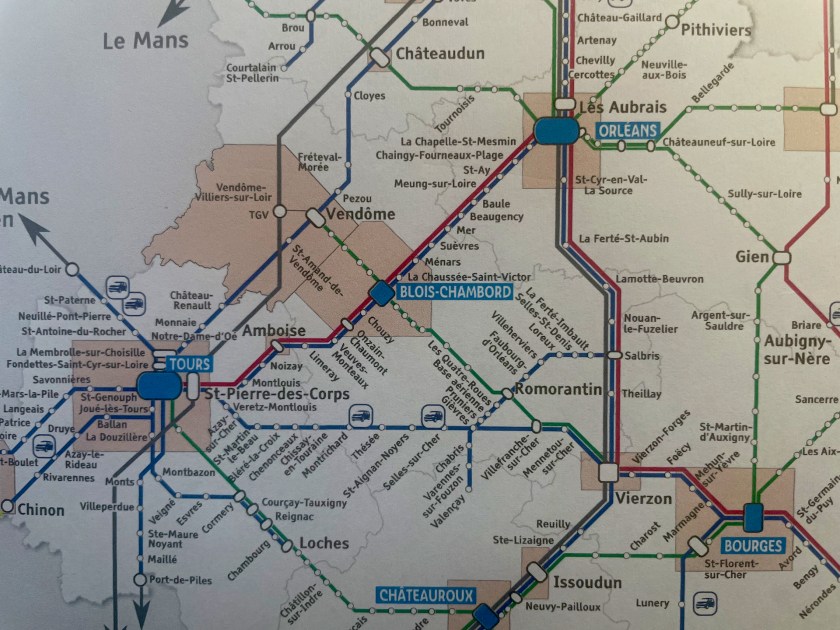
As the map below shows, the route no longer serves the towns of Argent nor Le Blanc, with what was once a 191km (119-mile) route now reduced to 67km (42-miles) in length, extending from an SNCF interchange station at Salbris in the north, and on the Pairs-Toulouse main line, through its headquarters in the town of Romorantin and another SNCF junction at Gièvres to terminate at Valençay.
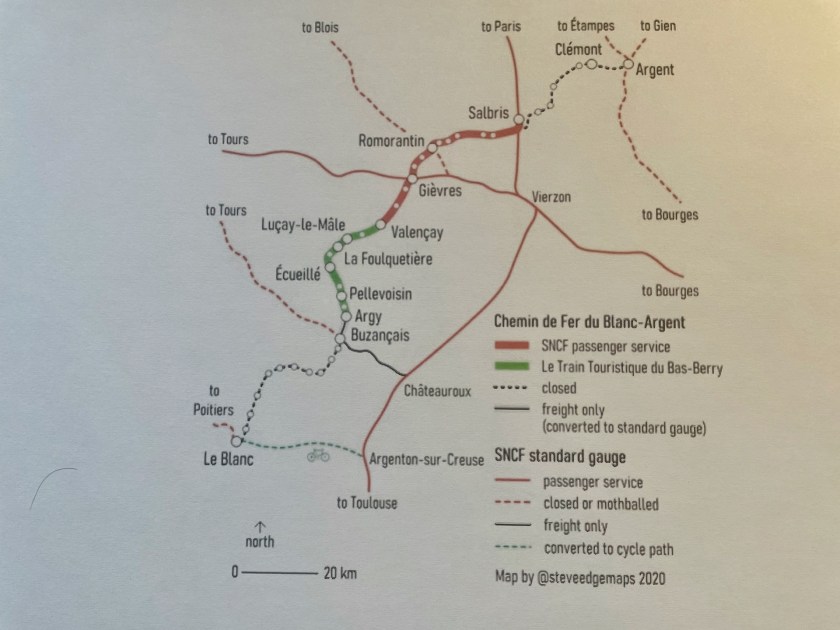
This gradual truncation of the B-A began a remarkably long time ago, with passenger services between Argent and Salbris ending in 1939, although the section between Clémont and Salbris remained open for freight until 1973. At the southern end of the B-A the section between Buzançais and Le Blanc closed to all traffic in 1953 with Luçay-le-Mâle to Buzançais losing its passenger services in 1980 and services between Valençay and Luçay-le-Mâle being suspended in 2009 and now served by replacement buses.
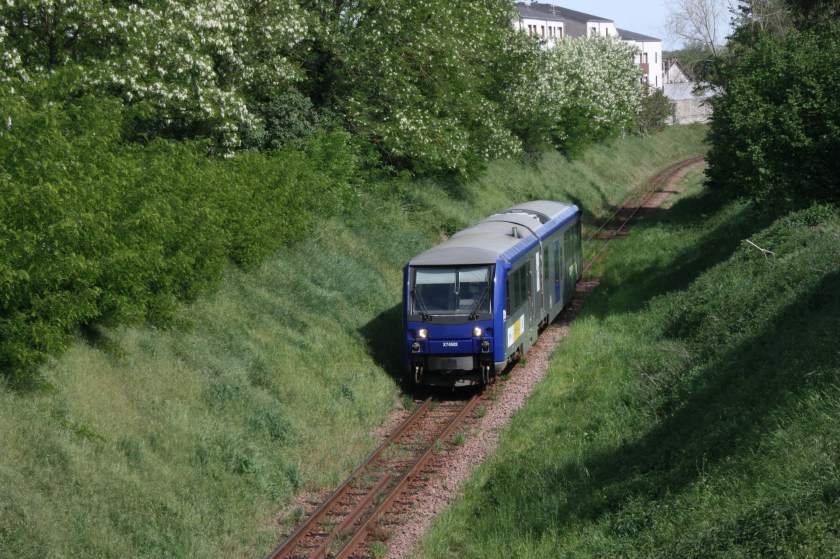
Today (2026) SNCF rail services in the northbound direction comprise a total of seven weekday departures from Valençay, along with a short working starting at Gièvres, three of which run through to Salbris with the remainder terminating at Romorantin, and a total of eight workings between Romorantin and Salbris, three of which are the through journeys from Valençay.
In the southbound direction, four of the eight Salbris-Romorantin services continue on to Valençay, with seven Romorantin-Valençay workings and an early morning service running as far as Gièvres that also originates at Salbris. There are also a couple of bus replacement services on weekdays between Valençay and Luçay-le-Mâle.
A preservation society, the Société d’Animation du Blanc-Argent (SABA), has a sizeable collection of historic metre-gauge rolling stock, including two of the six De Dion-Bouton OC2 railcars (X205/6) that moved to the B-A on closure of the Réseau Breton in 1967. From its base at Écueillé SABA runs seasonal services under the banner of “Le train touristique du Bas-Berry” between Valençay, Luçay-le-Mâle and Argy, while the section of B-A from Argy to Buzançais was re-built to standard gauge for freight use.
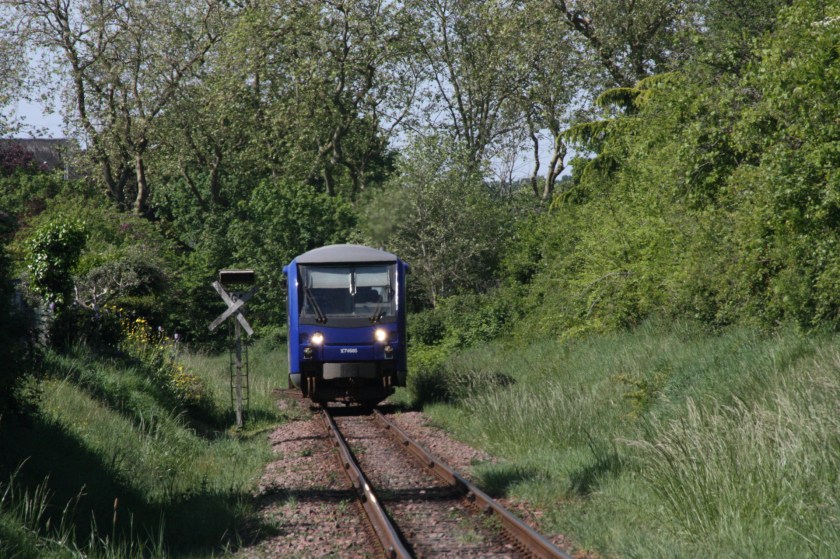
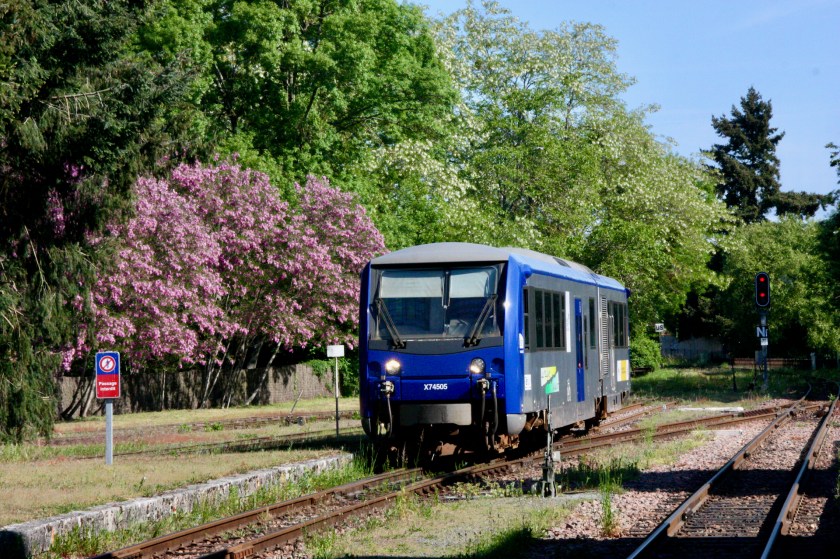
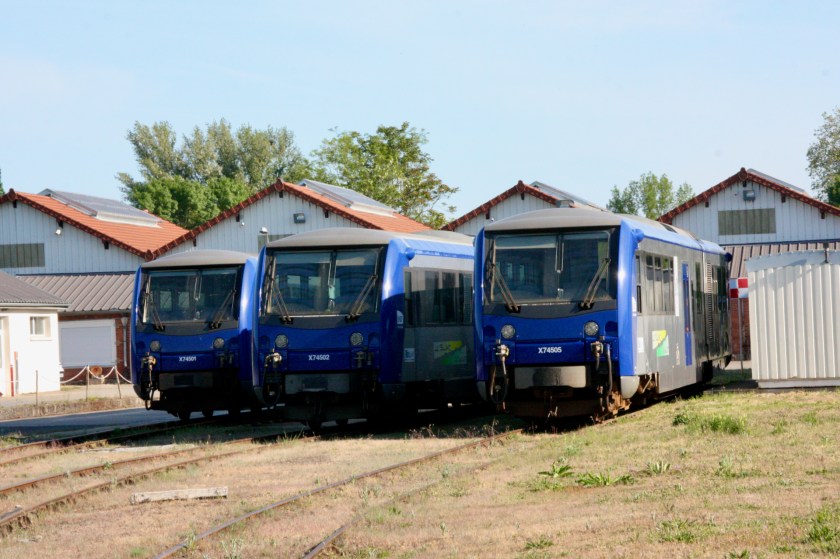
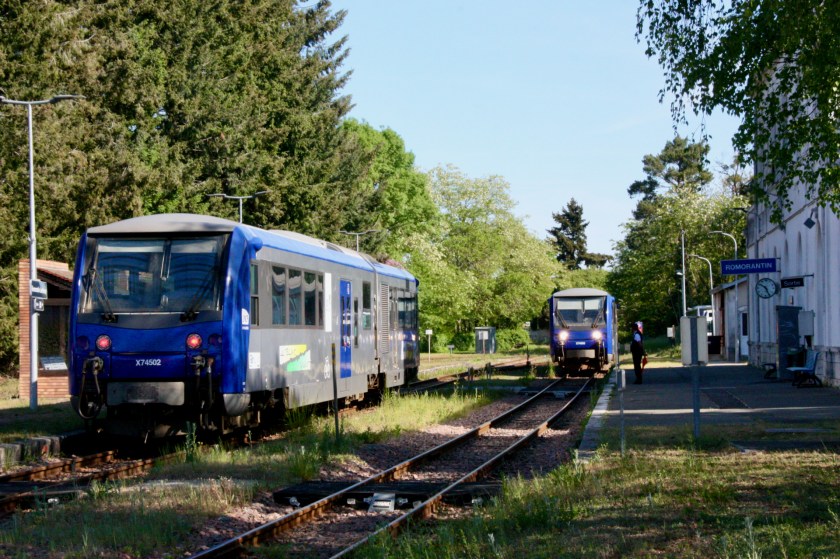
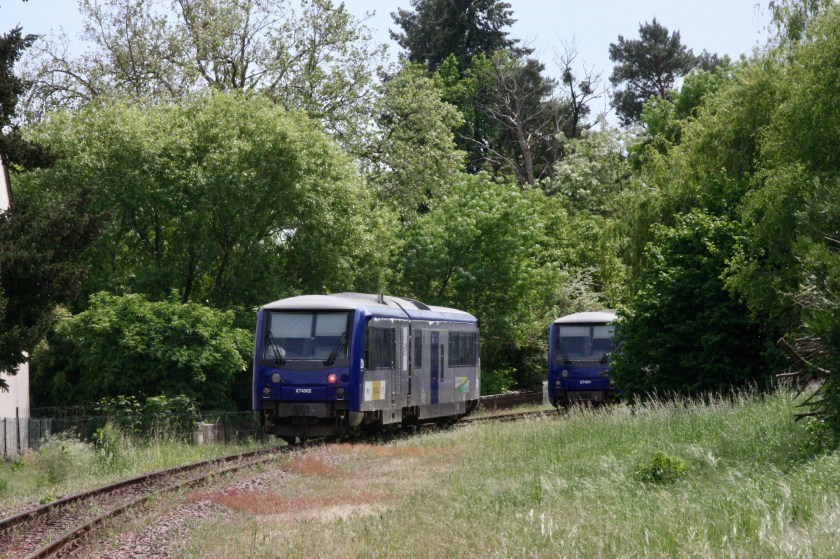
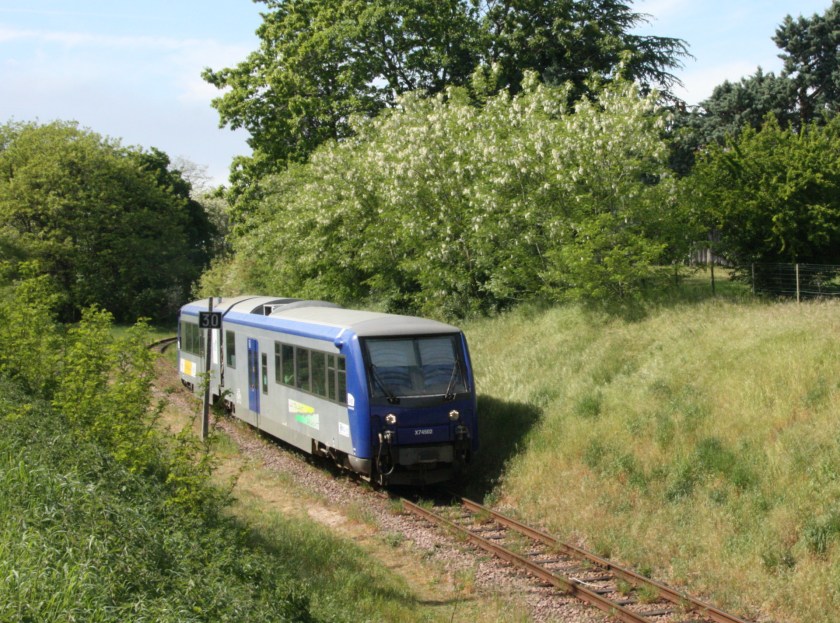
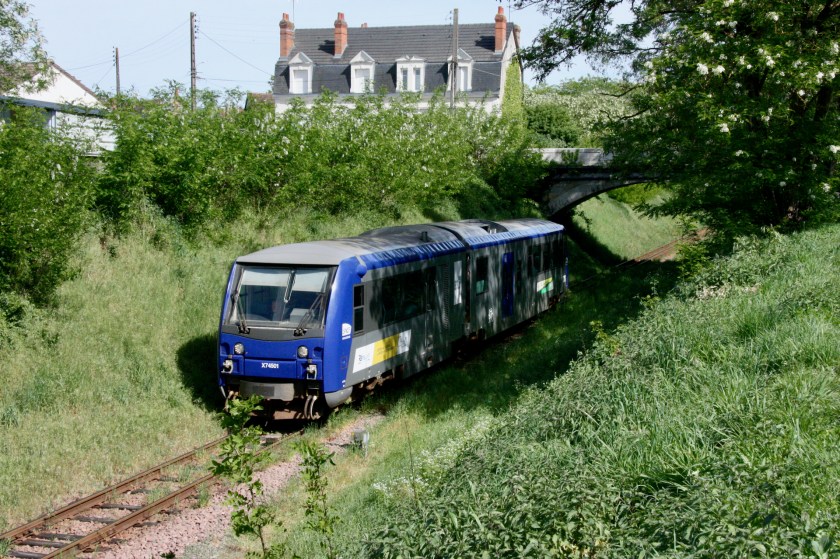
Passenger workings on the B-A are operated by a fleet of five twin railcars (X74501–X74505) which were built by CFD-Bagnères and entered service in 2001 as successors to the De Dion-Bouton vehicles, a number of other 1950s vintage Billard and SCG Verney vehicles and a couple of 1984-built Compagnie de Chemins de Fer Départementaux (CFD) railcars. Only four are currently in service, with X74504 dumped and sadly covered in Vouga-like graffiti.
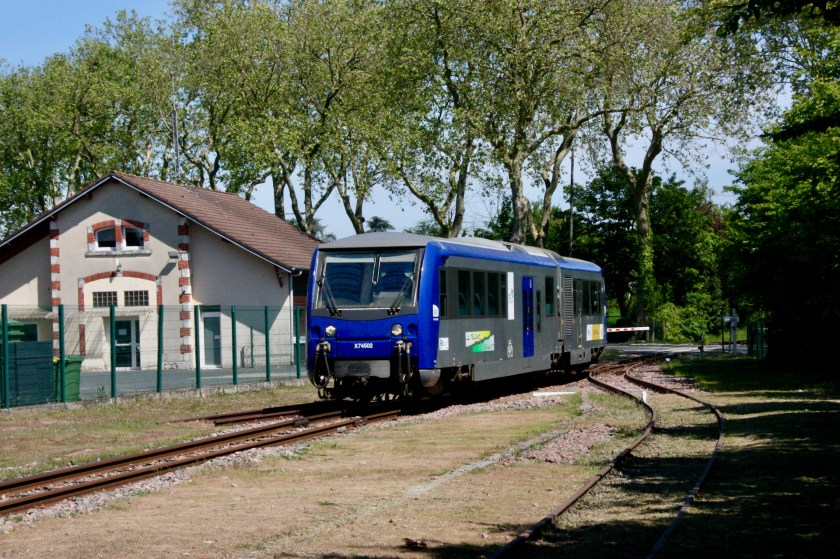
Spending a couple of days travelling the B-A I began by taking the first train (10.42) on Sunday, 26 April 2026 south to Valençay, where I was one of just two passengers for the entire trip, and was able to appreciate the line from my front seat alongside the driver, whose small cabin leaves room for two seats alongside at the front of the train.
Departing Romorantin an ancient and long-abandoned but intact standard gauge line disappears into bushes at a level crossing and the next notable feature is a huge but seemingly deserted air base that boasts a halt on the line, after which comes a nicely preserved station building at Pruniers, where a young boy living in the former station enjoys waving at passing trains.
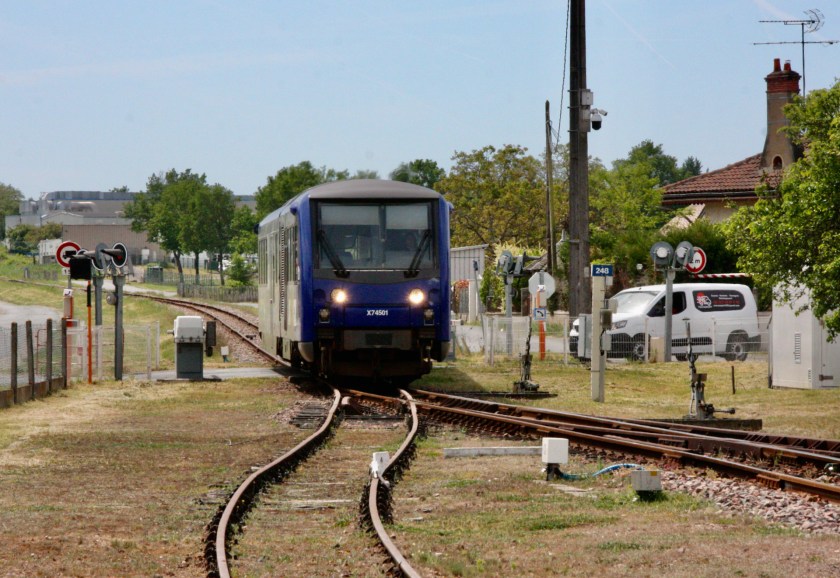
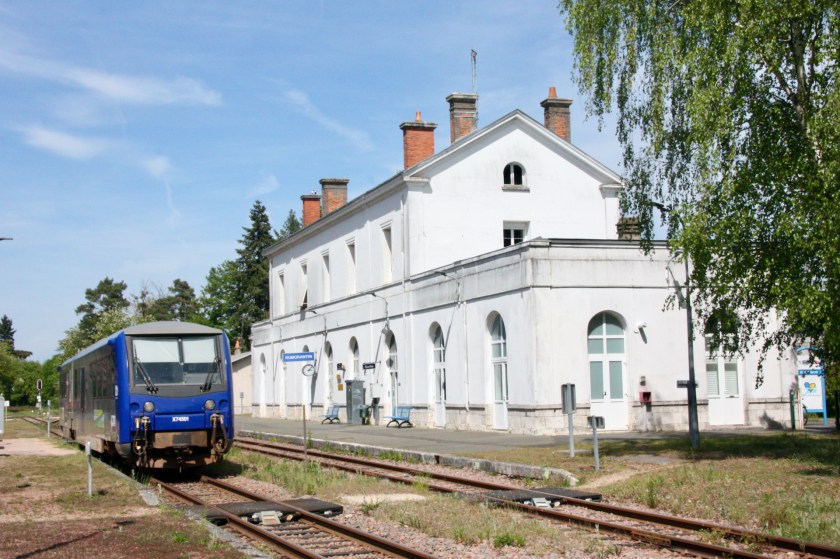
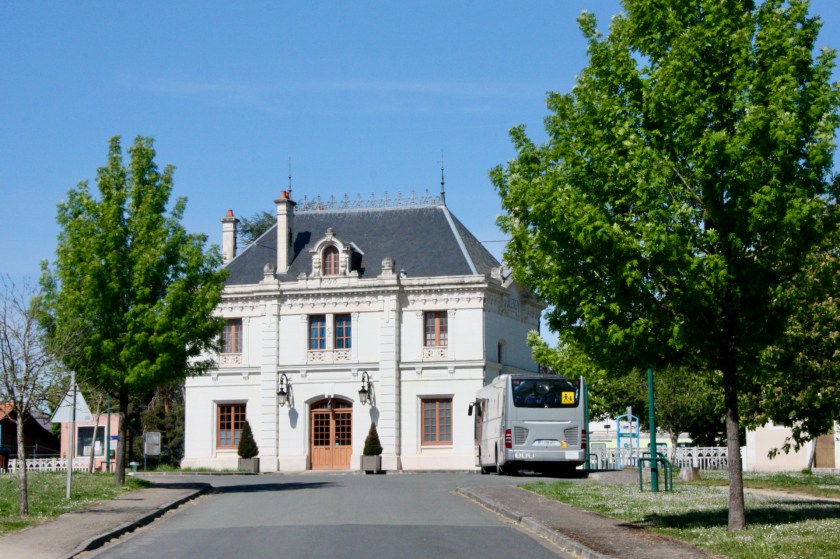
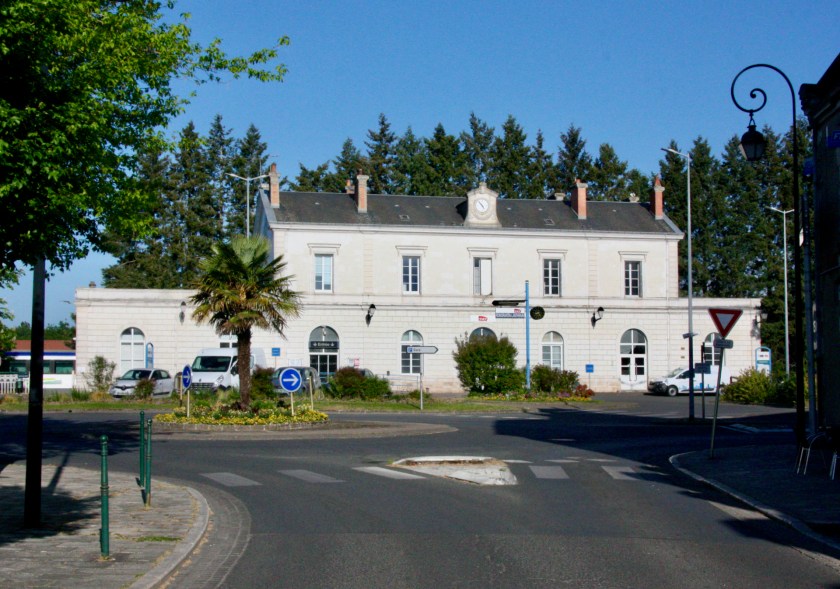
After the junction station at Gièvres the B-A dives under the main line to pass through the attractive station of Chabris and another surviving station building at Varennes-sur-Fouzon before reaching the magnificent station at Valençay, now southern terminus of the B-A and a connection with the replacement bus to Luçay-le-Mâle and the preservation society’s seasonal services and velo-rail operation.
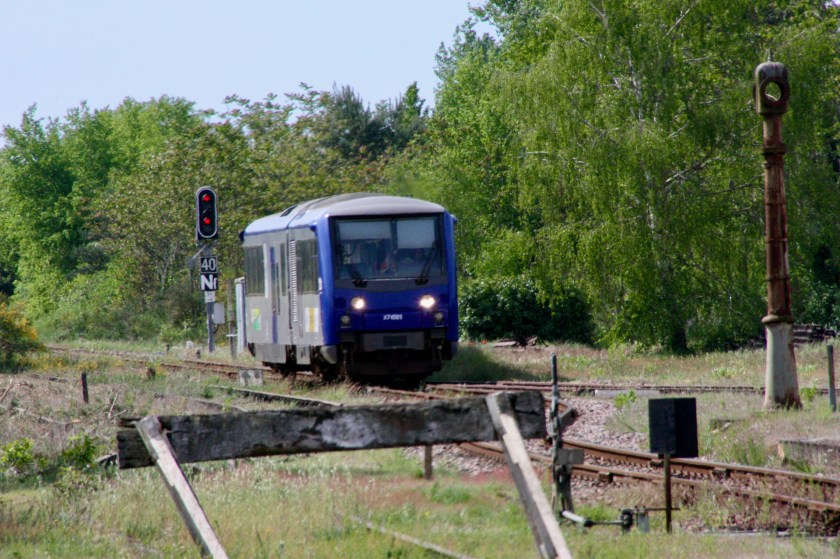
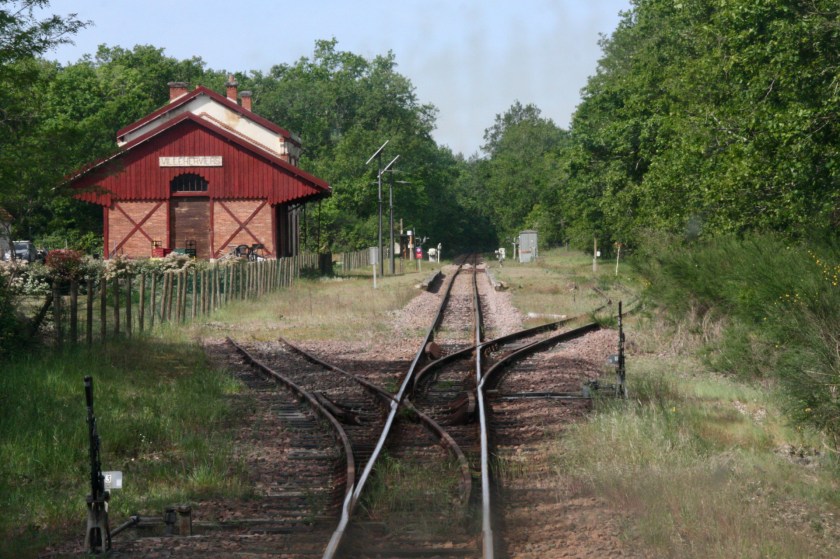
The following day (Monday, 27 April 2026) I was one of a select handful of passengers aboard the 09.30 to Salbris, a route that passes through an extensive area of forest, with a couple of attractive surviving station buildings, now privately-owned, at Villeherviers and Selles-Saint-Denis.
As on the southern section of the B-A there are a trio of stations with disused passing loops, with all B-A trains passing at Romorantin, where the only visual signalling on the entire line are starting colour lights at each end of the station.
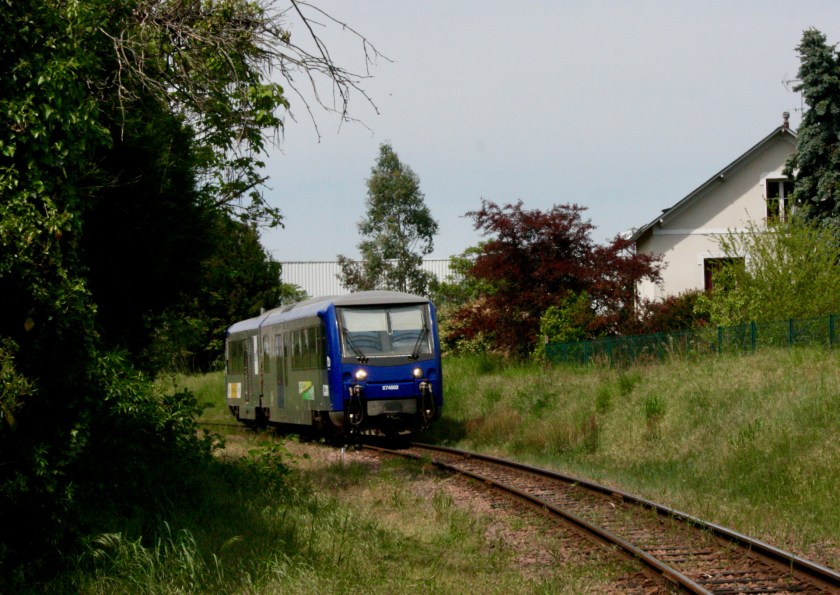
On the approach to Salbris and after passing the final of these disused loops at La Ferté-Imbault, the B-A rises up and over the main Paris-Toulouse line before terminating in a single platform that stands just east of the main SNCF station that makes for a rather less impressive terminus than Valençay at its southern end.
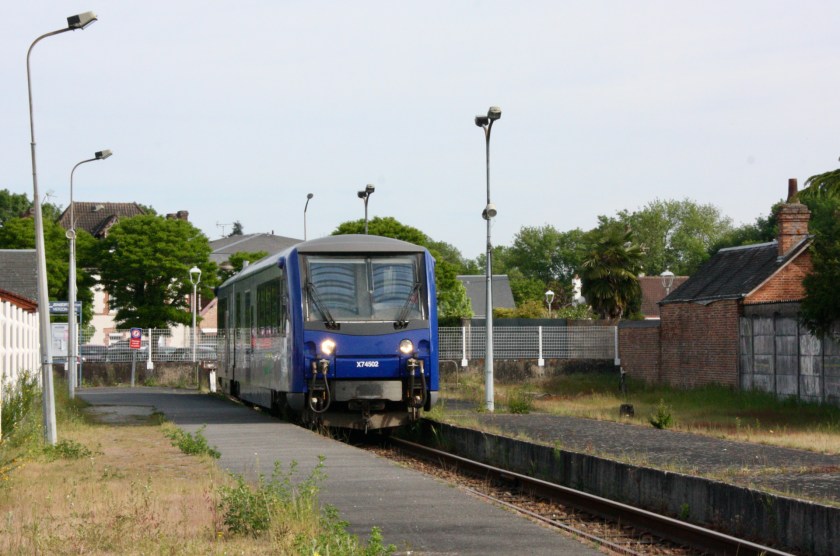
Besides acquiring the new railcar fleet, the B-A has seen significant investment in upgrading of its rail infrastructure over recent years, raising its line speed to 70km/h. That process continues, and in its April 2026 newsletter, the French Railways Society reported that the B-A will be closed in July and August for €4.5m worth of upgrade work between Salbris and Gièvres.
Regular services on the B-A are run by SNCF subsidiary Keolis as part of the Centre-Val in de Loire Region’s Transport Express Régional (TER), network. Unlike the UK there are no day return or day ranger fares available on B-A, but fares are relatively modest (Romorantin to Salbris or Valençay single is €6.80) and anyone spending a few days in the region would be well-advised to buy a €30 Rémi Liberté Carte, giving a 33% weekday and 50% weekend discount on local TER services for 12 months.
For those interested in visiting and riding the fascinating B-A system, Romorantin is easily accessible by rail from Paris, with the fastest direct TER services reaching Salbris in around 90 minutes, with another alternative, and the route I took, being a 431 bus between Romorantin and the main SNCF station at Vierzon Ville, from where there are Inter-City services to and from Paris Austerlitz.
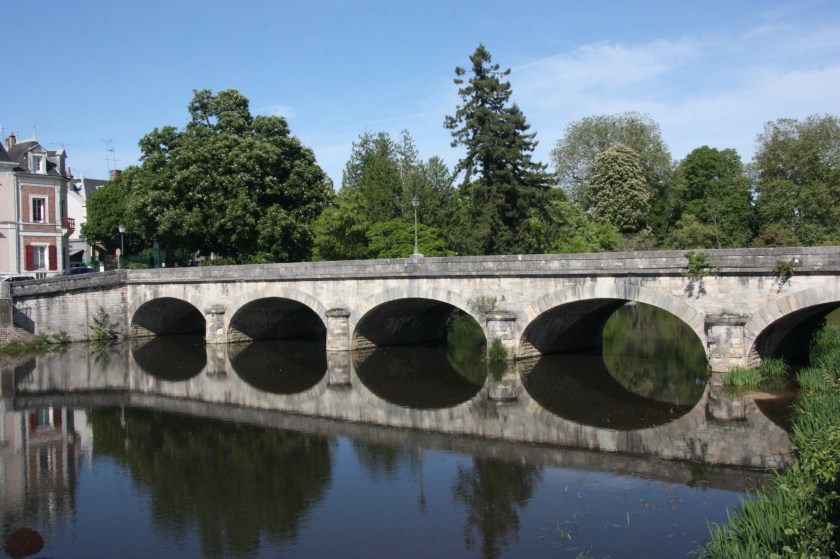
Romorantin or Romorantin-Lanthenay to give the place its full name, is a rather delightful town of around 18,400 inhabitants in the Loir-et-Cher department of the Centre-Val de Loire region of France that stands on both sides of the Saudre River and numbers Long Eaton in Derbyshire among its four twin towns.
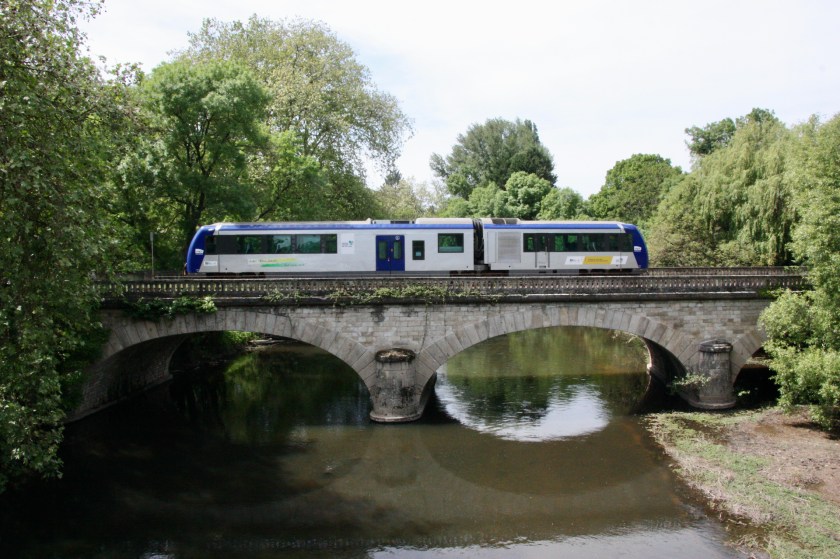
There is a rather charming riverside park in the town centre next to the stone Grand Pont over the river, with the railway station being on the south side of the river, and a photogenic three-arch railway bridge crossing the river just north of the station and easily photographed from a parallel road bridge.
For a comfortable and convenient place to stay I found a residence on the eastern side of the town centre called Les Thiausères (www.lesthiauseres.wordpress.com) that was an easy and pleasant 15-minute walk from the station, over the Grand Pont and then through the park, which cost me about £43.00 a night for bed and breakfast and I can highly recommend.


You must be logged in to post a comment.