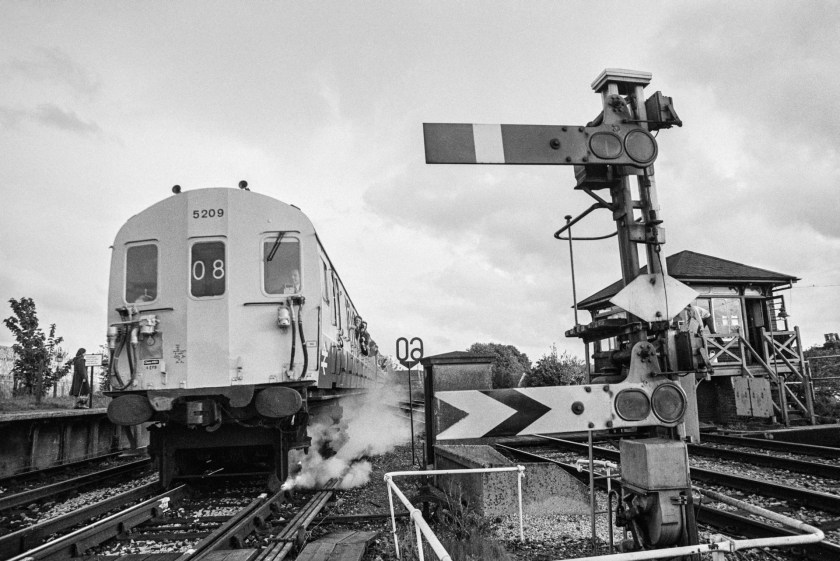
Exactly 43 years ago, on the evening of Friday, 13 May 1983, I travelled on the last ever train from Elmers End to Sanderstead, accompanied not only by a huge crowd of fellow enthusiasts, but also by a very famous photographer, who captured some remarkable images of that fateful night.
At the tender age of 25 I had recently joined the City office staff of The Observer and in my enthusiasm for a story had persuaded the News Desk that I should cover what by the early 1980s had happily become something of a rarity – not only the closure of a railway, but one in the heart of the prosperous South-East.
Accompanying me on that fateful evening was the legendary Jane Bown, who was 58 at the time, spent a remarkable 60 years working for The Observer and had an amazingly simple way of taking black & white photographs without the paraphernalia used by most professionals, becoming famous for her portraits of celebrities and, most notably, of Queen Elizabeth II on her 80th birthday (in 2006) when Jane herself was also aged 80.
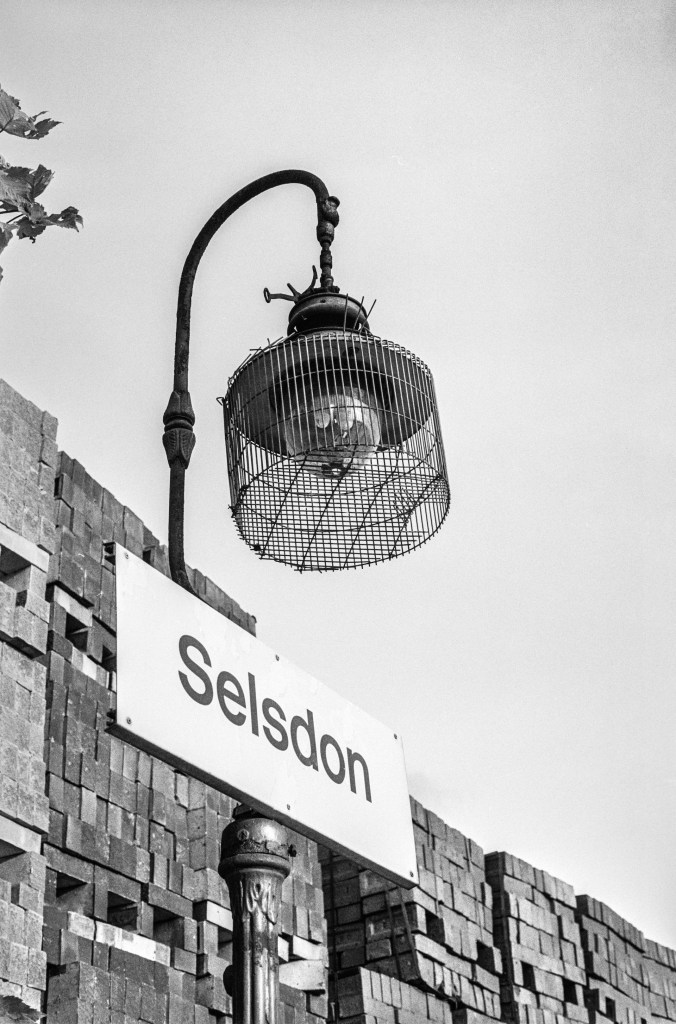
Sadly my account of travelling on the final services from Elmers End to Sanderstead and back was never published, but four decades later I could still recall how much Jane had enjoyed the evening and some amazing images she had captured that night of the final trains setting off detonators placed on the track by the signaller at Selsdon Junction.
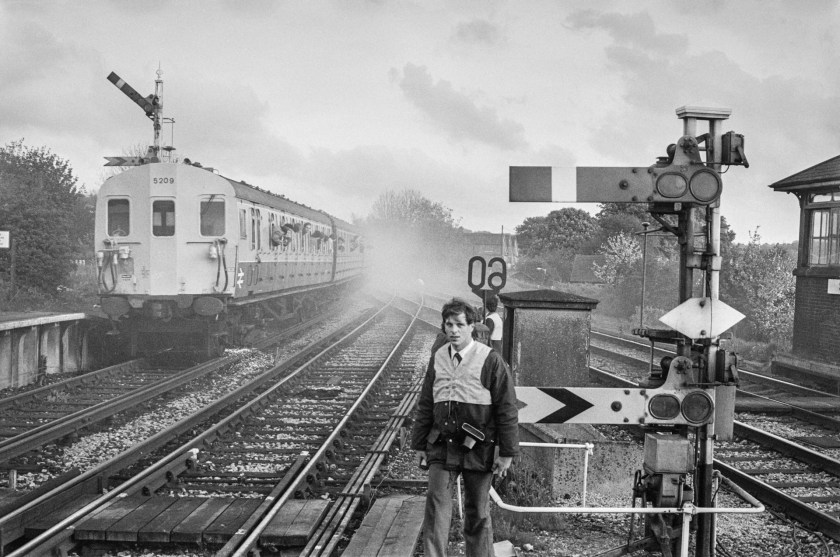
I had always wondered what became of those unpublished images, so on a visit to a wonderful retrospective of Jane Bown’s work at the Newlands House Gallery at Petworth in February 2026 had mentioned my connection to the photographer and The Observer to an assistant there, Melissa Hillman, in the hope that the mystery could be solved.
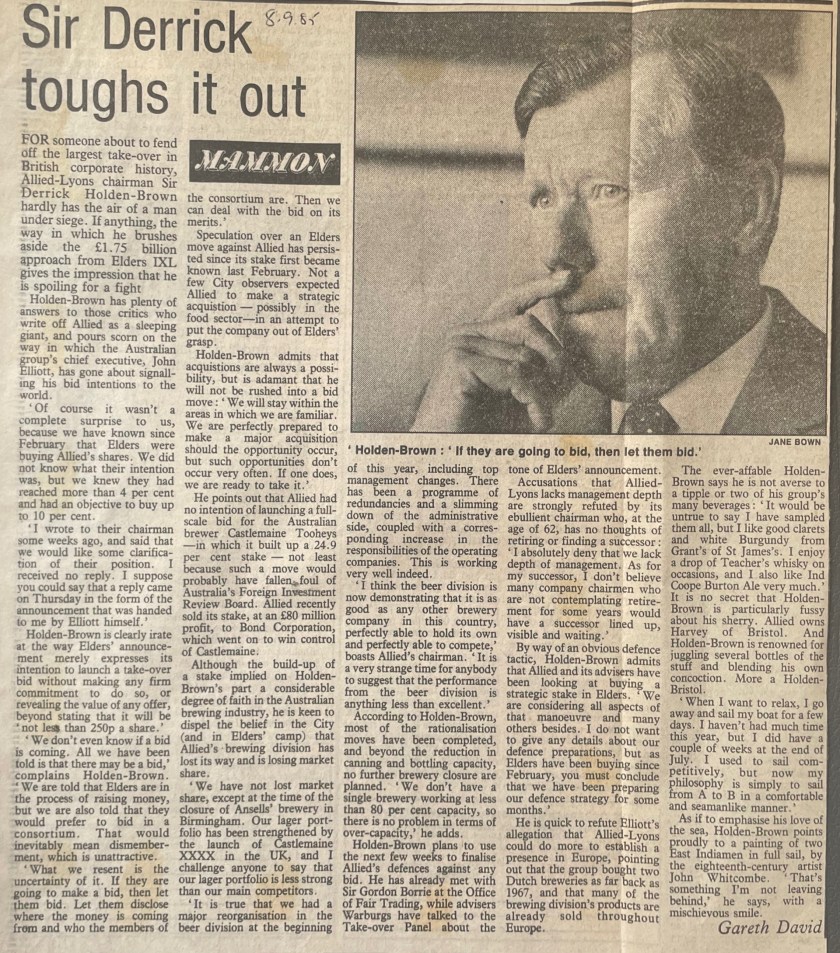
Not seriously expecting any positive news, I was pleasantly amazed when Melissa contacted me some weeks later to confirm that The Guardian archive held two sets of negatives from that evening, so after securing permission from the Jane Bown Literary Estate to obtain scans of these images, I made an appointment to view them at The Guardian’s King’s Place Head Office.
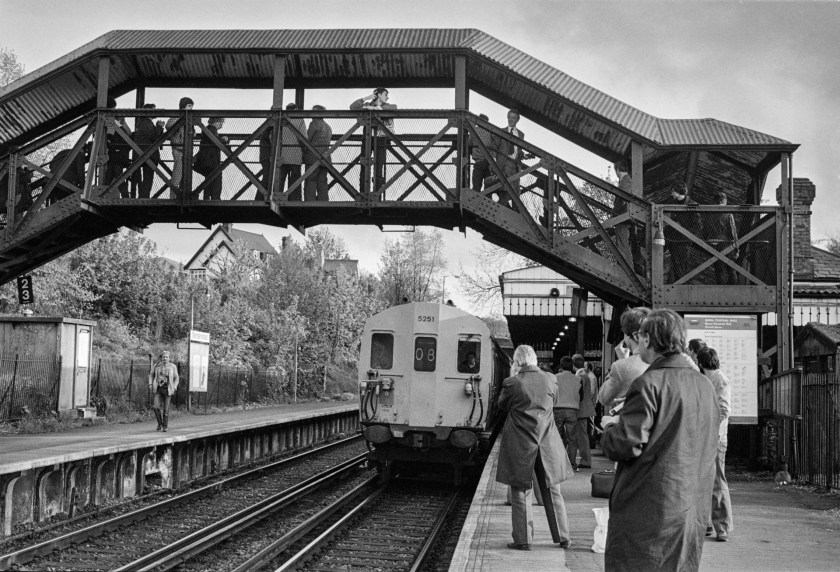
On file there are two sets of negatives from that evening, along with contact sheets for both – postage stamp-sized copies of each image, for those too young to remember such things! Memories of that evening came flooding back the moment I studied them, though one mystery remains as to how Jane was able to capture the final trains departing and arriving at Selsdon, but also photograph the other service that evening in Sanderstead station and formed by 4-EPB unit 5251.
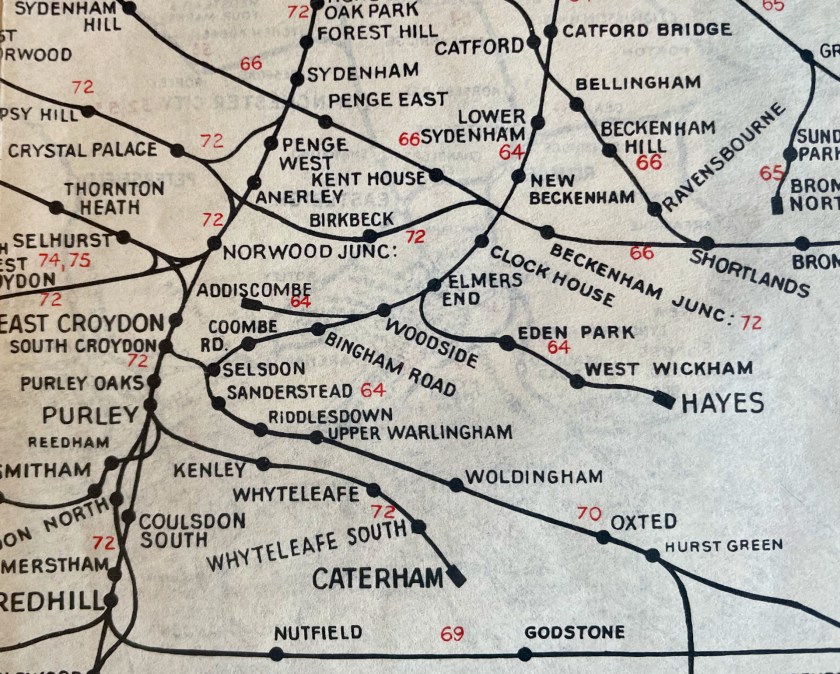
As I wrote in my 2020 book on the history of Croydon Tramlink, the 6½-mile route to the eastern side of Croydon, provided a link from Elmers End, on the suburban route from Charing Cross and Cannon Street to Hayes, to Sanderstead, a station south-east of Croydon on the routes to Oxted, East Grinstead and Uckfield.
It had been opened by the London, Brighton and South Coast Railway and the South Eastern Railway in 1885 and lived a twilight existence for most of its 98-year operating life. The double-track route had been electrified in 1935, when intermediate stations at Bingham Road and Coombe Road were re-built, and a new half-hourly service was far better than anything the line had enjoyed previously.
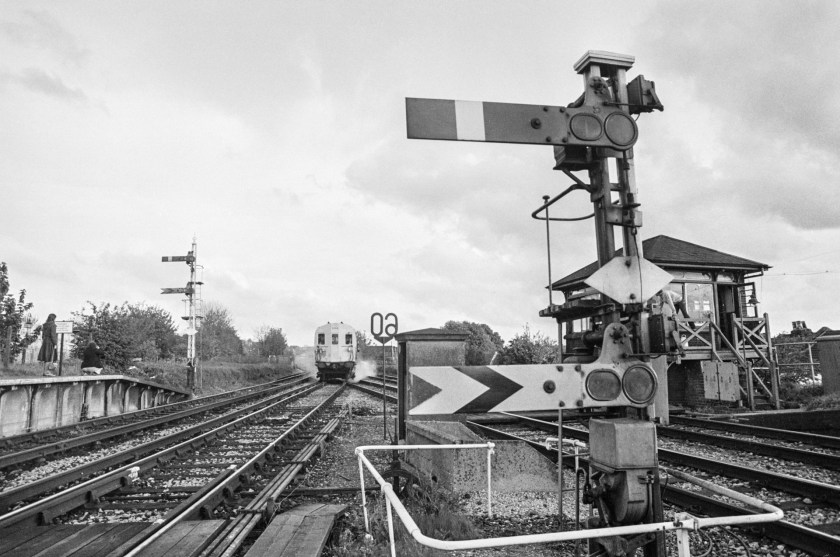
But traffic never developed in the way it did on other commuter routes across the South East, and retrenchment soon began. Most week-end services were axed in the 1940s, while a decade later through services to London were replaced outside peak-times by a shuttle service to Elmers End.
The last direct services to London were withdrawn in 1976, leaving just a peak-time only shuttle service until final closure on 13 May 1983, by which time patronage had fallen below 200 passengers a day and British Rail could not justify necessary improvements to track and signalling along the line. Today, much of the former railway is part of the Croydon Tramlink network.
In its final years services were operated by two-car 2-EPB “slam door” electric multiple units, which were more than adequate for the sparse remaining traffic in the line’s final years. But the last train was strengthened to six cars on that final Friday, with the last service being at 19.30hrs from Sanderstead and formed of 4-EPB unit 5209 and 2-EPB unit 5720.
My sincere thanks to Melissa Hillman at Newlands House Gallery in Petworth for tracking down the images, to Emma Aitken and Federica Perico at The Guardian for all their help and especially to the Jane Bown Literary Estate for permission to reproduce these images in this feature.


You must be logged in to post a comment.