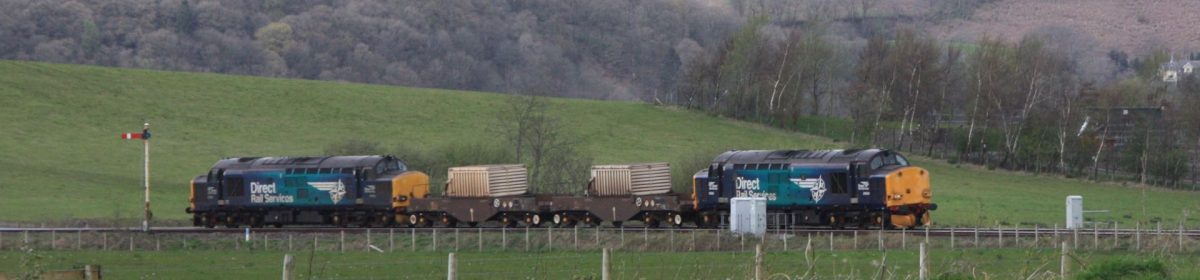
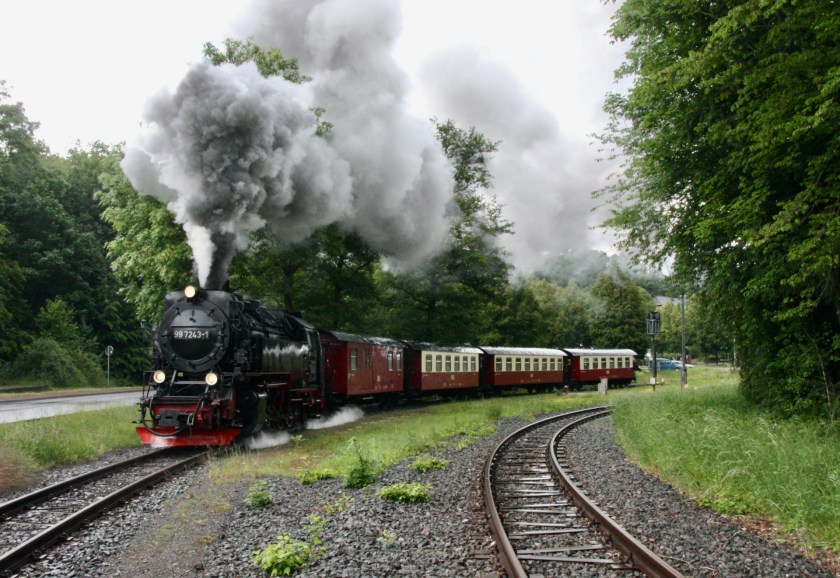
German Railways (Deutsche Bahn) may come it for a lot of criticism these days over reliability and punctuality, but for anyone visiting this fascinating country and happy to avoid the faster IC/ICE trains, there is a remarkable bargain to be had in the month-long Deutschland Ticket (D-ticket), costing just €63.00 (£55.00).
Not only does this offer unlimited travel on all local and regional trains and buses, but it is also valid for travel on a host of narrow-gauge railways in eastern Germany, including most of the world’s finest steam-worked network, the remarkable Harzer Schmalspur Bahnen (HSB) metre-gauge system.
Putting the bargain D-ticket in the context of travelling on the HSB network, my planned three days of HSB travel would have cost me €53.00 had I bought the cheapest available Rover, a three-day “Kurzurlaubsticket” (short holiday) ticket, on top of which travel from and to Berlin Airport would have cost almost €100 using the cheapest fares for the trains I was travelling on.
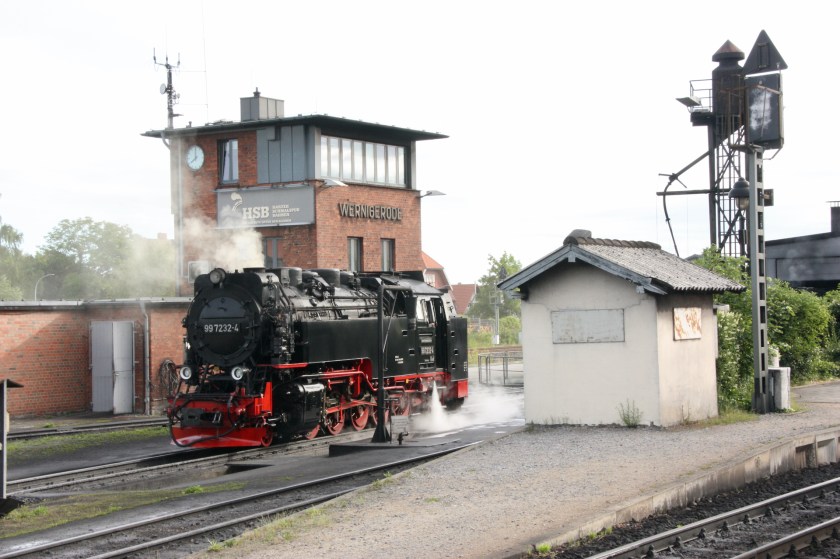
So two years on from my last visit (More Harz delights–April 2024) I am tempted to take a four-night stay (8-12 June 2026) in the charming and historic railway town of Wernigerode, which is a four-hour DB train ride south from Berlin’s Brandenburg Airport (BER) using Regional Express (RE) services with my D-ticket, and changes at Berlin Hauptbahnhof, Magdeburg and Halberstadt.
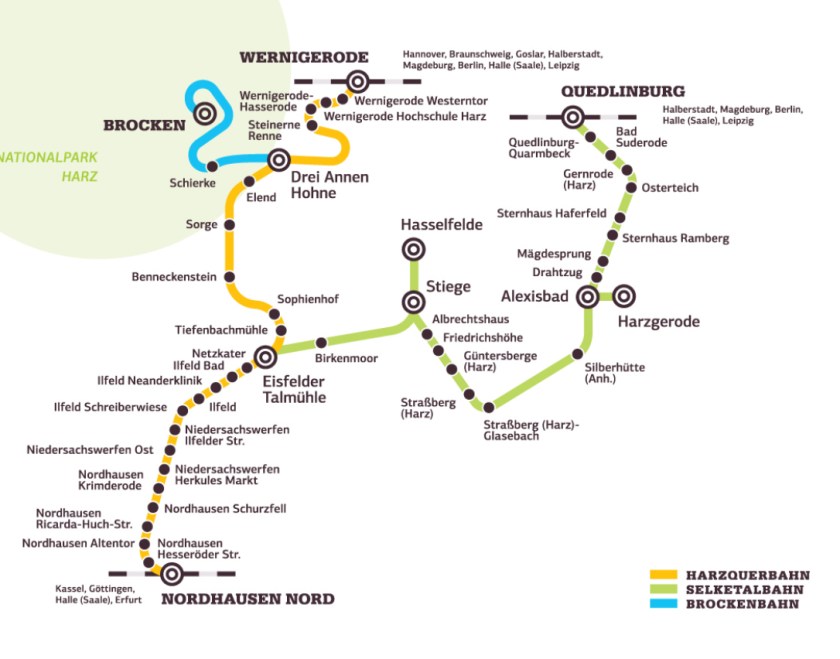
For those unfamiliar with this part of the world and who missed my previous HSB features, the 140km/87-mile long system is made up of three inter-connected railways forming a Y-shape, busiest of which is the 34km/21 mile Brockenbahn from Wernigerode up the 1125m/3,691ft Brocken Mountain. Premium fares are charged, and the Brocken route from the junction at Drei Annen Hohne is not included in the D-ticket.
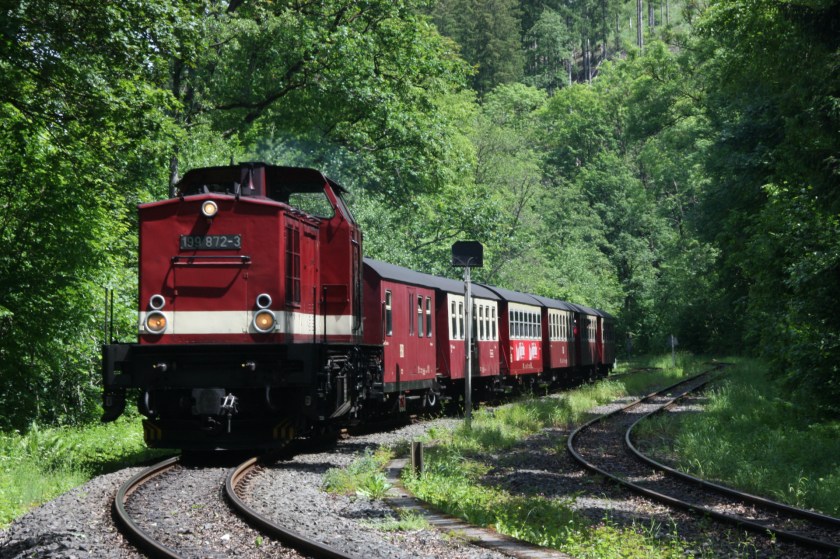
Secondly, comes the 61km/38 mile north-south Harzquerbahn from Wernigerode to Nordhausen, from which the Brockenbahn diverges at Drei Annen Hohne and the southern 12kms/7½ miles of which, from Ilfeld to Nordhausen, is also served by dual-powered Nordhausen trams.
Thirdly there is the delightful Selketalbahn, which connects with the Harzquerbahn at another junction, Eisfelder Talmühle, 44kms/27½ miles south of Wernigerode and runs in a north-easterly direction for 53kms/33 miles to the UNESCO World Heritage town of Quedlinburg, with short branches leading off it to the towns of Hasselfelde and Harzgerode.
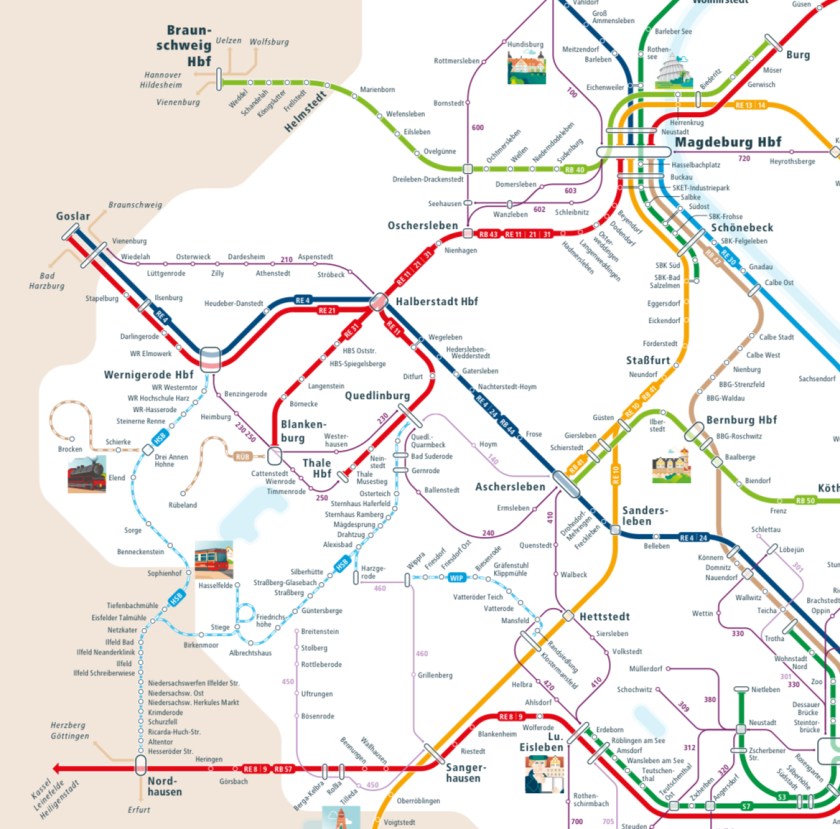
This schematic map of railways in the German state of Sachsen-Anhalt (above) shows the HSB in light blue and a number of useful bus routes providing excellent connections with the region’s rail services. One useful link I used, but not shown, was from Hasselfelde to Wernigerode in 45 minutes on a 260 bus.
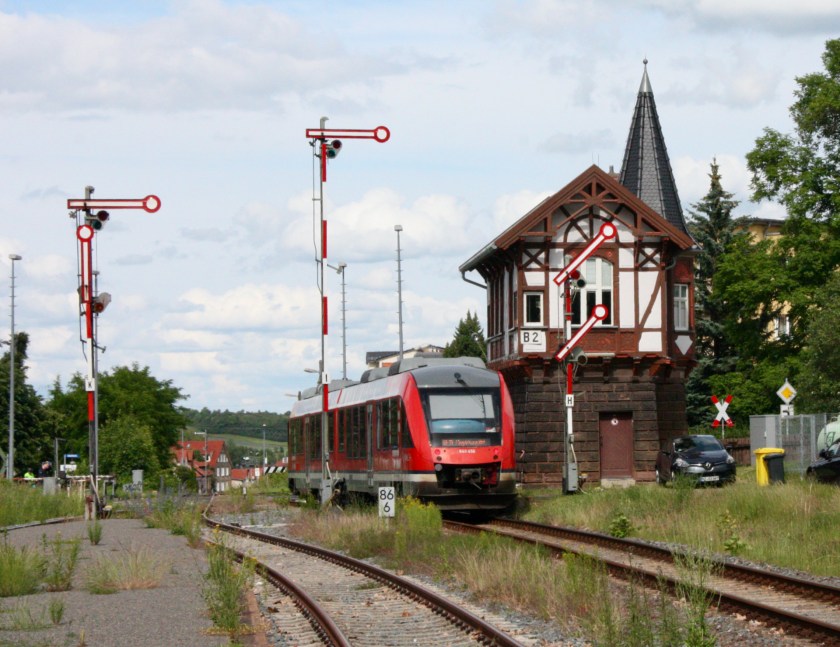
One of the joys of the D-ticket is the ability to simply head off to anywhere you fancy without any need to book or reserve, so having time on my hands at Quedlinburg while waiting for the next steam-worked HSB service, I took a scenic 12-minute ride on the hourly RE service to the terminus at nearby Thale.
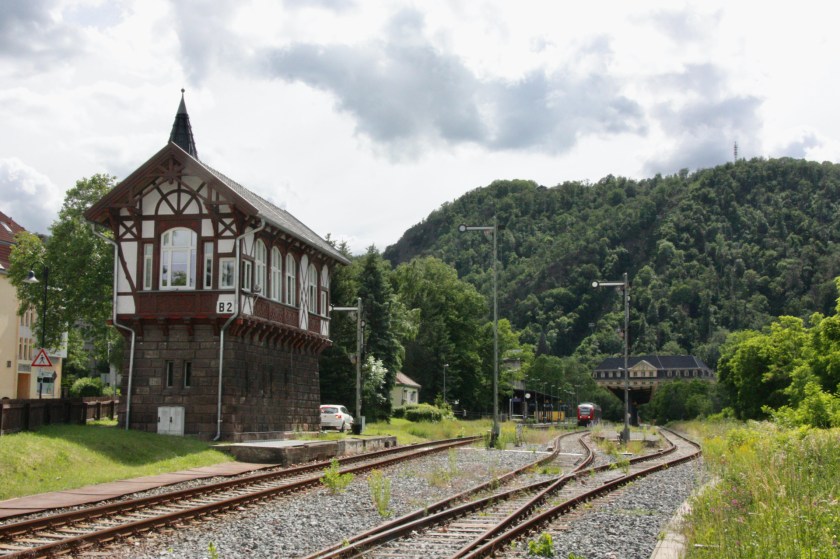
Thale boasts an impressive three-platform terminus (as seen above), with a fine station building that is used as a tourist information point, booking office and shop, and an even more impressive 1897-vintage timber-framed signal box at the north end of the station complex, once described as the finest signal box in Germany, with semaphore signals on both the approach to, and exit from, the station.
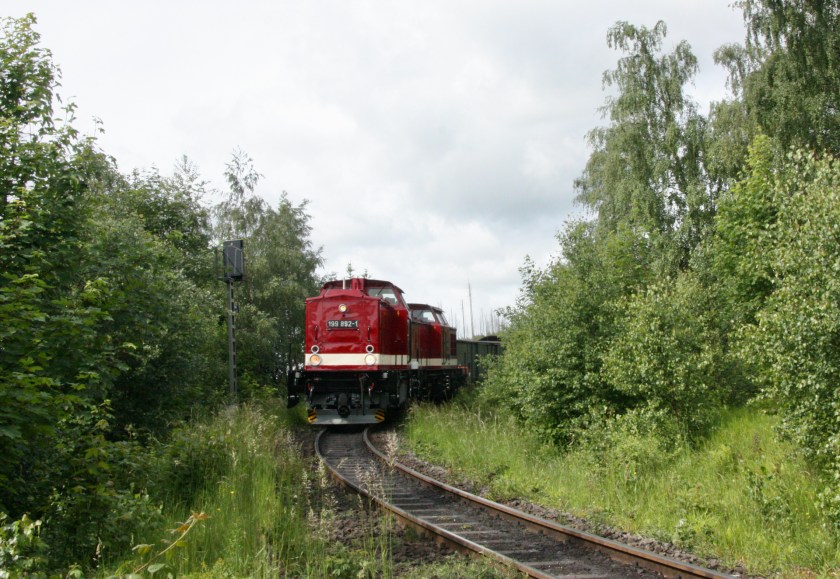
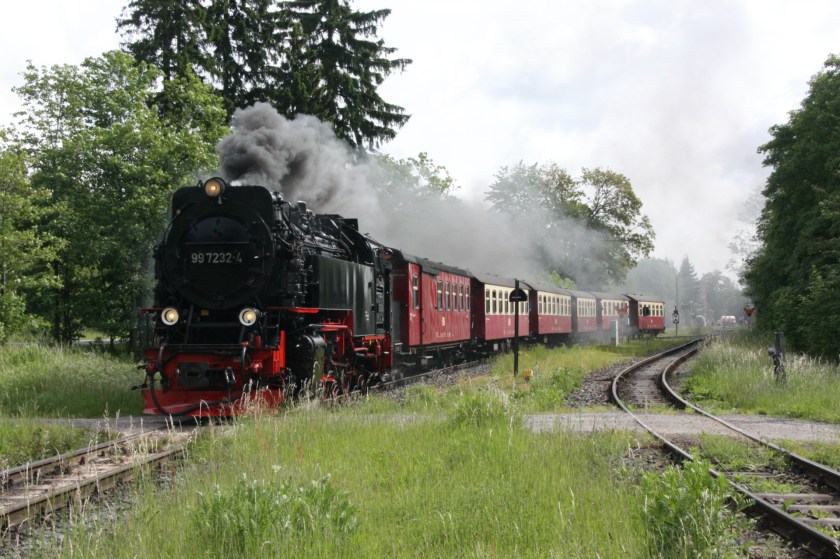
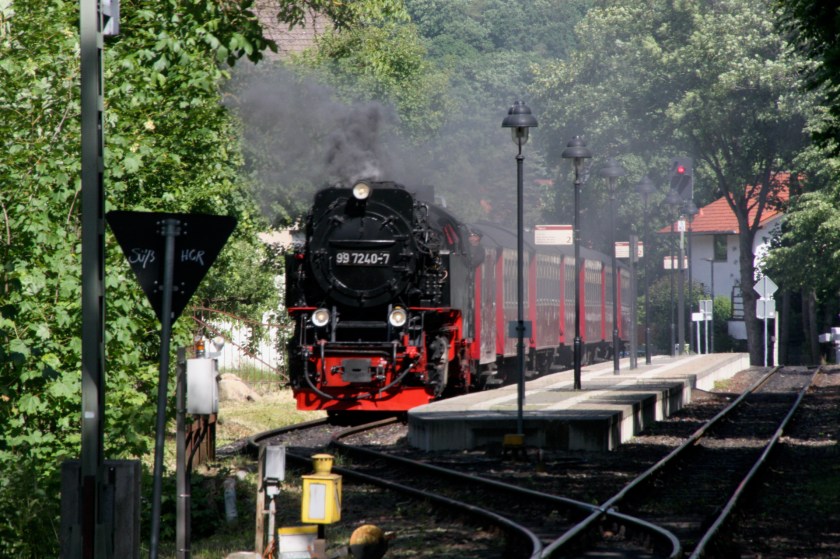
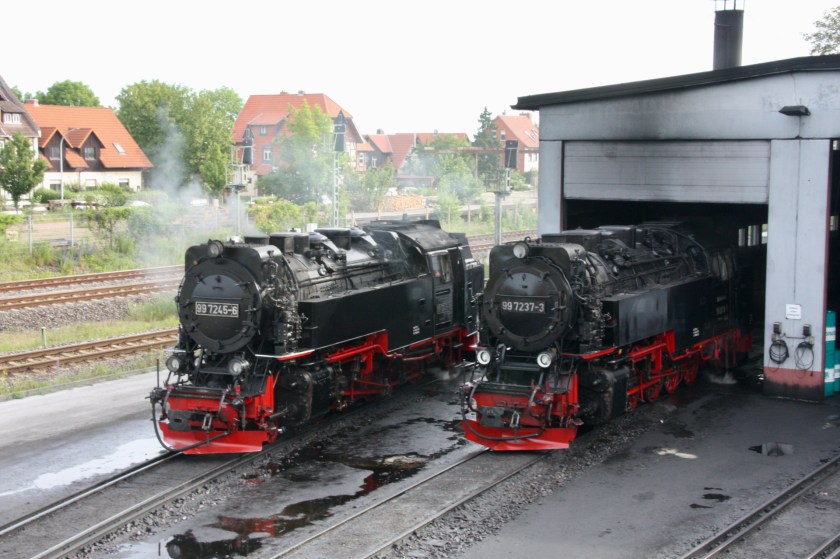
At the heart of daily HSB operations is its fleet of 17 powerful 2-10-2 tank engines, known as Neubaudampfloks, (99-7231-7247), built in the 1950s, and operating alongside two generations of single railcars and a handful of centre-cab diesels, converted from DR standard gauge locos and nicknamed Harzkamel, which are used for shunting, as well as passenger and freight workings.
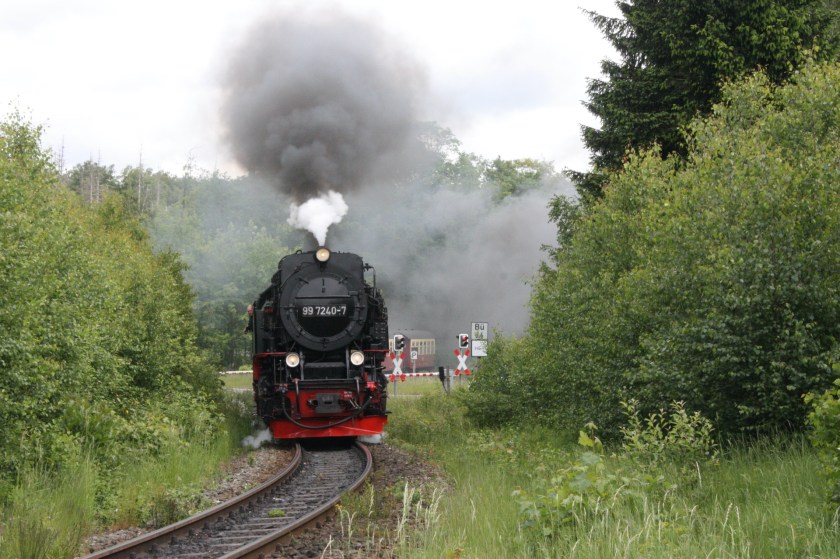
There are a total of six of the Neubaulok fleet currently in service, according to a very friendly guard I spoke to at Wernigerode – 99-7232/37/40/43/45/47 – along with four of the Harzkamel diesel locos – 199-861/872/874/892. Of the remaining steam fleet, 99-7239 and 99-7241 are both in Meiningen Works for new boilers, while 99-222/7236 are under repair at Wernigerode.
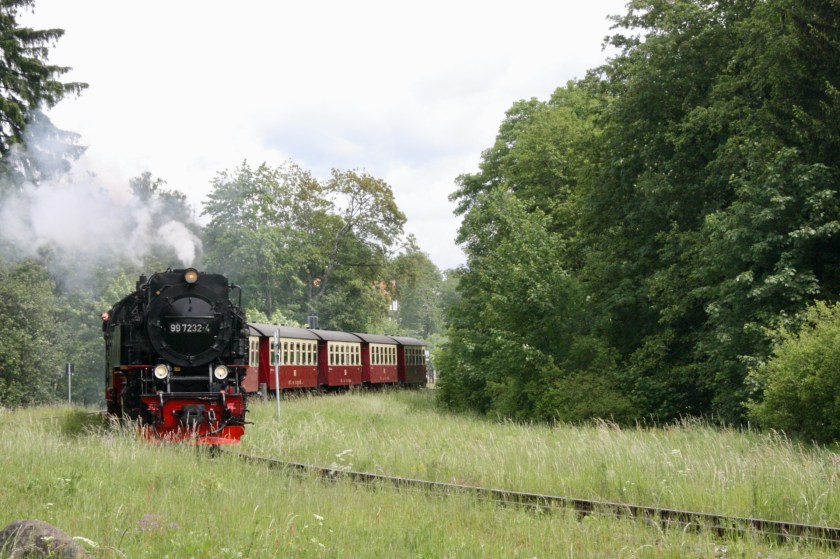
Sadly there seems no prospect of a return to service for the unique 2-6-2T loco 99-6001, which operated Selketalbahn services from its base at Gernrode until last year, was built in 1939 and was to have been the prototype for a production run, until the outbreak of World War II put paid to than plan. Its boiler ticket has now expired, so the loco has been retired and is stored at Gernrode.
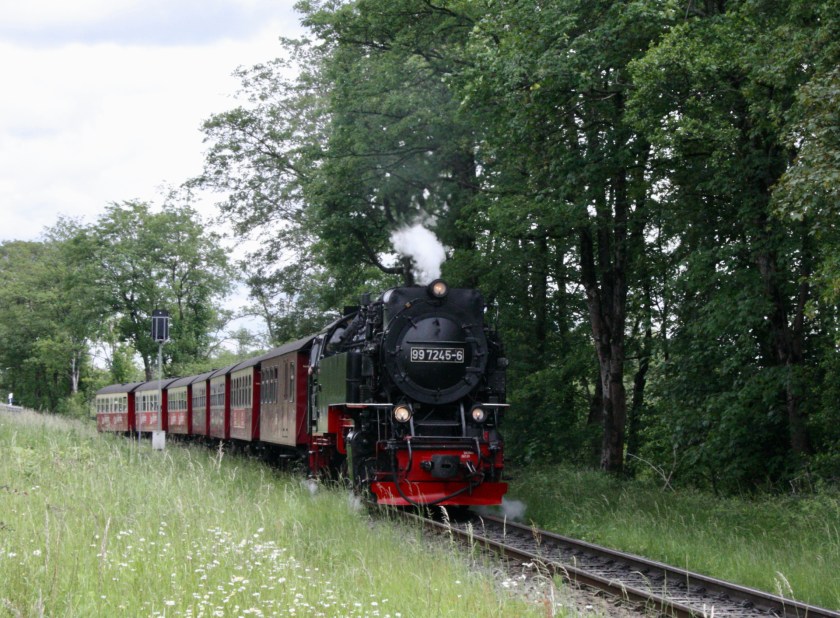
While nearly all the six daily services up the Brocken Mountain from Wernigerode are scheduled for steam working in the summer 2026 timetable, other services are normally operated by railcars, notably on the Selkatalbahn, where just one steam loco operates from a shed at Gernrode and means that only three of the nine daily departures from the terminus at Quedlinburg are steam worked.
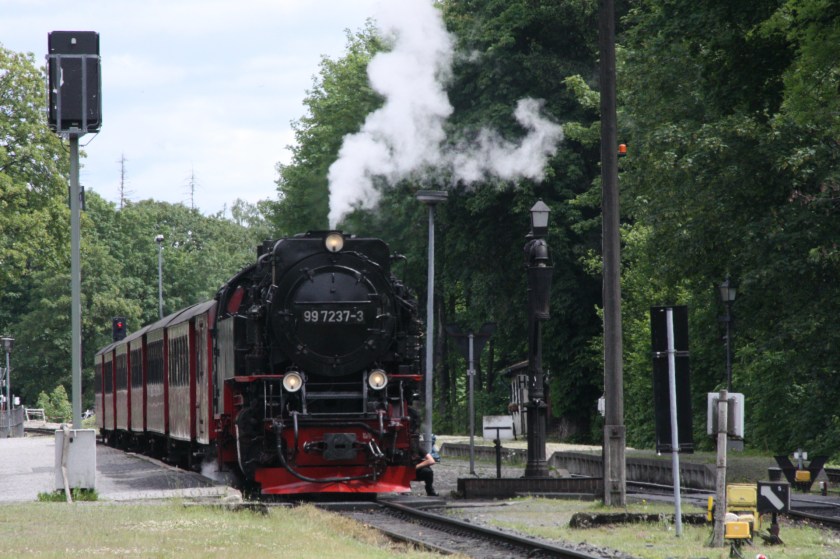
Under the summer timetable, which is in force until 31 August 2026, there are a total of five steam diagrams each day, with four locos beginning their day at Wernigerode for workings up the Brocken and to Eisfelder Talmühle on the Harzquerbahn and one loco operating a diagram from its depot at Gernrode on the Selketalbahn.
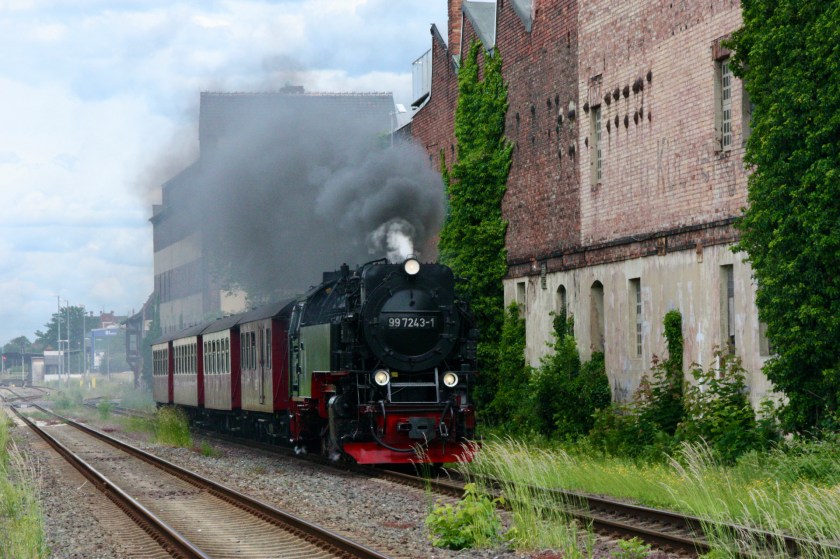
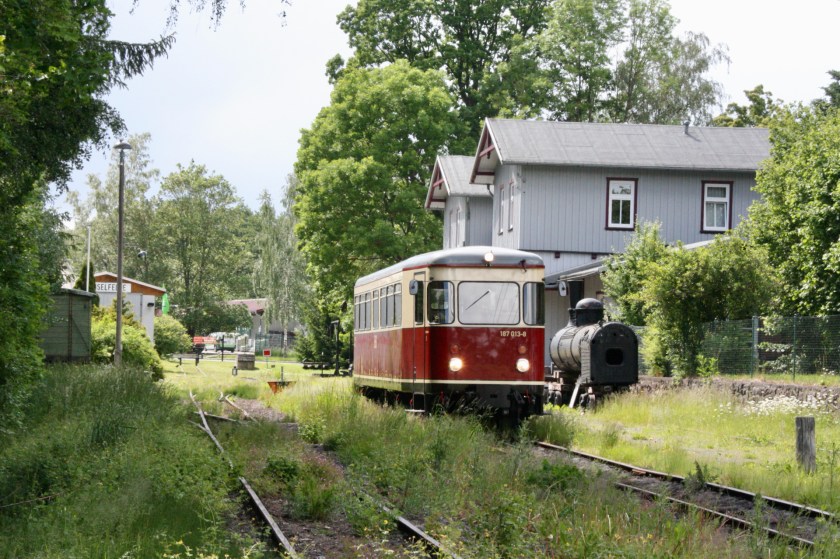
What the HSB system is currently lacking is its railcars, which normally operate on the Selketalbahn and provide links to Nordhausen from Eisfelder Tahlmuhle. Over the three days I spent travelling the network (9-11 June 2026) I saw only one in action (187-013) with another scheduled to operate alongside the Nordhausen trams between Ilfeld and Nordhausen, but I noted four (187-011/12/15/18) out of action in the depot sidings at Wernigerode Westerntor.
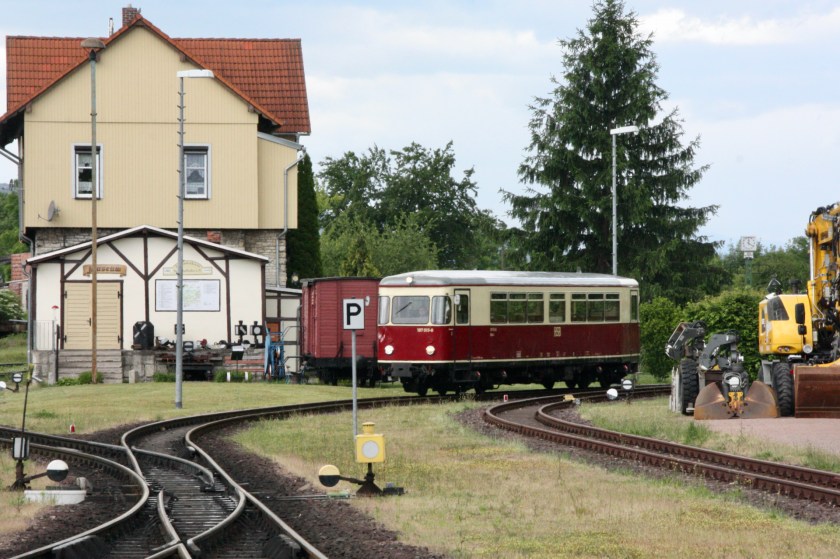
Re-building work during the summer means that rail replacement buses are covering services along the short branch line from Alexisbad to Harzgerode, while another section closed for re-building is between Eisfelder Talmühle and Ilfeld on the Harzquerbahn, which means the normal daily steam working from a shed at Nordhausen has been suspended for the summer season.
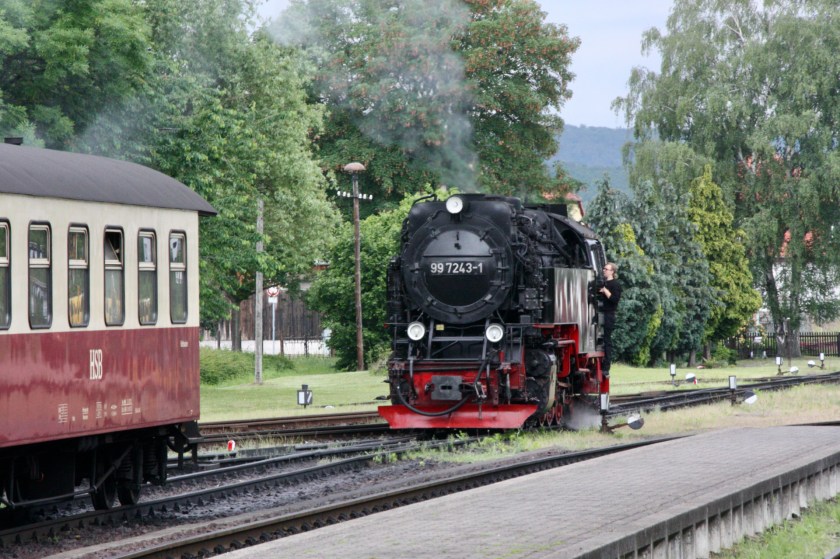
No work has yet been started on re-building the short branch from Alexisbad to Harzgerode, while major repair work needed to a viaduct on the Harzquerbahn means it is unlikely that through services from Wernigerode to Nordhausen will resume before the end of 2026.
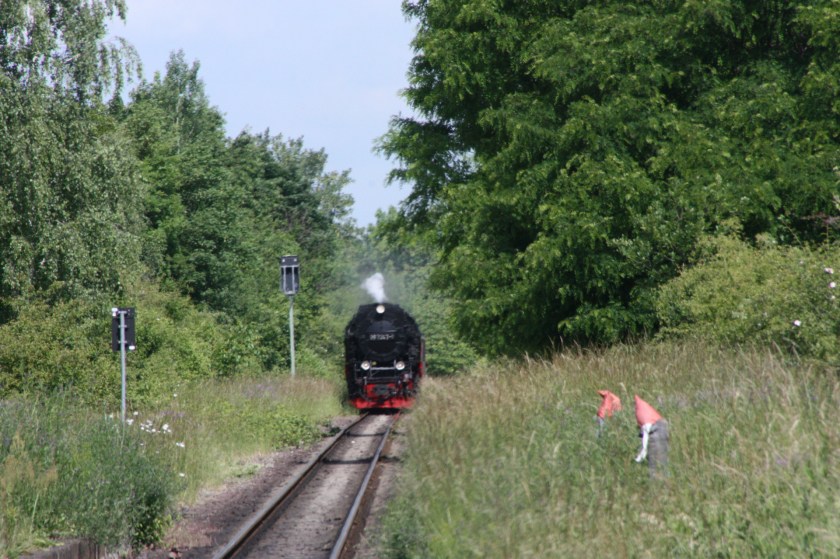
Besides the temporary closure of Eisfelder Talmühle-Ilfeld on the Harzquerbahn, services are also severely restricted on the Selketalbahn this summer, with the section between Eisfelder Talmühle and Stiege closed, except for one Sunday steam working, with one daily steam service from Quedlinburg as far as Strassberg (Harz) and a single railcar round trip from Quedlinburg to Hasselfelde.
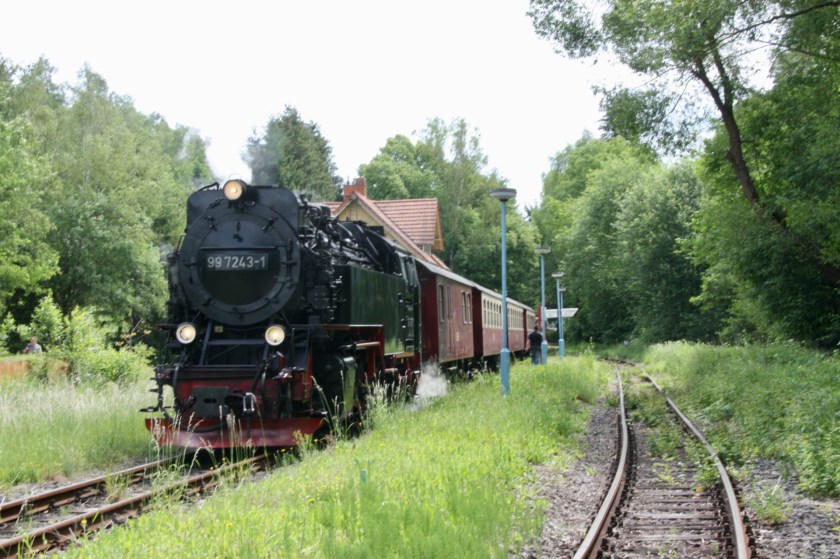
Ending my latest three-day Harz adventure with a one hour 45 minute trip aboard that once daily railcar, from Gernrode to Hasselfelde, it was hard to escape the thought that here was a missed opportunity. There were only three of us on board for most of the scenic journey, while the return from Hasselfelde at 15.43 (11 June 2026) predictably left the attractive terminus with no passengers at all.
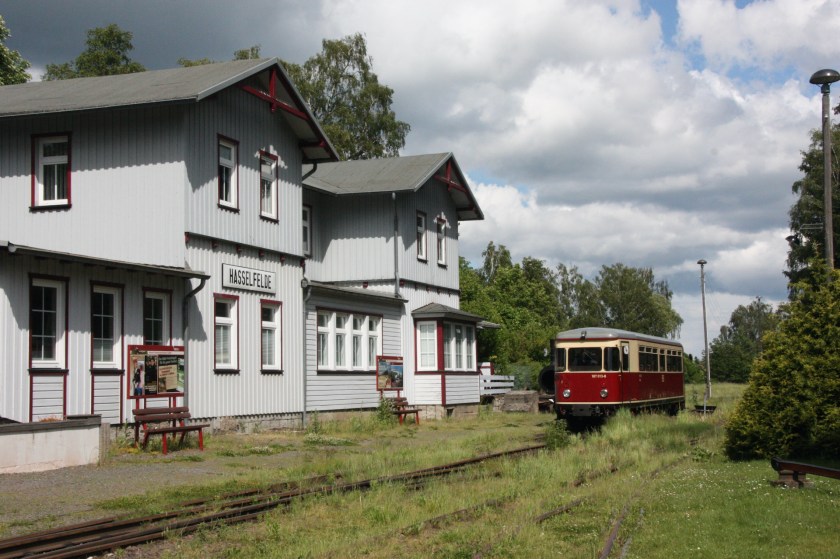
But for all its current shortcomings there really is nowhere else I have visited that is quite like the Harz – whether it’s spending the morning at Drei Annen Hohne photographing the four steam-hauled services up the Brocken, as I did, or riding lightly-loaded services along the picturesque Selke valley – it remains a quite remarkable area to visit.
My four nights at Wernigerode were spent once again in the very comfortable Pension Hexenkessel, which is in the town’s main street (Breite Strasse 9), an easy ten-minute walk from the rail and bus stations, and costing €67.50 (£58.70) a night (room only).


You must be logged in to post a comment.