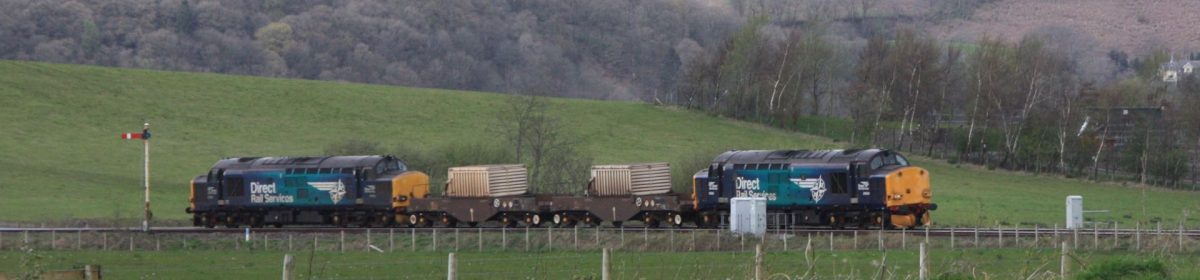
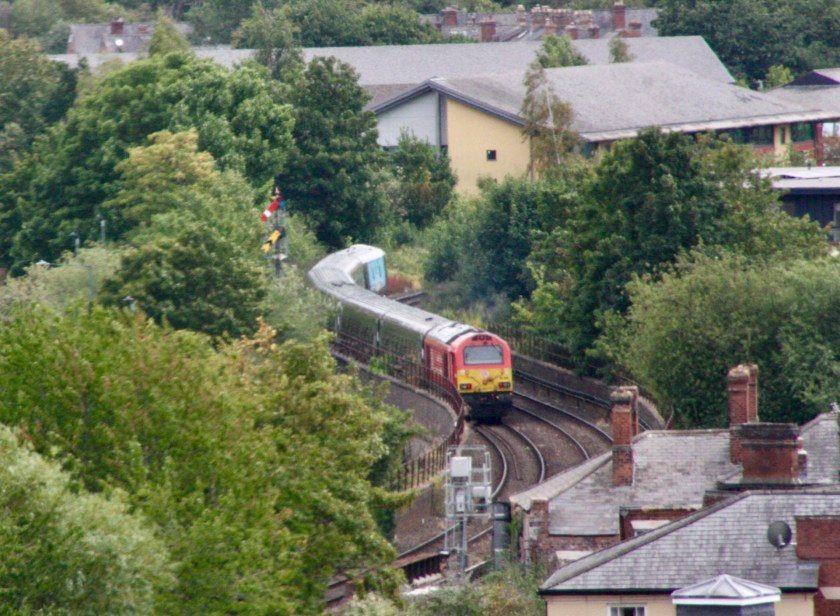
Three years on from my last visit (August 2023) and time for an overdue return to Shrewsbury, home to the finest collection of semaphore signals anywhere in Britain, with the aim of capturing some interesting workings from a fabulous vantage point in the castle and at Sutton Bridge Junction, a mile or so south of the station.
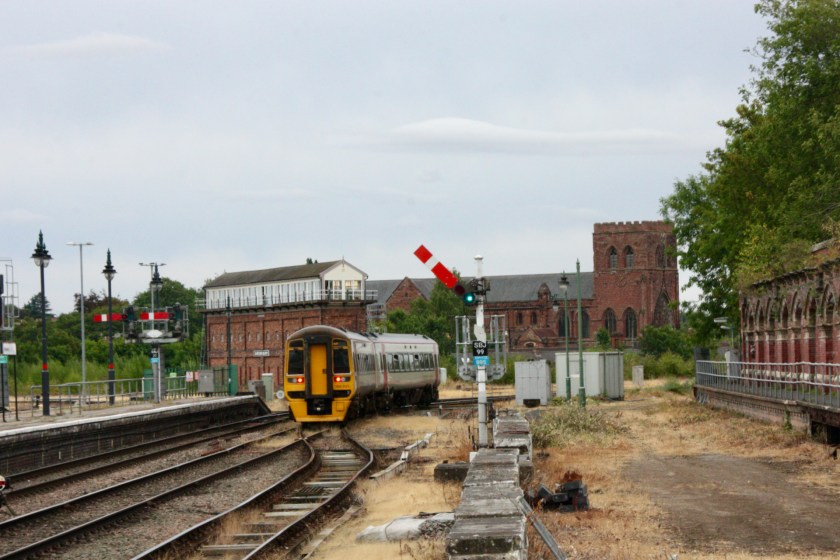
Starting on the station platforms (18 August 2026) my aim was to get a few shots of southbound trains passing some of the semaphores controlled by the world’s largest mechanical signal box (Severn Bridge Junction), and particularly its rare pair of centre pivot signals (SBJ11) at the south end of platform 7 and its newest semaphore (SBJ99) at the south end of platform 3.

Shrewsbury station has five platforms, and apart from platform 3 these are through platforms 4 and 7 along with two south-facing bay platforms (5 & 6) both of which are signalled by colour lights. Passenger services currently comprise a mixture of Class 158 and 197 units on TfW services, along with occasional Class 67-worked Cardiff-Manchester trains, TfW Class 150 or Active Travel Class 153 sets on the Heart of Wales Line and West Midlands Railway Class 196 units on stopping services to Birmingham New Street.
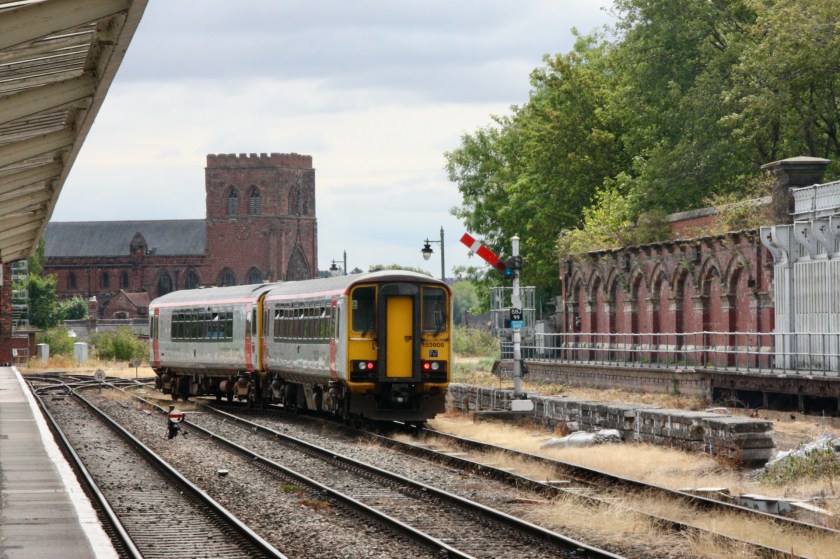
With the route north towards Gobowen, Wrexham and Chester closed for engineering work on the date of my visit, the only trains using platform 3 – which is ungated and reached by a separate staircase from the station forecourt – were terminating Heart of Wales Line workings from Swansea via Llandrindod Wells.
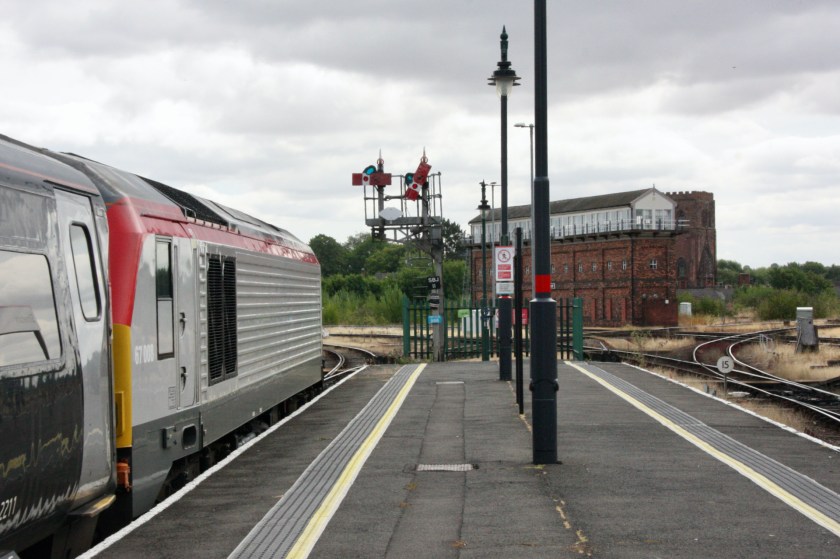
At the northern end of Shrewsbury station stands another magnificent and Listed signal box, Crewe Junction, which is a 1903-vintage London & North Western Railway structure. It controls divergence of the routes towards Chester via Wrexham (currently closed) and the line towards Crewe via Nantwich, with the box’s 120-lever frame controlling 15 mainly lower quadrant semaphore arms, including one of two three-arm brackets (CJ9) at either end of the station.
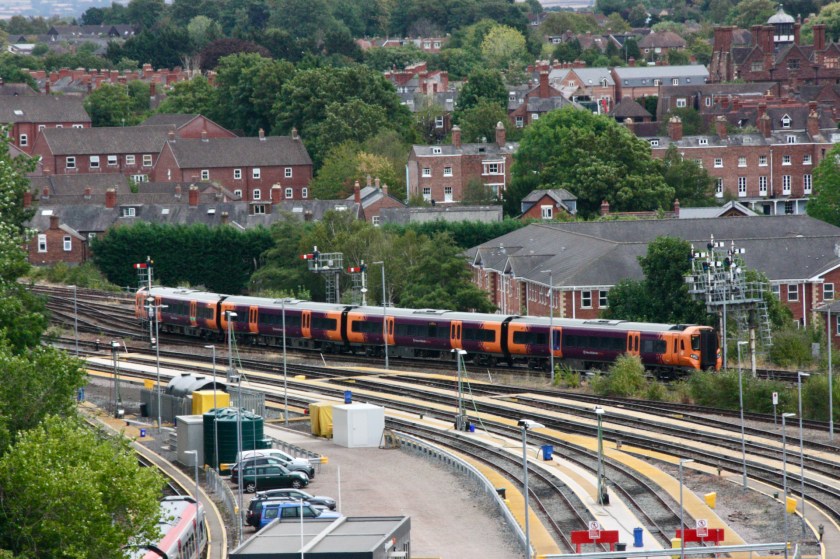
One notable feature close to the box is a unique signal gantry housing a down home semaphore protecting exit from platform 3 (CJ119) alongside colour lights for the centre track (CJ106) and exit from platform 4 (CJ97). Two exceptions to its predominantly lower quadrant semaphores are an up outer home signal CJ1 on the route from Chester and a down home signal CJ53 at the north end of platform 7.
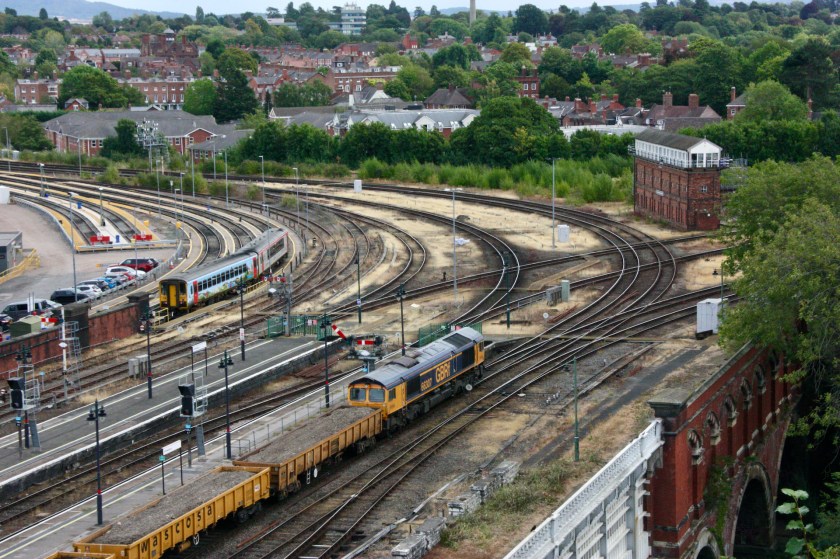
Moving on from the station, my next port of call was Laura’s Tower, in the grounds of Shrewsbury Castle, to which admission is free when the castle is open and offering a wonderfully panoramic view of the southern end of the station and the huge Severn Bridge Junction Signal Box, home to a 180-lever frame that requires two signallers to work it, given its great length.

I had forgotten what a spectacular vista can be seen from the tower walls, with Severn Bridge Junction Signal Box and the Abbey to the right and the route towards Abbey Foregate curving round to the left, with nothing but semaphore signals beyond the end of bay platforms 5 and 6 and a fine six-arm bracket the most notable feature apart from SBJ11 at the end of platform 7.
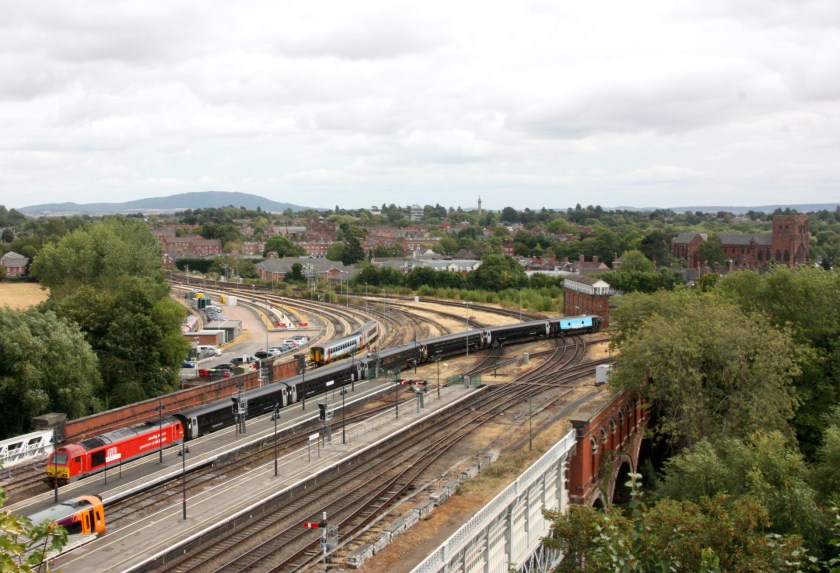
But what I had not spotted on my only previous visit to Laura’s Tower was a view of Britain’s last working lower quadrant semaphore distant signal (SUB59), one of the ten semaphores controlled by Sutton Bridge Junction Signal Box, which is mounted below the Severn Bridge Junction section signal (SBJ24) and a signal that can be seen, but not easily photographed from an adjacent main road.
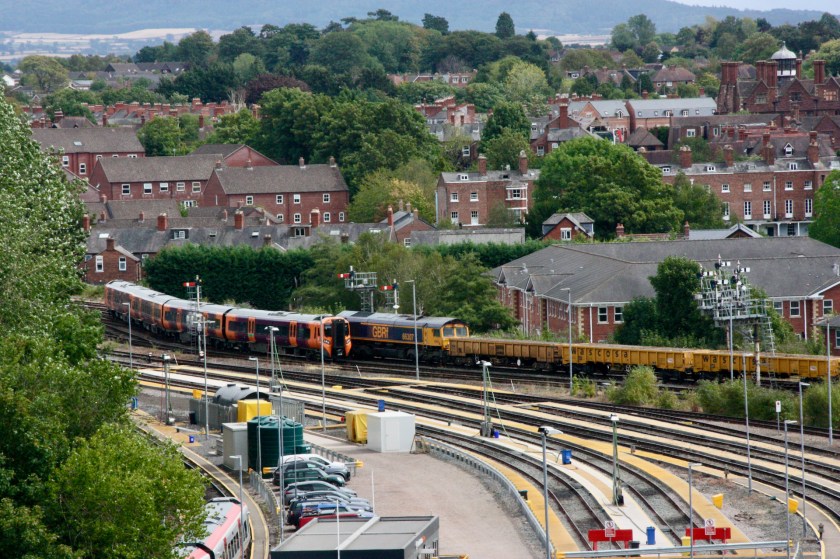
From the Castle I took a hilly 20-minute walk through the attractive town centre, over English Bridge and on to the southernmost of Shrewsbury’s four mechanical signal boxes, Sutton Bridge Junction. This 1913-vintage GWR box controls the junction of the Cambrian lines to Aberystwyth and Pwllheli with the Marches Line to Hereford and Newport, as well an up (northbound) goods loop and access to Coleham Yard on the west side of the line.
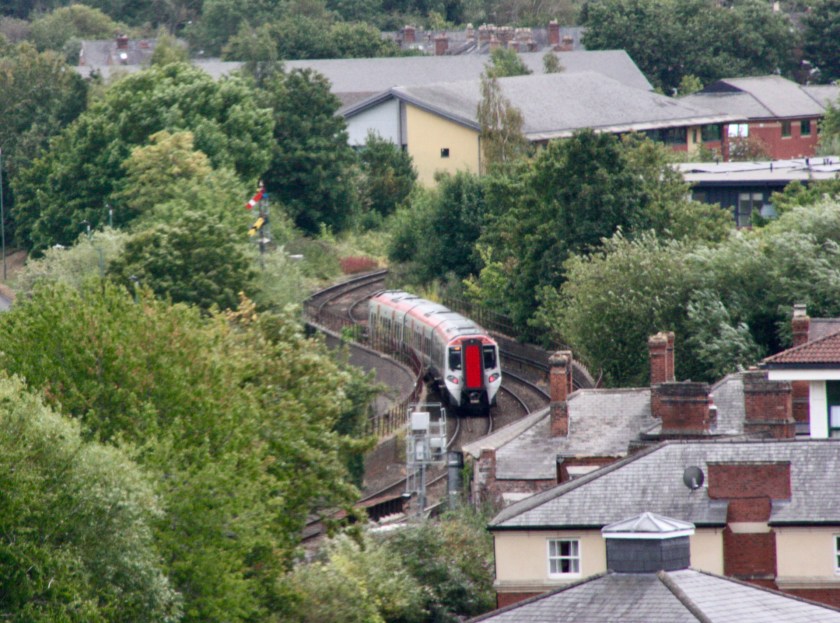
As I have written before, the ten semaphores controlled from its 61-lever frame includes a motor-worked down distant SUB59 that is now the last working lower quadrant distant signal on our national rail network. It can easily be seen from a main road running alongside the line, until my visit to Laura’s Tower I had though it almost impossible to get a decent photograph, owing to line-side vegetation.
Like the signals controlled by the other Shrewsbury boxes, semaphores at Sutton Bridge are a mixture of upper and lower quadrant signals, with SUB12, the up inner home signal on the Cambrian Line, a traditional GWR lower quadrant, along with a bracket holding down home signals SUB54 (Marches Line) and SUB58 (Cambrian Line), while all the other signals in view from a bridge near the box being upper quadrant.
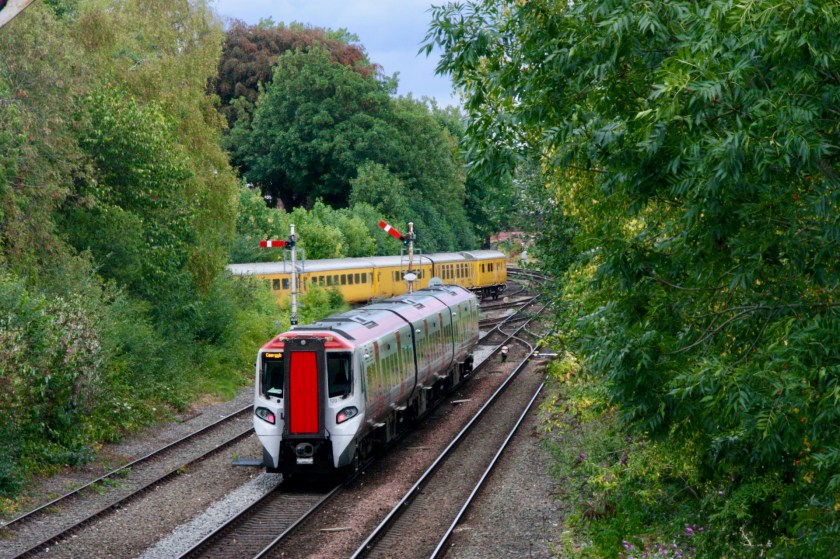
With a second footbridge immediately north of the signal box annoyingly blocked off, there is no decent vantage point to see and photograph trains passing the semaphores alongside Coleham Yard, so for a view looking north it is worth taking a ten-minute walk south to the closest of two footbridges over the line, close to down starter SBU57.

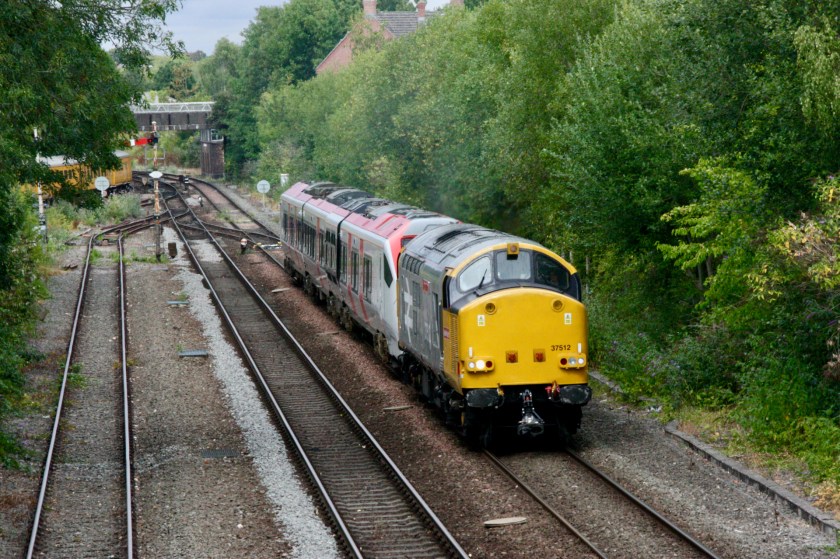
With encroaching buddleia making the view looking south from the bridge near the signal box rather limited, my luck was in on 18 August when I took the walk south and was in time to capture 37512 towing TfW metro unit from its wheel lathe treatment at Holyhead to Cardiff Canton (5Q78), shortly before 66748 passed with the luxury Britannic Explorer (1Z66) on its journey from Llandrindod to Shrewsbury.
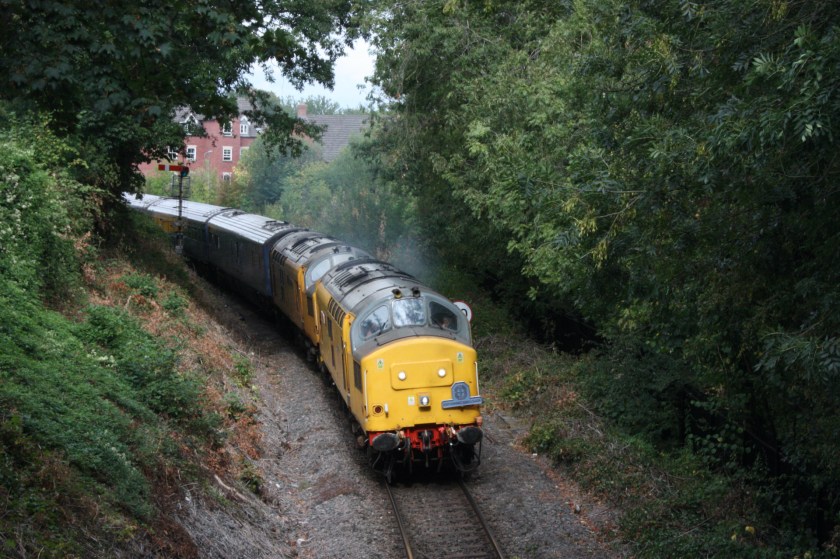
From this footbridge it was only a short walk to another over-bridge, taking a private road over the Cambrian Line, and a view back towards Sutton Bridge Junction and lower quadrant up home signal SUB12. Here there was more Class 37 action, as a yellow Network Rail 97303/4 stormed around the curve towards the bridge with the next leg of the Britannic Explorer excursion, from Shrewsbury to Pwllheli.
For anyone tempted to visit charming Shrewsbury and witness its remarkable heritage signalling, I can recommend a stay at the Wetherspoon-owned Shrewsbury Hotel, an easy eight-minute walk along the river from the station, where I paid £62.10 a night for a comfortable double room – with plentiful cheap real ale available in the pub next door.


You must be logged in to post a comment.