The more I travel on the railways of Britain and across Continental Europe the more I am drawn back to places I have become familiar with, that are welcoming, scenic, have considerable railway history or interest, and hopefully offer relatively cheap fares, food and accommodation.
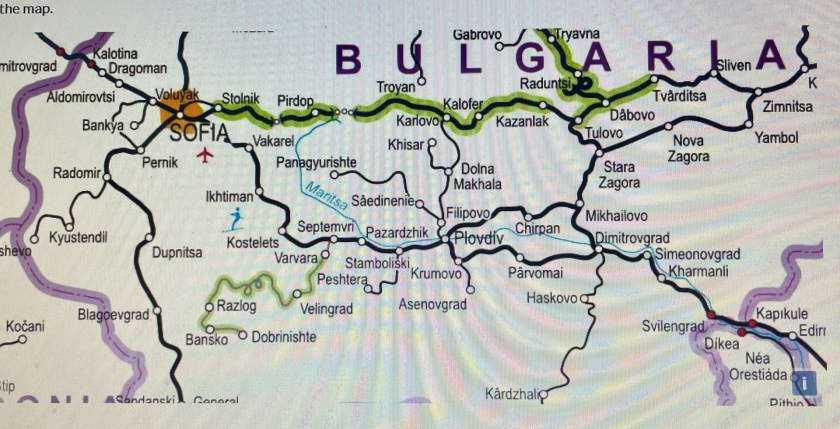
One place that ticks all those boxes is Velingrad in Bulgaria, “Spa Capital of the Balkans” and principal intermediate station on a 78-mile (125km) long 760mm (2’ 6”) gauge route that is Bulgaria’s only narrow gauge railway and runs south from a junction (Septemvri) on the main Sofia-Plovdiv route to the ski resort of Bansko, before terminating at nearby Dobrinishte.
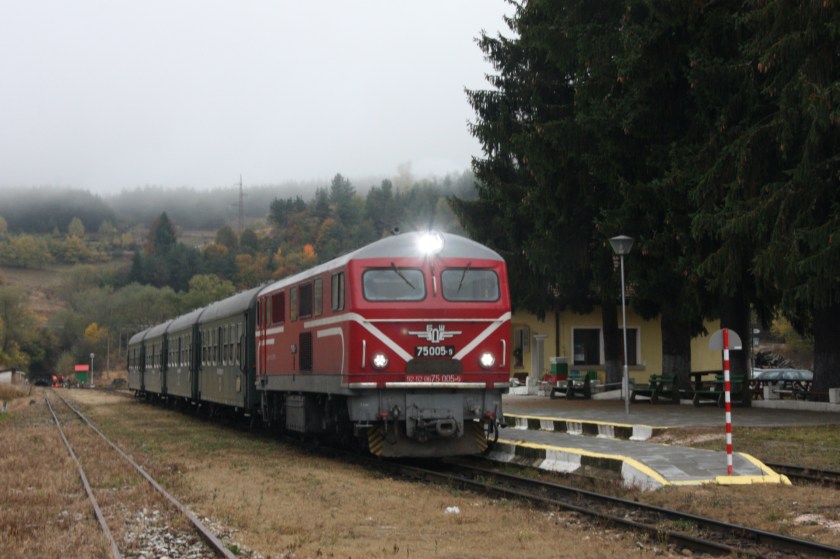
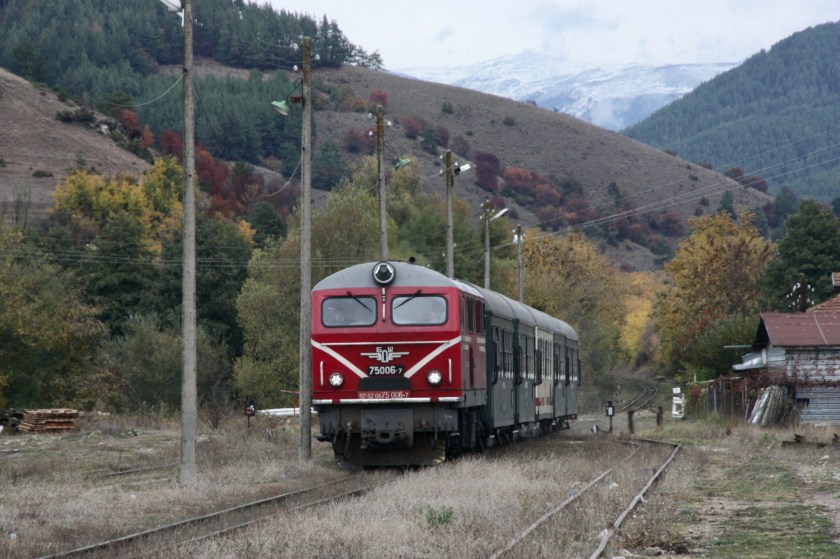
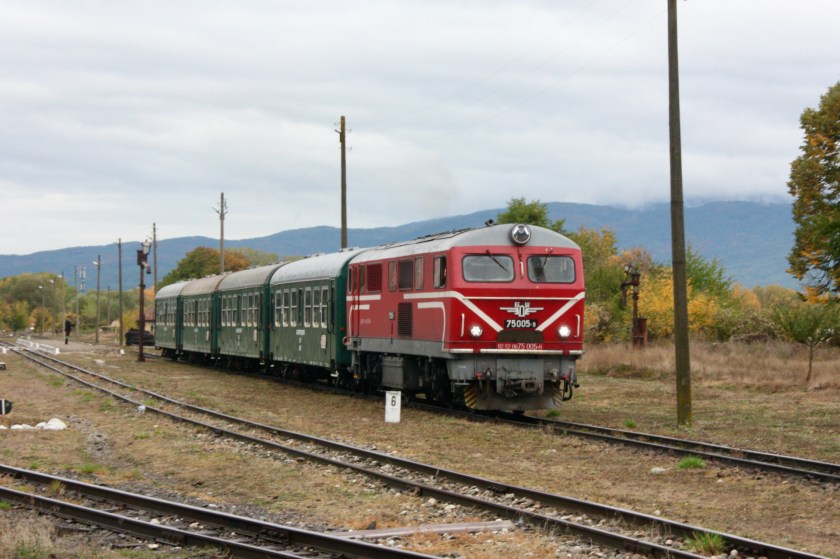
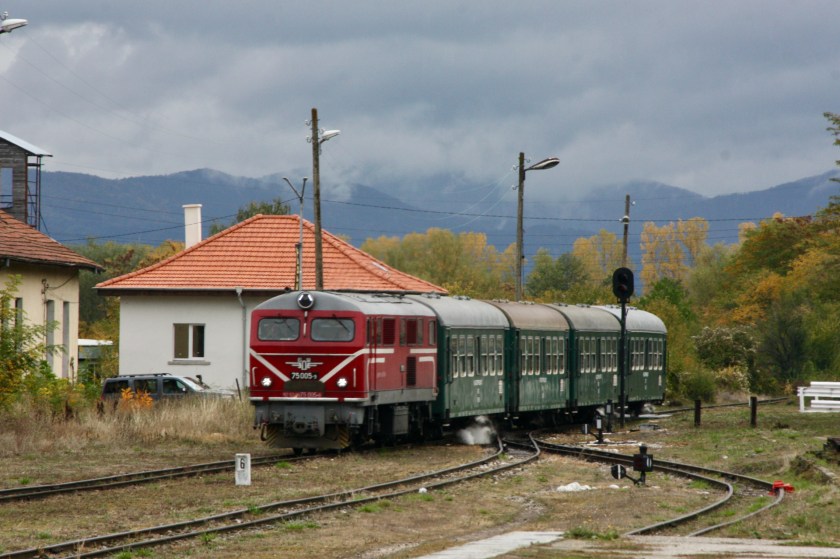
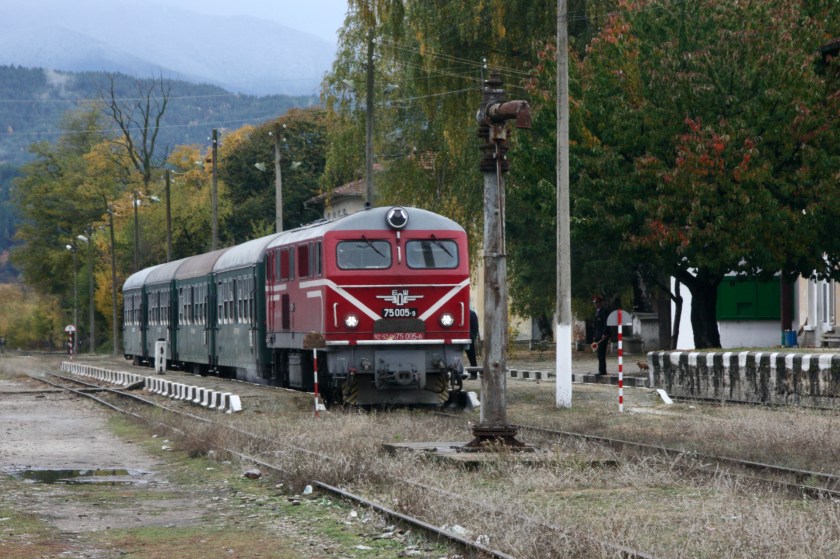
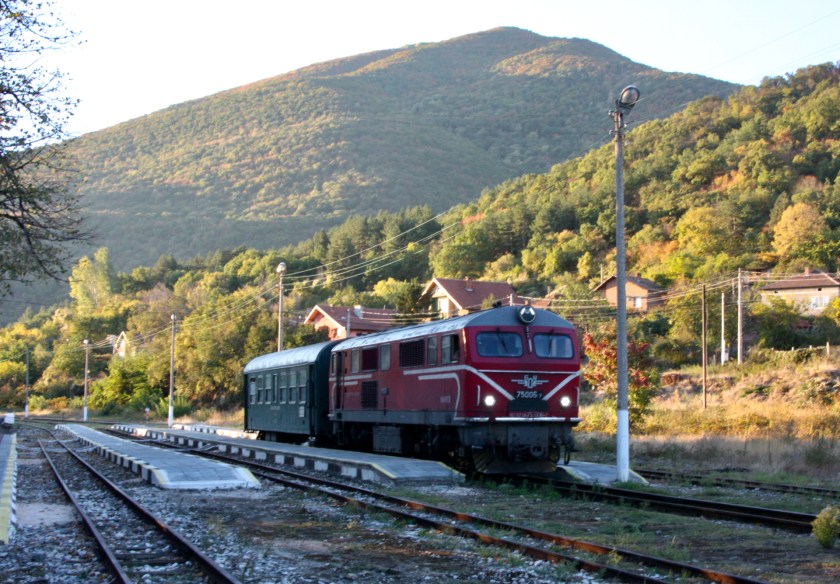
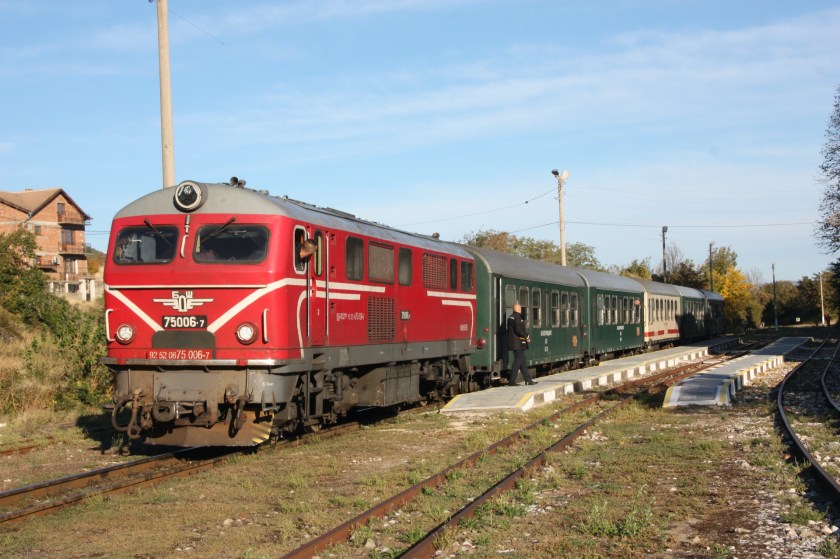
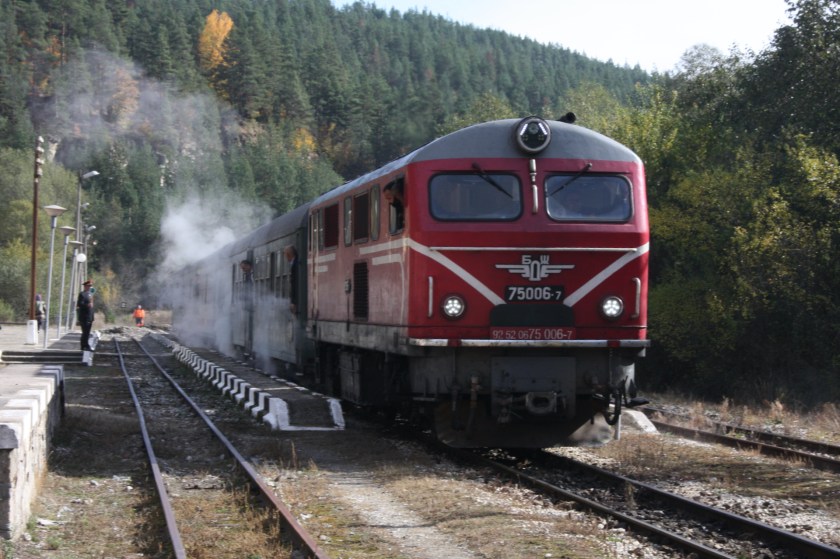
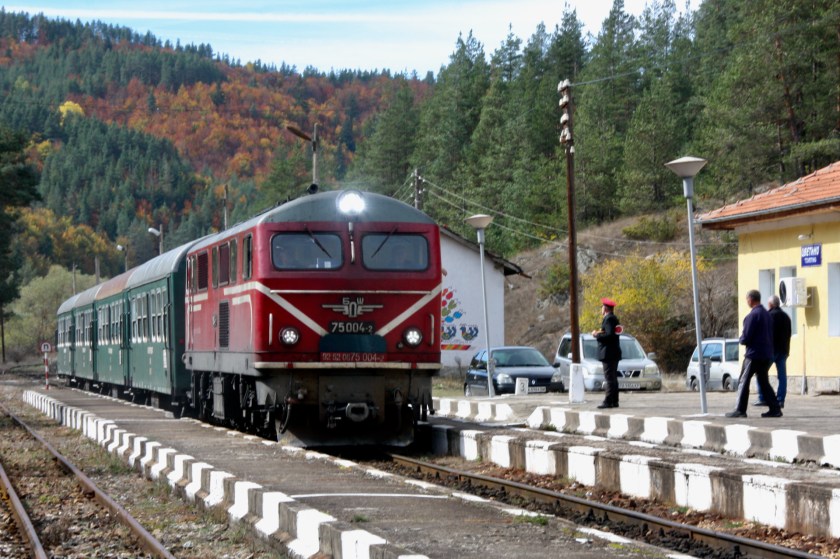
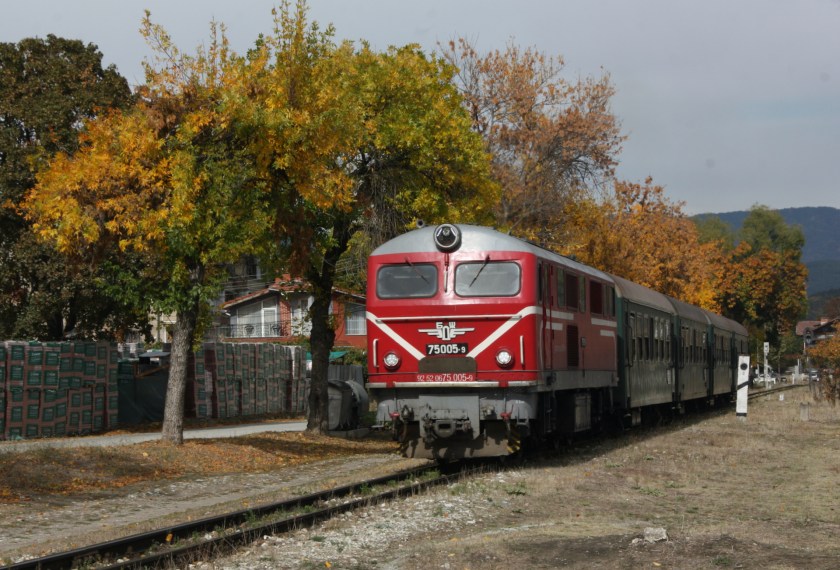
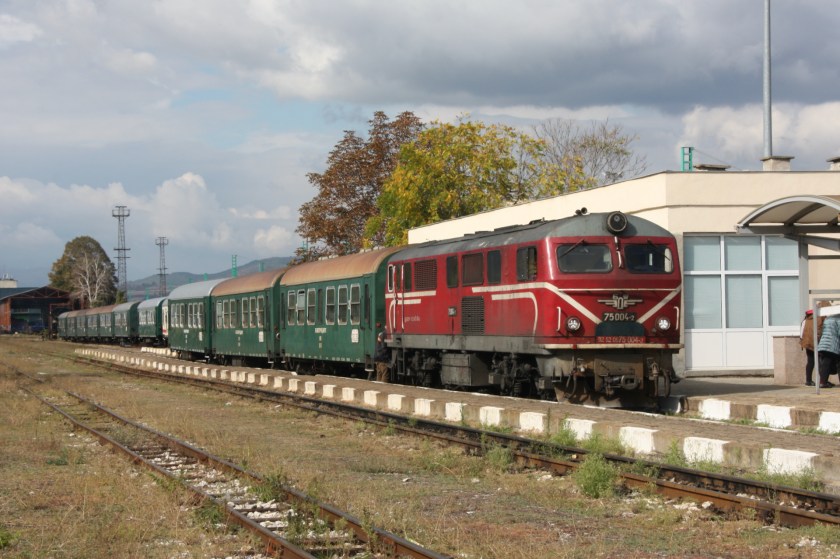
Emerging from the long subway at Septemvri station after a trip on a graffiti-covered BDZ suburban train and you will be transported back in time, with your narrow gauge journey being in small and cosy steam-heated and graffiti-free green coaches, hauled by diesel locos celebrating their 60th anniversaries of working the line in 2026 (they were built in 1965 and delivered in 1966).
Paying what has become an annual return for me to this delightfully scenic and remote corner of Eastern Europe, my plan during a three-night stay was to travel the entire railway once again, and also to seek out a number of new photo-spots at a trio of intermediate stations along the route that I had not previously visited.
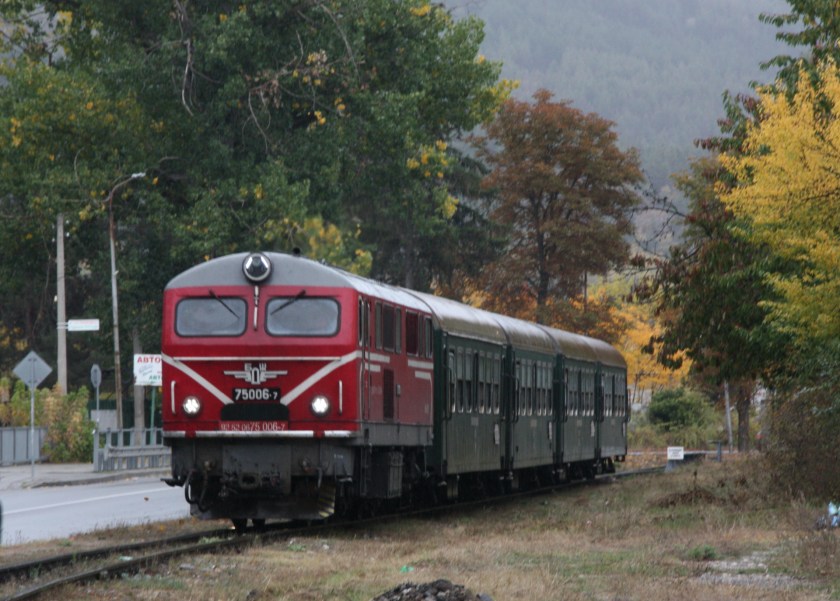
As I have written before, outstanding features of this highly scenic line are its perilous passage high on a narrow stone embankment alongside a road and the Chepinska River north of Velingrad, where there is a 15kmph speed limit, then four spirals and around two dozen tunnels that allow the line’s ascent from Velingrad to Avramovo, the highest station in the Balkans at 1267m (4,157ft).
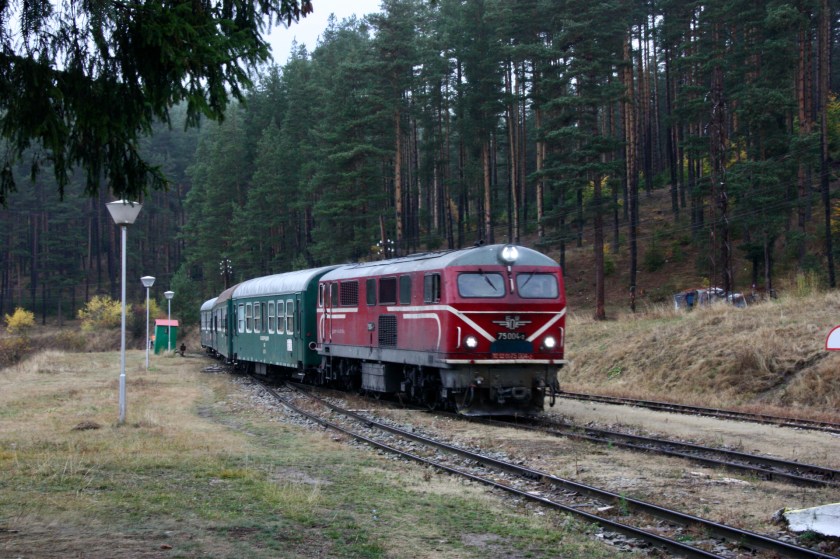
During the four days I spent riding the line (12-16 October 2026) all services were being worked by three of the 1965/6-vintage Class 75 Henschel diesels (75004/5/6), the oldest working locos on the line, with no sign of the later (1988) Romanian Class 77 units, of which 77102/109 were extensively overhauled in recent years and were both active on my 2025 visit.
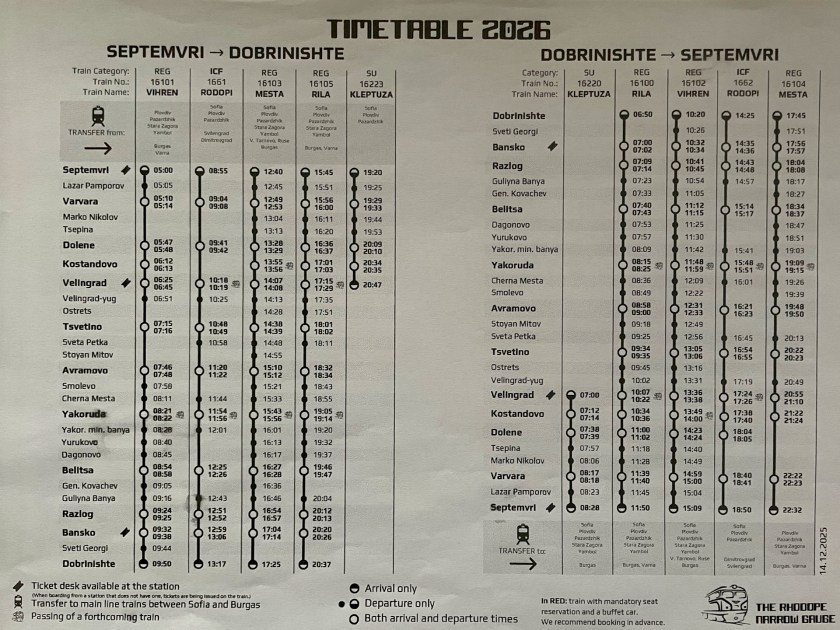
Services along the Septemvri-Dobrinishte railway do not alter much from year to year, although one change to the timings of the route’s four daily round trips is a later departure of the first train from Septemvri (the Vihren) from an unearthly 03.30 to 05.00, meaning a more civilized start to my first full day of travelling on it from Velingrad, where it now leaves at 06.45 rather than 05.02.
Two other noticeable changes as a consequence of this later running of the Vihren service are withdrawal of a short suburban working at the south end of the line, from Dobrinishte to Razlog and back (the Pirin), and a Velingrad start for the early morning short working to Septemvri (the 07.00 Kleptuza).
As I had witnessed on a pre-dawn departure from Velingrad towards Bansko last year, the loco and single coach to form the Kleptuza had previously been detached from the Vihren at a remote station called Tsvetino, from where the Kleptuza had begun its trip north to Septemvri via Velingrad at 06.15.
That detaching process now takes place at Velingrad, during a 20-minute stop by the Vihren (06.25-45), while there is a reversal of this procedure in the evening, when the loco and coach that have formed the 19.20 Kleptuza service from Septemvri are attached to the final Septemvri-bound service of the day, the Mesta, during its 15-minute stop at Velingrad (20.55-21.10).
As a way of avoiding two journeys on the painfully slow main line from Sofia to Septemvri, where upgrading is taking years to complete, I opted to begin my latest Bulgaria trip by flying (Ryanair) from Stansted to Bulgaria’s second city, Plovdiv, whose airport is close to the city and with a shuttle bus (€6.00 single) to the city centre bus station, opposite the main railway station.
Here I had a remarkably cheap night (£21.25) in a hotel (Intelcoop) only a short walk from the railway station, then travelled on the following morning to Septemvri by local train, before taking the Rodopi express from there (08.55) to Avramowo (11.20) befoe returning to Velingrad an hour later (12.31/€1.33).
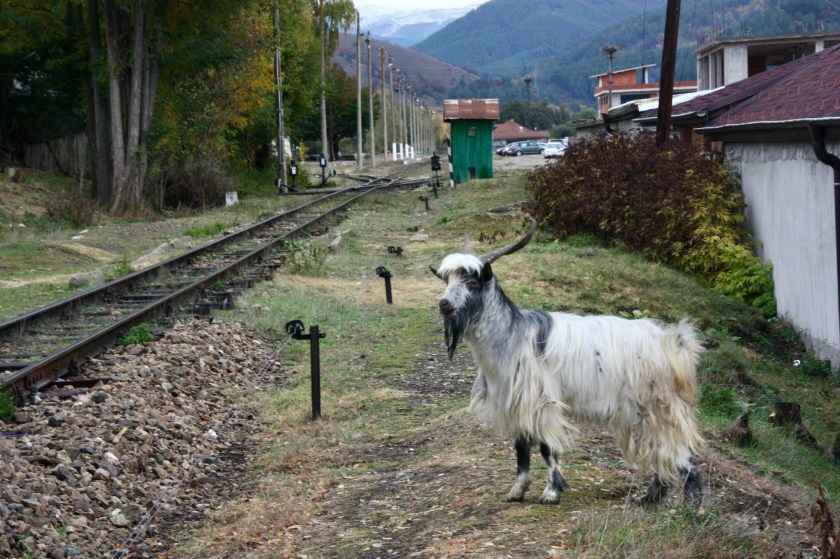
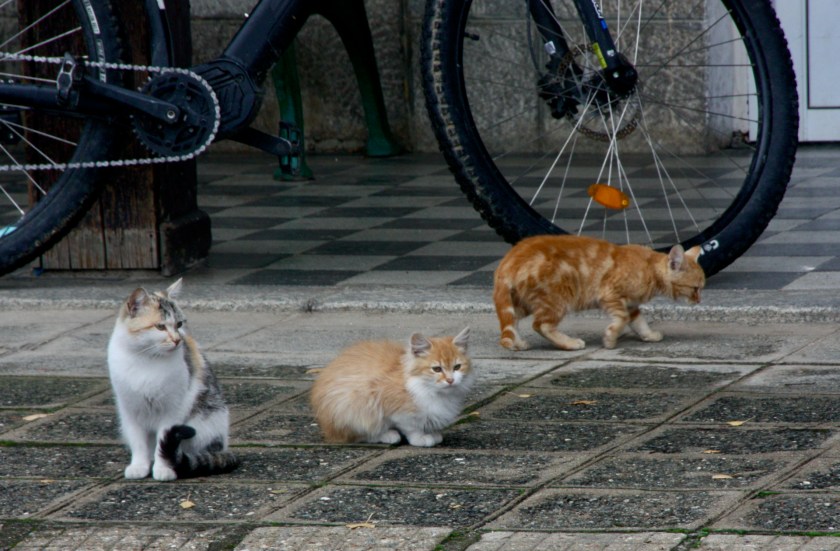
On my first full day at Velingrad I took a three hour trip to Bansko on the early morning Vihren departure (06.45/€2.86), spending an hour there before returning to a charming intermediate station called Belitsa, where I encountered three charming station cats and a herd of long-haired goats.
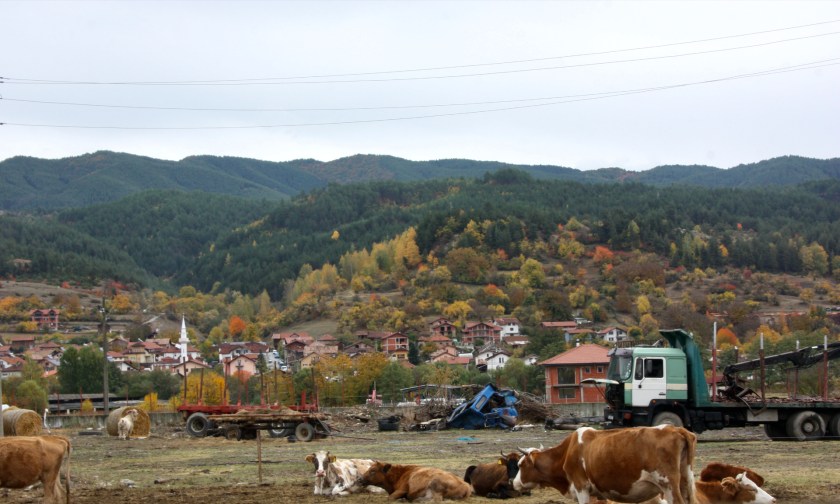
To complete my journey on the line I travelled on the southbound Rodopi from Belitsa to Dobrinishte (12.26/€2.45) and was pleased to see that the white buffet car, which had been missing from the train yesterday, had been added to its four green coaches. After an hour’s break I then return to Velingrad on the northbound Rodopi (14.25 / €4.24).
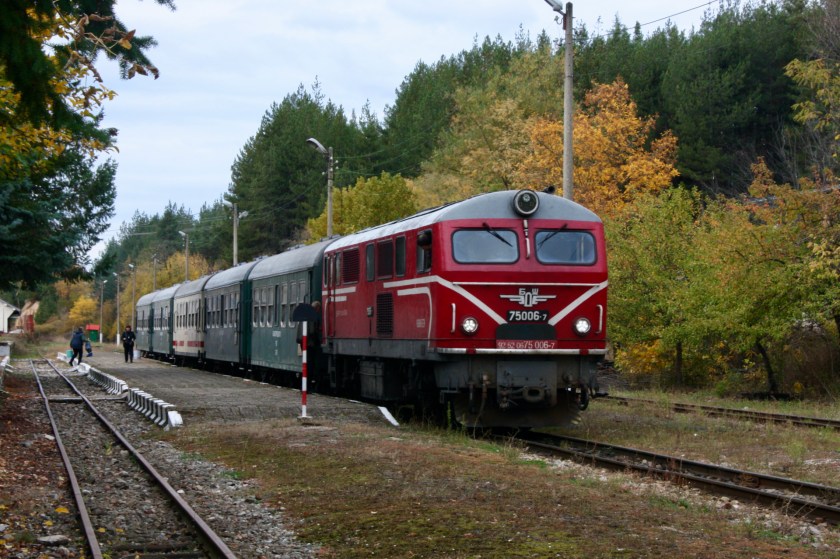
For a rather shorter day (15 October) I headed north with half a dozen others in the single coach of the 07.00 Kleptuza as far as Varvara (€1.64) before another ride aboard the Rodopi(09.08) to remote Tsvetino (€3.07), half an hour south of Velingrad, with an enforced two-hour break here before returning to Velingrad on the northbound Vihren at 13.06 (€1.02).
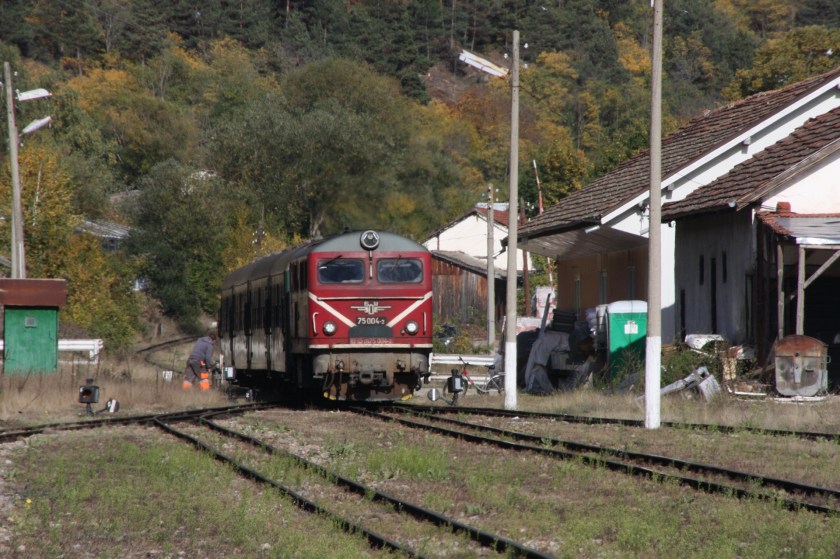
Despite my fears that Bulgaria’s adoption of the Euro on 1 January 2026 would significantly increase prices, fares on Bulgarian Railways remain very cheap by UK standards. Using the state railway company’s website www.bdz.bg I paid just €5.41 (£4.70) for my first three hour 45 minute journey from Plovdiv to Avramovo, with the following day’s journey to Bansko costing a modest €2.86.
Services on the narrow gauge railway all ran to schedule for the first three days of my Bulgaria trip, but things finally went awry on the day of my return to the UK (16 October) when the Rodopi mysteriously failed to arrive at Velingrad to pass the Rila, which I was travelling on to Septemvri, and was apparently replaced by a bus, presumably due to loco failure/lack of a substitute loco.
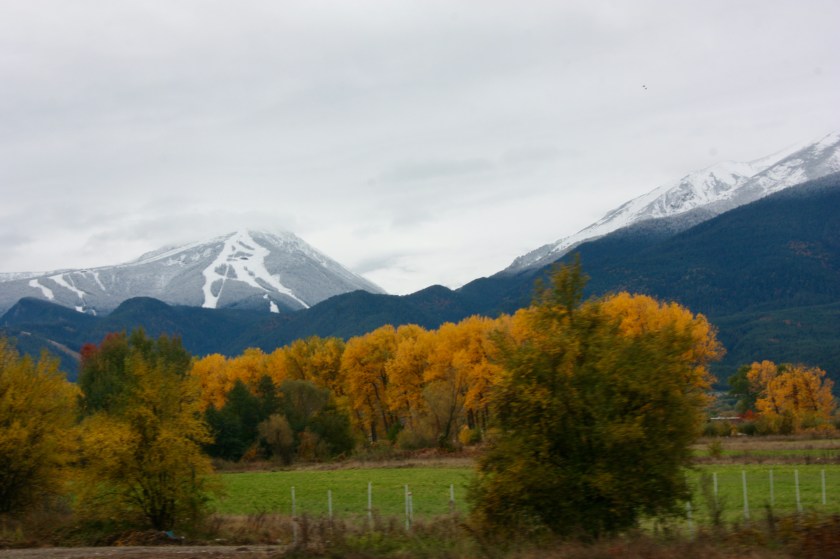
Mid-October seems an ideal time for a visit to this highly picturesque corner of Eastern Europe, with some stunning tree colours and days long and mild enough for photography. I can also recommend downloading an app called BulTrain, which works like our Realtime Trains and (in English) gives live times for all BDZ passenger trains, including those on the narrow gauge line.
Heading back to Haslemere on 16 October I travelled on the Rila Service from from Velingrad (10.22) to Septemvri then, for my through fare of €6.59, had first class comfort on an Inter-City train (IC8610) for a slow two-hour trip to a Sofia suburban station called Iskarso Shose, which is a mere two stops on Metro Line M4 from Sofia Airport (fare €0.80).
As I noted last year, upgrading work on the main line continues to make painfully slow progress. Work on the 156km (98-mile) Sofia to Plovdiv route is expected to take at least another three years, and includes construction of 36km (22½ miles) of new alignment, featuring numerous huge viaducts and a costly 6.8km (4¼-mile) tunnel that will be the longest in Bulgaria.
In Velingrad I stayed once again in a very comfortable and well-equipped apartment within a building called Shoshovi Guest House, costing €40.00 (£34.70) a night and less than 100 yards from the station. I can highly recommend it, and for anyone tempted to visit the area, the owners can be contacted via email: shoshovi@abv.bg or by text +359 8822 48484.


You must be logged in to post a comment.