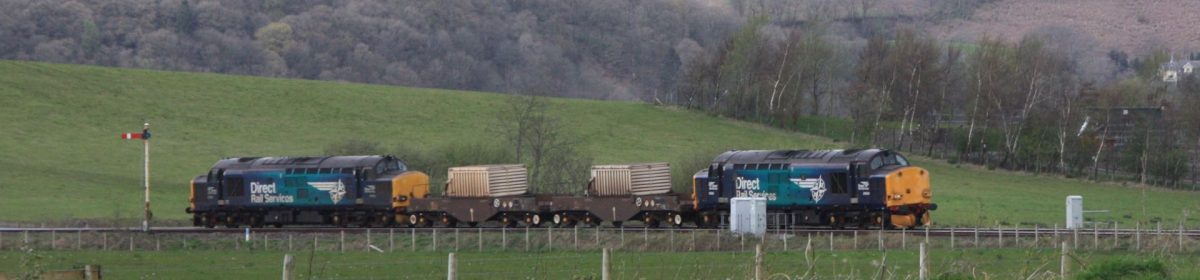
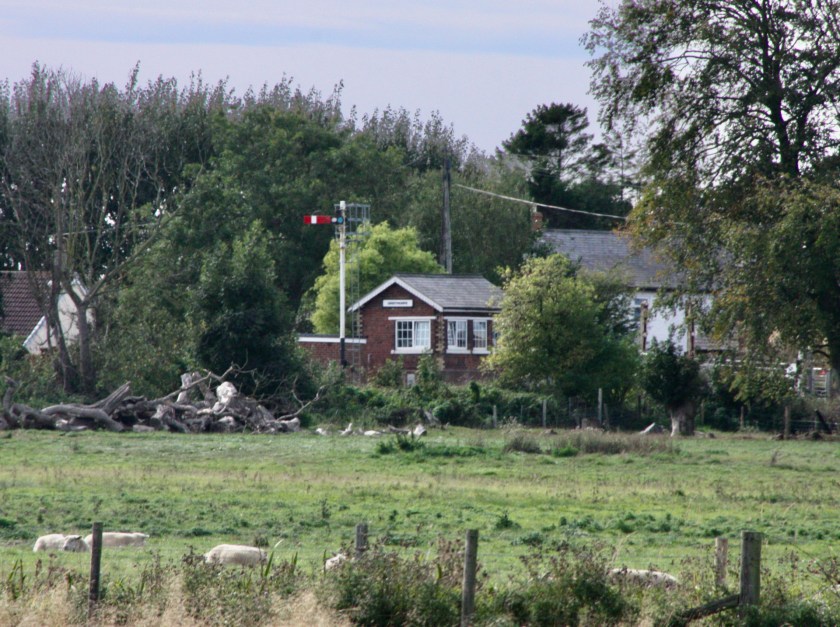
Five years after the loss of a fine collection of semaphore signals controlled by the magnificent Bridlington South Signal Box (in October 2021) plans are now being drawn up for elimination of the final mechanical signalling along the Hull-Scarborough Yorkshire Coast Line, with the planned automation of Gristhorpe and Lebberston Road Level Crossings, near Filey.
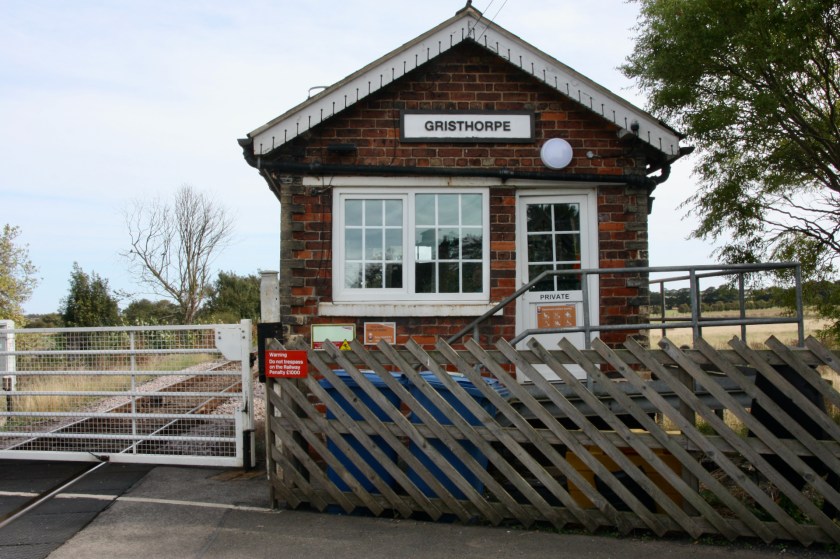
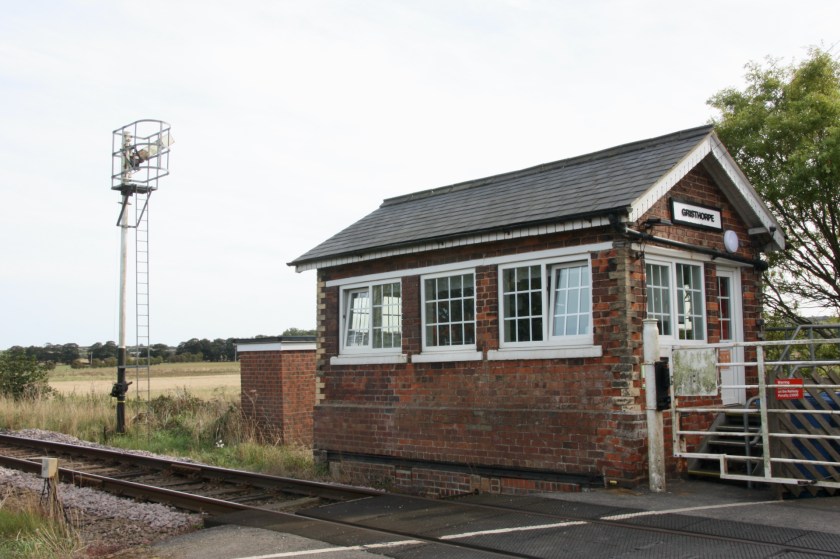
Gristhorpe Crossing is one of Britain’s oldest surviving signal boxes, being a North Eastern Railway (NER) design from 1874 that stands just south of the village of Gristhorpe, a short distance west of Filey. Here you will find hand-operated level crossing gates and a well-preserved former station (closed February 1959).
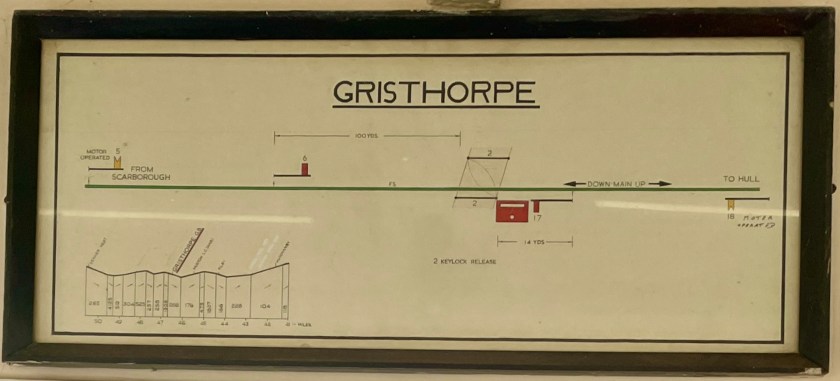
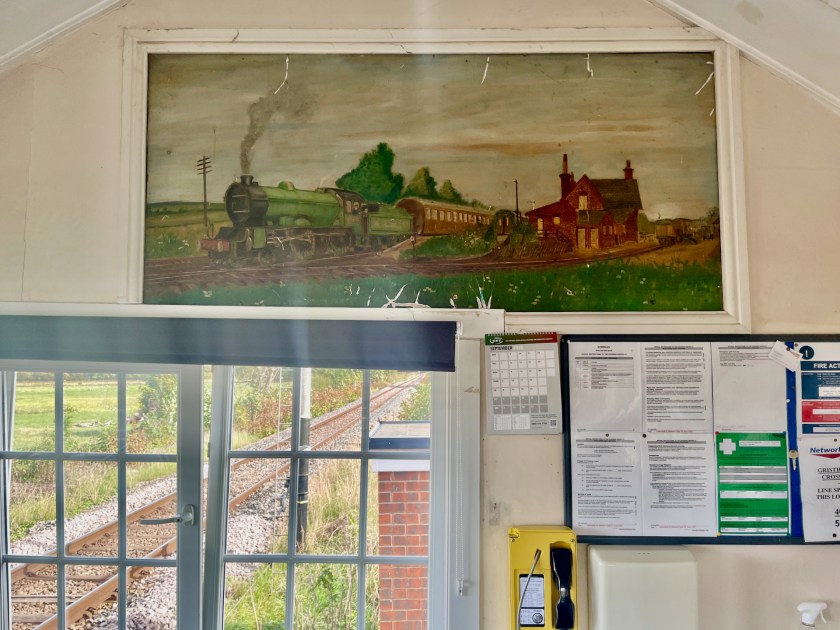
Only four signal levers remain operational in what was once an 18-lever frame – these are an up home (6) and a down home (17), both very close to the level crossing, with two shorter levers for motor-worked distant signals, 5 in the up direction and 18 in the down (northbound) direction. One unique feature of this charming box is a painting onto the end wall of a steam train in Gristhorpe station, dated 1981, the work of a signaller here, Pete Bartle, as seen below.
As can be seen in the photo below, the Gristhorpe frame has been somewhat butchered, with gate lock lever (2) in the fourth lever space, then from left to right the two working up levers (5/6), white levers (7/8/10) and a series of missing levers (9/11-16), followed by the two working down levers (17/18).
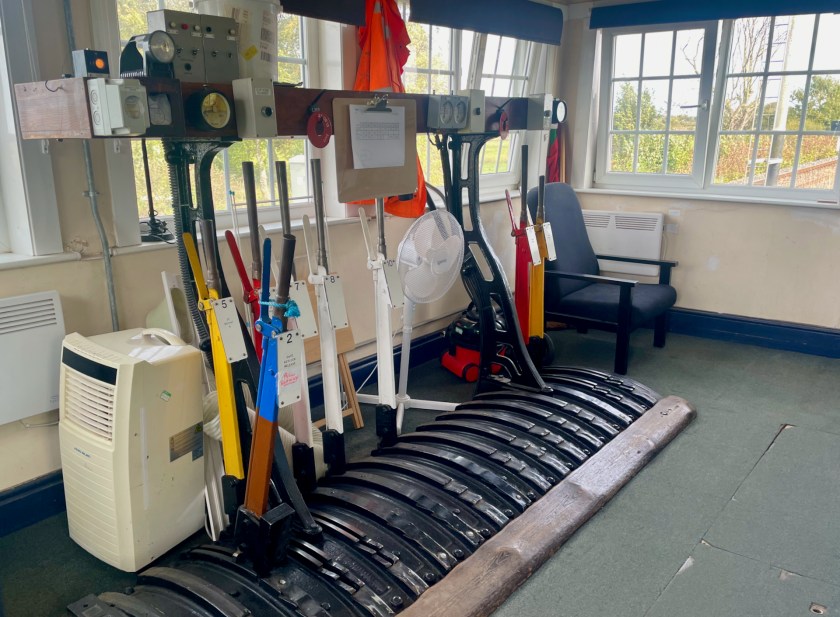
Spending a couple of nights in Hull (24-26 September 2026) I decided to pay my first visit to Gristhorpe since a trip there nine years ago (September 2017), so took a train to Filey and then set out on bus and foot to photograph the doomed box and to see if it was possible to photograph Gristhorpe’s yellow and black distant signals.
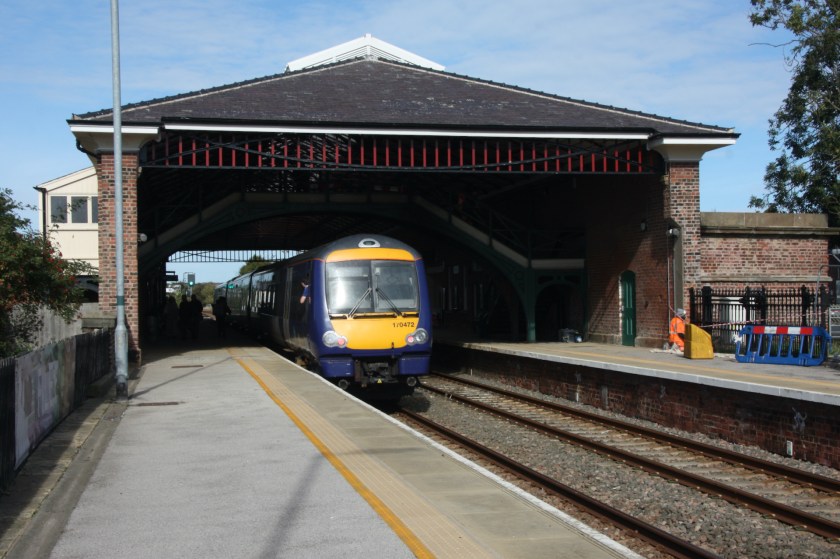
Alighting for my first ever visit to Filey, on 24 September 2026, it was a pleasure to see the fine Grade II* Listed station building, complete with an overall roof, as seen above. The station dates from opening of the railway in 1846, gaining its listing in 1985, three years before British Rail unsuccessfully sought permission to remove the overall roof. Instead it was re-built, with contributions to the cost from local councils and heritage bodies.
The northern end of the Yorkshire Coast Line, from Filey to Seamer was singled 1983, when a signal box at Filey was closed, with Seamer Signal Box assuming control of this section of the route and a number of level crossings replaced with automatic barriers. But for some historical quirk, the crossings at Gristhorpe and Lebberston Road remained.
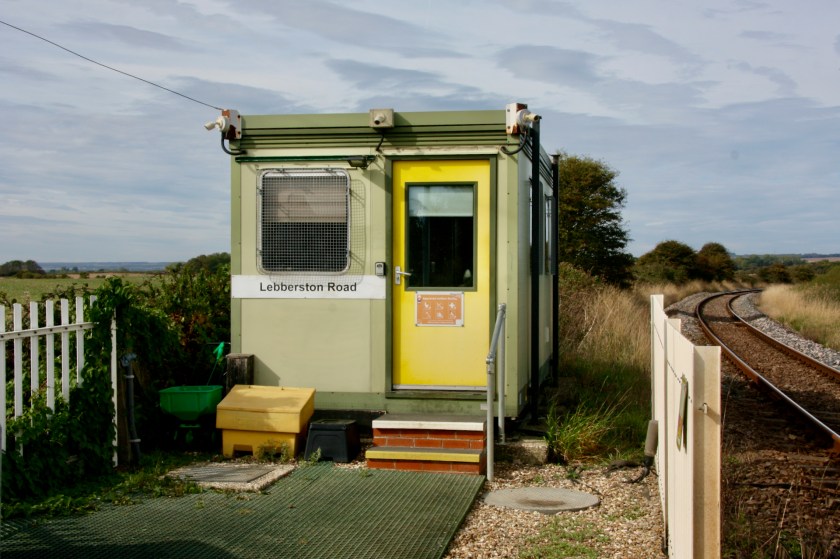
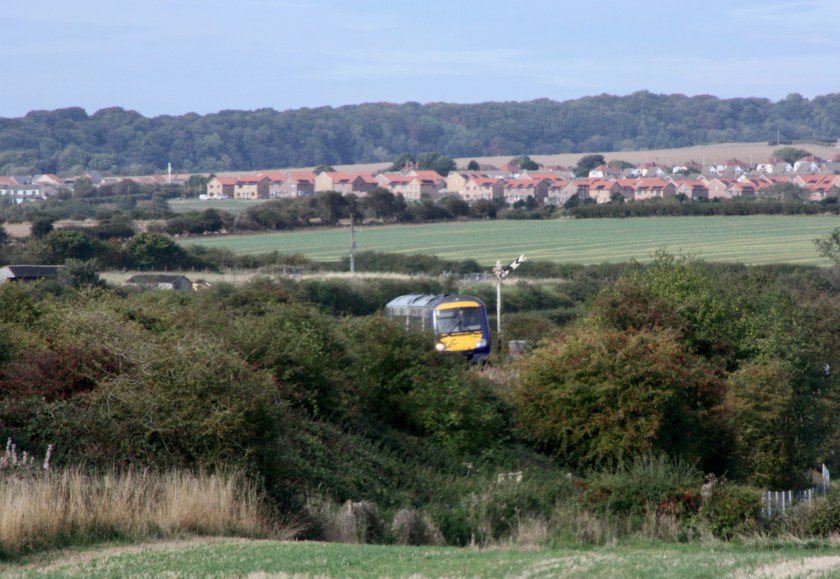
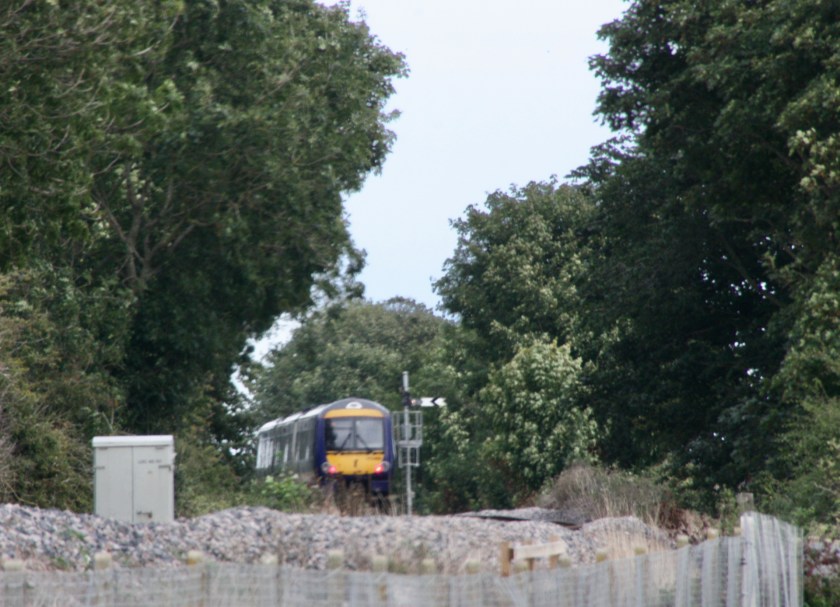
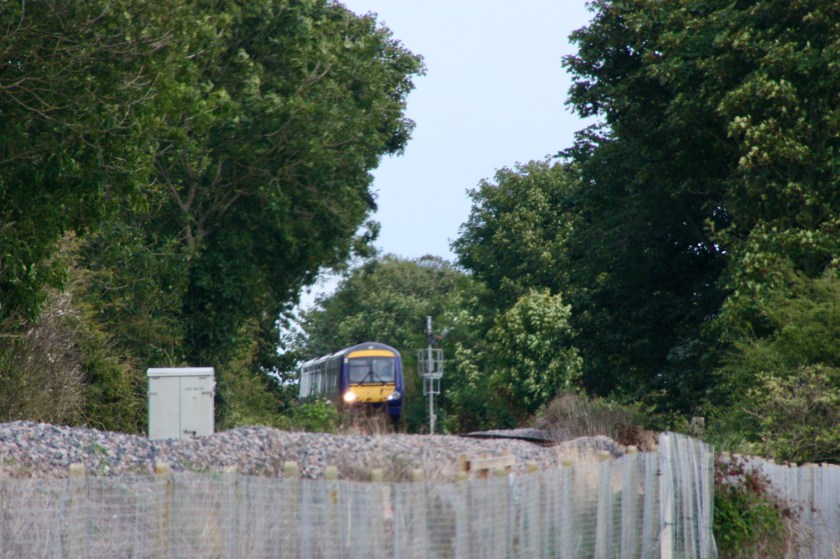
Setting out from Filey I took a ten-minute trip aboard an East Yorkshire Coaster bus 12 to Lebberston, then walked down to Lebberston Road Crossing, for a reasonable view from a nearby field of a Hull-bound service passing the Gristhorpe up distant signal (5).
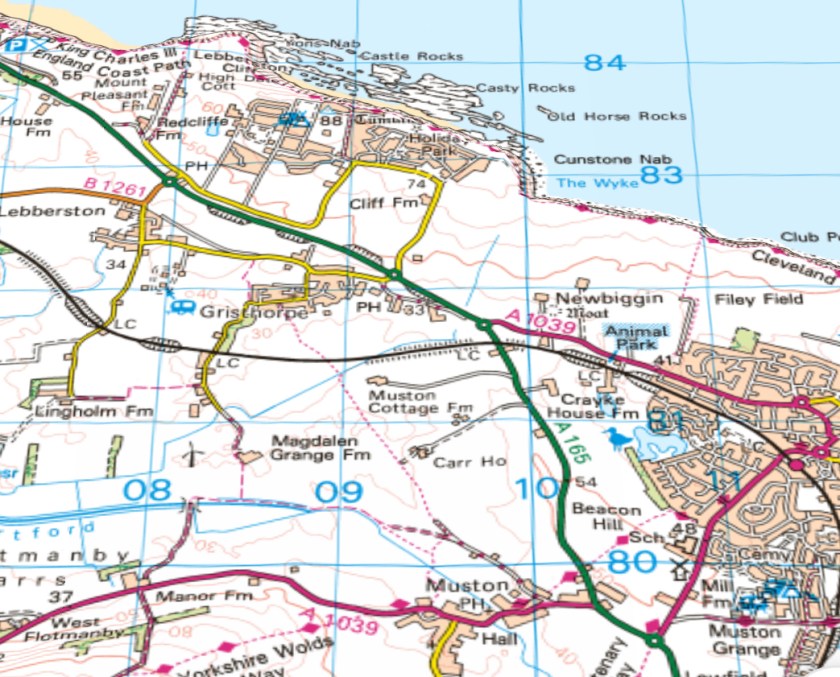
I then took a 15-minute walk off-road walk along a path that can be seen in the map above leading from Lingholm Farm to Gristhorpe Crossing, where I was lucky enough to have a chance to pay another visit to the charming box before attempting to photograph trains passing the two nearby home signals.
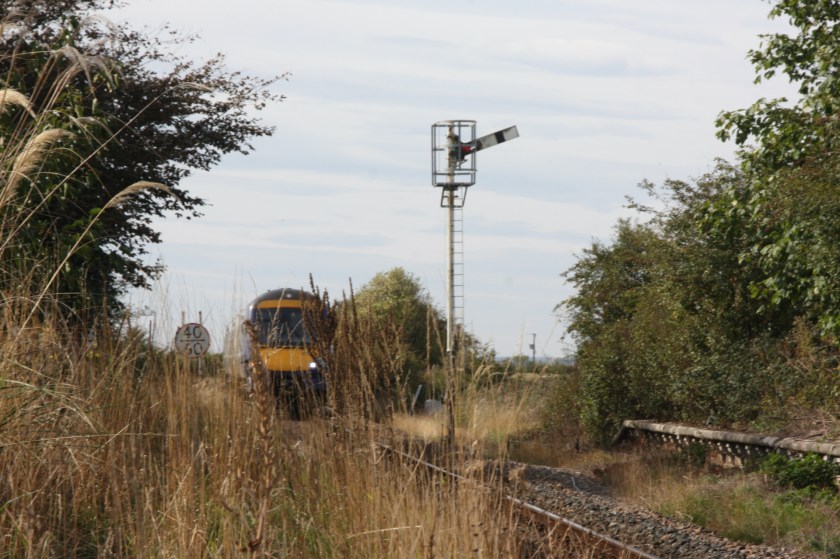
For my final shots I walked up to the attractive Gristhorpe village, then took a path leading in a south-easterly direction towards the railway, from where there was a good view of the box and down home signal and, just beyond a foot crossing of the railway, a passable view of down distant signal (18).
Weekday services along the Yorkshire Coast Line comprise twice-hourly trains as far north as Bridlington, with an hourly York-Bridlington working and another hourly service from Sheffield to Scarborough, both of which will reverse at Hull. Trains terminating at Bridlington are typically formed of Northern two-car Class 155/158 units, with Scarborough trains being three-car Class 170 units.
My last visit to the Yorkshire Coast Line had been a July 2021 visit (feature “Bye-bye Bridlington” – July 2021) to capture the semaphores at Bridlington, on a hot summer day just three months before they were swept away. Bridlington South Signal Box controlled a number of mechanical signals to the south of the station from a 65-lever frame, now replaced by a panel.
Like Filey, Bridlington station is another remarkable survival, which gained a Grade II Listing in April 2003, by virtue of being a fine example of Edwardian railway architecture, with carefully detailed interior fixtures and fittings, designed by the notable railway architect, William Bell. It was described then as a good example of a NER seaside station built for the greatly increased excursion traffic in the early twentieth century.
My sincere thanks once again to Network Rail’s Local Operations Manager Mike Haxby for authorising my Gristhorpe visit on 24 September


You must be logged in to post a comment.