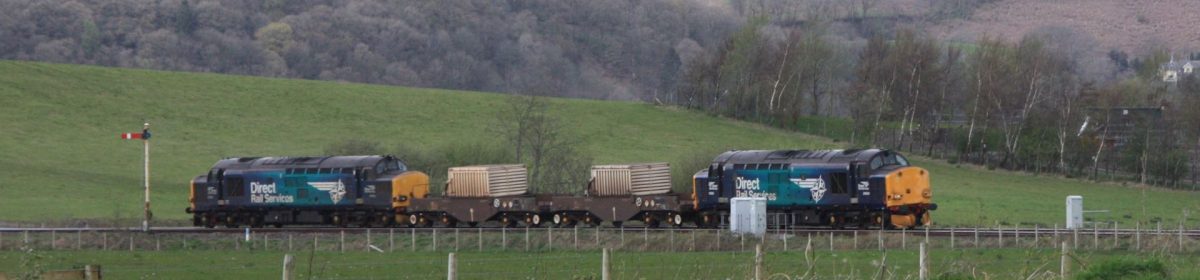
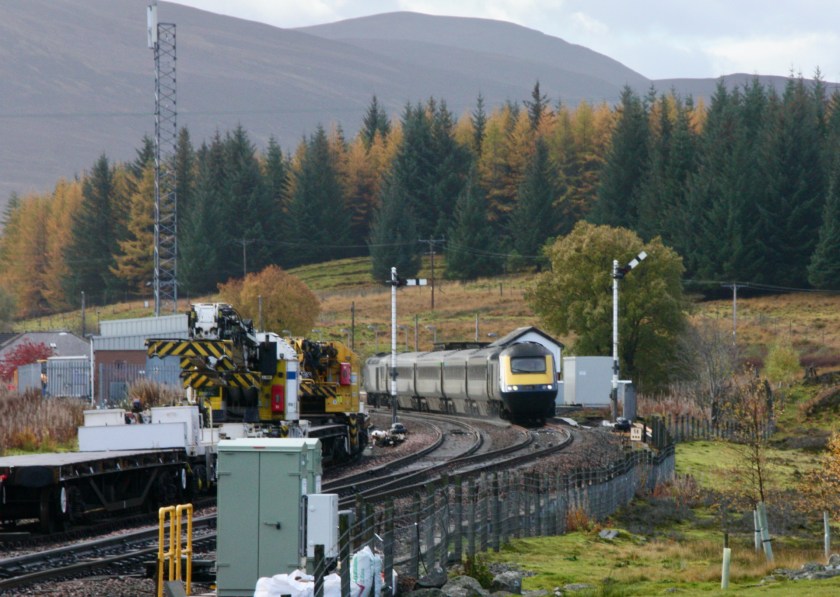
Another piece of our precious railway heritage is about to be swept away in the name of progress, with the imminent (November 2026) replacement of the handful of semaphore signals controlled by Dalwhinnie Signal Box on the Highland Main Line.
An £8 million project, due to be commissioned after closures of the route for the first two weekends in November will see renewal of around 400 yards of track and installation of a new south crossover, enabling northbound trains to use up platform 1 for step-free access, along with installation of new colour light signals.
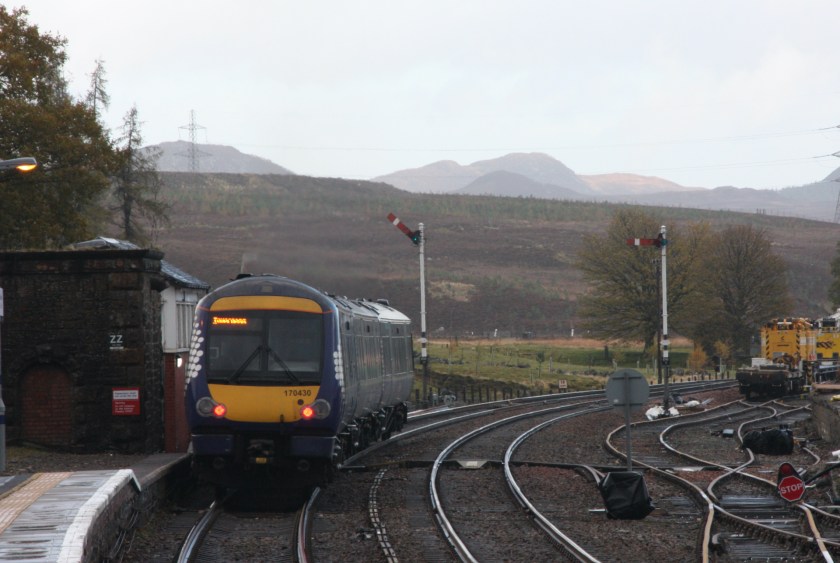
Annoyingly unable to take advantage once again of a seasonal Scotrail Club 50 flat fare ticket, which have not yet been put on sale, I travelled from Edinburgh Waverley for my first return to the remotest station along the scenic Perth-Inverness line since February 2020 (on 28 October 2026), with aim of capturing trains passing the doomed semaphores.
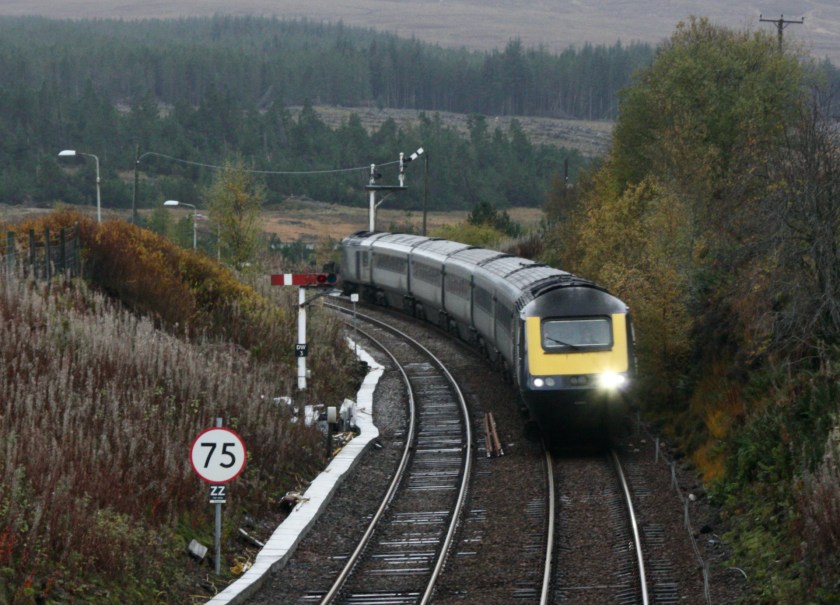
As I wrote following my 2020 visit, Dalwhinnie must rank as the quietest station on the Highland Main Line, serving a very small settlement just off the A9 trunk road, which enjoys a pretty sparse train service and is dominated by its large and well-known distillery, located some distance north of the station.
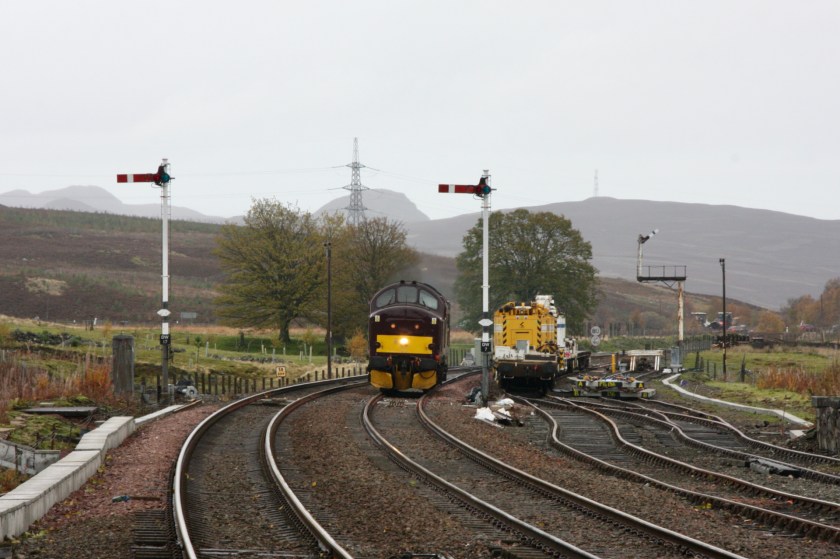
Current weekday passenger services calling at Dalwhinnie comprise five down (northbound) services to Inverness, four up services to Glasgow Queen Street and one to Edinburgh Waverley, along with the Caledonian Sleeper service to and from London Euston.
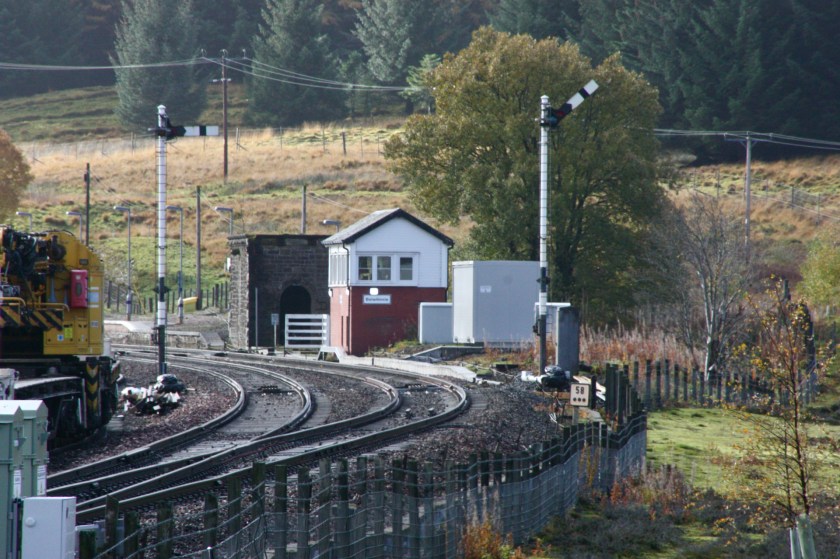
Latest ORR figures estimate Dalwhinnie sees about 65 passengers a week or ten a day and unchanged from the figure for 2018/9. But I was the only passenger to alight from 1H05 at 09.29 and I did not see a single person board or alight from any of the three services to call up to my departure for Edinburgh at 14.02.
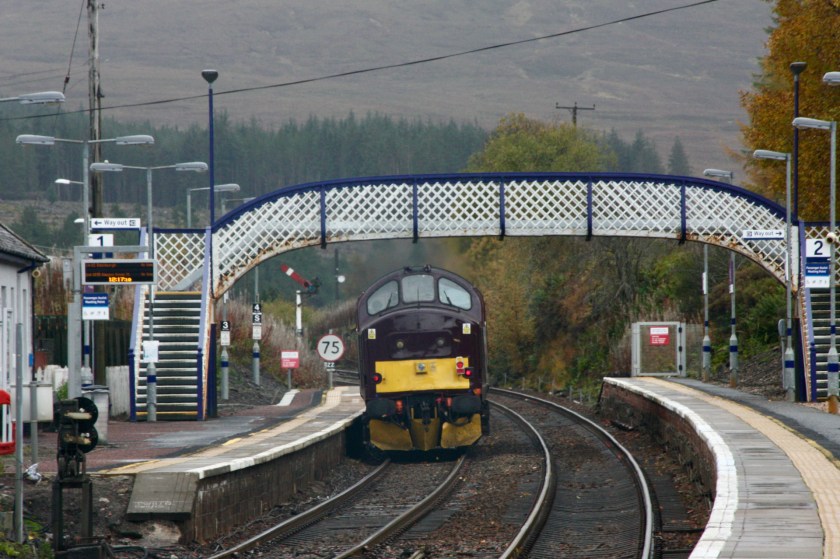
Dalwhinnie stands at the northern end of a section of double track extending from Blair Atholl to the south, with its rather unattractively modernised Highland Railway signal box (1909) standing some distance north of the two station platforms.
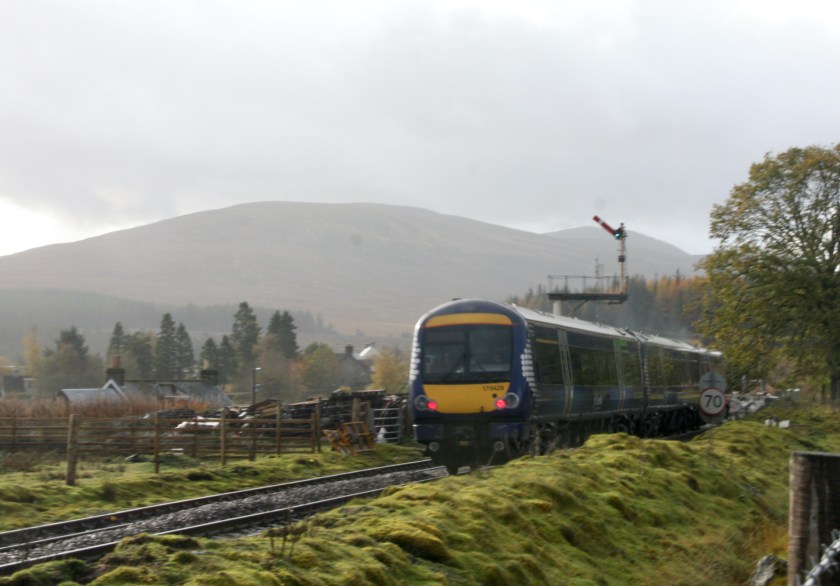
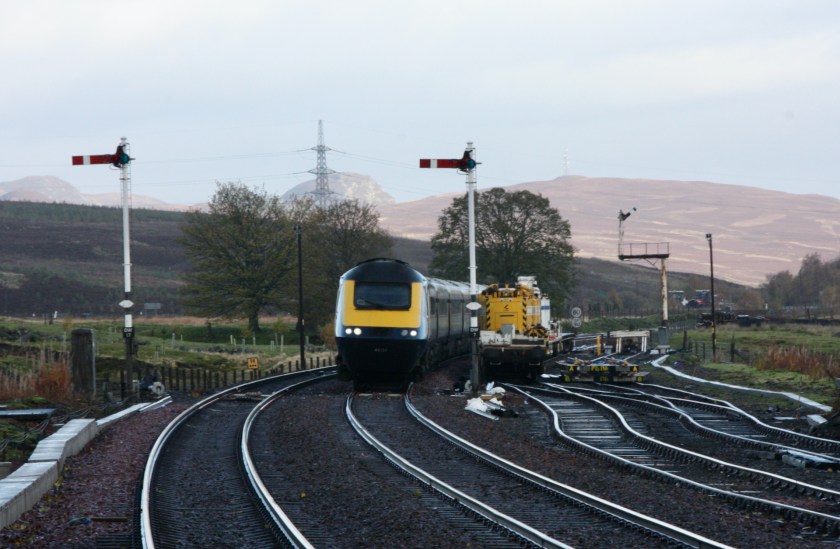
Looking north from the station platforms three of the five semaphores can be seen beyond the signal box, comprising a down starting signal (DW17) behind the box and a down starter for what is normally the up line (DW7) to its right, with up home DW2 beyond, at the point where the single track from Inverness divides into two lines.
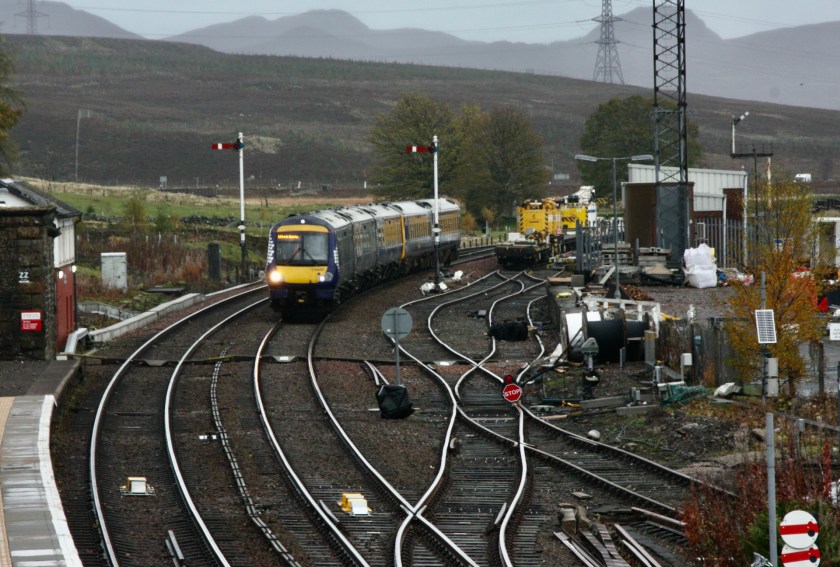
To the south of the station platforms are an up starting signal DW3, which is slightly offset from its post, and a bracket housing home signal DW18 and formerly DW15, which signalled a northbound service into up platform 1 but was removed when the cross-over was taken out following a derailment here in April 2021.
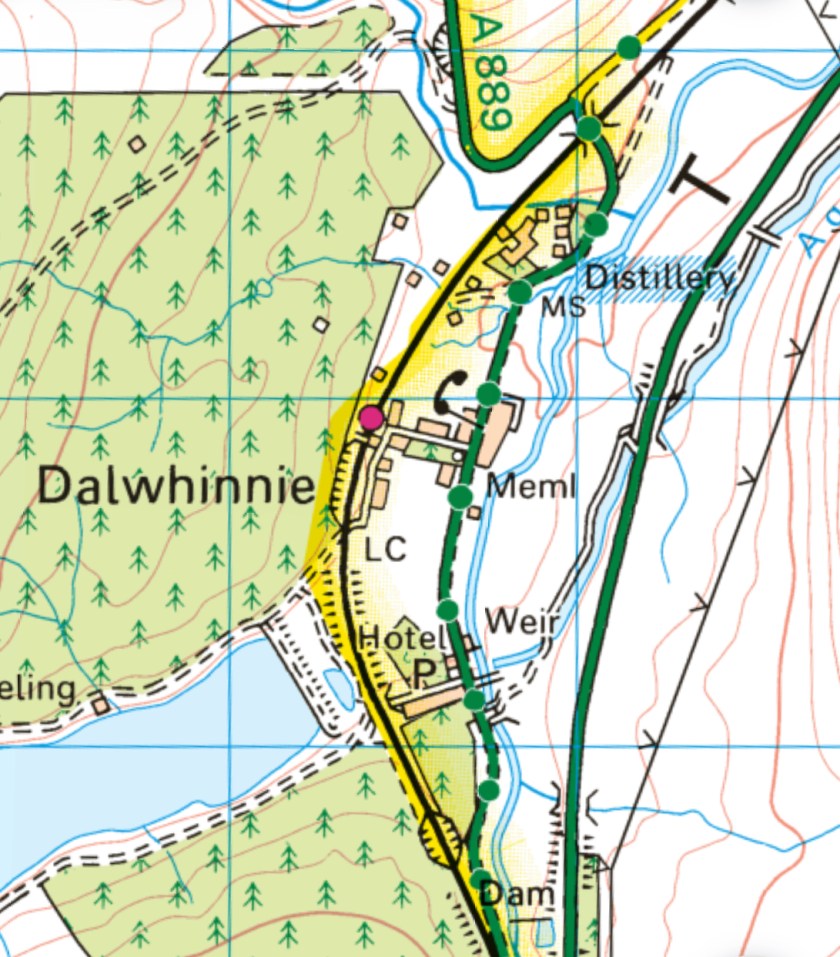
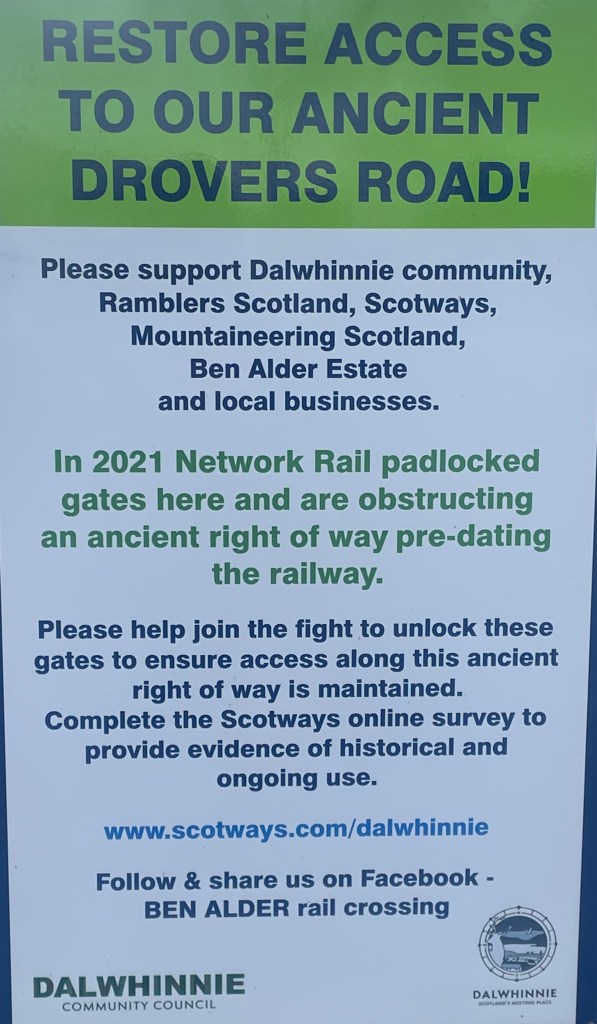
A track leading south from the station takes you to a crossing of the line close to the down home signal, but Network Rail unilaterally closed this crossing following the 2021 derailment to the annoyance of walkers and others who are in a continuing battle to get it re-opened.
So having got a few shots from the station platforms, I decided to head in the opposite direction, and took a ten-minute walk to the north, having recently seen photos taken from close to an under-bridge crossing the railway near the distillery.
The under-bridge was pretty wet and had become a water course, but was just passable on foot and from the west side there was a good view looking back towards the station and signal box, with the chance also to walk north alongside the railway for a shot of up home signal DW2.
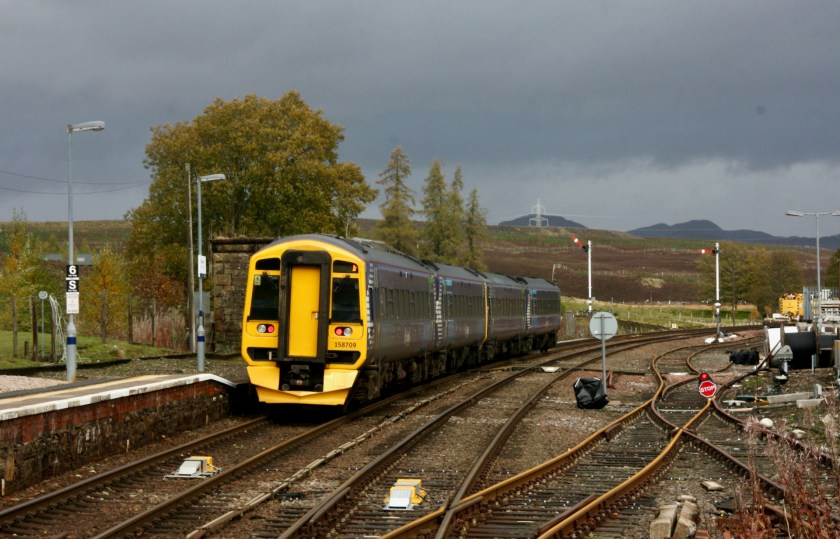
Loss of the Dalwhinnie semaphores follows the removal of those at Pitlochry and Aviemore in early 2019, and will leave only four mechanically-signalled locations on the Highland Main Line between Perth and Inverness – Stanley Junction, Dunkeld, Blair Atholl and Kingussie.


You must be logged in to post a comment.