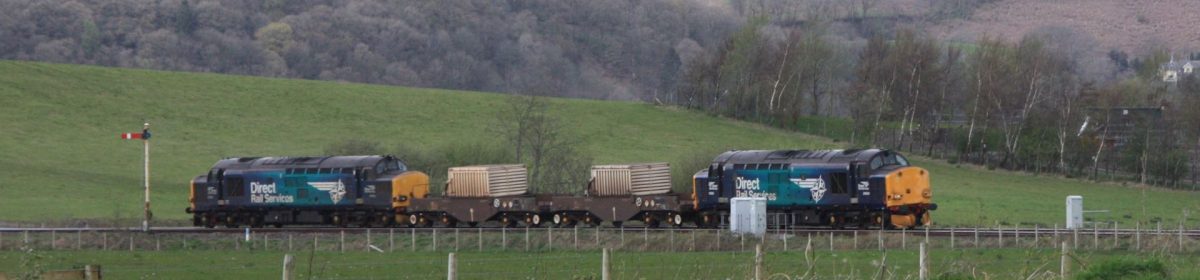
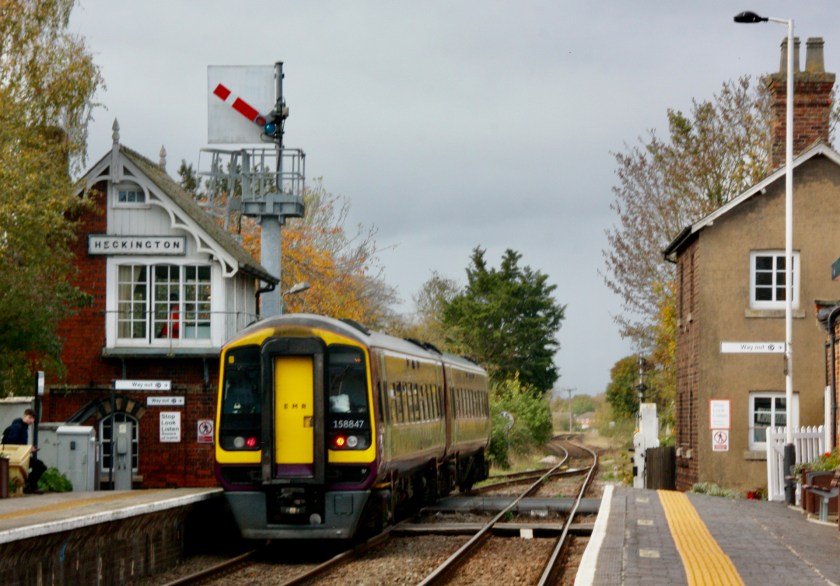
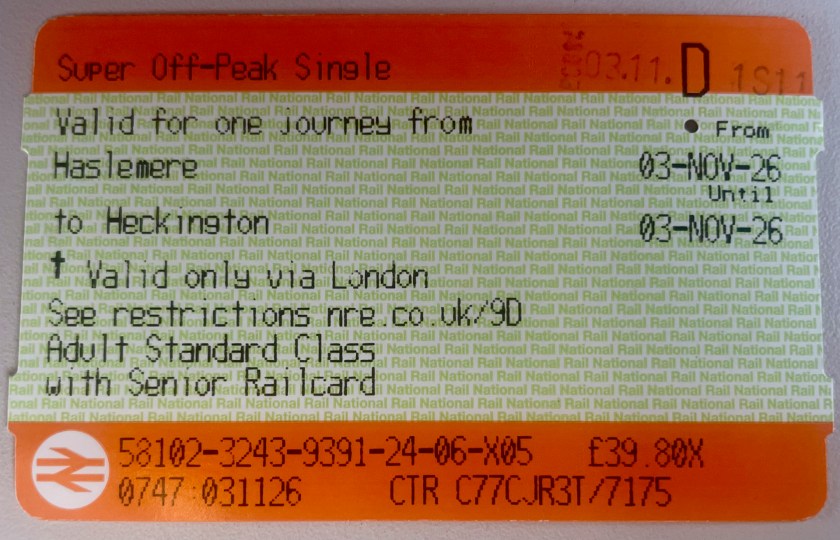
Luck can play a big part in successful railway photography and so it did on my first visit to the delightful Grantham-Skegness Poacher Line in 2026 (on 3 November) when I made a twice-delayed return to Heckington in search of some interesting loco action.
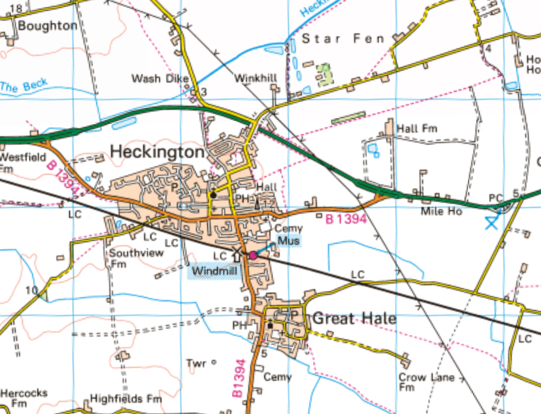
My luck was in when there were a remarkable three different loco-hauled workings in the space of two hours, but disappointment when a series of delays to the hourly EMR passenger services meant not seeing up distant signal HN1 pulled off after my 20 minute walk from the station to Great Hale Drove No 1 Level Crossing, close to HN1.
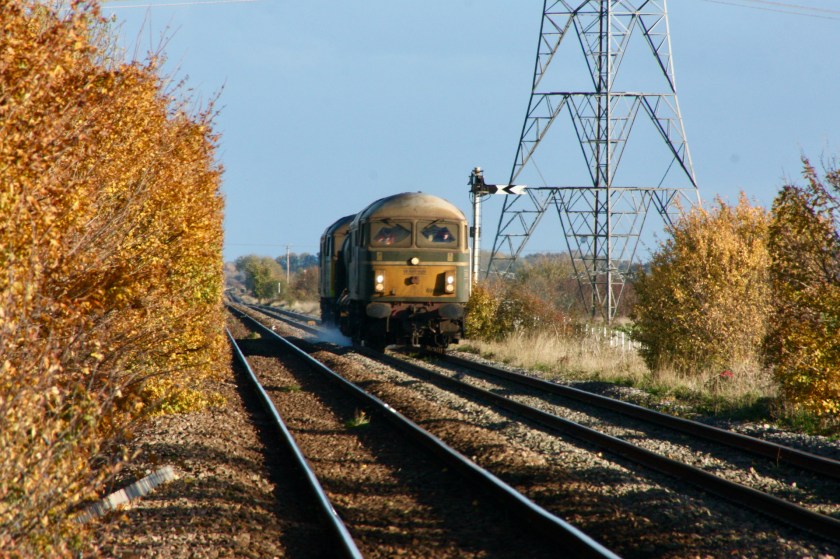
Delays to what were exclusively Class 158-worked EMR passenger services were being blamed on poor rail conditions, which was somewhat ironic as one of the thee loco-worked services was the seasonal Railhead Treatment Train (RHTT) 3J42 top-and-tailed by 69016/005 on a circuit from Barnetby to Peterborough.
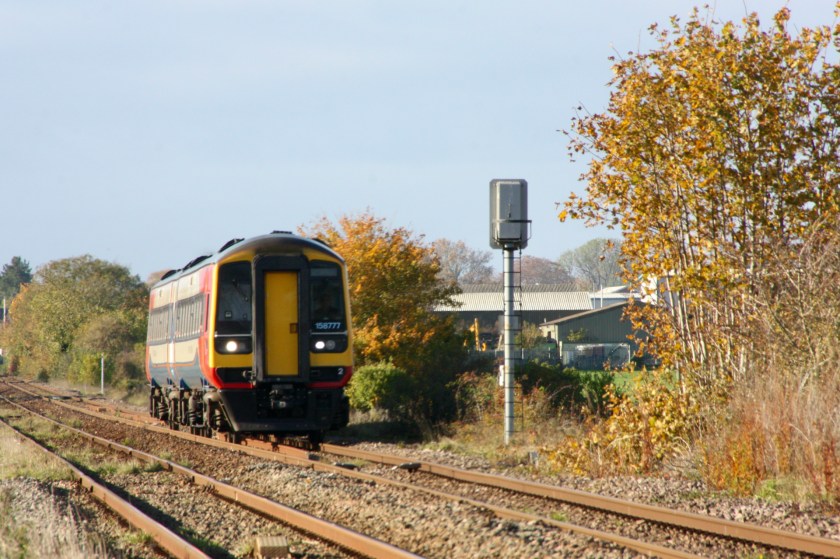
But this circuit only takes the train as far as Boston and the poor rail conditions seemed to be on the section of route between Boston and bracing Skegness, which was not being treated, but clearly needs to be, given the 30 minute delays to a number of the Skegness-Nottingham workings.
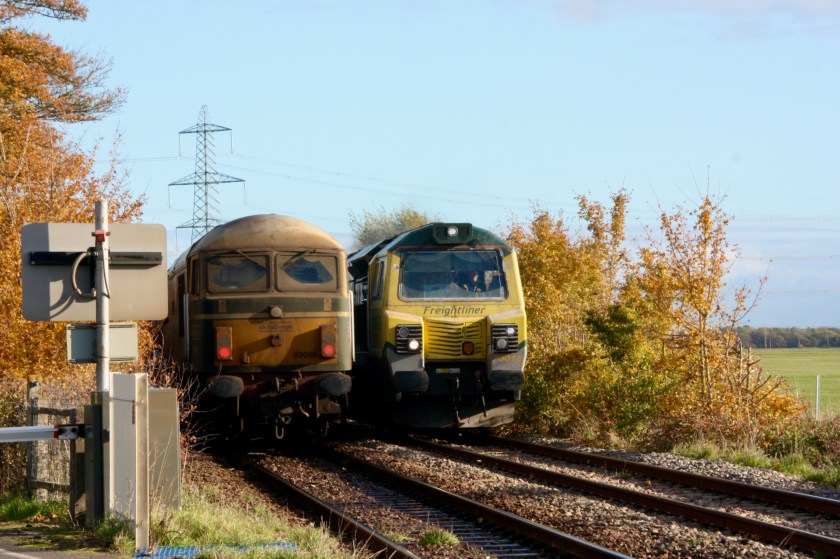
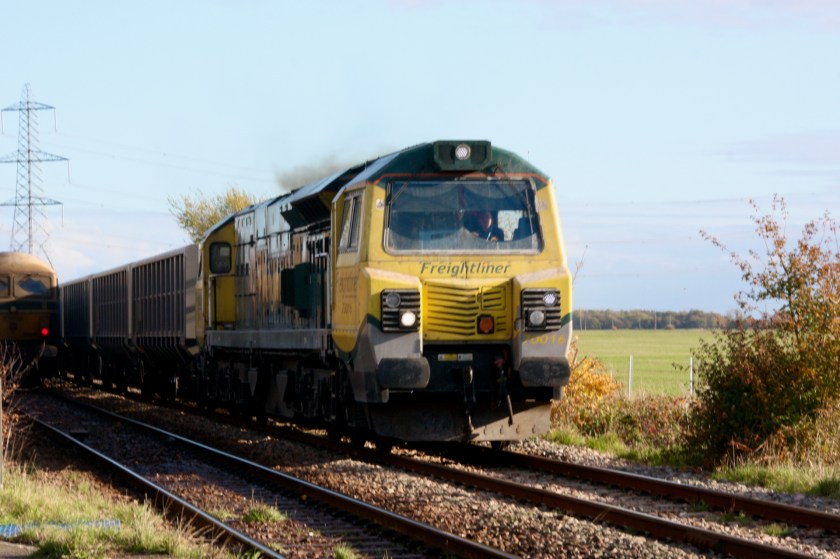
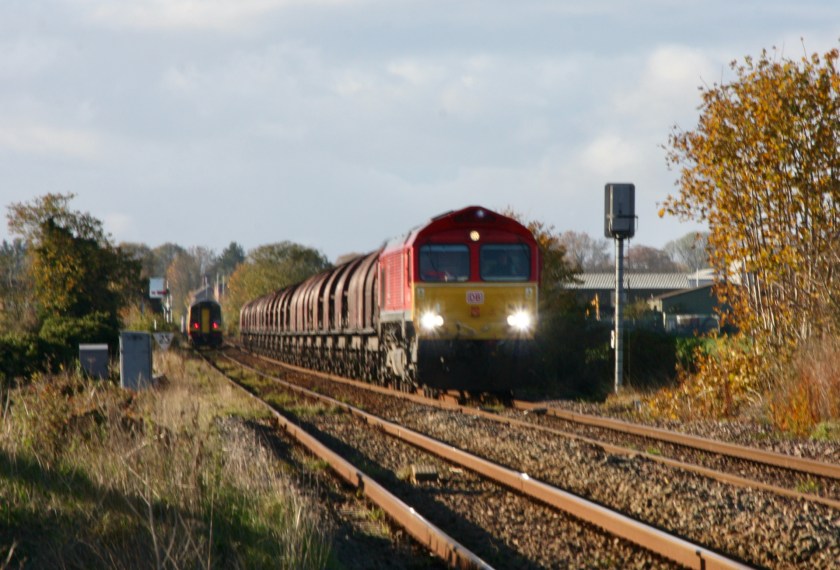
Besides the RHTT, the other loco haulage passing Heckington during my visit to this delightful village on a fine and sunny autumn day were Freightliner 70016 with a long train of empty aggregates wagons returning from Boston Docks to Dowlow Quarry (4M19) and DB 66660 with the route’s semi-regular steel movement (6E02) from Toton to Boston.
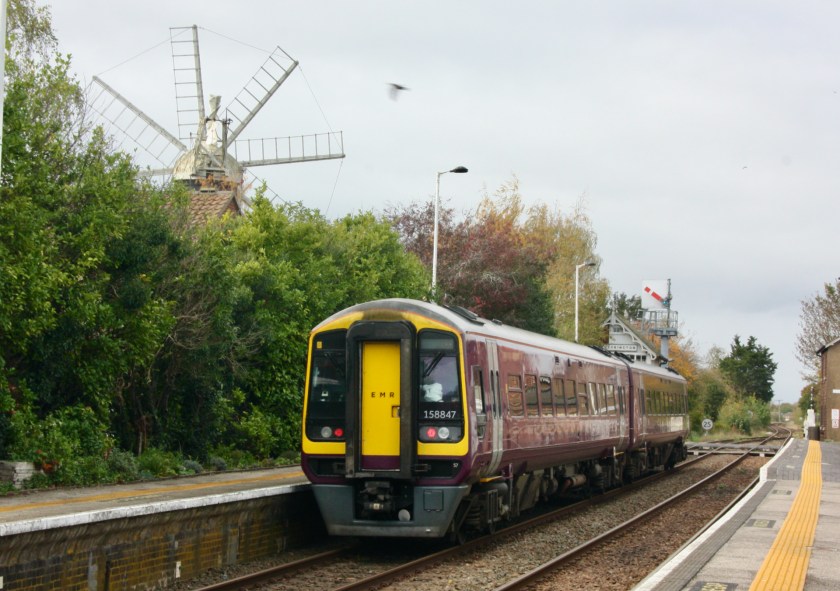
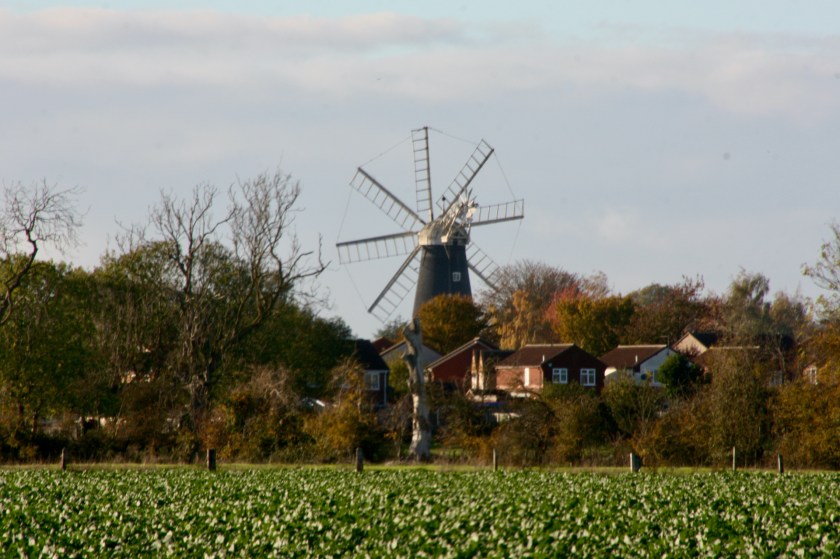
For those unfamiliar with this location, Heckington boasts a Grade II-Listed signal box that stands close to a unique and Grade I Listed eight-sail windmill, and is 4½ miles east of Sleaford, at the point where single line from Sleaford becomes double track to Hubbert’s Bridge, just three miles west of Boston.
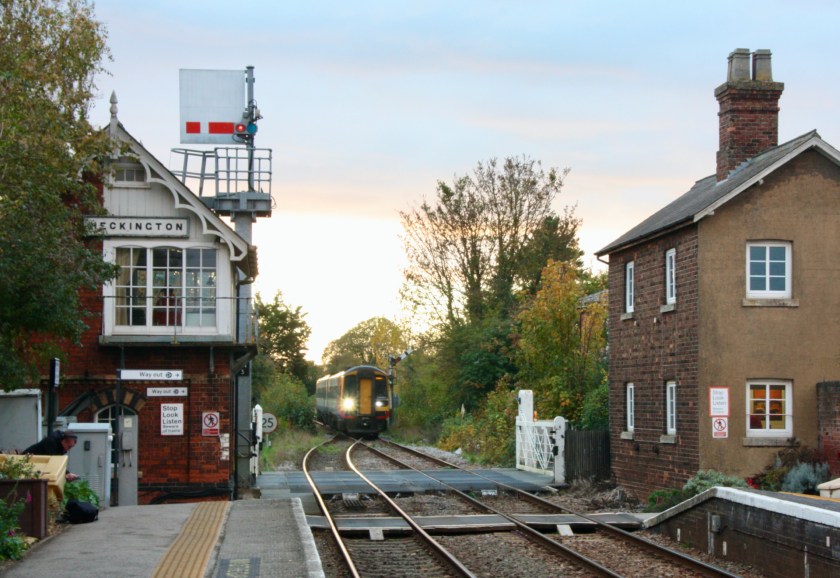
Heckington Signal Box is an 1876-vintage Great Northern Railway (GNR) Type 1 design, which gained its Listing for what was described as “elaborate detailing, such as the pointed Gothic arch polychromatic windows which are thought to be unique to the GNR”.
The box contains an 18-lever Saxby & Farner frame dating from 1925, controlling five semaphore signals, all of which are mechanically-worked apart from up distant signal HN1. From west to east these are down distant HN15, down home HN14, up starter HN3 between the signal box and level crossing, and up home signal HN2.
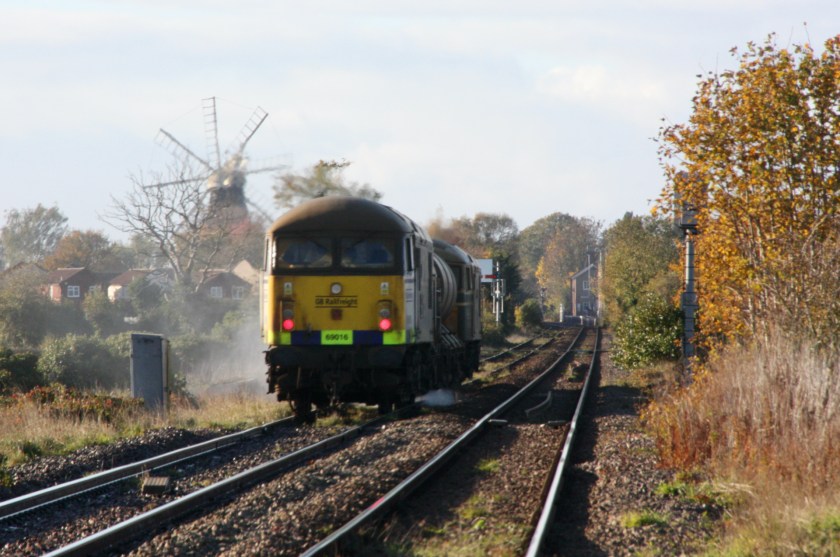
Heckington is a delightful place to spend time on a fine day, and the 20 minute walk out to the level crossing beyond the hamlet of Great Hale is well worth taking for shots of trains passing the up distant signal and then approaching HN2 and the station, with the famous windmill to the left.
The 58-mile long Poacher Line is one of the UK’s finest outposts of mechanical signalling, and apart from Heckington there are semaphores to be found at Ancaster, Hubbert’s Bridge, Boston, Bellwater Junction, Wainfleet and Skegness.
Among the route’s surviving semaphores are a number of the increasingly rare yellow and black distant arms, comprising working up and down signals at Ancaster, Heckington and Hubbert’s Bridge, an up distant at Bellwater Junction and both up and down distants at Wainfleet.
For a hydration break I can highly recommend the 8 Sail Brewery, opposite the station and at the foot of the windmill, where over a fascinating chat with the head brewer I enjoyed an excellent pint of Black Widow Ruby Mild (5.5%/£4.50). Not to be missed!


You must be logged in to post a comment.