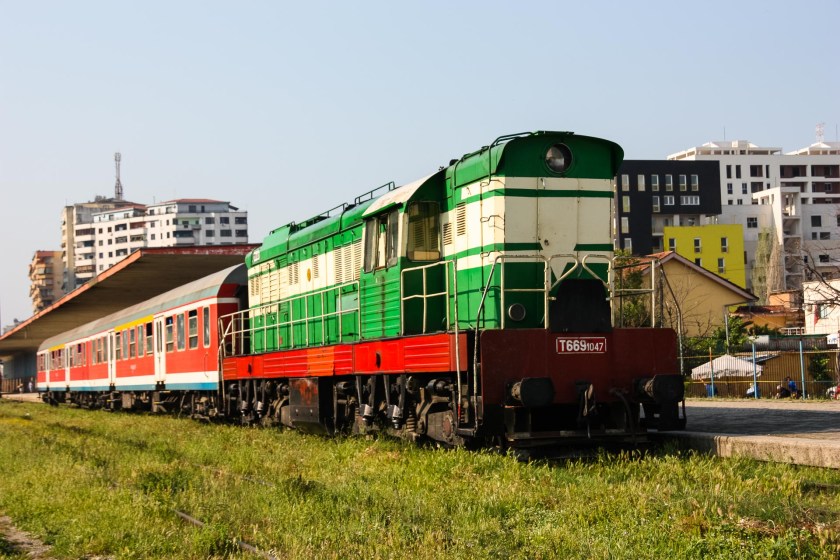
NINE years ago this month (in May 2011) I paid a visit to Europe’s most isolated country, Albania, and spent the next five days travelling the whole of its decrepit railway network, before the most scenic section of route was suddenly closed a year later.
As desperately needed investment seems set to revive at least part of this remarkable and ramshackle system, this is an expanded and illustrated version of my original 2011 account, with an update at the end on developments since that visit. Continue reading “Europe’s forgotten railway network”
 EXACTLY 25 years ago today, on Wednesday, 10 May 1995, I went on one of my most memorable ever continental railway journeys, when I broke off from a family holiday near Lisbon to spend an unforgettable 36 hours travelling to the Douro Valley and then sampling two of the remarkable metre-gauge lines leading up tributary river valleys north of the Douro.
 Shortly before 21.00 hrs. on Friday, 19 May 2017, a piece of railway history was made when the two 1960-vintage Class 121 “Bubble Cars” that had been in service with Chiltern Railways completed their last ever run from Princes Risborough to Aylesbury.
 Among the many memorable outings I had while researching my signalling book during 2017, one of the most enjoyable was a day spent visiting four semaphore-signalled locations along the delightful Tyne Valley line between Carlisle and Newcastle.
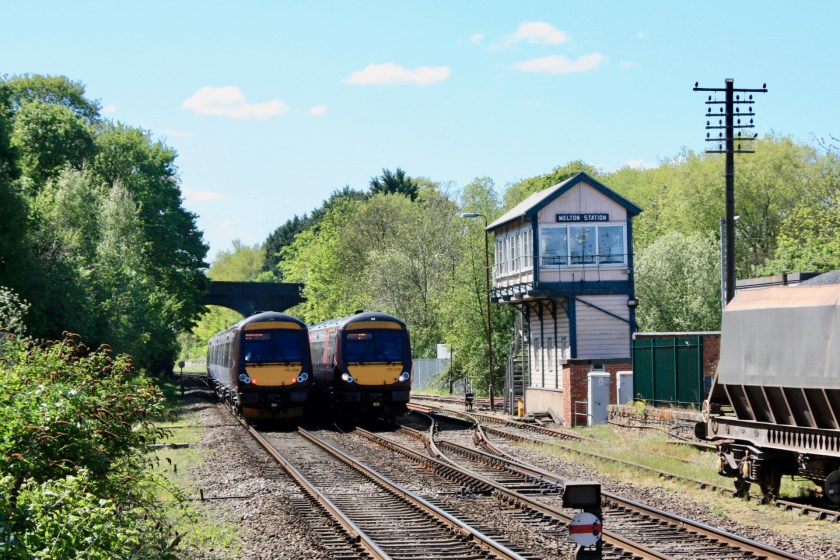 After my final pre-lockdown visit to the charming station at Manea, near Ely, it is now time to head further west, and take a look at the half dozen signal boxes which retain semaphore signalling interest on the busy cross-country route between Leicester and Peterborough.
 After last year’s return to Stranraer Harbour, it is time to pay another visit to south-west Scotland and to the four southernmost outposts of mechanical signalling on the Glasgow & South Western main line between Glasgow and Carlisle.
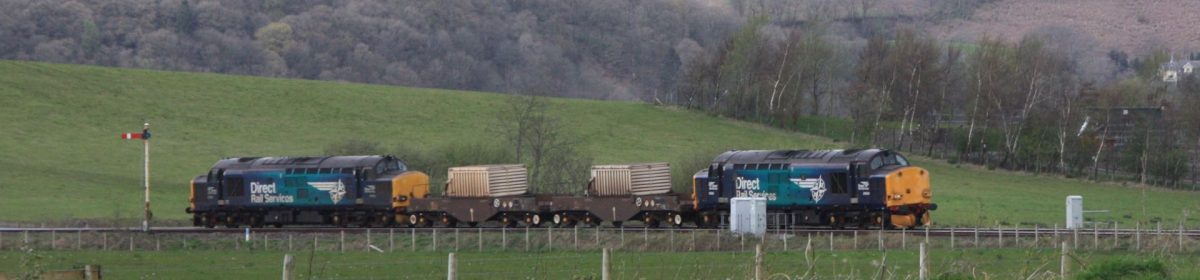
 After last week’s trip along the scenic Furness Line, it is now time to head north from Barrow-in-Furness and take a look at some of the many delightful spots that retain their mechanical signalling along the route through Whitehaven and Workington as far north as Wigton.
 Among all the many trips I went on three years ago in the quest for photos and text for my signalling book, most memorable of all was the week I spent during April 2017 at Barrow-in-Furness, while I explored the wonderful Furness and Cumbrian Coast Lines.
 Taking heed of Government advice to avoid making all but essential rail journeys, the current potentially dismal and very challenging period seems like a good moment to look back to better times, when we were all free to travel at will.

You must be logged in to post a comment.