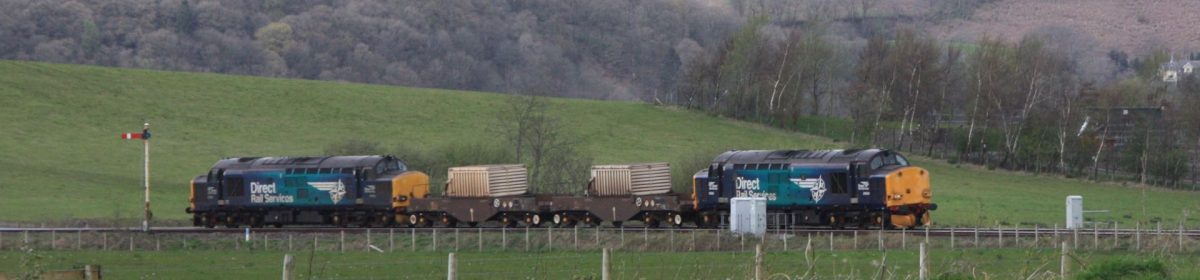
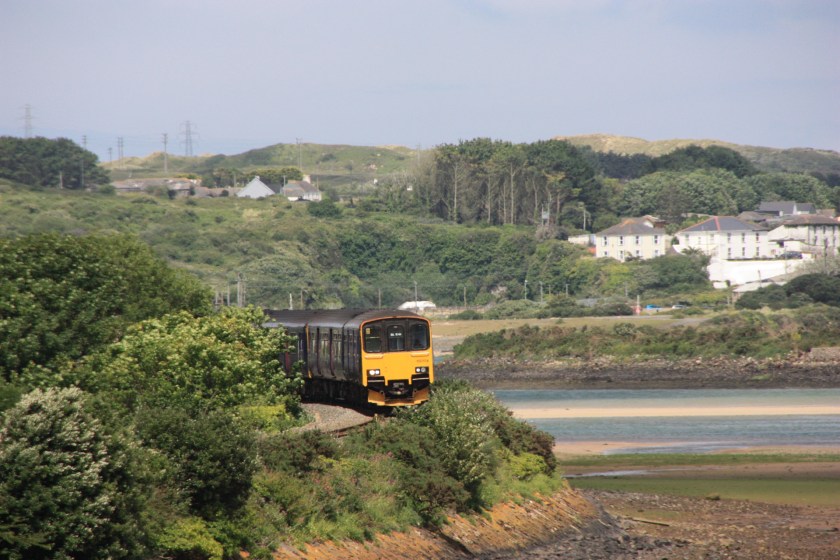
 Cornwall remains a delightful and photogenic outpost of mechanical signalling, so after my earlier features on Par/St Blazey and Lostwithiel, it is time to pay a visit to Britain’s most south-westerly railway junction, St Erth, which lies 56 miles on from the Royal Duchy’s first semaphore signals at Liskeard, and 299½ miles from Paddington.
St. Erth must rank as one of the county’s most unspoiled locations, with semaphore signalling being the perfect complement to the charming GWR junction station, complete with independently-run station buffet and a place where even the original footbridge was saved from replacement by a new structure after a fervent local campaign. Continue reading “Favourite photo-spots: St. Erth”
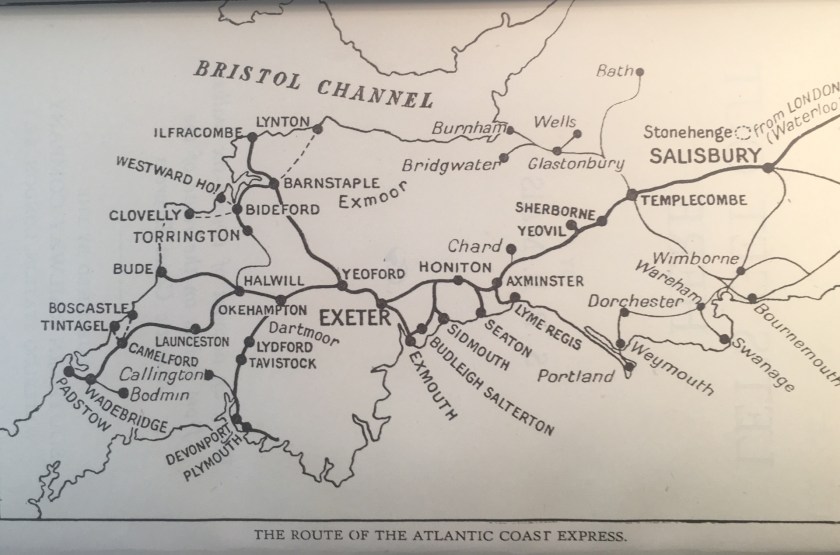
 Friday lunchtime on 29 June 2018 and the end of a scorching week in the sunny South West. Standing on platform 5 at Exeter St. David’s and waiting for the slightly delayed arrival of the 13.02 “Cornishman” to London Paddington, an announcement that the train is one coach short (a shortage of coaches, we are told!) and that the service is already “full and standing” is hardly the news any weary traveller wants to hear.
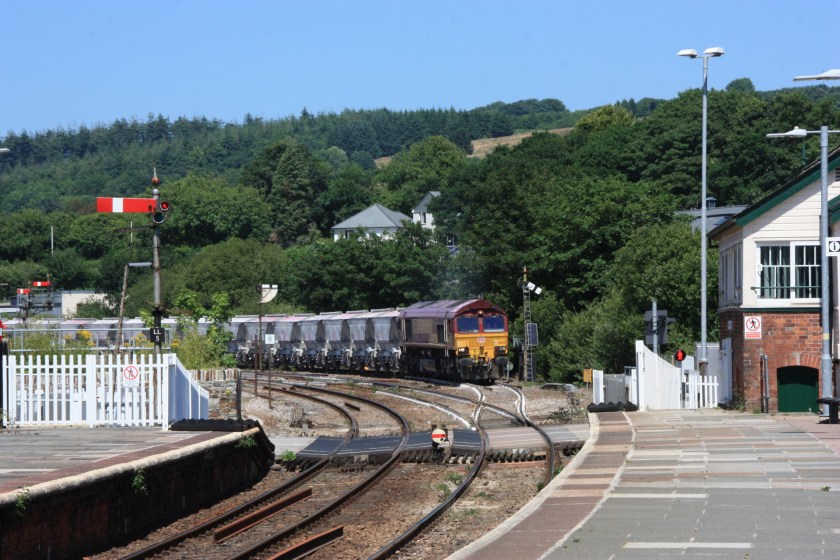 Among a number of marvellous locations in Cornwall to savour GWR-style lower quadrant signalling, one of the most attractive must surely be the delightful town of Lostwithiel, standing on the banks of the River Fowey, with its station and signal box situated just over the 16th century Lostwithiel Bridge from the town itself.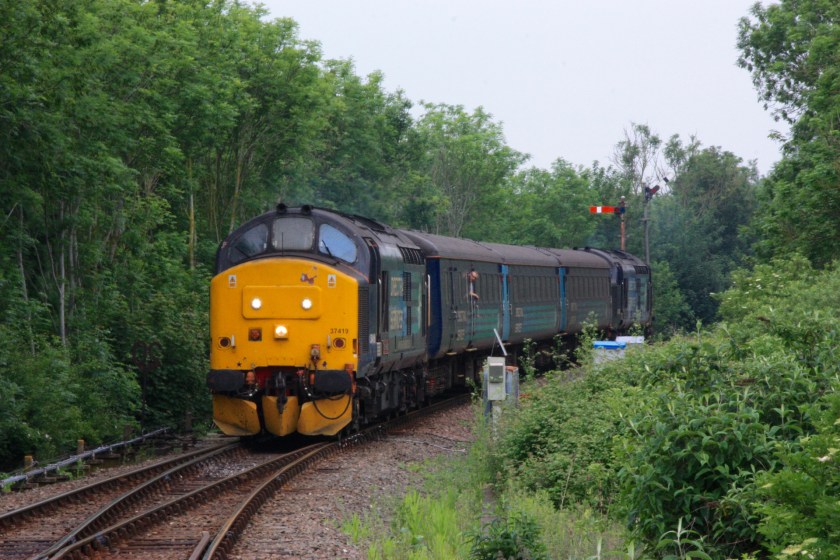
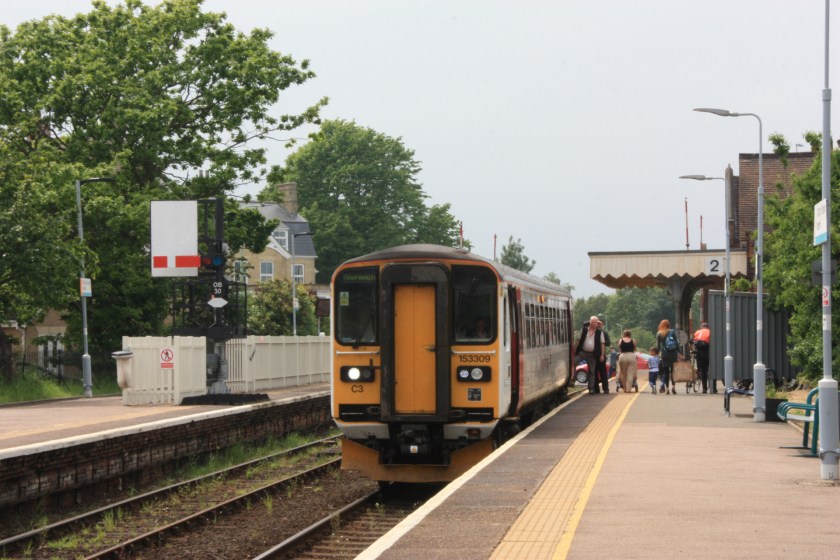 For its combination of manual signalling, interesting scenery and the regular chance of Class 37-haulage, there can be few places in England more attractive for rail enthusiasts than the Wherry Lines in Norfolk, linking Norwich with the seaside resorts of Great Yarmouth and Lowestoft.
 Basingstoke to Wareham is 96 miles on the direct route via Southampton Central, but take a new summer Saturday “seaside special” and the distance becomes exactly 150 miles, while the journey time increases from around one hour 40 minutes on the main line to almost four hours!
 Several locations on the national network can boast a mixture of upper and lower quadrant signals, but my shot today of a train passing successive upper and lower quadrant signals at Dorrington got me wondering if there are any other places where it is possible to see such a scene?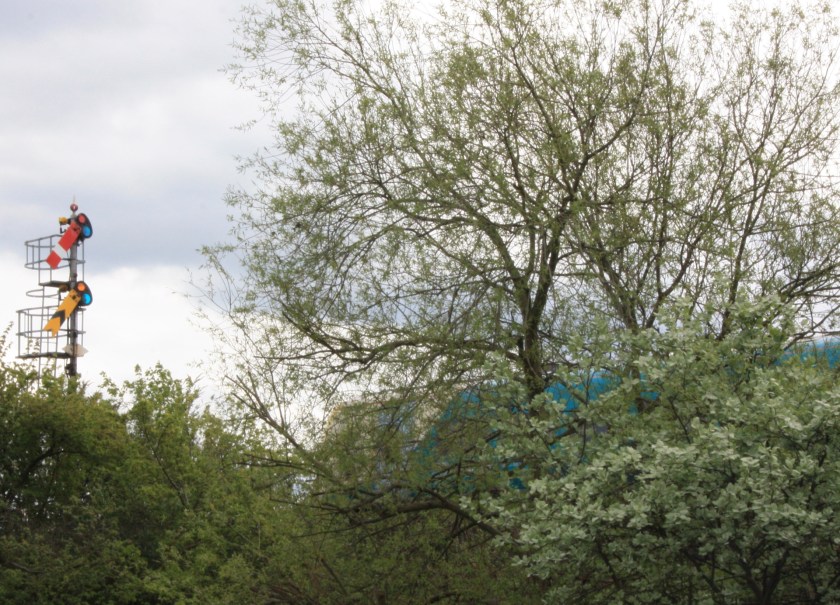
 Among the many railway revival schemes around the country, one of the most longstanding and compelling is the 31-mile long “Ivanhoe Line” linking Burton-upon-Trent and Leicester.

You must be logged in to post a comment.